 “Are you my people? Oh, no, you’re the North Americans who signed in yesterday!”” exclaimed the wildlife ranger as we were enjoying sundowners on the second night of our self-drive through Botswana. Still confused, we asked who it was that he was looking for? “Oh, there were reservations for people who did not show up last night and I am worried. It is the rainy season and the roads aren’t good. People get in to trouble when they are stuck and I want to make sure they are safe.” He was looking for the people who were supposed to be at the camping site last night but didn’t show up. As is common in Africa, we spent the next 20-30 minutes chatting with him about travel, the rainy season, what life is like in America, and the antics of our current President. He thanked us for signing in to the register he had left at the gate as he had to leave the post to go search for the missing campers. “I don’t remember the last time we had someone from North America” he quipped “they usually go on guided safaris. The Europeans, though, especially Germans and Dutch, they come here in herds.”

We had driven to the camp site from the ‘undeveloped’ side of the Chobe National Park but had not seen anyone stuck so could not help him locate his “people”. In fact, we only saw three cars on the entire 5-hour drive in. It is not a common route, even for self-drivers. We had met another group of ladies from the Netherlands who got stuck the night before and had to set up camp in the bush while they waited for someone to come along to pull their trucks out of the quagmire that is Botswana during the rainy season, but no one else. We, too, had almost been stuck in an impossibly deep ‘elephant hole’, but Colburn’s solid driving skills and 4-low gearing on the truck kept us moving along safely.
Independent traveling, and especially self-driving, in Botswana is amazing. Although driving on the bush roads can be extremely challenging, there is a strong tourist infrastructure that makes the process very enjoyable. We noticed the difference as soon as our ferry crossed the Zambezi River and we left the border crossing. There is organization, development and order. Tourism is well-established. Heaps of white 4×4 trucks like ours – fully kitted out with roof-top tents, spare fuel tanks and recovery gear – ply the roads in a steady stream. This means that there is usually help close by so even if you don’t have to have a lot of experience, you will likely be ok.

As we pulled in to the first town, Kasane, we were blown away to find Nando’s (a South African chicken fast food joint), a Puma Fuel Stop that accepts credit cards, and brand-new Shoprite all in one shopping center! It was almost overwhelming. After so many months of being the only white people (other than the volunteers we worked with) around, we were suddenly surrounded by them. They were in the grocery stores. They were on the roads. They were in the markets and towns, just going about daily life. We all felt as if our adventure had come to an end and now we were simply another tourist dollar. That feeling, however, was short lived as the bush in Botswana is so amazing that sharing it with other tourists is a joy, not an imposition.

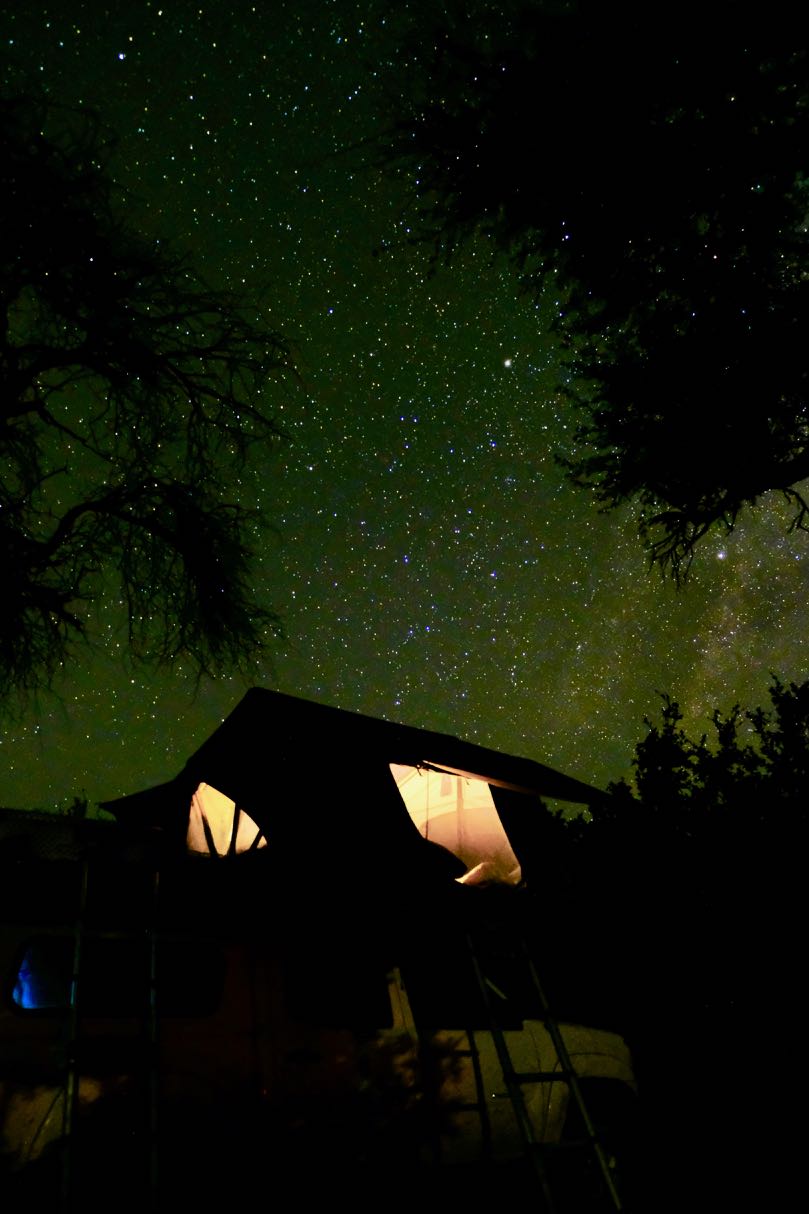
We planned a six-day self-drive through the Chobe-Savuti-Khwai-Moremi areas in the north-west. As it was the end of the rainy season, we did not expect to see much game, but the landscape is amazing and the sense of remoteness inspiring, so we went anyway. On our first night, we were the only people in camp. The camp guard had warned us not to walk to the ablutions (toilet/shower) after dark as there are many animals in the area including lion and elephants. Having learned from our experiences in Tanzania, we ate and were in the roof-top tent by sundown. A few hours later, a herd of elephants surrounded our truck, loudly munching on the vegetation and shuffling back and forth. We could hear them breathe, hear their stomachs rumble (it sounds like plumbing backing up), hear their footsteps and even smell their earthy mustiness. They had a little tussle where we could hear the tusks clanking together, but they never bothered us. It was extremely exciting to have them so close. Both Lucia and I had dreams that they bumped against the car, but we really don’t think it actually happened – we were just so close that it felt like they could. In the morning there were torn branches and footprints, but nothing else.
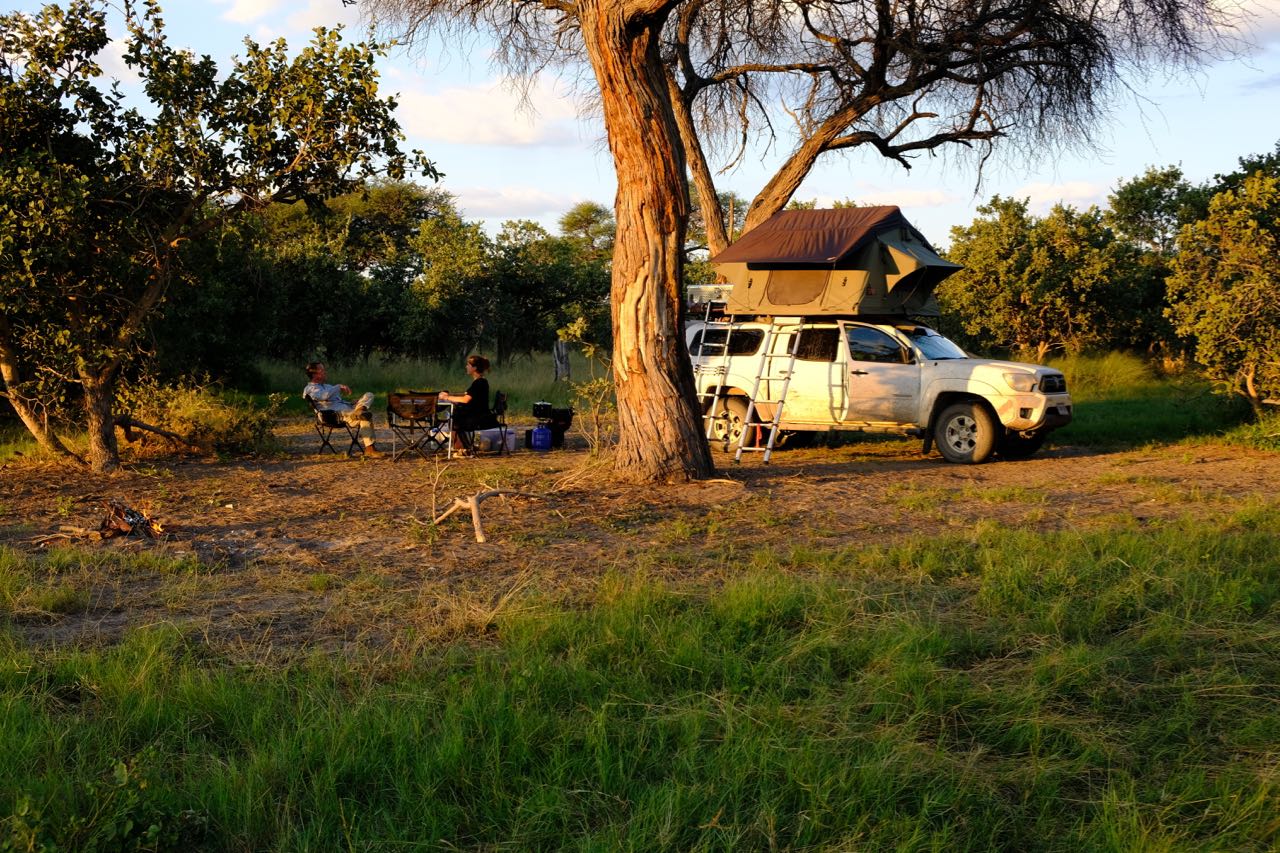
Our fourth day was spent doing the ‘sand ridge road’, a long high slog through impossibly deep sand. We had enquired at the gate as to the condition of the road and were told it was “fine”. In reality, it was fine, but extremely tiring to drive. The washboard which develops in the tracks is deep, so much so that the truck ‘dances’ from side to side, jostling the contents and passengers in an unending carnival ride. It’s fun for about 10 minutes, but three hours of it is exhausting. Towards the end of the sand road, we came across a safari truck which had buried itself in the deep tracks. We had not had to use our sand tracks yet so pulled them out and helped them free their vehicle. Unfortunately, they did not have four-wheel drive so soon became stuck again. We repeated the process several more times until a larger vehicle (six-wheel drive) came along to help. Such is life in the bush – while help may not be immediate, when someone comes by they stop and do what they can to assist.
Getting to our final camp was the last great adventure of our trip. There are two main roads that lead to the camp – the normal route and the ‘dry road’ which is used during the rainy season. Although the ‘dry road’ is longer, it avoids a large swampy area that is impossible to pass once it rains. When we registered at the gate, the ranger reminded us to take the dry road as there was still significant standing water on the other route. She said that the ‘dry road’ is well marked so just keep our eyes open and all will be good. The ‘dry road’ is not labeled as such on our navigation app (Tracks 4 Africa) so we just followed the normal route but were keeping an eye out for signs to the ‘dry road’. We picked our way through some dense brush and along bumpy tracks, but the road was dry and definitely passible. At one point, there was a road which went off to the left around a very large puddle. Typically the other end of such a bypass meets up with the main track after a few hundred meters, but this one did not. It twists and wound its way through dense scrub and low-growing trees for nearly a kilometer. We had to drive over smaller trees and through the scrub, turning tightly to fit between the larger trees, but since the terrain was dry, we were ok with it. Eventually the path came back to the well-worn track and we were confident that we had found our way…. that was until the track descended in to a huge body of shallow water, more like a lake than a puddle, and definitely not crossable. As I consulted the map to find possible routes around, a guy in a truck came out of what seemed like nowhere. He pulled up alongside us and casually asked, “Hey, where you headed?” in an American accent. When we told him, he smiled and said, “You probably want to take the dry road, this way will ruin your holiday! I’m only here because I have to check on things.” It ends up that the sign for the turn-off for the dry road was not visible from our direction because of the puddle bypass. Coming from the other direction it was obvious. Crisis averted through the kind guidance of strangers, we continued on our way.
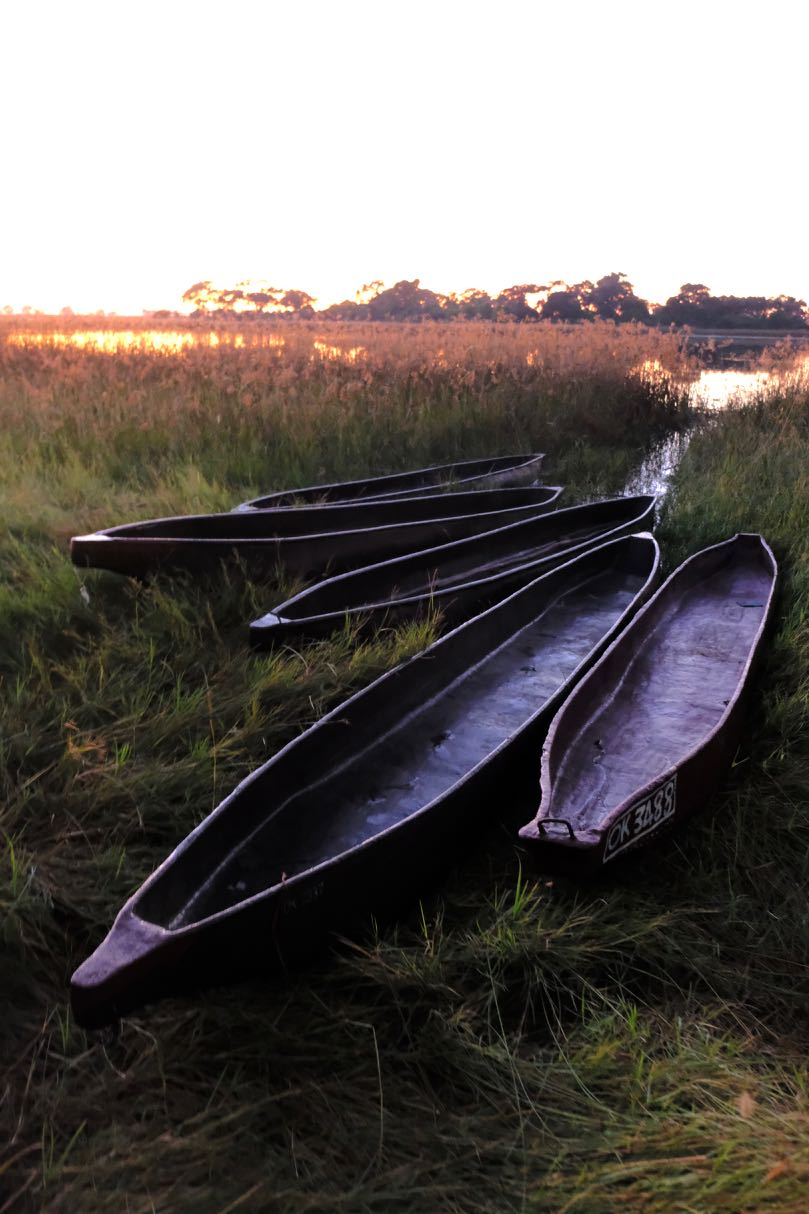
Our final camp, Third Bridge, is located on the far side of the third bridge you cross over a slow-moving but wide river and surrounding marshes. Following the directions on our navigation app, we approached the ‘first bridge’ with a bit of trepidation. Made entirely of local logs strung together with unknown hardware and an unknown foundation, it looked quite rickety and squeaked and creaked so much that it was quite disconcerting. We proceeded slowly, carefully, wondering the whole time what would happen if the entire bridge collapsed under our weight. About half way across, we still couldn’t see the end of the bridge. Colburn’s pre-trip reconnaissance had found that this happens with sometimes – the bridge ends in a large pool of water – a ‘wet exit’ – which must be traversed. This looked as if it ended in the reeds of the Okavango without a track to follow, not exactly what we wanted to do but also not completely unexpected. Scanning around to see if I could see tracks anywhere on the other side, I spotted a lovely and much newer bridge just a hundred meters to our right that had a clear exit point! We were on the old, retired bridge that hadn’t been used in years so had to reverse our way back across to find the road and the entrance to the newer bridge. The second bridge was short and easily crossed without concern. The third bridge was one that knew had a ‘wet exit’ so were not surprised by the large pool of water at the end. We were, however, a bit surprised by the depth!
In the end, all was well and we thoroughly enjoyed our time there. Botswana has adopted a high cost-high value approach to tourism. This means that the costs of visiting here are significantly higher than in the surrounding countries like South Africa, Zimbabwe, and Namibia. It also means that there aren’t as many people so the wildlife isn’t as impacted by human presence. The wildlife was not as abundant as we had hoped for, but there were plenty to keep our attention and we even had wild dogs running past our camp one night. The infrastructure is well developed so it is completely possible to do it on your own, but only if you have a sense of adventure because as Dorothy said in the Wizard of Oz, “we’re not in Kansas anymore!”
 By the end of our trip, our kids will have spent 13 weeks doing wildlife research and conservation volunteering in Africa. If you include the community volunteering, it rises to 18 weeks. This struck me when we were working with a college intern doing a 12-week assignment cataloging wild dog pack dynamics in northern Namibia. Our kids will have spent more time in the field than a college semester requires for a full-time internship. Not a bad way for a 7th and 9th grade student to learn about biology, ecology, botany, zoology and a myriad of other topics.

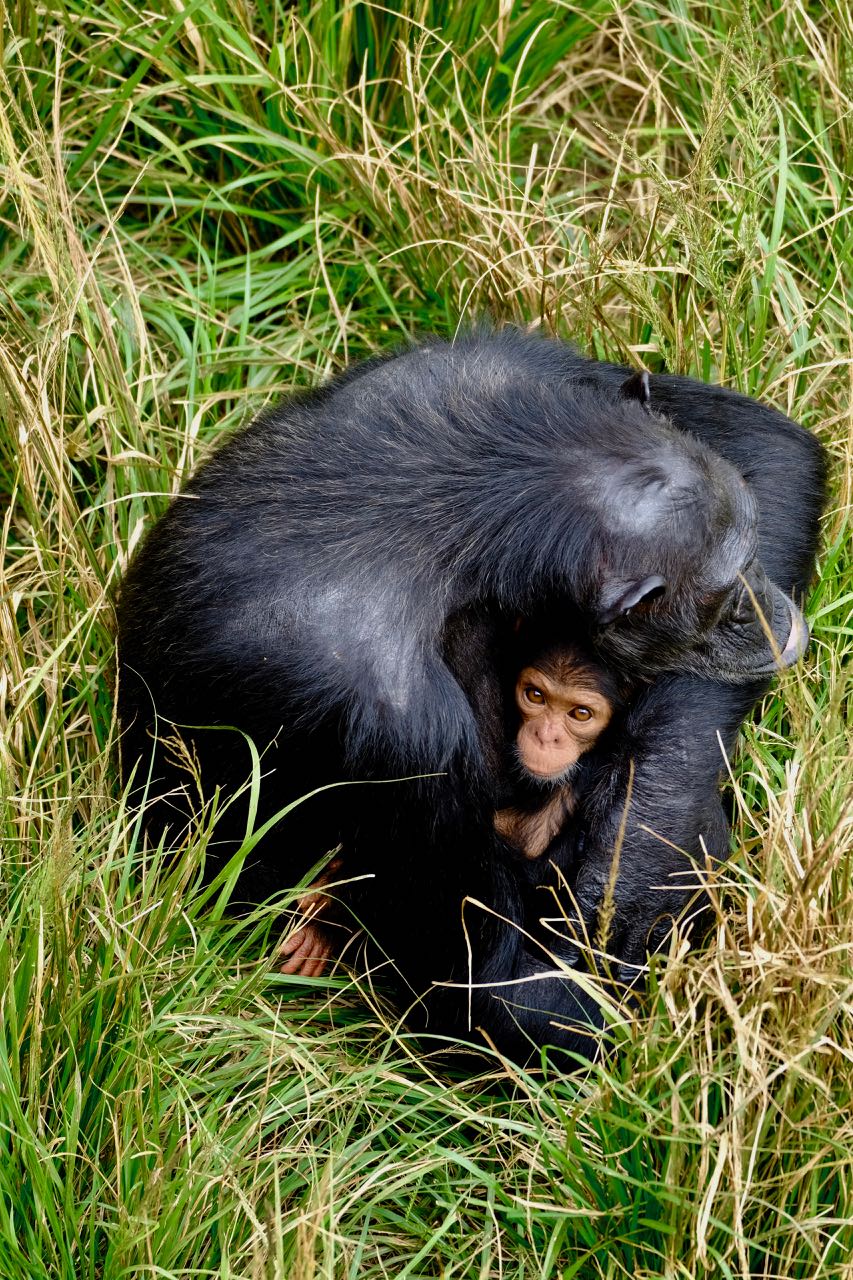

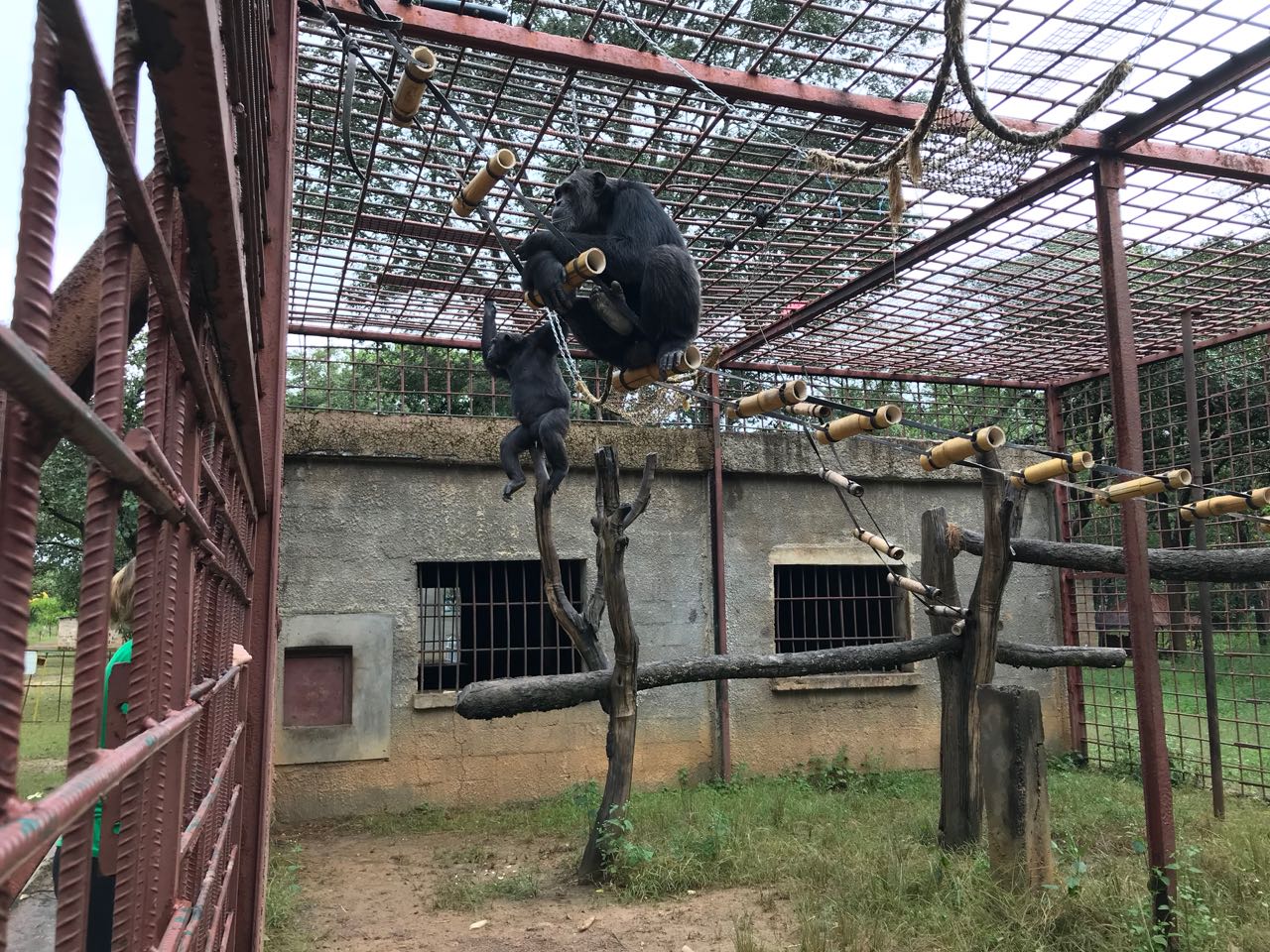
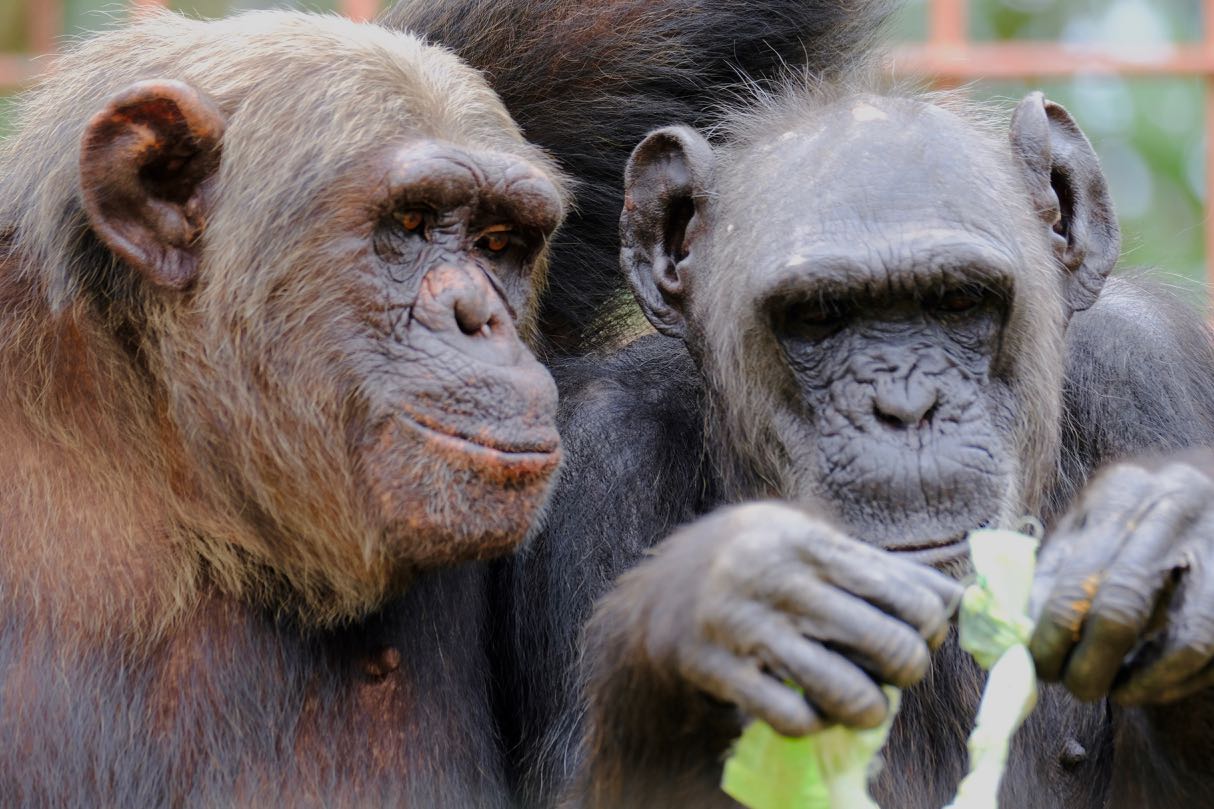 Because humans and chimps share 97% of the same DNA, Sheila was able to apply her nursing knowledge to help Pal recover. Once he was better, Pal needed a new home as he had become human habituated so could not be released back in to the wild. David, Sheila’s husband, built an enclosure so that the chimp would have room to play and explore. As word spread of Pal’s recovery and the care David and Sheila provided, more people would bring chimps and other wildlife in need to the couple. They always welcomed new animals in and released them back to the wild when possible but also provide a long-term home for those which cannot be released.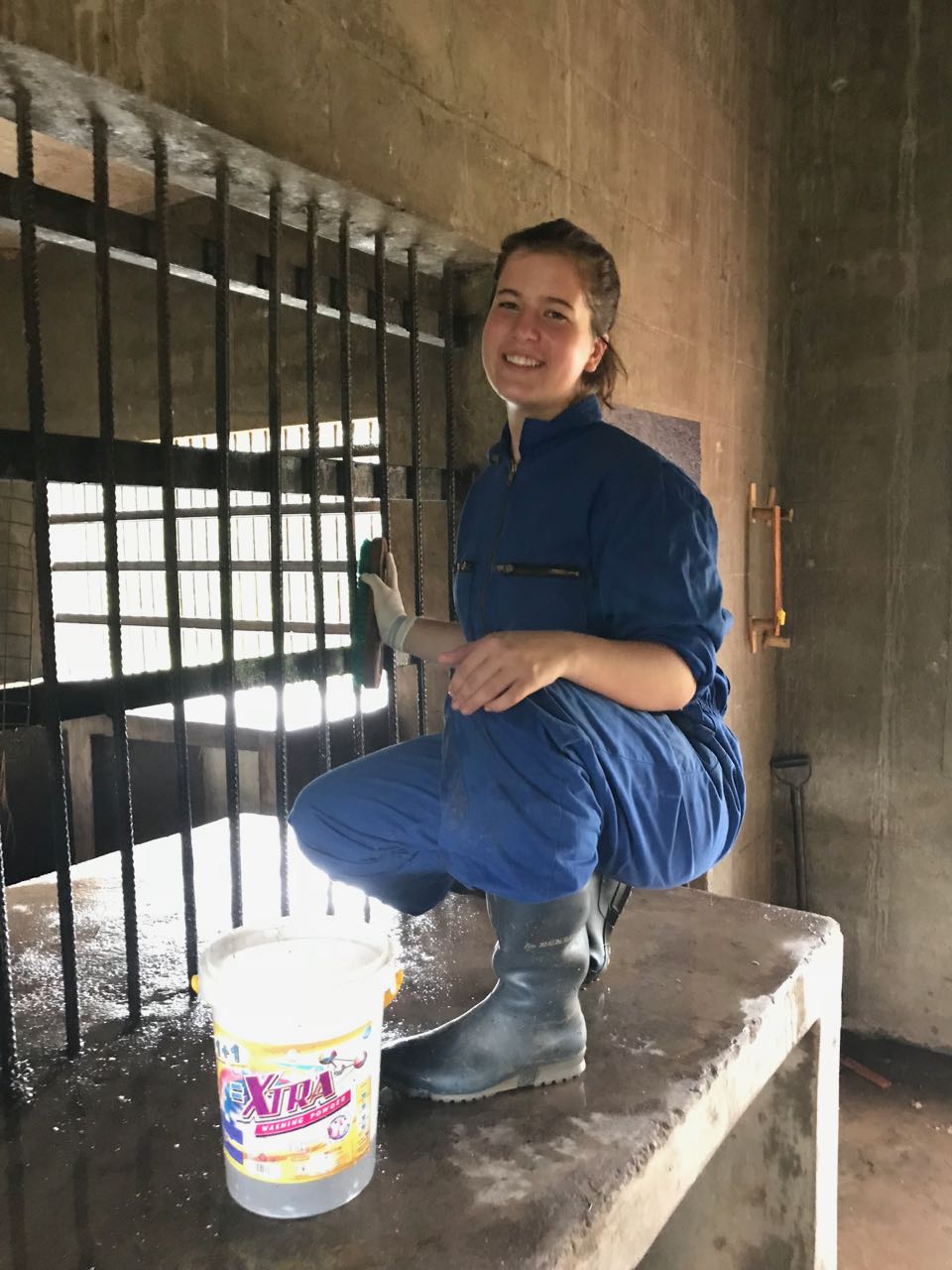
 Each of the chimps had a horrendous story about how they came to be part of the rescue network; one had been a pet for a family in South Sudan but had become so unruly (as chimps do when they enter their teen years) that the family simply abandoned it on a street, another had been tied to a platform outside of a restaurant in the Central African Republic as an living advertisement, yet another had been hidden by villagers as they fled from rebels in the Democratic Republic of Congo knowing that she would be killed and eaten as bush-meat if found. Each story is a little more heartbreaking than the previous. But through a network of concerned individuals, these six chimps had been kept safe until they were approved to come to the sanctuary.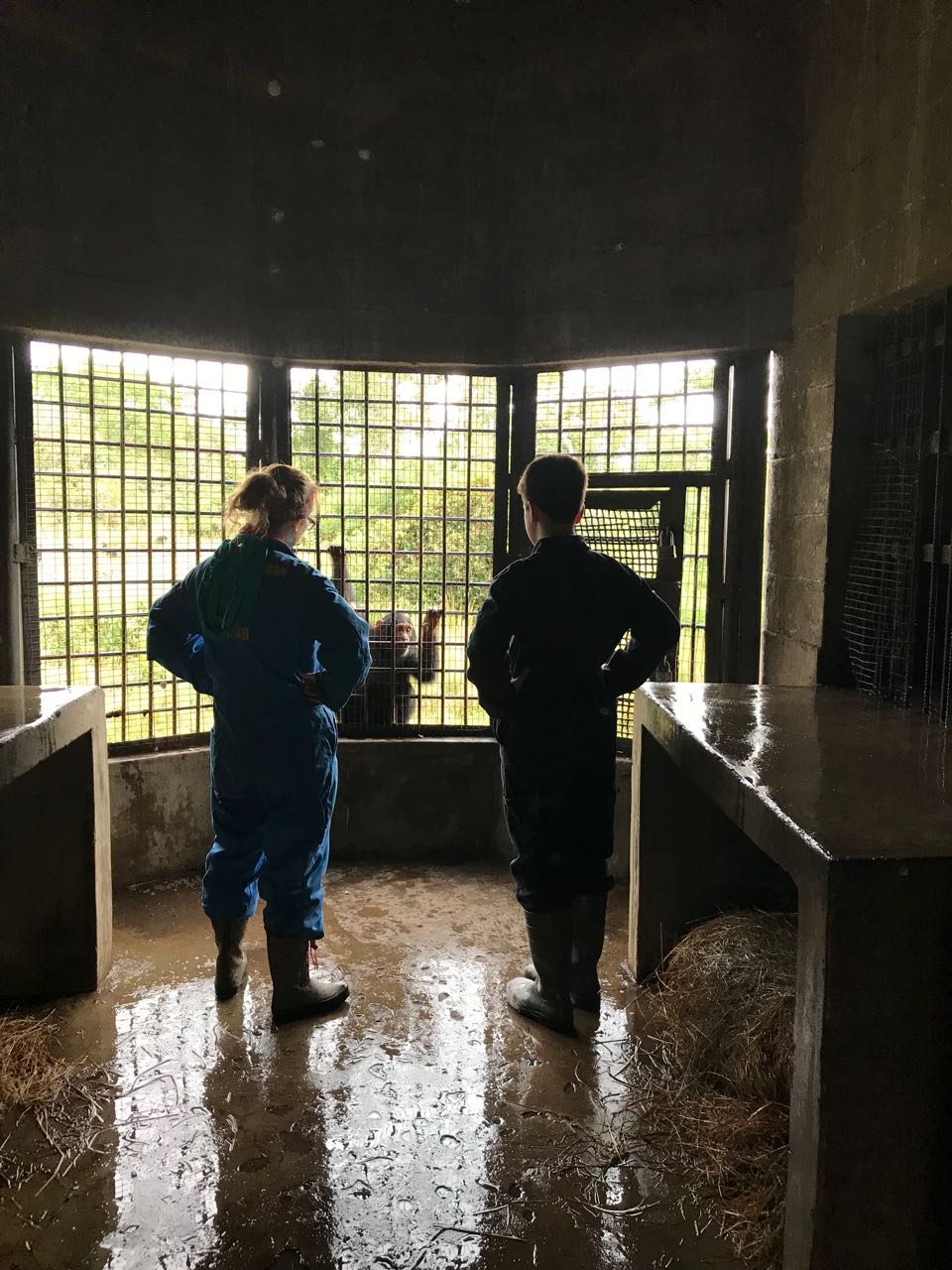

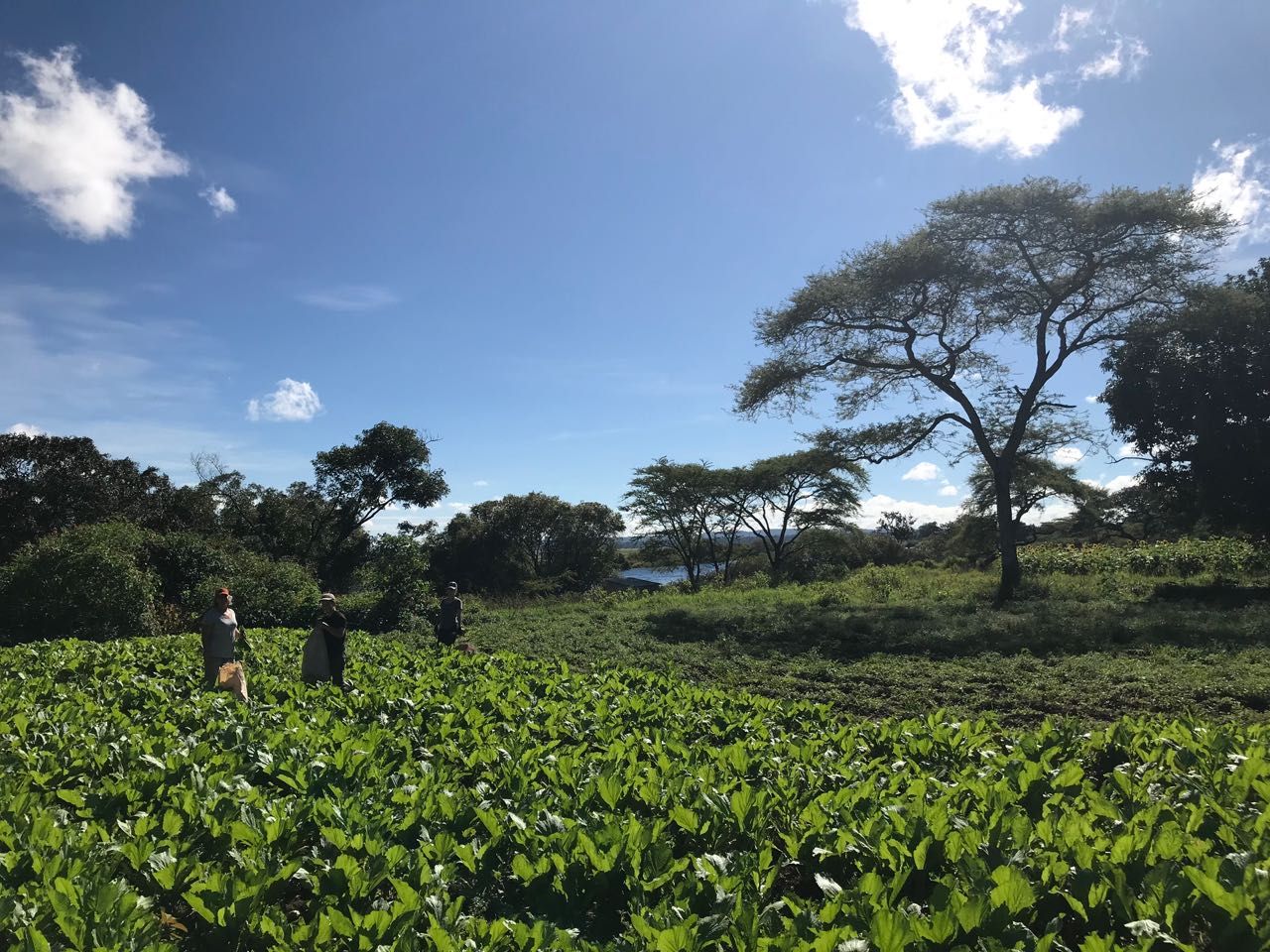 As volunteers, we spent several days prepping for the new arrivals; cleaning out old quarantine enclosures which had been reclaimed by the vegetation because they sat unused for more than a decade, chopping and hauling trees and vines to put inside the enclosures for the chimps to play and climb on, harvesting bedding so they would have a warm and comfortable place to sleep, making a tire swing, etc.
  On the night of the arrival, we were allowed to observe the process. Thalita Calvi, the sanctuary vet, had briefed us ahead of time that the chimps had spent more than three days in transit crates because of a bureaucratic delay. They would likely be tired, hungry and extremely frightened. Even happy chimps are amazingly strong for their size but when they are frightened, their power is even more impressive which meant that we should stay far back from the scene and simply watch the work being done.
 However, like Eisenhower once said, “while planning is indispensable, plans are useless”. Flight delays meant that the chimps didn’t arrive at the sanctuary until after dark. As the trucks pulled in, there were no outside lights to illuminate the unloading area or path to the enclosures but we had headlamps and flashlights with us so moved closer to light up the area as best we could. The chimps were transferred in dog crates so were easy to move but needed more hands to make sure that no chimps were left behind alone in the dark.
 It was a busy and emotional time for all; one chimp reached his hand out between the bars simply wanting someone, anyone, to comfort him. I held his hand for a few minutes while he settled. Another chimp tried to escape but quickly clambered up on one of the handlers when the handler made a chimp comforting sound. A third chimp clung to the vet as she moved between enclosures making sure that all of the chimps were settled with the right partners. When it was all done, someone said, “You’re safe now, you’re home now, you’ll never be in danger again.” It is true, they have found their forever home and once cleared from quarantine, will get to become part of a larger family group. It felt good to be able to help.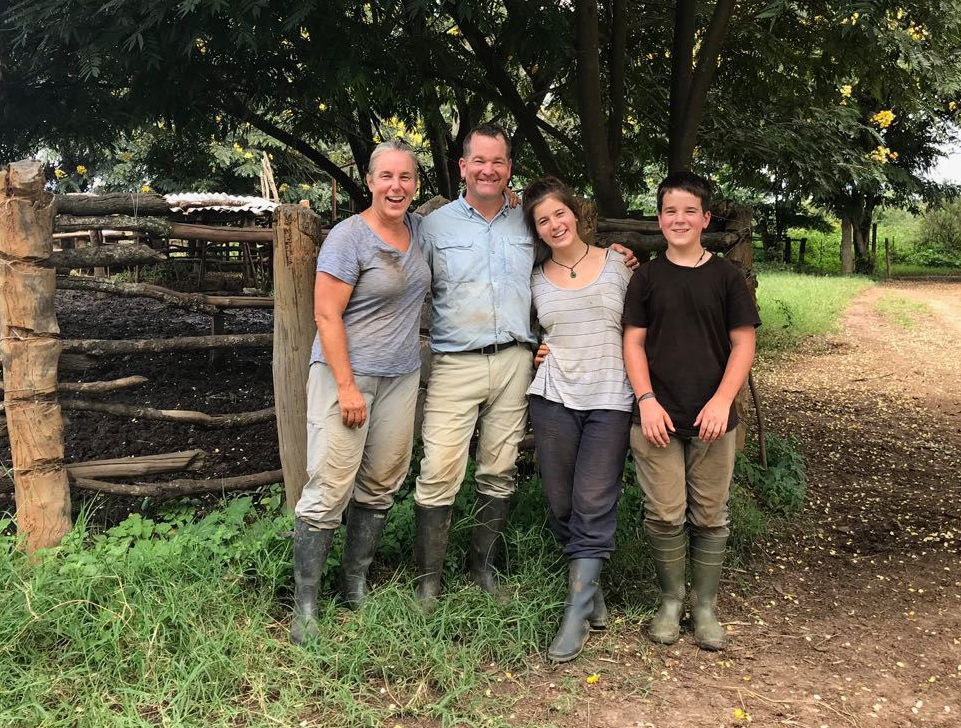


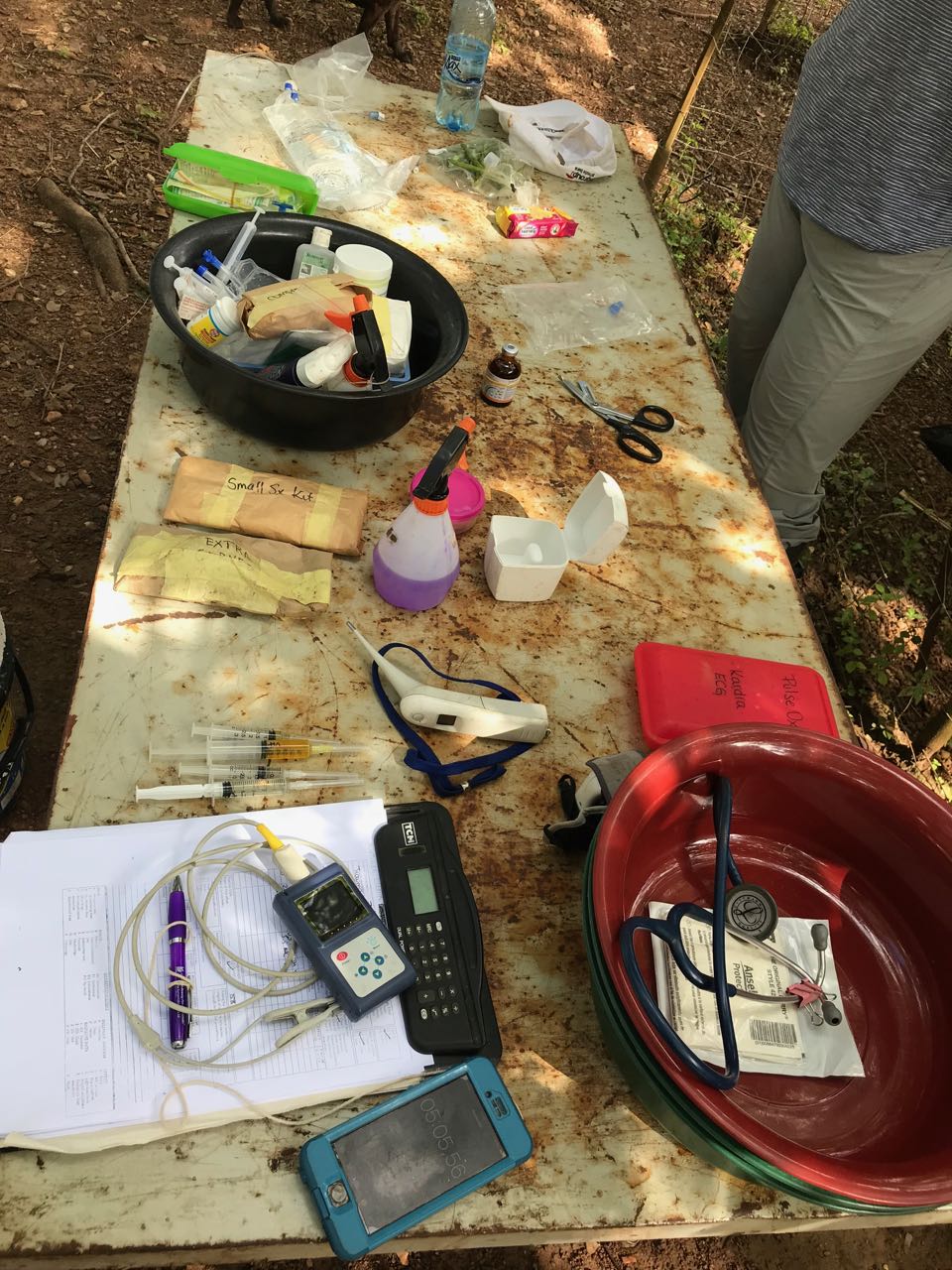 Without the ability to do x-rays or lab work in the field, it was impossible to determine the extent of his internal injuries. There were several obvious wounds visible externally which would account for some but not all of the blood loss. The vet needed to anesthetize the chimp to examine him and stitch up what she could of the injuries, but without a formal surgery and recovery to use, all of it must be done in one of the feeding enclosures as it is the only space where the chimps can be safely separated from each other. All of the volunteers assisted in different ways; monitoring vital signs, opening and cleaning supplies, running errands for things like hot water bottles or more medication, etc. The vet had an infected wound on her hand and wasn’t sure how much she would be able to use it so I gloved up to help where I could. After three and a half hours, as much as could be done to patch him back together had been done. He was slow to come out of the anesthesia and never fully recovered, dying from his injuries the next day.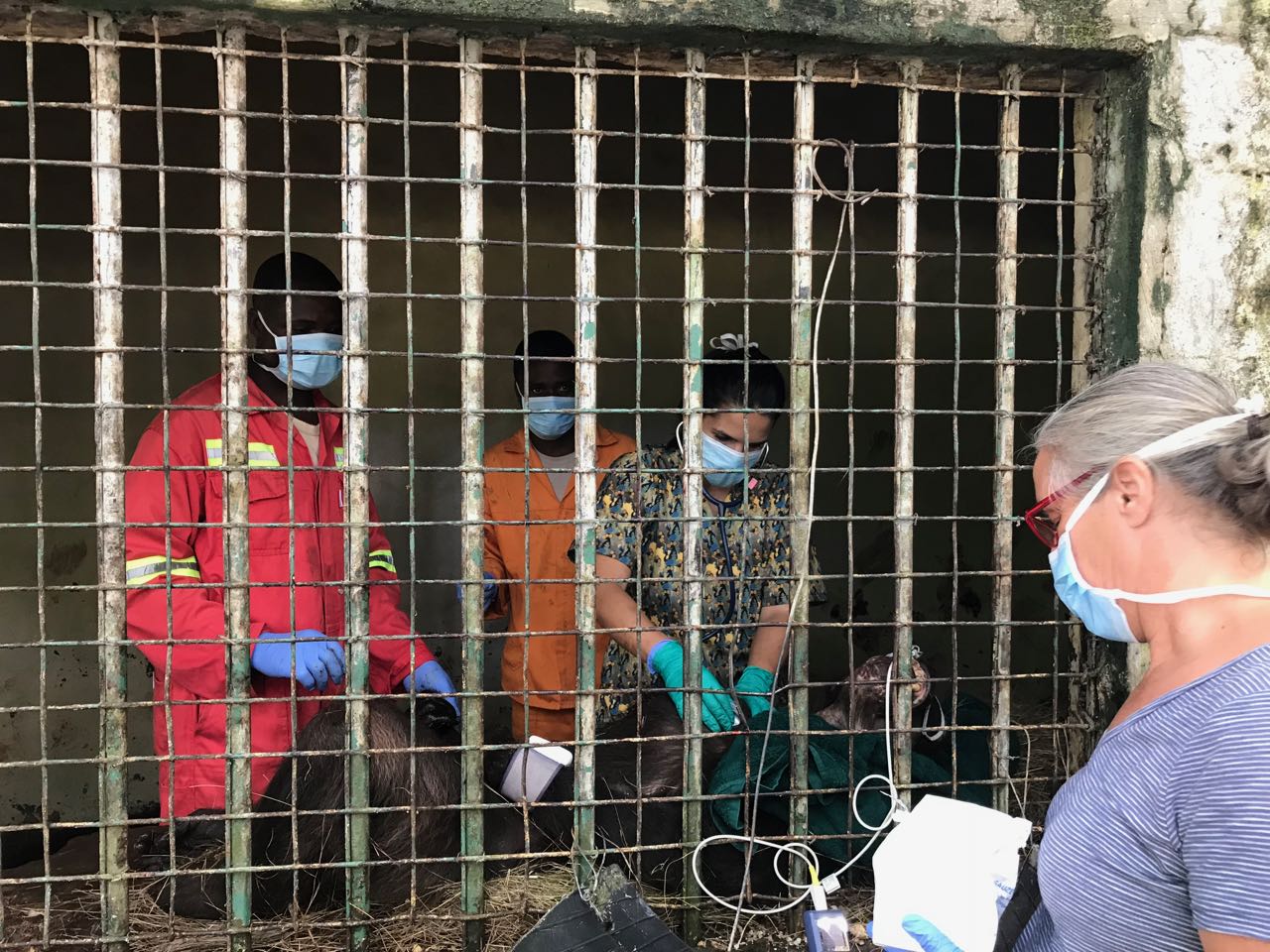

 Please note that much of the following description of our time in Rwanda may be very disturbing if you are not familiar with the Rwandan Genocide. We absolutely enjoyed Rwanda, but the history is full of pain.
 As we passed through no-man’s land, we all girded ourselves for the same experience entering Uganda. We were more than a little surprised by the lack of fixers when we parked outside of the immigration hall. It was the first time that we have not been swarmed by money changers and fixers as soon as we pulled up, in fact there was not one to be seen – definitely a welcome change. In contrast to the grumpy affect we experienced from start to finish in Kenya, the Ugandan officials were smiling kindly and eager to help us get through the required paperwork and directing us to where we needed to go next. It was organized and everything you need (foreign exchange, ATM, bank, etc.) is in one building. No wonder there were no fixers – there was no need!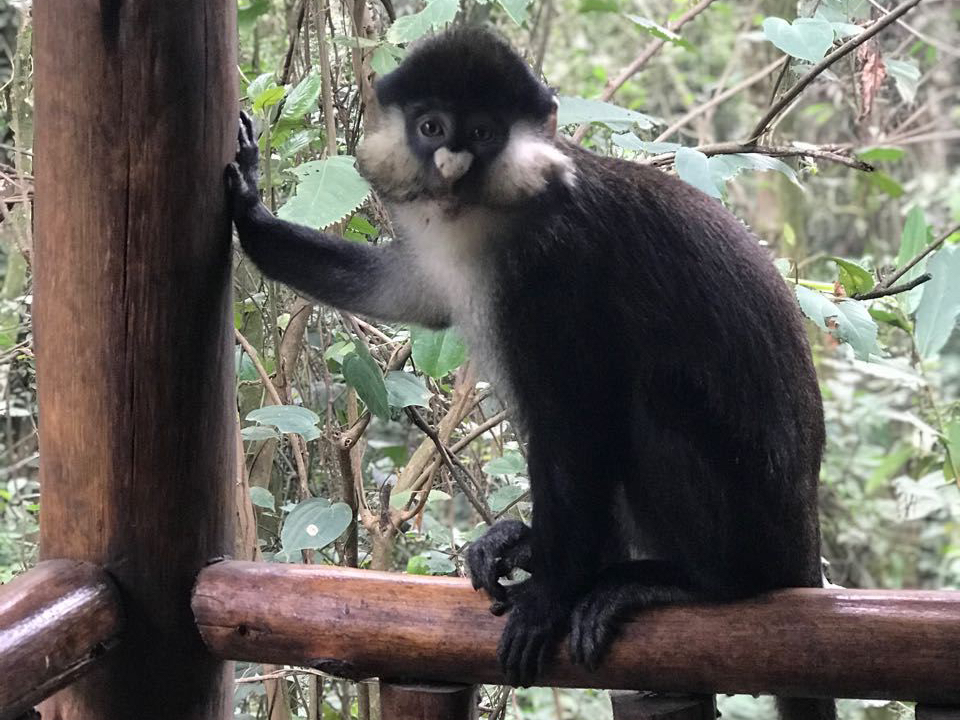


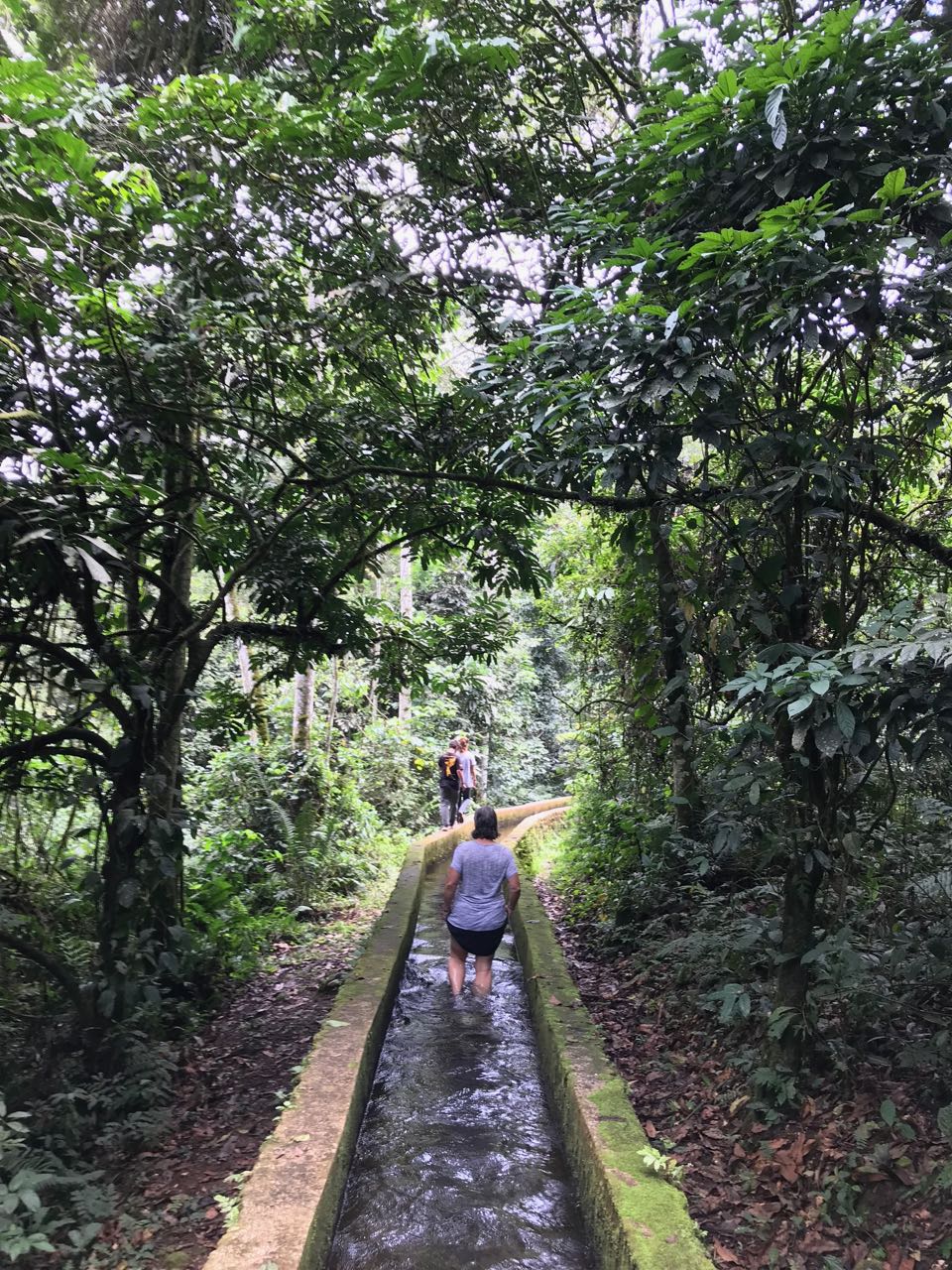
 Leaving the open plains of Queen Elizabeth Park behind, we headed to the cool mountains of Bwindi Impenetrable Forest for some volunteering for the local nursing school that I learned about many years ago and work with the Batwa Development Program. Colburn and the kids had decided to raise money to build a permanent home for a Batwa family who has been living in temporary structures. The “Build a Batwa Home” is a partnership between the local community and the Kellermann Foundation.


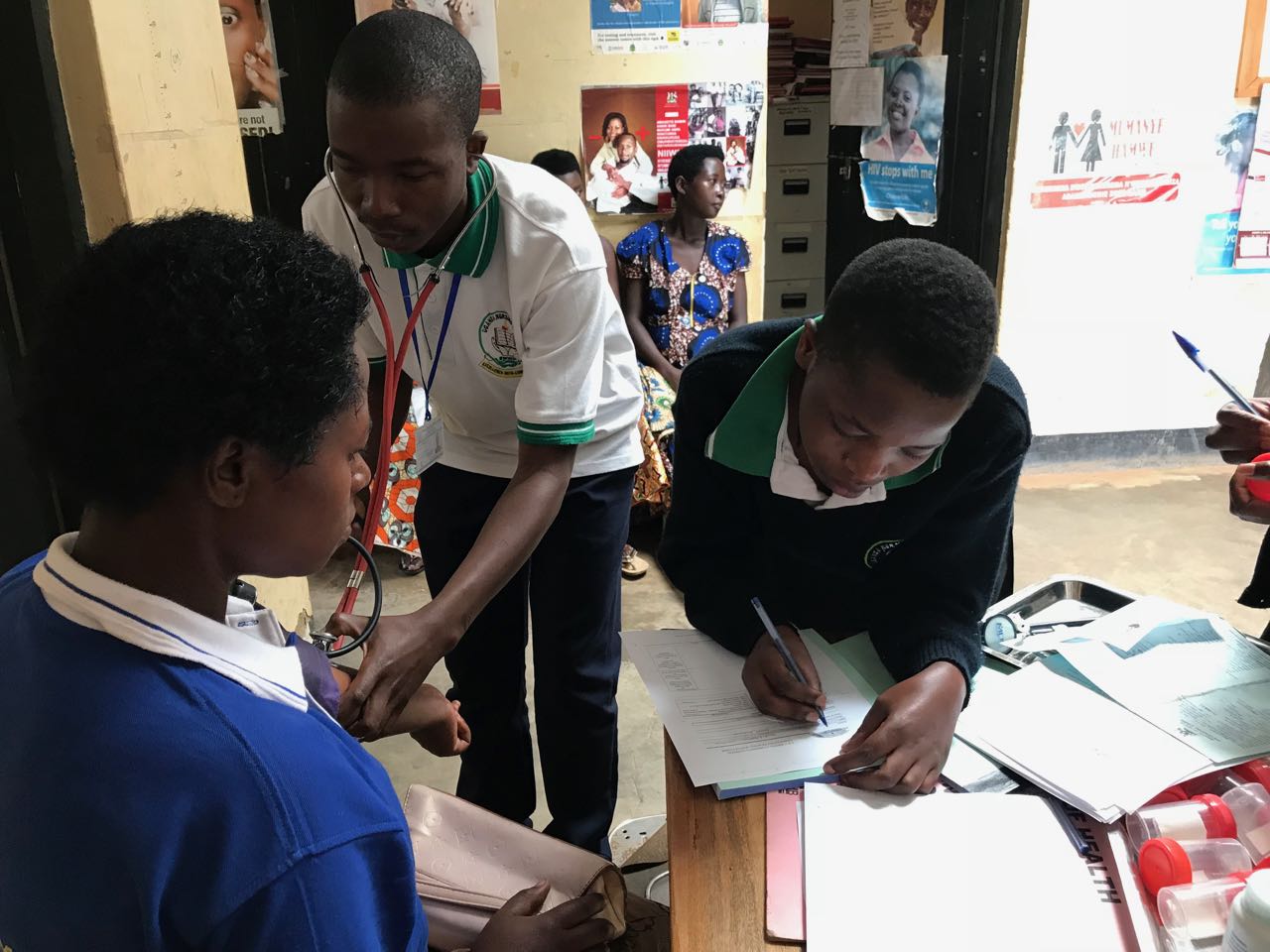 When we arrived, the Principal mentioned that she and the faculty were very eager to learn about how to use more engaging methods of teaching so I did a series of workshops for the faculty. Fortuitously, they were also working on the design of a new skills lab so I was able sit in on those discussions as well. The experience was exactly what I had been hoping for all along – I was able to volunteer my professional experience to help a nursing school. The relationship is one which could become a long-term engagement as the process of changing instruction takes time and intermittent periodic reinforcement. We all loved Bwindi and the community there so hope to come back soon.


 When we made the decision to return to traveling, we knew that we didn’t want to move as quickly as we had during our first trip. Moving through 39 countries in 24 months was much too fast. Also, when we were first discussing the possibilities of what we would do while traveling, Mac had brought up a desire to give back to the communities through which we travel rather than simply consuming what they have to offer. These two aspects motivated us to pursue both short and longer-term volunteering opportunities while in Africa. With Colburn’s background in education and mine in healthcare, we thought that it would be easy to find programs which would benefit from our professional expertise.
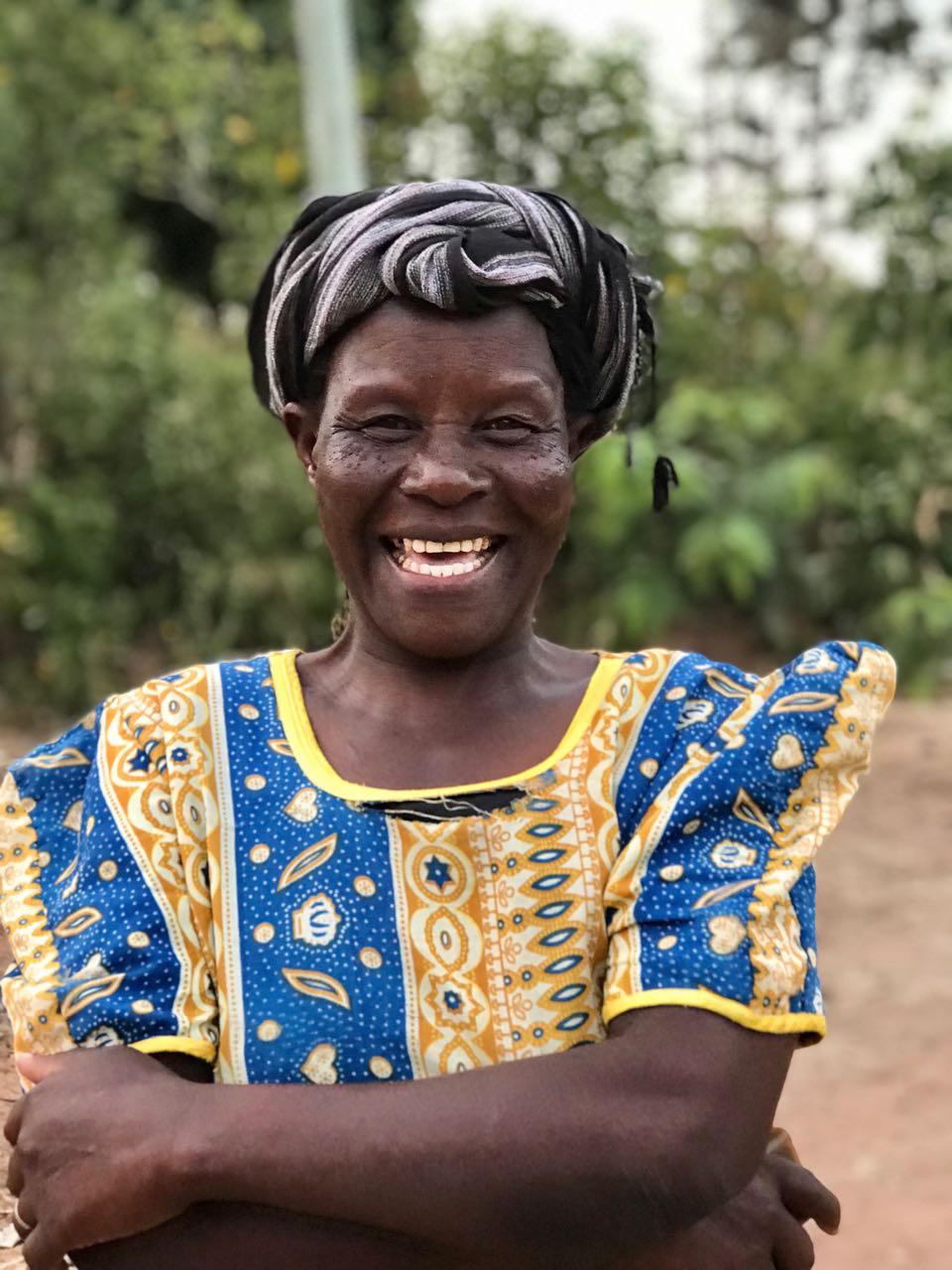

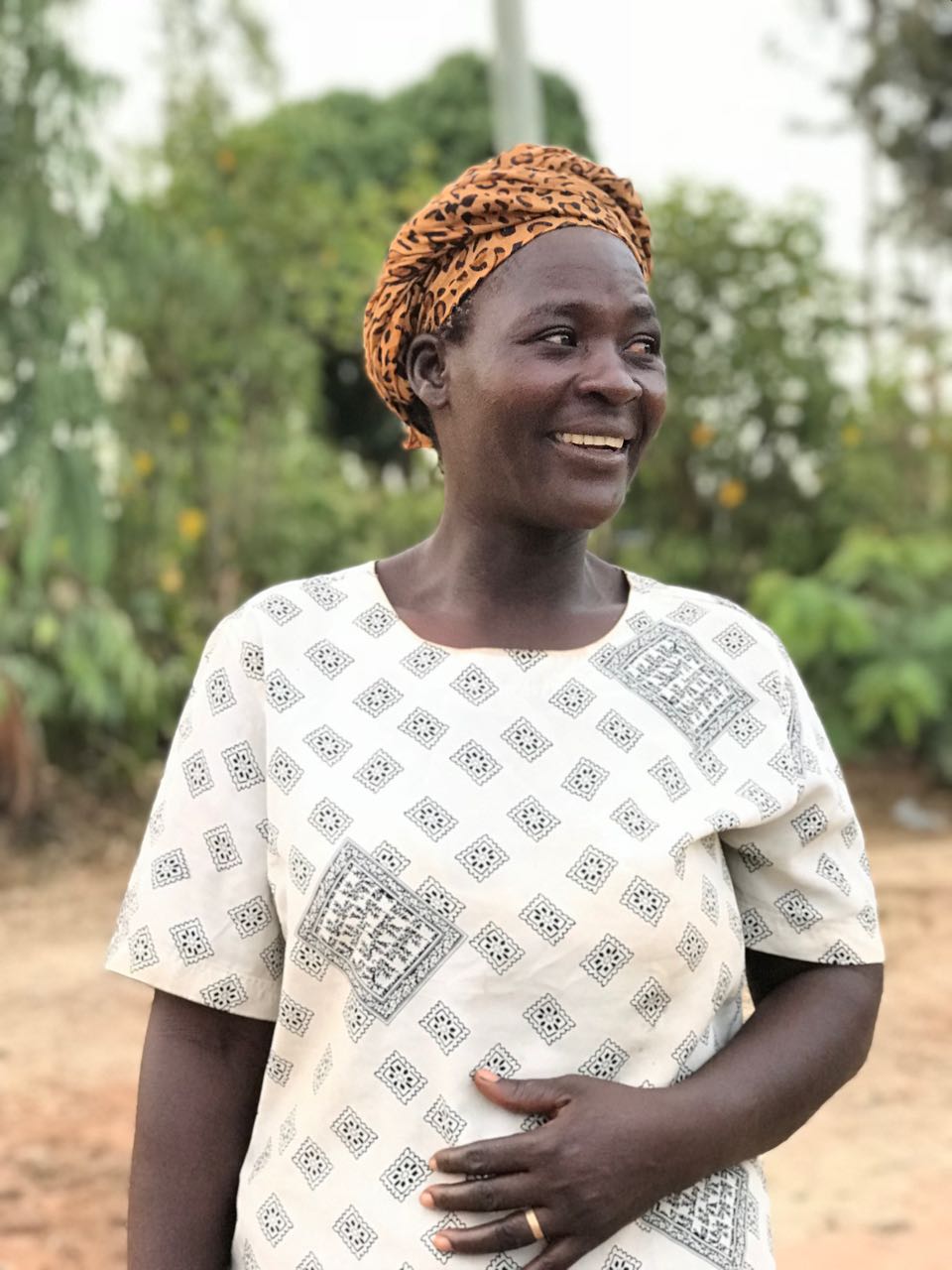


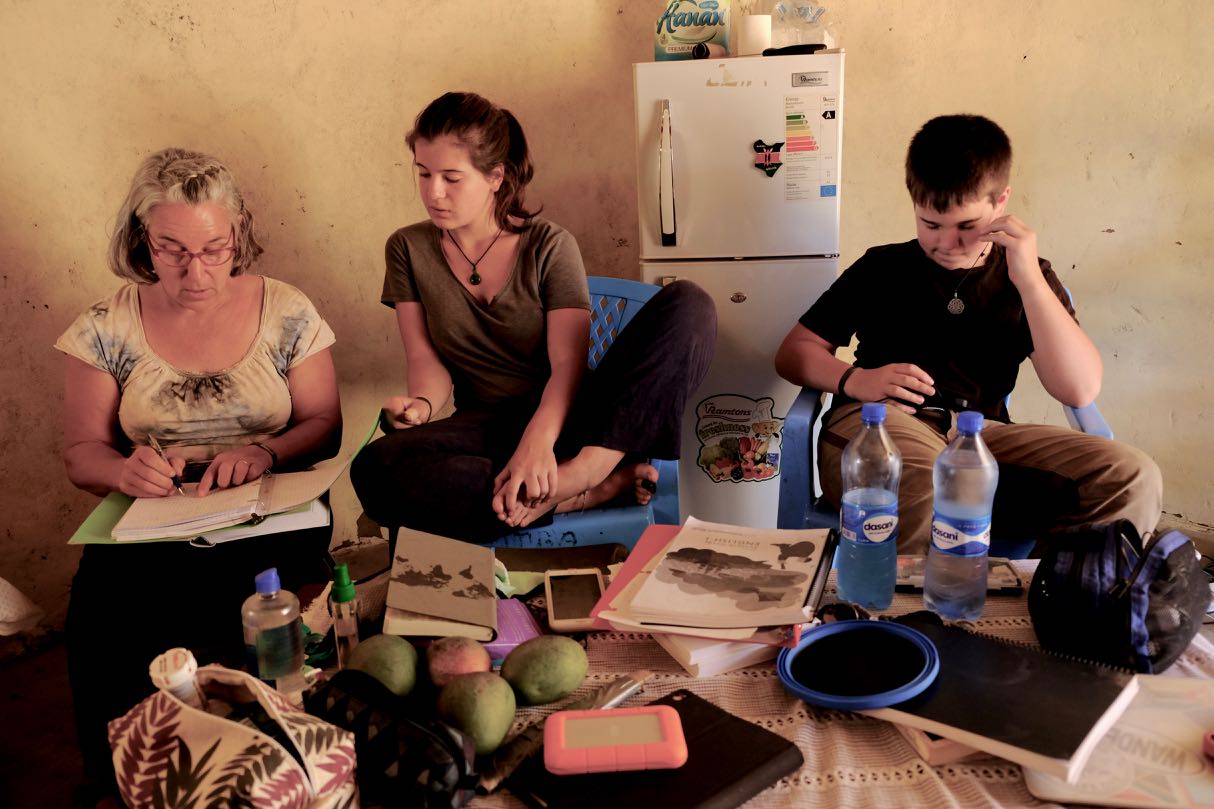
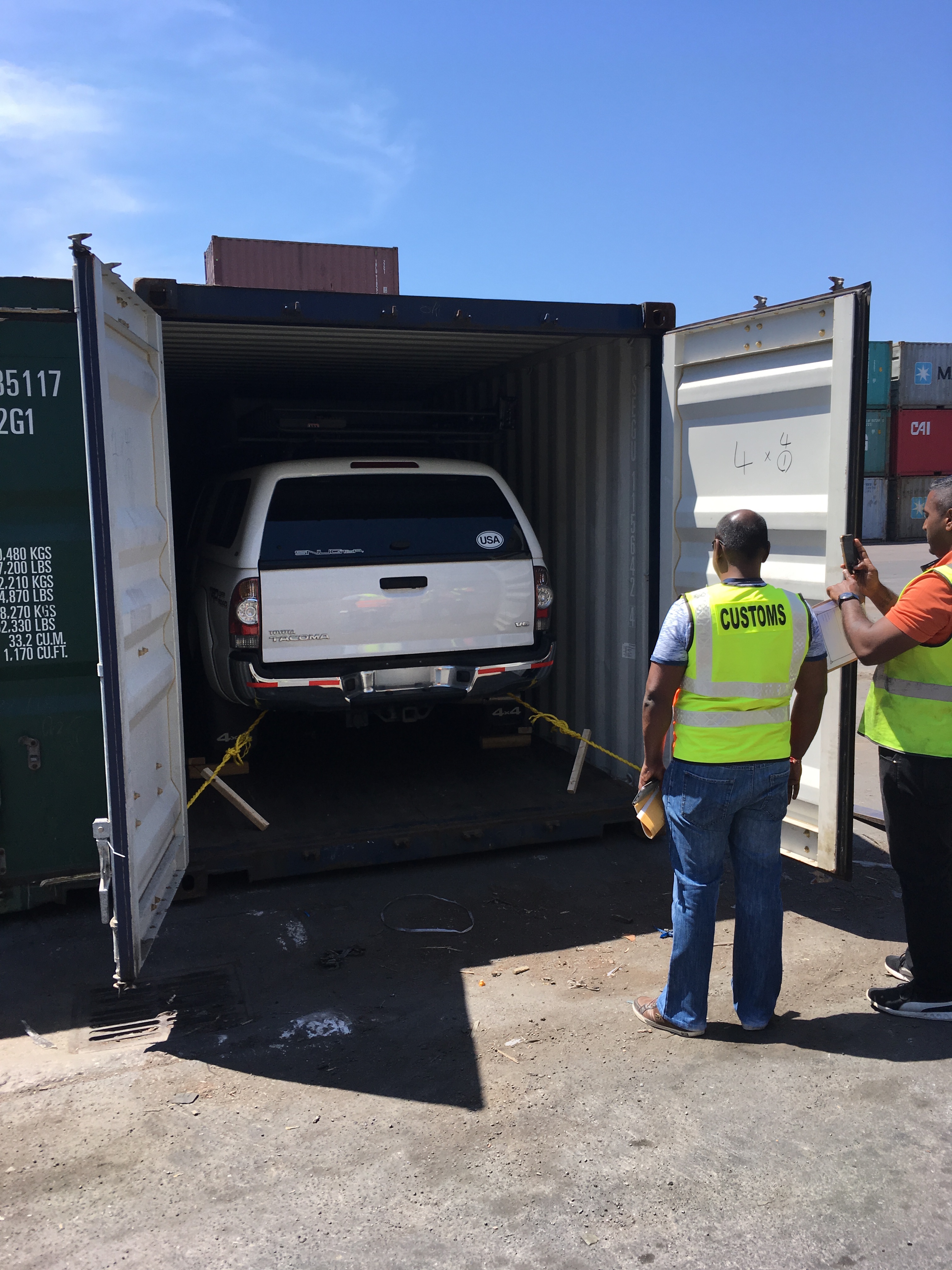 Leaving Madagascar, our life was impacted by three biblical events – a plague, a flood and a tempest – within 24 hours. After braving two hours of traffic in Antananarivo, we arrived at the airport only to be told that our flight had been cancelled because of a suspected case in the Seychelles had been traced back to Madagascar’s outbreak so they were no longer allowing entry from Mada. This meant that we were to be rerouted directly to Durban, our final destination. Just as we sorted out our arrangements for an early arrival in Durban, we were informed that there had been a freak storm two days earlier. The wind and flooding had knocked the power out at the home where we were to spend the week. The power company had come out twice but the power was still not on. Our host offered to cancel our reservation and let us find alternative lodgings but we really didn’t have the energy to do that so we opted to stay in the home without power. Additionally, the wind associated with the storm had wrecked havoc on the port, one of the busiest in all of Africa, turning two cargo ships sideways in the port mouth and running one aground.


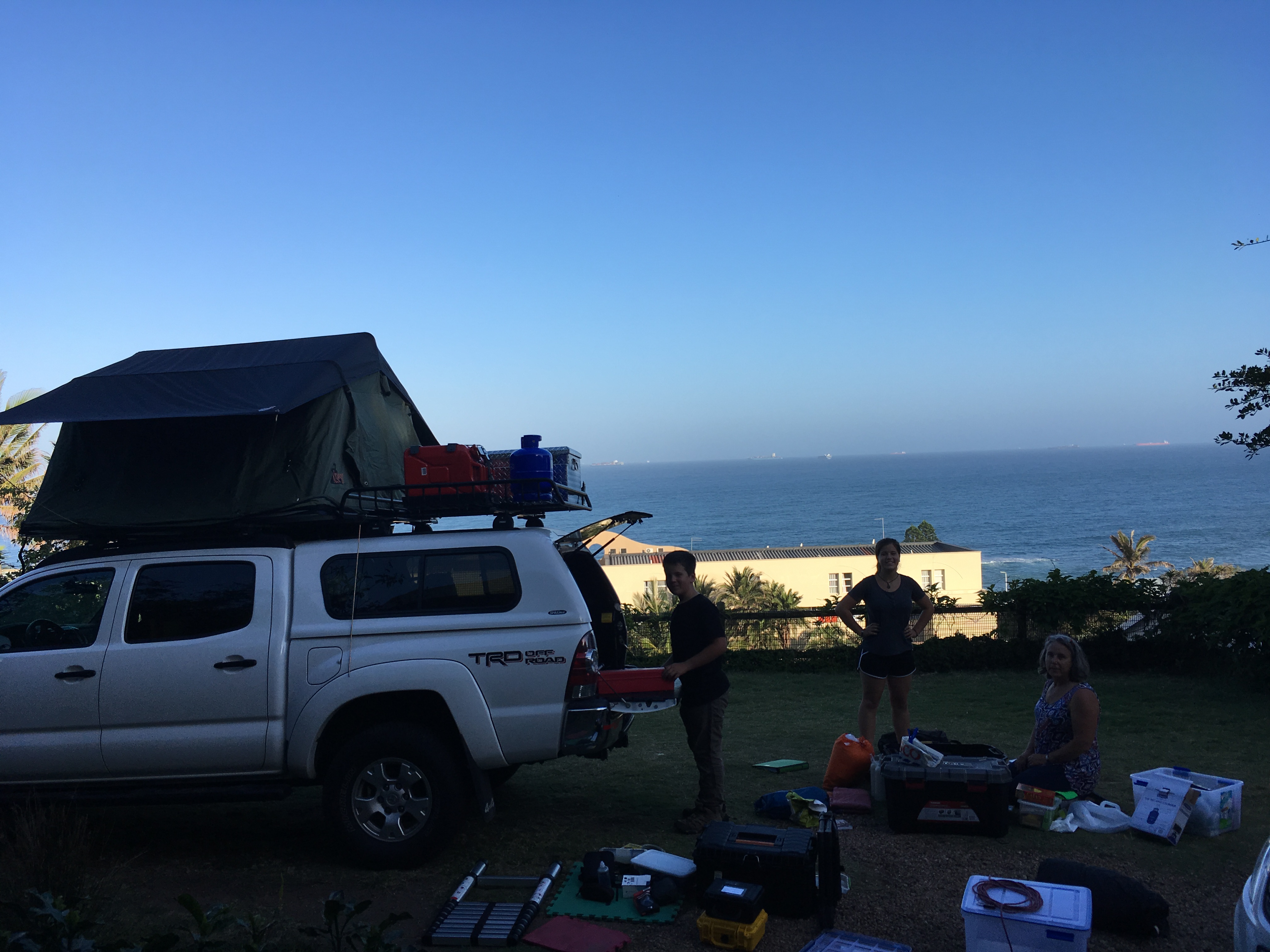


 An acquaintance very familiar with travel in Mozambique said that the differences in infrastructure will be obvious as soon as you cross the border. This ended up being the understatement of the year! Quite literally, the pavement and structure of South Africa ends at the border gate and disperses in to several very convoluted sand tracks across an open plain. No longer are there road signs, curbs, pavement, or any suggestion of order. Armed with a paper map, our GPS app, and a Portuguese phrasebook, we immediately got lost. There were five different roads in front of us but both the map and the GPS only showed two. Not sure which road to take, we chose the most traveled one only to have it end in a few hundred meters. We doubled back and chose a different one which ended up heading in the opposite direction of they way we wanted to go. Without anyone who we could ask for directions, we chose a third road which also ended up heading in the wrong direction. Just as we realized our error, a man in fatigues suddenly appears out of the bushes whistling us to stop but upon seeing us, asks in perfect English, “Where are you going?” When we reply, he points us in the correct direction and we head off down a deeply sandy track. After several kilometers, the sand becomes more firm and the road more obvious.
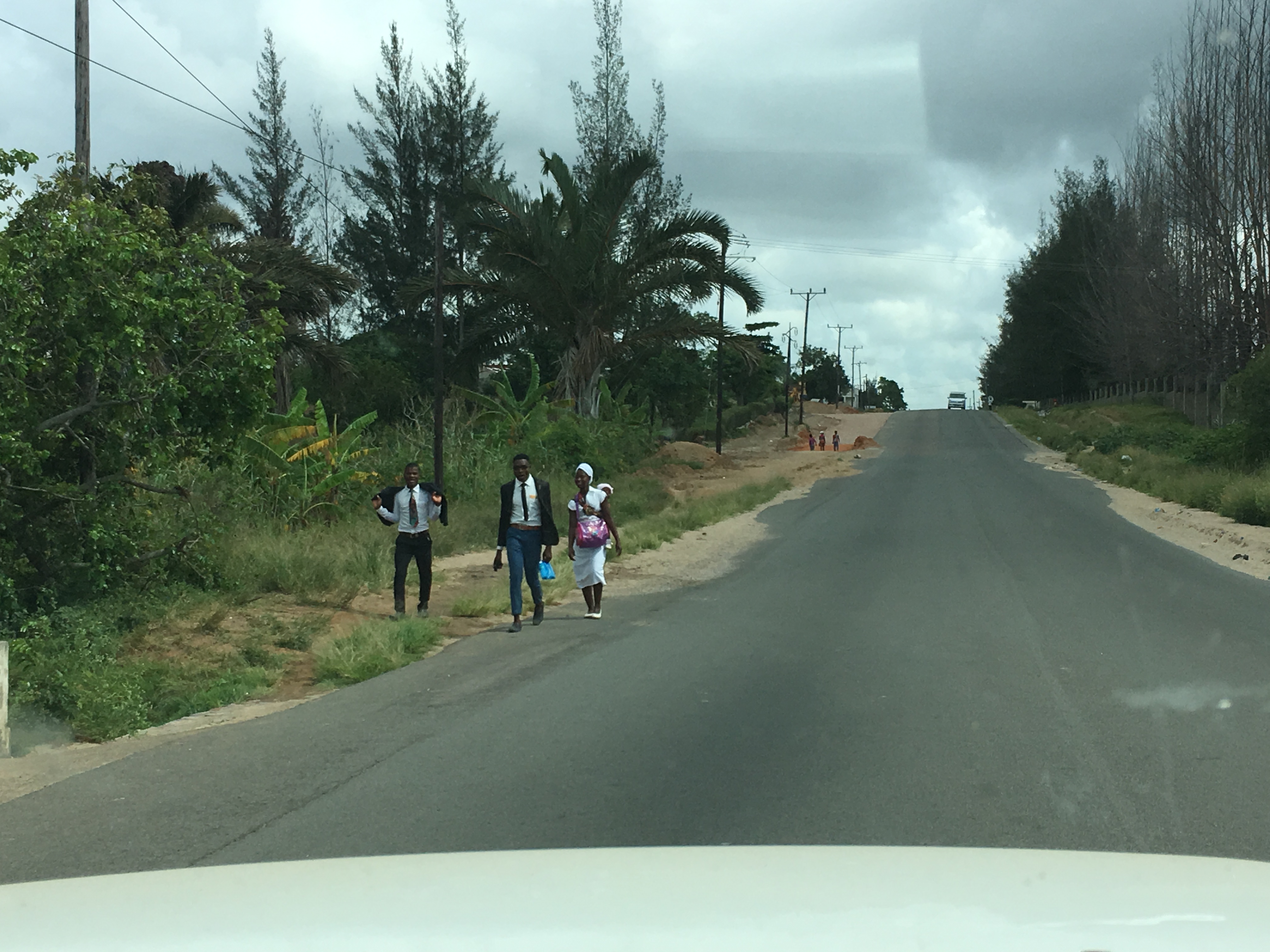 There is a great deal of Chinese investment in the infrastructure of sub-Saharan Africa. One of these projects is a main road between Kosi Bay and Maputo. Although not yet complete, the upgrade makes traveling this way quite easy so we reached Maputo in a couple hours.
 Four hours later, the sun had set, the full moon had risen but we hadn’t moved an inch. As it turns out, the single remaining vehicle ferry had broken down and was being repaired. We were now worried because every blog, guide book and traveler warns that you should not to drive in Africa after dark. Here it is our first night on our own and we are breaking that rule! I explored options for staying in the town where the ferry starts or just on the other side in downtown Maputo, but there was nothing suitable for a family with a big truck. The closest place we could find was about 30 minutes north of the city, but down a 4×4 trail we would have to negotiate in the dark – definitely sub-optimal but perhaps a necessity given the situation. Not knowing when we would actually be able to cross the river, we waited….and waited…..and waited.
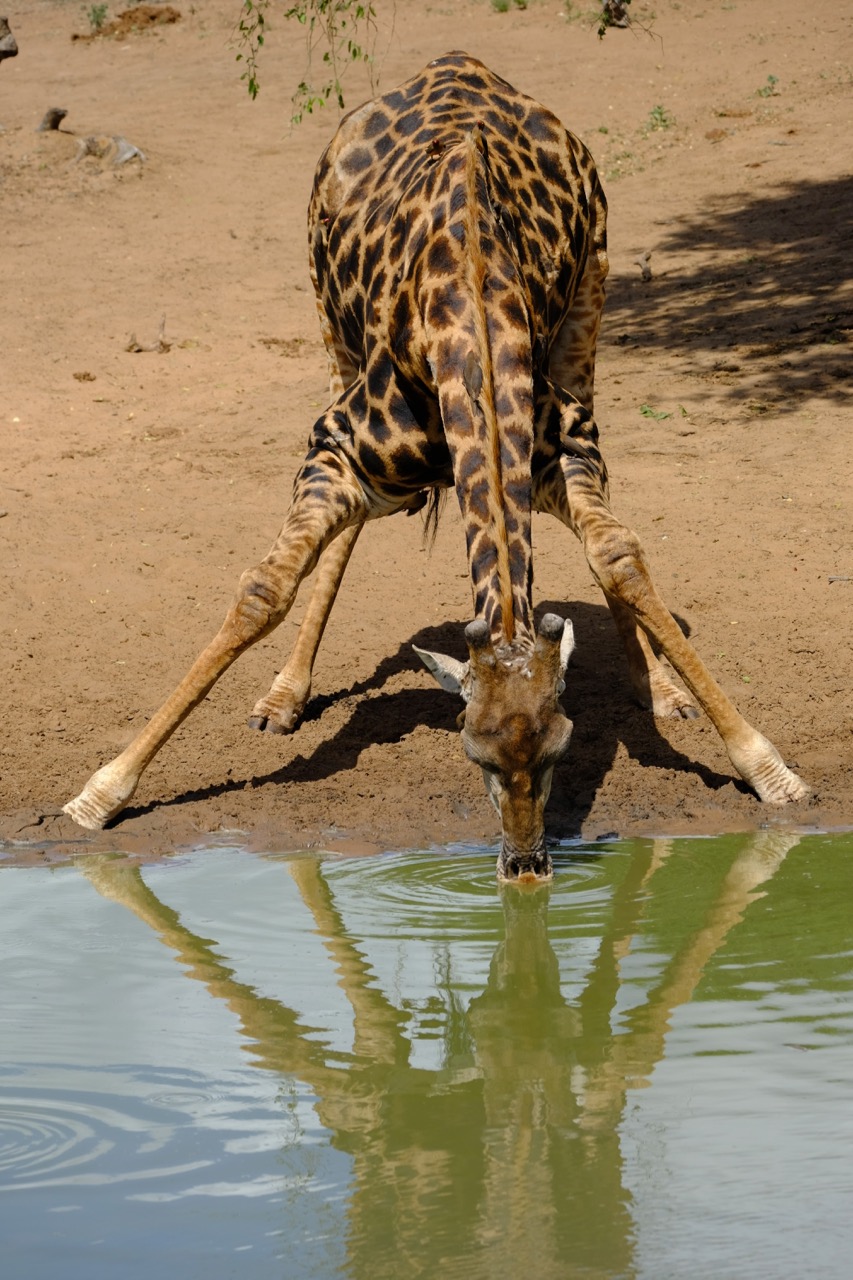 Four hours later, the ferry was fixed and the line of vehicles inched forward. Along with probably 200 people, 20 or so cars were packed on the rusty barge and set off under the full moon. Although the waiting is frustrating, the actual experience of crossing on the barge was magical. Vehicle passengers stay in their car while walk-on passengers fill in every possible empty space between, in front of, on top of and behind the cars, leaning up against the car or sitting on a bumper. Even the ladders to the bow of the boat are chock full of people hoping to get a little fresh air. From somewhere off of our right side, we can hear a group of passengers drumming and singing. Just to our left, a group of probably 10 middle aged men and women are chatting excitedly in Portuguese and laughing full-belly laughs. We see a group of 20-something young men doing shots of whisky straight from the bottle but all in very good nature. The moon is lighting up the skyline and new bridge being built. Several men ask Colburn about our truck – what kind is it, what are the specs, how did we get it to Mozambique, how much does a truck like this cost in the US, where are we going, etc. We noticed several people taking “selfies” with our truck – all with very macho poses as if the truck was theirs. Other than the Portuguese couple in the car next to us, we are the only white people on the entire ferry. The combination of being in a place so utterly different on such a beautiful night made any concern we may have had disappear for this is why we travel. Unfortunately, we did not get a decent picture of the scene but it is etched in our memory as a highlight.
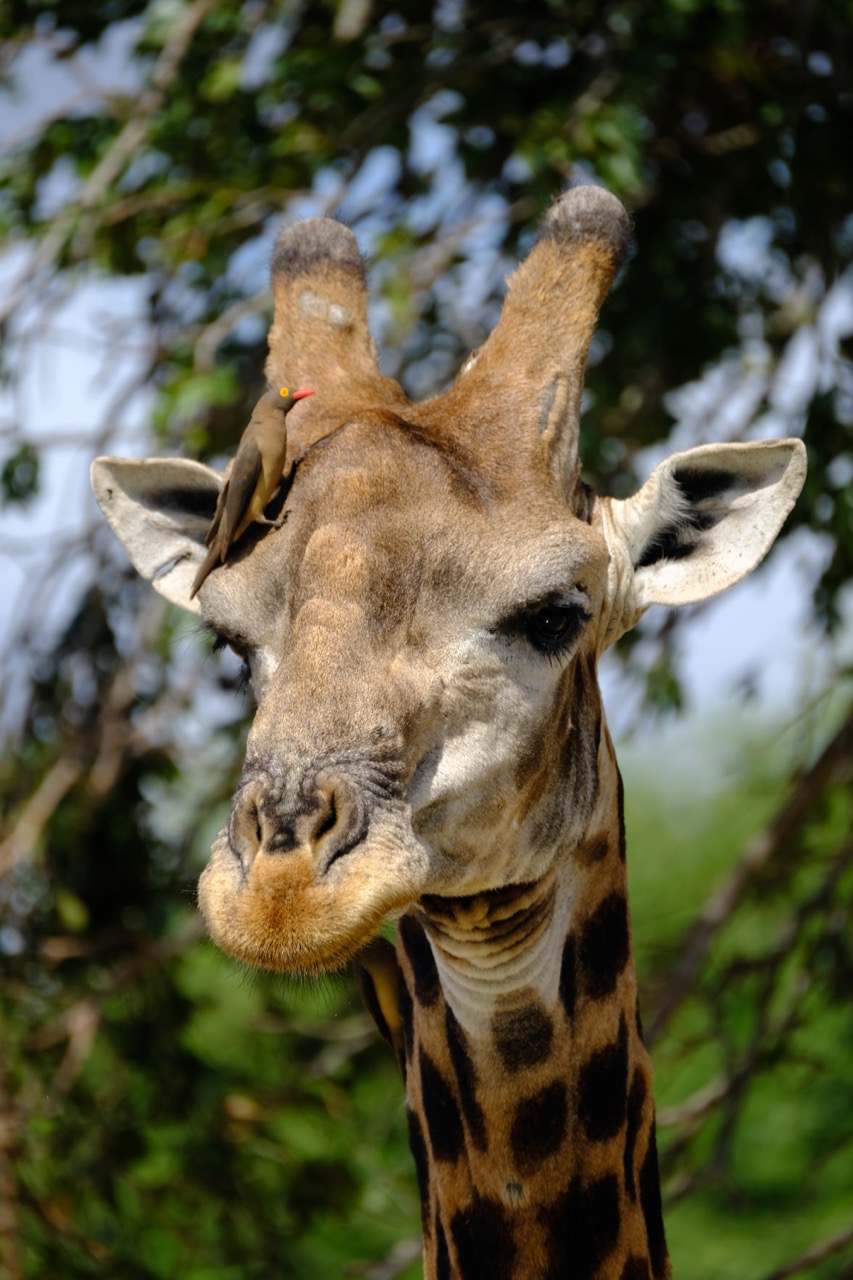 We drove off of the ferry around 8:30pm, well after dark. The roads north of Maputo are tarred and in good repair so there were no problems getting out of town. Armed with my Portuguese phrasebook, I called the closest camp ground to see if we would be able to check in after 9:00pm. The man who answered replied yes, but to be careful as the road is a 4×4 trail so would be difficult to navigate in the dark. Colburn’s excellent driving skills got us to the camp without a problem, the camp host was waiting up to show us where to park, and we made dinner and went to sleep happy to have successfully negotiated our first day over-landing with just a map, an app and a Portuguese phrasebook.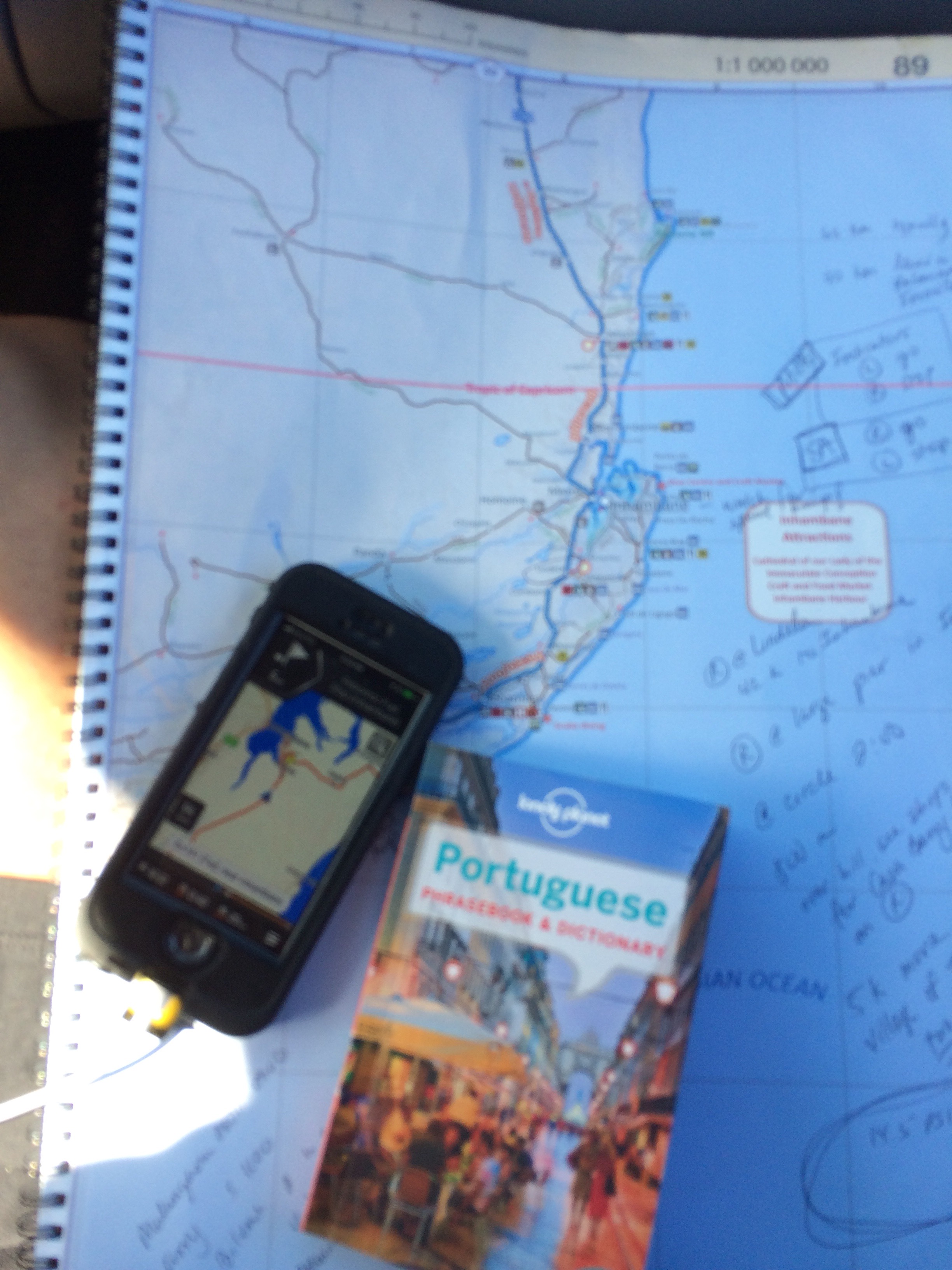


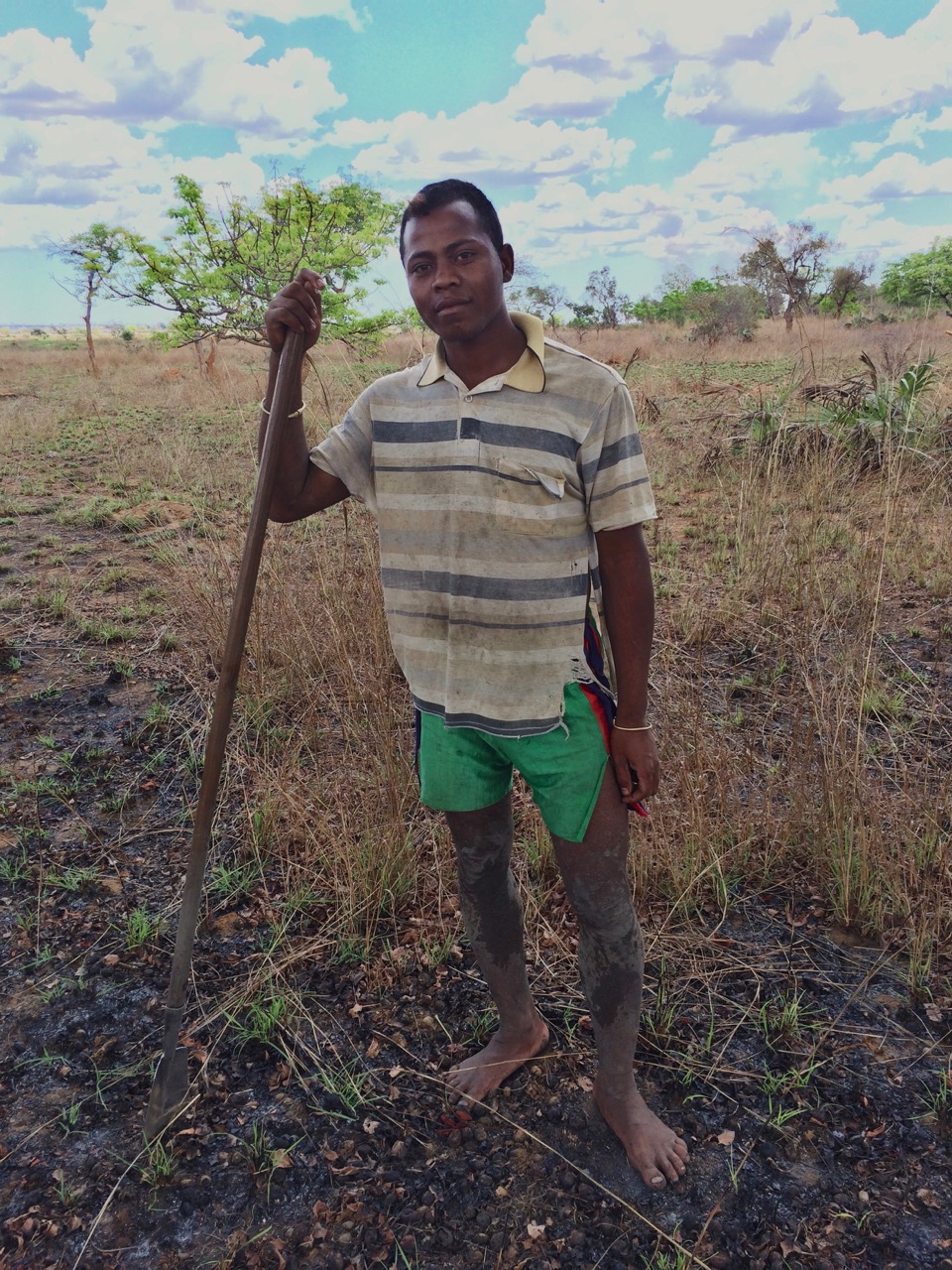
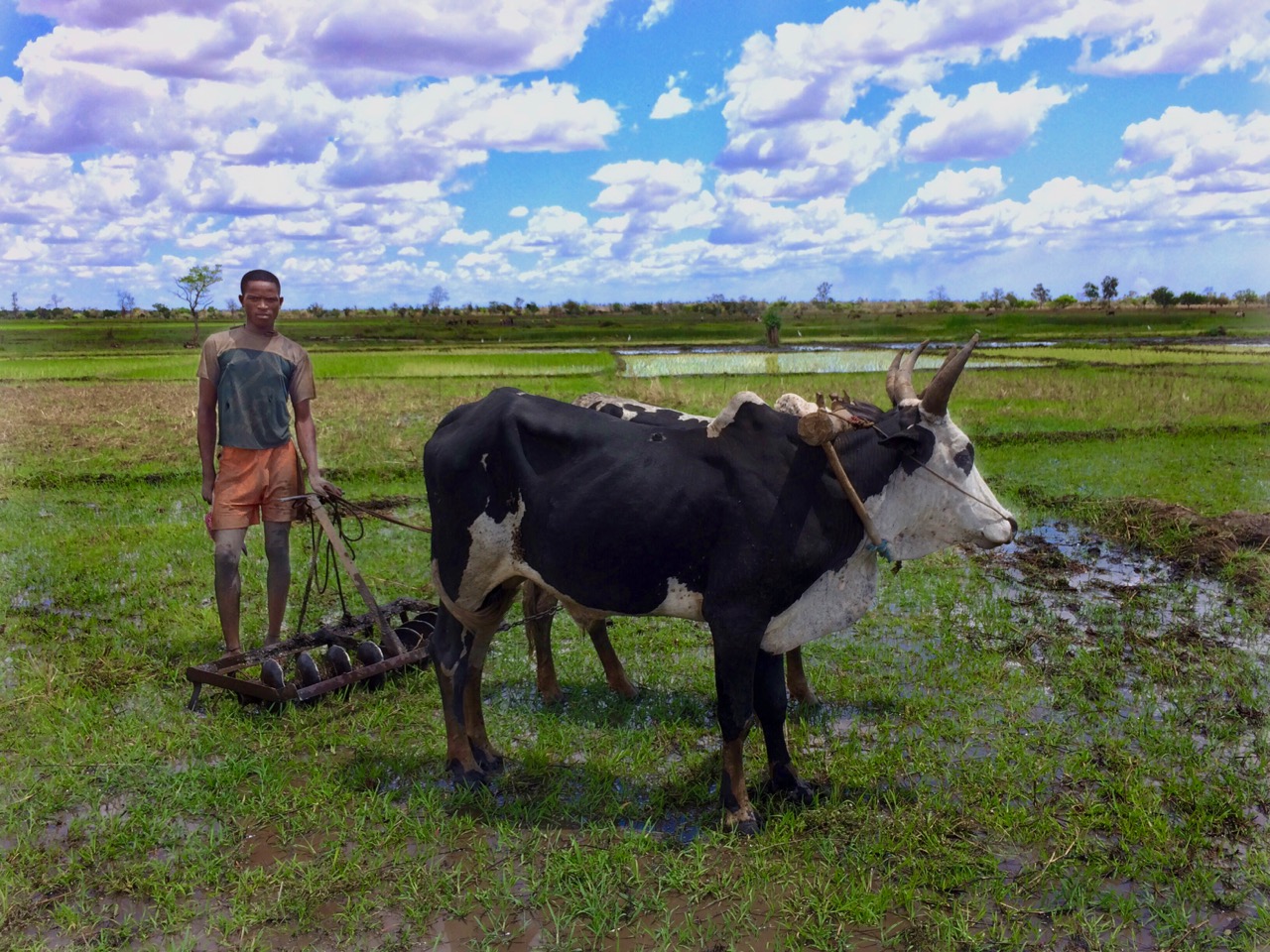
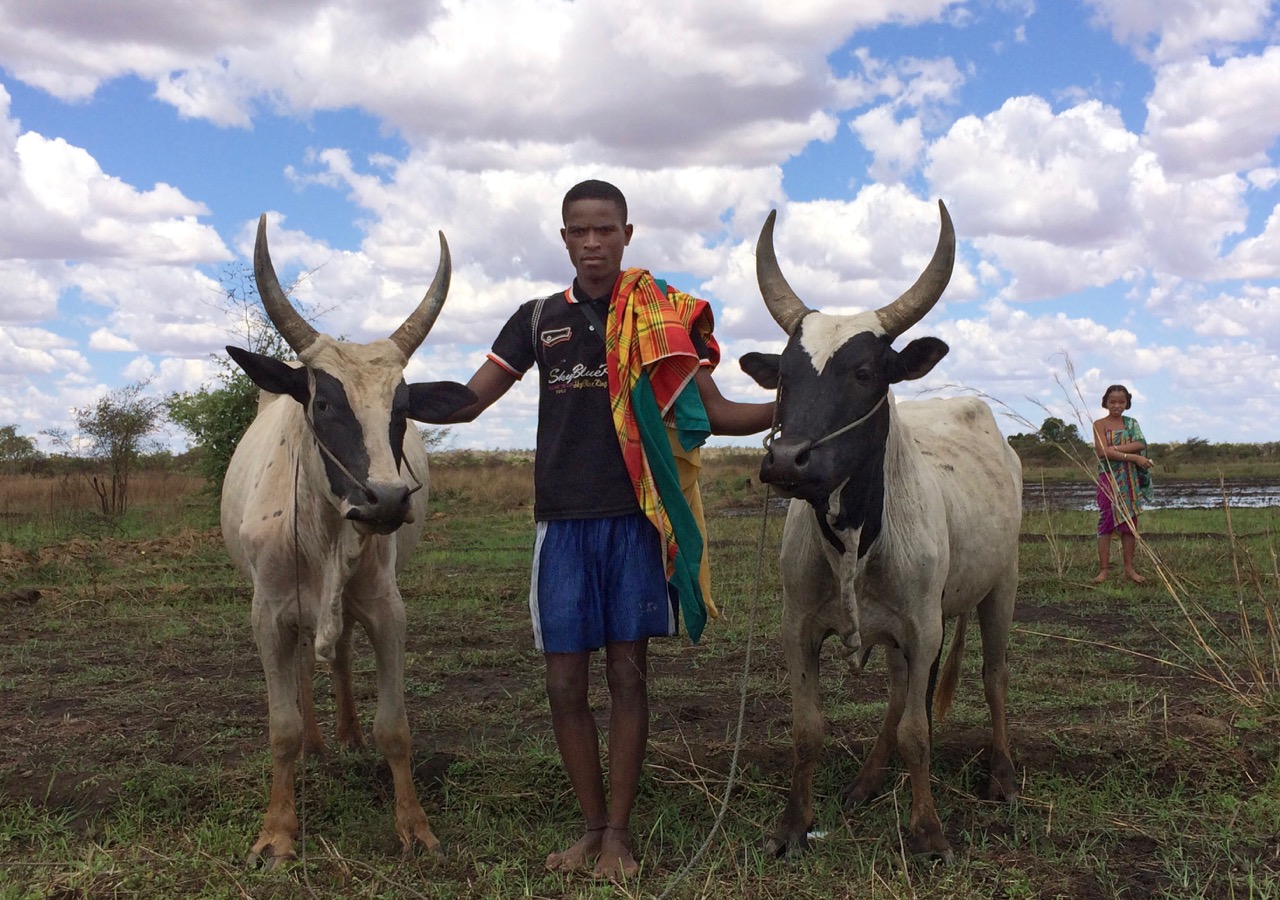
 Even after almost three weeks in Madagascar, the land remains an enigma. I am torn between loving it and being incredibly frustrated by it. The landscapes range from dusty desert-like open expanses with little but scrub and short dried grasses to thickly wooded rain and cloud forests, to the spiney forest of the south, perhaps the most bizarre environment I have ever witnessed (imagine 8-10 foot tall desiccated branching cacti bushes covered in three inch spines and red dust). Everywhere there are people farming, mostly rice, and 100% by hand. The poverty is obvious, Madagascar is one of the least developed nations on the planet but the smiles and welcomes are warm and genuine. Culture varies substantially by region, but family is strong throughout. The infrastructure is crumbling yet provides a needed lifeline for many communities. Drought has made life in the south tenuous, but elsewhere the taps flow freely.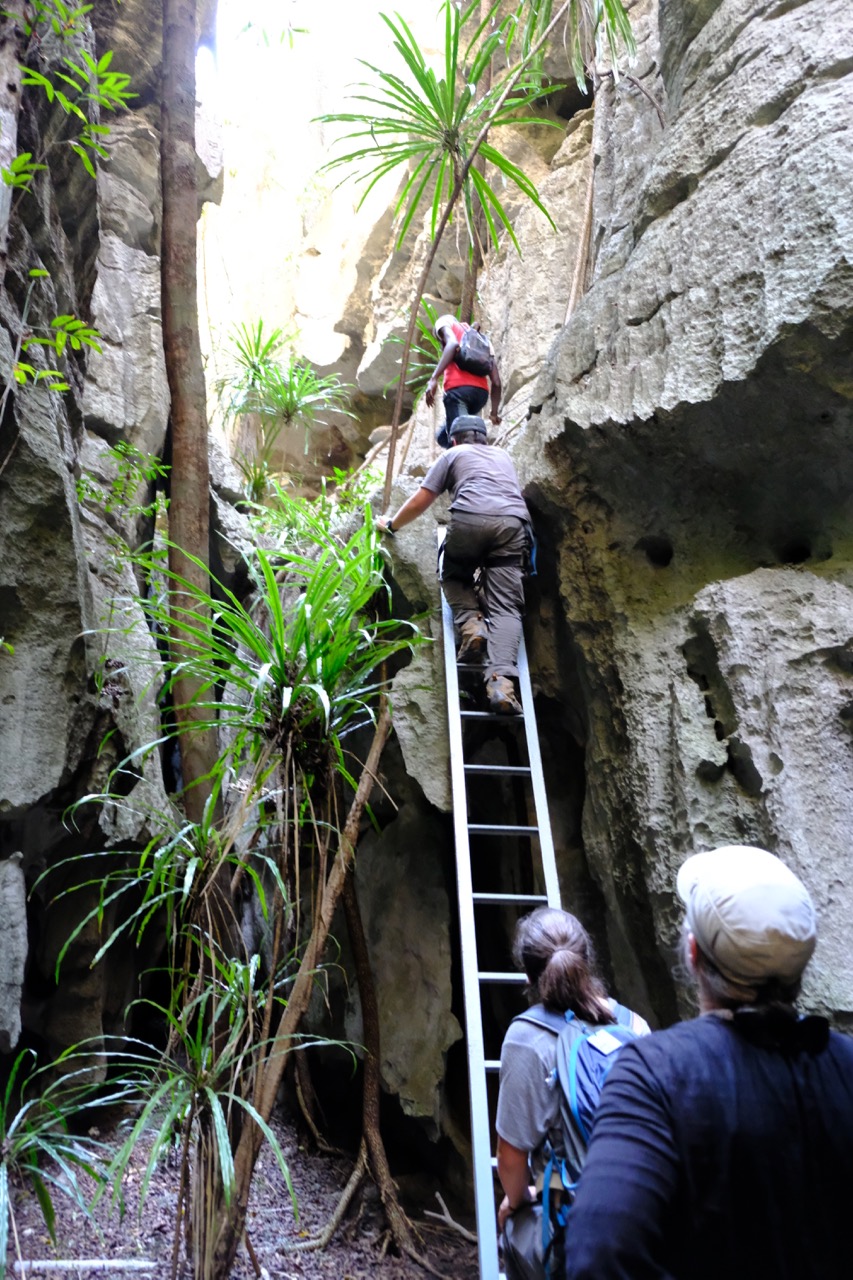
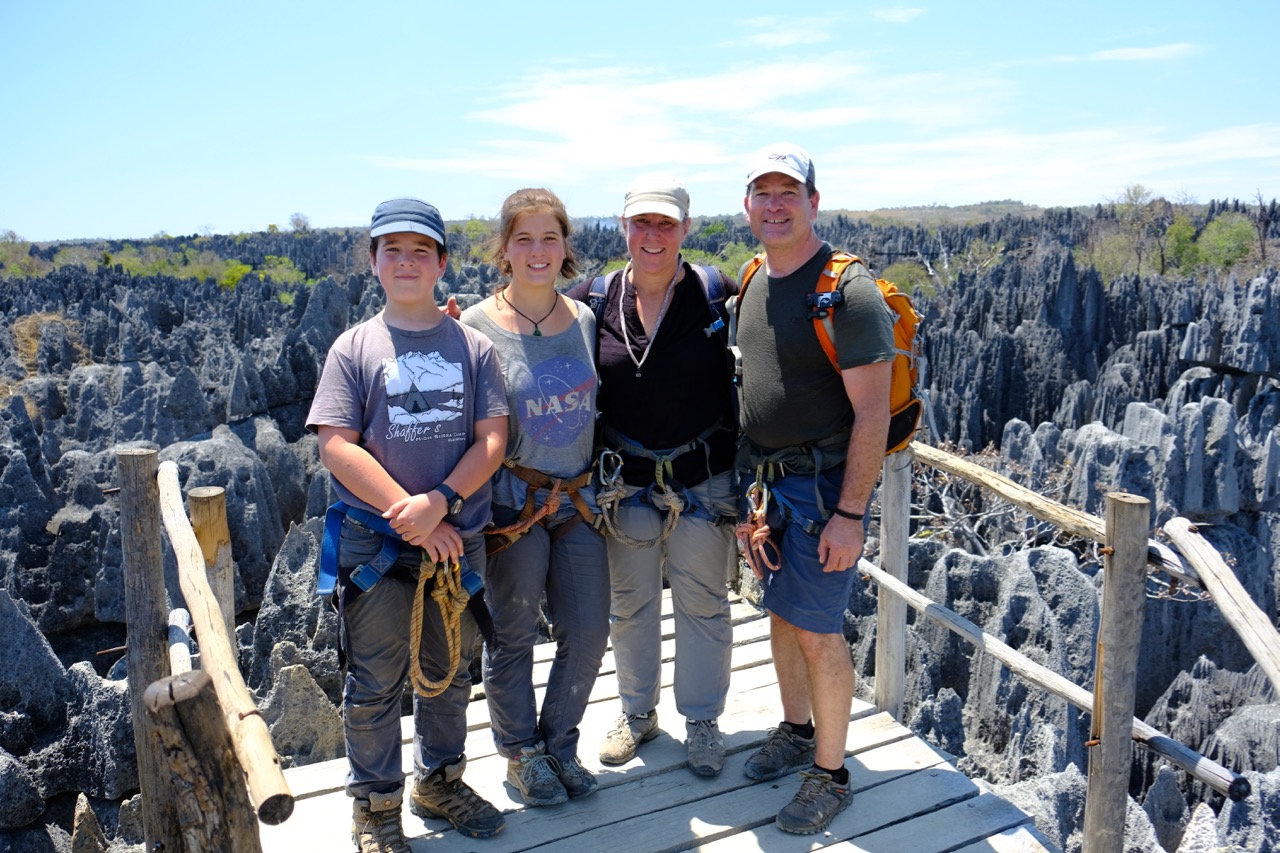 When we were planning our time here, it was difficult to grasp all that Madagascar has to offer. Despite days of Colburn’s research and hours spent correlating guide books with the maps, the combination of difficult but similar sounding place names (Kirindy Park is a day’s drive from Kirindy Matia Park, Antsirabe is not Andasibe, etc.) and wanting to see and do everything left us paralyzed, unable to make a decision. Madagascar is a large country – nearly 1,000 miles north to south – and difficult to reach. It took us three days to get from Scotland to Madagascar and included an overnight stop in Paris and a full day on Reunion Island in the middle of the Indian Ocean.
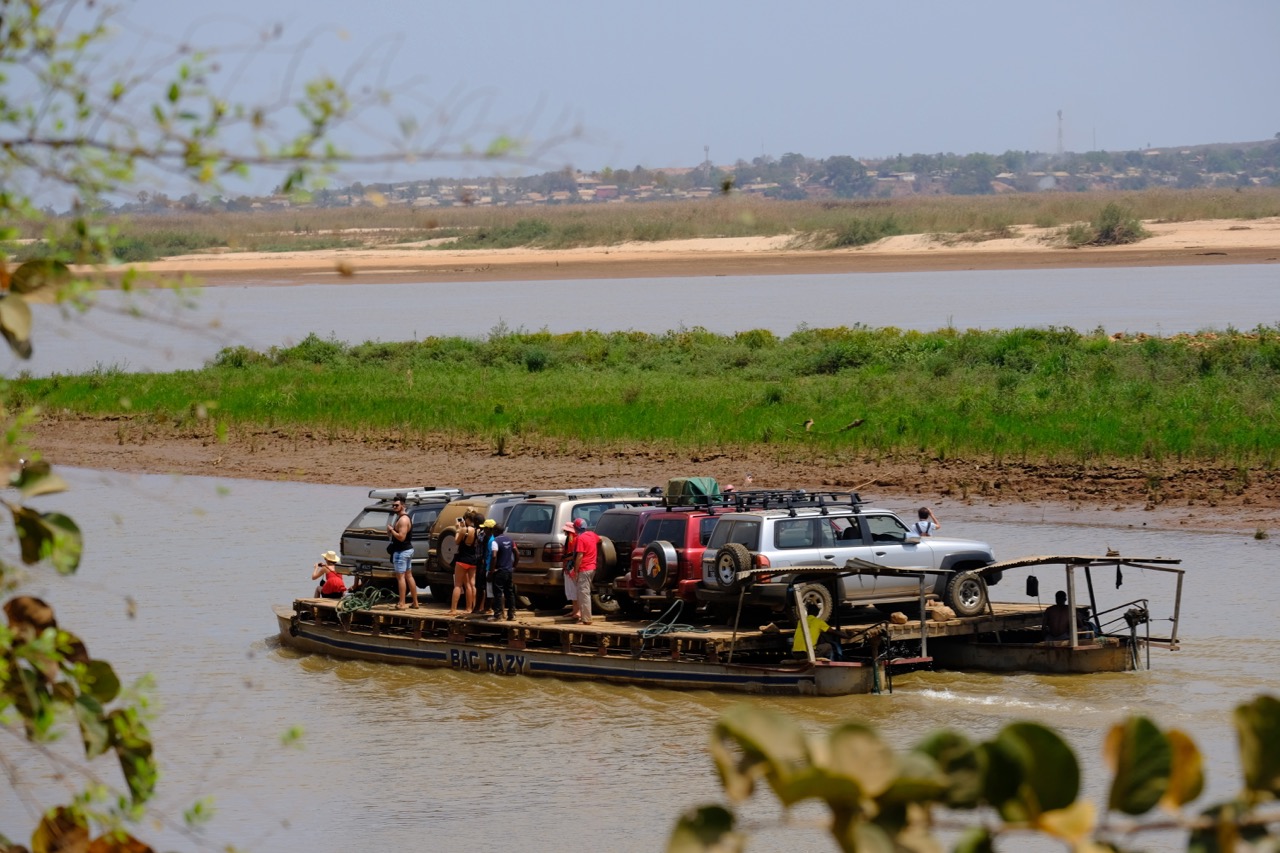
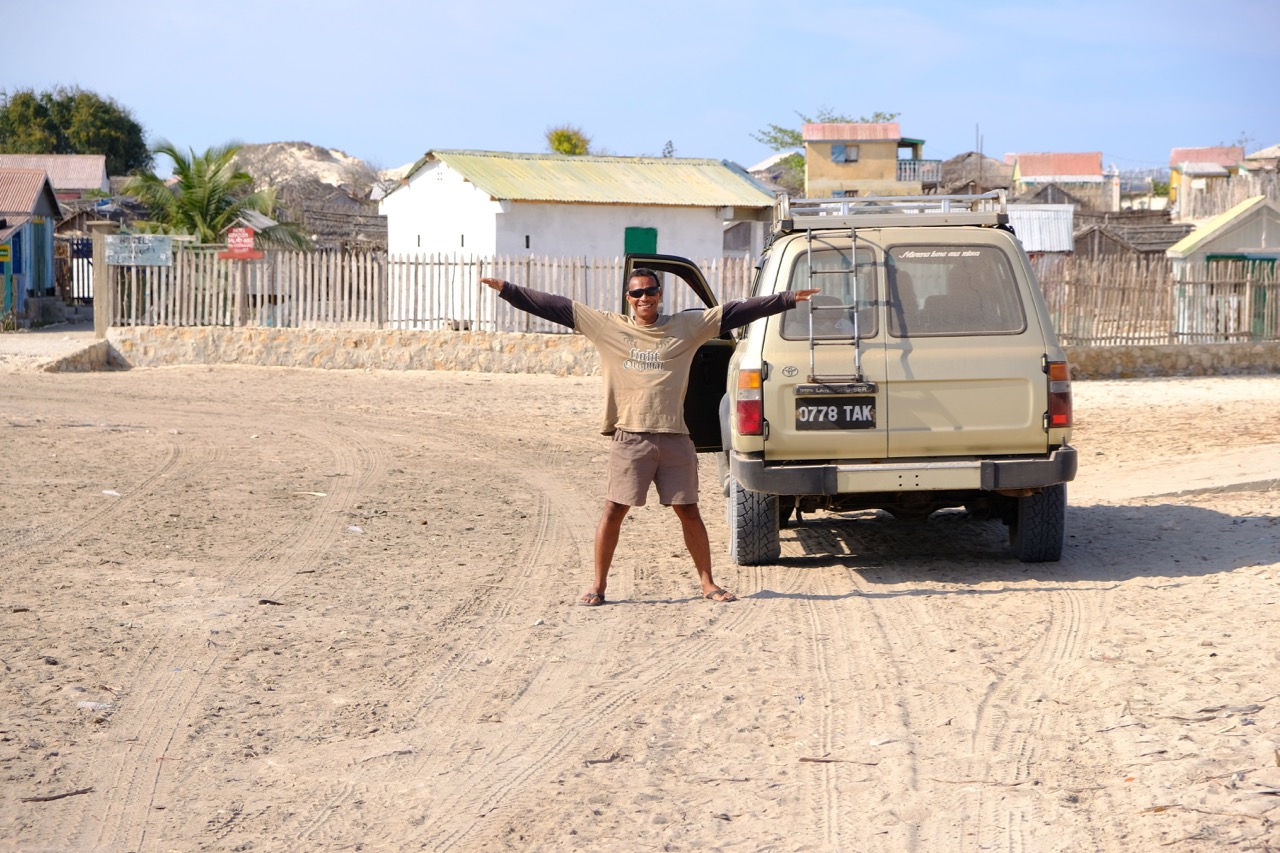 With the help of a tour agency which arranges a car and driver (pictured above), we finally decided on 20 days focused on the western part of Madagascar with a short jaunt east to see the Indri in the rain forest. This would allow us to do an extended four wheel drive trail down the west coast, see lots of lemurs, and walk through the tsingy – all classic Madagascar experiences. The plan was great until we had to shorten our time in order to meet our truck in Durban, arriving three days earlier than expected. We made a rookie mistake by cutting out our rest days, not changing our overall route. This meant that we would be moving every day, sometimes all day, which drags on you after a while. Driving on many of the roads might be best described as bashing, careening or hurtling, making our Madagascar road trip an endurance event of epic proportions.
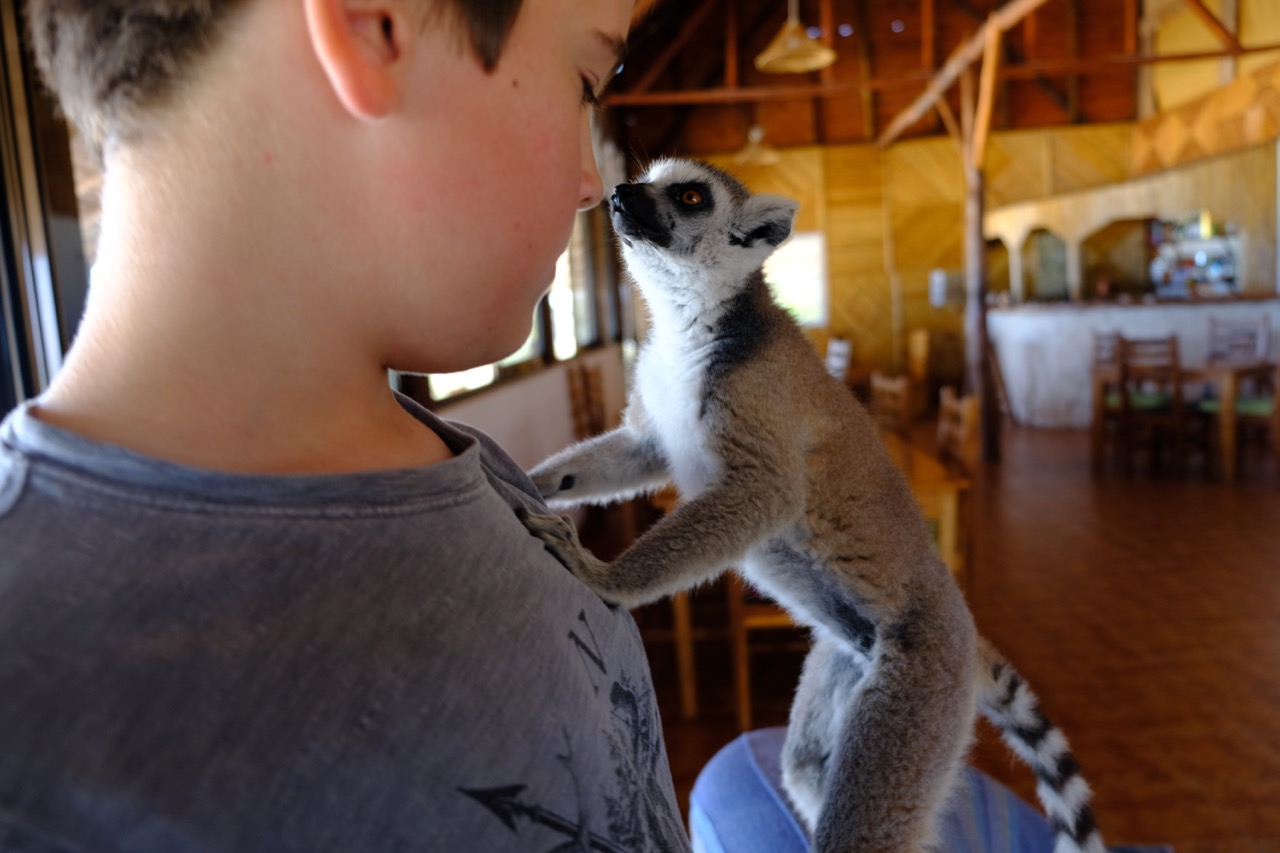
 Each day presented us with new experiences: the haunting call of the Indri on a misty morning, the unique greetings and enthusiastic shouts of “Salama!” from village children, dashing through the rainforest both day and night to find lemurs, intense dusty roads through a burned-out dystopian landscape, overloaded car ferries with chugging diesel engines spewing black smoke, the refreshing taste of drinking the water from a 17 cent fresh young coconut, people in their Sunday best lining the road for miles on end going to church on Sunday, seeing a body wrapped in white cloth being carried through a village, taking a dug out canoe to a small offshore island to learn about what the local Veza fishermen hunt, meeting a cheeky young ringtail lemur who fell asleep on Mac’s lap one afternoon then woke me from my nap by jumping on my chest and licking my face while I lay in bed. Each day was different, engaging, and brought with it a whole new set of questions.
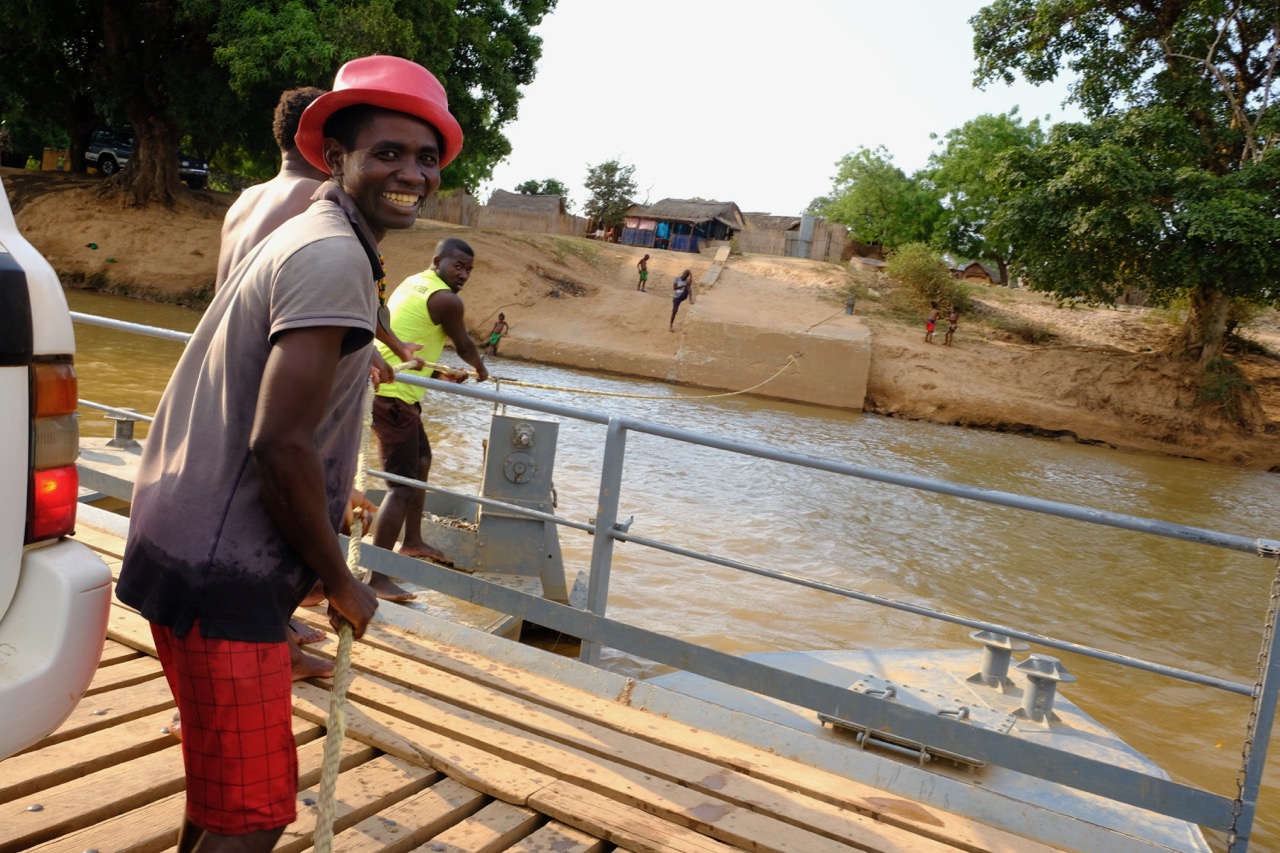
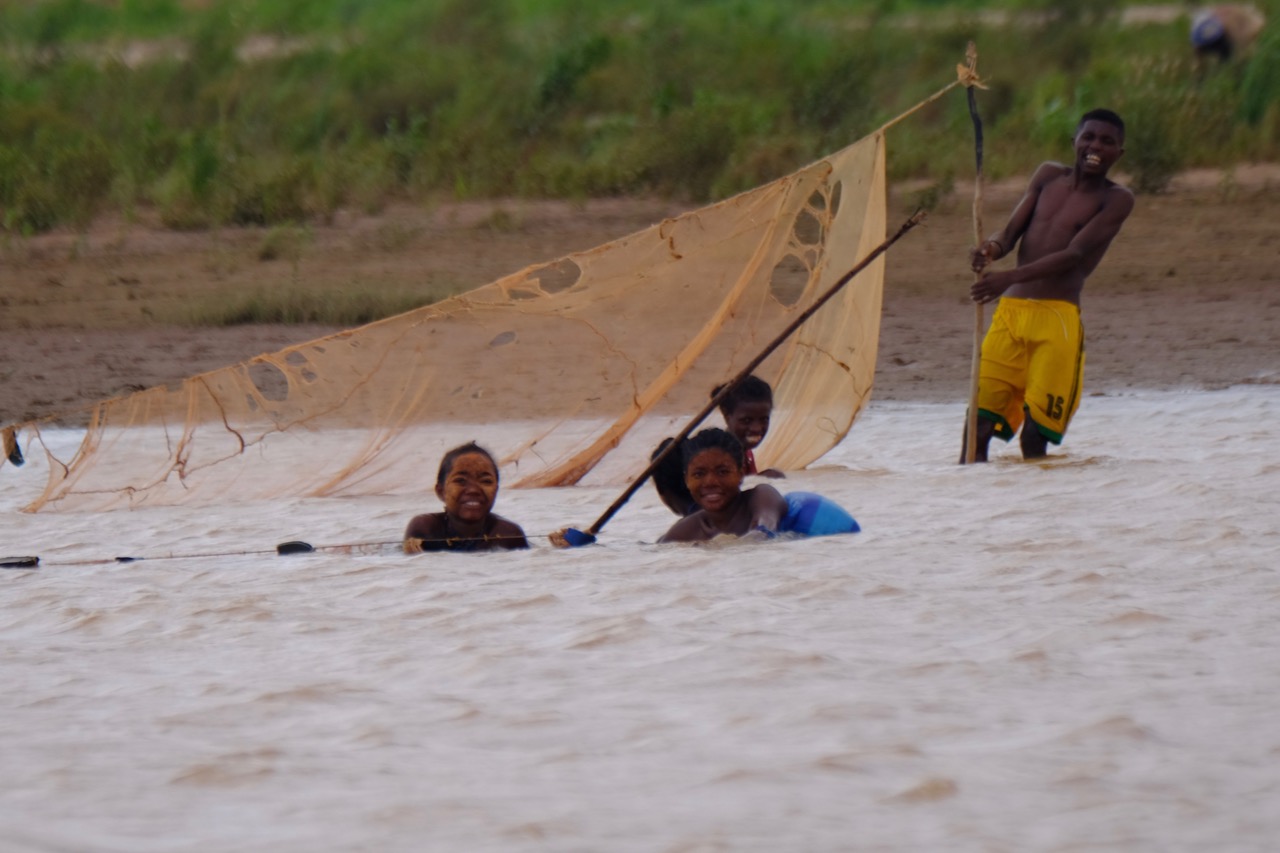


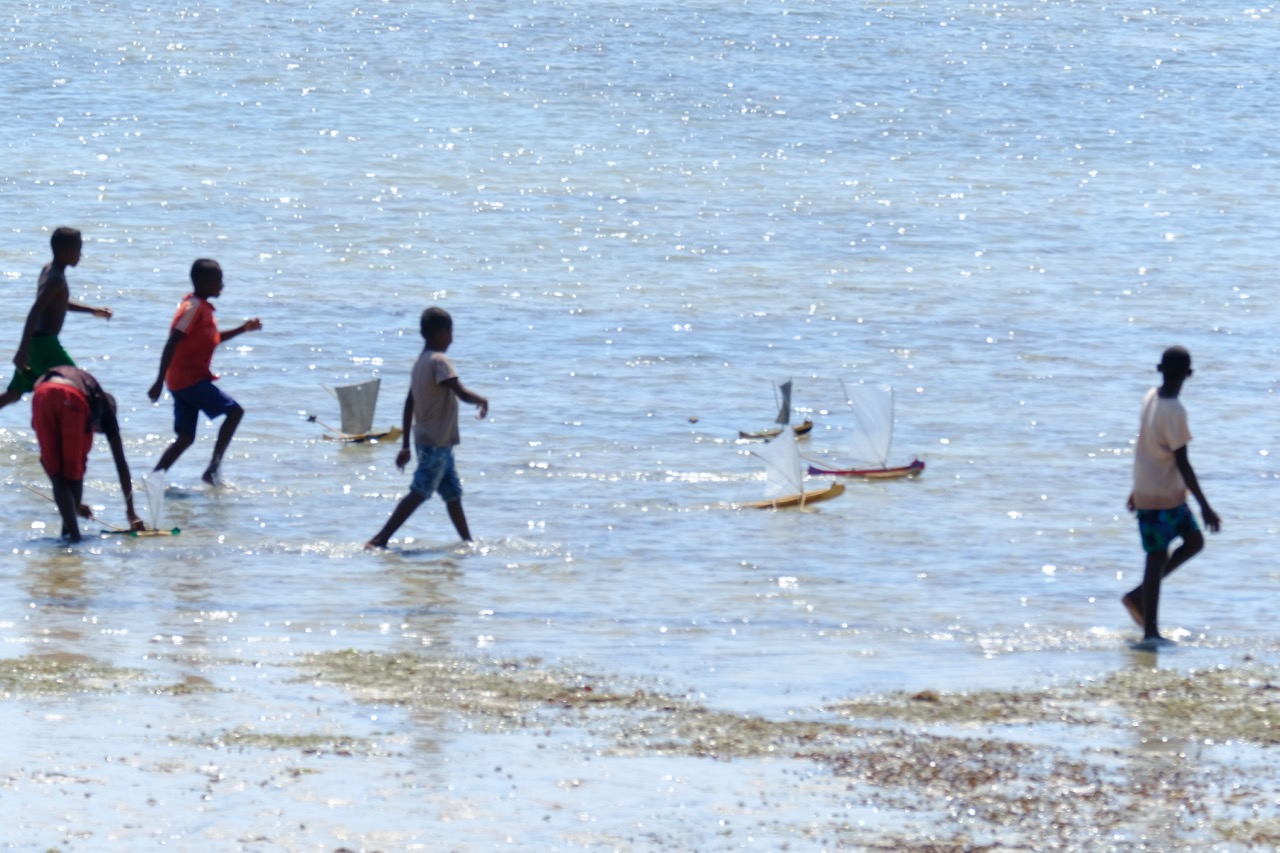

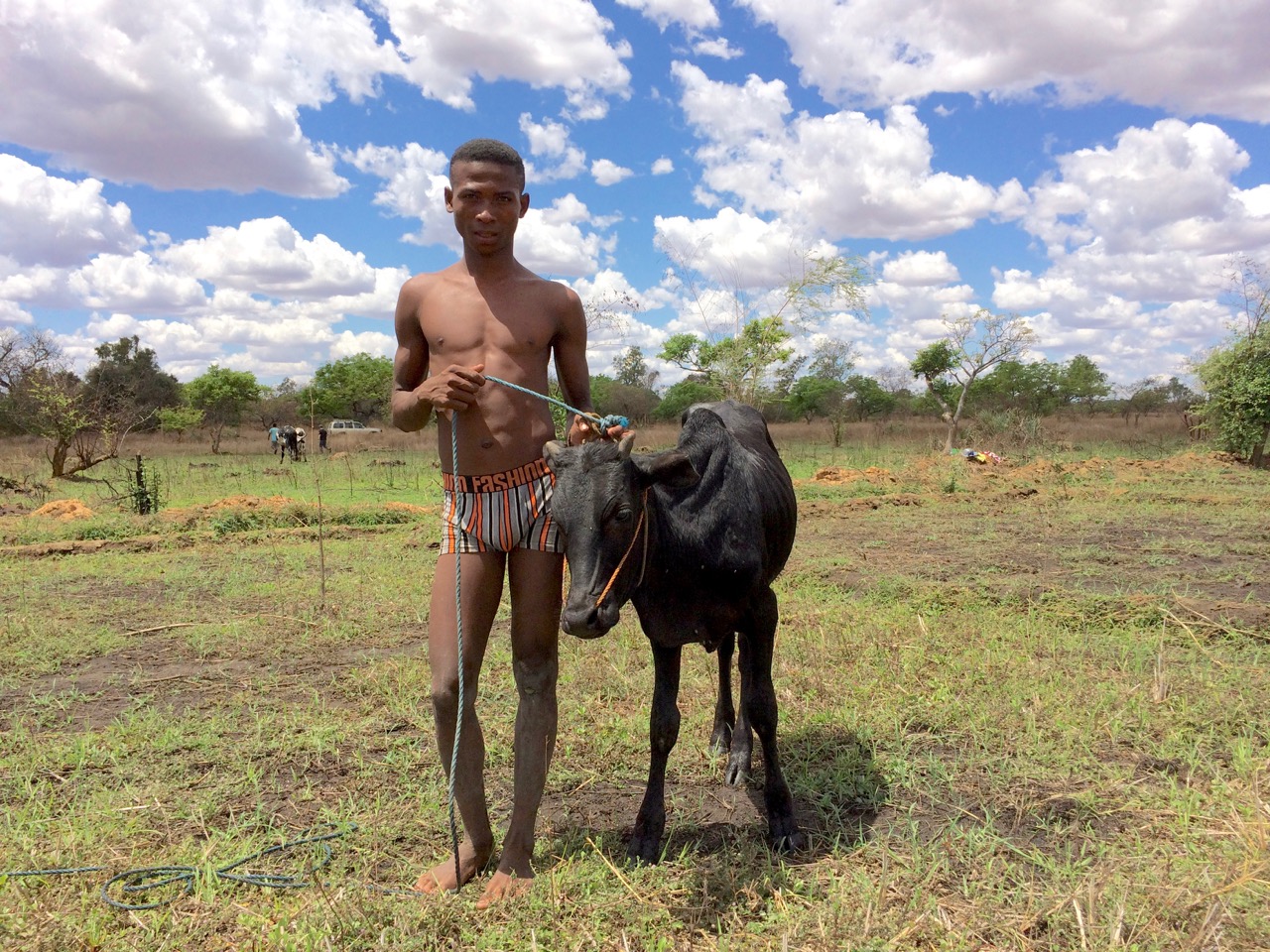
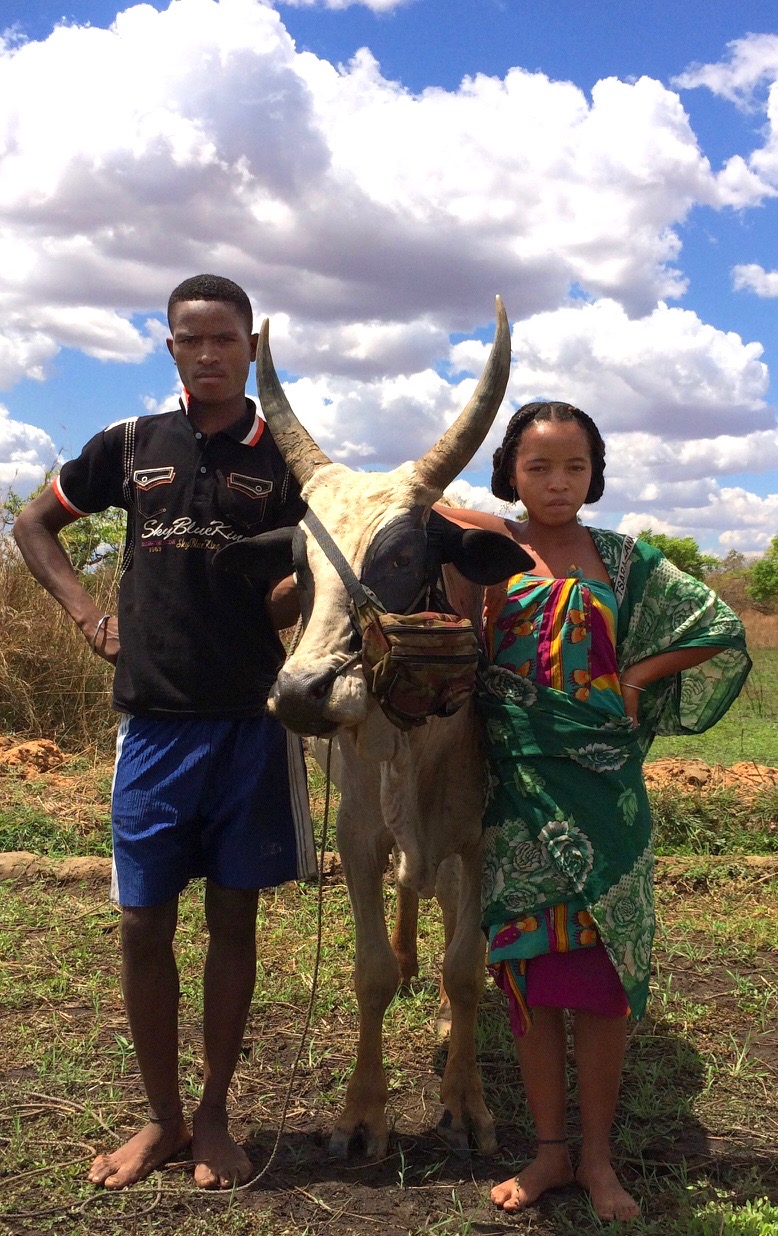


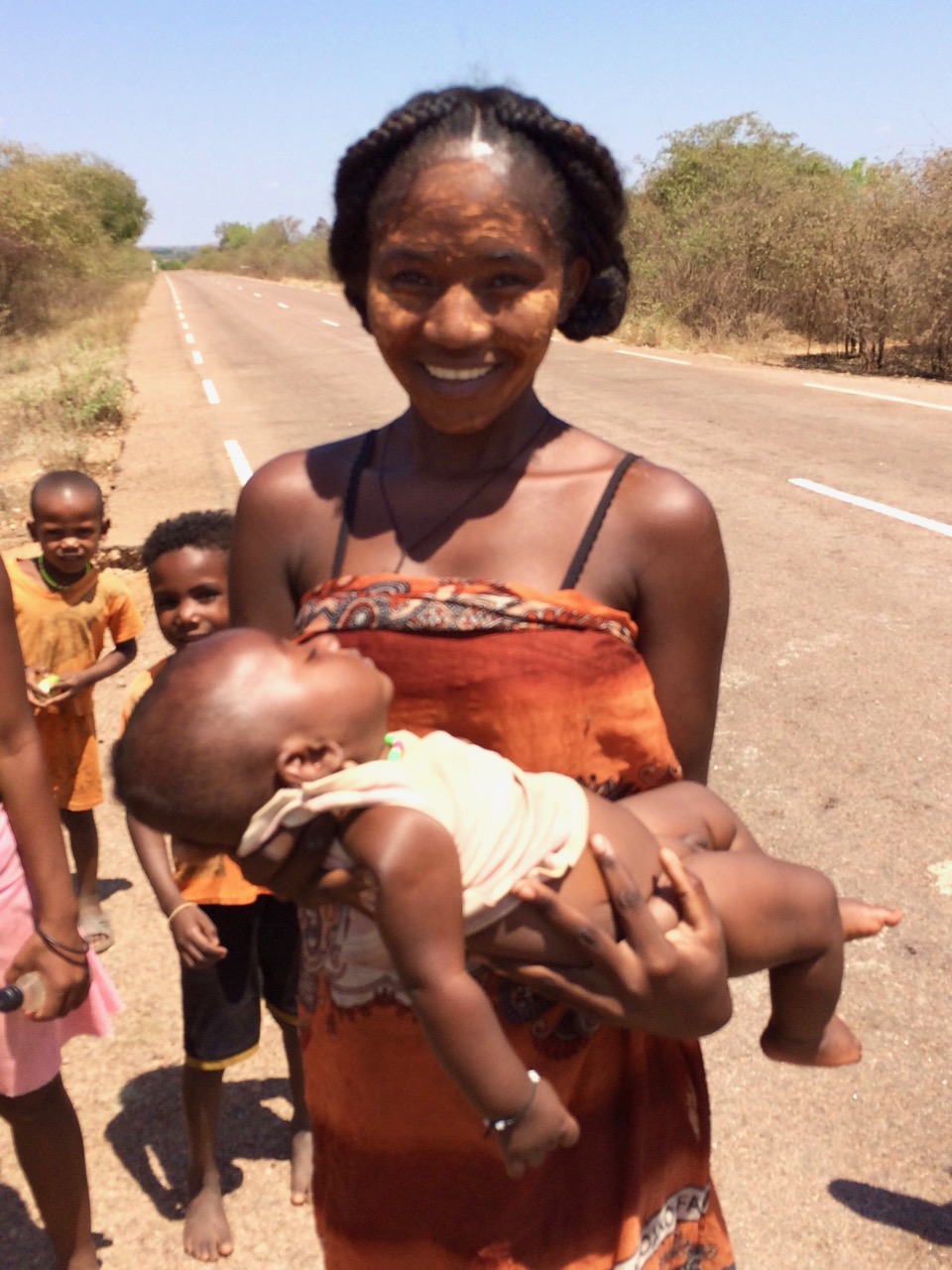
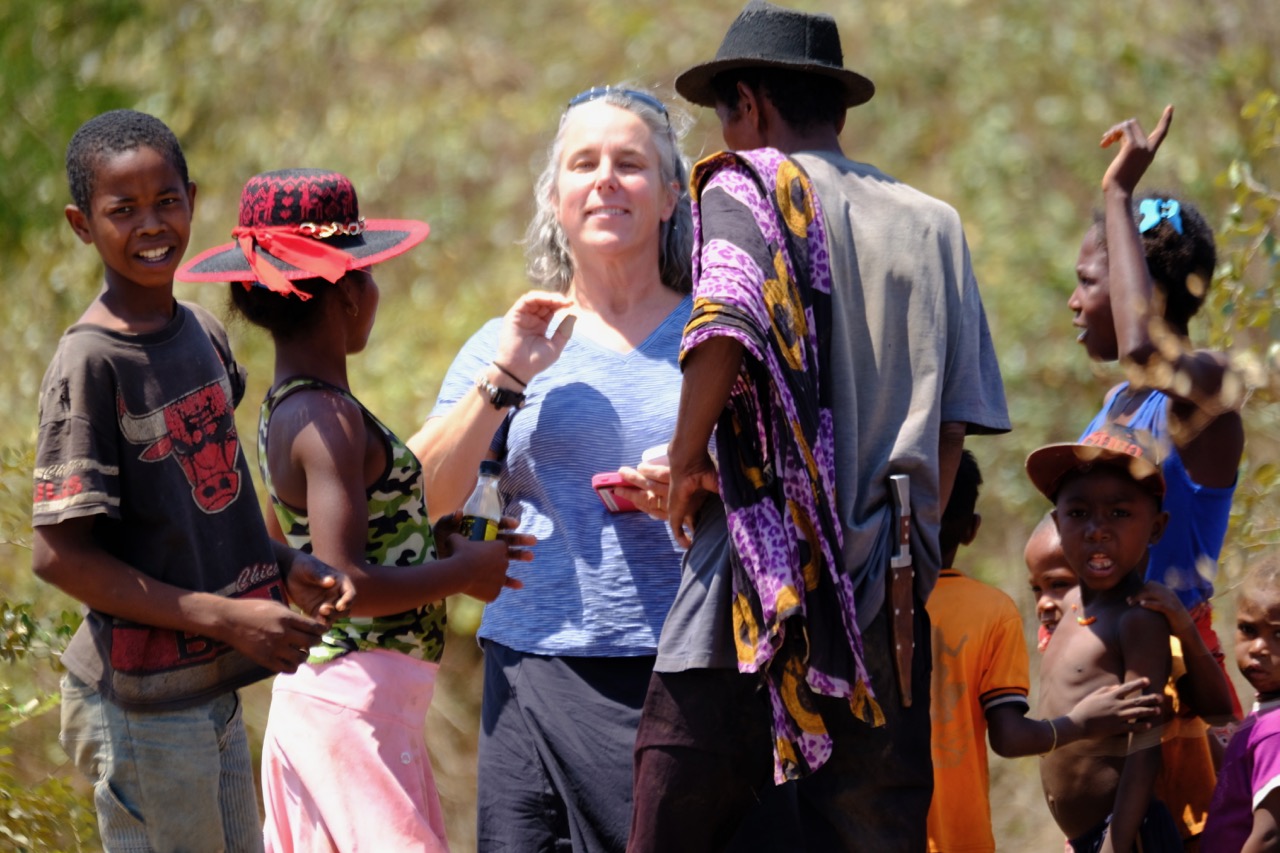 Seeing this miracle, several other young mothers quickly brought their babies for a picture and the shy younger girls gained enough courage to let me take their photo. There were laughs, comparisons of skin color (the two young girls were amazed by Lucia’s light skin), and lots of charades to communicate. It was a genuine and memorable experience which would not have occurred if not for the gregarious and inquisitive nature of the first young mother. We would have simply moved along after we finished our sandwiches, never having this interaction. I could not help but think of the David Attenborough line from many of his BBC Earth episodes, “Fortune often favors the brave.”



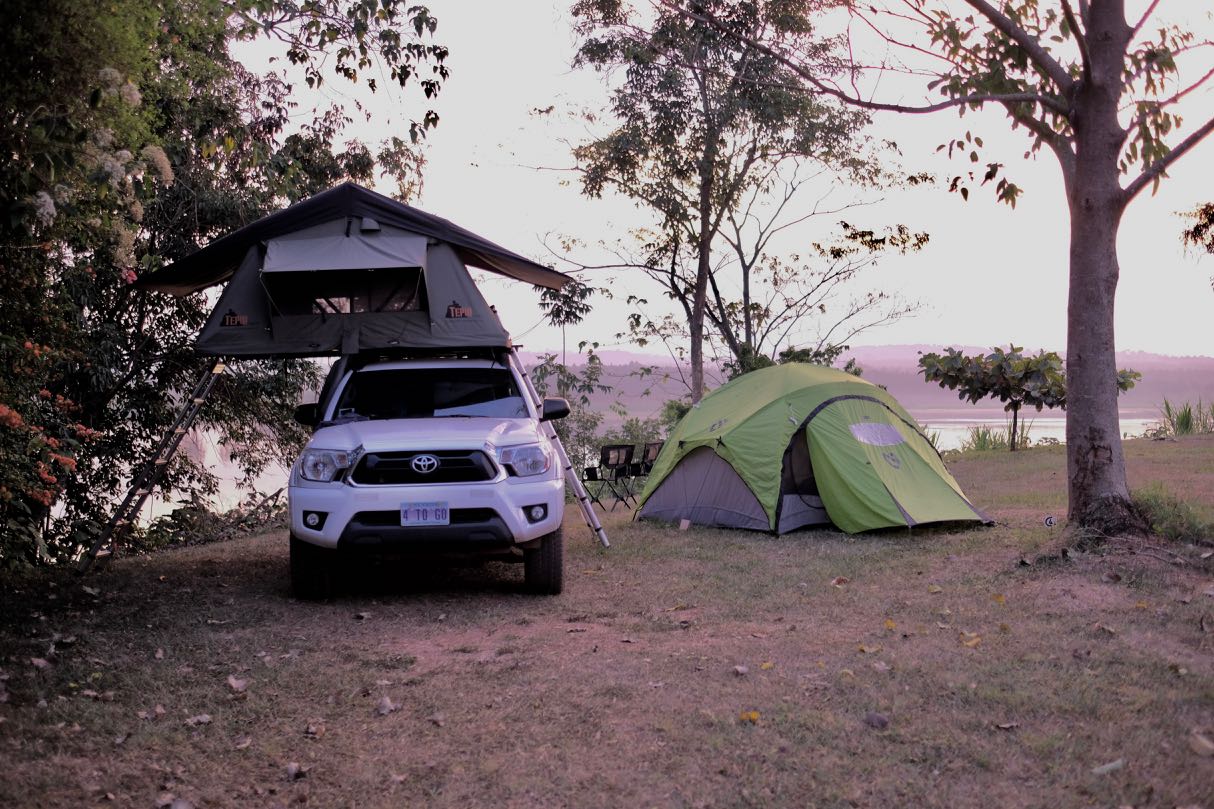
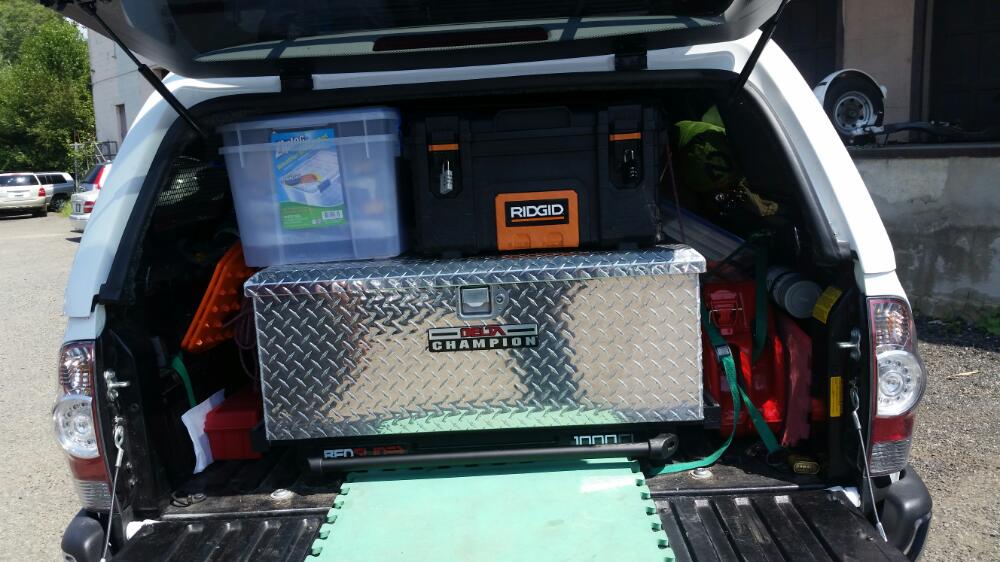
 After more than a solid six months of planning and preparation, Colburn, the kids, and Fig all left Reno in late July to drive east and see his family. Our truck, now nicknamed Olaf, has everything we will use over the next year – a four person roof-top tent, camping gear, two jerry cans, water storage, a 12 volt car refrigerator, emergency recovery gear, sand trax, an extra water pump, tire repair kit and a myriad of other miscellaneous items. This was the first full test-run of the rig. It worked beautifully! Everything has its place and there is a place for everything….even Fig (who won’t be going with us – she will be staying with Colburn’s sister and her family and their dog).

 The Shindells - Four to Go