Tag: travel with kids

  • Luck of the Irish – Ireland

    2206C235-7388-4A67-B2D1-774624973A30-1724-000000DE5EE879CDSometimes everything goes your way, sometimes it doesn’t.  We knew going into it that the weather in Ireland in May can be unsettled. It can be a fabulously beautiful time with the most spring colors across the Emerald Isle or it can be cold, wet and miserable.  After our amazing good fortune for weather in Scotland, we were hesitant to believe that our luck could hold out.  Fortunately for us, we were blessed with extremely good weather for the entirety of our biking trip through Ireland.  It must be the luck of the Irish which smiled down upon us.

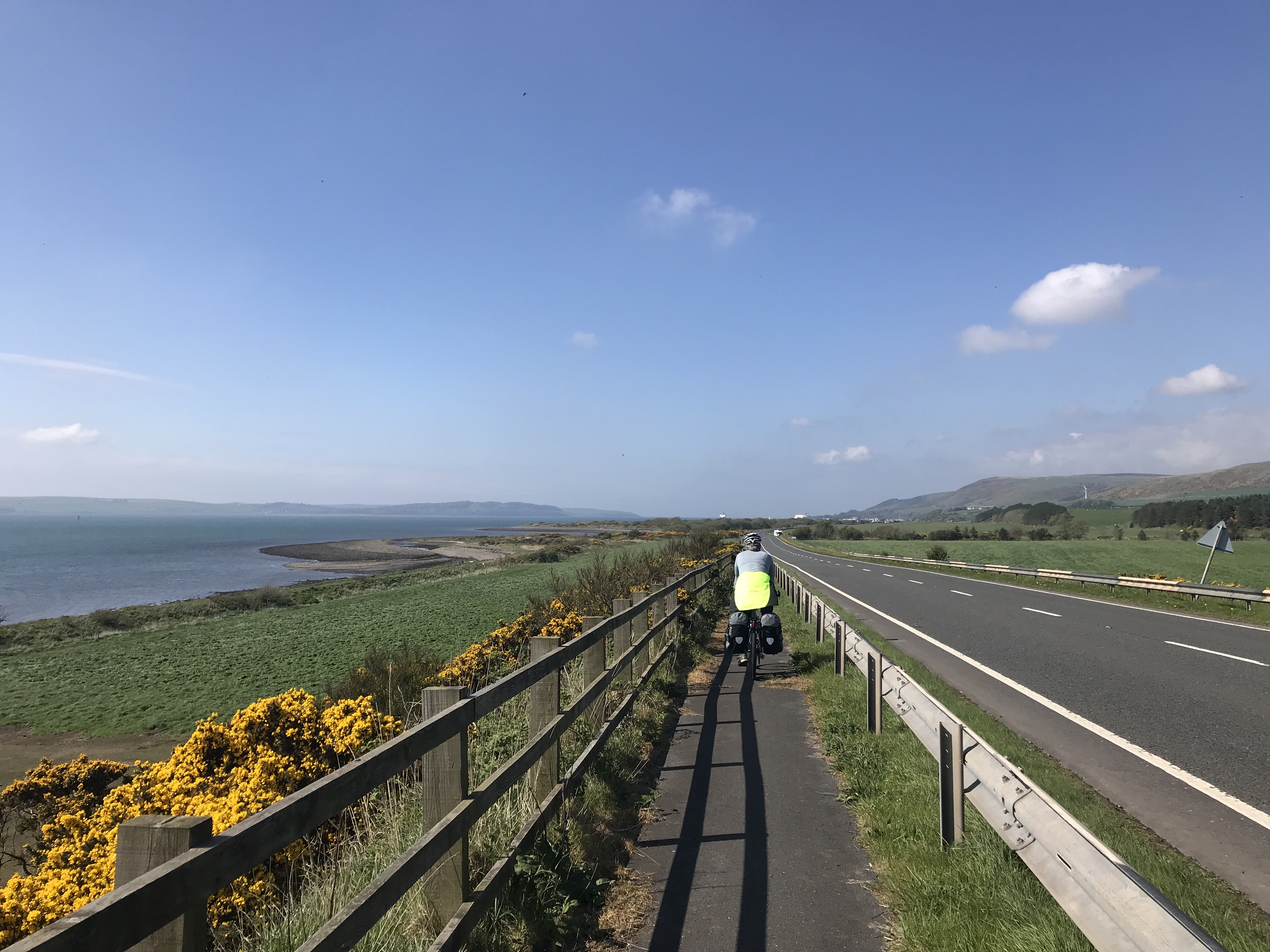
    IMG_3713We left Glasgow on a picture perfect day – sunny but with big puffy clouds, throngs of walkers (about 40,000 of them) mostly dressed in kilts for the Kiltwalk, a charity walk to Loch Lomond, gathered on the green in front of our flat as we started our ride and a sense that spring had finally come in to full swing.  The energy and pageantry of the walkers set us off on a good note.  The day was not too long – about 65km (40 miles) with only one significant hill – and almost fully on bike paths.  Along the way, we passed through some folks on an organized bike race, met up with other cyclists enjoying the beautiful weather, and basically sailed to our destination feeling like we could do anything. We stopped for ice cream in the early afternoon, found our way to our AirBnB without difficulty, and had an amazing and very funny dinner in town that evening. It is the kind of feeling that is hard to describe because everything simply clicked in to place as if the world was telling us that this is what we should be doing.  It was an energizing and auspicious beginning.
    IMG_3745The next few days, however, were a bit more complicated – Mac slept awkwardly the first night and woke up the next morning with a very crookneck, so much so he couldn’t move his head at all much less bike the second 60 km.  This necessitated a change in plans as we had a ferry scheduled for the following day so we hopped a train to the closest town to the port which cut down our mileage considerably.  We then took a ferry to Belfast and another train to get to Dublin.

    IMG_3975Moving bikes on and off the ferries and trains is always stressful because, much like land border crossings in Africa, each one is slightly different and everyone expects that you will know how things operate on this specific train/ferry.  Unfortunately for visitors like us, each one is unique and likely not at all the same as the previous ones you have done.  For example, on some trains you simply roll your bike on, panniers still attached, and strap them to the side of the train car in the wheelchair or luggage sections.  This is by far the easiest yet least frequent method we have found – but oh do we love it when it happens!  On other trains, you have to take the bags off and put them by your seat but hang up the bikes in specifically designated areas.  Sometimes there is only one bike per area, sometimes two, sometimes four and sometimes 20, but the thing is that no one can tell you ahead of time, so you have to figure it out while jostling for space with everyone else who is boarding the train…and we have four bikes and 12 bags to negotiate.  Once inside, how you place the bikes is different – sometimes you hang them up with the back wheel up, sometimes with the front wheel up, sometimes they are on an angle, sometimes they are in little individual stalls. It is a lesson in going with the flow of how things are done where you are, not how you think they should be or how you’ve done them in the past.

    FerryExitSimilarly, with the ferries, sometimes they simply roll them on the deck of the boat and carry your bags to your seat or cabin as luggage.  Other times, especially on larger ferries, you roll on with the cars and trucks.  There may be a bike rack to park in if you are lucky.  If not, you wait around until someone shows you where to go.  We’ve had the bikes stored in the wheelhouse of a small ferry in the Aran Islands, in an engineering room of a larger ferry to Belfast, and on a formal bike rack alongside the cars going to France.  Flexibility is key as is being patient, and humble. When I was fully scolded by the Swiss train conductor for putting two bikes where there was only supposed to be one and thus somewhat blocking the path, I had to apologize profusely as he wagged his finger disapprovingly at me eventually helping me solve the problem by showing me where I could put the second bike.  The thing is that arguing with or getting upset by his castigation would only have made the situation more tense.  With this kind of travel, it is better to be kind and gentle even if you are boiling inside for you are a guest in their country and not just representing yourself, but your entire country.  In the end, everything will be fine – the bikes get loaded and we reach our destination.
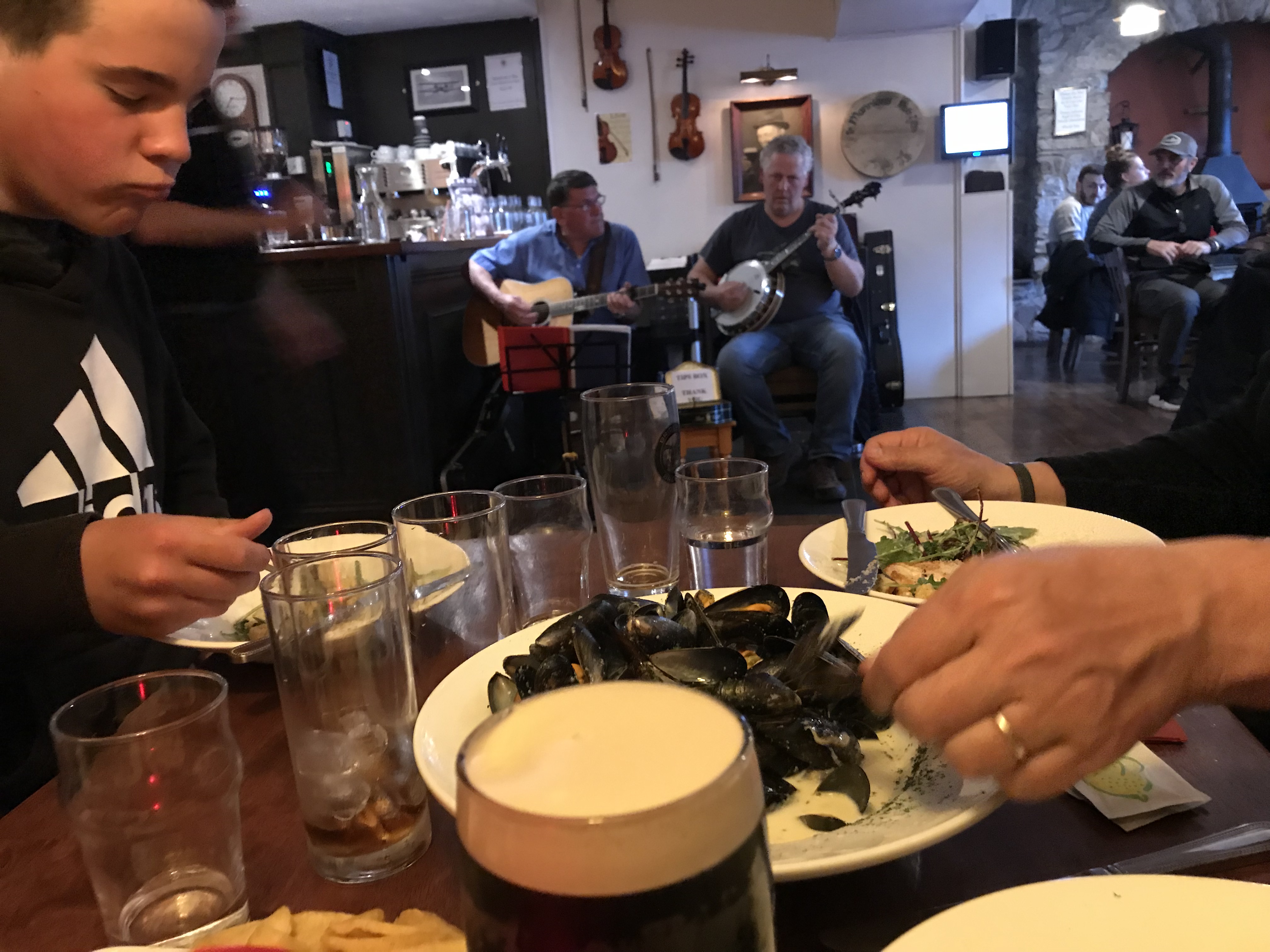
    IMG_4296With the majority of our transportation hassles behind us, we enjoyed a couple days in Dublin listening to pub music, enjoying the big city vibe, and doing our last-minute planning. Ireland is a big island with varied and diverse terrain.  One could easily spend an entire summer biking across the countryside, but realistically we could only spend about two or three weeks if we were going to also do the European areas we wanted to see as well.  This meant we had to choose just one area for our bike ride.  Friends we met hiking in Scotland last year,  Lee and Lisa from Lee and Lisa Explore followed their West Highland Way walk with a bike tour of the Connemara area as part of their adult gap year, so we knew that it was a reasonable place to bike.  Staying in the area would also allow us to visit the Aran Islands with stone age forts, the Burren  – a magical landscape of high, folded limestone plateaus, and bike along much of the dramatic County Galway and County Mayo coastline along the Wild Atlantic Way.

    IMG_3811We were very happy with our decision as the biking was truly dramatic, perhaps some of the most beautiful bike rides we have ever ridden.  The Burren’s stark hillsides, eerily quiet road, and endless undulating terrain made us feel as if we were on a totally different continent, if not the planet. This is the area is also known for the dramatic Cliffs of Moher (Cliffs of Insanity if you are a Princess Bride fan or cliff which held the cave and lake with the locket horcrux in the 6th Harry Potter movie). We visited the Cliffs late in the evening to catch the sunset – and oh what a sunset it was!

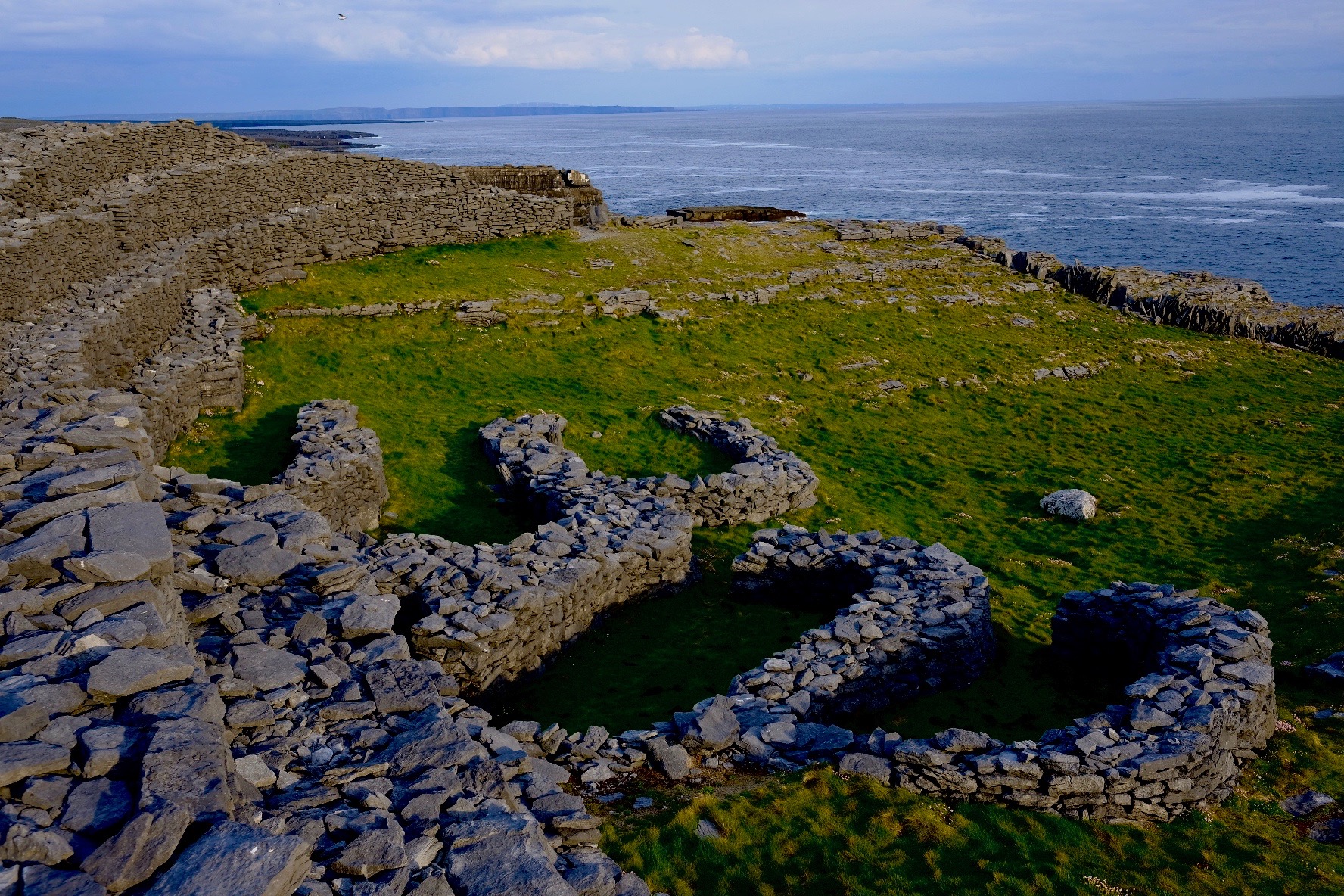
    03CF5ECF-014E-4F9D-81B8-A2785C848357-2825-000002380B576585On the Aran Islands, our favorite place was the rarely visited Dún Dúchatair (the Black Fort). Perched on a rocky but crumbling coastal cliff, initially built more than 3,000 years ago then re-fortified just 1,000 years ago, no one is sure of what the purpose of the structures was, only that eons of storms, tsunamis and erosion have obscured the true purpose. Most tourists who visit the Aran Islands only come for a day trip, so tend to head straight to Dún Aonghasa, the larger and more developed site on the other side of the island.  Because we were staying the night on the island and that Colburn and I chose to visit Dún Dúchatair late in the afternoon, there was not another soul anywhere in the area.  We passed a farmer planting vegetables in the thin and rocky soil about 4 or 5 km from the entrance to the site, but no one else at all.  In fact, there were barely even any paths from foot traffic anywhere in the site.
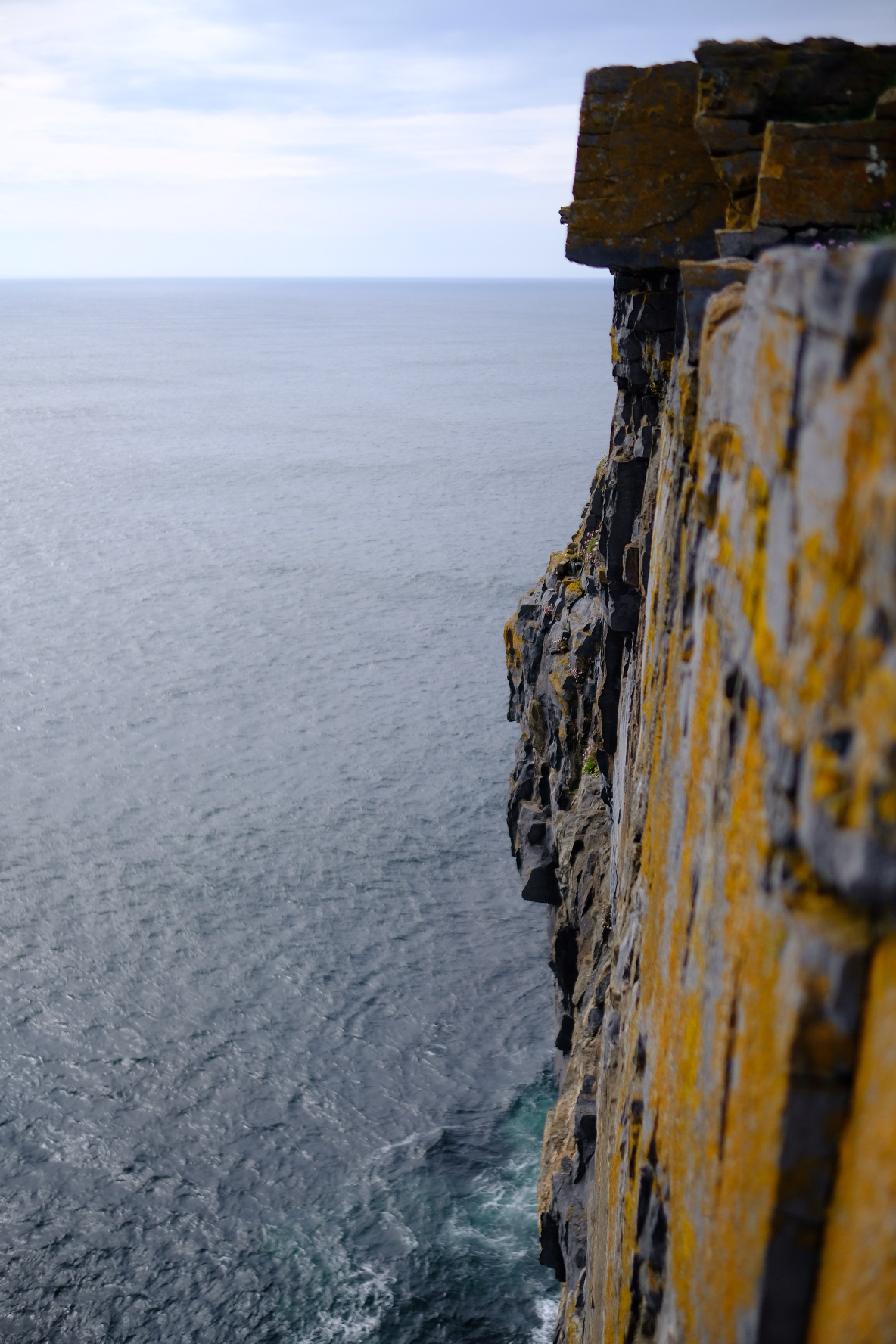
    68E167EF-C912-4187-9A3D-27A0C64C1B8F-216-000000022A3B4602Being there late in the afternoon as the sun was low on the western horizon, waves crashing against the steep cliffs and the salty dampness of ocean air clinging to our skin, it was easy to imagine this place as a home or an outpost 3,000 years ago. The remnants of the buildings have openings to the southeast to let in the early morning light and the stout backs designed to protect from the prevailing winds.  The terraced walls of defense are 13 feet thick in some areas and are built to the very edge of a 300-foot cliff, making the area easy to defend from invaders.  As with the Burren, we felt that we had been transported back in time or far, far away.  It was magical.

    DSCF1068The third place we fell in love with was Doolough Valley.  The scenery is stunning but the history here is heart-breaking.  During the famine of 1849, many of the locals relied on relief aid from the government but the officials required that the hundreds of starving people walk 12 miles to see them at the hunting lodge where they were staying in order to reauthorize their famine aid.  More than 17 people are known to have died because of the energy expenditure needed to accomplish this arduous walk – 24 miles round trip. There are memorials on the pass and also in the surrounding towns.  It was very sobering to contrast our life of abundance with this level of starvation less than 200 years ago.

    IMG_4335

    The other thing that made our ride through the Doolough Valley interesting was that heading in the opposite direction were thousands of bicyclists either racing or on a charity ride (we’re not sure which).  When the pace car passed us with the lead pack of probably 30 to 50 riders, all fully in aero gear and riding very expensive carbon fiber race bikes. We thought, “Wow, those guys are serious!” but didn’t think too much of it because it looked like a training ride.  Then, just a few minutes later, another big pack of maybe 100 passed us, smiling and giving us the thumbs up for slogging with our extremely slow and heavily laden bikes while they are all totally fit and aerodynamic like the first pack but not quite as focused on performance.  This process then continued for the next 3-4 hours in a progression from the extremely fast racers through the fit weekend warriors then finally on to the somewhat out of shape recreational riders out for a 100km fun ride as a personal challenge. Seeing and interacting with them as we lumbered up the hill that they were sailing down was wonderful. Although we didn’t know it at the time, they had also climbed a long hill to get to the Valley, so they were excited with their downhill.  One man gave a gleeful, “WEEEEEEEEE!” that made us all laugh as he crested the final summit and began his downhill.  The camaraderie we felt and the encouragement received was very uplifting and added to the joy of our ride.

    DSCF0958

    Although we truly loved some of the biking in Ireland, there was a part of it which tempered our overall perspective to that of a cautious “we enjoyed parts of it”.  The drivers in Ireland are oblivious to the laws about safe passing distances and show active aggression towards bicyclists.  I, personally, have been bike touring in New Zealand, Australia, Switzerland, France, Germany, the Netherlands, and Belgium without ever feeling truly at risk.  Sure, there have been varying levels of awareness of and respect for bicyclists, but overall people were reasonable. Ireland was different – very different.  Biking here is a bit of a blood-sport with the cars completely unconcerned for your safety or right of way.  When I spoke to a few locals about it, they concurred saying that “the drivers here are a**holes – you really shouldn’t bike on any of the main roads”.  One farmer we talked to was so concerned that he cautioned us to go so far as avoiding the roads at all costs, suggesting instead that we walk our loaded bikes through the field off to the side of the shoulder to avoid any interactions with drivers.
    527B6FC7-5F1E-45A6-B7B0-261B3D6912AD-216-0000000126DD4871We had far too many close calls where drivers would pass us at full speed without allowing for a safe passing distance (1.5 meters in Ireland) even on the crest of a hill, blind corners and when another car was coming the other way.  They simply continued in the lane as if we were not there, running one or more of us off the road more than once.  After hearing of our travails, our brother-in-law sent us an idea which I think is brilliant – put a brightly colored pool noodle across the back of your bike so that it sticks out the required 1.5 meters.  This gives drivers an indication of what a “safe passing distance” looks like in real life.  I had a similar idea while riding but was much more passive aggressive about it – I would attach a sharp object (like broken glass) on the end so that if someone did come too close, it would scratch their car’s paint.  I would consider the damage from this a natural consequence for them not respecting the required safe distance.  In the end, we truly enjoyed parts of biking Ireland but would probably not do it again until there are either proper bike paths, a change of heart from drivers, or another way of assuring our safety.

    FDCC885A-2CC7-45B8-904C-DB58614B5019-300-000000088C44BA10Ending off our time in Ireland was a true treat where we were able to meet up with our friend and third child, Zara, and meet her parents for the first time.  We met Zara diving in Mozambique almost two years ago and have stayed in contact with her ever since.   Seeing her again in a totally different environment and meeting her parents reminded us of why we travel – in the end, it is the people you meet and the experiences you have that make traveling worthwhile. We were thoroughly spoiled by their hospitality and fell in love with Northern Ireland.
    514155AE-7DEC-4E3F-A9C0-D9BF3B383349-216-00000001BCE78DB5

  • Are You My People?

    DSCF3172“Are you my people? Oh, no, you’re the North Americans who signed in yesterday!”” exclaimed the wildlife ranger as we were enjoying sundowners on the second night of our self-drive through Botswana.  Still confused, we asked who it was that he was looking for?  “Oh, there were reservations for people who did not show up last night and I am worried.  It is the rainy season and the roads aren’t good.  People get in to trouble when they are stuck and I want to make sure they are safe.”  He was looking for the people who were supposed to be at the camping site last night but didn’t show up.  As is common in Africa, we spent the next 20-30 minutes chatting with him about travel, the rainy season, what life is like in America, and the antics of our current President.  He thanked us for signing in to the register he had left at the gate as he had to leave the post to go search for the missing campers.  “I don’t remember the last time we had someone from North America” he quipped “they usually go on guided safaris.  The Europeans, though, especially Germans and Dutch, they come here in herds.”
    DSCF3612

    We had driven to the camp site from the ‘undeveloped’ side of the Chobe National Park but had not seen anyone stuck so could not help him locate his “people”.  In fact, we only saw three cars on the entire 5-hour drive in. It is not a common route, even for self-drivers.  We had met another group of ladies from the Netherlands who got stuck the night before and had to set up camp in the bush while they waited for someone to come along to pull their trucks out of the quagmire that is Botswana during the rainy season, but no one else.  We, too, had almost been stuck in an impossibly deep ‘elephant hole’, but Colburn’s solid driving skills and 4-low gearing on the truck kept us moving along safely.

    DSCF3508

    Independent traveling, and especially self-driving, in Botswana is amazing.  Although driving on the bush roads can be extremely challenging, there is a strong tourist infrastructure that makes the process very enjoyable.  We noticed the difference as soon as our ferry crossed the Zambezi River and we left the border crossing.  There is organization, development and order.  Tourism is well-established.  Heaps of white 4×4 trucks like ours – fully kitted out with roof-top tents, spare fuel tanks and recovery gear – ply the roads in a steady stream.  This means that there is usually help close by so even if you don’t have to have a lot of experience, you will likely be ok.

    DSCF3892

    As we pulled in to the first town, Kasane, we were blown away to find Nando’s (a South African chicken fast food joint), a Puma Fuel Stop that accepts credit cards, and brand-new Shoprite all in one shopping center!  It was almost overwhelming.  After so many months of being the only white people (other than the volunteers we worked with) around, we were suddenly surrounded by them.  They were in the grocery stores.  They were on the roads.  They were in the markets and towns, just going about daily life.  We all felt as if our adventure had come to an end and now we were simply another tourist dollar.  That feeling, however, was short lived as the bush in Botswana is so amazing that sharing it with other tourists is a joy, not an imposition.

    DSCF3685

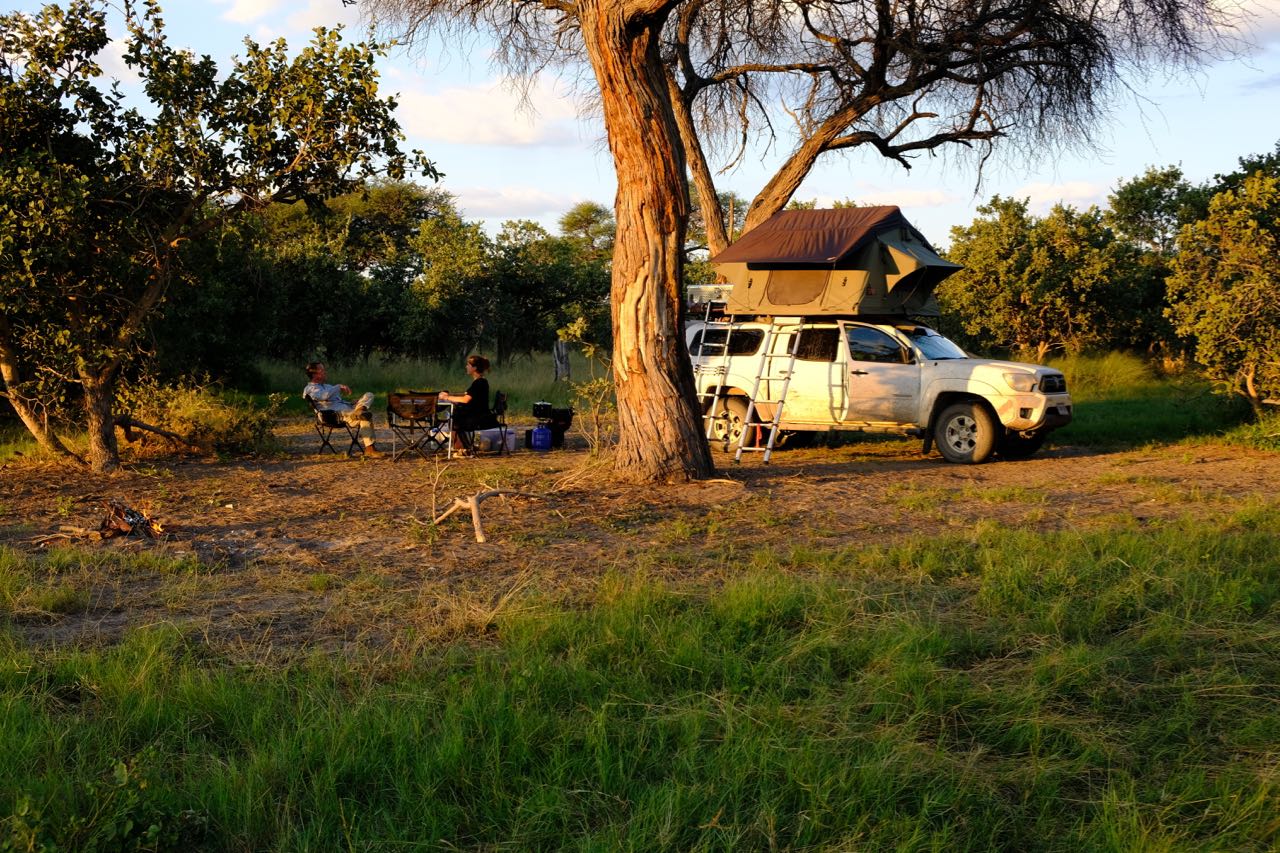
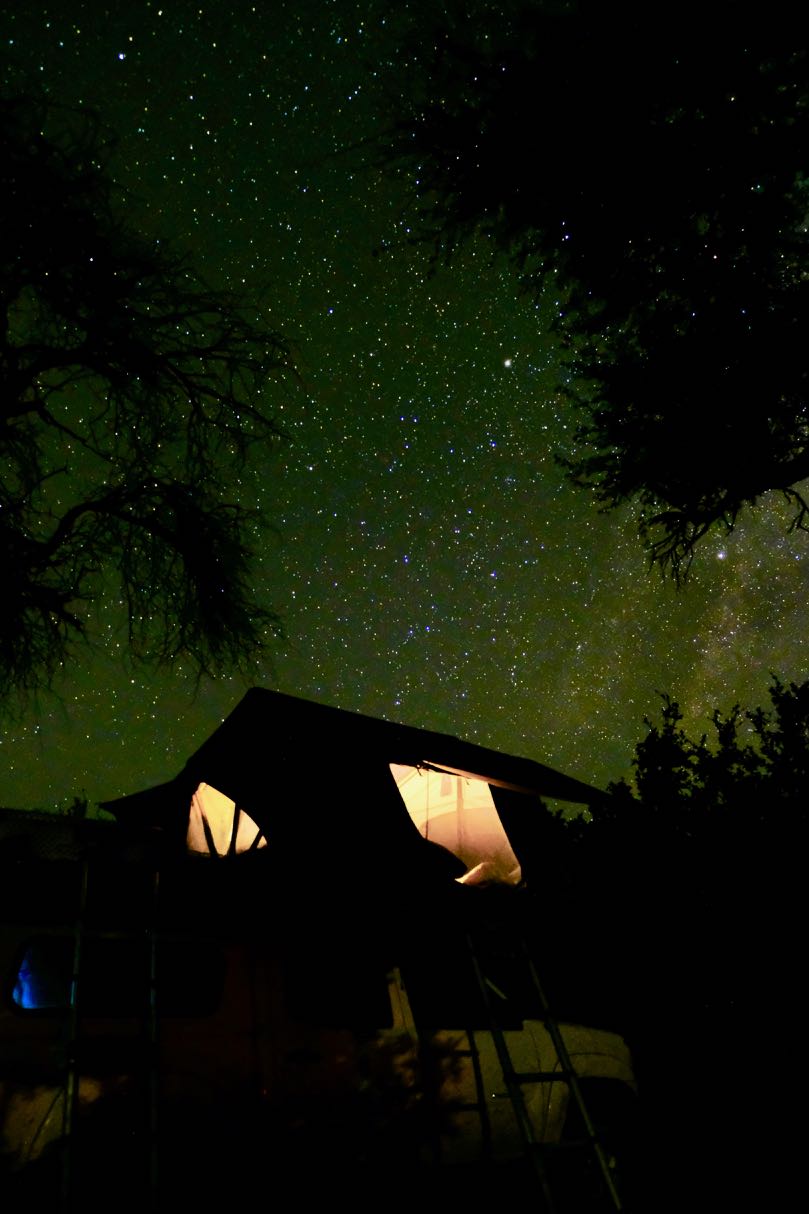
    We planned a six-day self-drive through the Chobe-Savuti-Khwai-Moremi areas in the north-west.  As it was the end of the rainy season, we did not expect to see much game, but the landscape is amazing and the sense of remoteness inspiring, so we went anyway.  On our first night, we were the only people in camp.  The camp guard had warned us not to walk to the ablutions (toilet/shower) after dark as there are many animals in the area including lion and elephants.  Having learned from our experiences in Tanzania, we ate and were in the roof-top tent by sundown. A few hours later, a herd of elephants surrounded our truck, loudly munching on the vegetation and shuffling back and forth.  We could hear them breathe, hear their stomachs rumble (it sounds like plumbing backing up), hear their footsteps and even smell their earthy mustiness.  They had a little tussle where we could hear the tusks clanking together, but they never bothered us.  It was extremely exciting to have them so close.  Both Lucia and I had dreams that they bumped against the car, but we really don’t think it actually happened – we were just so close that it felt like they could.  In the morning there were torn branches and footprints, but nothing else.

    DSCF3475

    Our fourth day was spent doing the ‘sand ridge road’, a long high slog through impossibly deep sand. We had enquired at the gate as to the condition of the road and were told it was “fine”.  In reality, it was fine, but extremely tiring to drive.  The washboard which develops in the tracks is deep, so much so that the truck ‘dances’ from side to side, jostling the contents and passengers in an unending carnival ride.  It’s fun for about 10 minutes, but three hours of it is exhausting. Towards the end of the sand road, we came across a safari truck which had buried itself in the deep tracks.  We had not had to use our sand tracks yet so pulled them out and helped them free their vehicle.  Unfortunately, they did not have four-wheel drive so soon became stuck again.  We repeated the process several more times until a larger vehicle (six-wheel drive) came along to help.  Such is life in the bush – while help may not be immediate, when someone comes by they stop and do what they can to assist.


    Getting to our final camp was the last great adventure of our trip.  There are two main roads that lead to the camp – the normal route and the ‘dry road’ which is used during the rainy season.  Although the ‘dry road’ is longer, it avoids a large swampy area that is impossible to pass once it rains.  When we registered at the gate, the ranger reminded us to take the dry road as there was still significant standing water on the other route.  She said that the ‘dry road’ is well marked so just keep our eyes open and all will be good.  The ‘dry road’ is not labeled as such on our navigation app (Tracks 4 Africa) so we just followed the normal route but were keeping an eye out for signs to the ‘dry road’.  We picked our way through some dense brush and along bumpy tracks, but the road was dry and definitely passible.  At one point, there was a road which went off to the left around a very large puddle. Typically the other end of such a bypass meets up with the main track after a few hundred meters, but this one did not.  It twists and wound its way through dense scrub and low-growing trees for nearly a kilometer.  We had to drive over smaller trees and through the scrub, turning tightly to fit between the larger trees, but since the terrain was dry, we were ok with it. Eventually the path came back to the well-worn track and we were confident that we had found our way…. that was until the track descended in to a huge body of shallow water, more like a lake than a puddle, and definitely not crossable.  As I consulted the map to find possible routes around, a guy in a truck came out of what seemed like nowhere.  He pulled up alongside us and casually asked, “Hey, where you headed?”  in an American accent. When we told him, he smiled and said, “You probably want to take the dry road, this way will ruin your holiday!  I’m only here because I have to check on things.”  It ends up that the sign for the turn-off for the dry road was not visible from our direction because of the puddle bypass.  Coming from the other direction it was obvious.  Crisis averted through the kind guidance of strangers, we continued on our way.
     

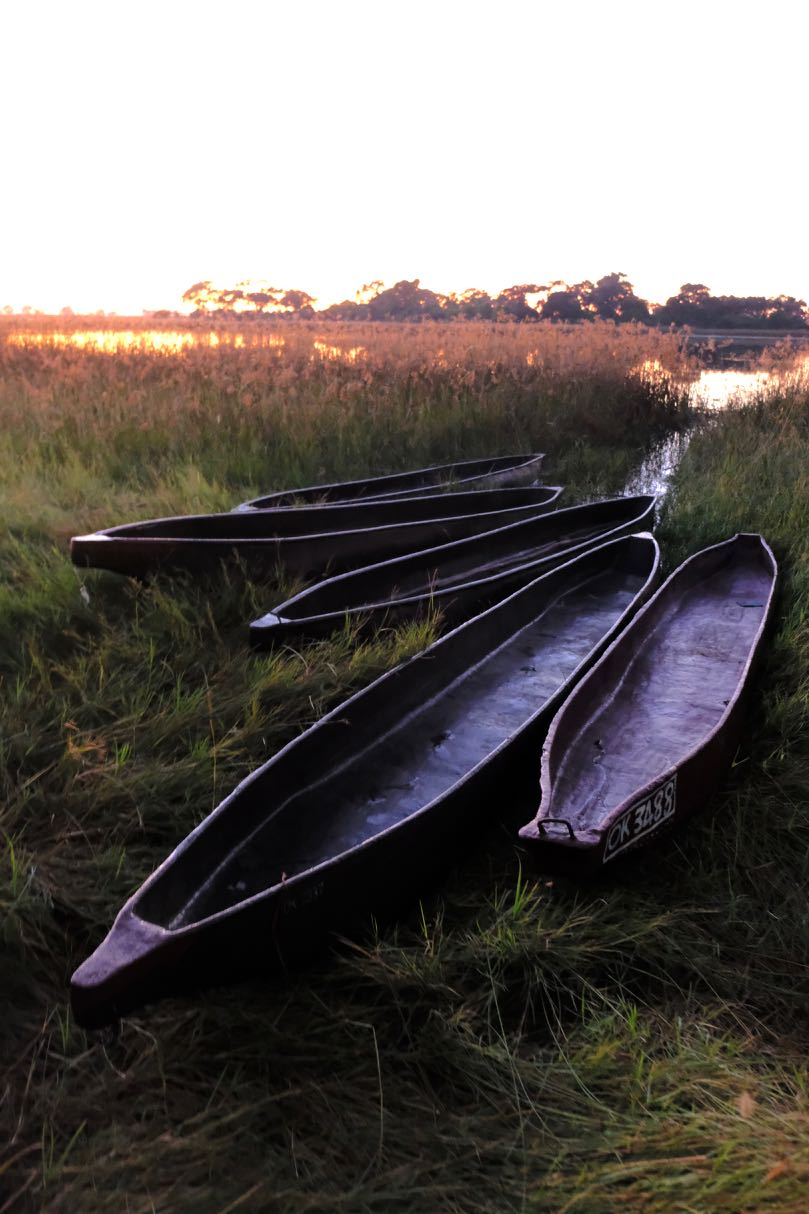
    Our final camp, Third Bridge, is located on the far side of the third bridge you cross over a slow-moving but wide river and surrounding marshes.  Following the directions on our navigation app, we approached the ‘first bridge’ with a bit of trepidation.  Made entirely of local logs strung together with unknown hardware and an unknown foundation, it looked quite rickety and squeaked and creaked so much that it was quite disconcerting.  We proceeded slowly, carefully, wondering the whole time what would happen if the entire bridge collapsed under our weight.  About half way across, we still couldn’t see the end of the bridge.  Colburn’s pre-trip reconnaissance had found that this happens with sometimes – the bridge ends in a large pool of water – a ‘wet exit’ – which must be traversed. This looked as if it ended in the reeds of the Okavango without a track to follow, not exactly what we wanted to do but also not completely unexpected.  Scanning around to see if I could see tracks anywhere on the other side, I spotted a lovely and much newer bridge just a hundred meters to our right that had a clear exit point!  We were on the old, retired bridge that hadn’t been used in years so had to reverse our way back across to find the road and the entrance to the newer bridge. The second bridge was short and easily crossed without concern.  The third bridge was one that knew had a ‘wet exit’ so were not surprised by the large pool of water at the end.  We were, however, a bit surprised by the depth!

    DSCF3748

    In the end, all was well and we thoroughly enjoyed our time there.  Botswana has adopted a high cost-high value approach to tourism. This means that the costs of visiting here are significantly higher than in the surrounding countries like South Africa, Zimbabwe, and Namibia.  It also means that there aren’t as many people so the wildlife isn’t as impacted by human presence.  The wildlife was not as abundant as we had hoped for, but there were plenty to keep our attention and we even had wild dogs running past our camp one night.  The infrastructure is well developed so it is completely possible to do it on your own, but only if you have a sense of adventure because as Dorothy said in the Wizard of Oz, “we’re not in Kansas anymore!”

    DSCF3218

  • Peaceful Papua

    Peaceful Papua

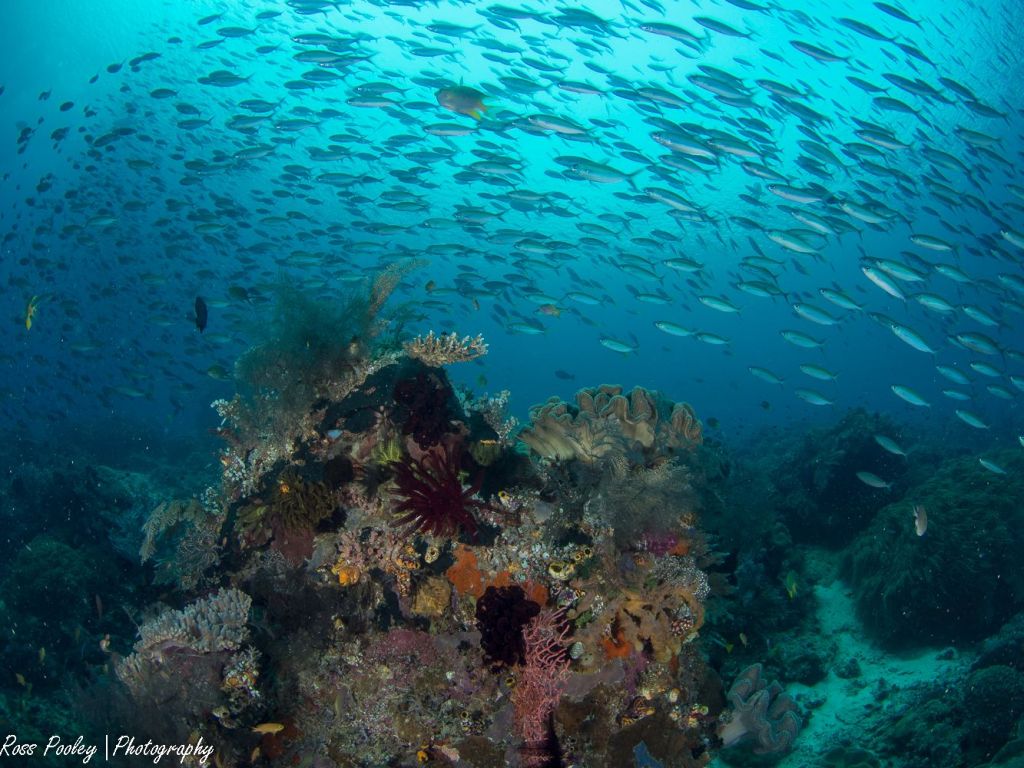
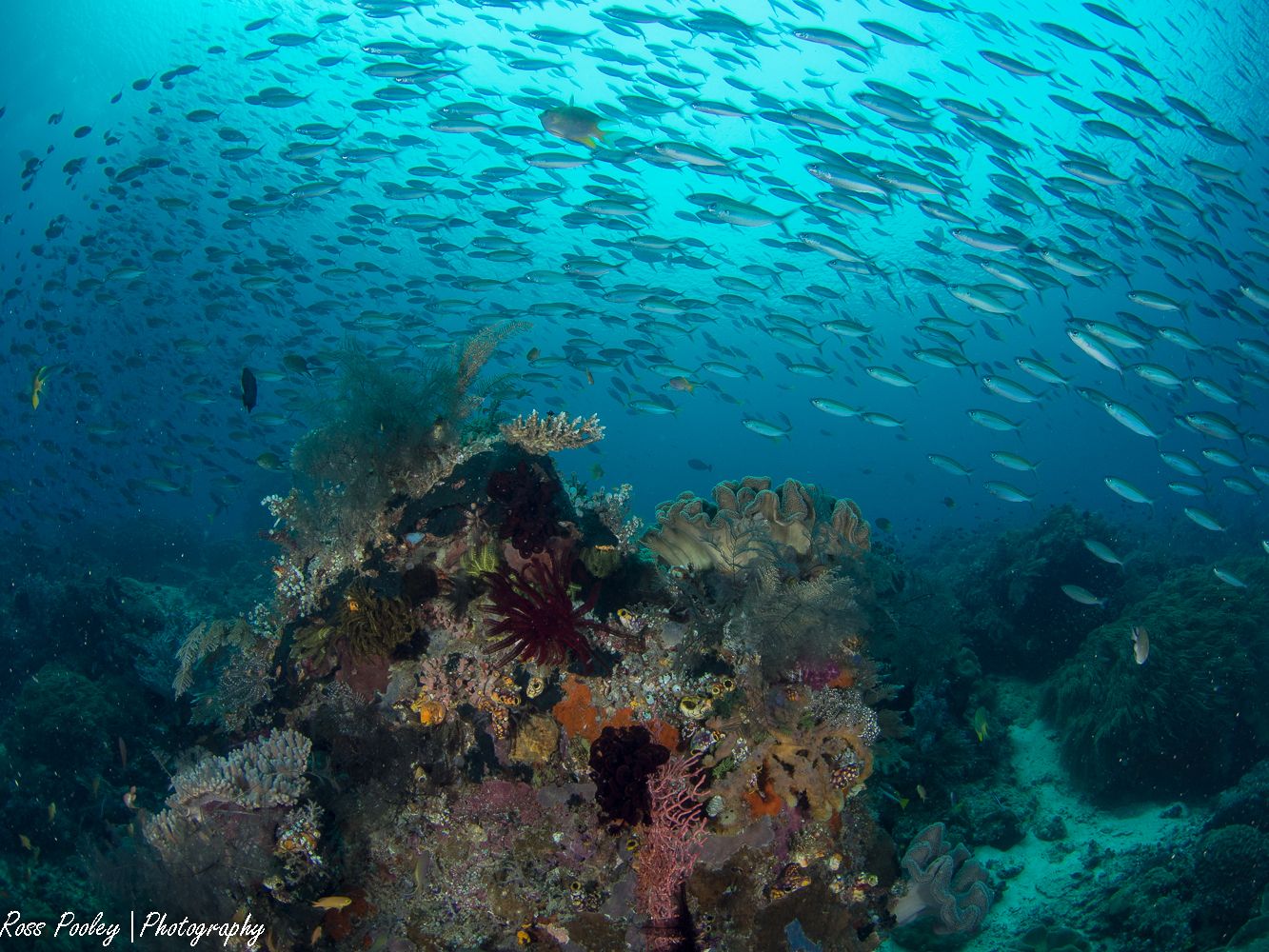
    Healthy corals (Photo: Ross Pooley)
    Healthy corals (photo: Ross Pooley)

    Located off the north-western side of the island which is split between the countries of Indonesia and Papua New Guinea, Raja Ampat is an archipelago in the middle of the Coral Triangle with incredible marine diversity.  We ventured here because it holds some of the last pristine coral reefs anywhere in the world.  Noted naturalist and broadcaster, David Attenborough (Mac’s idol since he was 5 years old) says that a single reef in Raja Ampat can contain more species of coral than in all of the Carribbean – 75% of all known species grow here.  And, having seen it, I believe that these claims might well be true.

    One of several turtles we saw snorkeling
    One of several turtles we saw snorkeling

    Coral reefs world-wide are dying at an alarming rate.  It is estimated that 25% of all coral reefs are now damaged beyond repair with another 60% are under imminent risk because of a combination of factors including rising surface temperatures, ocean acidification due to increasing CO2 levels, rampant costal development causing both pollution and sedimentation as well as over-fishing and destructive fishing methods (dynamiting, poisoning). Science does not yet have an answer for why the reefs of Raja Ampat have survived better here than in other areas but they appear to be more resistant to high surface temperatures, somehow making them less likely to suffer from the bleaching and coral disease that have decimated other areas of the oceans.

    Mayhem  (photo: Ross Pooley)
    Mayhem (photo: Ross Pooley)

    Healthy reefs support health fish populations so this area also has some of the greatest biodiversity of anywhere on Earth because it is at the crossroads of two major oceans – the Pacific Ocean and the Indian Ocean.  Like in the Galapagos, cold currents bring nutrients from deep in the open ocean to the surface when they hit the shallower waters of the archipelago.  Unlike many shallow seas which are devoid of nutrients, the nutrient-laden water supports a wide variety of fish – more than 1,500 different species and nearly 700 mollusk species.

    Note the shark in the back is grabbing a fish (photo: Ross Pooley)
    Note the shark in the back is grabbing a fish (photo: Ross Pooley)
    Little Nemo fish
    Little Nemo fish

    All of these factors combine to make one incredible place to visit.  Although many people would wait until they had more dives under their weight-belts to venture this far, we decided that if we waited to go to Papua, we probably would never see it.  You see, getting there is not easy – which is probably good because too many people would go if it was easier to get there.

    Our favorite surface interval spot, Kri Beach
    Our favorite surface interval spot, Kri Beach

    Our journey began in New Zealand with a 10 hour journey to Denpasar, Bali via Brisbane, Australia.  After clearing Indonesian immigration and switching to the domestic terminal, we took an hour-long flight to Makassar then had to spend part of the night there because our second leg didn’t leave until 3:00am.  Arriving in Sorong, West Papua, at 6:30am, we waited until 11:00am for our boat to the island, which was another hour-and-half journey. All-in-all, the entire journey took us something like 30 hours, only about three of which were actually spent sleeping, and that was beginning relatively close by in New Zealand.  You really have to want to get to Raja Ampat to go there, but it is definitely worth the effort.

    Mantas (photo: Ross Pooley)
    Mantas (photo: Ross Pooley)

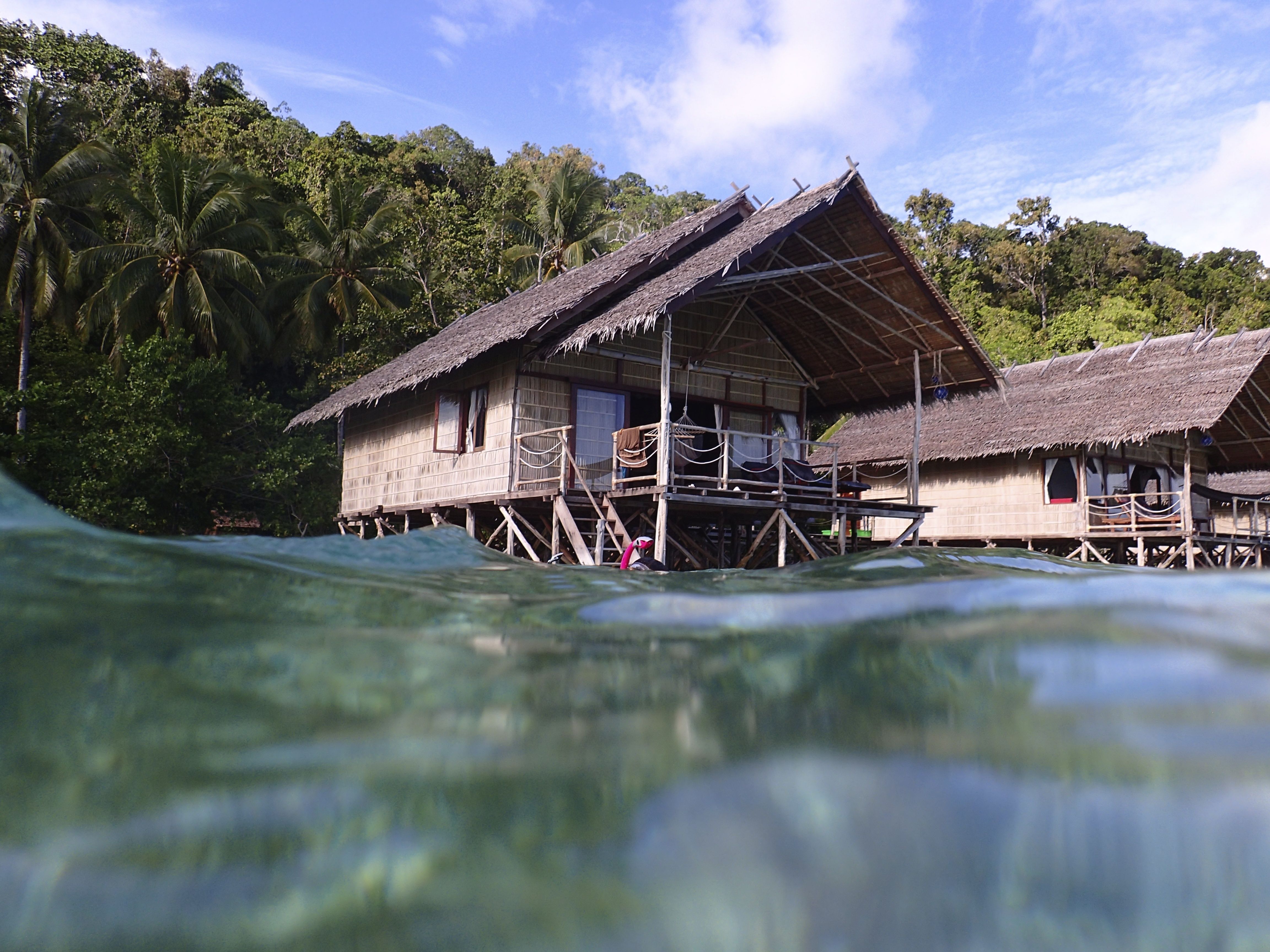
    We chose a relatively new resort, Papua Explorers, because it offered the right mix of both diving and non-diving activities.  We aren’t really big scuba divers, so don’t plan our days around getting in as many dives as possible. Instead we wanted to learn about life both above and below the water.  PapEx helped us snorkel as a family, visit local villages, find the elusive Red Bird of Paradise and get some phenomenal diving in for the parents as well.

    Snorkeling in the blue waters
    Snorkeling in the blue waters

    The snorkelling and diving were incredible – pictures only capture momentary glimpses of what we experienced.  Beyond the myriad of fishes, we saw octopi fighting, were visited by reef sharks on nearly every dive, watched manta rays being cleaned for probably 20 minutes, found woebegong sharks hiding under rocks, observed the diminutive pygmy sea horse (even a pregnant one!) hanging on to sea fans and were surrounded by more fish than I ever thought existed in the world.  There were three baby black-tipped reef sharks and a blue-spotted ray that swam under our bungalow porch like clock-work every morning and evening.

    The baby sharks and rays would hang out under our bungalow
    The baby sharks and rays would hang out under our bungalow
    Mac inspecting a tiny sea star
    Mac inspecting a tiny sea star

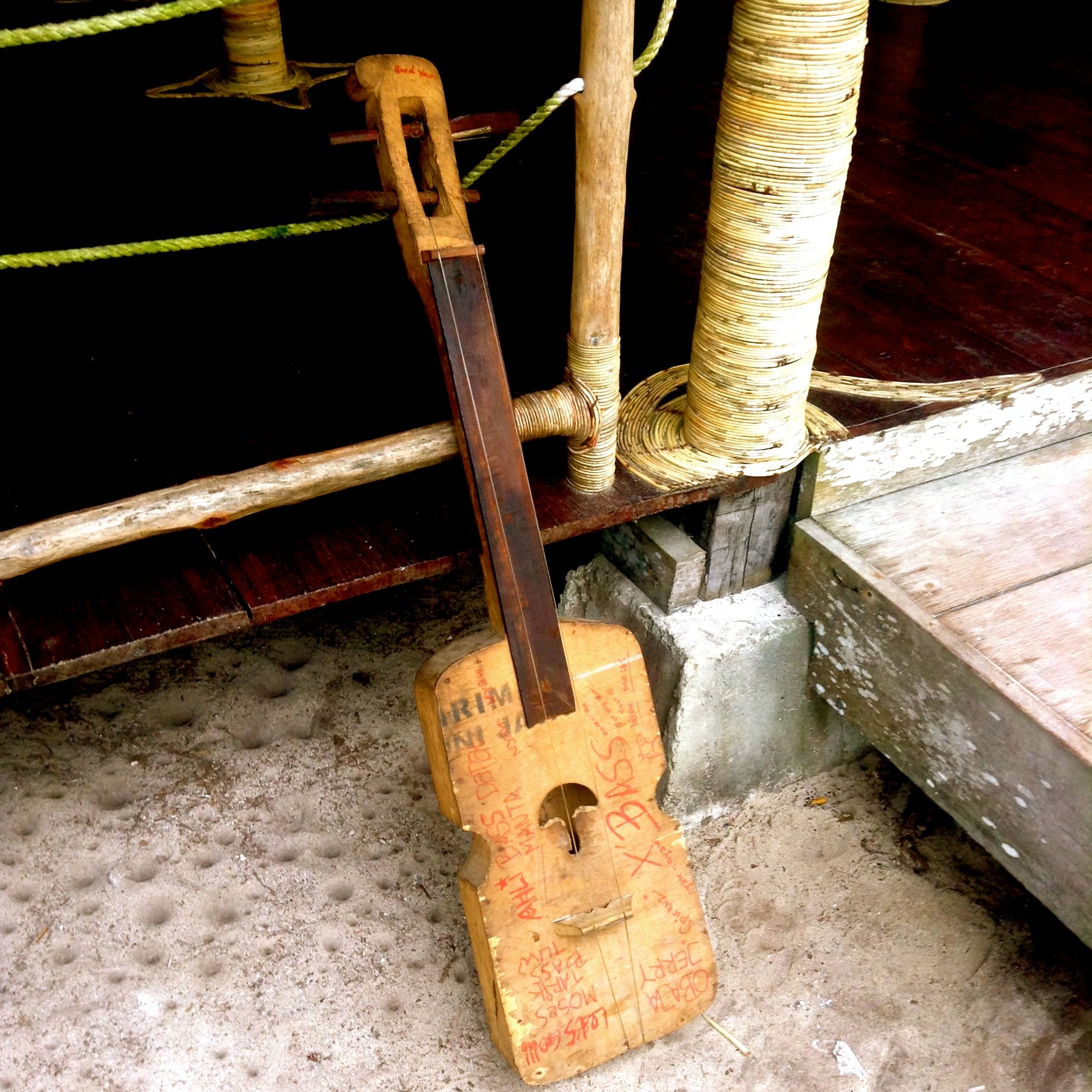
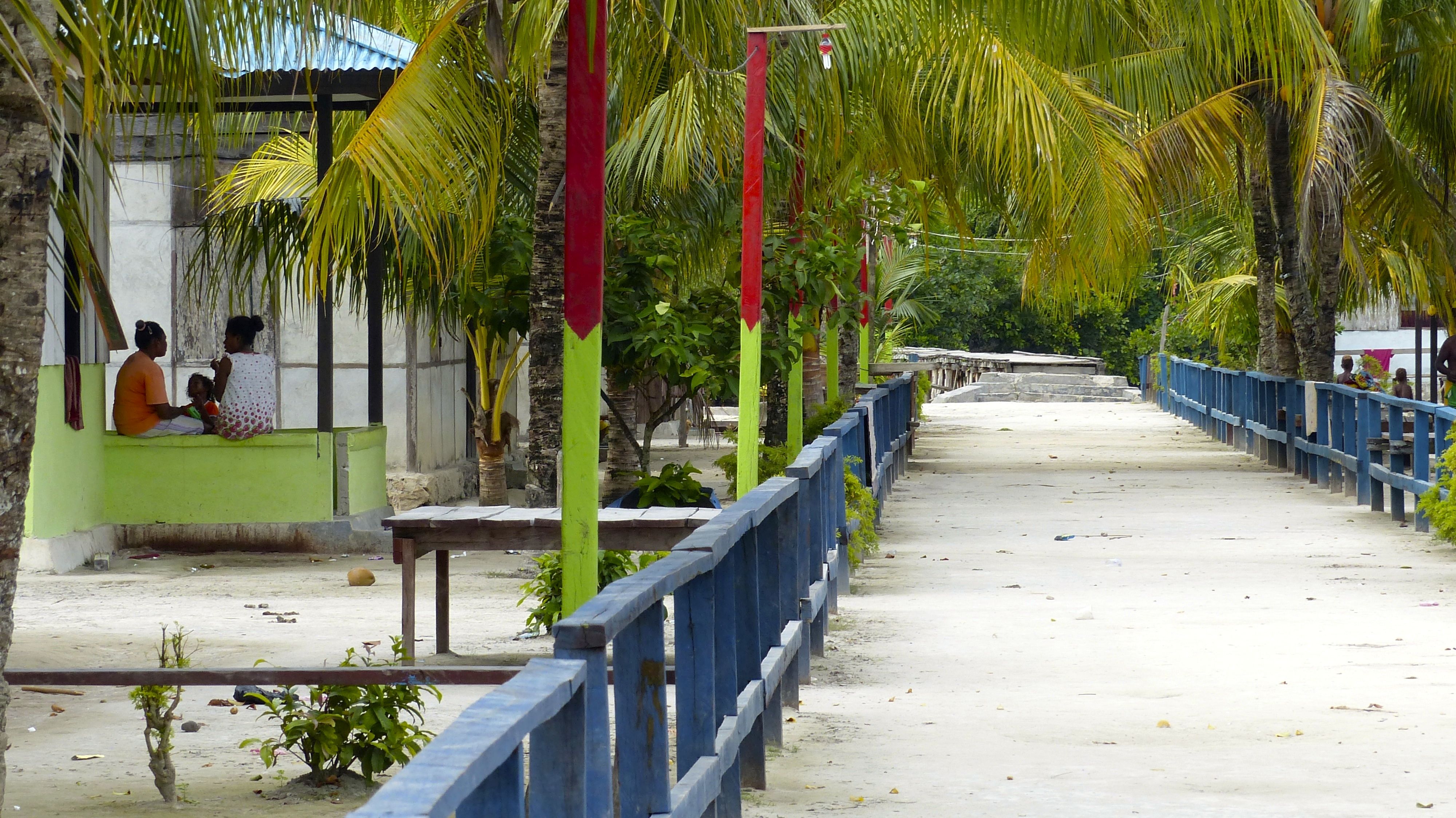
    But, more than the marine life, the things we enjoyed most about Raja Ampat were the people.  The local Papuans are peaceful, soft-spoken, quick to smile and always singing or playing an instrument.  We visited a village on Arborek Island where we were allowed to walk through town without once being accosted by people trying to sell us trinkets and treasures.  In nearly two years of travel, this is the first time that I can recall where literally no one asked us to buy anything.  In fact, there was nothing but biscuits and toilet paper for sale – no necklaces, bracelets or sarongs.  The people smiled at us, waved, and went about their day, seemingly happy to share their island with us without expectations.  It really makes me wonder why the people of Papua have not succumbed to exploiting tourists in the same way that nearly every other place we have visited has.

    Always music around
    Always music around
    The village near our resort - extremely tidy and nothing for sale
    The village near our resort – extremely tidy and nothing for sale

    Our main dive and snorkelling guides, Hervil and Moses, are brothers from a neighbouring island.  While their English is limited,  Hervil’s zen-master confidence diving put our nervous nelly tendencies at ease.  Moses seemed to enjoy playing with the kids in the water as much as they did, but also found lots of critters to look at as well, striking the perfect balance and keeping them interested day after day.  Our other guides and boat drivers, Obaja, Ismail, Derek, Manu, Nathan, Gundawan and others were wonderful as well – we just didn’t spend as much time with them as we did with Moses and Hervil.  Everyone made us feel very welcome and well looked-after every day.

    Most of our dives/snorkels were guided by Hervil & Moses
    Most of our dives/snorkels were guided by Hervil & Moses

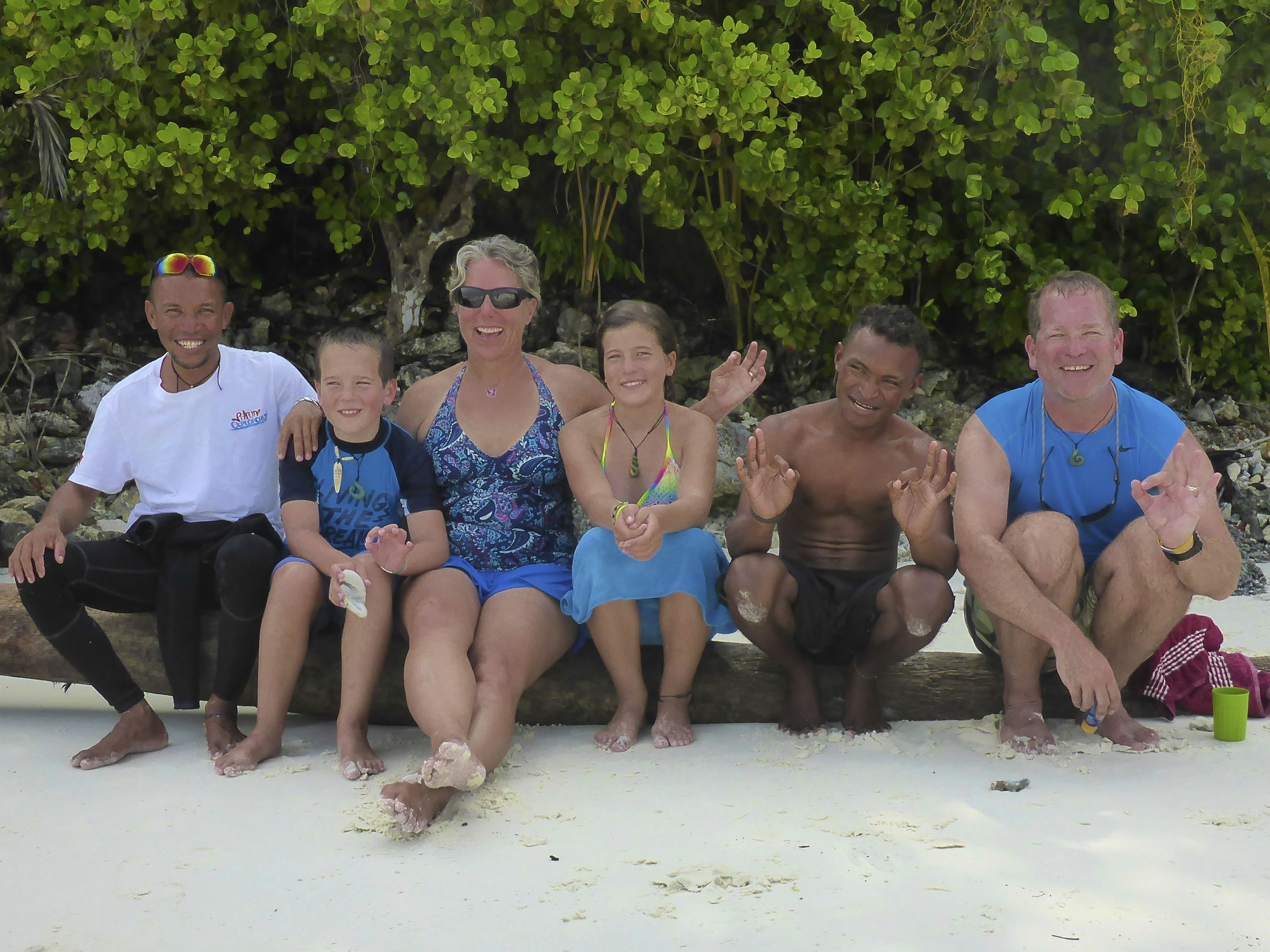
    We were also fortunate to have an incredible group of guests with us almost the entire two weeks we were there – Marquee and Jay from Chicago, Sonia and Richard from Portland, and Joonas and Camilla from Finland – making the time out of the water as enjoyable as the time diving and snorkelling.  They embraced the kids as equal members of the group, not just something to be seen and not heard.  This made our time together even better, especially for Mac and Lucia who now exhibit the traveller’s love of sharing stories from the road, but are often over-looked during the dinner-table discussions because they are “just kids”.  Not so in Papua.  We would love to come back again sometime soon.

    Having fun in Raja
    Having fun in Raja
  • The Unknown

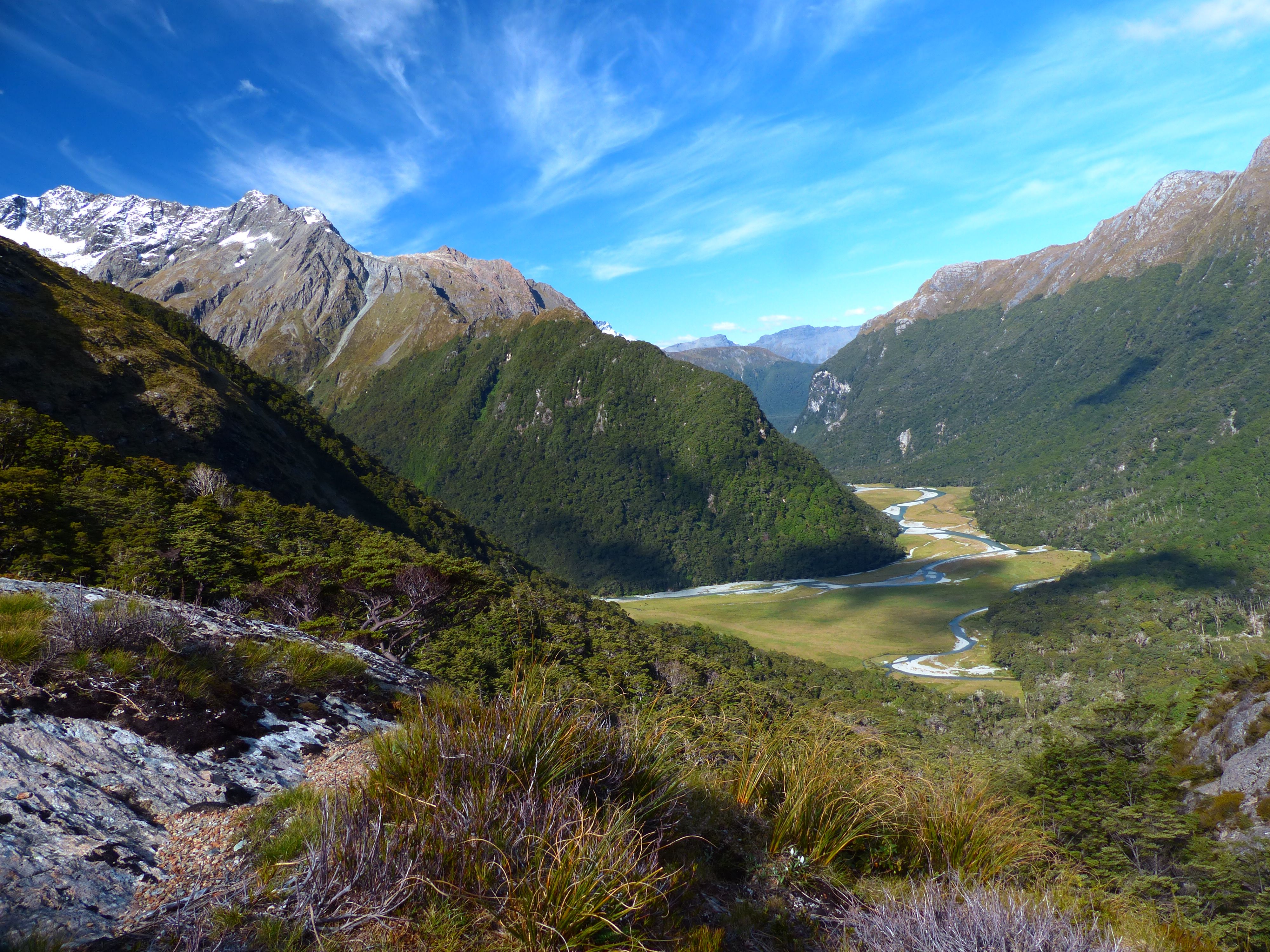
    The view from our last hut
    The view from our last hut

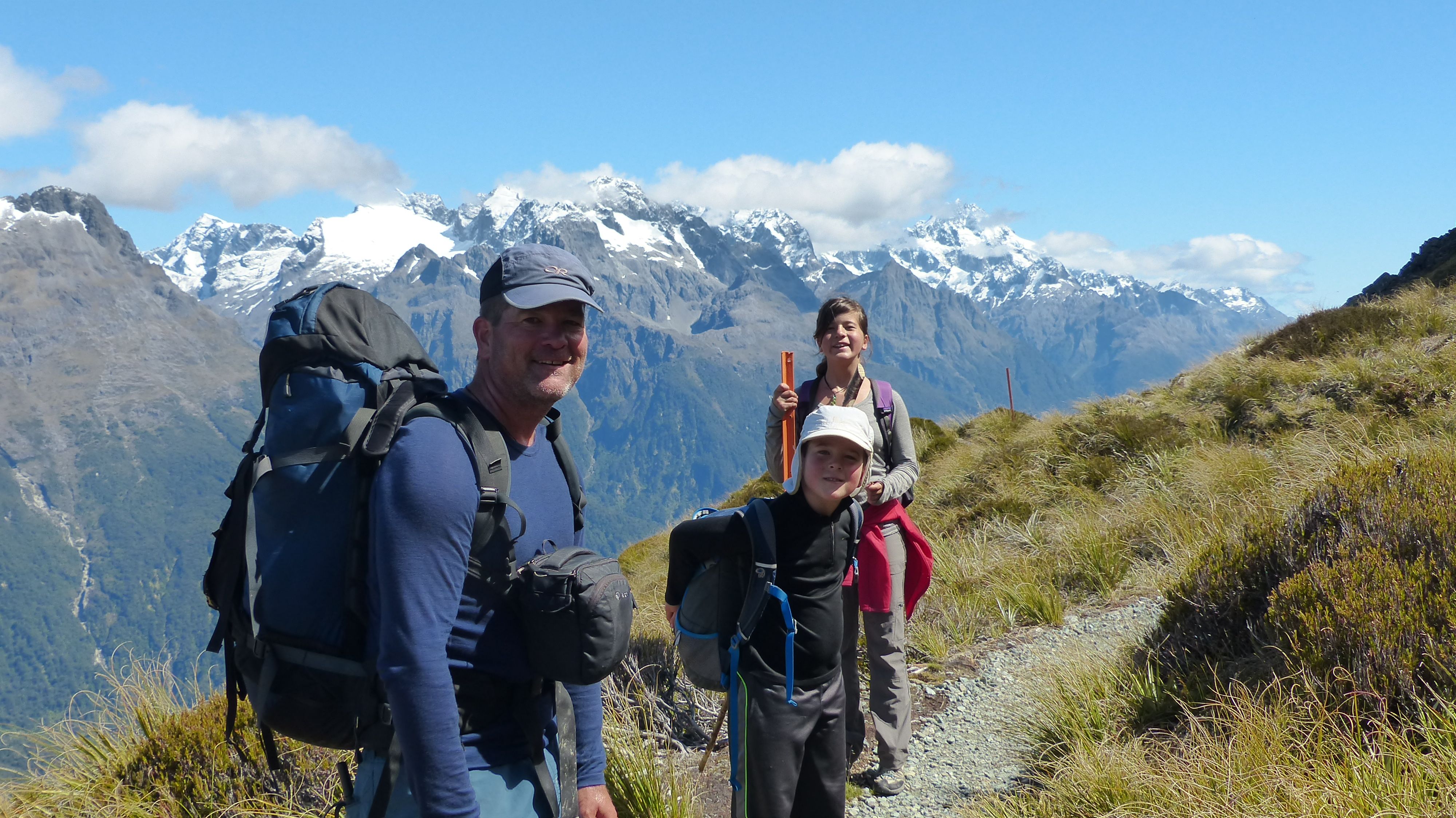
    As I stood at the sink of the hut doing the breakfast dishes on our last day of trekking, I asked the woman standing next to me, a Danish mother of an 8 month old baby, what their plans were for the day.  Expecting to hear, “heading out”, “going to see the lake” or something similarly safe, I was moderately surprised when she replied, “Heading to MacKenzie”, a trekking hut some 12 kilometers over a moderately steep alpine pass away.  We had done the walk the day before and enjoyed it tremendously, but it is the middle day of a 3-4 day high alpine trek in New Zealand — not something you expect to be done with a young child.  Initially I was taken slightly aback by the response, but as I considered it further, I said, “Wow, I really admire you!” To be honest, we love adventure, but I don’t think it would have ever even crossed our minds to take our infant on a multi-day hike where you have to sleep in dorms of 25-28 beds.  We were challenged by car camping trips to Yosemite and Lake Tahoe, so I was impressed by the courage and confidence that these young parents showed.

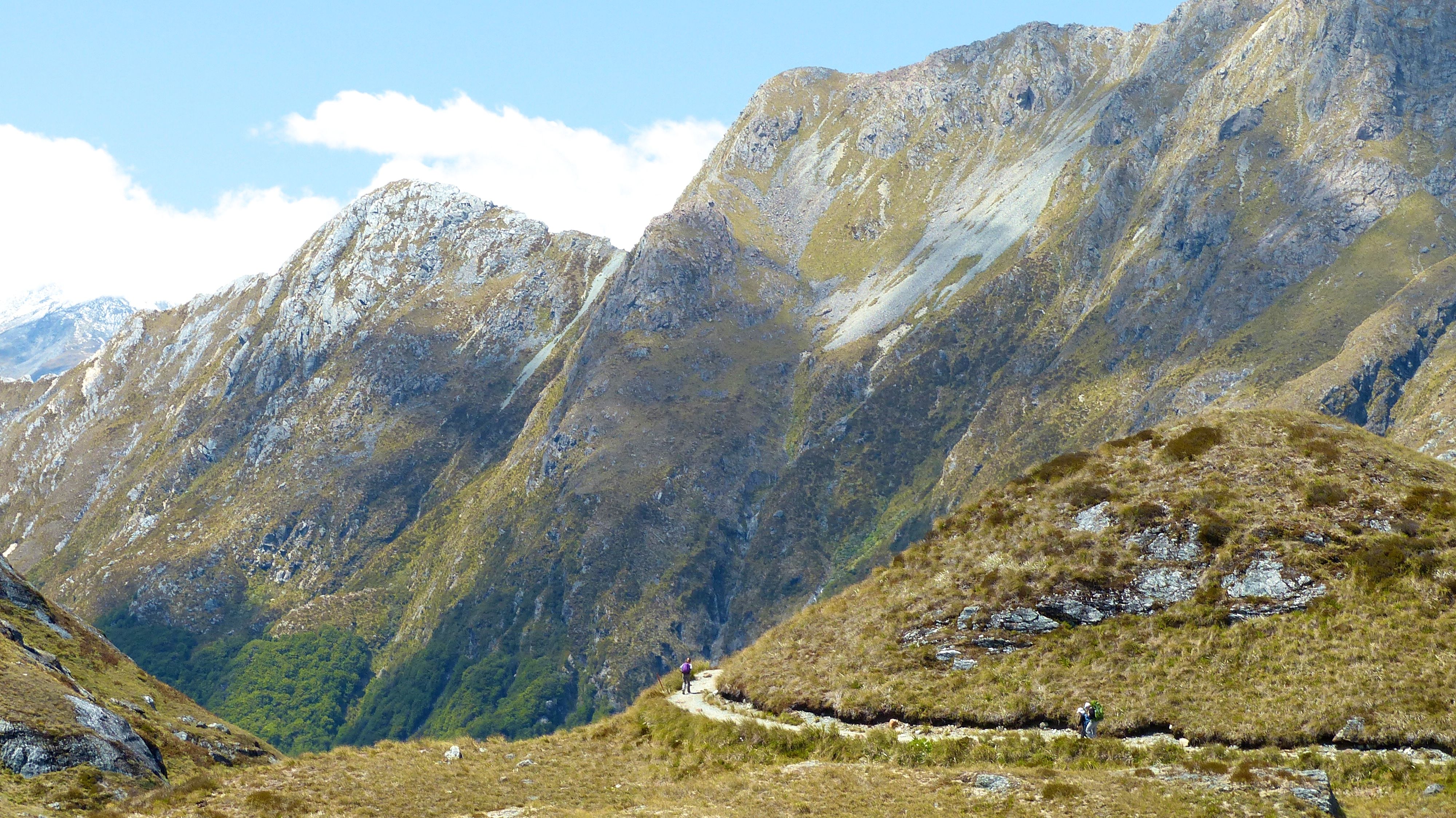
    The Harris Saddle
    The Harris Saddle to Lake Mackenzie

    But, they weren’t doing this walk on a whim or as a spur of the moment decision.  They had thought about the challenges of taking an infant trekking and came to the conclusion that they could handle any situation that might come up.  The walk they chose is on a very well maintained route (at least half of which is a meter wide gravel bridle path) with only intermittent rocky or steep areas.  The facilities are exceptional with cosy warm huts every evening, running water that can be consumed without treatment, and flush toilets.  They planned their trip so that the first night was only a half-day hike away from the car so should the situation be too challenging for them or their baby, Elena, they could easily descend.  They had been ready to abort the trip because the weather was quite unsettled for a few days before they began walking, but it had cleared and was predicted to be beautiful for their three nights/four days.  They had planned that each evening her partner would make an announcement during the hut talk that although their daughter is normally a good sleeper, they had extra ear plugs for the other people in the bunk room with them in case this was one of her off-nights.  The night we were with them, someone in the corner of the room commented that they wished that the people who snored would have been so thoughtful!  Everyone in the hut seemed quite content to have such a young hiker amongst them and appreciated the thoughtfulness of the parents.  Elena spent the evening being adored by young and old alike.

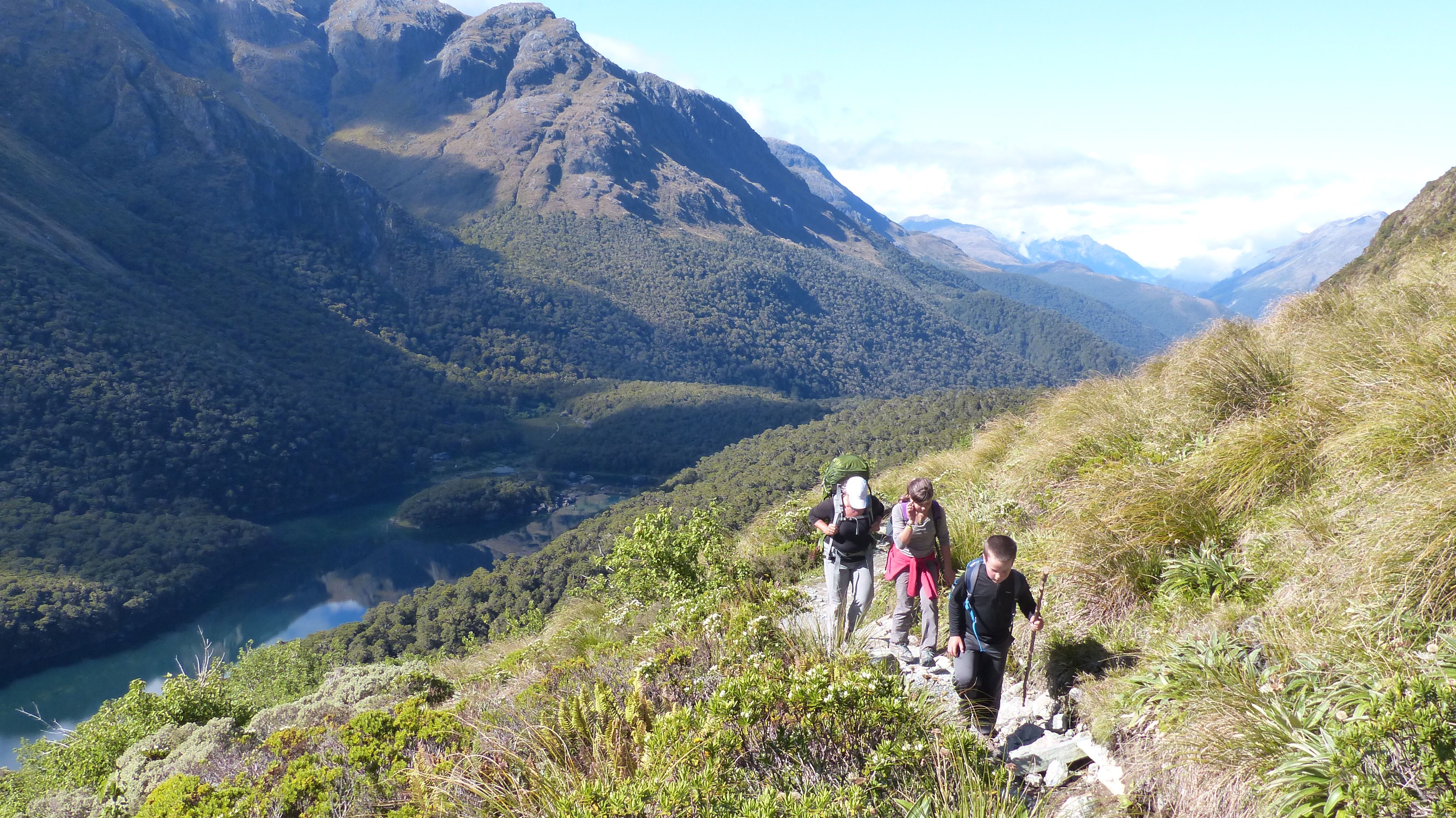
    Ascent
    Ascending from Lake Mackenzie

    As our conversation about doing things with children continued, a Polish father hiking with several kids and also doing breakfast dishes with us, joined in commenting that he felt many people can only see a myriad of reasons why they should not do something rather than the few but compelling reasons why the should do something.  Together we pondered why we were all in New Zealand, a half-a-world away from our respective home countries, trekking with our children, when there are so many reasons why we shouldn’t be on such an adventure.  The line of questioning goes something like this:  what will we do if someone gets sick?  what if the baby gets fussy?  how will we make sure the kids aren’t behind in school when they get back?  etc.  There are an awful lot of reasons why we shouldn’t be there.  But, in the end, there is really only one good reason to do something out of the ordinary — because you really want to do it, and for some people that is enough of a reason to actually do it. For each of us standing at the line of sinks that morning, none of our trips would never have happened if we let all of the reasons why we shouldn’t  do it rule our decision, yet we were all there.  What is different about us?  Why did we choose to do something which has so many reasons not to?

    MackenzieLake
    Lake Mackenzie

    I believe that it comes down to a tolerance for the unknown.  At home our lives are largely predictable and there is great comfort in that routine.  We know what our daily schedule is — kids to school by 8:30 and us to work by 9:00, a full day at work then pick up the kids for after-school activities, make dinner, get any home chores done, and be in bed by 10:30.  We have our favorite markets for groceries but also know where to go for a back-up, we have our favorite coffee shops in several different parts of town depending on where we are and can drive home without worrying about which exit to take because we go there out of habit rather than conscious thought.  If our kid gets sick, we know we can call our primary care provider for a same-day appointment or go to an urgent care.  When our kids were babies, if they were fussy, we had an armory of resources to calm them and a pile of things to distract them.  But when you step outside of this norm through travel, everything is unknown — how to navigate in a different culture, what to do with your days, how will to find your way through foreign lands where you may or may not be able to read the signs, where to find food to eat, what you will do if someone gets sick, what to do if the weather is horrible, etc. — and you have to be okay with not knowing because the list goes on and on.  As you enter the unknown and live there for awhile, a sense of accomplishment and confidence flourishes – both as individuals and as a family.

    HowdenHutGames
    Howden Hut Games

    With travel you learn that things will happen, but you will be able to figure out how to handle them.  You will experience the kindness of strangers for the overwhelming majority of people in this world are incredibly nice and will go to great lengths to help out a foreigner.   You will also find that there are a great deal more similarities in people than differences. If you let the unknown of what you will do if the baby gets fussy in the dormitories rule your decision, you may never experience her becoming the loving center of 48 people’s lives for one evening.  If you let the unknown of what you will do if someone gets sick when they are trekking, you may never watch young men at a Tibetan monastery blowing their shells and banging on their drums as they learn the meditation chants.  If you let the fear of what will happen if you get lost driving your own car through Africa, you will never share peaches with three generations of a family of wood-carvers along the side of the road.

    The notice board keeps you informed
    The notice board keeps you informed

    It is only through a tolerance of the unknown that some experiences can happen, but this is not a process one can enter blindly trusting that everything will be fine without forethought.  We, in fact, spend a great deal of time planning and evaluating our options, considering what we would do should certain situations occur. We have taken reasonable precautions to handle the foreseeable obstacles.  What will we do if someone gets sick?  We have an armory of medicines and a nurse practitioner on staff.  If she can’t handle the situation, we have an insurance policy which will help us locate English speaking providers in every country.  So far we have only had a broken toe, one case of pneumonia, a round of strep throat, a few bouts of travelers diarrhea, and two chipped teeth — all of which have been handled without any trips to a hospital and only two visits to local dentists.  What will we do if we get lost? Each of us wear a wrist band with our contact and medical information engraved on it and have a satellite phone for emergencies.

    High on the Routeburn
    High on the Routeburn

    What will we do if the area could be dangerous because of weather or political strife?  In areas where weather can have a severe impact on the experience or safety, we plan accordingly.  We wanted to go to Madagascar in March, but it is the middle of the rainy season and roads can be dangerous. It’s just not worth the risk. When we were in Nepal, a freak storm dumped snow on the route we were supposed to trek so we headed to a different area.  Our  seven day Greenstone-Routeburn trek was condensed to four because there was a major low pressure system that would have made it difficult to enjoy hiking and possibly dangerous.  Because we could change it, we did. Although everything would probably be just fine, visiting Egypt and Ethiopia are currently off the table for this round because the political situation seems too uncertain for our comfort but other areas such as Turkey, Israel and Jordan are still being considered.  We are constantly reviewing our options and making sure that blind adventure does not over-rule common sense and that we draw on multiple sources of valid information to base our decisions.  We have learned that we can handle the unknowns.

    Sunny days
    Sunny days

    One of the byproducts of a global family journey are a vast and rich wealth of stories — stories we share with each other, with family, with friends, and with other parents who wonder whether they should (or could) do something like this.  These stories are born from the adventures and have become the fabric of our vital and colorful family circus.  We have each benefitted from adventures experienced during childhood and are privileged to have had consistent and loving families our whole lives.  Early on, both of us, on opposite coasts, developed a passion for adventure.  It is the reason we found each other, working as outdoor educators taking kids on trips outside. Seeing the other families from around the world in the track hut in New Zealand, sharing stories about when things did not go as planned, triggers a moment to stop as a family and ask the question, “What other adventures are out there?” because new experiences are a wonderful facet to any family’s life.  We are more open to enjoying them now because we know we can handle them.

    Hiking was like walking through an elven forest
    Hiking was like walking through an elven forest

    And now, as we begin preparation for returning to the US, we find ourselves again facing another big unknown.  Where will we live?  We are not certain, but it will be near family on one coast or the other.  How will we handle being settled after such a grand adventure?  At this point, we are all desiring a more stable routine but also know that travel is part of our blood.  This means that the thing we are currently longing for will also be challenging. Will we go back to the same professions?  Maybe, maybe not.  Colburn is going back to the US in February for interviews because he has found a few options which seem to combine his love of leadership with a bit more adventure and creativity than he had previously. If something pops up that feels right, we will follow that opportunity.  If not, we are considering other opportunities which will allow us greater flexibility so that we can continue to explore while living a more settled life. Perhaps the hardest thing to face will be heading off to our respective days without each other: the kids to school and the parents to work.  Driving away from each other even though only for 8-10 hours, after these two years, will be heart-wrenching.  We don’t wish to hasten that day, however, it must come.  In just a few months, we will again step in to the unknown of life after a grand adventure.

    DandC
    A grand adventure together!


  • The Most Perfect Week Ever

    Skills session in the pool
    Skills session in the pool

    Traveling is different than vacation.  Vacation is for relaxing and having “down time”, but traveling is  hard work.  Yes, it great fun and there is little else we would rather be doing, but at least the way we travel, it is also a lot of work. We need to have an idea of not only where we want to go and what we want to do, but also how to get there, what is needed before we get there (i.e. visas, plane reservations, arranging for a car to meet you at the airport, etc.), where to stay, where to find food, what the best activities are, etc.  On top of the travel, we must try to conjure up something for Christmas, homeschool our kids and still keep up with our regular duties (i.e. preparing for taxes in not too long, making sure our renters are not having any problems in the houses, etc.).  As the Count says in the Princess Bride, “I have a marriage to plan, my wife to murder, and Guilder to frame for it.  I’m booked!”

    All OK underwater
    All OK underwater

    After traveling for the better part of a year and a half, we were incredibly tired, the kind of tired where you don’t want to get dressed all day and just want to eat ramen and cold pizza.  We didn’t want to have to think about where to go for dinner, what restaurant would have food which was not too spicy for the kids to eat, worry about them getting run over by motos and taxis every time we left our hotel/apartment/room, etc.  We just wanted to relax for a while and catch our collective breath.  The first place we thought of was Thailand.  Colburn and I had gone to Thailand as we ended our last Asia trip in October of 2001.  We really enjoyed the ease of travel, the amazing food, and the very kind people we met during that trip.  It is also a great place to “splurge” without breaking the bank as the dollar goes pretty far here.  We decided that Thailand would be where we would take a vacation from our travel.

    OLYMPUS DIGITAL CAMERA

    A quick internet search landed us with a phenomenal rental villa on a relatively quiet island, Ko Lanta.  Unlike its much busier neighbors, Phuket and Ko Phi Phi, Ko Lanta was not wiped out by the 2004 tsunami and has retained its laid back beach vibe despite significant growth in the past few years.  To be certain, there are full moon parties, new moon parties, half moon parties and just about every other kind of party, but they are all very low-key in comparison to Phuket and Phi Phi.  The population of Lanta is largely Muslim, not Western, so tourism has not steam-rolled the local population as it has elsewhere.  It is also somewhat difficult to get to (2.5 hours from the nearest airport including two car ferries).  We found a great villa that was a huge splurge for us, but one that we thought we could afford given all the budget-conscious accommodation we had in Nepal and throughout Europe.

    Our welcoming towel sculpture.  There was a new one most every day.
    Our welcoming towel sculpture. There was a new one most every day.

    Arriving in the early evening just as the sun was setting, we were giddy with excitement as the villa was even better than we had anticipated.  Located up on a hill with endless views across the Andaman Sea, but only 5 minutes to the main beach area. It is spotless, modern and built with exceptional craftsmanship.  Fresh flowers, beautiful towel sculptures, and even a cold beer awaited our arrival.  We felt as if we had traveled to a different planet.  Definitely not a resort, but with all the conveniences of having a full staff, everything is handled for you by the owners, Luk and Ian, and their staff.  If you’d like dinner brought to the villa, just let them know what you want and they will get it take out from their favorite local restaurants then serve it plated in your villa.  Need dinner reservations or a driver for the day, no worries.  Everything was just perfect for us to relax.  We were enjoying having a beautiful, climate controlled, modern home so much that we didn’t even leave the house for the first couple days.  We had food brought in, caught up on sleep, played in the pool, did some school and watched videos.  We planned the second half of our year and made reservations.

    Lucia and Steve
    Lucia and Steve

    Around day three we began to get a little itchy to do something other than sit around so decided to check out the diving scene.  We aren’t really scuba divers, but Colburn and I did do an open water course13 years ago which we loved. We just haven’t had the opportunity to do a lot of diving.  Our villa manager called their favorite dive shop and the manager tracked us down at dinner that night.  Lee was personable, relaxed, and seems like a really competent yet unpretentious guy.  He explained that it would only take a quick refresher to get the adults back up to speed and the kids could do kid-specific intro courses simultaneously – “bubble maker” for Mac (depth limit 2 meters) and “discover scuba” for Lucia (depth limit 12 meters).  Everyone was excited to try diving, so we signed up.  A bit nervous, we showed up at the dive shop the next day for our pool session.  When your 11 year old is going to be breathing under 12 meters of water for the first time, you want to make sure that you have confidence in who will be monitoring her safety.

    OLYMPUS DIGITAL CAMERA
    Mac and Harun

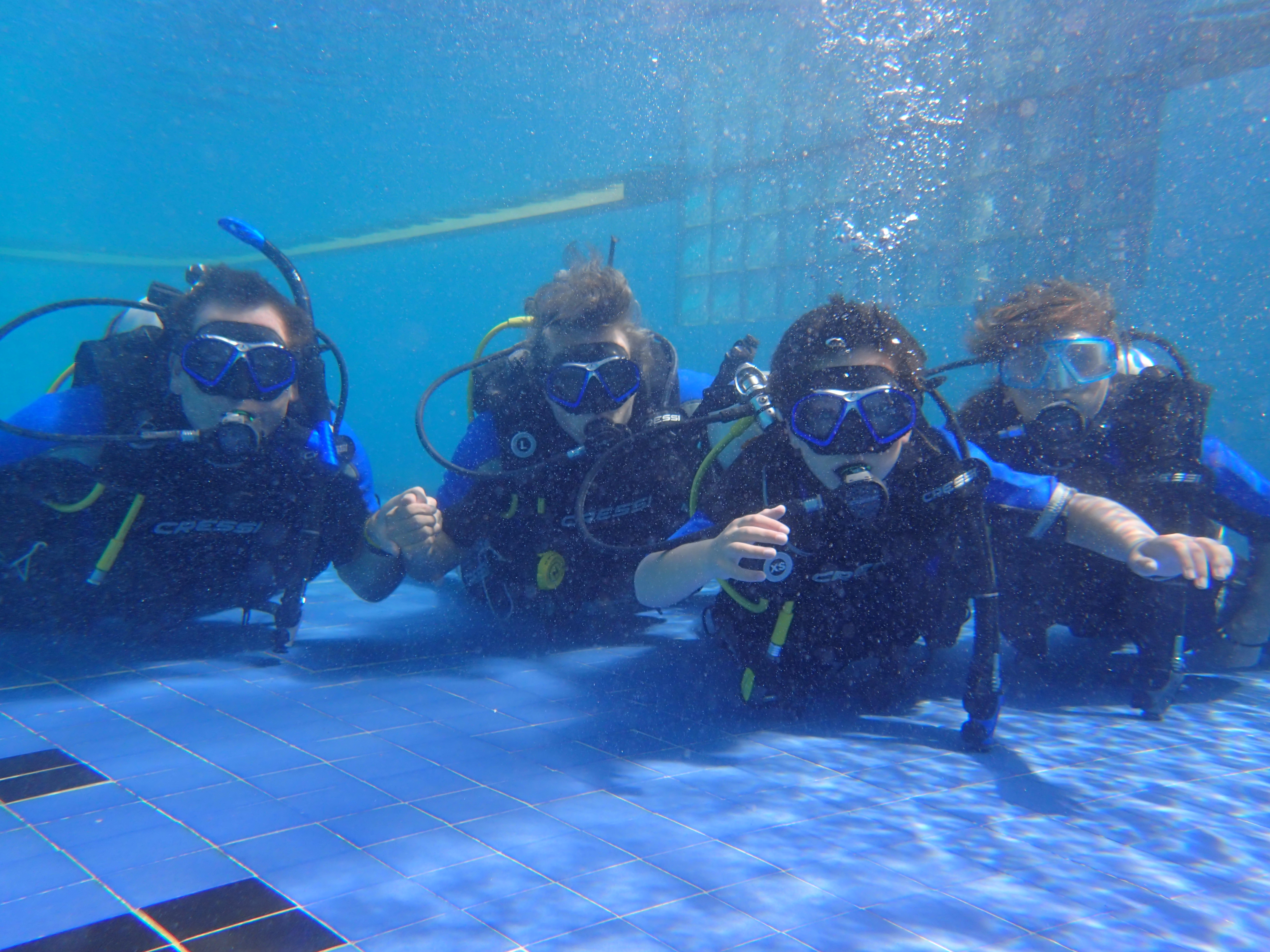
    Within minutes of meeting our phenomenal dive instructors, Steve and Harun, we all felt relaxed and comfortable about what we were going to do.  Both men are casual yet very professional, genuinely caring, and excellent teachers.  A quick review of essentials and some time practicing underwater skills like equalizing your ear pressure, clearing your mask of water and retrieving your regulator should it fall out were accomplished quickly.  Harun said that he knew the kids would be fine when he told them to watch his demonstration of regulator retrieval but instead of watching they copied him step for step as he was showing the skill.  As the lesson came to a close, he showed us how to blow bubble rings underwater, quickly creating a new obsession for us all.

    Bubble rings!
    Lucia working on her bubble rings

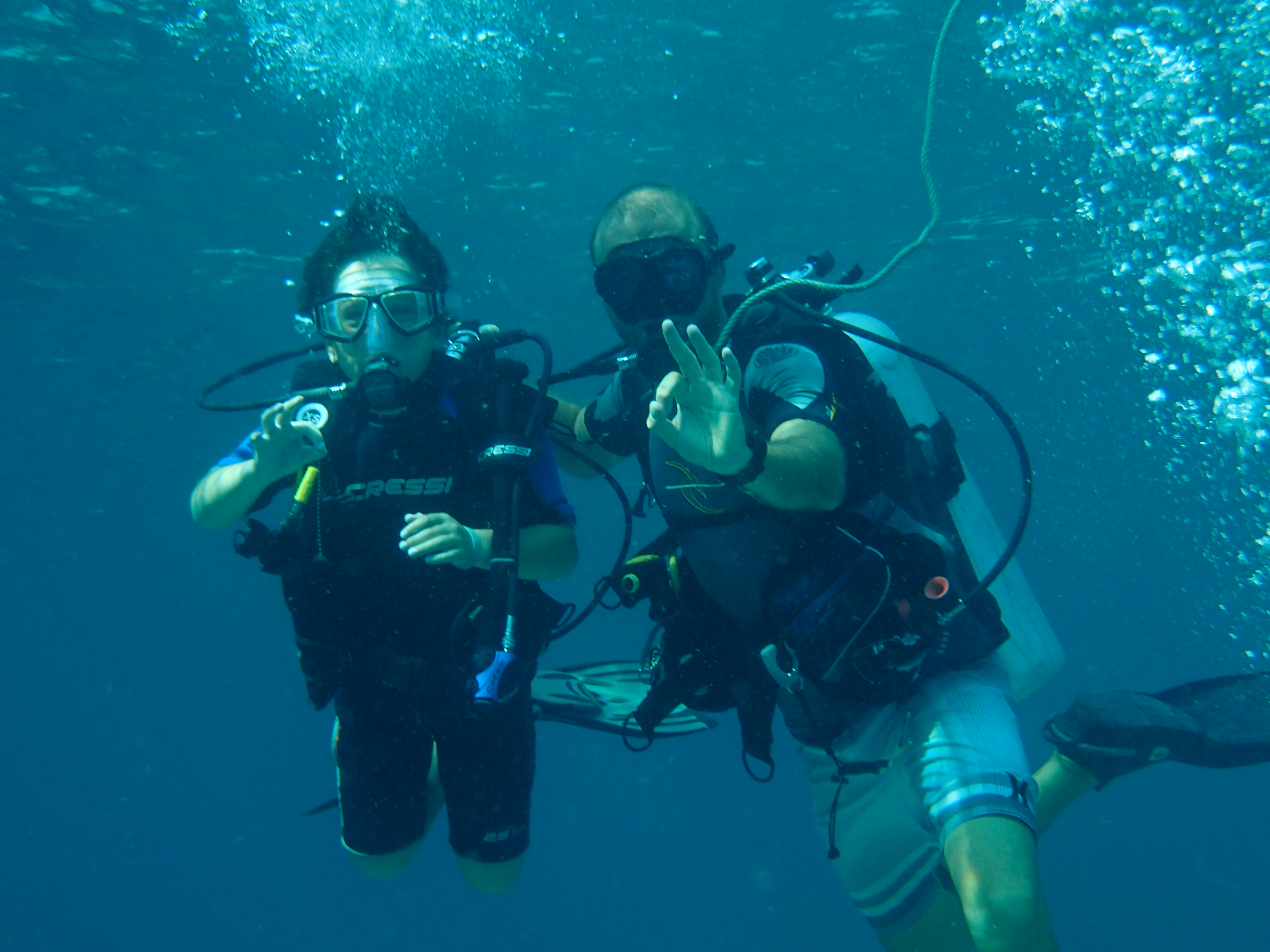
    The next day we headed out one of the local dive sites, Ko Haa, a collection of six small uninhabited islands about an hour and a half south west of our town.  Harun would be Mac’s buddy at two meters and Steve would dive with Lucia, Colburn and me a bit lower.  Our first dive together was wonderful.  Working our way along the edge of two of the islands along a relatively shallow ledge (15 meters) allowed us all to get used to the process while seeing heaps of reef fishes – three different kinds of puffers, the improbable box fish, scorpionfish, some barracuda, several moray eels (one of which was HUGE), and lots of others.  Both kids came up ecstatic, as were we.  On the boat with us were Tony and Chris, a wonderful couple from the Netherlands, who were as happy for the children’s success as we were.  The second dive was equally as exciting with Mac spotting two sea snakes, a crown of thorns sea star, and a very large grouper.  He has an eye for wildlife spotting and his talent showed itself underwater as well.  Tired, a little sun-burned, and incredibly happy we motored back to town completely at ease.  We had so much fun, we decided to do it again a couple days later with the same crew of people!

    OLYMPUS DIGITAL CAMERA
    At the end of our first dive together, very happy

    Beyond the joy of sharing a new experience with your kids, watching them explore the underwater world was wonderful.  Lucia said that, while she enjoys watching the wildlife, her favorite parts were feeling like she was flying through the water and playing with the bubbles as she moved along.  Like Mac, she has an eye for wildlife spotting, but seems to enjoy the whole process so even if there are not a lot of animals, she still thinks it is awesome.  Mac is now adding dive master to his list of possible career options and we can only guess what his perspective will be when he can go deeper than six feet.  Colburn and I have always wanted to do more diving, but with young kids, it was not a priority.  Now that we can enjoy it as a family, it will definitely be on our radar.

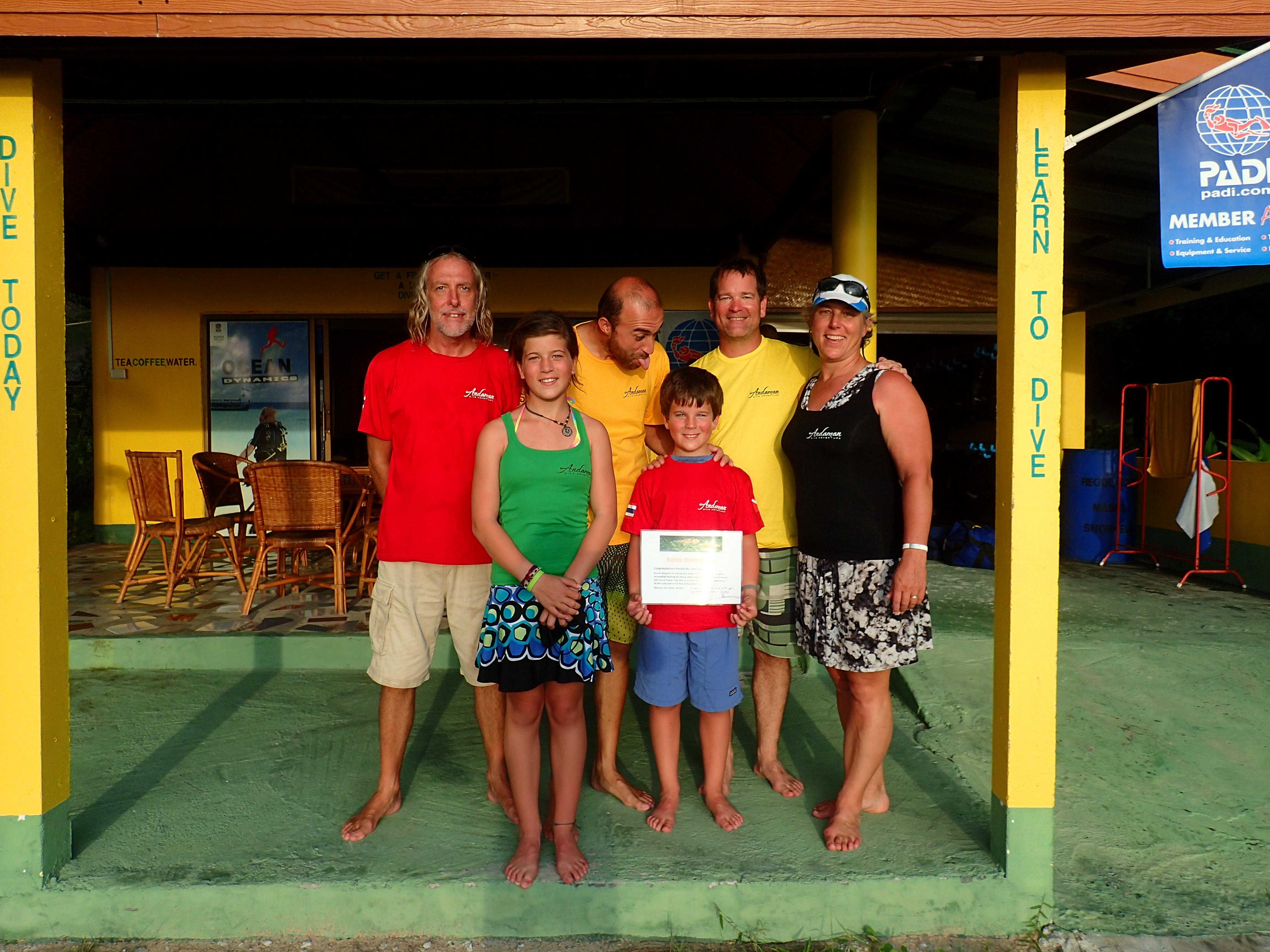
    Our group! Harun knew when to focus and when to be silly!

    As we came back to our lovely villa at the end of our second day of diving, we were elated by the combination of rest, activity, and having spent time with some incredible people.  This might be the most perfect week ever.

    Parent selfie underwater
    Parent selfie underwater
  • Travel Vignettes

    Travel Vignettes

    Onward
    Onward

    This is a hodgepodge of short thoughts we have had recently, none of which warrant a full post so are put together.

    A Boy and His Dog(s)

    Mac and Brownie
    Mac and Brownie

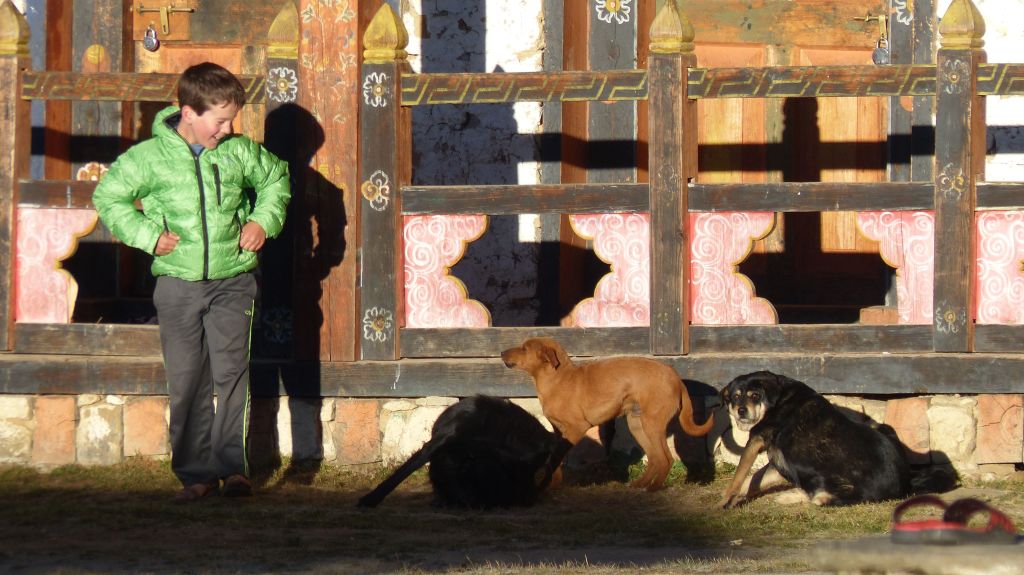
    Anybody who knows us, even a little, knows that we love dogs. Apparently, we have passed this affliction on to our children because they both fawn over any friendly dog we pass. We have found dogs to love in nearly every city, town, and hamlet we have passed through. This longing has seemed to intensify during our time in Nepal and Bhutan as Mac has been particularly hard hit by missing our curly dog. When we speak of what we long for about home, Moxie tops Mac’s list most every time. While he misses certain foods, his friends, clean toilets, etc., it is always Moxie that he misses most. Along our trek in the Annapurna region, he was able to find a young Tibetan Mastiff mix to love in every town. They all looked similar so he named each after a candy bar – Bounty, Snickers, KitKat, and Brownie. Each dog would walk us from our guest house to the end of his territory where we would eventually be guided by a different dog from the next town. Mac has been reading a lot of stories about boys and their dogs (i.e. Shiloh, Where the Red Fern Grows, etc.) which seems to allay the loss somewhat, but also seems to intensify the longing as well. That connection is something he desires intensely. Right now the kids are talking about how many and what kinds of dogs will round out our menagerie when we get back. There is something about the bond between a boy and his dog that cannot be substituted, and missing Moxie is one of the more difficult parts of traveling this long.

    Mac with Bounty
    Mac and Bounty


    A Girl Grows Up

    We were looking through last year’s photos recently when we realised just how much Lucia has grown up over the past year and one half. No longer a young girl, she is now an independent, capable, witty and aware young woman entering her tween years with grace and a level head. She has also developed a keen awareness of the role of inequality in the world. For example, while hiking in Nepal, we walked for a while with a transgender woman. After we parted ways, Lucia wondered out loud how the process happens which led us to a discussion of the role of hormones in the development of male or female characteristics. As I explained how exogenous testosterone can change physical appearance (i.e. hair on the face and chest, greater muscle mass, deeper voice, etc.), she, without missing a beat, adds, “And, of course, greater job opportunities.” At 11, she has recognised the pervasiveness of gender-based inequality across the globe – an unintended, but wholly welcome, lesson. Also showing wisdom beyond her years, after getting on Instagram after a couple weeks without internet, she said, “I am so tired of all the selfies on Instagram! Don’t my friends have anything better to do with their time?” Yes, honey, I sure hope they do, but what they look like is the most important thing in the world to them right now. We can only wonder what re-entry will be like for her. Perhaps we are simply providing something for her to go to therapy about later in life.

    With Auntie Mar just before we left
    Lucia and Mac with Auntie Mar just before we left
    Lucia, 11 years old
    Lucia now


    The Bickersons

    Often we are asked if it is difficult to spend so much time together, if we we are constantly at each other’s throats. The reality is no – not at all – it may seem like it from the outside but it’s really quite enjoyable. This is not to say that traveling together is always easy, but we are quite happy together and have worked out who does what within the family. Colburn is in charge of money and restaurants, Deb is in charge of reservations and logistics, Lucia now makes sure we don’t leave too much stuff behind because we have lost 6 water bottles since August, and Mac makes sure we have snacks and water. We all have a role to play, but one of the unintended consequences of being together all day, every day for a year and a half is that our marriage has matured at an accelerated rate. We’ve become an old married couple much earlier than our 18 years together would indicate. Perhaps it stems from being more comfortable with and up front about our individual strengths and weaknesses, perhaps it is not having the distractions of work and school to temper our actions, perhaps it is just the consequence of so much time together – something most couples don’t really do until retirement – it is difficult to tell why. From the outside it may look as if we are arguing about trivial things, but the reality is that it is much more of a form of playful banter and not really an argument at all. You can’t spend this much time together and not get along. We love each other more and more each day.

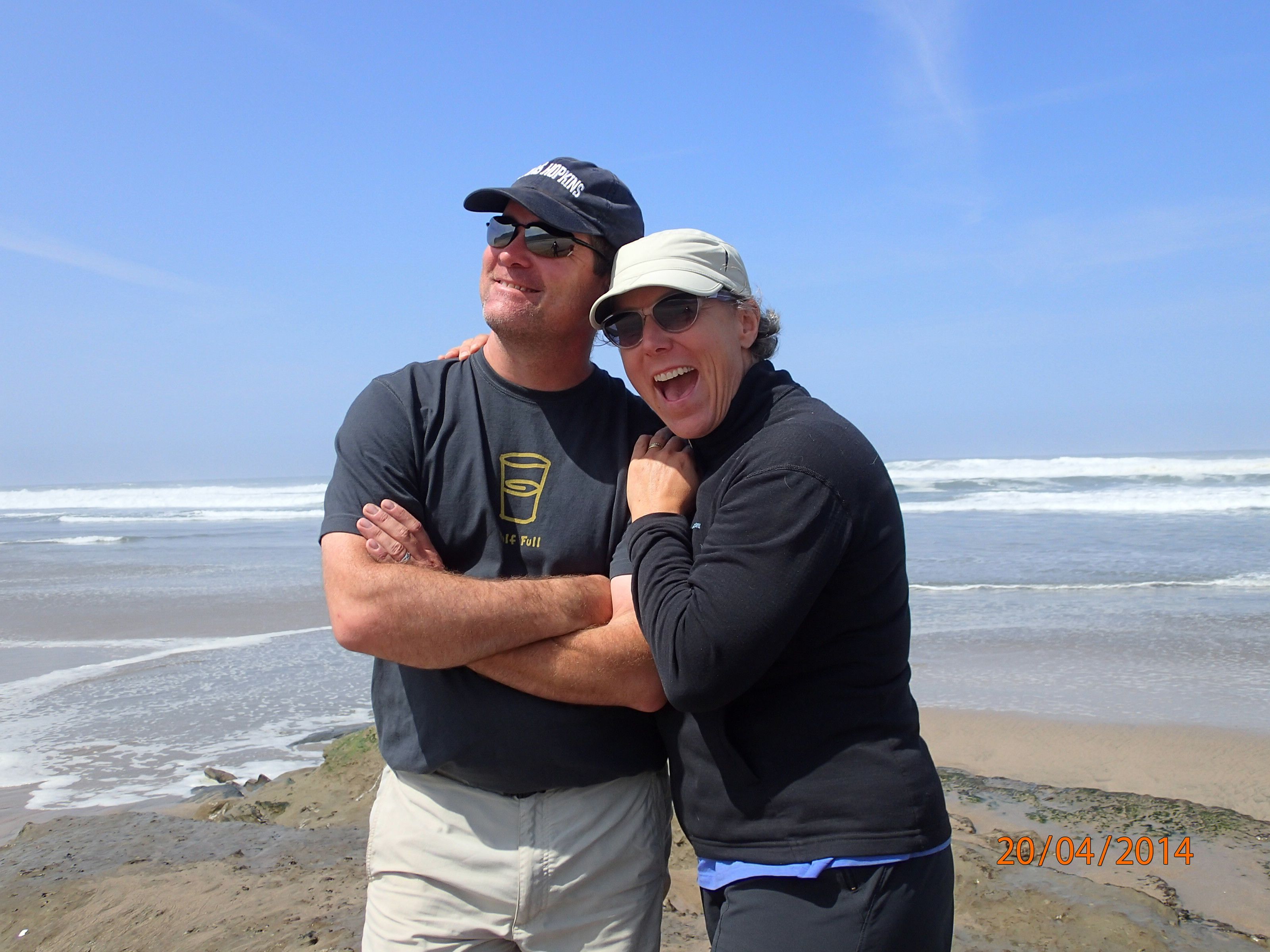
    Having fun in California
    Having fun in California
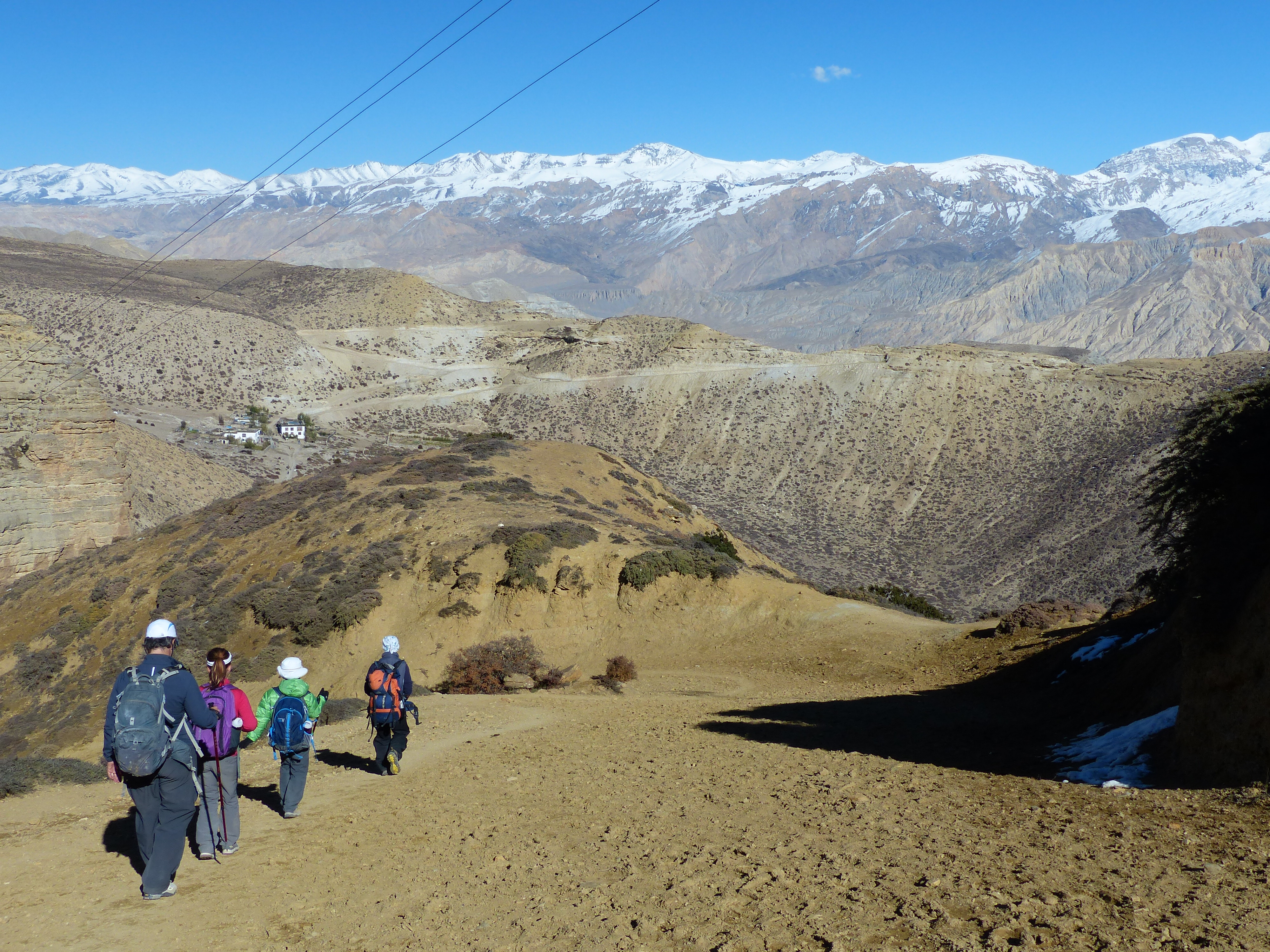
    Having fun in Mustang
    Having fun in Mustang


    Holding on and Letting Go
    Traveling together for an extended period has brought us to the realisation that life really is a matter of deciding what needs to be held on to and what needs to be let go. Hold on to your children, let go of your preconceived notions of who they should be. Hold on to principles and let go of steadfast rules. Hold on to simple routines, let go of expectations that everything will go the way you think it should. Hold on to what matters most to you – people you love, beliefs, dreams – and let go of anything or anyone who does not support you in those things. Hold on to tradition even when letting go is easier. The list goes on. In fact, it might even be the theme for our book, should we ever write one…..


    Onward
    Onward
  • Biking the Upper Rhine

    OLYMPUS DIGITAL CAMERA
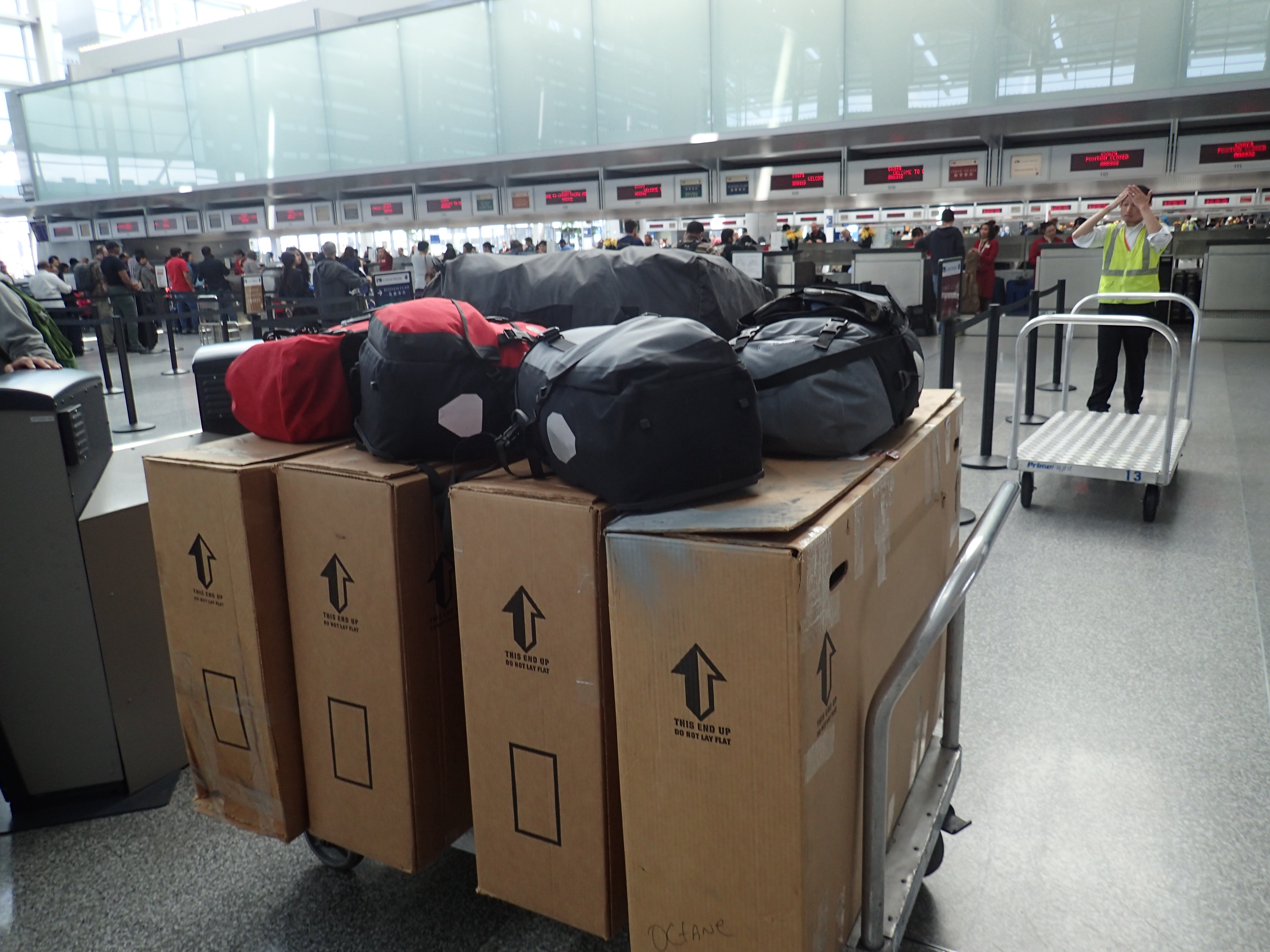
    Leaving SFO with our bags and bikes in boxes
    Putting bikes together in the Zurich Airport
    Putting bikes together in the Zurich Airport

    450 km of the Rhine completed, 800 km to go! Perhaps up there with hiking Colca Canyon in Peru and to the Mirador de las Torres in Chile, biking through the upper portion of the Rhine route ended up being one of the more challenging physical activities we have undertaken.  Listed as an “easy” and “suitable for families” route, we thought that it would be the perfect introduction to cycle touring.  Relatively short days of around 50 km per day and flat terrain coming out of the mountains would allow us to settle in to a rhythm and get used to biking with all our gear with us.  At least, that’s what we thought it would be.  The reality has been quite different, still good, but not nearly as “easy” as we thought it would be.

    Bike lanes are everywhere
    Bike lanes are everywhere

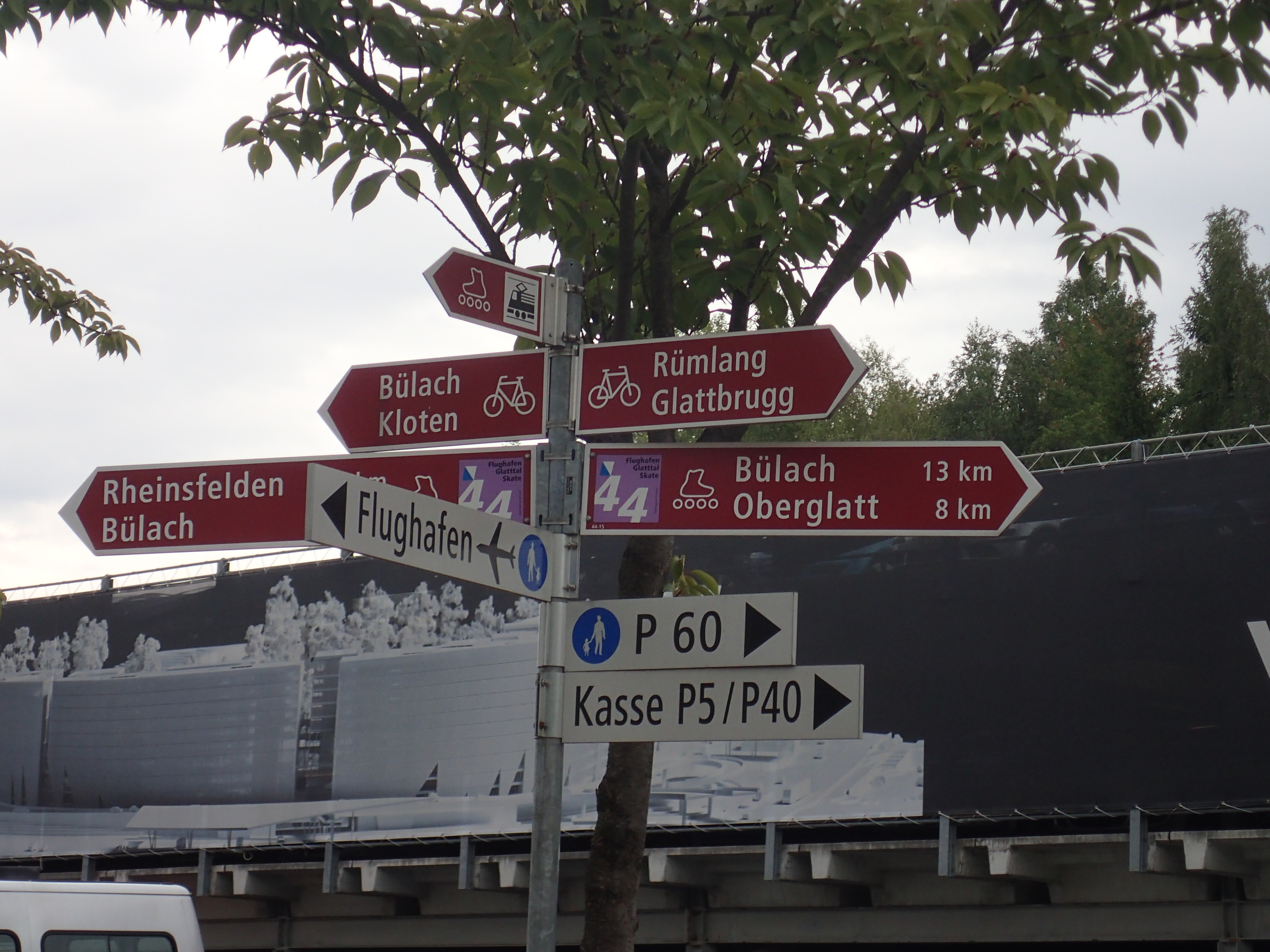
    You’ve got to love the Swiss because the whole country is set up for bicycling.  There are literally thousands of bikes traversing cities, towns, and villages.  The Swiss are also fanatical about identifying their bike routes.  Think signage at every possible juncture.  Unfortunately for us, we encountered 100 or more such junctions each day as we were winding our way through medieval towns, traversing apple orchards and spanning rural farm roads.

    OLYMPUS DIGITAL CAMERA
    Well marked, but sometimes confusing

    The system works great  until you don’t see one of the signs because it was hidden behind a jasmine bush or hyacinth.  It may take a while for you to realize that you’ve lost your signage and now are not really sure how to get back to where you want to be without backtracking great distances – something irritating in a car but down right disheartening when on a loaded bike.  We also have a mobile app which has all of the Swiss bike trails on it, so we thought we were good to go.  If we got lost, we could just look up where we were on the map and find our way back to the route.  It would probably work great if it didn’t take 10 minutes to load when we were in the rural areas of the Alpine Rhine or if we had better cell coverage.  In the end, it was pointless to even try to use it so we were stuck relying on the signs.  It worked okay, but we have made more than a few wrong turns which extended  both our mileage and daily elevation.

    OLYMPUS DIGITAL CAMERA
    Konstanz, Germany from the church tower

    In my mind, I had pictured peacefully spinning along the riverbank on a flood dyke or towpath, following the river as it meandered across the valleys.  However this section is through the mountains so the river is sinuous and convoluted as it tumbles down from the high passes.  The bike route frequently has to veer away from the river to cross a ridge because the valley cut by the river is too narrow or too steep for a bike path.

    L1100814
    Pleasant Swiss courntryside

    A few of our “misdirections” included adding 12 km of “undulating” terrain through the hills where the book Heidi was set on our very first day, crossing through a farmer’s field and sheds to then go down a dirt path, across a stream, and back up the other side of the ravine on the third day (this one ended up great though because we found a Turkish restaurant for lunch as a result!), pushing our bikes through a quagmire of clay-like mud along a construction zone as it rained on day 6, and a 3 km ride along what might be described as a high-speed truck-route our last day in Switzerland.  And this is just some of the highlights of our misdirection adventures – there were many, many more!

    L1100720
    One of many clock towers

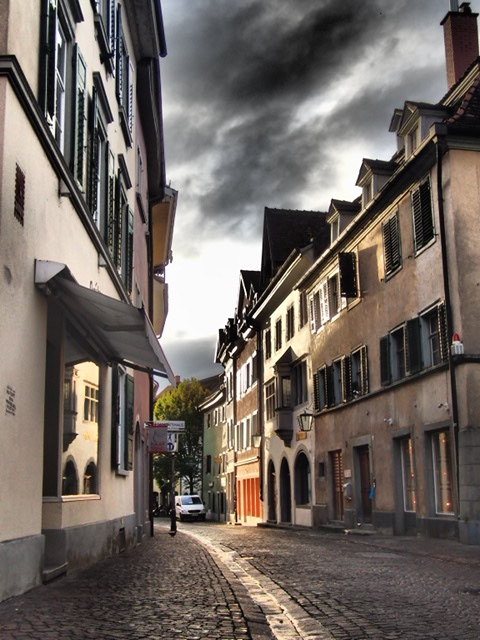
    However frustrating the navigation, the scenery and experience have been amazing.  We began riding in Chur, one of the longest inhabited cities in Switzerland.  Charming streets are lined with half-timber houses, winding narrow cobblestone streets, and yummy peasant food lured us in to its charms.  The scene was idyllic – high granite mountains with a quaint typical Swiss town in the valley below.  It was the kind of scene which makes you want to break in to Julie Andrews, “The hills are alive, with the sound of music….” but we didn’t because none of us can really sing all that well.  The weather was fantastic – high puffy clouds, 70 degrees, and abundant sunshine.  This, of course, was not to last too long as it has been a rainy summer here, but we enjoyed the auspicious start.

    OLYMPUS DIGITAL CAMERA
    A rainy day

    After a few days of riding we decided to spend our first rest in a hotel in Konstanz, Germany.  A very welcoming college town, it was easy to get out and see some of the sights.  Part of us just wanted to hole-up in the hotel and relax, but the other part of us really wanted to walk the streets, see the churches, and explore the area.  This conundrum is something that we have faced often.  If you are visiting an area for a week, you can sort of suck it up and do everything that you want to even though it is exhausting in the end.  If you’re only going to be someplace once, you need to make the most of it, right?  With long-term travel, it is different because you simply cannot have amazing new experiences every minute of every day.  You saturate your mind, burn out, melt down, and end up in a puddle on the ground.

    OLYMPUS DIGITAL CAMERA
    Finally getting out for a walk

    Over our time traveling, we have found that one incredible “event” per day is plenty.  It may seem like we are wasting our time because we’re sitting down listening to music or reading stories instead of seeing all of the sights of an area, but we just can’t do any more than that.  Some days our event is simply getting from one place to the next, other days it might be visiting a church or taking a tour by canal boat.  We also have to be able to get school done along the way and we have found that the process is much easier if the kids aren’t exhausted from touring different sights.

    L1100731
    A small Swiss castle

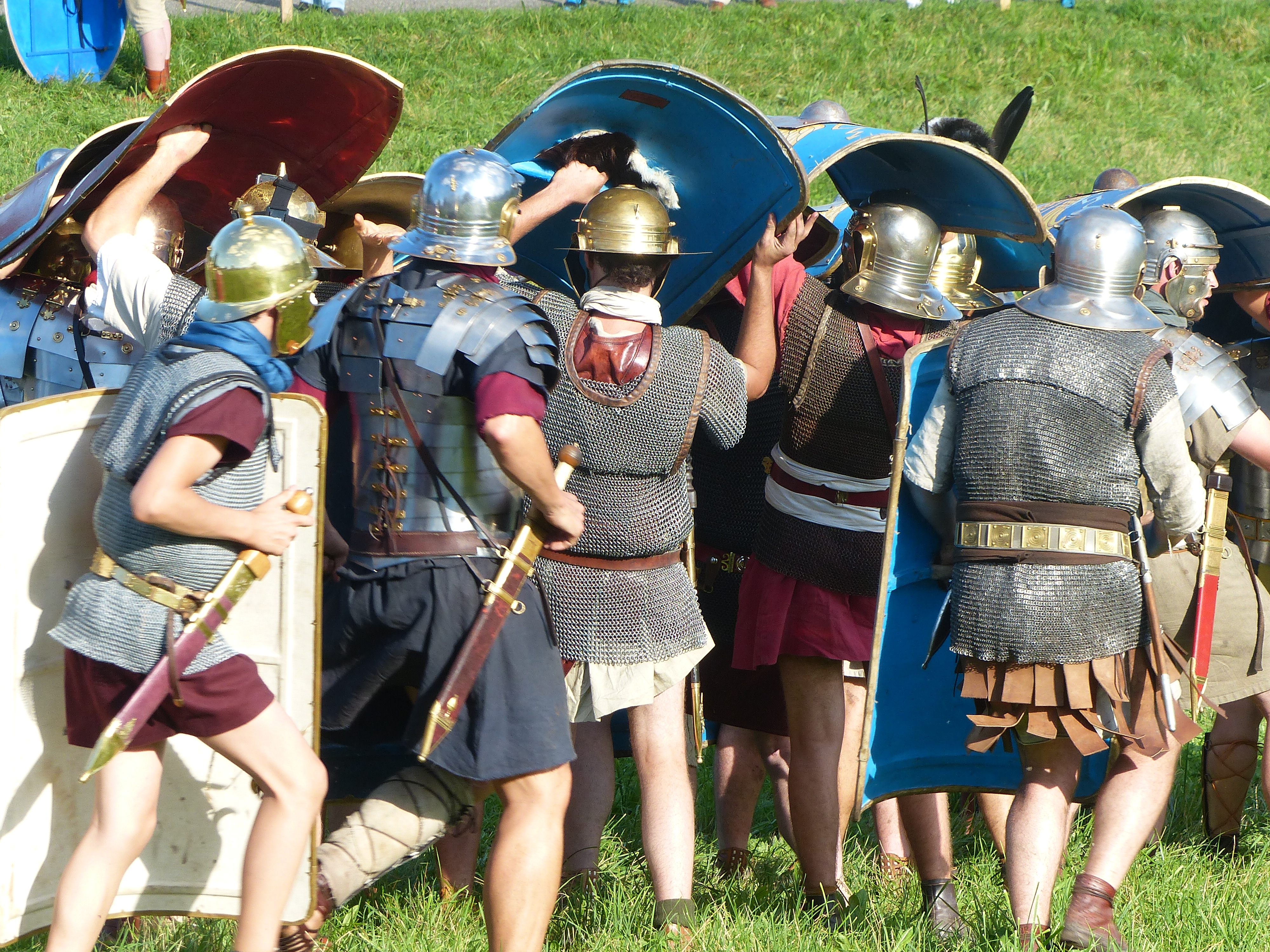
    Another few days of biking lead us to the small town of Kaiseraugst, Switzerland.  Our family has a thing for ancient history so we wanted to see Augusta Raurica, an old Roman fortified town built around 200 A.D.  Walking down a path along the river we came across the restored old bath house you can just walk through — no entry fee, no guards making sure you don’t touch anything, just informative signs as you walk through.  Walking further along the path, we came to a playground the kids wanted to explore.  As we looked around, we noticed that the wall of the playground was really, really thick – like 9 feet thick – it was part of the old fortifications.  Again, the kids could climb on it if they wanted to – no barriers, no signs admonishing you to stay off of the relics, just history embedded in to the town.  The weekend we were there was also the annual Romanfest complete with expositions of gladiator fighting, presentation of the troops dressed in period clothing, and a whole bunch of other Roman things.

    L1100885
    Parading of troops at the Romanfest

    This was one of those times when we were so tired we could barely walk to the store to get groceries but really wanted to go see the festival too.  After much deliberation, we thought this was something we really had to do so pulled our butts up one more hill to the festival.  It was good fun, but probably would have been better if we could have understood at least a few words of what they were saying. Leaving Kaiseraugst was difficult as we really liked the town and our campsite along the river.  The whole process was very relaxing.  The people who run the place are a Swiss-American couple so it was nice to be able to speak fluently with her about the area, how to get around, etc.  The man is Swiss and Lynn his partner is from Long Island, NY.

    L1100913
    Demonstrating a battle formation – Mac loved it!

    Switzerland is not part of the EU so has its own currency, Germany, France and Austria use the Euros.  You would hope that most places would accept either currency at a nominal exchange rate, but our experience has been that in Switzerland it is Francs and only Francs and everywhere else is Euros only.  We ended up having two different money storage (left pocket Euros, right pocket Swiss Francs) and would have to figure out if we had enough money when we had to pay for something because you often cannot tell what country we are in.  One day we must have crossed back and forth in to different countries at least six times.  Mac got a kick out of this though because he hates immigration.  He thought it was a hoot that we never had to have our passports stamped!

    OLYMPUS DIGITAL CAMERA
    Steim am Rhine, with a beautiful medieval main street

    Strasbourg, France followed Kaiseraugst.  We decided to hop a train as there were 150 km of undulating terrain, a big city, and not too  much to see so we decided to get a bit ahead by taking the train for a couple hours.  It was a nice break as we were able to get an extra day in Strasbourg, which we adore, and also to give our legs a break. 

    OLYMPUS DIGITAL CAMERA
    How bikes travel on French trains

    The kids were able to do double lessons, Colburn and I were able to eat some yummy Alsatian food, and we enjoyed walking around town.  One of the things that we love about many of the cities/towns we have been in is just how walkable they are.  Unlike the US where your favorite restaurant may be 20 miles away, our favorite place was only three doors down from our apartment (not that we were there long enough to really develop a “favorite”, but we really enjoyed our date-night there).  Strasbourg was especially nice and we have started to consider coming back for a European Christmas!

    OLYMPUS DIGITAL CAMERA
    A stormy morning in France

    Our last few days have been much more along the lines of what we expected – flat tow-paths and flood dykes, long-ish distances (60 km yesterday) without being exhausted when we get to camp , and a little bit of extra time to enjoy where we are.  We have spent these couple days mostly “big ring riding” – a phrase we can only use when the terrain is flat that you can actually use your largest chain front ring.  We love big ring riding!

    OLYMPUS DIGITAL CAMERA
    Happy bikers

    So, to this point, if you would ask us if we have enjoyed biking the Rhine, we would give it a qualified yes.  It has been more difficult both physically and emotionally than we had anticipated yet we have enjoyed the process overall.  Despite near-obsessive signage, we manage to get mis-directed several times each day.  It’s happened so much now that the kids just groan or chuckle we she have to take a “detour”.  We’re settling in to a rhythm and realizing that a decent map is a godsend, that shorter days are better than longer ones, that chocolate makes everything better, and that we need way more food with us than you would think.  The kids love the pastries, schnitzel (fried anything, sometimes on bread=schnitzelbrat), spaetzle (a thick egg noodle), and Shorley (an apple drink).  Colburn and I love the wine and beer.

    L1100745
    Currywust and Schnitzelbrat at a festival

    The people in Switzerland were lovely, reserved but always patient and helpful.  We were also surprised in Strasbourg by how accepting of our linguistic incompetence people were and how they would go out of their way to try to help us.  Often it has required a mixture of German, Spanish, and some English.  Now we are in Germany and have been struck by just how far the German people will go out of their way to help us.  In just one day, a man saw us ride up and down the same street (we were looking for a bakery) and he got on his bike to make sure we found what we were looking for; another man saw us looking at our map so asked where we were going and gave us two different options on how to get there; a woman who saw our tent and sleeping bags on the back of the bikes stopped to ask us if we were looking for a campground because there were none in the area. Finally,  when we stopped for lunch at a Home Depot type place, another man was checking out our bikes and started to ask questions about what we’re doing – ends up he lived in Pittsburg for several years as a coal miner.  Speaking with him in English was profound for Colburn as he sounded precisely as a early Shindell in Pennsylvania would.  So far we’ve made it through every situation somehow – often through the kindness of strangers.  These are the experiences which make travel so rewarding.  Everywhere we turn there is warmth, kindness and generosity of time and spirit.

    OLYMPUS DIGITAL CAMERA
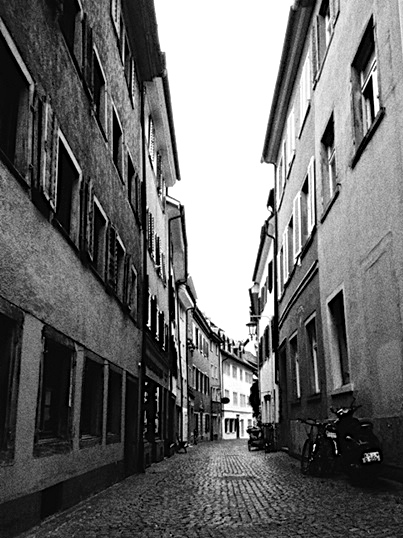
    Medieval streets
  • Extreme Bar-hopping with Kids

    A family bar experience
    A family bar experience

    So, are you a bad parent if you take your 8 & 10 year old kids to a sub-zero bar?  See what you think…

    Lucia in a bar
    Lucia learning to do shots….of CocaCola

    The story behind this is that we went to visit the Glaciarium, a museum all about glaciers. After touring the glaciers Perito Moreno, Spagezzini, and Upsala the other day, we were interested in learning a little more about how glaciers are formed, how they change the landscape, etc. so went to the local glacier museum.

    Watch out, Mac is in the house!
    Watch out, Mac is in the house!

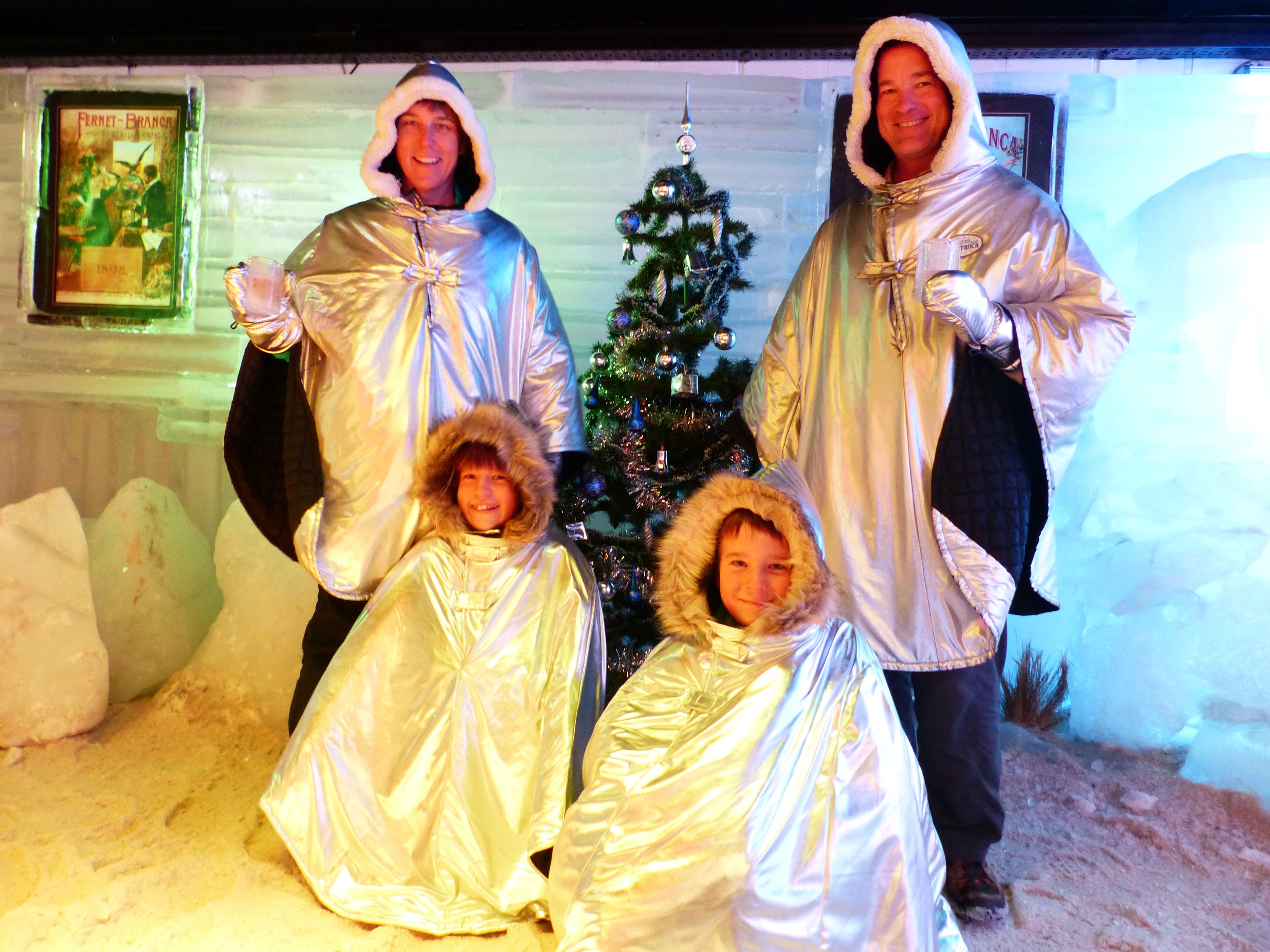
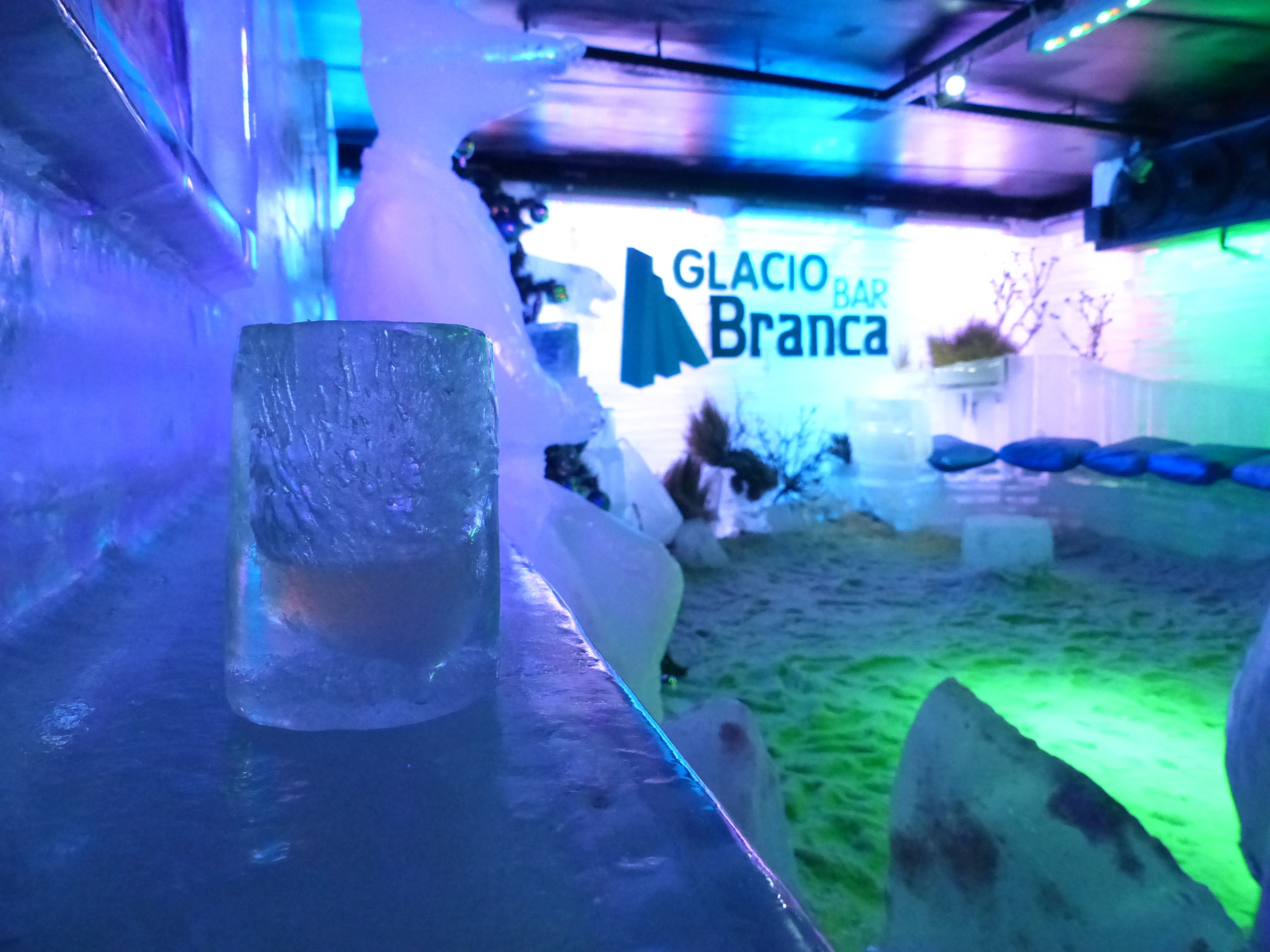
    The whole thing was pretty fascinating for science nerds like us, but what was the most fun was going to the “Glaciobar” in the basement after the kids were able to answer three parent-selected questions about the exhibits (we try to use the “carrot and stick” method as much as possible). Somewhat similar to Minus5 in Las Vegas, the whole thing, including the bar and glasses, is made of glacier ice and housed in a sub-zero walk-in cooler. After donning our sparkly silver insulated ponchos and mittens, we were escorted in to the “bar” for 25 minutes of free drinks, pounding music and flashing lights….the first real night-club experience for the kids! The parents had a few bartender recommended drinks known locally as “The Hangover” (pretty good but awfully sweet) and the kids indulged in unlimited CocaCola. During the 25 minutes, both kids learned how to do shots and dance with drinks in their hands.

    Ice glasses
    The “Hangover” – in an ice glass

    It was really great fun for us to share a bar experience with our kids – they came out with smiles from ear-to-ear and began to create plans for bar-hopping when they are old enough stating, “wouldn’t it be awesome if we got to do that with our friends!”. We are grateful that because, unlike their parents, they were only drinking Coke when they went to their first real “bar”, they will be able remember it! We are also beginning plans for an annual Shindell Sub-Zero Party for winters at home in Reno.