Tag: Family travel

  • A Map, an App and a Portuguese Phrase Book: Getting to Mozambique

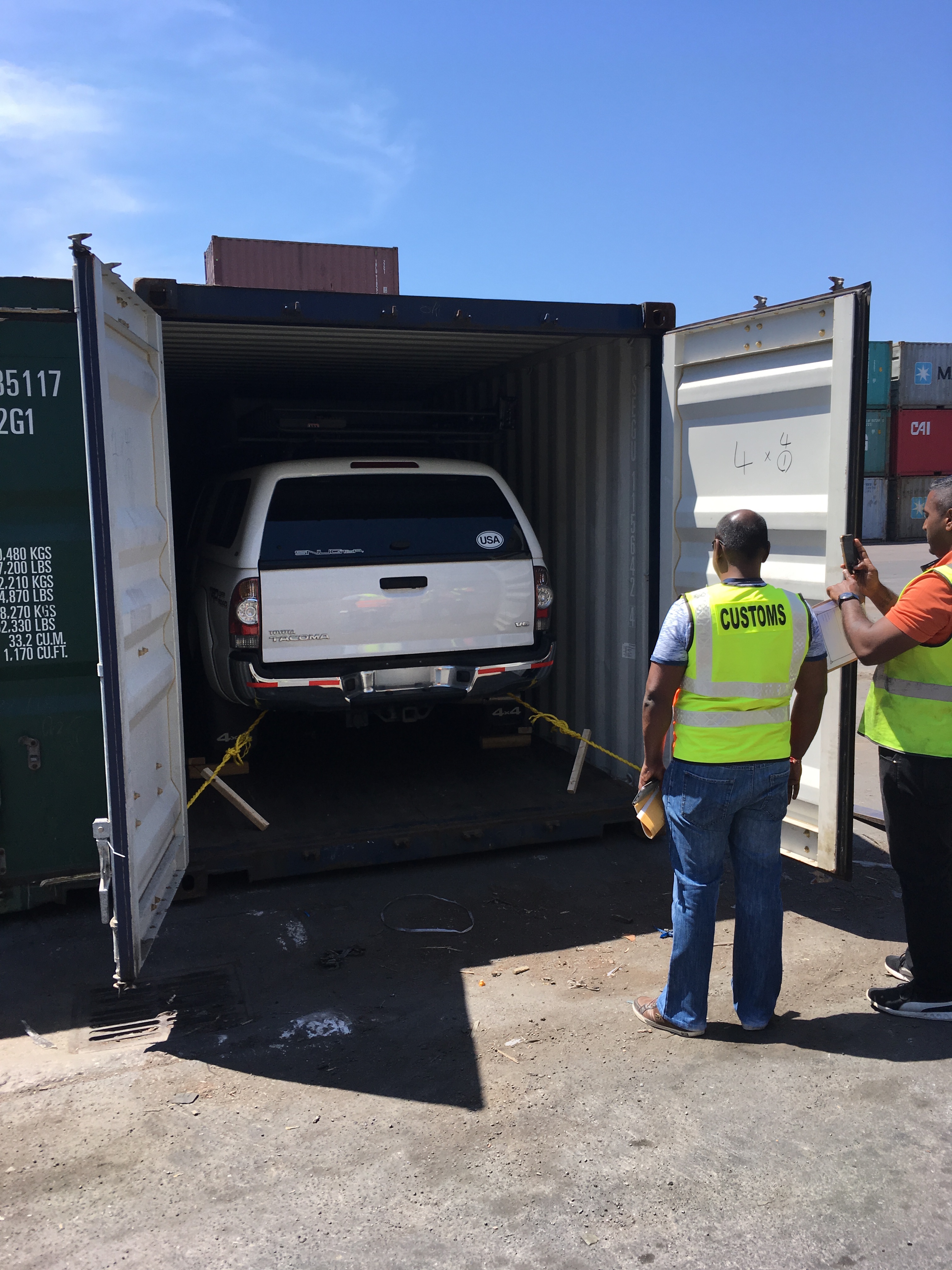
    IMG_2002 2Leaving Madagascar, our life was impacted by three biblical events – a plague, a flood and a tempest – within 24 hours. After braving two hours of traffic in Antananarivo, we arrived at the airport only to be told that our flight had been cancelled because of a suspected case in the Seychelles had been traced back to Madagascar’s outbreak so they were no longer allowing entry from Mada. This meant that we were to be rerouted directly to Durban, our final destination. Just as we sorted out our arrangements for an early arrival in Durban, we were informed that there had been a freak storm two days earlier. The wind and flooding had knocked the power out at the home where we were to spend the week. The power company had come out twice but the power was still not on. Our host offered to cancel our reservation and let us find alternative lodgings but we really didn’t have the energy to do that so we opted to stay in the home without power. Additionally, the wind associated with the storm had wrecked havoc on the port, one of the busiest in all of Africa, turning two cargo ships sideways in the port mouth and running one aground.

    Recovering from these issues backed up the port and caused our truck arrival to be delayed by more than ten days. It was a rough start to our over-landing adventure, but we made the best of the delay by spending a few days catching up with our friends Cape Town and getting ahead on school work.
    IMG_2003 2

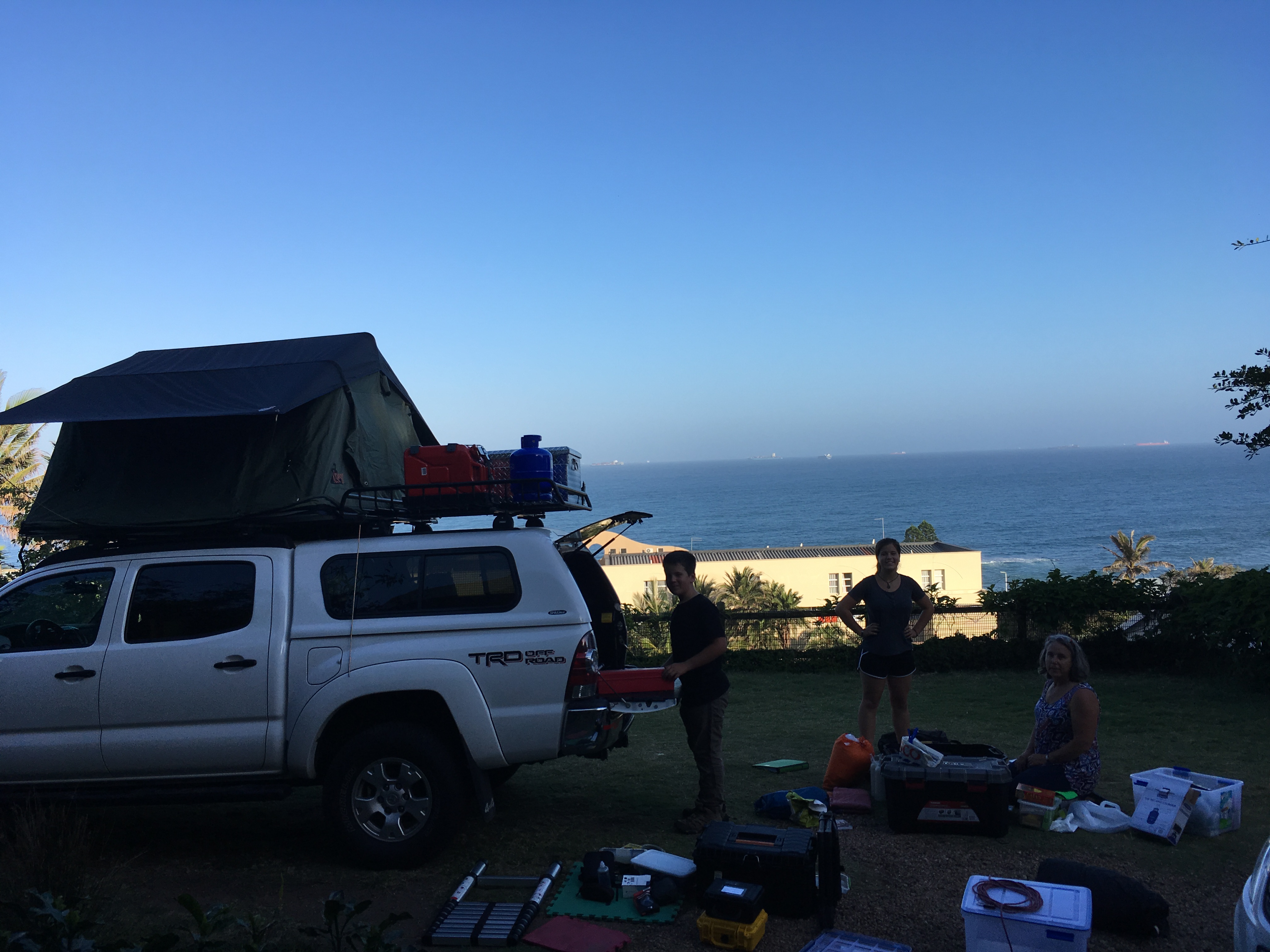
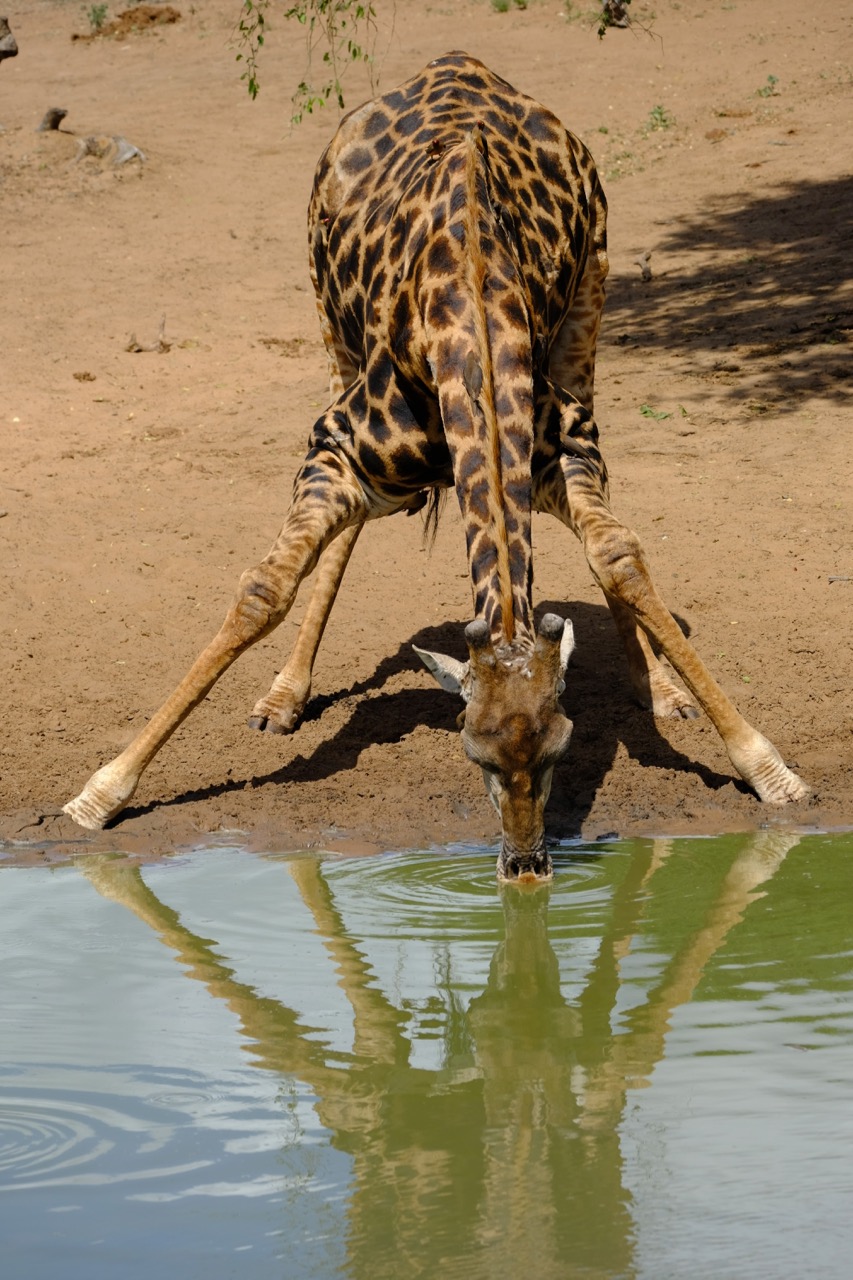
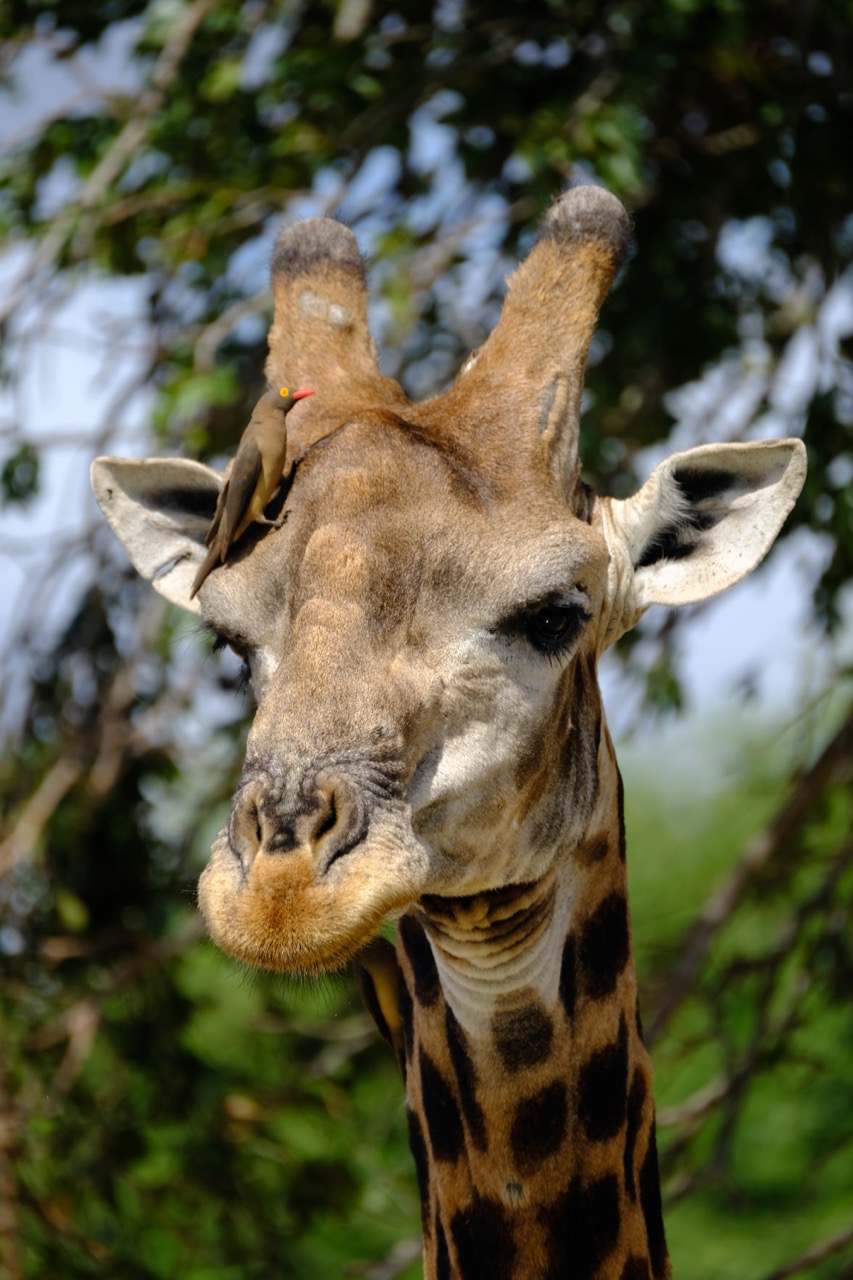
    Once our truck cleared customs, we immediately headed for Mozambique, relieved to finally have Olaf and all of our stuff. Since our truck is a US build with the steering wheel on the left side of the car, it draws curious and disbelieving looks frequently. Many people, mostly men, ask about the differences between our truck, a Tacoma, and the African stalwart, the Hilux. The differences are minimal but still enough to be a novelty and prompt discussion. We had originally planned for five days visiting game parks in the coastal north of South Africa, but had to shorten it to only an overnight stop because of the shipping delay. Still, we were able to see hippos, giraffe, elephants, rhinos (including an up-close and personal encounter!), zebra, antelope, and lots of other wildlife.


    Many people had warned us that Mozambique was “not at all like South Africa” and that the travel would be much more challenging there. They told us horror stories of corruption, bad roads, unhelpful locals, scams, difficulty with the language (Portuguese) and a myriad of other dangers which abound. Prepared for the worst, we were pleasantly surprised at the ease of travel we encountered. The boarder crossing took less than 30 minutes and happened without a hitch. Taking a car across international borders is a bit more complicated than simply having a passport stamped as there are import taxes, local insurance which needs to be purchased, and differences in safety features/equipment necessary. For example, in Mozambique, a vehicle must be equipped with two bright green or yellow reflective safety vests to be worn in the event of a break down and carry both a fire extinguisher and red reflective triangles of a specific sizes and types. All international cars must have a two-letter, oval “Euro” sticker which clearly identifies their country of registration (ours is “USA” which is technically not compliant but is close enough). We, more specifically Mac, had spent a great deal of time researching the various requirements for all of the countries we plan to visit so had acquired all of the necessary items. Despite our build up of both equipment and anxiety about the process, it went very smoothly and the customs folks never even looked at the truck!

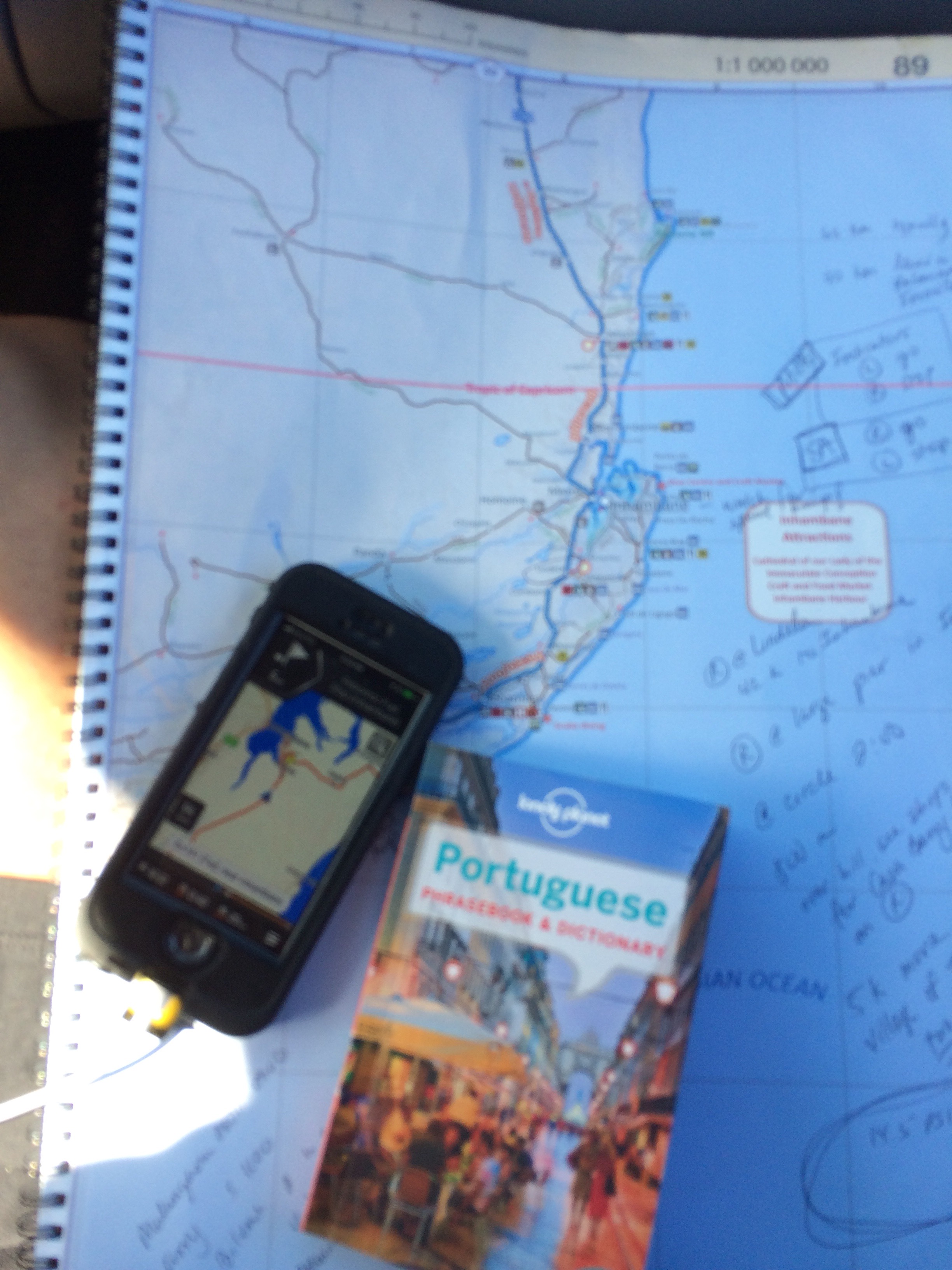
    An acquaintance very familiar with travel in Mozambique said that the differences in infrastructure will be obvious as soon as you cross the border. This ended up being the understatement of the year! Quite literally, the pavement and structure of South Africa ends at the border gate and disperses in to several very convoluted sand tracks across an open plain. No longer are there road signs, curbs, pavement, or any suggestion of order. Armed with a paper map, our GPS app, and a Portuguese phrasebook, we immediately got lost. There were five different roads in front of us but both the map and the GPS only showed two. Not sure which road to take, we chose the most traveled one only to have it end in a few hundred meters. We doubled back and chose a different one which ended up heading in the opposite direction of they way we wanted to go. Without anyone who we could ask for directions, we chose a third road which also ended up heading in the wrong direction. Just as we realized our error, a man in fatigues suddenly appears out of the bushes whistling us to stop but upon seeing us, asks in perfect English, “Where are you going?” When we reply, he points us in the correct direction and we head off down a deeply sandy track. After several kilometers, the sand becomes more firm and the road more obvious.
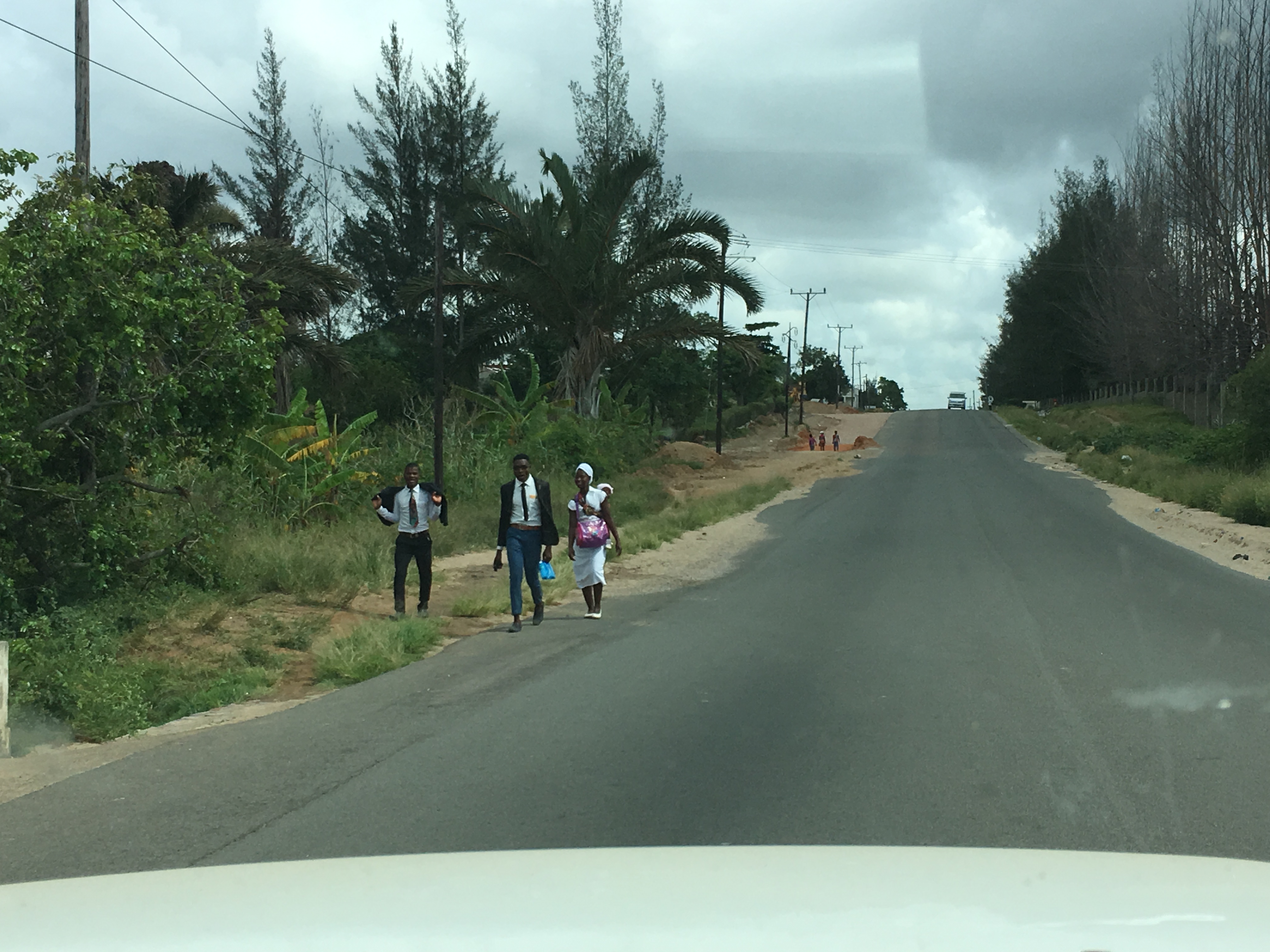
    IMG_2009 2There is a great deal of Chinese investment in the infrastructure of sub-Saharan Africa. One of these projects is a main road between Kosi Bay and Maputo. Although not yet complete, the upgrade makes traveling this way quite easy so we reached Maputo in a couple hours.

    IMG_2003 2One of the decisions to make when traveling through Maputo is whether to take the ferry which crosses the river and allows follows the coastline north but risk delays or to take the ring road around the city thus adding many kilometers to the journey but avoids endless waiting to get on the ferry. We had decided to take the ferry. Arriving at 3:30pm, we thought that were were plenty early to make a crossing before dark as the actual journey only takes 15-20 minutes. Even though we would not make the next ferry, we were probably 30th in line and they only fit 20 cars per ferry, it would only be an hour or maybe two hours maximum. The ferry dock is a lively place – the streets are lined with outdoor stalls, open-air bars with music pumping at top volume, hawkers peddling cashews and coconuts, money changers, SIM card salesmen, and throngs of people milling about on a pleasant Saturday evening. There were noticeable waves people every 15 minutes or so, flooding through and around the line of waiting vehicles, as the smaller passenger ferries disgorged their human cargo.

    Four hours later, the sun had set, the full moon had risen but we hadn’t moved an inch. As it turns out, the single remaining vehicle ferry had broken down and was being repaired. We were now worried because every blog, guide book and traveler warns that you should not to drive in Africa after dark. Here it is our first night on our own and we are breaking that rule! I explored options for staying in the town where the ferry starts or just on the other side in downtown Maputo, but there was nothing suitable for a family with a big truck. The closest place we could find was about 30 minutes north of the city, but down a 4×4 trail we would have to negotiate in the dark – definitely sub-optimal but perhaps a necessity given the situation. Not knowing when we would actually be able to cross the river, we waited….and waited…..and waited.
    DSCF8412Four hours later, the ferry was fixed and the line of vehicles inched forward. Along with probably 200 people, 20 or so cars were packed on the rusty barge and set off under the full moon. Although the waiting is frustrating, the actual experience of crossing on the barge was magical. Vehicle passengers stay in their car while walk-on passengers fill in every possible empty space between, in front of, on top of and behind the cars, leaning up against the car or sitting on a bumper. Even the ladders to the bow of the boat are chock full of people hoping to get a little fresh air. From somewhere off of our right side, we can hear a group of passengers drumming and singing. Just to our left, a group of probably 10 middle aged men and women are chatting excitedly in Portuguese and laughing full-belly laughs. We see a group of 20-something young men doing shots of whisky straight from the bottle but all in very good nature. The moon is lighting up the skyline and new bridge being built. Several men ask Colburn about our truck – what kind is it, what are the specs, how did we get it to Mozambique, how much does a truck like this cost in the US, where are we going, etc. We noticed several people taking “selfies” with our truck – all with very macho poses as if the truck was theirs. Other than the Portuguese couple in the car next to us, we are the only white people on the entire ferry. The combination of being in a place so utterly different on such a beautiful night made any concern we may have had disappear for this is why we travel. Unfortunately, we did not get a decent picture of the scene but it is etched in our memory as a highlight.
    DSCF8415We drove off of the ferry around 8:30pm, well after dark. The roads north of Maputo are tarred and in good repair so there were no problems getting out of town. Armed with my Portuguese phrasebook, I called the closest camp ground to see if we would be able to check in after 9:00pm. The man who answered replied yes, but to be careful as the road is a 4×4 trail so would be difficult to navigate in the dark. Colburn’s excellent driving skills got us to the camp without a problem, the camp host was waiting up to show us where to park, and we made dinner and went to sleep happy to have successfully negotiated our first day over-landing with just a map, an app and a Portuguese phrasebook.
    img_1506

  • Travel Vignettes

    Travel Vignettes

    Onward
    Onward

    This is a hodgepodge of short thoughts we have had recently, none of which warrant a full post so are put together.

    A Boy and His Dog(s)

    Mac and Brownie
    Mac and Brownie

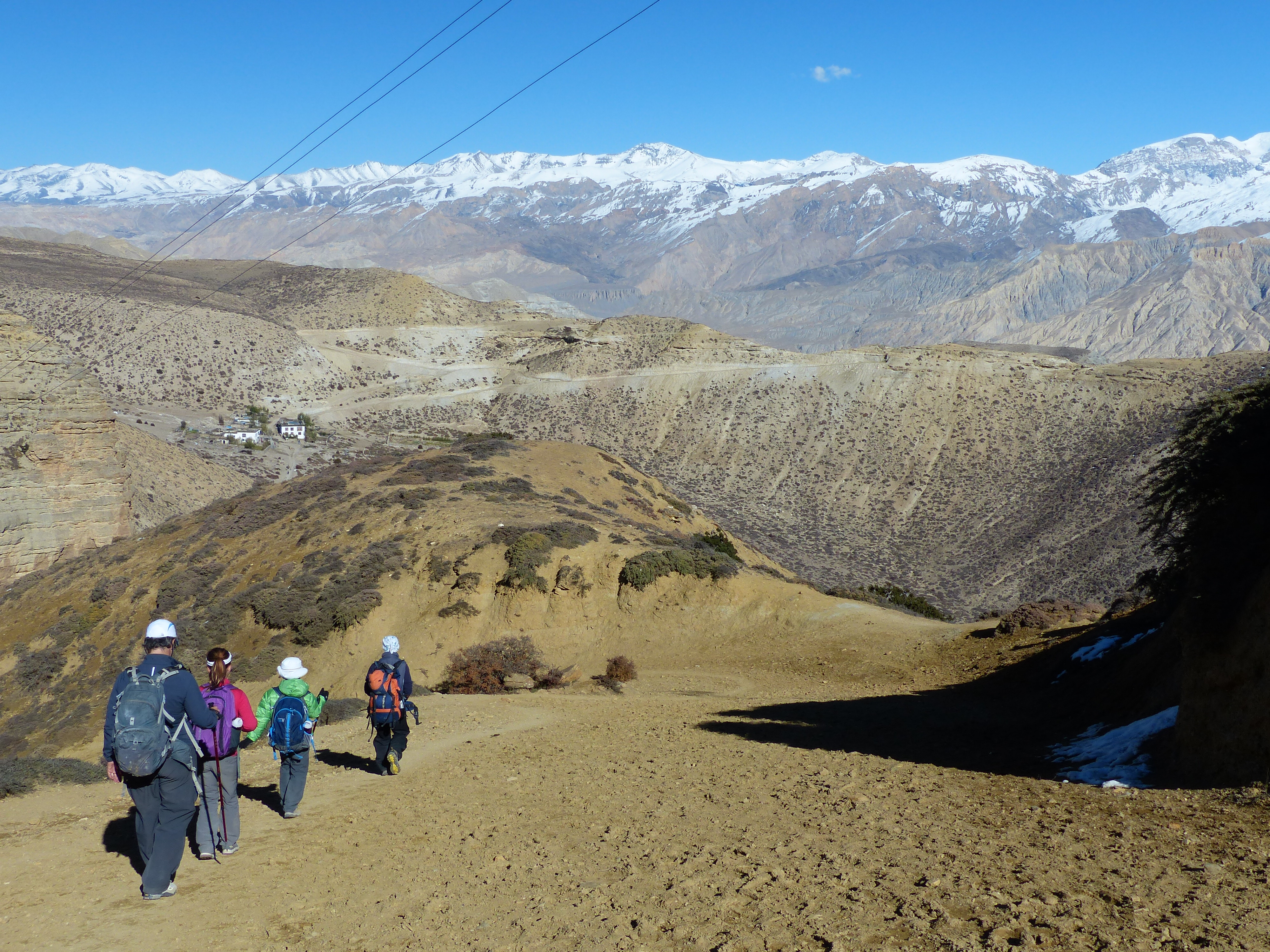
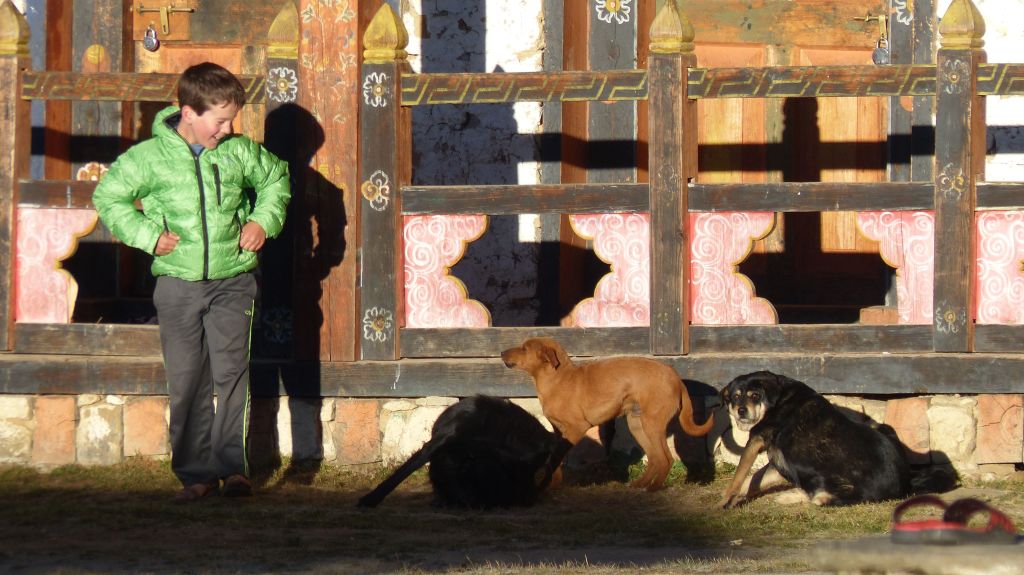
    Anybody who knows us, even a little, knows that we love dogs. Apparently, we have passed this affliction on to our children because they both fawn over any friendly dog we pass. We have found dogs to love in nearly every city, town, and hamlet we have passed through. This longing has seemed to intensify during our time in Nepal and Bhutan as Mac has been particularly hard hit by missing our curly dog. When we speak of what we long for about home, Moxie tops Mac’s list most every time. While he misses certain foods, his friends, clean toilets, etc., it is always Moxie that he misses most. Along our trek in the Annapurna region, he was able to find a young Tibetan Mastiff mix to love in every town. They all looked similar so he named each after a candy bar – Bounty, Snickers, KitKat, and Brownie. Each dog would walk us from our guest house to the end of his territory where we would eventually be guided by a different dog from the next town. Mac has been reading a lot of stories about boys and their dogs (i.e. Shiloh, Where the Red Fern Grows, etc.) which seems to allay the loss somewhat, but also seems to intensify the longing as well. That connection is something he desires intensely. Right now the kids are talking about how many and what kinds of dogs will round out our menagerie when we get back. There is something about the bond between a boy and his dog that cannot be substituted, and missing Moxie is one of the more difficult parts of traveling this long.
    Mac with Bounty
    Mac and Bounty


    A Girl Grows Up

    We were looking through last year’s photos recently when we realised just how much Lucia has grown up over the past year and one half. No longer a young girl, she is now an independent, capable, witty and aware young woman entering her tween years with grace and a level head. She has also developed a keen awareness of the role of inequality in the world. For example, while hiking in Nepal, we walked for a while with a transgender woman. After we parted ways, Lucia wondered out loud how the process happens which led us to a discussion of the role of hormones in the development of male or female characteristics. As I explained how exogenous testosterone can change physical appearance (i.e. hair on the face and chest, greater muscle mass, deeper voice, etc.), she, without missing a beat, adds, “And, of course, greater job opportunities.” At 11, she has recognised the pervasiveness of gender-based inequality across the globe – an unintended, but wholly welcome, lesson. Also showing wisdom beyond her years, after getting on Instagram after a couple weeks without internet, she said, “I am so tired of all the selfies on Instagram! Don’t my friends have anything better to do with their time?” Yes, honey, I sure hope they do, but what they look like is the most important thing in the world to them right now. We can only wonder what re-entry will be like for her. Perhaps we are simply providing something for her to go to therapy about later in life.

    With Auntie Mar just before we left
    Lucia and Mac with Auntie Mar just before we left
    Lucia, 11 years old
    Lucia now


    The Bickersons

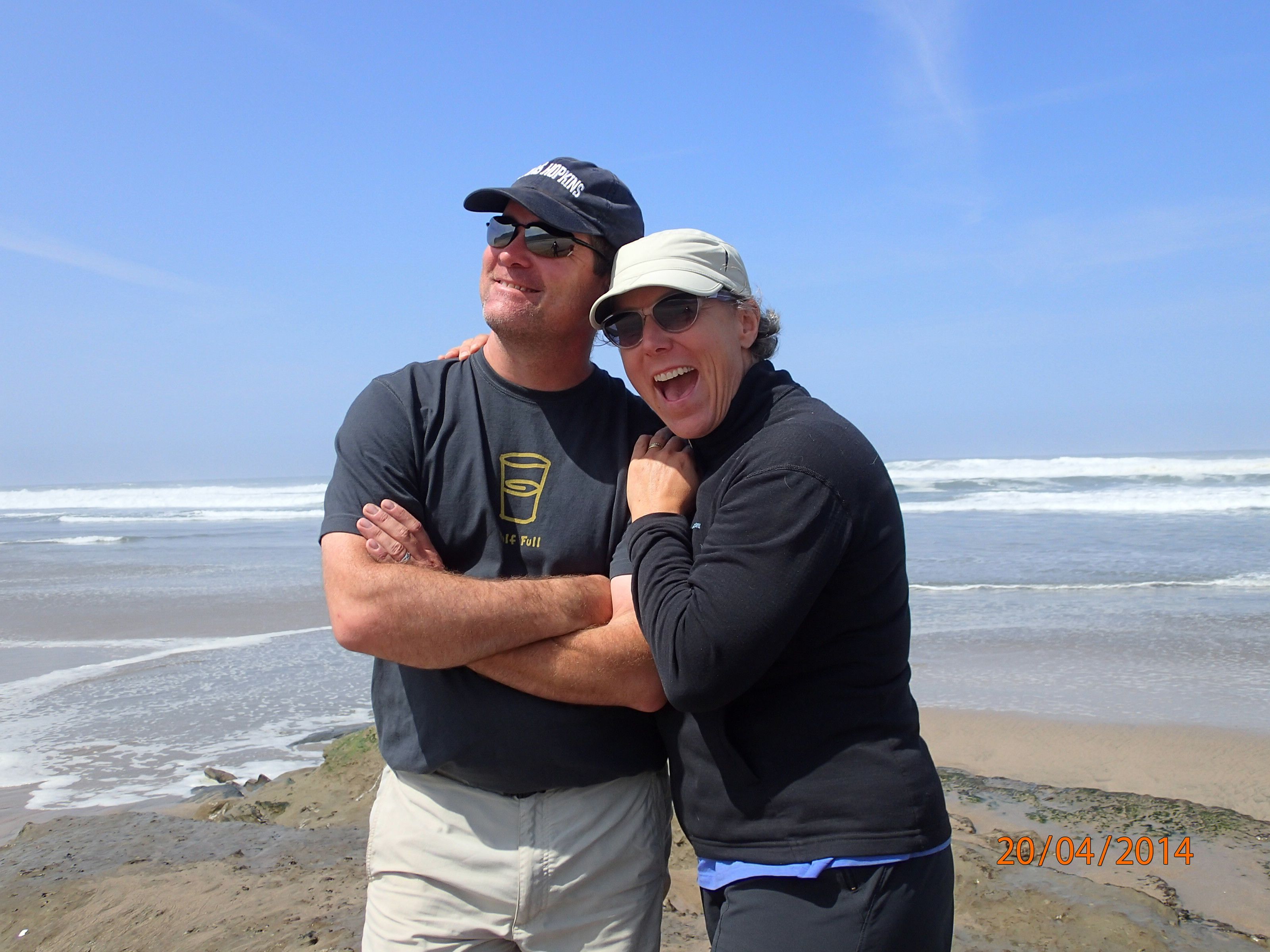
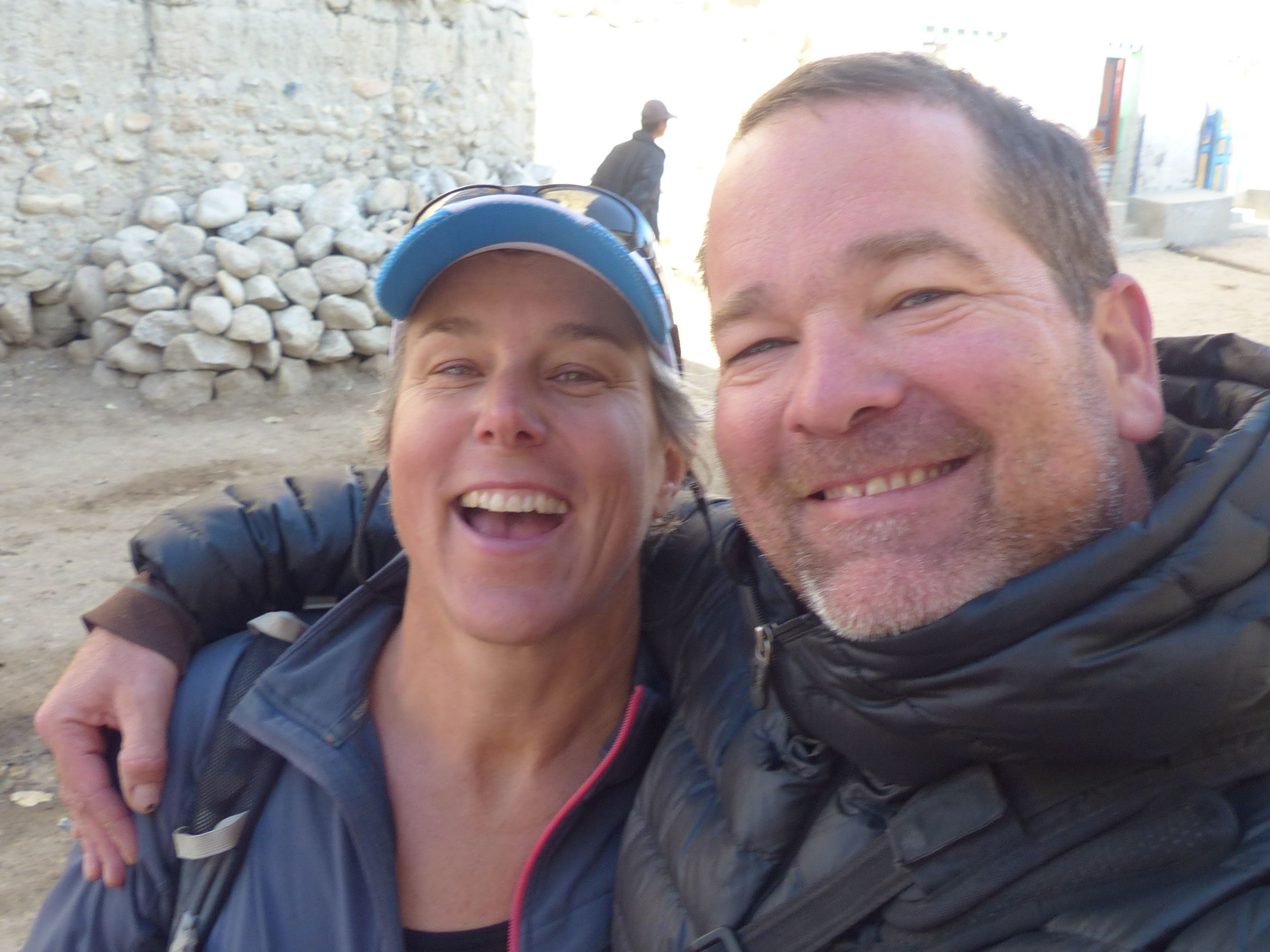
    Often we are asked if it is difficult to spend so much time together, if we we are constantly at each other’s throats. The reality is no – not at all – it may seem like it from the outside but it’s really quite enjoyable. This is not to say that traveling together is always easy, but we are quite happy together and have worked out who does what within the family. Colburn is in charge of money and restaurants, Deb is in charge of reservations and logistics, Lucia now makes sure we don’t leave too much stuff behind because we have lost 6 water bottles since August, and Mac makes sure we have snacks and water. We all have a role to play, but one of the unintended consequences of being together all day, every day for a year and a half is that our marriage has matured at an accelerated rate. We’ve become an old married couple much earlier than our 18 years together would indicate. Perhaps it stems from being more comfortable with and up front about our individual strengths and weaknesses, perhaps it is not having the distractions of work and school to temper our actions, perhaps it is just the consequence of so much time together – something most couples don’t really do until retirement – it is difficult to tell why. From the outside it may look as if we are arguing about trivial things, but the reality is that it is much more of a form of playful banter and not really an argument at all. You can’t spend this much time together and not get along. We love each other more and more each day.

    Having fun in California
    Having fun in California
    Having fun in Mustang
    Having fun in Mustang


    Holding on and Letting Go
    Traveling together for an extended period has brought us to the realisation that life really is a matter of deciding what needs to be held on to and what needs to be let go. Hold on to your children, let go of your preconceived notions of who they should be. Hold on to principles and let go of steadfast rules. Hold on to simple routines, let go of expectations that everything will go the way you think it should. Hold on to what matters most to you – people you love, beliefs, dreams – and let go of anything or anyone who does not support you in those things. Hold on to tradition even when letting go is easier. The list goes on. In fact, it might even be the theme for our book, should we ever write one…..


    Onward
    Onward
  • Fitting In

    Easy Going On The Middle Rhine
    Easy Going On The Middle Rhine

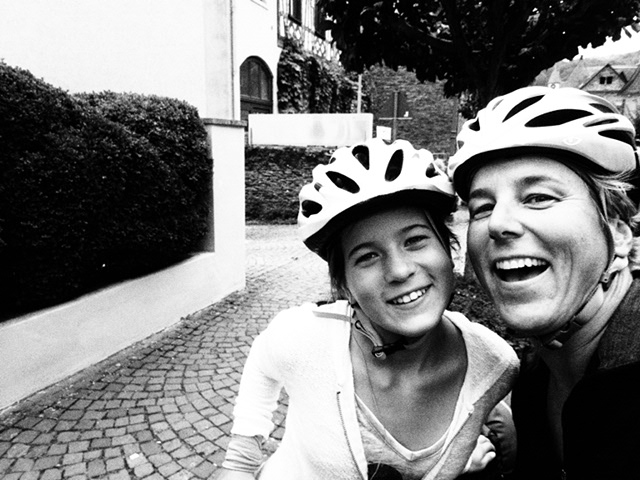
    With few exceptions, our entire first year of travel was spent in areas where we were always easily identifiable as “foreigners” or “tourists”. You get used to it after a while. In fact it can be wonderful because there is a kind of pity given to foreigners that helps when you’re lost or clueless as to what to do in a particular situation. Except for our time in Argentina and South Africa, we have always stood out for our size, our clothing, our language and the color of our skin. However in Europe, our experience is quite different. We fit in – very well – almost too well. People only speak to us in English if we specifically ask them to do so. Strangers ask us for directions. We are expected to know how the local restaurants work (which is not always intuitive). People really think that we are from the area.  That rarely happened last year.  When they find out we don’t speak German, French or Swiss German, the first guess is that we are from the Netherlands. This is understandable given that we both come from Germanic heritage – Deb’s mom was born and raised in Holland, Colburn’s father’s side of the family comes from Germany and Austria – and English is widely spoken in the Netherlands. So, if you speak English and look Germanic, you must be Dutch! I guess if you only based it on our looks, it would be completely possible.

    Guess The Nationality?
    Can You Guess The Nationality?
    Fun Cycling
    Fun Cycling

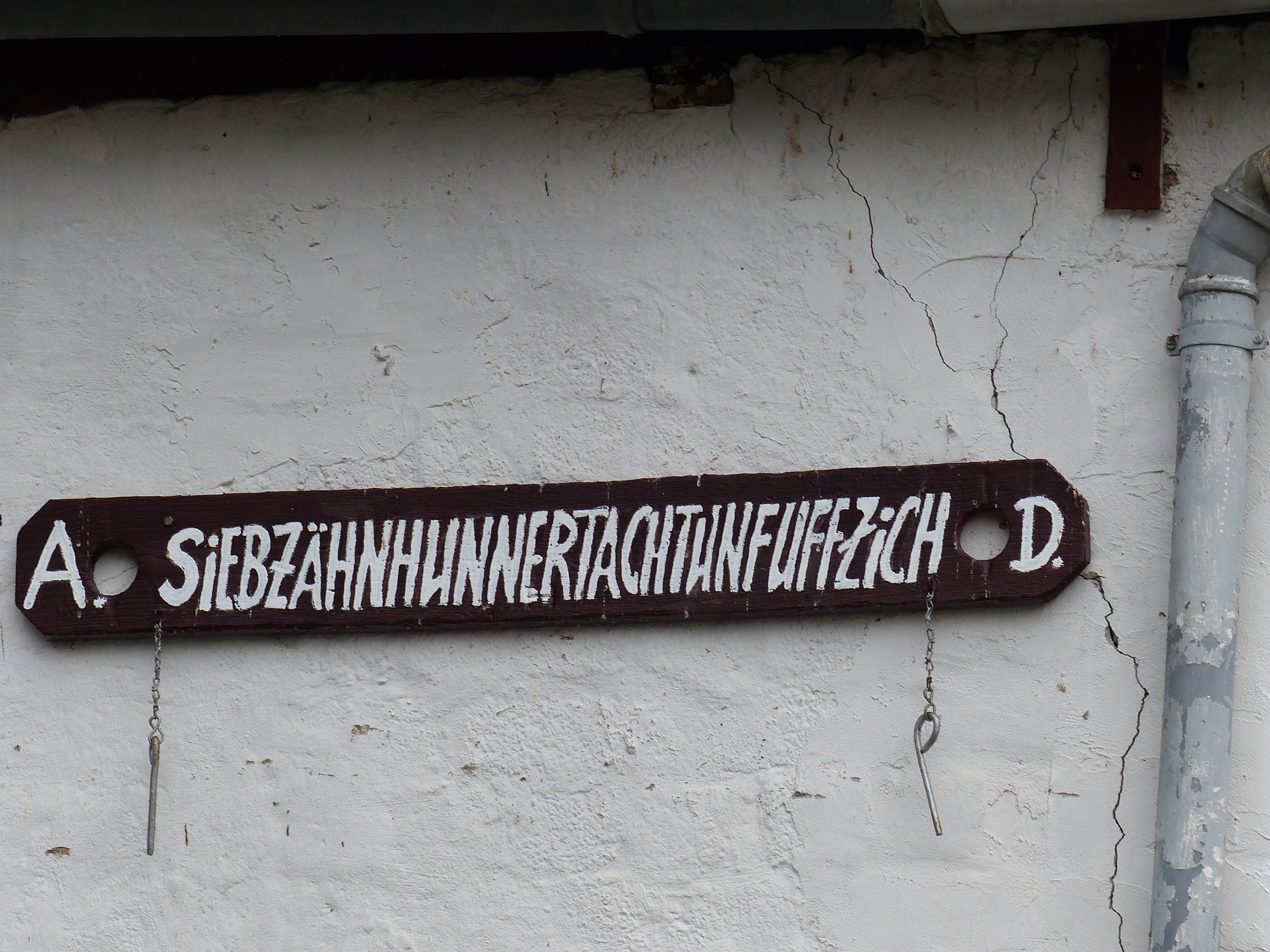
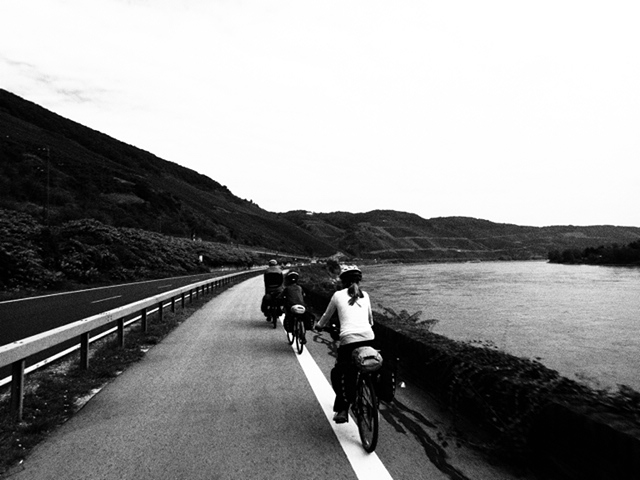
    One lady was convinced that we were from somewhere in the UK because folks from the US wouldn’t be biking with their kids. And Lucia was once mistaken for being Italian because she reflexively responded to a question in Spanish rather than English. Embarrassed, she came back to us exasperated, but we all have had to fight the urge because if we’re not speaking in English, we must have to speak Spanish as it is the only other language we know. Unfortunately, it’s not a common language here so we’re left playing charades or trying to get by on the simple phrases and words we do know. But, it’s pretty amazing how much we can actually understand without knowing much about the language. The other day, we were cycling through a little town and saw a house that had a sign on it that was a very long word. L1110093We doubled back to take a picture of the sign and when Colburn asked permission, the gentleman standing outside explained to us in German that the word was word was the year the house was built (1758), possibly written in the local dialect. He then went on to explain that the area has been wiped out by the Turks, the Franks, and we think, the Allemani but then was rebuilt in the 1600’s. His particular house used timbers and materials from the 1600’s but was actually built a century later. And we understood all of this without actually speaking German. Pretty amazing. L1110094 The other aspect of travel where we feel like we fit in is being on our bikes. It’s wonderful to see how many people bike around town – older ladies going to the bakery for bread, young adults going to work, toddlers on their balance bikes tooling down the path. Everyone bikes. But perhaps the most surprising to us has been the number of 60 or 70-somethings we see touring on bikes. If I had to estimate, I would say that probably two-thirds of the folks identifiable as bike tourists (are using a map) are in the 60-80 year old category. Now, they aren’t carrying all of their gear with them like we are; it’s a different type of cycle-touring. They don’t camp, their luggage gets forwarded from inn to inn, they have electric assist bicycles — but they are still out here doing the same basic thing we are – seeing the Rhine by bike. It’s totally awesome.

    The Middle Rhine
    The Middle Rhine

    Surprisingly, we have only seen a couple other kids carrying gear on bikes – one at our first campground and another at our last one – both with a single parents.  When we feel that we are intrepid bikers, we remember that we are in Europe and there are folks way tougher than us doing the same thing.  We stand out only because the kids are carrying stuff, not because we are biking 1200 kilometers.

    Water Bottle Holders Can Carry Wine Too!
    Water Bottle Holders Can Carry Wine Too!

    With almost 800 kilometers completed, we have settled in to a lovely routine with bike touring. Unlike the Upper and Alpine Rhine, the well-cycled Middle Rhine has not presented the navigational or topographic challenges we experienced early on in the trip. The route now clearly follows the river, often on the tow paths as we had expected. The going is easy and the days enjoyable. Our bodies have adapted to the demands of cycling nicely – no more sore butts or tired legs. We carry a lot of food with us because we need to stoke the engines frequently.  That being said, we can easily add 10 or 15 km to a day if we need to without anyone having a meltdown. It’s just not a big deal anymore (it was the first couple weeks).

    Our Airstream in Bonn
    Our 1980’s Airstream in Bonn
    The License Plate on Our Room for the Night
    The License Plate on Our Room for the Night

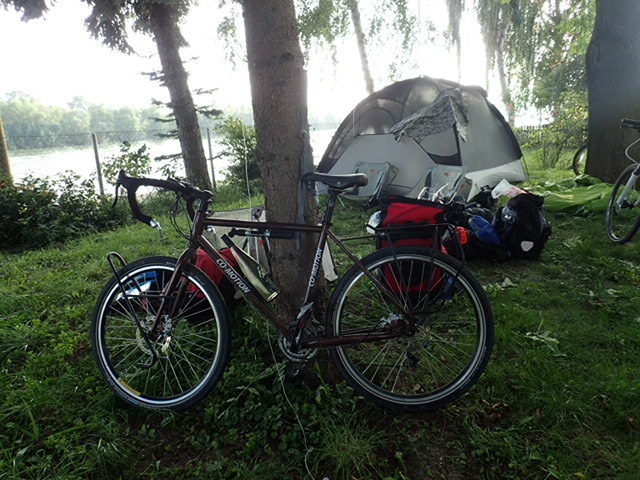
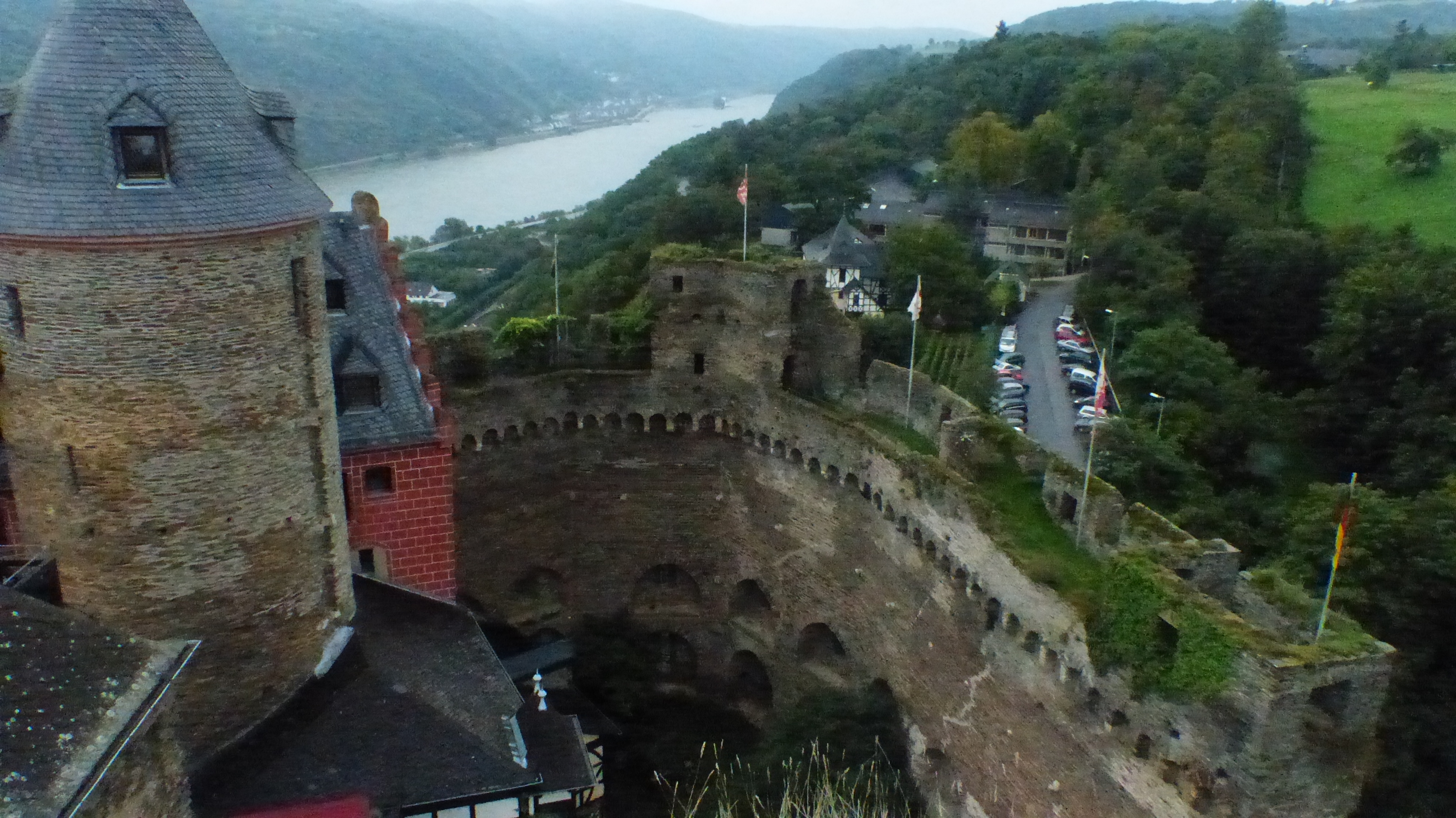
    We like to camp for a few nights then stay in a hotel, hostel, or funky Bonn camper hotel – we are staying tonight in a 1983 Airstream – or, the other night, a 9th century castle. That was a real treat – but was hard-earned as the climb was steep!

    Our Castle Retreat
    Our Castle Retreat

    We ride for a few days then take a day to enjoy the area. We can do school on most days, even if it is a full riding day. We have settled in to our routine and it’s good. Soon we leave the Rhine to visit some family in the south of Holland then take a train up to visit more family in Amsterdam. After Amsterdam, we cycle down the coast of the Netherlands to the Belgian border where we will store our bikes for the winter. We intend to hop back on them in the late Spring to ride the Danube from outside of Vienna down to Prague and possibly even beyond.  We will have to see what the Spring holds for us, but for now we are enjoying the ride!

    View From The Castle
    View From The Top of Our Castle
  • Biking the Upper Rhine

    OLYMPUS DIGITAL CAMERA
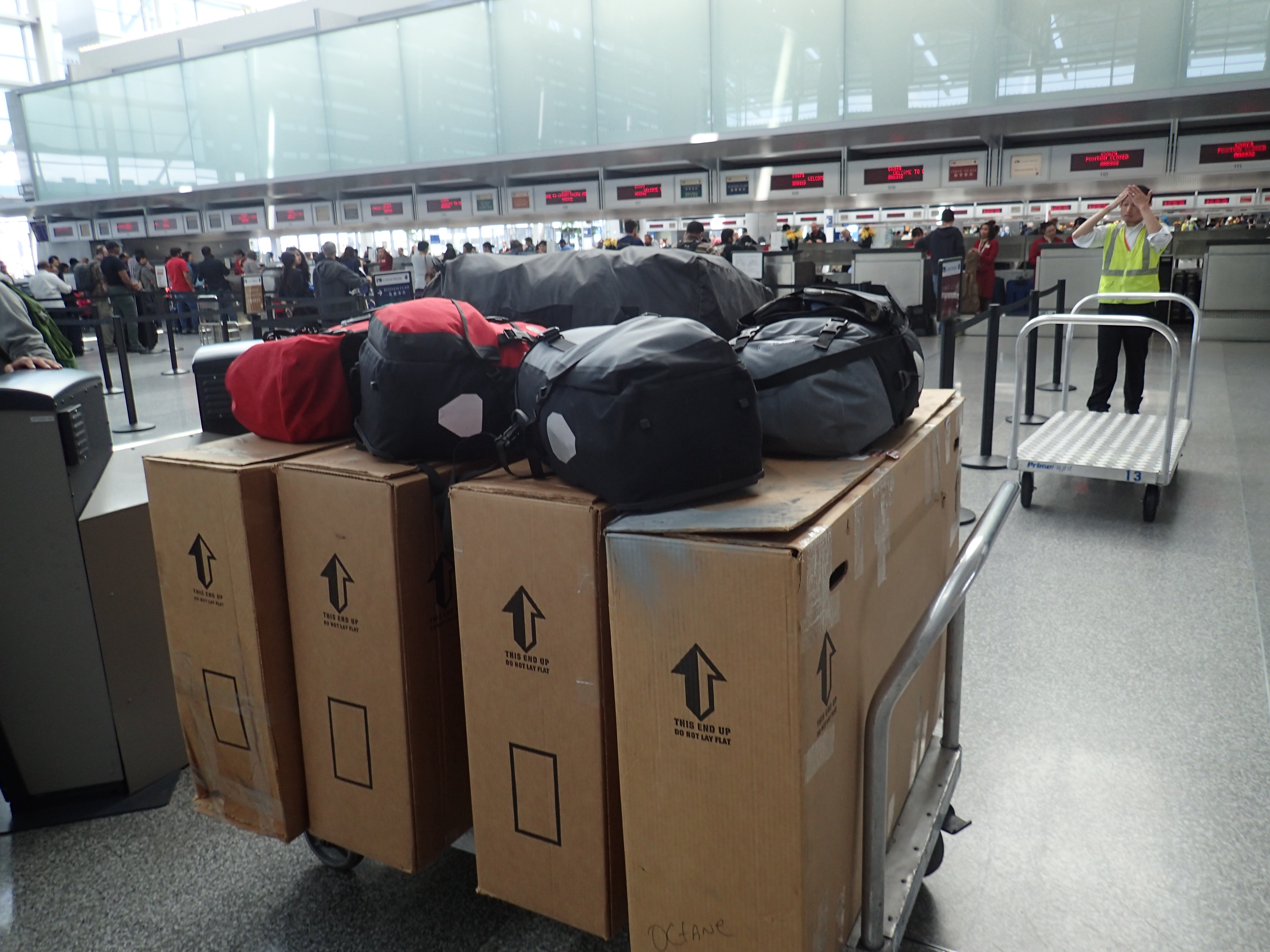
    Leaving SFO with our bags and bikes in boxes
    Putting bikes together in the Zurich Airport
    Putting bikes together in the Zurich Airport

    450 km of the Rhine completed, 800 km to go! Perhaps up there with hiking Colca Canyon in Peru and to the Mirador de las Torres in Chile, biking through the upper portion of the Rhine route ended up being one of the more challenging physical activities we have undertaken.  Listed as an “easy” and “suitable for families” route, we thought that it would be the perfect introduction to cycle touring.  Relatively short days of around 50 km per day and flat terrain coming out of the mountains would allow us to settle in to a rhythm and get used to biking with all our gear with us.  At least, that’s what we thought it would be.  The reality has been quite different, still good, but not nearly as “easy” as we thought it would be.

    Bike lanes are everywhere
    Bike lanes are everywhere

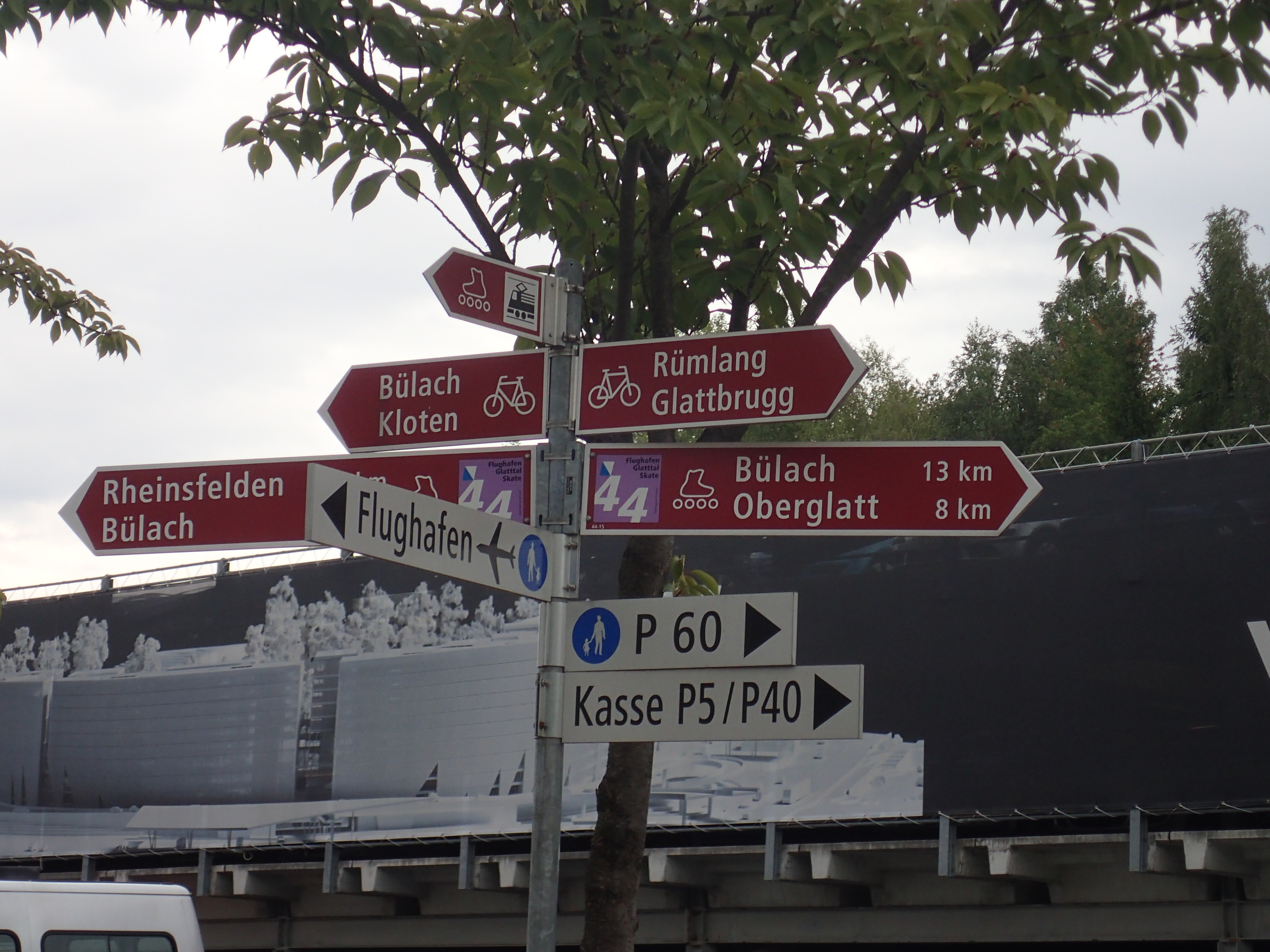
    You’ve got to love the Swiss because the whole country is set up for bicycling.  There are literally thousands of bikes traversing cities, towns, and villages.  The Swiss are also fanatical about identifying their bike routes.  Think signage at every possible juncture.  Unfortunately for us, we encountered 100 or more such junctions each day as we were winding our way through medieval towns, traversing apple orchards and spanning rural farm roads.

    OLYMPUS DIGITAL CAMERA
    Well marked, but sometimes confusing

    The system works great  until you don’t see one of the signs because it was hidden behind a jasmine bush or hyacinth.  It may take a while for you to realize that you’ve lost your signage and now are not really sure how to get back to where you want to be without backtracking great distances – something irritating in a car but down right disheartening when on a loaded bike.  We also have a mobile app which has all of the Swiss bike trails on it, so we thought we were good to go.  If we got lost, we could just look up where we were on the map and find our way back to the route.  It would probably work great if it didn’t take 10 minutes to load when we were in the rural areas of the Alpine Rhine or if we had better cell coverage.  In the end, it was pointless to even try to use it so we were stuck relying on the signs.  It worked okay, but we have made more than a few wrong turns which extended  both our mileage and daily elevation.

    OLYMPUS DIGITAL CAMERA
    Konstanz, Germany from the church tower

    In my mind, I had pictured peacefully spinning along the riverbank on a flood dyke or towpath, following the river as it meandered across the valleys.  However this section is through the mountains so the river is sinuous and convoluted as it tumbles down from the high passes.  The bike route frequently has to veer away from the river to cross a ridge because the valley cut by the river is too narrow or too steep for a bike path.

    L1100814
    Pleasant Swiss courntryside

    A few of our “misdirections” included adding 12 km of “undulating” terrain through the hills where the book Heidi was set on our very first day, crossing through a farmer’s field and sheds to then go down a dirt path, across a stream, and back up the other side of the ravine on the third day (this one ended up great though because we found a Turkish restaurant for lunch as a result!), pushing our bikes through a quagmire of clay-like mud along a construction zone as it rained on day 6, and a 3 km ride along what might be described as a high-speed truck-route our last day in Switzerland.  And this is just some of the highlights of our misdirection adventures – there were many, many more!

    L1100720
    One of many clock towers

    However frustrating the navigation, the scenery and experience have been amazing.  We began riding in Chur, one of the longest inhabited cities in Switzerland.  Charming streets are lined with half-timber houses, winding narrow cobblestone streets, and yummy peasant food lured us in to its charms.  The scene was idyllic – high granite mountains with a quaint typical Swiss town in the valley below.  It was the kind of scene which makes you want to break in to Julie Andrews, “The hills are alive, with the sound of music….” but we didn’t because none of us can really sing all that well.  The weather was fantastic – high puffy clouds, 70 degrees, and abundant sunshine.  This, of course, was not to last too long as it has been a rainy summer here, but we enjoyed the auspicious start.

    OLYMPUS DIGITAL CAMERA
    A rainy day

    After a few days of riding we decided to spend our first rest in a hotel in Konstanz, Germany.  A very welcoming college town, it was easy to get out and see some of the sights.  Part of us just wanted to hole-up in the hotel and relax, but the other part of us really wanted to walk the streets, see the churches, and explore the area.  This conundrum is something that we have faced often.  If you are visiting an area for a week, you can sort of suck it up and do everything that you want to even though it is exhausting in the end.  If you’re only going to be someplace once, you need to make the most of it, right?  With long-term travel, it is different because you simply cannot have amazing new experiences every minute of every day.  You saturate your mind, burn out, melt down, and end up in a puddle on the ground.

    OLYMPUS DIGITAL CAMERA
    Finally getting out for a walk

    Over our time traveling, we have found that one incredible “event” per day is plenty.  It may seem like we are wasting our time because we’re sitting down listening to music or reading stories instead of seeing all of the sights of an area, but we just can’t do any more than that.  Some days our event is simply getting from one place to the next, other days it might be visiting a church or taking a tour by canal boat.  We also have to be able to get school done along the way and we have found that the process is much easier if the kids aren’t exhausted from touring different sights.

    L1100731
    A small Swiss castle

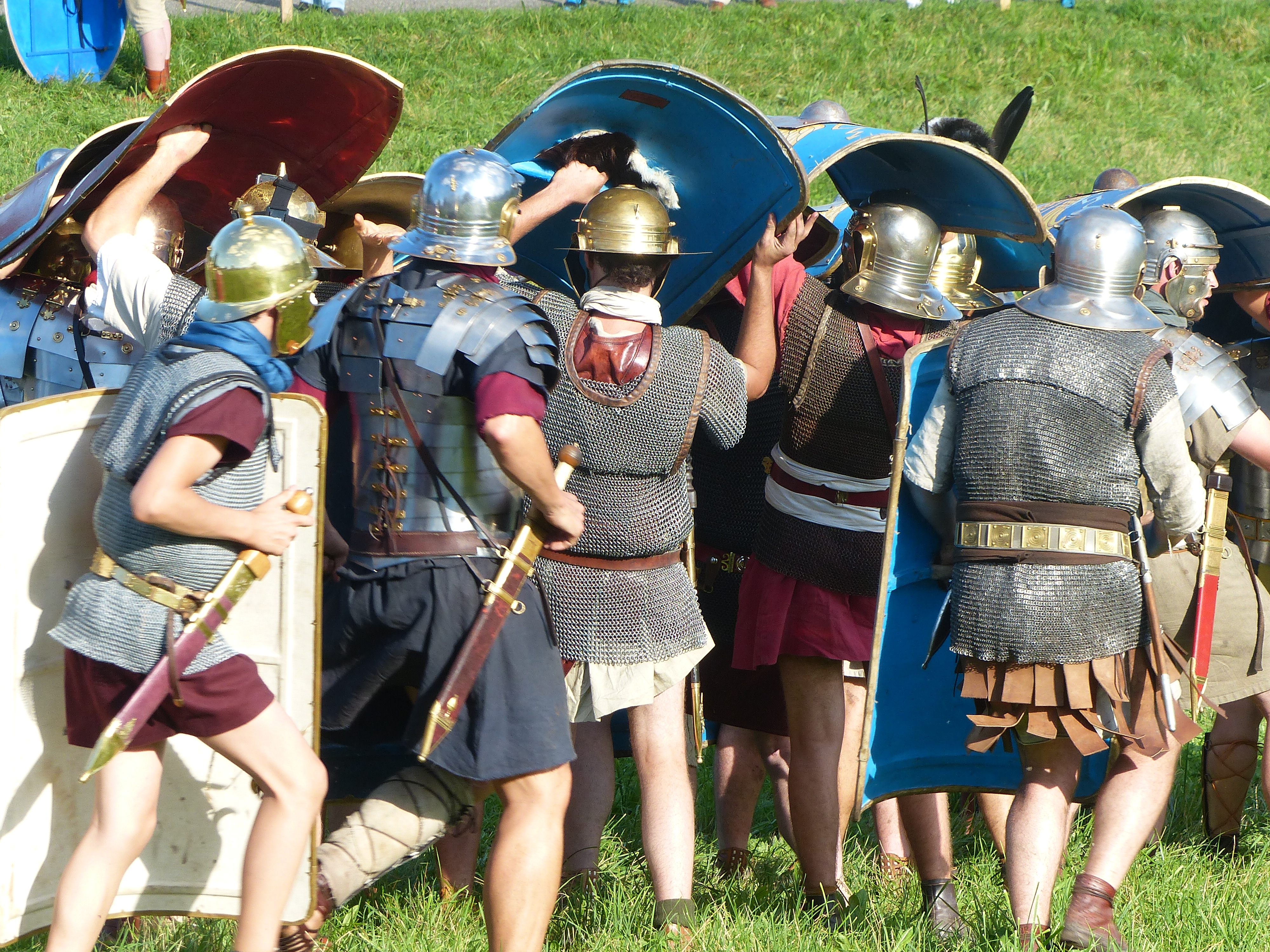
    Another few days of biking lead us to the small town of Kaiseraugst, Switzerland.  Our family has a thing for ancient history so we wanted to see Augusta Raurica, an old Roman fortified town built around 200 A.D.  Walking down a path along the river we came across the restored old bath house you can just walk through — no entry fee, no guards making sure you don’t touch anything, just informative signs as you walk through.  Walking further along the path, we came to a playground the kids wanted to explore.  As we looked around, we noticed that the wall of the playground was really, really thick – like 9 feet thick – it was part of the old fortifications.  Again, the kids could climb on it if they wanted to – no barriers, no signs admonishing you to stay off of the relics, just history embedded in to the town.  The weekend we were there was also the annual Romanfest complete with expositions of gladiator fighting, presentation of the troops dressed in period clothing, and a whole bunch of other Roman things.

    L1100885
    Parading of troops at the Romanfest

    This was one of those times when we were so tired we could barely walk to the store to get groceries but really wanted to go see the festival too.  After much deliberation, we thought this was something we really had to do so pulled our butts up one more hill to the festival.  It was good fun, but probably would have been better if we could have understood at least a few words of what they were saying. Leaving Kaiseraugst was difficult as we really liked the town and our campsite along the river.  The whole process was very relaxing.  The people who run the place are a Swiss-American couple so it was nice to be able to speak fluently with her about the area, how to get around, etc.  The man is Swiss and Lynn his partner is from Long Island, NY.

    L1100913
    Demonstrating a battle formation – Mac loved it!

    Switzerland is not part of the EU so has its own currency, Germany, France and Austria use the Euros.  You would hope that most places would accept either currency at a nominal exchange rate, but our experience has been that in Switzerland it is Francs and only Francs and everywhere else is Euros only.  We ended up having two different money storage (left pocket Euros, right pocket Swiss Francs) and would have to figure out if we had enough money when we had to pay for something because you often cannot tell what country we are in.  One day we must have crossed back and forth in to different countries at least six times.  Mac got a kick out of this though because he hates immigration.  He thought it was a hoot that we never had to have our passports stamped!

    OLYMPUS DIGITAL CAMERA
    Steim am Rhine, with a beautiful medieval main street

    Strasbourg, France followed Kaiseraugst.  We decided to hop a train as there were 150 km of undulating terrain, a big city, and not too  much to see so we decided to get a bit ahead by taking the train for a couple hours.  It was a nice break as we were able to get an extra day in Strasbourg, which we adore, and also to give our legs a break. 

    OLYMPUS DIGITAL CAMERA
    How bikes travel on French trains

    The kids were able to do double lessons, Colburn and I were able to eat some yummy Alsatian food, and we enjoyed walking around town.  One of the things that we love about many of the cities/towns we have been in is just how walkable they are.  Unlike the US where your favorite restaurant may be 20 miles away, our favorite place was only three doors down from our apartment (not that we were there long enough to really develop a “favorite”, but we really enjoyed our date-night there).  Strasbourg was especially nice and we have started to consider coming back for a European Christmas!

    OLYMPUS DIGITAL CAMERA
    A stormy morning in France

    Our last few days have been much more along the lines of what we expected – flat tow-paths and flood dykes, long-ish distances (60 km yesterday) without being exhausted when we get to camp , and a little bit of extra time to enjoy where we are.  We have spent these couple days mostly “big ring riding” – a phrase we can only use when the terrain is flat that you can actually use your largest chain front ring.  We love big ring riding!

    OLYMPUS DIGITAL CAMERA
    Happy bikers

    So, to this point, if you would ask us if we have enjoyed biking the Rhine, we would give it a qualified yes.  It has been more difficult both physically and emotionally than we had anticipated yet we have enjoyed the process overall.  Despite near-obsessive signage, we manage to get mis-directed several times each day.  It’s happened so much now that the kids just groan or chuckle we she have to take a “detour”.  We’re settling in to a rhythm and realizing that a decent map is a godsend, that shorter days are better than longer ones, that chocolate makes everything better, and that we need way more food with us than you would think.  The kids love the pastries, schnitzel (fried anything, sometimes on bread=schnitzelbrat), spaetzle (a thick egg noodle), and Shorley (an apple drink).  Colburn and I love the wine and beer.

    L1100745
    Currywust and Schnitzelbrat at a festival

    The people in Switzerland were lovely, reserved but always patient and helpful.  We were also surprised in Strasbourg by how accepting of our linguistic incompetence people were and how they would go out of their way to try to help us.  Often it has required a mixture of German, Spanish, and some English.  Now we are in Germany and have been struck by just how far the German people will go out of their way to help us.  In just one day, a man saw us ride up and down the same street (we were looking for a bakery) and he got on his bike to make sure we found what we were looking for; another man saw us looking at our map so asked where we were going and gave us two different options on how to get there; a woman who saw our tent and sleeping bags on the back of the bikes stopped to ask us if we were looking for a campground because there were none in the area. Finally,  when we stopped for lunch at a Home Depot type place, another man was checking out our bikes and started to ask questions about what we’re doing – ends up he lived in Pittsburg for several years as a coal miner.  Speaking with him in English was profound for Colburn as he sounded precisely as a early Shindell in Pennsylvania would.  So far we’ve made it through every situation somehow – often through the kindness of strangers.  These are the experiences which make travel so rewarding.  Everywhere we turn there is warmth, kindness and generosity of time and spirit.

    OLYMPUS DIGITAL CAMERA
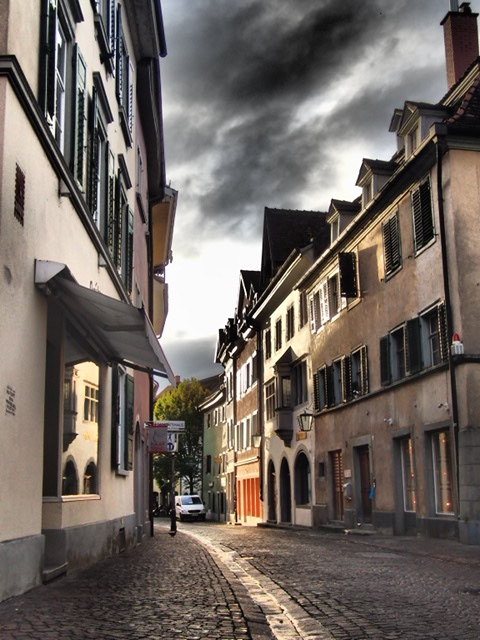
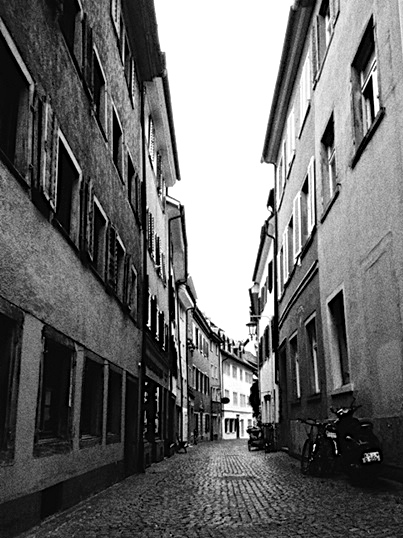
    Medieval streets
  • The End of Six Months in South America

    We have been on the road in Central and South America for six months.  As we are wrapping up this phase, we wanted to reflect upon what the trip has held for us so far.  South America has been a grand adventure – trekking, rafting, snorkeling, zip-lining, hiking, surfing, etc.  We have experienced a range of situations that have tested our limits.  We have navigated our way through an entire continent in a different language, not always smoothly, but we’ve done it.  We have learned what we need to stay happy on the road and just how little stuff is actually necessary.

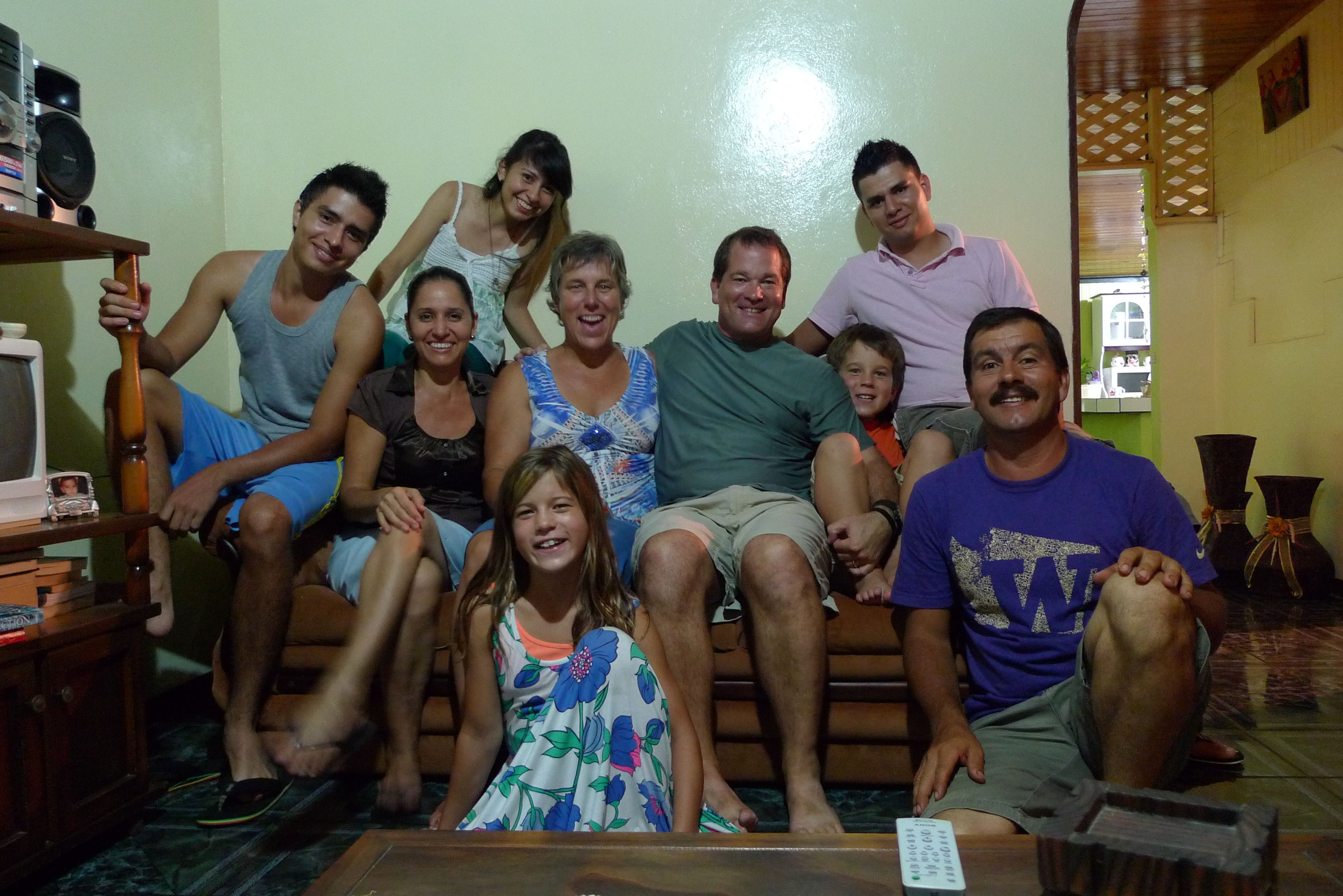
    Retana-Miñoz Family
    Retana-Miñoz Family

    Many people ask us which country we have liked the best.  Unfortunately, this is somewhat like asking you which child you like best.  It is not really possible to say that we liked one better than the other, but we have enjoyed them for very different reasons.   In Costa Rica and Nicaragua, we enjoyed the ease of travel and wild life.  Spending a week at Proyecto Asis and with the Retana Munoz family, our homestay family was an amazing experience.  Rosi and her family were gracious, patient, and made us feel completely at home living with them.  Taking Spanish lessons with Danielle and Yalitza gave us a foundation for making our way through the language.  Working with and learning about peccary, capuchin monkeys, macaws, and a whole host of other animals provided us with first hand knowledge of the challenges which face the animals in the wild we were to see later in our trip.  We enjoyed it so much that we are thinking about going back there at the end of this summer – “one year later” – to see how our perspective has changed.

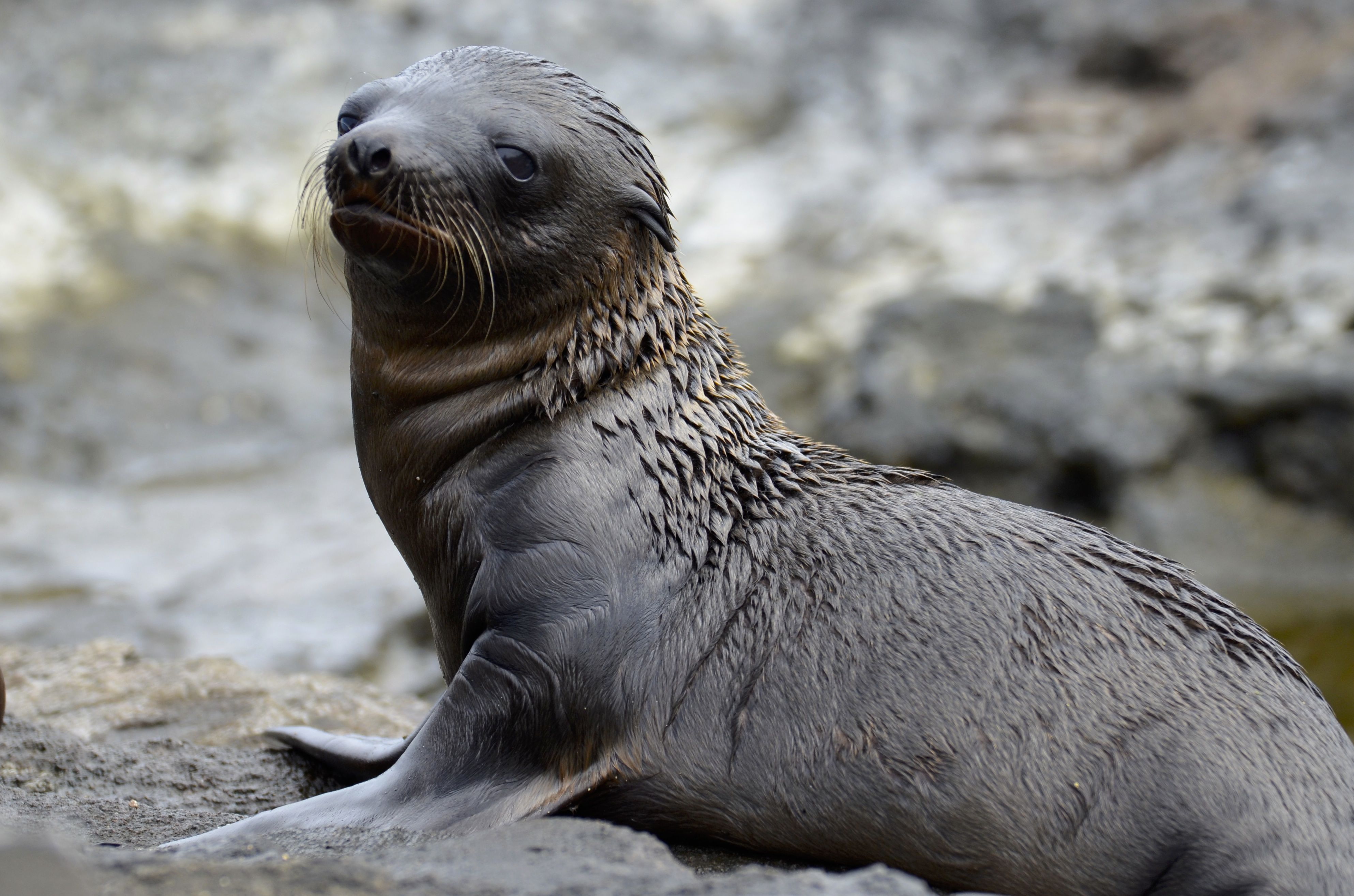
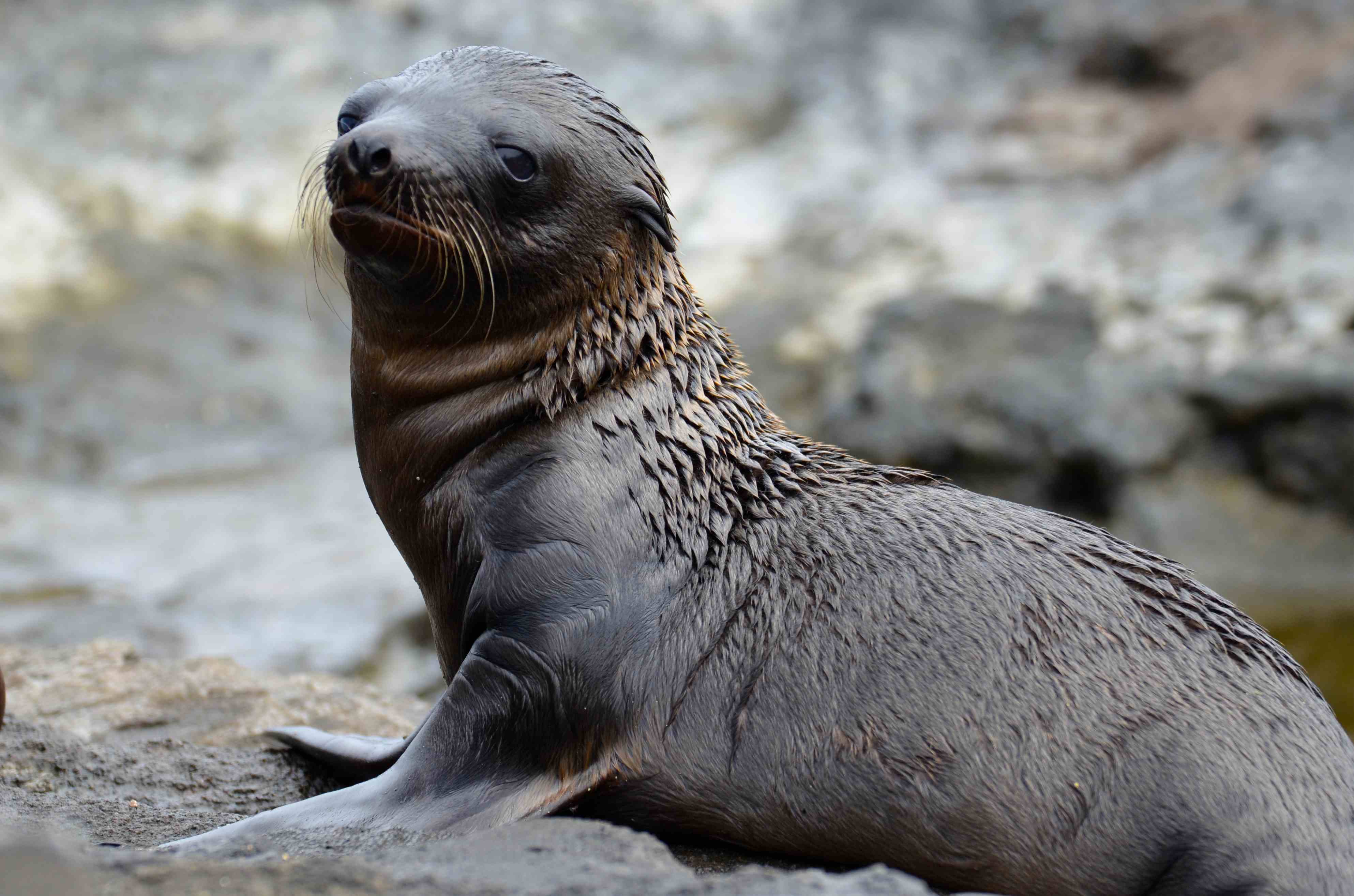
    Infant Sea Lion
    Infant Sea Lion

    Ecuador held Quito, the Galapagos, and Otovalo; each quite different from the other but creating a very well-rounded experience.  The Galapagos will always hold a special place in our hearts as you can interact with wildlife in a way that is not possible anywhere else on Earth.  Playing in the ocean with sea lions produces a giddiness that is not often experienced as an adult.  Watching marine iguanas climb out of the sea to bask on the black lava and expel excess salt out of their nostrils is seeing life on our planet before hominids began to dominate everything.  Listening to the scratch and scrape of a giant tortoise as it hauls its shell over the rocky landscape reminds us of how resilient life is, and how fragile.  We had enough time (four weeks) on the Galapagos to feel like we really got to know the place.  Quito and Otavalo were our first introduction to the Incan influence, but it was subtle.

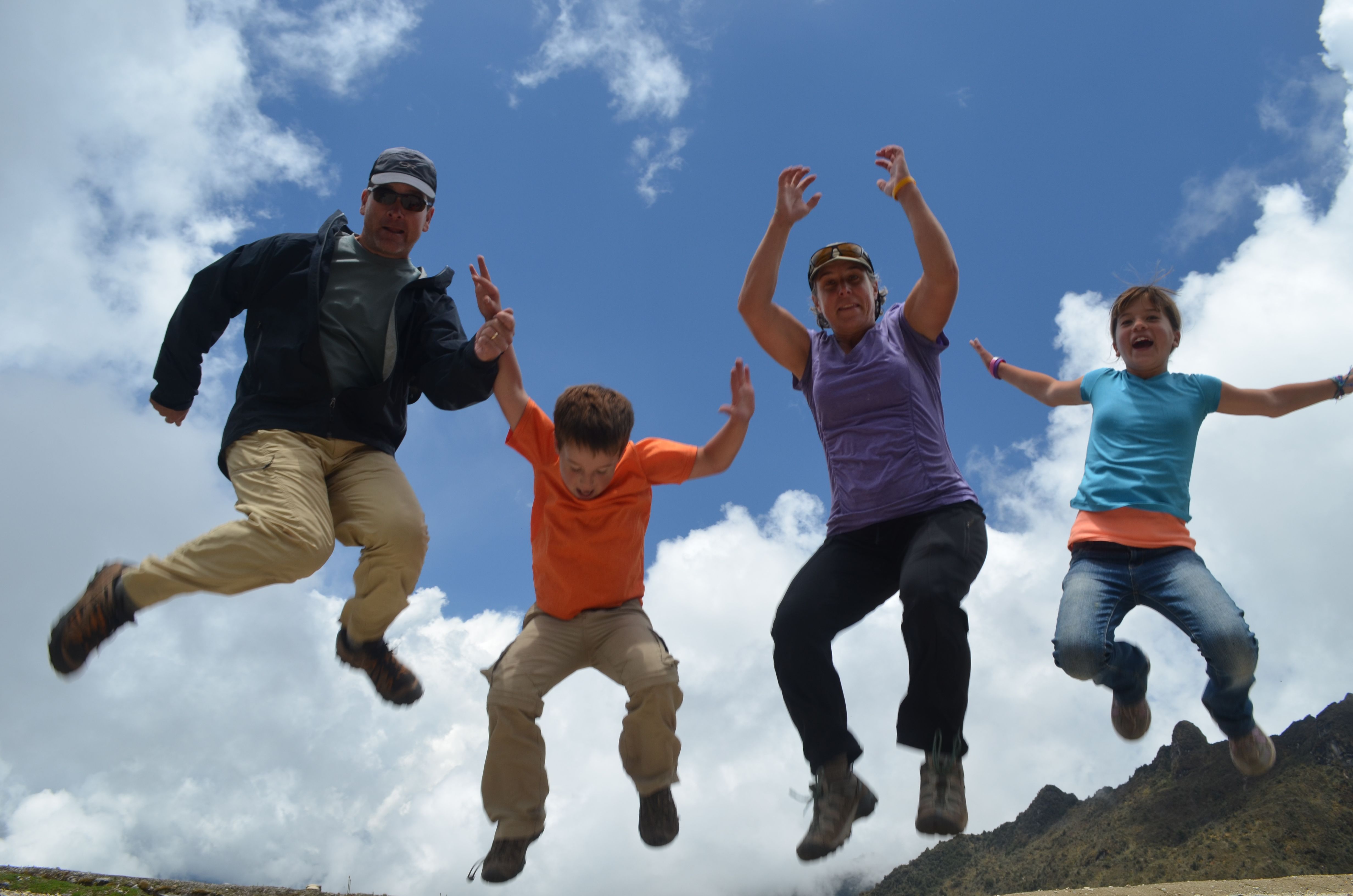
    Celebrating Success
    Celebrating Success in Peru

    Our experience in Peru was very different from Ecuador.  Yes, the landscapes are similar, but what we paid attention to was much different.  With the Incan influence clearly visible everywhere, we learned more about the history and culture than flora and fauna.   The stark beauty of the Colca Canyon and the wonderful hospitality of our host family and guide left us feeling as if we were truly welcomed there, not just a paying passenger.  In contrast, Titicaca and Ollanta left us feeling as if we were simply a commodity; something to be exploited for every dollar possible.  Although it was quite disturbing, we became aware of just how damaging tourism can be for a culture, a necessary awareness when traveling abroad.  We are now even more diligent in making sure that we give our dollars to organizations that do not damage and exploit the culture or the people solely for profit.  Our time in the Amazon was amazing – the raucous calls of the macaws flying overhead, the peculiar odor of a peccary approaching, the grace of the monkeys launching from tree to tree – will always be remembered.  Hiking our way to Machu Picchu was a more of a pilgrimage than a trek, allowing us to glimpse the spiritual side of Incan culture as well as a fantastic experience.

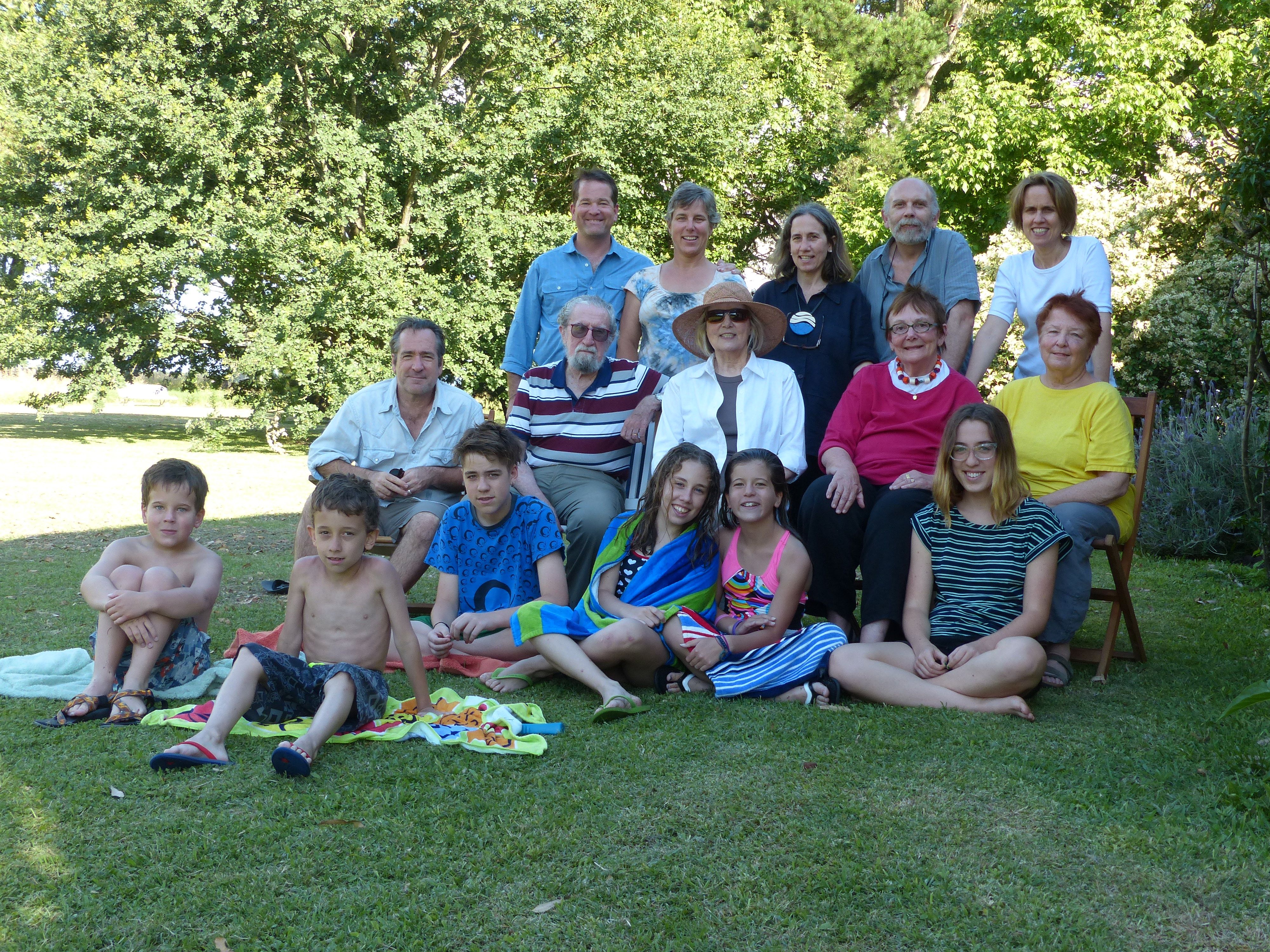
    With Granny and Jean and Our Argentine Family
    With Granny and Jean and Our Argentine Family

    We have enjoyed Argentina for our time with family, the absolutely jaw-dropping landscapes and the availability of fabulous wine and scrumptious grilled meats everywhere.  Being able to spend the better part of a month with Colburn’s Argentine family has been a true gift.  We have been with them long enough to able to see in to their life in a way that is not possible with a one or two week visit.  They have welcomed us with such grace and kindness that we have felt as if we were in our own home, not visiting.

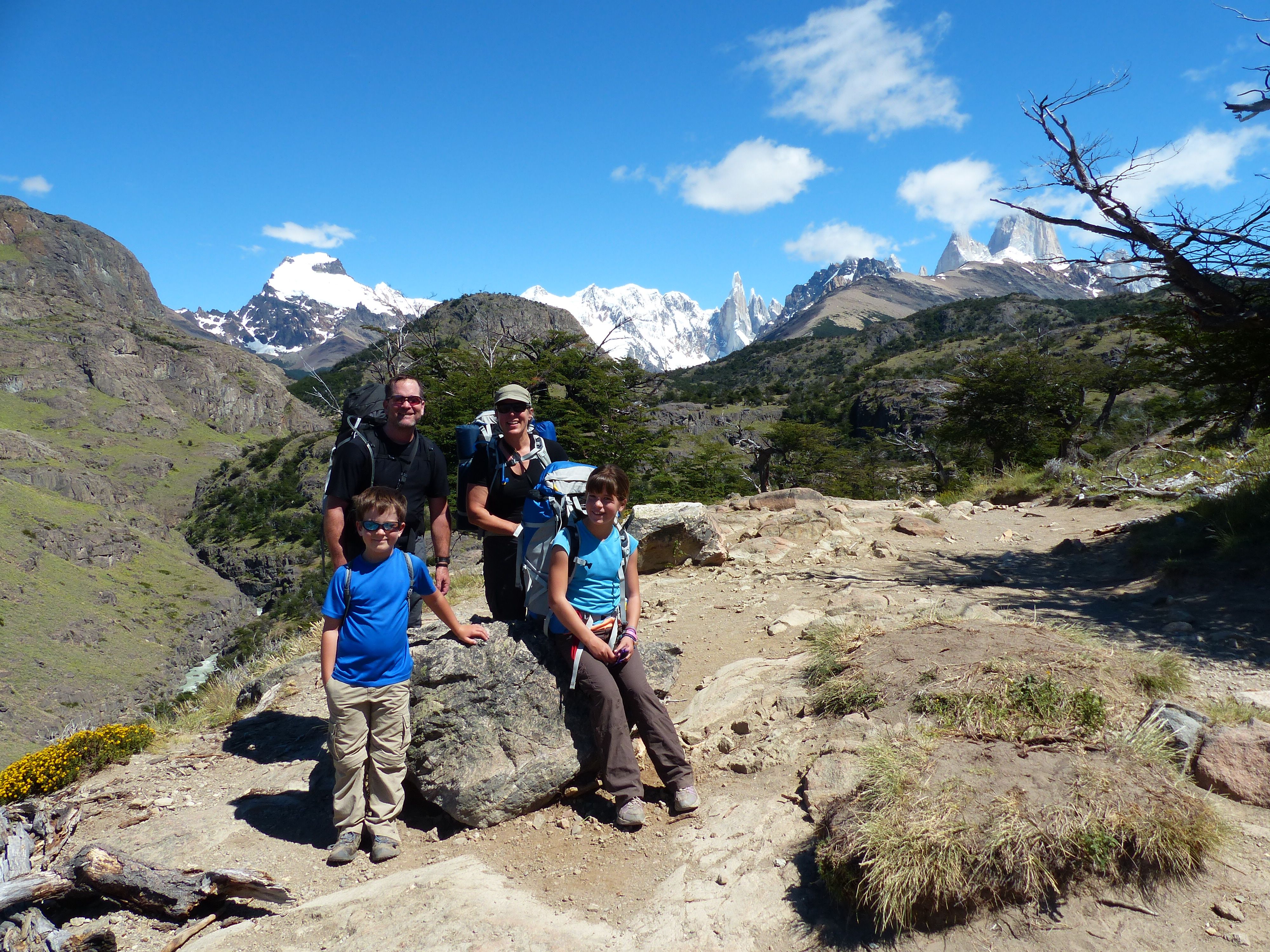
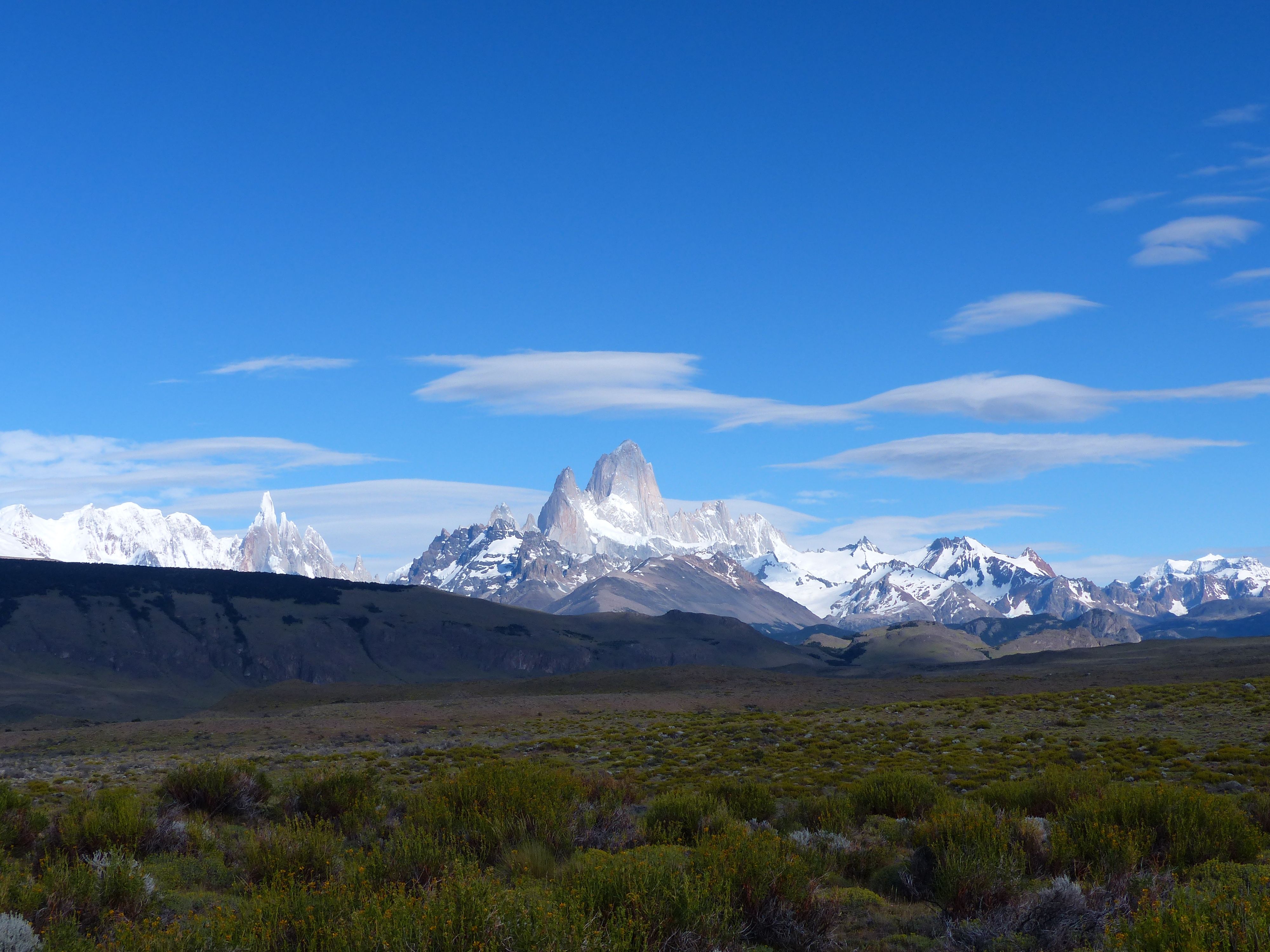
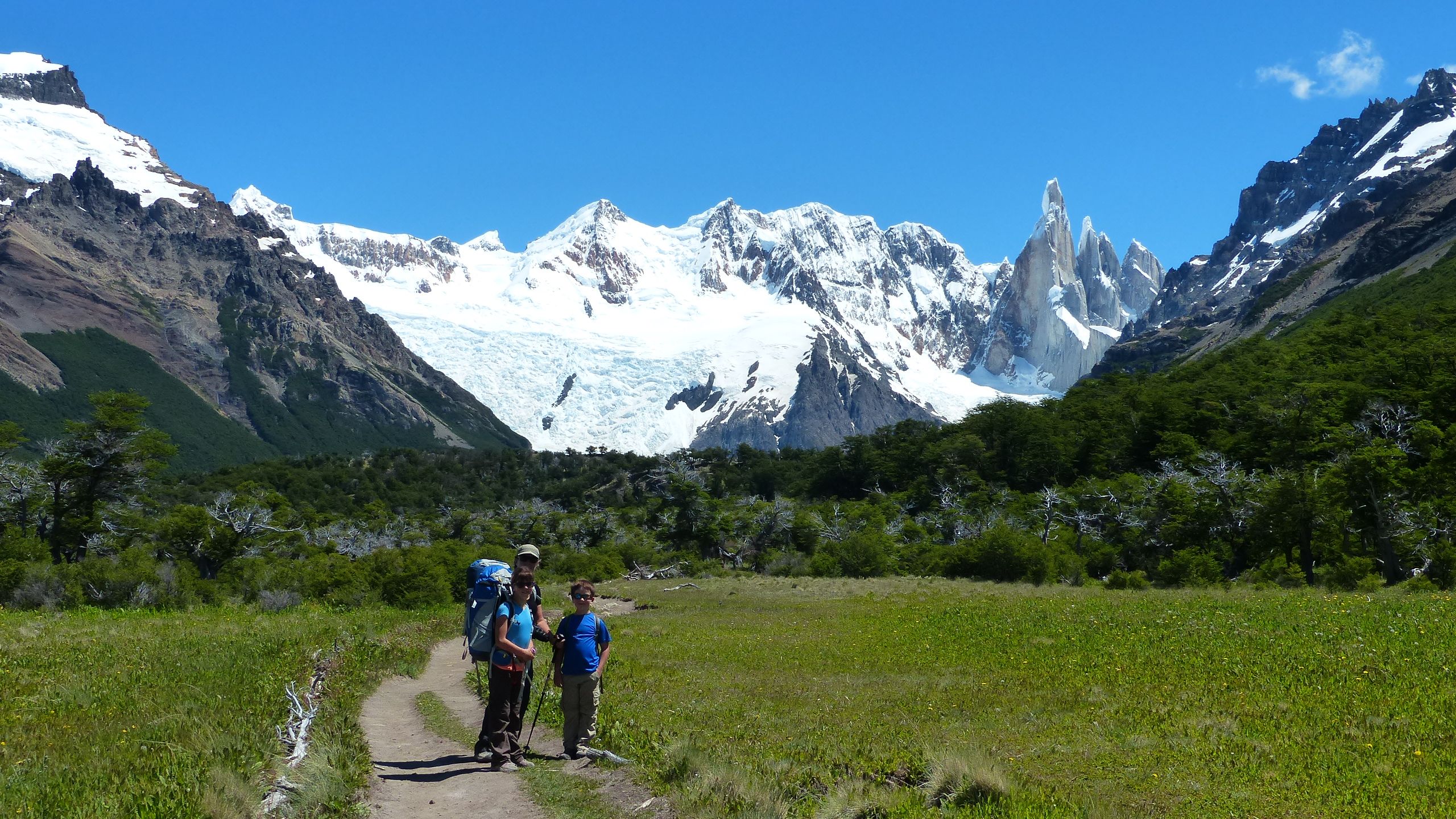
    Near El Chaltén
    Near El Chaltén, Southern Patagonia

    Going to Southern Patagonia was like finding the place we have always wanted to be. It is mesmerizing and might be like what the American West was before super highways and strip malls.  We know we will be back to Patagonia, so when we left it was hasta luego not adios.

    Hot.  Sweaty.  Waiting.  Puerto Maldonado Peru.
    Hot. Sweaty. Waiting.  Leaving the Amazon, Puerto Maldonado Peru.

    Beyond simply visiting interesting places, our travel has changed each of us individually and also as a family unit.  Individually, we are each now more gentle with ourselves and others.  Our expectations for everything going as planned has diminished considerably since leaving the US.  Repeatedly experiencing extended periods of waiting for an unknown outcome and the feeling of being lost as we try to navigate our way through unmarked routes in foreign lands has taught us that most people are really quite helpful and a sense of humor about pretty much everything is essential to successful travel.

    An Indication of the Future  (translation - the road is in a bad state)
    An Indication of the Future
    (translation – the road is in a bad state)

    When Deb left her wallet in a taxi in Peru, the driver came back to the airport and found us to return it with everything still in it.  When we were having trouble getting the rental car company to do anything about our car that wouldn’t start, the gentleman at the hotel desk became our valiant defender summoning a tow truck within 15 minutes.

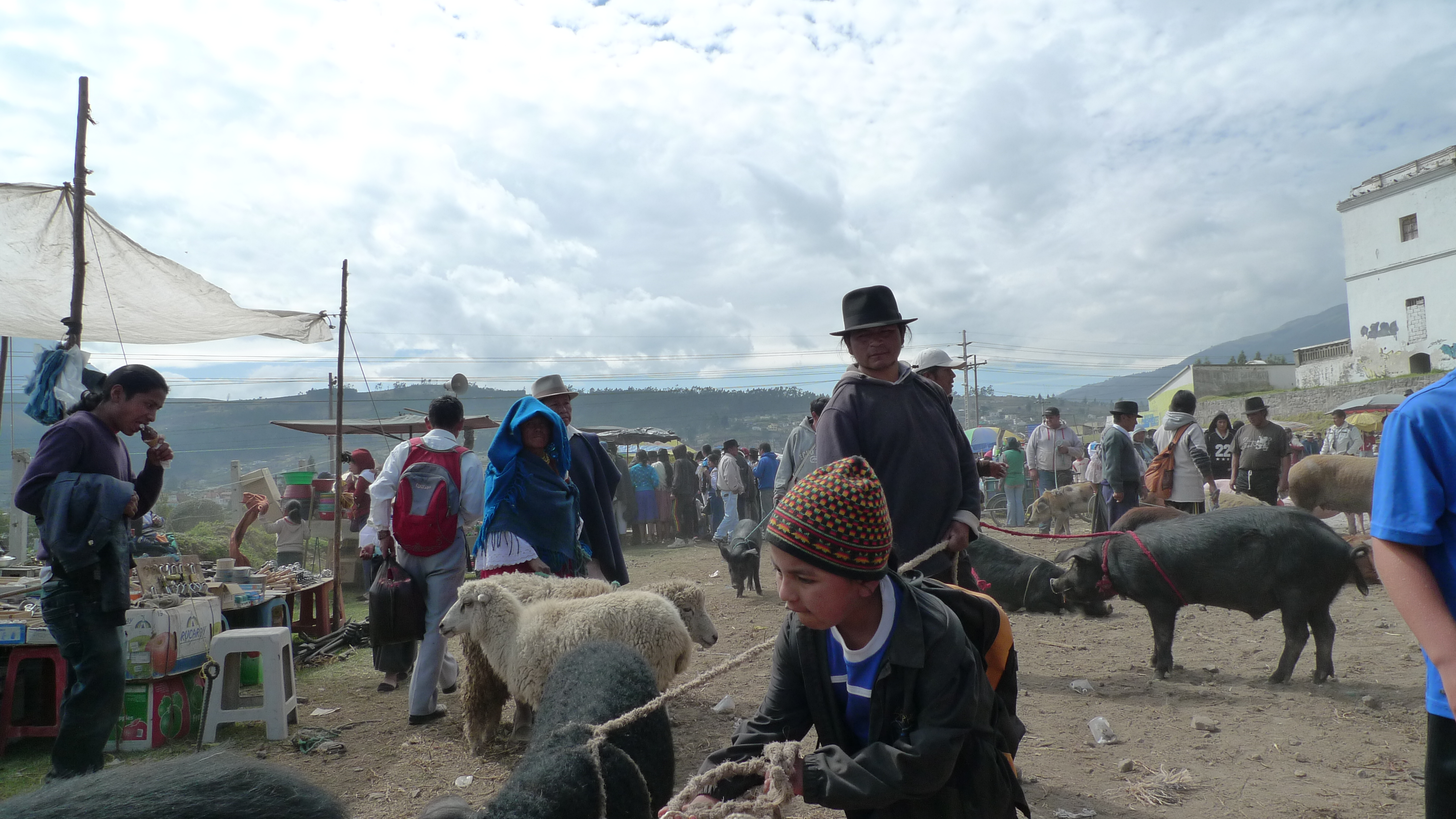
    Animal Market, Otavalo
    Animal Market, Otavalo Ecuador

    We have seen first hand the struggle to survive that both people and animals experience when their world is not abundant.  This has given us a greater awareness of how our individual actions at home impact people, places and animals unseen to us.  Discussing the loss of habitat in Costa Rica lead to a discussion about us decreasing our consumption of animal products and the illegal pet trade.  Seeing the ecological impact of large-scale agriculture for export has made us more aware of our choices when fruits and vegetables in the US are imported from the Southern Hemisphere.   Learning about the long-term effects of colonization, oppression, and exploitation has made us more aware of the freedoms we take for granted.

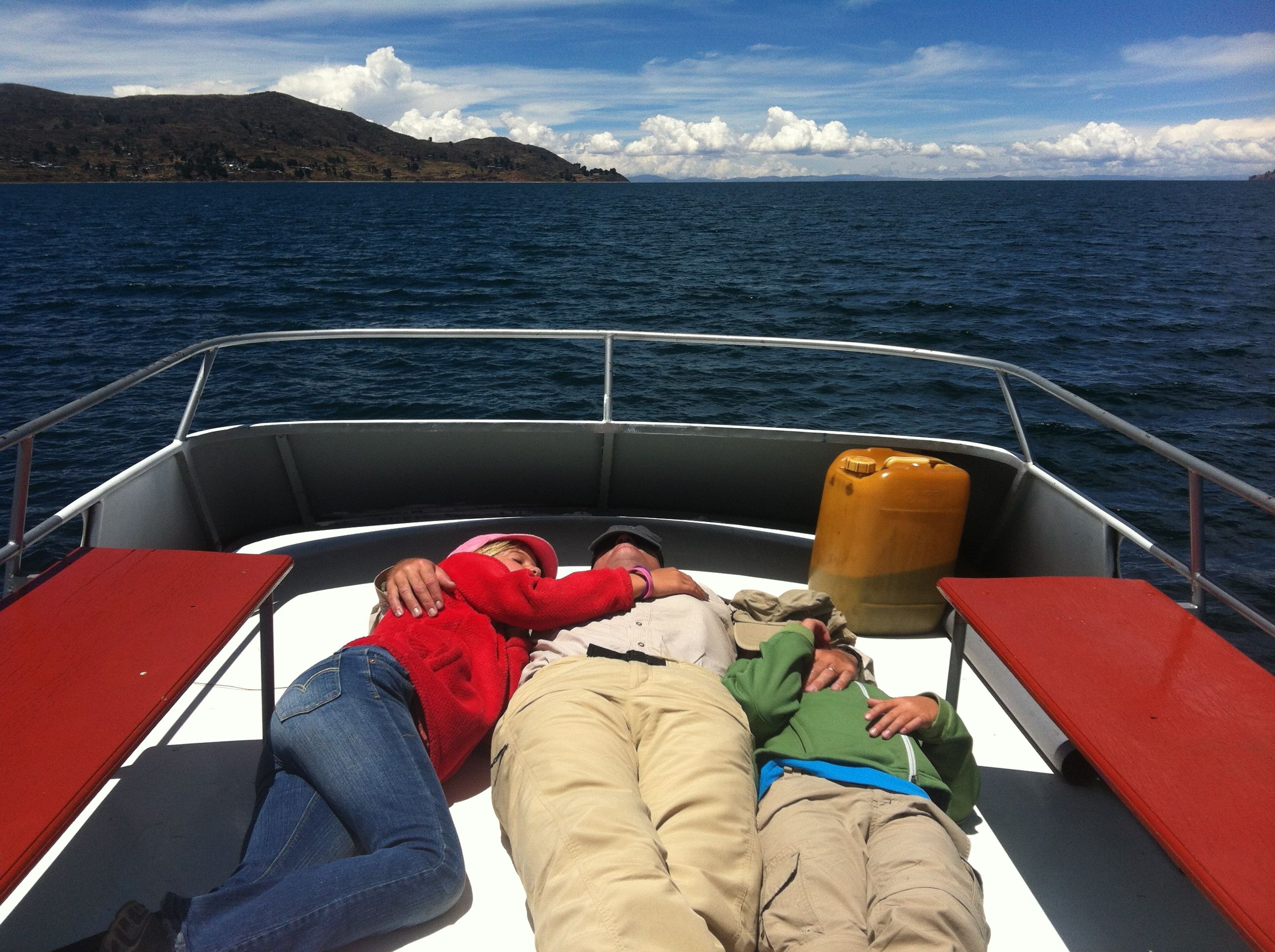
    Nap on Lake Titicaca
    Nap on Lake Titicaca

    We are also more aware of the importance of gentle words, especially when we are stressed. We are much closer to each other both physically and emotionally for we have supported each other through difficult challenges – Colca Canyon, Torres del Paine, and homeschooling while on the road.  Twenty-six weeks of being together all day every day has given us insight in to what makes each other tick and who can be relied upon for what.  We are now much more of a team than we were when we left the US and have a heightened sense that we are stronger as a unit than we are as individuals.  The children now ask, “What can I do to help?” instead of declaring, “I want …” or “Where is my…” The adults are more likely to say, “I could use a hand…” instead of “Go get the…” or “I need you to…”. Mac and Lucia have learned that there are not always three meals per day, sometimes not even two, and dinner at 10:00 or 11:00 pm is just fine.  They can now be hungry and tired without being cranky.

    Brothers
    Brothers

    Perhaps the most important thing we have learned is that family really is the foundation for happiness.   There really in nothing more important than family. Without our jobs or school to distract us, we are now able to focus on each other.  This is not to say that we were not close when we were in the US, but rather that we each had to split our attention between our family and school, work, friends.  Similarly, visits to family members further away had to be arranged when our work or school would let us leave, not when it would be beneficial to see them.  With family as far away as Australia and Argentina, it is difficult to visit them for only a week or two.  And, if you can only visit for a week or so, there is a tendency to focus on “doing” things all of the time rather than simply enjoying being together.  Lucia commented on this when we first arrived at the campito, a small weekend house outside of Buenos Aires for Colburn’s Argentine family, saying that she felt like she should have been there five years ago.  When we went back two months later, it was like coming home for all of us.  It has been wonderful to be able to share some of their life, not just a visit.

    We have truly enjoyed our time traveling so far and feel that we are incredibly blessed to be able to do so.

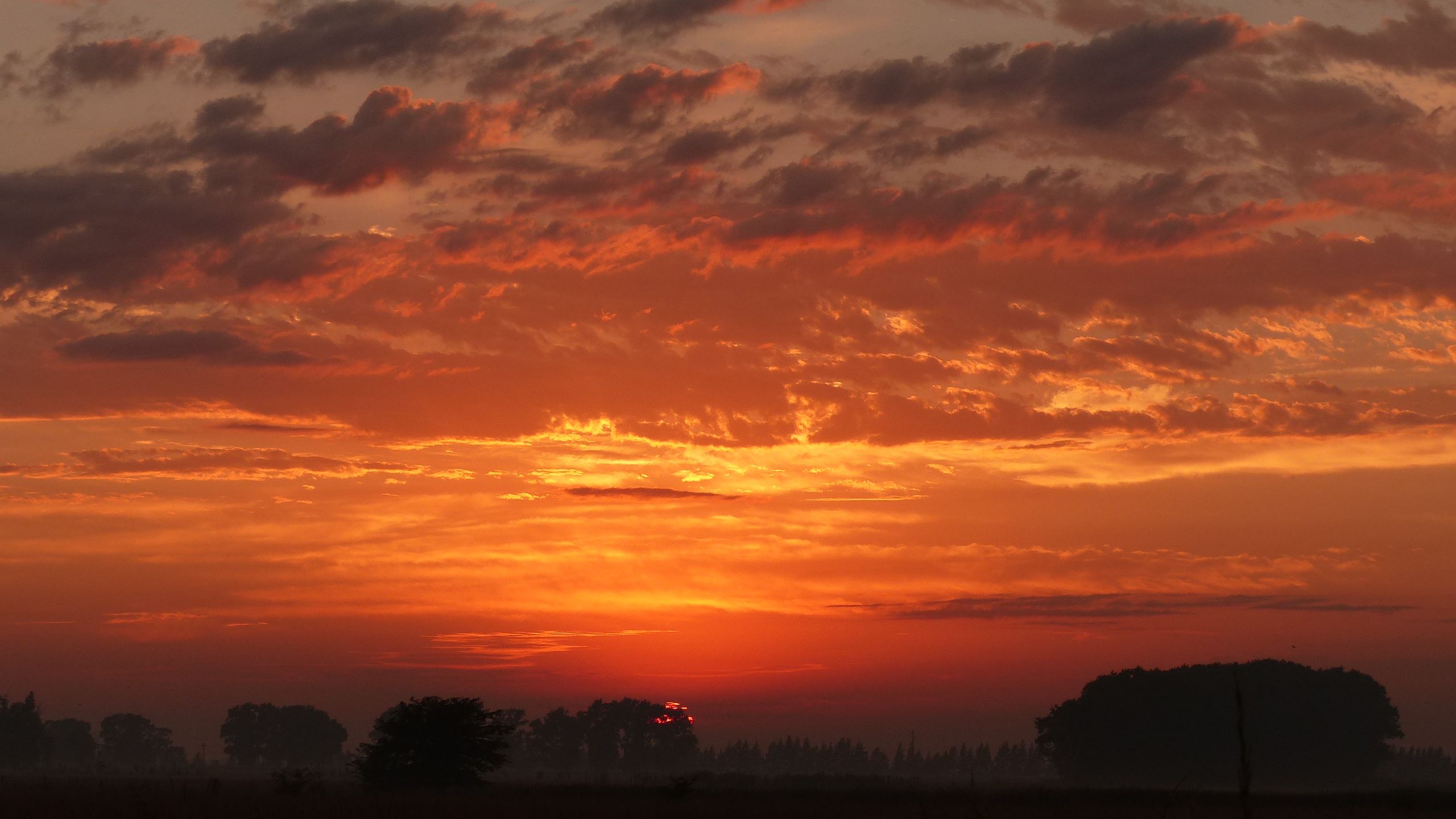
    Sunrise at the Campito
    Sunrise at the Campito
  • Why We Love Patagonia

    The high desert near El Chaltén
    The high desert near El Chaltén

    We love mountains, we really do, and like the desert an awful lot as well.  This is why we like our hometown of Reno so much – technically we live in the desert yet are 15 minutes from some of the most beautiful mountains in the United States.  We have the benefit of a dry, sunny climate and can drive to “the snow” in a matter of minutes for our outdoor fix.  This might be why we have fallen in love with Patagonia, the region that spreads from the Pampa through to Tierra del Fuego and crosses between Chile and Argentina.  It is definitely our kind of place.  The flat horizon line of the pampa or the ridgeline of the Andes in Patagonia holds our imaginations.

    The region of Patagonia
    The region of Patagonia

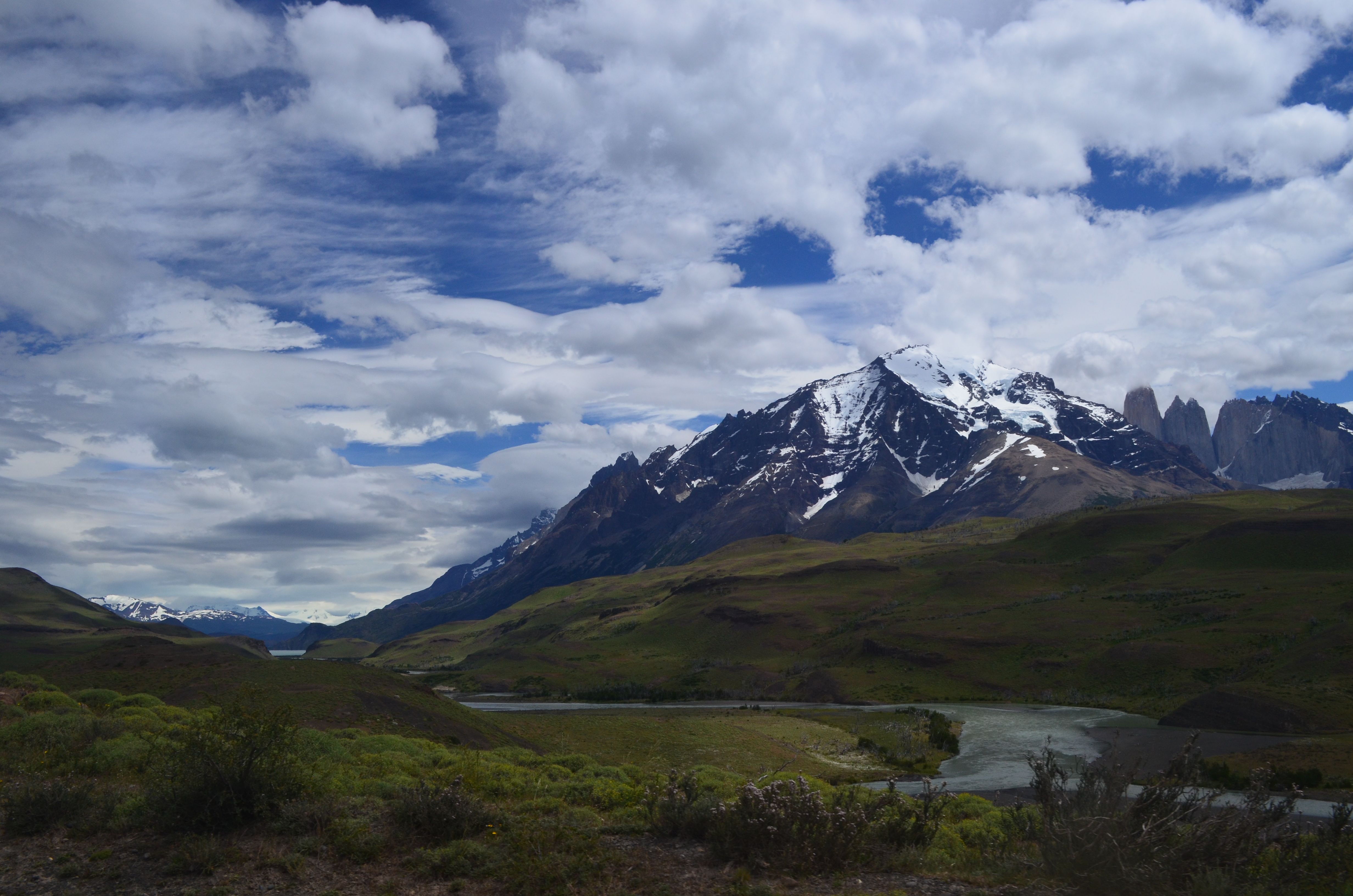
    When we arrived in Patagonia, we were immediately struck by the landscape – arid yet mountainous – we felt at home.  In contrast to the Pampa’s mesmerizing expanse and razor-sharp uninterrupted horizon line, Patagonia is a series of rolling hills, subtle mountains, small lakes, ancient glacial moraines, and milky blue streams.  The diminutive Guanaco roam in small packs, the Rheas seem oddly out of place, and the wind blows strong and consistent.  It is as if Nevada, southeastern Wyoming and Colorado have all been wrapped in to one – but it is different and on a grander scale.  The spaces are larger, the mountains taller.  We love Patagonia.

    Our favorite campsite of all time - de Angostini
    Our favorite campsite of all time – de Angostini

    Like the West, the people are tough.  Their skin is tanned and weathered from the intense sun, biting wind, and snow, but the smiles are bright and welcoming.  The dogs look as if they have come from herding stock – Australian Shepherd, Cattle Dogs and Border Collies mostly, but some German Shepherds and Great Pyranese too.

    Mountains of Patagonia
    Mountains of Patagonia

    The lenga trees are short and sturdy against the wind, small oak-shaped leaves tough like holly but without the spines.  Much like a forest of hemlock, walking through a forest of lenga makes you feel as if you are in the land of gnomes and elves or that Robin Hood will bound out from behind a tree any moment.  It is a tidy forest without understory or debris.  The landscape is young because the ice fields have only recently (in a geologic sense) retreated, revealing fresh and raw lands.  It is a place where all life must find a way to survive.  We loved it.

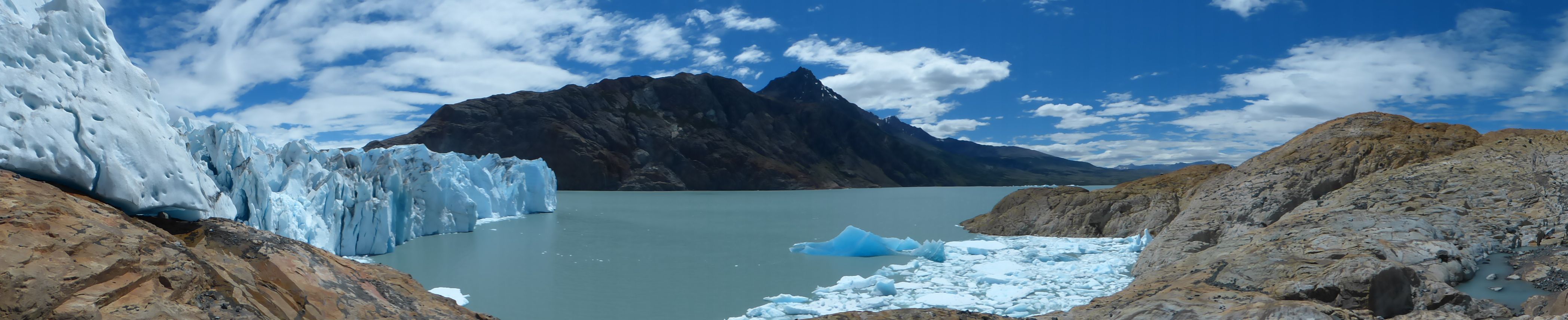
    Videma Glacier
    Videma Glacier

    After our trek in Torres del Paine, we were ready for a few days of rest and some time to catch up on schoolwork.  We took our few unplanned days in El Calafate to enjoy being in one place.  Other than a day-trip to see the glaciers and a visit to a wetlands sanctuary and museum, we mostly stayed in town and did math…not very exciting but what you need to do when road schooling your children.  While visiting the glaciers was interesting, there was little else to do in a town which mostly caters to package tourists.  After four days, it was time to move on.

    Colburn ice climbing
    Colburn ice climbing

    To get closer to the mountains, we headed north from El Calafate to El Chaltén.  (Side note: our trip has been broken down in to different letters: The C’s – Cuzco, Quito, Cuenca, The P’s – Puerto Natales, Punta Arenas, Patagonia, and The L’s – El Chalten, El Calafate, El Bolson!).  El Chaltén is a new town, only in existence since 1985, created to end the border dispute between Argentina and Chile over who was responsible for administration of the northern part of the park.  It is an outdoor person’s heaven.

    The area around El Chaltén
    The area around El Chaltén

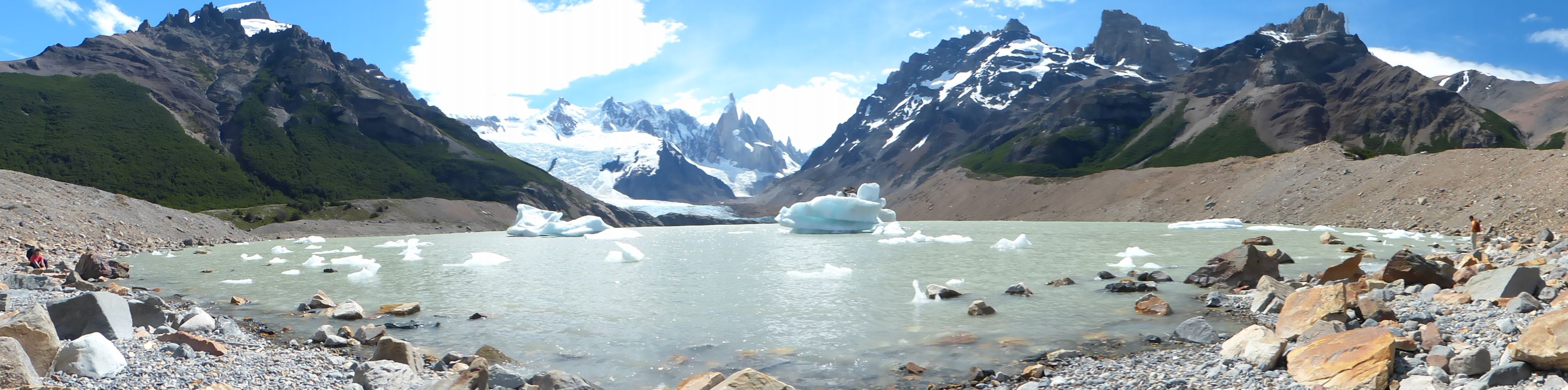
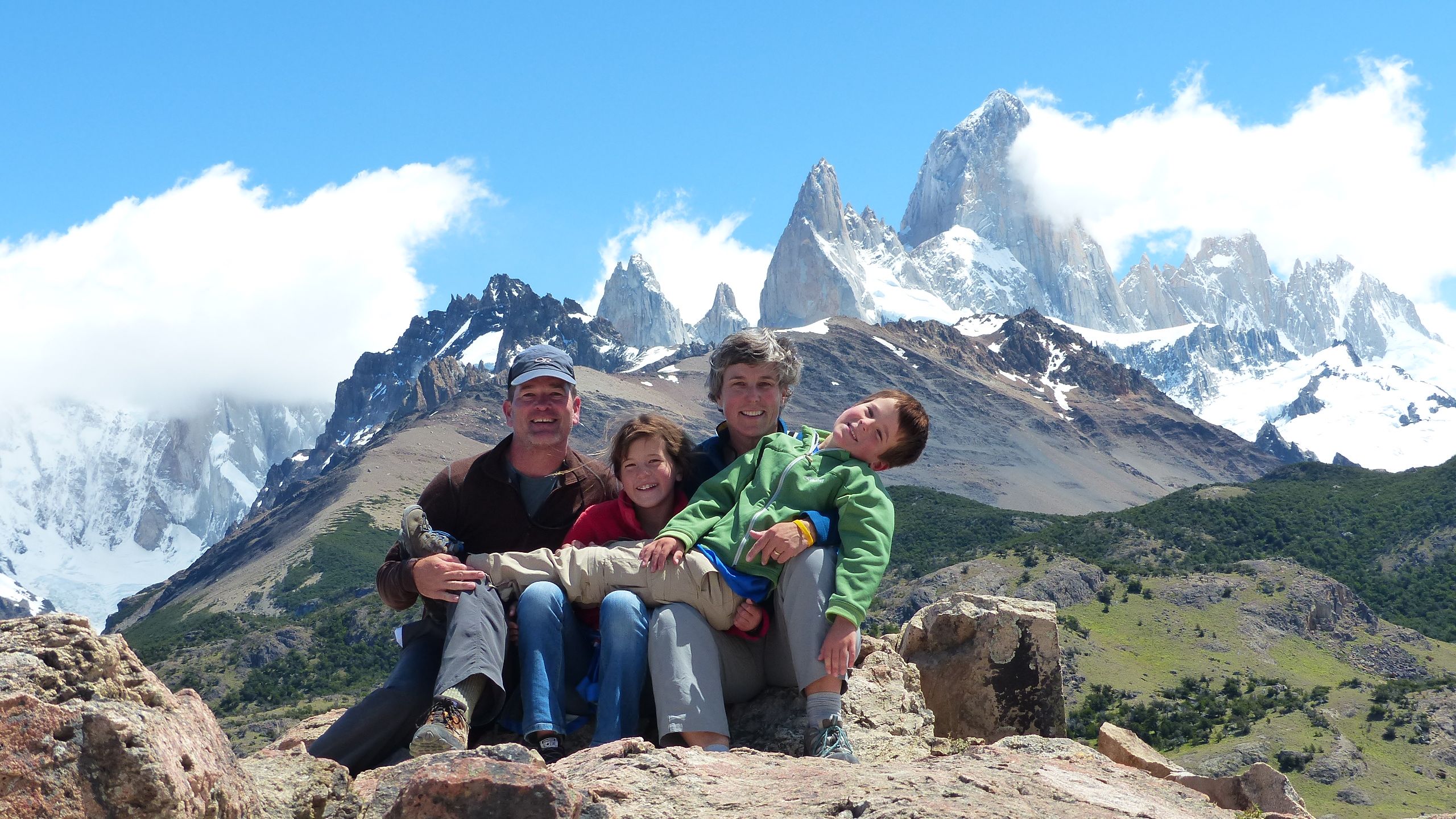
    Situated at the confluence of two rivers, it is a spectacular location where you can see Cerro Fitz Roy from the town playground, you can walk a half-hour to a 30 meter waterfall, or an hour to an overlook where you can see Fitz Roy, Cerro Torre, and both rivers from one spot…and there are Andean condors there too!  Only 10 kilometers by trail from town is what is perhaps our favorite campsite of all times – de Angostini.

    The trail to our favorite campsite of all time, de Angostini
    The trail to de Angostini

    Literally, we loaded our packs with overnight stuff and walked out of our door a few hundred meters to the trailhead and were hiking in a matter of minutes.  No long drives, no park entrance fees, no shuttles – just amazing hiking, good local beer, and great lamb asado.  We loved El Chaltén.

    Mount FitzRoy and Cerro Torre from 45 minutes above El Chaltén
    Mount FitzRoy and Cerro Torre from 45 minutes above El Chaltén

    At some point during our 1800 km road trip to El Bolson we noticed the shadows and the location of the sun.  Shadows are cast on the left side of the car heading west.  We were struck by the contrast.  In the US, when driving west, the sun falls in the lap of the driver and casts a shadow on the right side of the car. The long days and bright sun in the far south of Patagonia make a northern hemisphere inhabitant stop and wonder where they are.  We love Patagonia.

  • Galapagos – The Second Half

    Above Darwin Lake
    Above Darwin Lake

    By Deb

    Our time on the Galapagos Archipelago was fantastic, yet words will probably do little to explain the magic of being there. The setting is stark and unforgiving, yet the life that survives there is placid and phenomenally beautiful.  It was surreal to be able to watch the wildlife from such proximity that we would have to move away from them to maintain the required 6 foot distance.  They do not run away from humans, but rather seemed intrigued by us, especially the sea lions which will swim up to you and bite your fins to try to get you to chase them.

    Inquisitive Sea Lion
    Inquisitive Sea Lion

    For centuries, the only animals which inhabited the Galapagos are those which could swim or fly there on their own (i.e. sea lions, penguins, frigate birds, etc.), those which were able to survive a 2-week trip on a vegetation raft blown out to sea (i.e. iguanas, tortoises) or carried by a strong off-shore wind (i.e. finches, mocking birds).  Until humans began visiting the islands a couple hundred years ago, there were no mammals at all – they were too fragile to survive the journey out to the islands.  Even now, the largest animals on the islands are giant tortoises and iguanas, both of which are vegetarians.

    Newborn Baby Fur Seal
    Newborn Baby Fur Seal

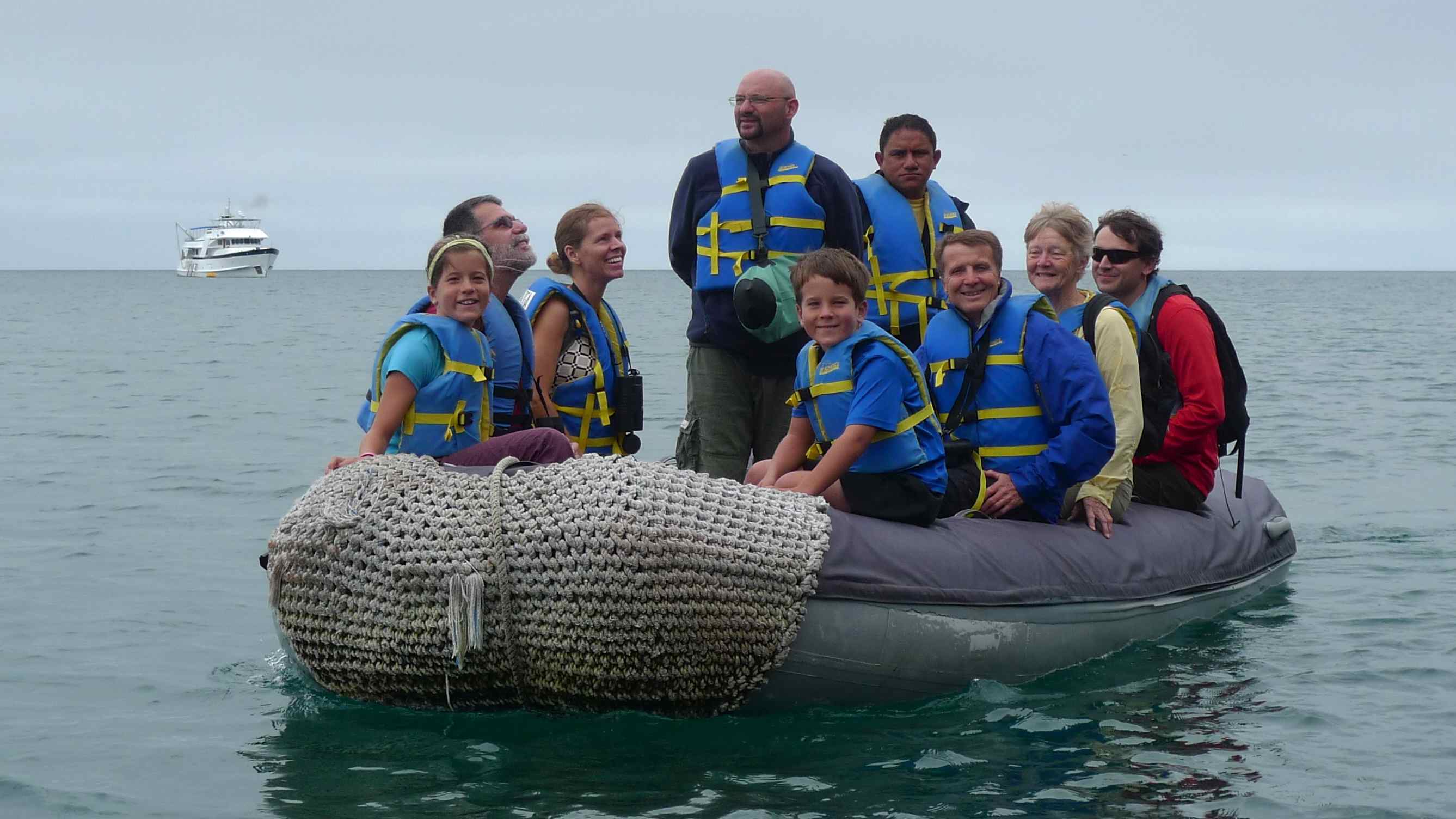
    We had originally planned on staying on land and only doing day-tours out the other islands but were able to score a last-minute deal on an 8-day boat trip through the western islands.  Now, if you know us, we are not “cruise” people, but, wow, what a fantastic experience!  Our initial trepidation about being out of place on the boat were quickly relieved when we met the other folks – a varied group of 12 others – many of whom were just like us.  There were a few younger back-packer types as well as a number of folks our age an older but we all love travel and the outdoors.  The only thing missing were other kids, but Lucia and Mac were their usual charming selves and made quick friends with all.

    Kids on Panga with Other Guests
    Kids on a Panga with Other Guests

    Despite our initial trepidation, we are very glad that we did a boat trip.  Yes, it sort of blew our Ecuador budget a bit, but we were able to see much more than we would have doing only day-trips.  Because the evenings were spent traveling between distant locations, we would wake up in a new place ready for a new adventure.  Each day held at least two different locales, usually quite different from each other, with different activities.  The morning may be hiking through a lava field or up a volcano then the afternoon snorkeling with sea iguanas or sea turtles.  The video below highlights only some of what we saw.  A note of disclaimer – the quality of the photos and video is pretty low so it is a bit blurry and jerky.  Although I tend to have high expectations for anything that I “publish”, it would take me another 8-10 hours of internet time to upload at a higher quality so I have decided that this is “good enough” to give you an idea of what the experience was like.  If you want to see better quality photos, please visit our SmugMug site shindellsrtw.smugmug.com