Tag: adventure

  • A Map, an App and a Portuguese Phrase Book: Getting to Mozambique

    IMG_2002 2Leaving Madagascar, our life was impacted by three biblical events – a plague, a flood and a tempest – within 24 hours. After braving two hours of traffic in Antananarivo, we arrived at the airport only to be told that our flight had been cancelled because of a suspected case in the Seychelles had been traced back to Madagascar’s outbreak so they were no longer allowing entry from Mada. This meant that we were to be rerouted directly to Durban, our final destination. Just as we sorted out our arrangements for an early arrival in Durban, we were informed that there had been a freak storm two days earlier. The wind and flooding had knocked the power out at the home where we were to spend the week. The power company had come out twice but the power was still not on. Our host offered to cancel our reservation and let us find alternative lodgings but we really didn’t have the energy to do that so we opted to stay in the home without power. Additionally, the wind associated with the storm had wrecked havoc on the port, one of the busiest in all of Africa, turning two cargo ships sideways in the port mouth and running one aground.

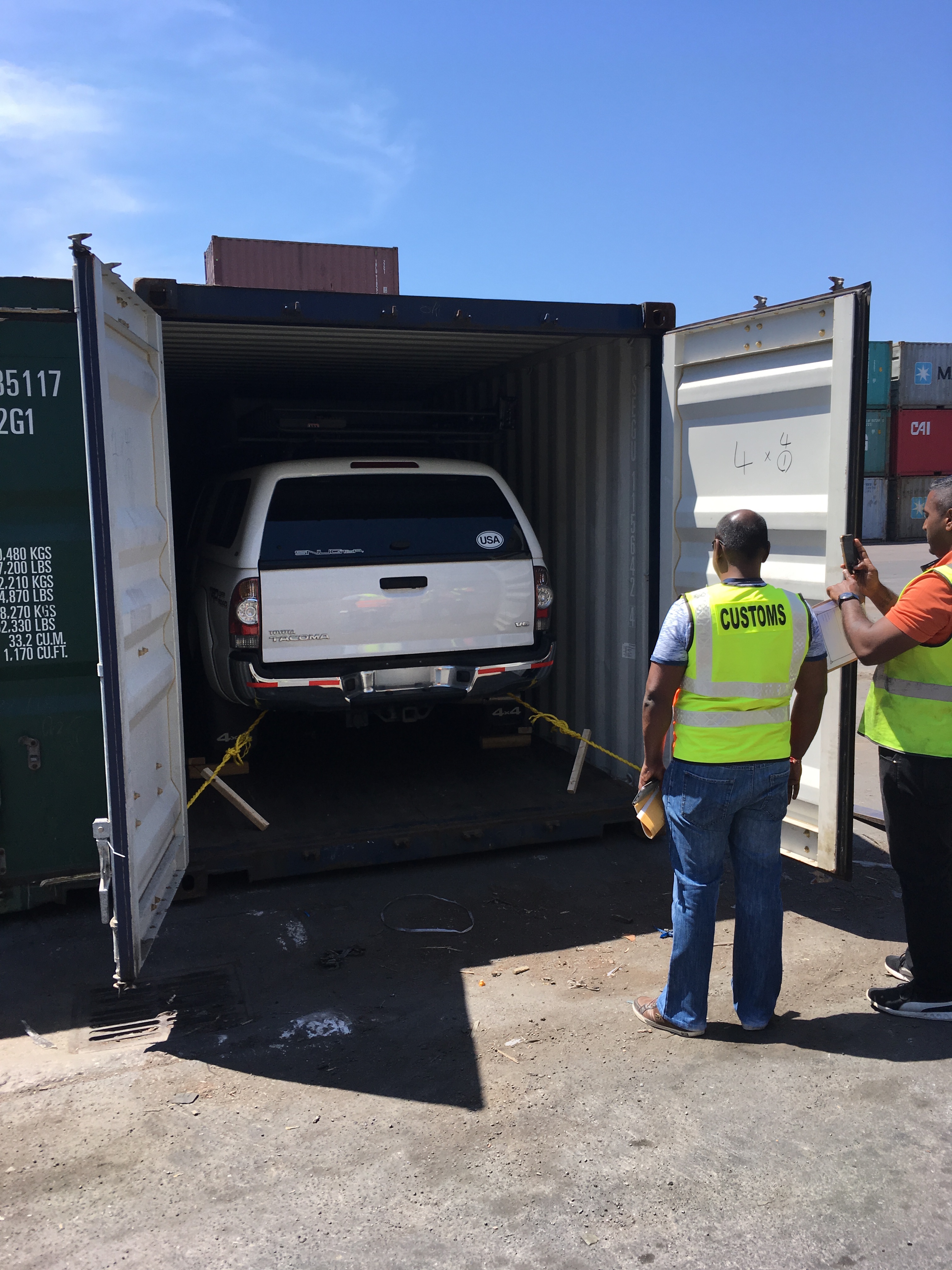
    Recovering from these issues backed up the port and caused our truck arrival to be delayed by more than ten days. It was a rough start to our over-landing adventure, but we made the best of the delay by spending a few days catching up with our friends Cape Town and getting ahead on school work.
    IMG_2003 2

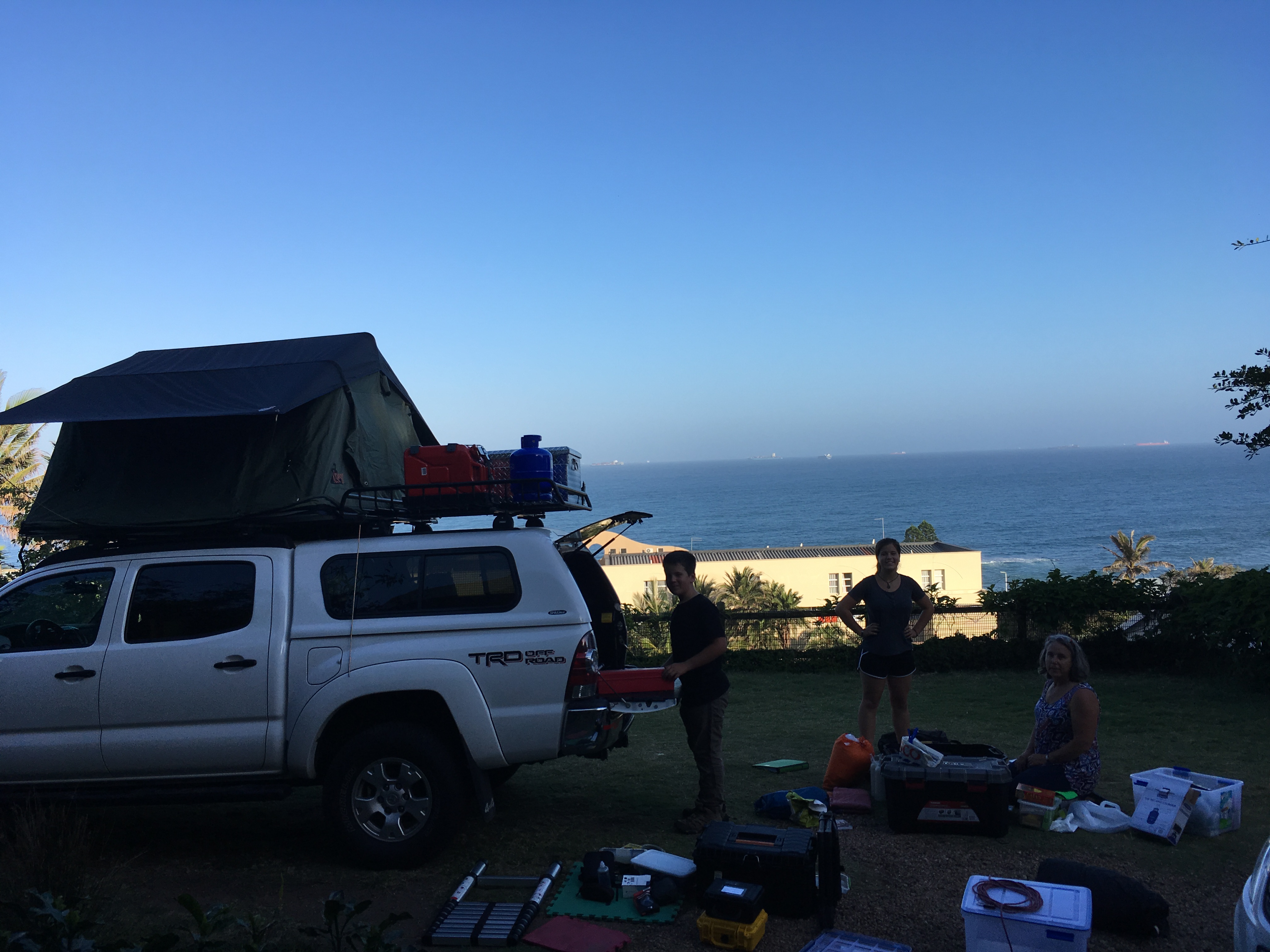
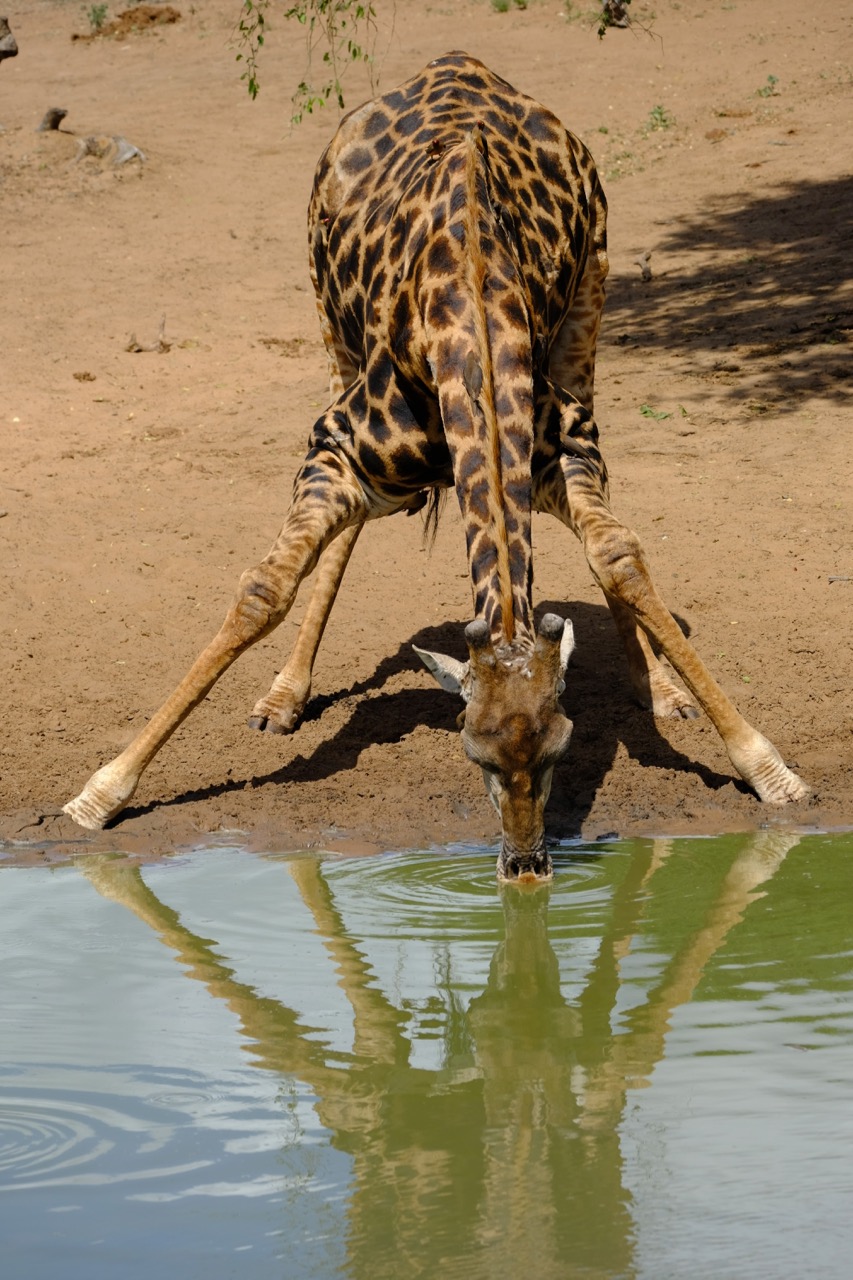
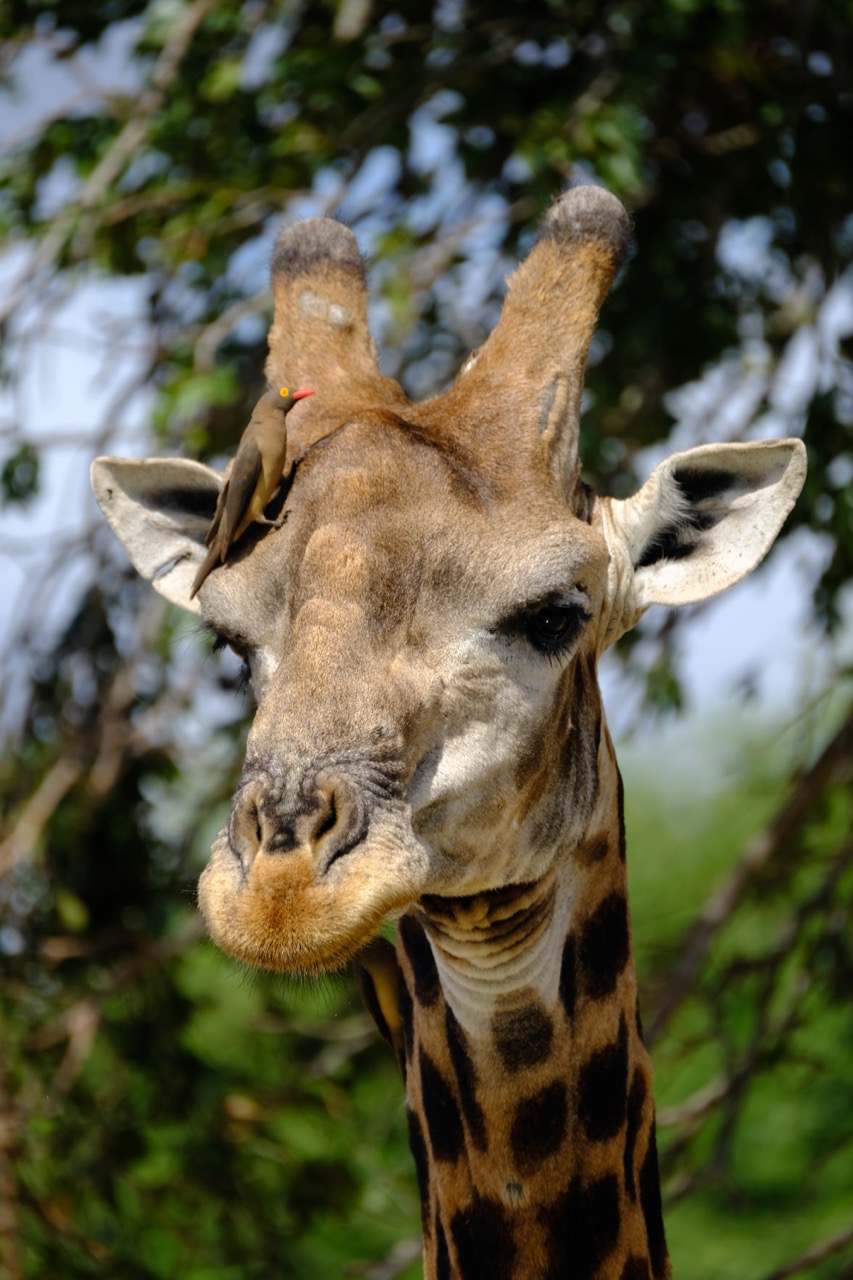
    Once our truck cleared customs, we immediately headed for Mozambique, relieved to finally have Olaf and all of our stuff. Since our truck is a US build with the steering wheel on the left side of the car, it draws curious and disbelieving looks frequently. Many people, mostly men, ask about the differences between our truck, a Tacoma, and the African stalwart, the Hilux. The differences are minimal but still enough to be a novelty and prompt discussion. We had originally planned for five days visiting game parks in the coastal north of South Africa, but had to shorten it to only an overnight stop because of the shipping delay. Still, we were able to see hippos, giraffe, elephants, rhinos (including an up-close and personal encounter!), zebra, antelope, and lots of other wildlife.


    Many people had warned us that Mozambique was “not at all like South Africa” and that the travel would be much more challenging there. They told us horror stories of corruption, bad roads, unhelpful locals, scams, difficulty with the language (Portuguese) and a myriad of other dangers which abound. Prepared for the worst, we were pleasantly surprised at the ease of travel we encountered. The boarder crossing took less than 30 minutes and happened without a hitch. Taking a car across international borders is a bit more complicated than simply having a passport stamped as there are import taxes, local insurance which needs to be purchased, and differences in safety features/equipment necessary. For example, in Mozambique, a vehicle must be equipped with two bright green or yellow reflective safety vests to be worn in the event of a break down and carry both a fire extinguisher and red reflective triangles of a specific sizes and types. All international cars must have a two-letter, oval “Euro” sticker which clearly identifies their country of registration (ours is “USA” which is technically not compliant but is close enough). We, more specifically Mac, had spent a great deal of time researching the various requirements for all of the countries we plan to visit so had acquired all of the necessary items. Despite our build up of both equipment and anxiety about the process, it went very smoothly and the customs folks never even looked at the truck!

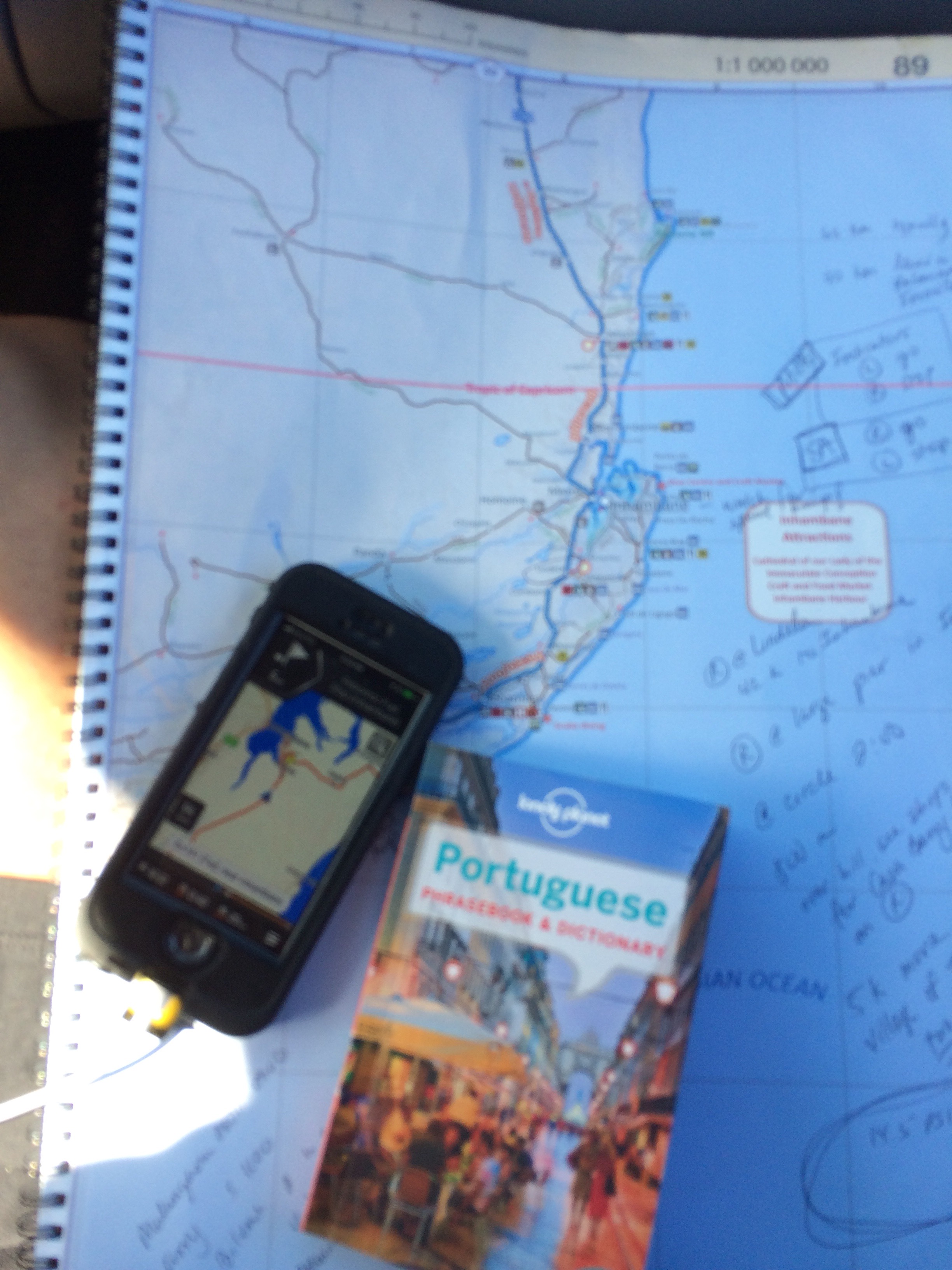
    An acquaintance very familiar with travel in Mozambique said that the differences in infrastructure will be obvious as soon as you cross the border. This ended up being the understatement of the year! Quite literally, the pavement and structure of South Africa ends at the border gate and disperses in to several very convoluted sand tracks across an open plain. No longer are there road signs, curbs, pavement, or any suggestion of order. Armed with a paper map, our GPS app, and a Portuguese phrasebook, we immediately got lost. There were five different roads in front of us but both the map and the GPS only showed two. Not sure which road to take, we chose the most traveled one only to have it end in a few hundred meters. We doubled back and chose a different one which ended up heading in the opposite direction of they way we wanted to go. Without anyone who we could ask for directions, we chose a third road which also ended up heading in the wrong direction. Just as we realized our error, a man in fatigues suddenly appears out of the bushes whistling us to stop but upon seeing us, asks in perfect English, “Where are you going?” When we reply, he points us in the correct direction and we head off down a deeply sandy track. After several kilometers, the sand becomes more firm and the road more obvious.
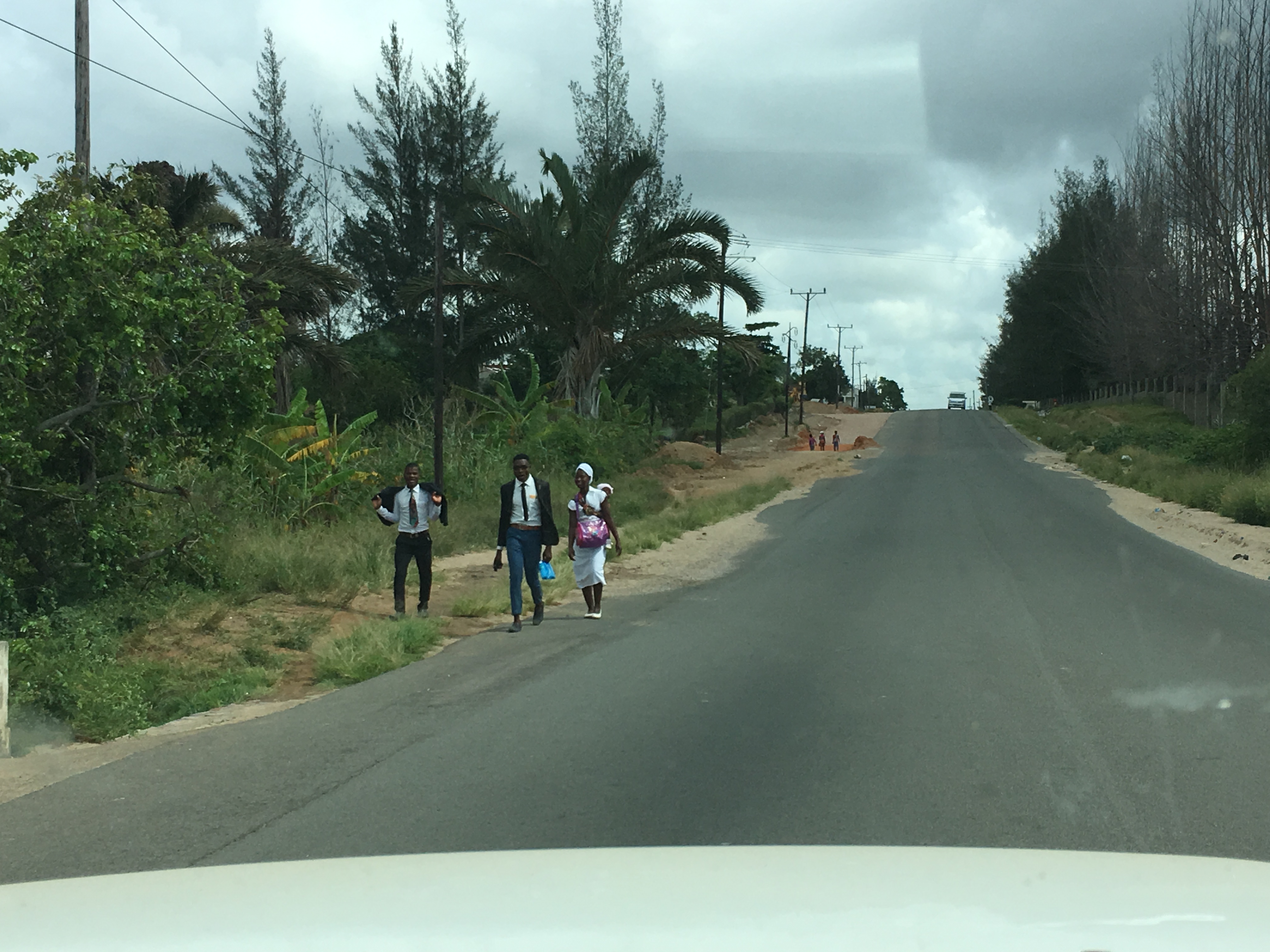
    IMG_2009 2There is a great deal of Chinese investment in the infrastructure of sub-Saharan Africa. One of these projects is a main road between Kosi Bay and Maputo. Although not yet complete, the upgrade makes traveling this way quite easy so we reached Maputo in a couple hours.

    IMG_2003 2One of the decisions to make when traveling through Maputo is whether to take the ferry which crosses the river and allows follows the coastline north but risk delays or to take the ring road around the city thus adding many kilometers to the journey but avoids endless waiting to get on the ferry. We had decided to take the ferry. Arriving at 3:30pm, we thought that were were plenty early to make a crossing before dark as the actual journey only takes 15-20 minutes. Even though we would not make the next ferry, we were probably 30th in line and they only fit 20 cars per ferry, it would only be an hour or maybe two hours maximum. The ferry dock is a lively place – the streets are lined with outdoor stalls, open-air bars with music pumping at top volume, hawkers peddling cashews and coconuts, money changers, SIM card salesmen, and throngs of people milling about on a pleasant Saturday evening. There were noticeable waves people every 15 minutes or so, flooding through and around the line of waiting vehicles, as the smaller passenger ferries disgorged their human cargo.

    Four hours later, the sun had set, the full moon had risen but we hadn’t moved an inch. As it turns out, the single remaining vehicle ferry had broken down and was being repaired. We were now worried because every blog, guide book and traveler warns that you should not to drive in Africa after dark. Here it is our first night on our own and we are breaking that rule! I explored options for staying in the town where the ferry starts or just on the other side in downtown Maputo, but there was nothing suitable for a family with a big truck. The closest place we could find was about 30 minutes north of the city, but down a 4×4 trail we would have to negotiate in the dark – definitely sub-optimal but perhaps a necessity given the situation. Not knowing when we would actually be able to cross the river, we waited….and waited…..and waited.
    DSCF8412Four hours later, the ferry was fixed and the line of vehicles inched forward. Along with probably 200 people, 20 or so cars were packed on the rusty barge and set off under the full moon. Although the waiting is frustrating, the actual experience of crossing on the barge was magical. Vehicle passengers stay in their car while walk-on passengers fill in every possible empty space between, in front of, on top of and behind the cars, leaning up against the car or sitting on a bumper. Even the ladders to the bow of the boat are chock full of people hoping to get a little fresh air. From somewhere off of our right side, we can hear a group of passengers drumming and singing. Just to our left, a group of probably 10 middle aged men and women are chatting excitedly in Portuguese and laughing full-belly laughs. We see a group of 20-something young men doing shots of whisky straight from the bottle but all in very good nature. The moon is lighting up the skyline and new bridge being built. Several men ask Colburn about our truck – what kind is it, what are the specs, how did we get it to Mozambique, how much does a truck like this cost in the US, where are we going, etc. We noticed several people taking “selfies” with our truck – all with very macho poses as if the truck was theirs. Other than the Portuguese couple in the car next to us, we are the only white people on the entire ferry. The combination of being in a place so utterly different on such a beautiful night made any concern we may have had disappear for this is why we travel. Unfortunately, we did not get a decent picture of the scene but it is etched in our memory as a highlight.
    DSCF8415We drove off of the ferry around 8:30pm, well after dark. The roads north of Maputo are tarred and in good repair so there were no problems getting out of town. Armed with my Portuguese phrasebook, I called the closest camp ground to see if we would be able to check in after 9:00pm. The man who answered replied yes, but to be careful as the road is a 4×4 trail so would be difficult to navigate in the dark. Colburn’s excellent driving skills got us to the camp without a problem, the camp host was waiting up to show us where to park, and we made dinner and went to sleep happy to have successfully negotiated our first day over-landing with just a map, an app and a Portuguese phrasebook.
    img_1506

  • Morocco – 52 Days from Timbuktu

    Morocco – 52 Days from Timbuktu

    52 Days from Timbuktu
    52 Days from Timbuktu

    “Fifty-two days” responded Mohammed, our Berber guide, when queried how long it would take to get to Timbuktu.  “By camel” he added when noticing our quizzical facial expressions.  My first though it that fifty-two days on a camel would be torturous, but the idea of fifty-two days on a camel through the Sahara seems down right impossible.  We were only on the camels three days and had enough.  Fifty-two days seems unfathomable.  The salt traders were a heartier folk than us soft Americans.

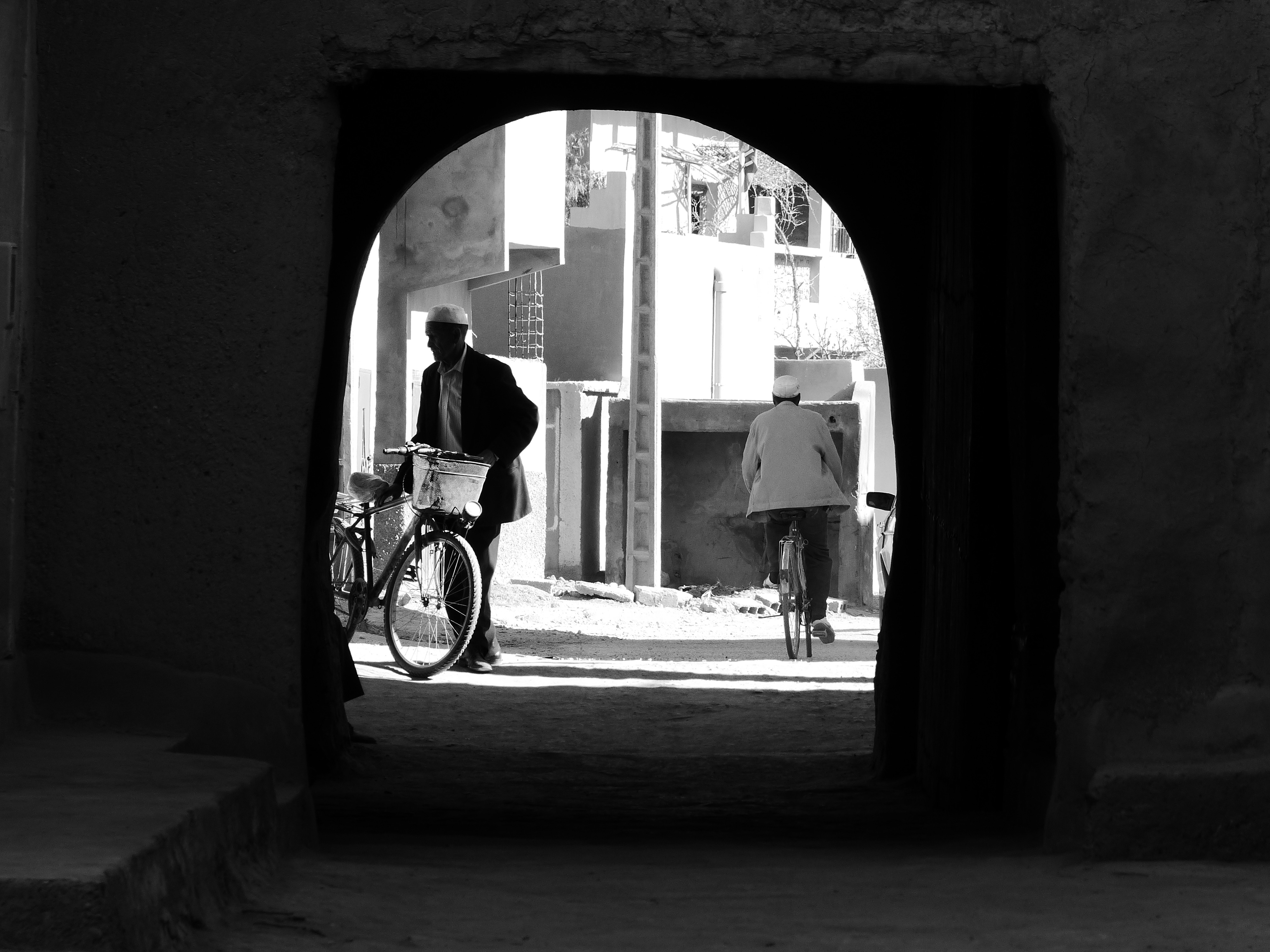
    Sore butts (and blisters in places where there shouldn’t be blisters!) aside, Morocco was an incredible experience and a place we would love to explore more thoroughly.  We arranged our time there as a “highlights” tour, spending only a few days in each of the well-known locations – Marrakech, Erg Chebbi in the Sahara desert, Meknes, Fes, and Assilah.  We rented a 4×4 car so were not beholden to bus and train schedules, thus allowing us to be able to stop at minor out-of-the-way destinations such as Tizgha, Ait Ben Houddit, and Volubulis without having to join a formal tour.

    Volubulis, a Roman ruin
    Volubulis, a Roman ruin

    Having read horror stories of driving in Morocco, we were a bit apprehensive, but all of the hype was over-stated.  We found that the drivers were largely following general guidelines (i.e. don’t pass on a blind curve, honk when overtaking a slower vehicle in front of you, stop for pedestrians, etc.) with a few looser interpretations than what we are accustomed to (i.e. keep generally to your side of the road unless the other side is smoother in which case stay on the smooth road for as long as possible only switching to your side if the other driver does not back down, signaling turns is unnecessary, etc.) but compared to Nepal and Peru, it seemed down right organized.  Most of the road signs are have English translations making navigation relatively easy (except for where there are no road signs at all – more on that later).  French is widely spoken so communication is possible.  But, perhaps the best part of having your own car in Morocco, is that you get to meet real Moroccans outside of the horribly touristed places.  For anyone who is moderately adventurous, this is an amazing experience.

    Ait ben Haddou
    Ait ben Haddou

    For the me and the kids, the adventure of Morocco began at the tail end of a twenty-three hour flight from Australia.  Yes, twenty-three hours of flying time, not including layovers.  Prior to going on this trip, I would have dreaded such an endeavor, especially being solo with the kids.  I would have spent hours creating a game plan – getting them psyched up for the challenge of being together in a small space, finding new and engaging entertainment options, getting them enough exercise before we boarded the plane so they wouldn’t go crazy, making healthy snacks to take with us, etc.  What I realize now is all of that energy would be misplaced on my anxiety, not on the reality of what they need.  We all did just fine without any significant preparation – just got on the plane and everyone slipped in to their long travel day routine.  I’m not going to lie to you, 14 hours on a plane is a long time that challenges anyone’s patience, but we all did well and made it safely to Casablanca.

    Colburn had been in the US doing some job search stuff for the previous three weeks, so met us at the airport for a wonderful family reunion.  After two years of being together nearly 24/7, when he left Indonesia for the US and we headed to Australia, all of us were a bit out of sorts being separated.  Coming back together was a welcome relief.  We all took a deep breath, loaded up in the car and drove straight to Marrakech, our first stop.

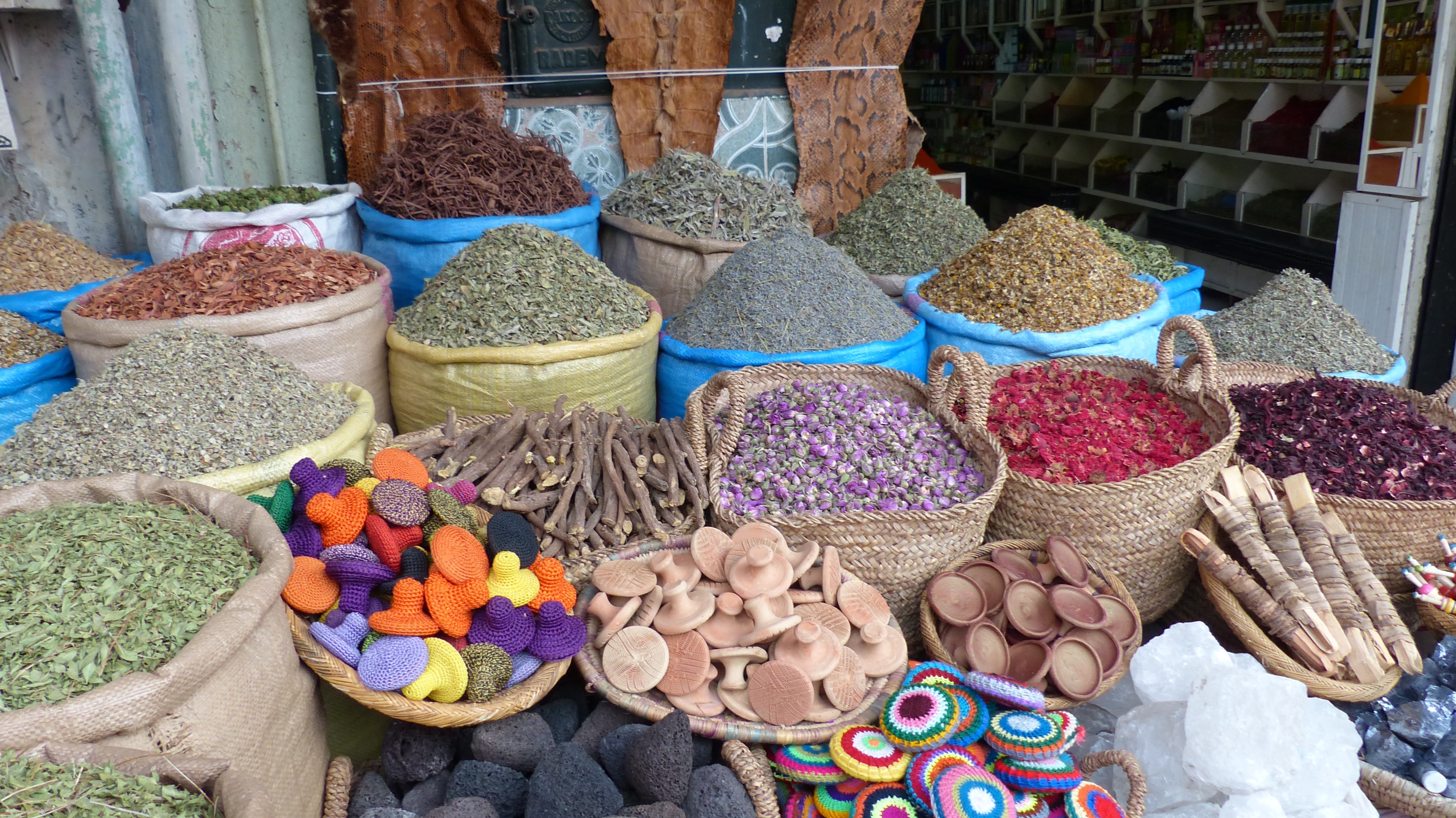
    One of the many stalls, but in daylight
    One of the many stalls, but in daylight

    Arriving on the outskirts of Marrakech at dusk with only general directions written by the owner of our guesthouse (riad) for guidance, we attempted to navigate our way in to the medina.  The directions said something like, “Exit off of the toll road and go through several roundabouts until you get to the last big roundabout before the city itself and take the third exit.  Go through two more roundabouts then make the first right.  When you get to Petit Cour, call us and we will send the bell boy to come get you.”  OK, so we are new to Morocco and not really sure how to determine which roundabouts are considered “big” and which ones are “small” or  which one is the “last one” before the city or if “Petit Cour” is an area, a building, a roundabout, or what, but we trust in the universe and do our best to follow these directions.  We exit the motorway and use the GPS feature on our smart phone to let us know the general area.  We are feeling confident because it shows us a much larger roundabout just before what looks like the outskirts of the city.  The directions didn’t use street names, so it wasn’t possible to double check to make sure we were at the right one.  As it turns out, the directions didn’t describe any street names because they don’t really use them in the same way we would.  There are few, if any, street signs and those are mostly in Arabic script, directions are provided in terms of blocks, landmarks, and other markers.

    Daily bread
    Daily bread

    We, unfortunately, were too anxious to “take the third exit” and ended up on the opposite side of town, heading towards our next destination.  Realizing that we had missed our exit, we retraced our steps back through to where we though we made the mistake, only to make the same mistake again!  Now it was not just dusk, it was dark, and we were getting a bit frustrated because we had already had a long travel day coming from our respective continents.  Marrakech is a big medieval walled city with twisting, winding, narrow lanes which do not follow any sort of pattern.  There is not a grid system, a spoke and wheel layout, or any other semblance of order.  The streets were built helter-skelter and designed for pedestrians and donkeys, not cars and trucks.  Colburn was doing his best to dodge the evening rush hour of men on bicycles, women toting babies and groceries, people on motos and donkeys pulling carts while I attempted to give him directions like “where the road splits off in to five directions up here, take the hardest right you can.”  Eventually the lane narrowed down to something that is barely wide enough for a car to fit through but it was completely clogged with pedestrians.  We are only a block or two from our riad, but quite literally, our car is surrounded by a sea of scarved women in long robes, young men in jeans and sweat jackets, older men in hooded djellabs, donkeys pulling wooden carts filled with firewood, and overflowing stalls of meats, spices, trinkets, and household goods.

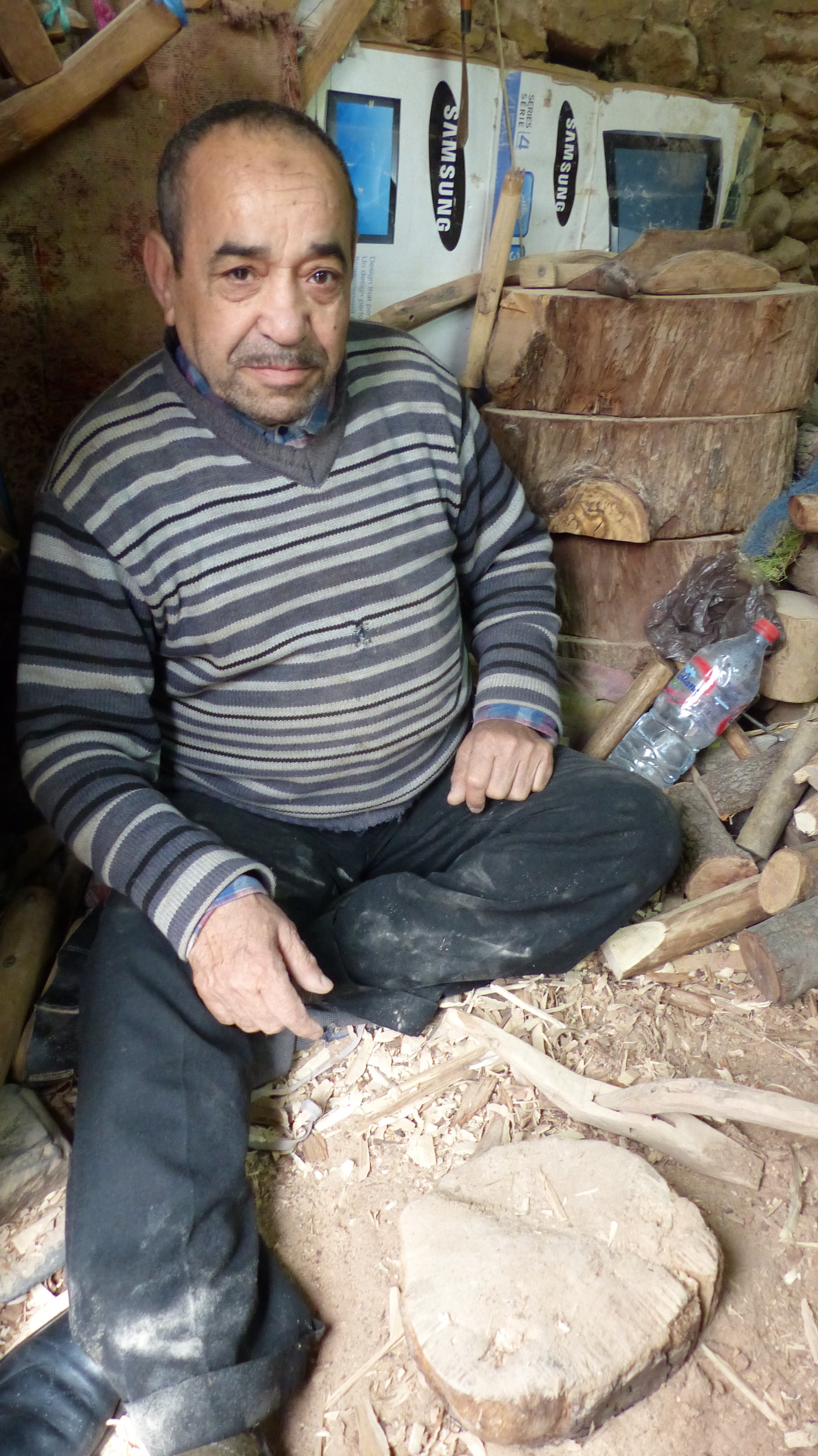
    The Woodworker
    The Woodworker in Fes

    A young man off to the left side of the car frantically waves at Colburn and yells something in French.  We don’t understand, but roll down the window.  He sees our wide-eyed-ness and pale skin so responds with compassion, speaking more softly this time, but still in French.  Once again, he sees our blank stares of incomprehension, so switches to English.  “The road is closed here sir, only people can go, you have to go back.”  He implores us to head out the direction from which we just came, but we resist because our riad is just on the other side of the crush of people.  We are so close!  When we show him the location, he smiles and pulls out his cell phone saying, “Yes, you are close.  Let me call them to see where you park.”  Moments later he pounds two quick taps on the hood of the car and indicates for us to follow him.  Our guide clears the way for us to easeforward making sure we stay very close (like within an inch or two) from the donkey cart in front of us. Quick waves of his hand mean move forward.  A solid rap on the hood means stop.  His buddy literally “has our back” and is guiding the rear of the car to make sure that we don’t accidentally run over anyone because in order to get down our road,  a 26-point turn is needed, inching forward and backward to make the off angle turn. Like the President’s Secret Service, they each had a hand on our car indicating to us when to go and when to stay.  As our guide parts the sea in front of us, we get to an open triangular area that has two cars in it, both parked at odd angles.  “This is where you park” he told us.  After paying the equivalent of US$3 per night to what appears to be a random man on the street, we lock our car and follow our guides through the melee of people, jostling our suitcases behind us on the cobbled streets, dodging donkey dung all the while.

    The Coppersmith
    The Coppersmith and his Apprentice in Fes

    The area we are walking through is actually a night market.  What we see is a blur of robed people, grills spewing smokey aromas of charred meat, dim overhead lights, raw meat hanging from hooks, piles of grains, and many other items spilling in to the narrow lane.  We turn off the main road, down an even more narrow but equally poorly lit side road, then make a sharp right turn ducking under a low overhang or perhaps a small doorway, it is difficult to tell in the dark.  I am not really sure where we are now, then a bit of anxiety hits me, “What if instead of calling our riad, he had called his buddies and they are going to mug us?”  We have a lot of US cash on us right now, are exhausted, stressed, and new to the culture.  What if I missed the signals?  Just as I really started to think about what to do, our guide points out the sign above us which reads “Dar Hanane”, our riad.  But for the providence of strangers, we could have been lost for a very long time.  These two young men, probably 20 or so, saw that we didn’t know the area and helped us out.  This scene was to be repeated several more times during our stay in Morocco.  Whenever we were lost or mis-directed, someone would see our confusion and come to our rescue.  Sometimes they asked for small backsheesh ($1-3), but mostly they did it out of genuine hospitality.  Only once, during our last days in Morocco, did anyone try to scam us for this help.  Everyone else made us feel most welcomed and honored that we had chosen to visit their country.

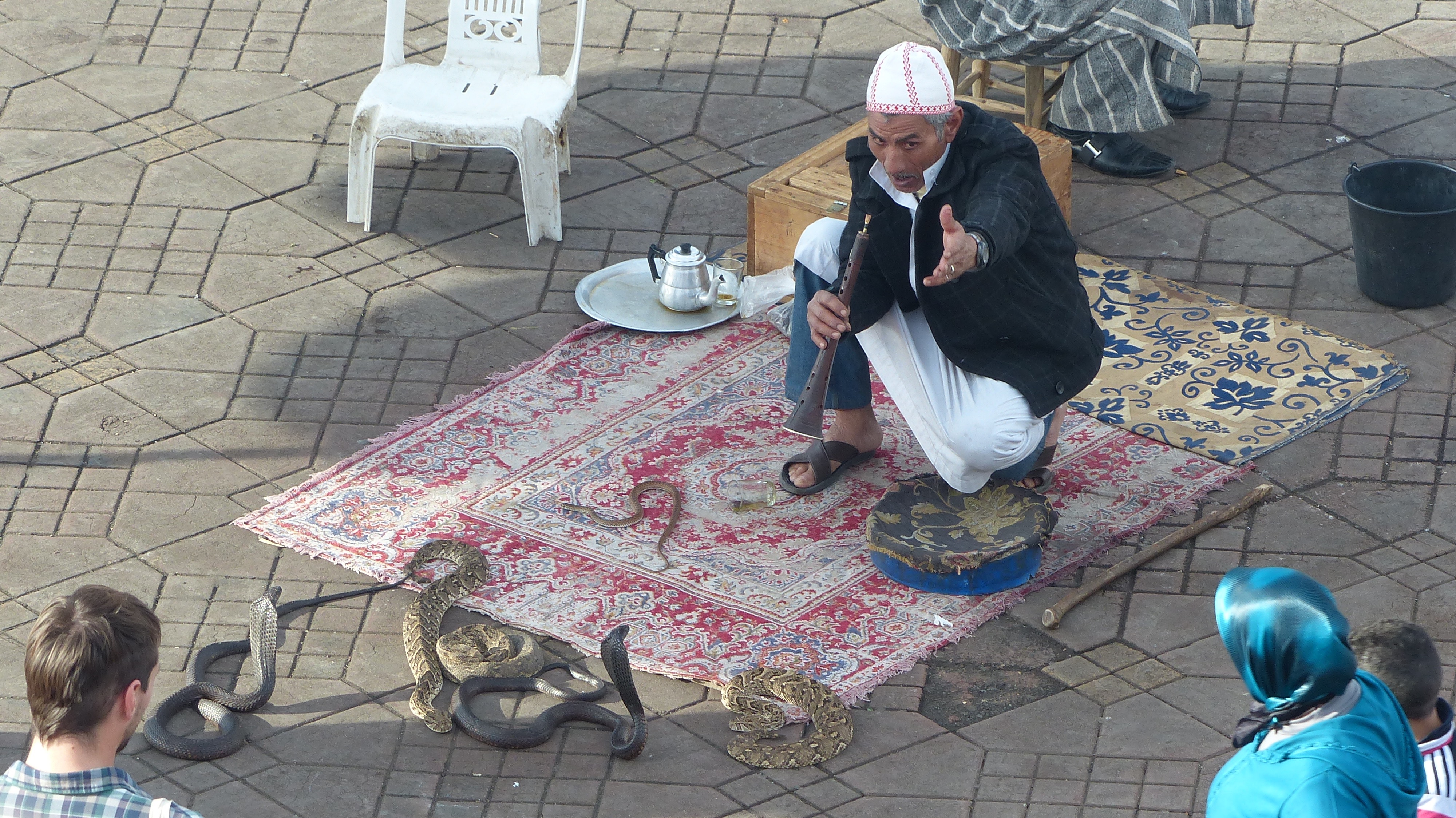
    Snake-charmer in Marrakech
    Snake-charmer in Marrakech

    Marrakech is an interesting city awash in tourists.  Because of this, it is difficult to know what is real in the city and what is primarily there only for the benefit of tourists.  Lines of caleche drivers (horse-drawn carriages) tout their services always undercutting the next driver, snake charmers perform their craft but have sewn the snake’s mouth shut so it is all just a facade, and the acrobats request a “tip” for simply walking by where they are performing.  If you view it as a grand show, it is quite interesting, but so theatrical that one cannot see the reality of life there.  In contrast, the Medina of Fes is still an authentic, thriving small city with wood workers, metalsmiths, a tannery, and other artisanal traditions still practiced intact.  Yes, there are tourists, but the city seems to remain true to itself and has not sold out solely to the tourist dollar.  In full disclosure, we only spent one day in Marrakech and three in Fes, so perhaps it was the depth in which we were able to experience Fes that leads us to such differing opinions about the two; it is hard to tell.

    L1160728
    Near the town of Ourrzazate

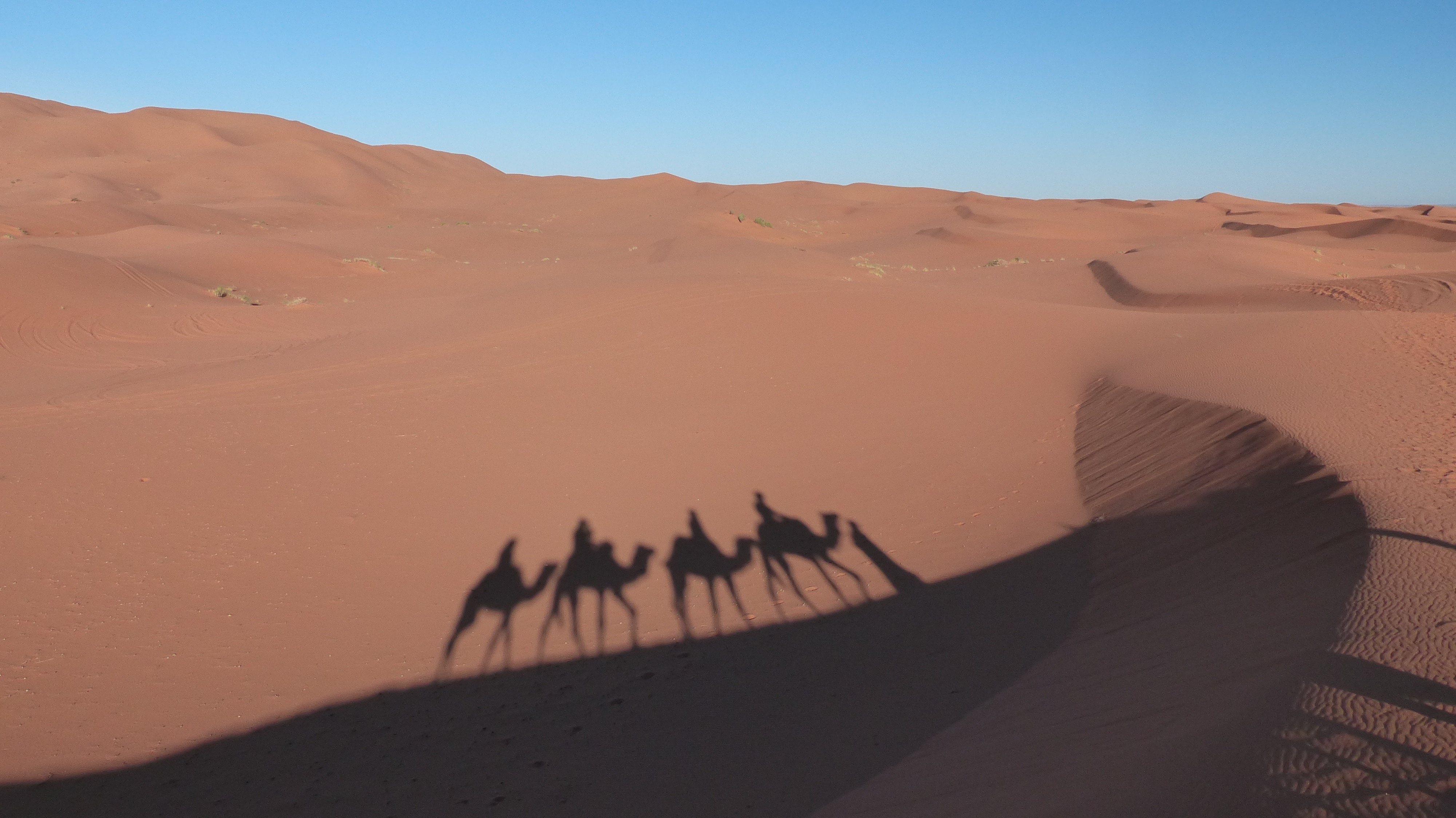
    Perhaps one of the most serene and sublime experiences of our trip so far was a three-day, two-night camel trip in to the desert dunes of Erg Chebbi on the northern edge of the Sahara Desert.  Rather than going through one of the big tour operators, we had learned about the Family Fayou through a homestay organization we had contacted.  The business is a family affair with Mohammed being the main guide, his mom and sisters providing food preparation and hospitality, his younger brother Said taking care of the camels, and his father continuing to farm a small plot for wheat and other necessities.  Mohammed’s family were originally nomads who lived in the dunes herding goats and occasionally welcoming intrepid travelers to their home for the night in exchange for a small fee.  As adventure travel became commonplace, they had more and more guests so were able to use some of the money they earned from hosting tourists to build a home in the local village, Ras-el-Erg.  Mohammed learned English through the guests who came to visit their nomadic tent and completed high school in the big town some 50km from his village.  Eventually he and his family were able to purchase three camels of their own and start guiding their own guests.  While he and his family enjoy the ease of life in the village, they miss the quiet and solitude of the dunes.

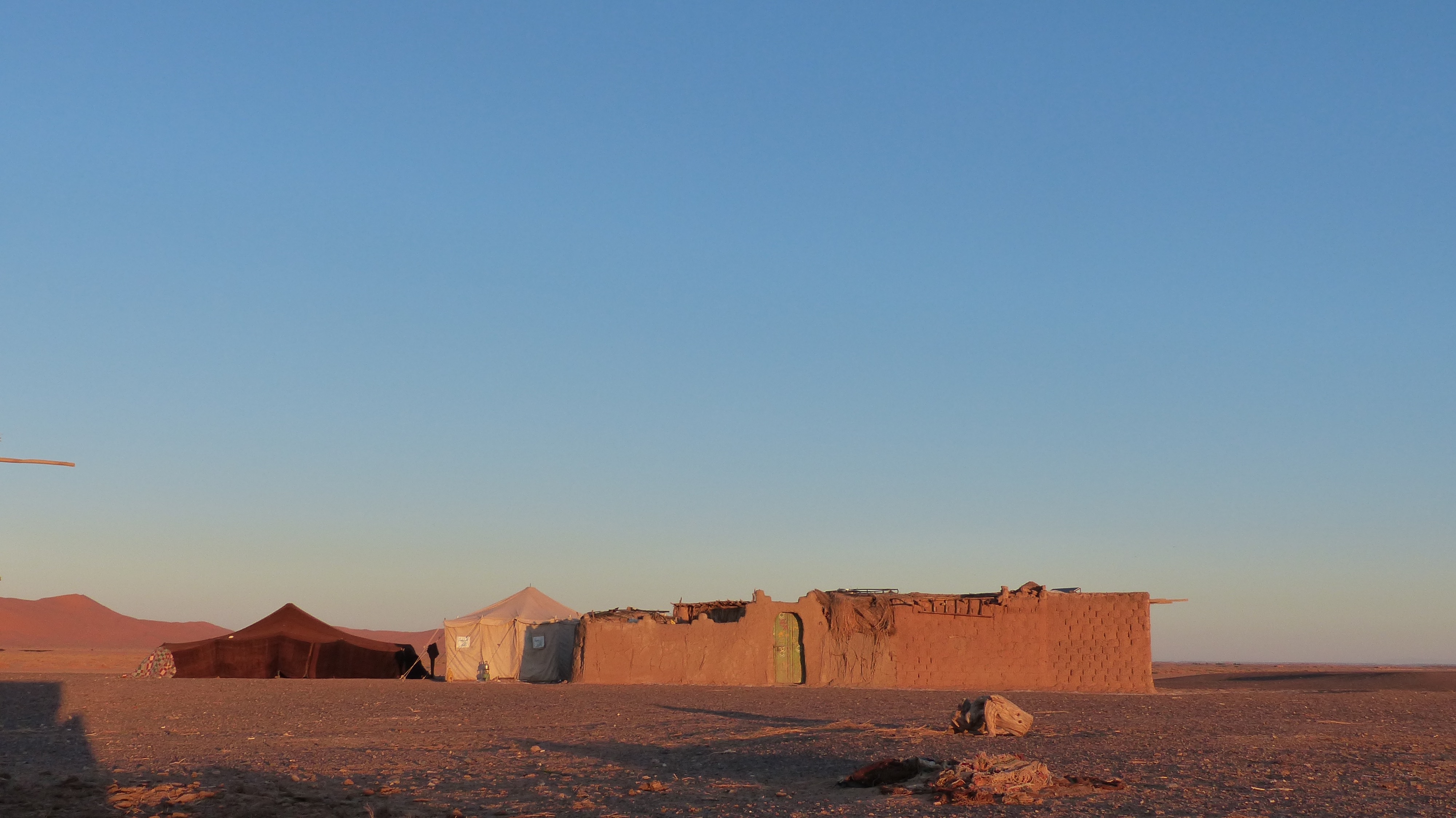
    L1160801Our first night was spent in the black rock desert along the Algerian border visiting a family not unlike what Mohammed’s family was twenty years ago. It struck me that although these people are referred to as “nomads”, their lifestyle is, in fact, quite settled.  They have a mud-brick house which although roughly built, still provides solid protection from the prevailing winds and sand storms. They have a traditional goat hair tent for when they have guests or need to move for whatever reason, but it doesn’t appear that this happens very often.  The goats roam the area, grazing on whatever shoots they can find, the little boy kicks an empty plastic bottle across the dirt, and the young mother weaves a rug from small strips of excess fabric.  Water is collected by hand and transported by donkey but there is plenty of it close by.  There are no long walks to water, so life is relatively easy here, pretty much going on as it has been for many centuries if you don’t count the Land Cruisers zooming by loaded with well-heeled hotel tourists out on their “sunset dune tour”.  Interestingly Mohammed said that none of the jeep tours stop to meet the locals or will even bring supplies to the nomads.  Instead, the air conditioned vehicles have their windows rolled up, insulating their inhabitants from the sun, wind, and locals as they zoom past.  We spent the evening sipping mint tea, playing cards, and watching the amazing moon rise in the desert before we were tucked in under a mountain of blankets for a lovely night’s sleep.

    The nomad's camp
    The nomad’s camp

    After our fourth cup of morning tea, we left the black rock desert behind and headed directly west in to the sand dunes.  Rising up out of the desert, the dunes look like giant orange mountains stacked against the horizon.  One set of ridges give way to the next in undulating waves.  Mohammed walks barefoot in front of us, leading the first camel by a rope with each successive camel tied to the one in front of it.  Atop the camels, we marvel at the degree to which the camel’s fleet splay out in order to distribute their weight over a larger surface area thus avoiding sinking ankle or knee deep with each step.  The camels themselves are cantankerous, contemptuous creatures who only reluctantly accept passengers or loads to carry.  When Mohammed would approach the camels when it was time to saddle them up, the camels would protest vocally and give him the “stink eye” as if to say, “I despise you and all you make me do!”  They also have an interesting odor – it is not foul and acrid like a peccary nor is it warm and musty like a horse, but rather is unique and not unpleasant, but not quite pleasant either.  The digestive sounds they make at both ends reminded me of old plumbing backing up.  It is a gurgling, bubbling, roiling sound that makes you feel that something terrible is about to happen.  Luckily, nothing terrible ever did.

    The nomad father
    The nomad father

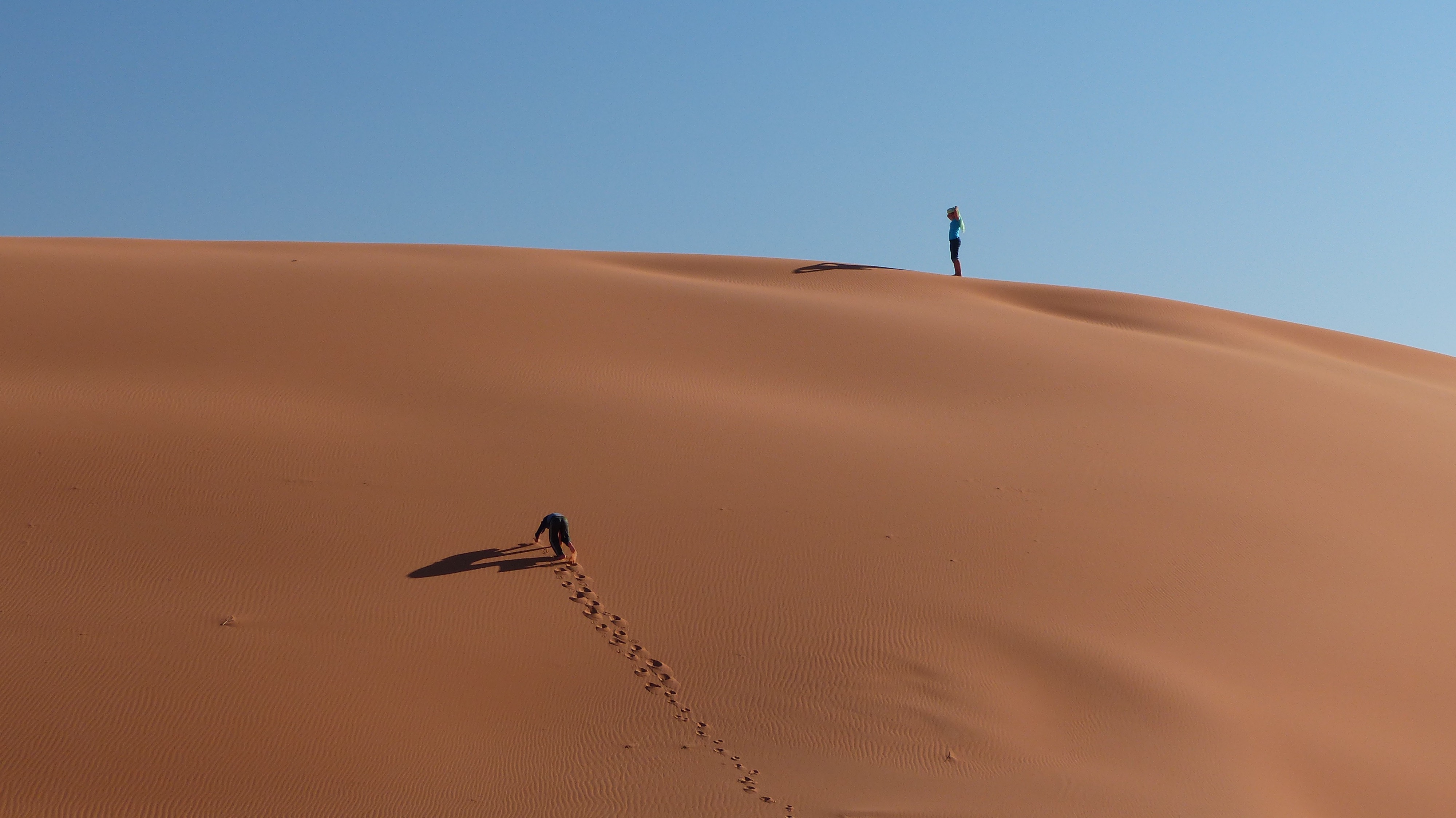
    Our second afternoon and evening were spent at the oasis where Mohammed grew up.  His family’s tent is still there, tended to by one of their former neighbors who still lives in the dunes.  The mid-day sun is intense, even in March, so everyone waits it out in the shade.  We read books, played with the baby goats, did some school work and were entertained by a little boy and his shy older sister.  As the sun begins to set, we start our trek up the highest peak near the oasis to stretch our legs.  When we climbed the dunes in the Namib, we were amazed at how difficult it was to make progress, so we started with low expectations of how much ground we would be able to cover.  The sand here was much firmer than the Namib however, so we were able to make it to a lower shoulder ridge in only 45 minutes or so.  Lucia wanted to climb higher, so she and Mac headed up the next ridge as Colburn and I looped around the side.  From where the kids stood, they could see the peak, so headed up that way.  We could see them but they were too far away to shout to them.  About ten minutes later,  Lucia comes running towards us, ecstatic, panting  “I need the camera to take some pictures.  The view up there is fantastic!”    We hand it over to her and she sprints off, kicking up a trial of sand as she runs back up to the top.  As we adults amble over in their general direction, tired and sore from two days of jostling on the back of a camel, Mac comes careening down the dune proclaiming that the view from the top is “a once in a lifetime experience” and that he believes we can make it up there just fine “if you take your time and remember to breathe slowly”.

    L1160885
    Mac racing up to rejoin Lucia

    Colburn and I looked at each other and smiled for we both felt the mixture of pride and amazement at our kids for what they now seem to value and how they have embraced the challenges and adventure of travel.  We heard our words coming back to us from our children and sense that they will continue these types of adventures long after we are gone.  There is a great comfort in knowing that our kids have internalized the lessons we have learned together through these two years of travel and perhaps cherish them even more than we do.  Their whole lives will be spent knowing the quietness and incredible beauty of the desert those few nights, they will always have with them the memory of the giddy thrill of swimming in the Galapagos with the sea lions, and they will always be able to recall the excitement (and terror) of watching a lioness hunt down a gnu.  It is impossible not to wonder how these early experiences will alter their conception of the world.

    L1160895

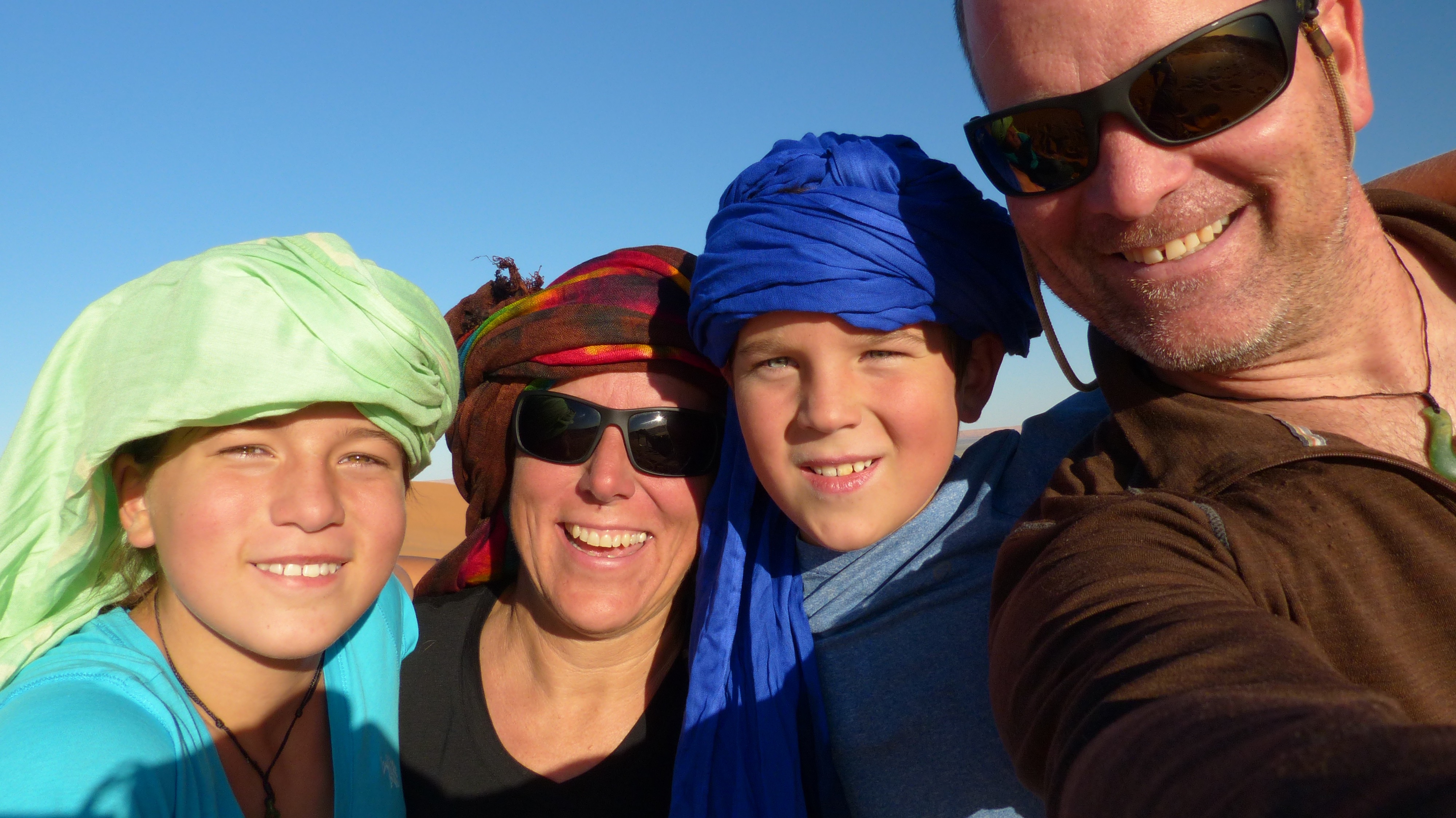
    Hopefully adventuring together for a long time
    Hopefully adventuring together for a long time
    Cooking with Tara and Ms. Rashida
    Cooking with Tara and Ms. Rashida
  • Biking the Upper Rhine

    OLYMPUS DIGITAL CAMERA
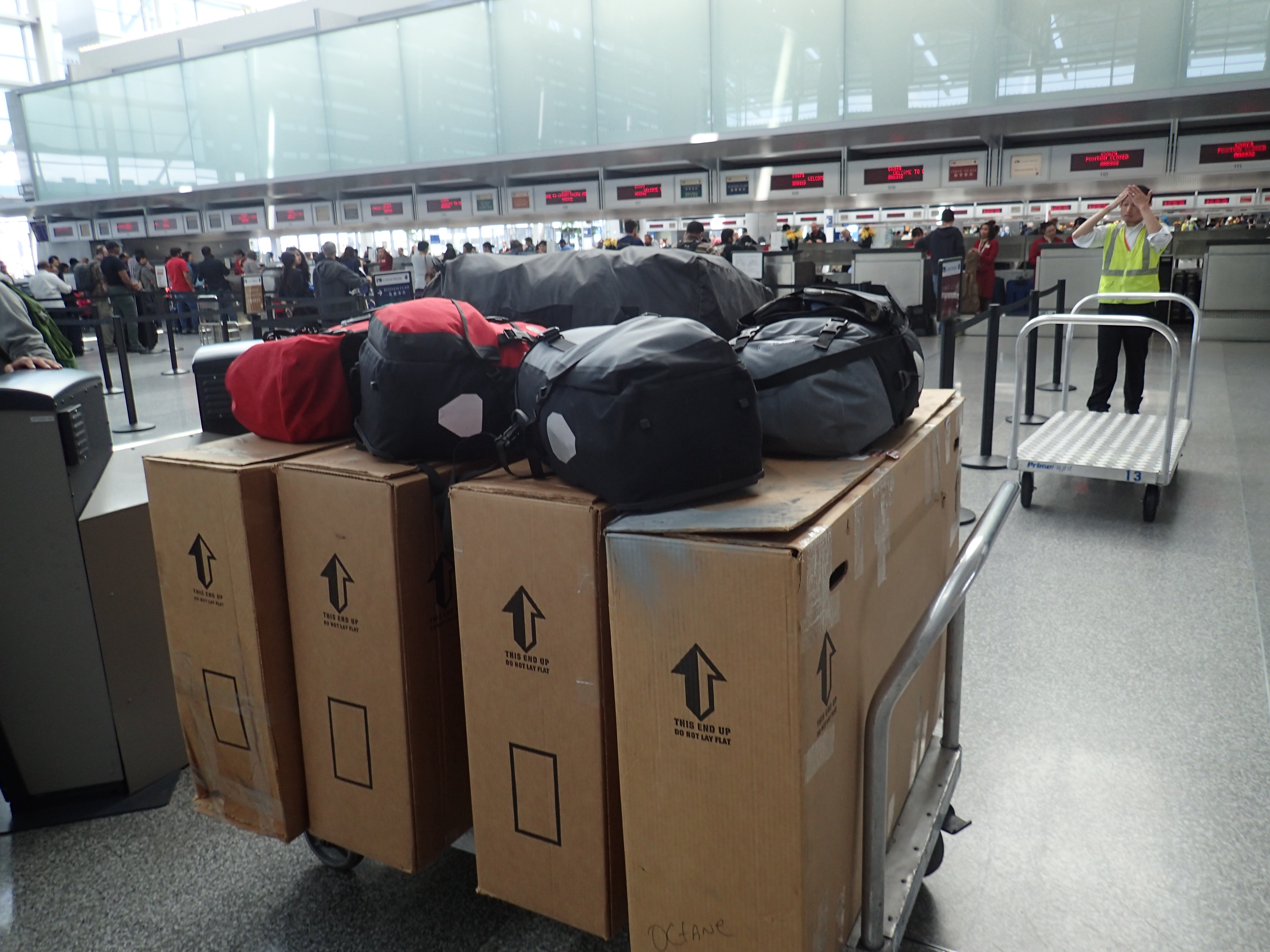
    Leaving SFO with our bags and bikes in boxes
    Putting bikes together in the Zurich Airport
    Putting bikes together in the Zurich Airport

    450 km of the Rhine completed, 800 km to go! Perhaps up there with hiking Colca Canyon in Peru and to the Mirador de las Torres in Chile, biking through the upper portion of the Rhine route ended up being one of the more challenging physical activities we have undertaken.  Listed as an “easy” and “suitable for families” route, we thought that it would be the perfect introduction to cycle touring.  Relatively short days of around 50 km per day and flat terrain coming out of the mountains would allow us to settle in to a rhythm and get used to biking with all our gear with us.  At least, that’s what we thought it would be.  The reality has been quite different, still good, but not nearly as “easy” as we thought it would be.

    Bike lanes are everywhere
    Bike lanes are everywhere

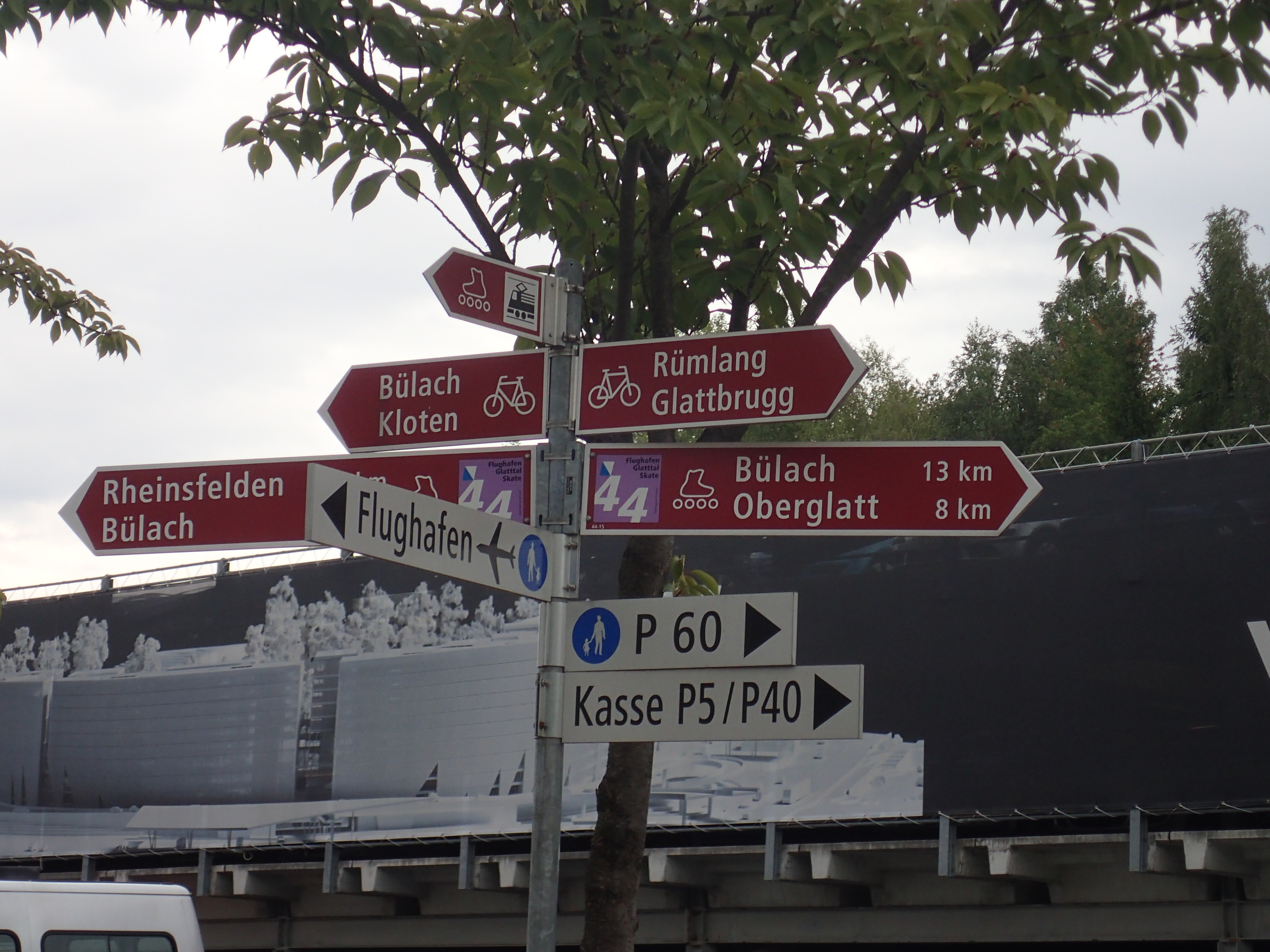
    You’ve got to love the Swiss because the whole country is set up for bicycling.  There are literally thousands of bikes traversing cities, towns, and villages.  The Swiss are also fanatical about identifying their bike routes.  Think signage at every possible juncture.  Unfortunately for us, we encountered 100 or more such junctions each day as we were winding our way through medieval towns, traversing apple orchards and spanning rural farm roads.

    OLYMPUS DIGITAL CAMERA
    Well marked, but sometimes confusing

    The system works great  until you don’t see one of the signs because it was hidden behind a jasmine bush or hyacinth.  It may take a while for you to realize that you’ve lost your signage and now are not really sure how to get back to where you want to be without backtracking great distances – something irritating in a car but down right disheartening when on a loaded bike.  We also have a mobile app which has all of the Swiss bike trails on it, so we thought we were good to go.  If we got lost, we could just look up where we were on the map and find our way back to the route.  It would probably work great if it didn’t take 10 minutes to load when we were in the rural areas of the Alpine Rhine or if we had better cell coverage.  In the end, it was pointless to even try to use it so we were stuck relying on the signs.  It worked okay, but we have made more than a few wrong turns which extended  both our mileage and daily elevation.

    OLYMPUS DIGITAL CAMERA
    Konstanz, Germany from the church tower

    In my mind, I had pictured peacefully spinning along the riverbank on a flood dyke or towpath, following the river as it meandered across the valleys.  However this section is through the mountains so the river is sinuous and convoluted as it tumbles down from the high passes.  The bike route frequently has to veer away from the river to cross a ridge because the valley cut by the river is too narrow or too steep for a bike path.

    L1100814
    Pleasant Swiss courntryside

    A few of our “misdirections” included adding 12 km of “undulating” terrain through the hills where the book Heidi was set on our very first day, crossing through a farmer’s field and sheds to then go down a dirt path, across a stream, and back up the other side of the ravine on the third day (this one ended up great though because we found a Turkish restaurant for lunch as a result!), pushing our bikes through a quagmire of clay-like mud along a construction zone as it rained on day 6, and a 3 km ride along what might be described as a high-speed truck-route our last day in Switzerland.  And this is just some of the highlights of our misdirection adventures – there were many, many more!

    L1100720
    One of many clock towers

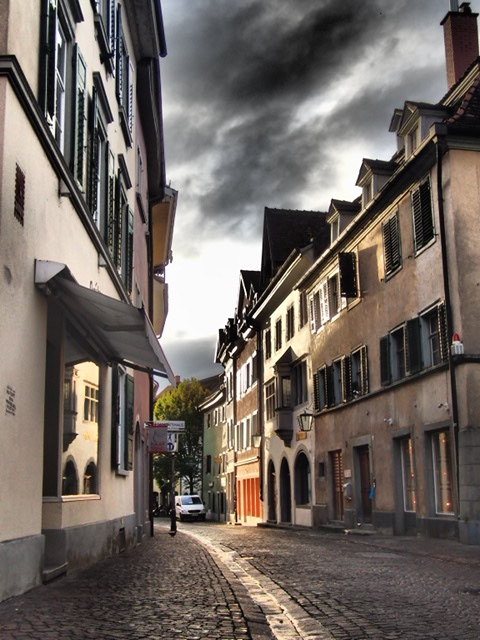
    However frustrating the navigation, the scenery and experience have been amazing.  We began riding in Chur, one of the longest inhabited cities in Switzerland.  Charming streets are lined with half-timber houses, winding narrow cobblestone streets, and yummy peasant food lured us in to its charms.  The scene was idyllic – high granite mountains with a quaint typical Swiss town in the valley below.  It was the kind of scene which makes you want to break in to Julie Andrews, “The hills are alive, with the sound of music….” but we didn’t because none of us can really sing all that well.  The weather was fantastic – high puffy clouds, 70 degrees, and abundant sunshine.  This, of course, was not to last too long as it has been a rainy summer here, but we enjoyed the auspicious start.

    OLYMPUS DIGITAL CAMERA
    A rainy day

    After a few days of riding we decided to spend our first rest in a hotel in Konstanz, Germany.  A very welcoming college town, it was easy to get out and see some of the sights.  Part of us just wanted to hole-up in the hotel and relax, but the other part of us really wanted to walk the streets, see the churches, and explore the area.  This conundrum is something that we have faced often.  If you are visiting an area for a week, you can sort of suck it up and do everything that you want to even though it is exhausting in the end.  If you’re only going to be someplace once, you need to make the most of it, right?  With long-term travel, it is different because you simply cannot have amazing new experiences every minute of every day.  You saturate your mind, burn out, melt down, and end up in a puddle on the ground.

    OLYMPUS DIGITAL CAMERA
    Finally getting out for a walk

    Over our time traveling, we have found that one incredible “event” per day is plenty.  It may seem like we are wasting our time because we’re sitting down listening to music or reading stories instead of seeing all of the sights of an area, but we just can’t do any more than that.  Some days our event is simply getting from one place to the next, other days it might be visiting a church or taking a tour by canal boat.  We also have to be able to get school done along the way and we have found that the process is much easier if the kids aren’t exhausted from touring different sights.

    L1100731
    A small Swiss castle

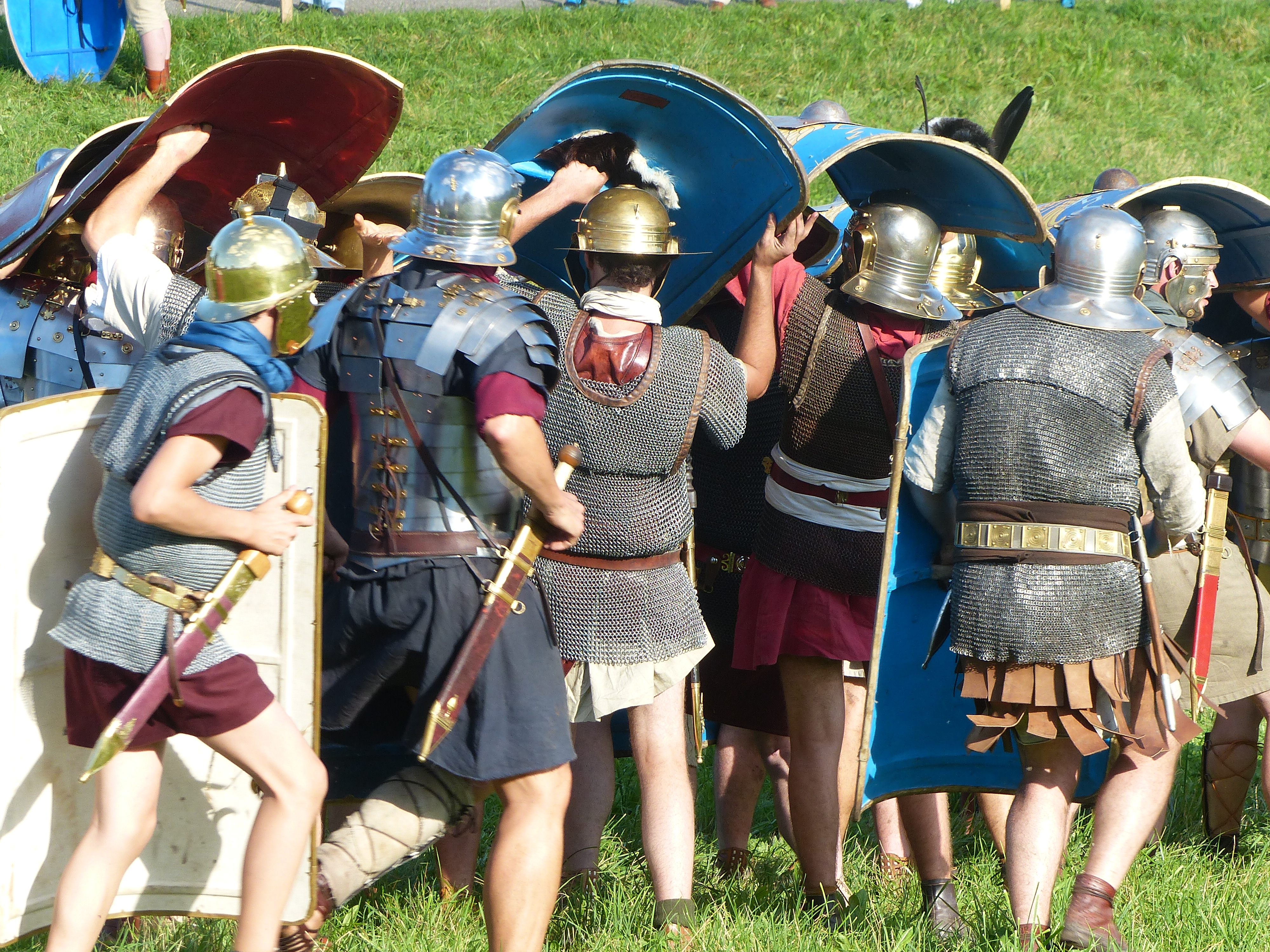
    Another few days of biking lead us to the small town of Kaiseraugst, Switzerland.  Our family has a thing for ancient history so we wanted to see Augusta Raurica, an old Roman fortified town built around 200 A.D.  Walking down a path along the river we came across the restored old bath house you can just walk through — no entry fee, no guards making sure you don’t touch anything, just informative signs as you walk through.  Walking further along the path, we came to a playground the kids wanted to explore.  As we looked around, we noticed that the wall of the playground was really, really thick – like 9 feet thick – it was part of the old fortifications.  Again, the kids could climb on it if they wanted to – no barriers, no signs admonishing you to stay off of the relics, just history embedded in to the town.  The weekend we were there was also the annual Romanfest complete with expositions of gladiator fighting, presentation of the troops dressed in period clothing, and a whole bunch of other Roman things.

    L1100885
    Parading of troops at the Romanfest

    This was one of those times when we were so tired we could barely walk to the store to get groceries but really wanted to go see the festival too.  After much deliberation, we thought this was something we really had to do so pulled our butts up one more hill to the festival.  It was good fun, but probably would have been better if we could have understood at least a few words of what they were saying. Leaving Kaiseraugst was difficult as we really liked the town and our campsite along the river.  The whole process was very relaxing.  The people who run the place are a Swiss-American couple so it was nice to be able to speak fluently with her about the area, how to get around, etc.  The man is Swiss and Lynn his partner is from Long Island, NY.

    L1100913
    Demonstrating a battle formation – Mac loved it!

    Switzerland is not part of the EU so has its own currency, Germany, France and Austria use the Euros.  You would hope that most places would accept either currency at a nominal exchange rate, but our experience has been that in Switzerland it is Francs and only Francs and everywhere else is Euros only.  We ended up having two different money storage (left pocket Euros, right pocket Swiss Francs) and would have to figure out if we had enough money when we had to pay for something because you often cannot tell what country we are in.  One day we must have crossed back and forth in to different countries at least six times.  Mac got a kick out of this though because he hates immigration.  He thought it was a hoot that we never had to have our passports stamped!

    OLYMPUS DIGITAL CAMERA
    Steim am Rhine, with a beautiful medieval main street

    Strasbourg, France followed Kaiseraugst.  We decided to hop a train as there were 150 km of undulating terrain, a big city, and not too  much to see so we decided to get a bit ahead by taking the train for a couple hours.  It was a nice break as we were able to get an extra day in Strasbourg, which we adore, and also to give our legs a break. 

    OLYMPUS DIGITAL CAMERA
    How bikes travel on French trains

    The kids were able to do double lessons, Colburn and I were able to eat some yummy Alsatian food, and we enjoyed walking around town.  One of the things that we love about many of the cities/towns we have been in is just how walkable they are.  Unlike the US where your favorite restaurant may be 20 miles away, our favorite place was only three doors down from our apartment (not that we were there long enough to really develop a “favorite”, but we really enjoyed our date-night there).  Strasbourg was especially nice and we have started to consider coming back for a European Christmas!

    OLYMPUS DIGITAL CAMERA
    A stormy morning in France

    Our last few days have been much more along the lines of what we expected – flat tow-paths and flood dykes, long-ish distances (60 km yesterday) without being exhausted when we get to camp , and a little bit of extra time to enjoy where we are.  We have spent these couple days mostly “big ring riding” – a phrase we can only use when the terrain is flat that you can actually use your largest chain front ring.  We love big ring riding!

    OLYMPUS DIGITAL CAMERA
    Happy bikers

    So, to this point, if you would ask us if we have enjoyed biking the Rhine, we would give it a qualified yes.  It has been more difficult both physically and emotionally than we had anticipated yet we have enjoyed the process overall.  Despite near-obsessive signage, we manage to get mis-directed several times each day.  It’s happened so much now that the kids just groan or chuckle we she have to take a “detour”.  We’re settling in to a rhythm and realizing that a decent map is a godsend, that shorter days are better than longer ones, that chocolate makes everything better, and that we need way more food with us than you would think.  The kids love the pastries, schnitzel (fried anything, sometimes on bread=schnitzelbrat), spaetzle (a thick egg noodle), and Shorley (an apple drink).  Colburn and I love the wine and beer.

    L1100745
    Currywust and Schnitzelbrat at a festival

    The people in Switzerland were lovely, reserved but always patient and helpful.  We were also surprised in Strasbourg by how accepting of our linguistic incompetence people were and how they would go out of their way to try to help us.  Often it has required a mixture of German, Spanish, and some English.  Now we are in Germany and have been struck by just how far the German people will go out of their way to help us.  In just one day, a man saw us ride up and down the same street (we were looking for a bakery) and he got on his bike to make sure we found what we were looking for; another man saw us looking at our map so asked where we were going and gave us two different options on how to get there; a woman who saw our tent and sleeping bags on the back of the bikes stopped to ask us if we were looking for a campground because there were none in the area. Finally,  when we stopped for lunch at a Home Depot type place, another man was checking out our bikes and started to ask questions about what we’re doing – ends up he lived in Pittsburg for several years as a coal miner.  Speaking with him in English was profound for Colburn as he sounded precisely as a early Shindell in Pennsylvania would.  So far we’ve made it through every situation somehow – often through the kindness of strangers.  These are the experiences which make travel so rewarding.  Everywhere we turn there is warmth, kindness and generosity of time and spirit.

    OLYMPUS DIGITAL CAMERA
    Medieval streets
  • Getting Ready – 17 weeks and counting

    PeruWeaverThe intensity of preparations has been ramping up over the past few weeks. Being the ever-prepared “Plannie McPlanerson” (a name, by the way, that we have hijacked from a family from Colorado who did a similar trip a few years ago – she liked to plan too!) that I am, I set out a schedule of things we needed to accomplish before we left – rent houses, get visas, get school books, etc. – as weekly assignments so that we won’t get overloaded in the last few weeks. As two former outdoor educators, we strongly believe in the old adage, “prior planning prevents piss-poor performance”. The unintended drawback to this idea was that I allowed too much time to get things done. For example, India offers a multiple entry visa good for 180 days over the next 10 years so I put that as one of the first things on my list. To complete the application, we need 2 passport-sized pictures for each of us.  While this is not hard to do – it only involves having an off-white background on which to shoot the picture – I’ve been busy with work so now it’s 6 weeks later and I still haven’t taken the pictures because I have “so much time” left before we go.  Perhaps the reality is that everything really will happen in the last month or two because that is just the reality of preparation – you don’t actually do anything until it absolutely must be done.

    This is not to say that we are total procrastinators as Colburn tested two different packing systems (regular backpack or convertible soft-sided) with the kids during trips to visit his parents. We have decided to go with the convertible ones because there are fewer straps, handles, and various other “dingle-berries” to get caught up. They are also front-loading instead of top-loading is a key factor – you can actually see all of your stuff when you open the soft-sided ones. So – check – at least one thing has been checked off the list!

    The other major accomplishment to date has been coming to the realization of just how much there is to see and do in this world! In talking about what our priorities were for this trip, Colburn and I have realized that we really are gluttons for adventure. We sort of knew it before, but our life has become so settled and “ordinary” over the past few years that we almost forgot about it. We are also very lucky that even the kids are excited for new adventures….what do you think of a camel safari in Morocco? Cool! How about hiking 2 days up hill just to see some Inca ruins? Sure! Every time I bring up a new place or activity, our family tends to respond the same, “Wow, that would be cool! Let’s do it!” You’ve really gotta love a 7-year old who says that to a 6-day train trip across Russia and Mongolia or a 9-year old who is willing to brave the tarantulas in the Amazon just to see pink river dolphins!  The other aspect of this realization is that our trip may take longer than the one-year we had originally planned.  We will leave it open to see what feels right once we actually get on the road.

    We are also setting up our first volunteer experience. If all goes well, we will be doing a service-travel program with Awamaki – a group in the Sacred Valley of Peru (near Cuzco) which works on community development and women’s empowerment. Although we don’t know what our actual role will be quite yet, we are looking at teaching English for Colburn and the kids and possibly doing some healthcare for Deb. If you want to check out what they do, they are at Awamaki