Category: Peru

  • The End of Six Months in South America

    We have been on the road in Central and South America for six months.  As we are wrapping up this phase, we wanted to reflect upon what the trip has held for us so far.  South America has been a grand adventure – trekking, rafting, snorkeling, zip-lining, hiking, surfing, etc.  We have experienced a range of situations that have tested our limits.  We have navigated our way through an entire continent in a different language, not always smoothly, but we’ve done it.  We have learned what we need to stay happy on the road and just how little stuff is actually necessary.
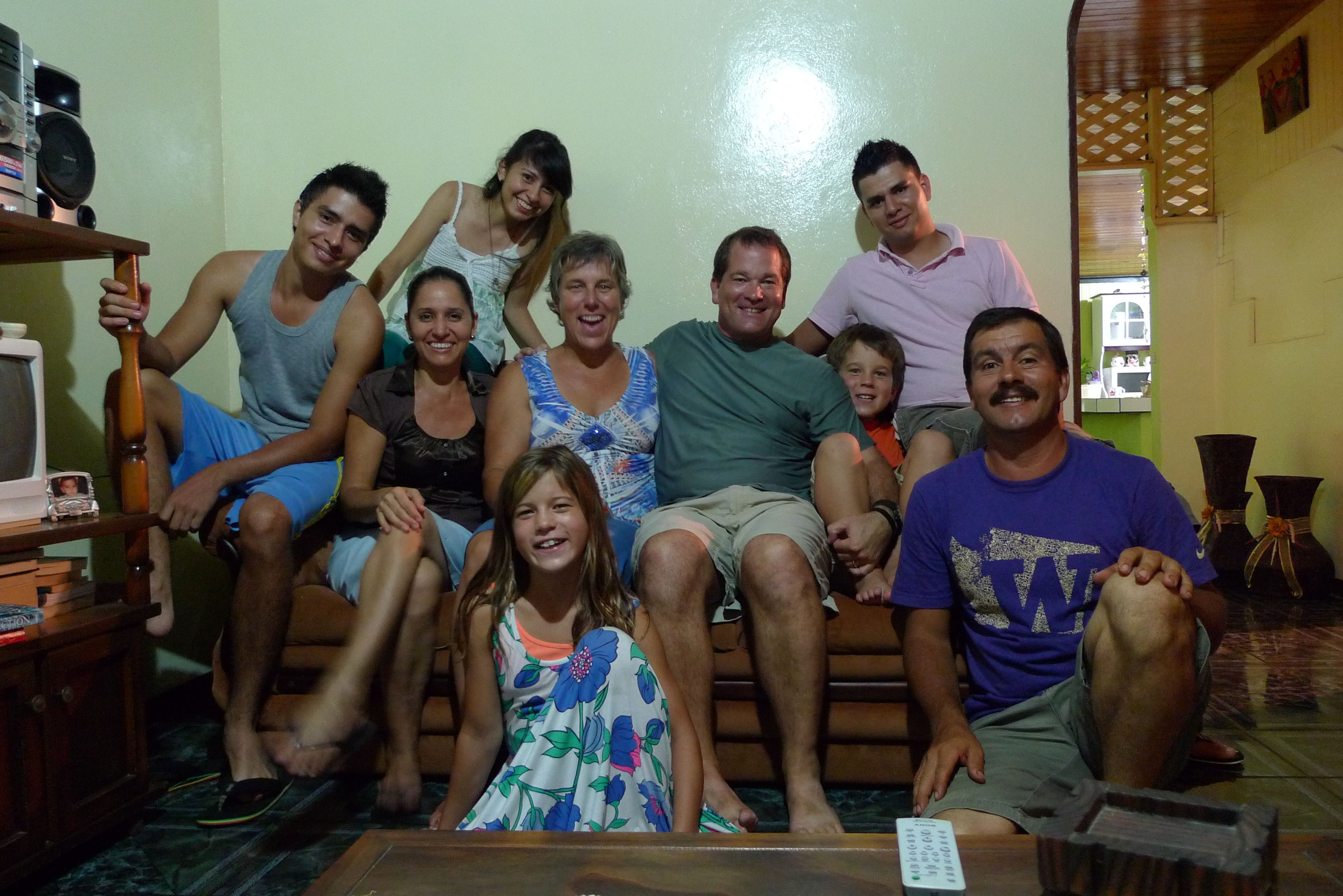
    Retana-Miñoz Family
    Retana-Miñoz Family

    Many people ask us which country we have liked the best.  Unfortunately, this is somewhat like asking you which child you like best.  It is not really possible to say that we liked one better than the other, but we have enjoyed them for very different reasons.   In Costa Rica and Nicaragua, we enjoyed the ease of travel and wild life.  Spending a week at Proyecto Asis and with the Retana Munoz family, our homestay family was an amazing experience.  Rosi and her family were gracious, patient, and made us feel completely at home living with them.  Taking Spanish lessons with Danielle and Yalitza gave us a foundation for making our way through the language.  Working with and learning about peccary, capuchin monkeys, macaws, and a whole host of other animals provided us with first hand knowledge of the challenges which face the animals in the wild we were to see later in our trip.  We enjoyed it so much that we are thinking about going back there at the end of this summer – “one year later” – to see how our perspective has changed.
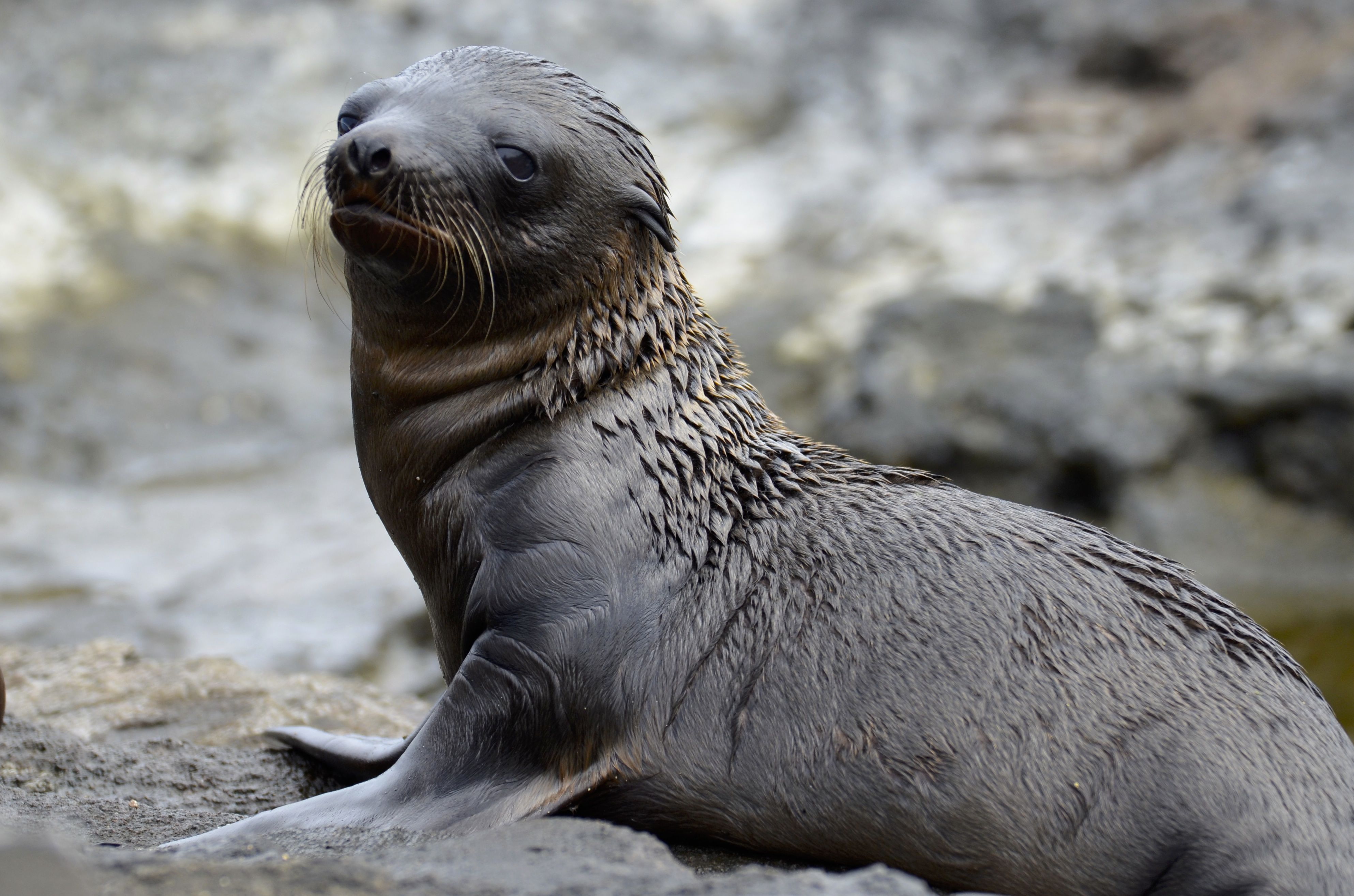
    Infant Sea Lion
    Infant Sea Lion

    Ecuador held Quito, the Galapagos, and Otovalo; each quite different from the other but creating a very well-rounded experience.  The Galapagos will always hold a special place in our hearts as you can interact with wildlife in a way that is not possible anywhere else on Earth.  Playing in the ocean with sea lions produces a giddiness that is not often experienced as an adult.  Watching marine iguanas climb out of the sea to bask on the black lava and expel excess salt out of their nostrils is seeing life on our planet before hominids began to dominate everything.  Listening to the scratch and scrape of a giant tortoise as it hauls its shell over the rocky landscape reminds us of how resilient life is, and how fragile.  We had enough time (four weeks) on the Galapagos to feel like we really got to know the place.  Quito and Otavalo were our first introduction to the Incan influence, but it was subtle.
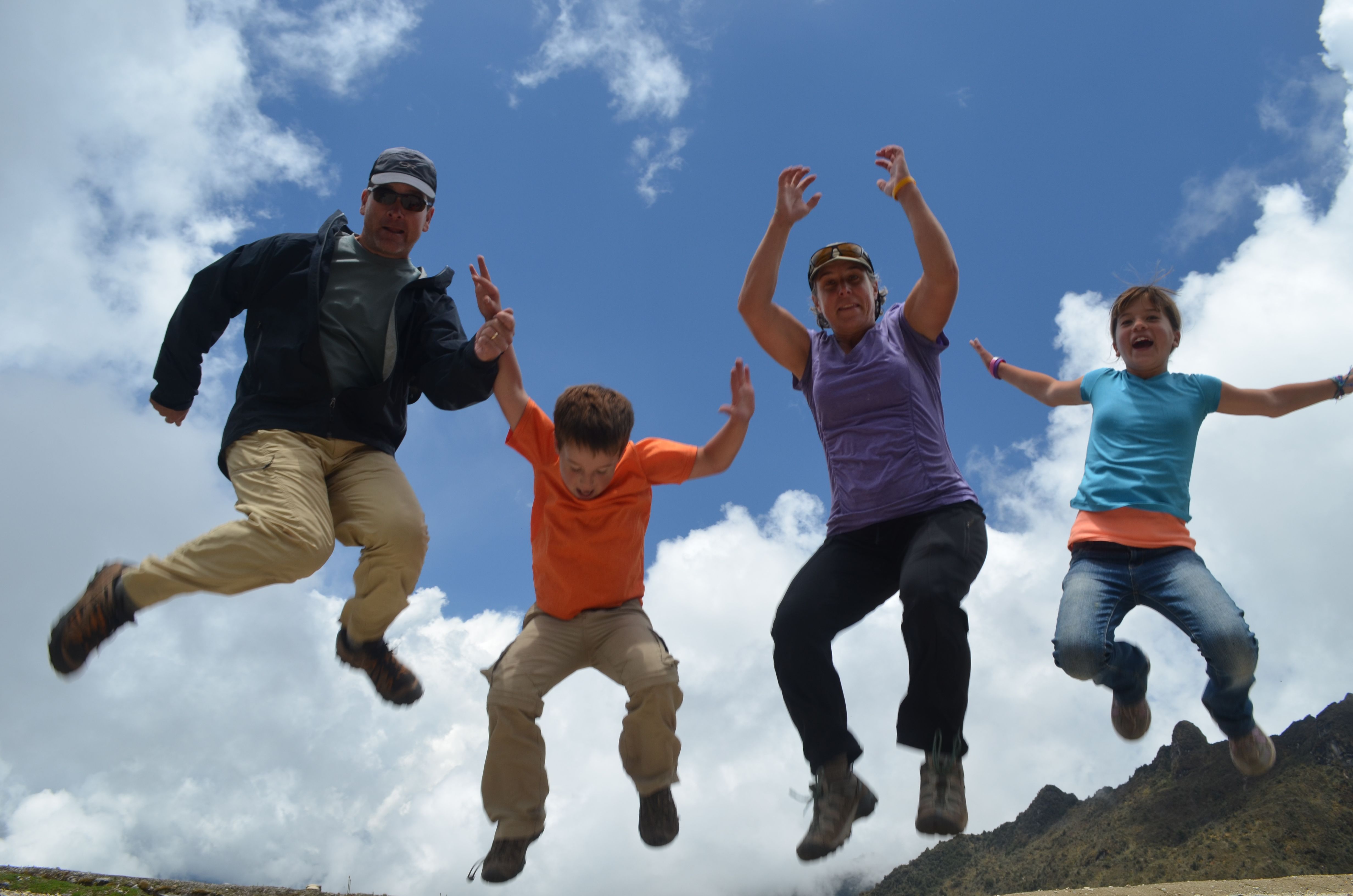
    Celebrating Success
    Celebrating Success in Peru

    Our experience in Peru was very different from Ecuador.  Yes, the landscapes are similar, but what we paid attention to was much different.  With the Incan influence clearly visible everywhere, we learned more about the history and culture than flora and fauna.   The stark beauty of the Colca Canyon and the wonderful hospitality of our host family and guide left us feeling as if we were truly welcomed there, not just a paying passenger.  In contrast, Titicaca and Ollanta left us feeling as if we were simply a commodity; something to be exploited for every dollar possible.  Although it was quite disturbing, we became aware of just how damaging tourism can be for a culture, a necessary awareness when traveling abroad.  We are now even more diligent in making sure that we give our dollars to organizations that do not damage and exploit the culture or the people solely for profit.  Our time in the Amazon was amazing – the raucous calls of the macaws flying overhead, the peculiar odor of a peccary approaching, the grace of the monkeys launching from tree to tree – will always be remembered.  Hiking our way to Machu Picchu was a more of a pilgrimage than a trek, allowing us to glimpse the spiritual side of Incan culture as well as a fantastic experience.
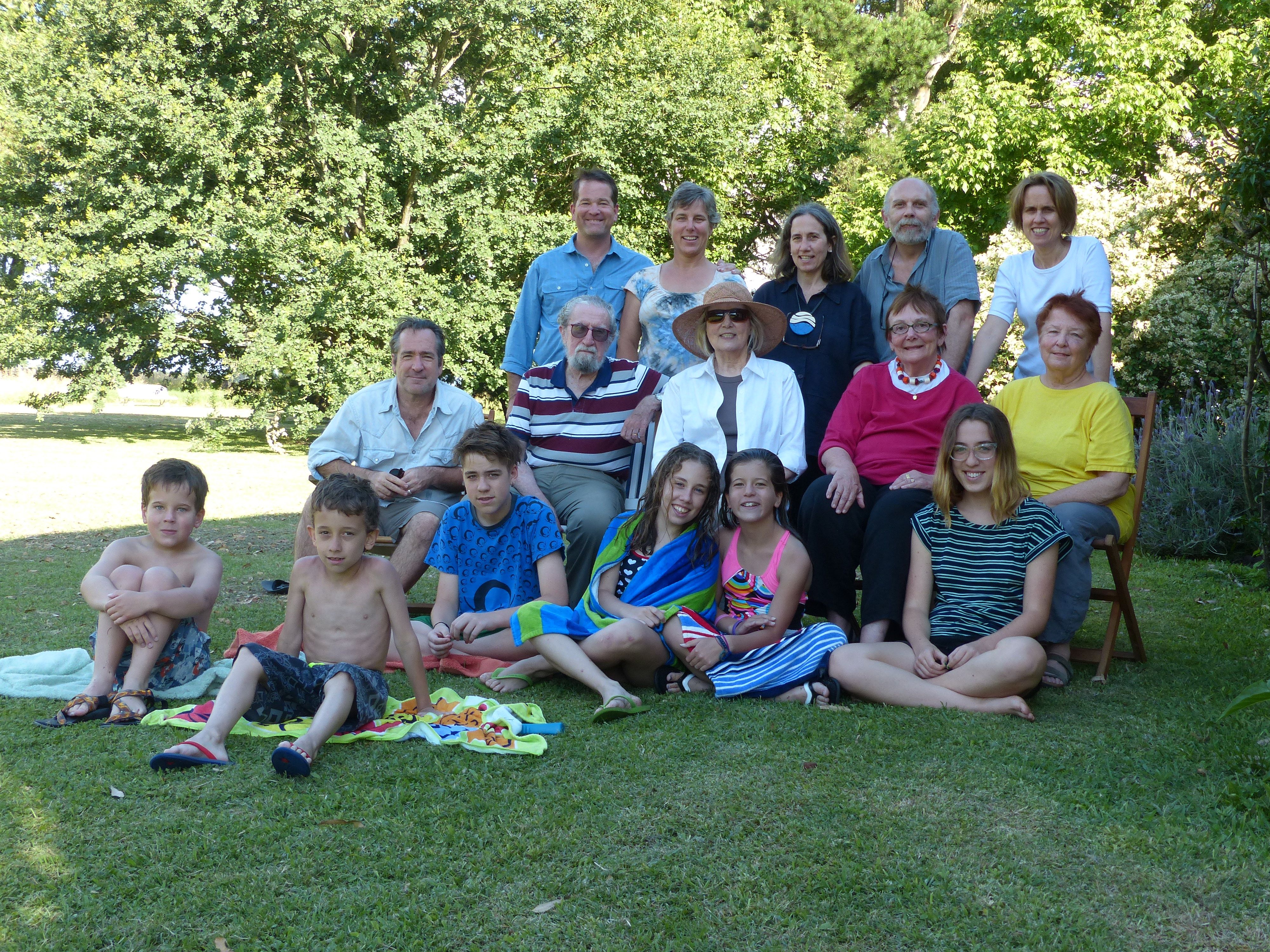
    With Granny and Jean and Our Argentine Family
    With Granny and Jean and Our Argentine Family

    We have enjoyed Argentina for our time with family, the absolutely jaw-dropping landscapes and the availability of fabulous wine and scrumptious grilled meats everywhere.  Being able to spend the better part of a month with Colburn’s Argentine family has been a true gift.  We have been with them long enough to able to see in to their life in a way that is not possible with a one or two week visit.  They have welcomed us with such grace and kindness that we have felt as if we were in our own home, not visiting.
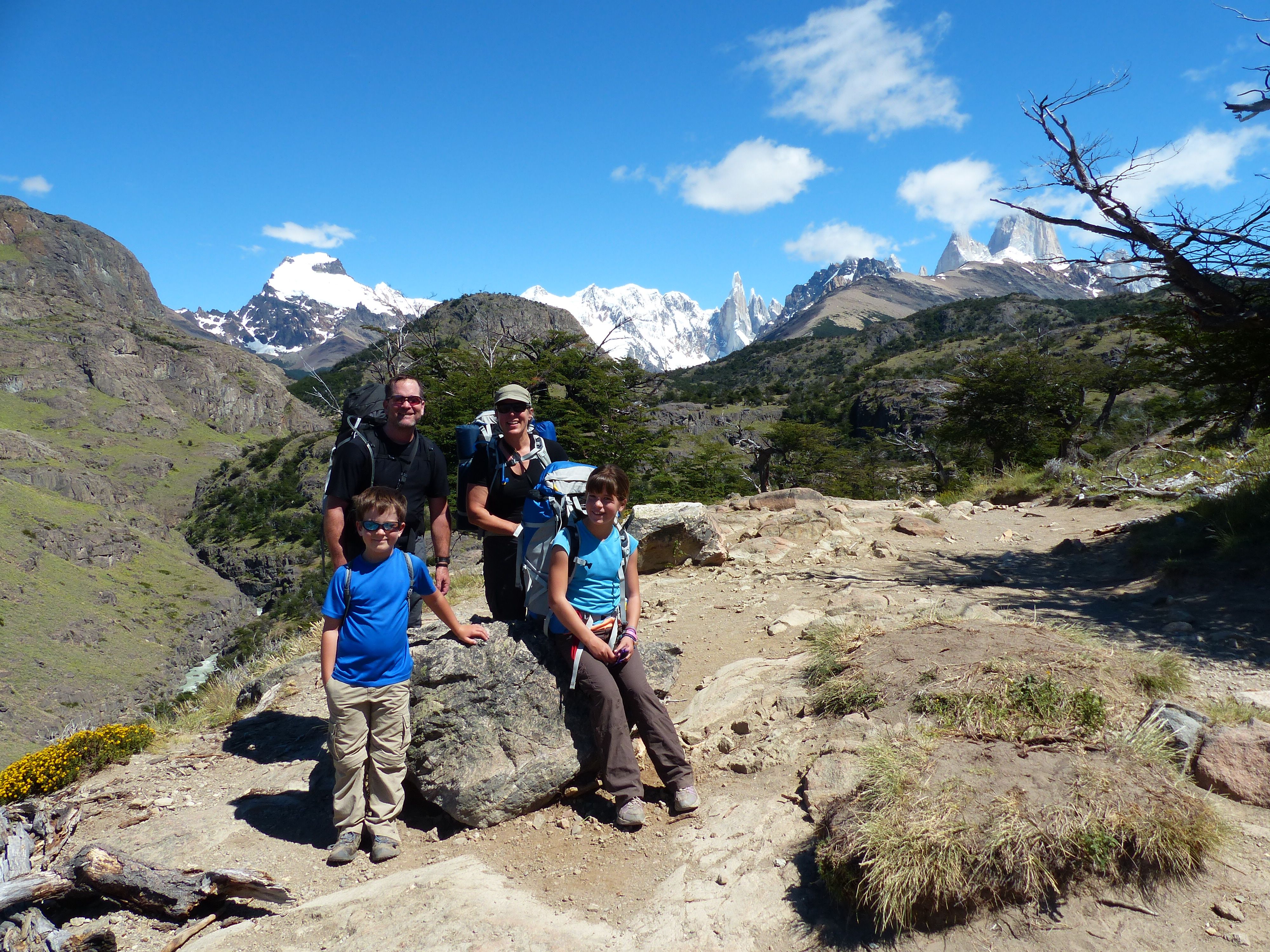
    Near El Chaltén
    Near El Chaltén, Southern Patagonia

    Going to Southern Patagonia was like finding the place we have always wanted to be. It is mesmerizing and might be like what the American West was before super highways and strip malls.  We know we will be back to Patagonia, so when we left it was hasta luego not adios.

    Hot.  Sweaty.  Waiting.  Puerto Maldonado Peru.
    Hot. Sweaty. Waiting.  Leaving the Amazon, Puerto Maldonado Peru.

    Beyond simply visiting interesting places, our travel has changed each of us individually and also as a family unit.  Individually, we are each now more gentle with ourselves and others.  Our expectations for everything going as planned has diminished considerably since leaving the US.  Repeatedly experiencing extended periods of waiting for an unknown outcome and the feeling of being lost as we try to navigate our way through unmarked routes in foreign lands has taught us that most people are really quite helpful and a sense of humor about pretty much everything is essential to successful travel.

    An Indication of the Future  (translation - the road is in a bad state)
    An Indication of the Future
    (translation – the road is in a bad state)

    When Deb left her wallet in a taxi in Peru, the driver came back to the airport and found us to return it with everything still in it.  When we were having trouble getting the rental car company to do anything about our car that wouldn’t start, the gentleman at the hotel desk became our valiant defender summoning a tow truck within 15 minutes.
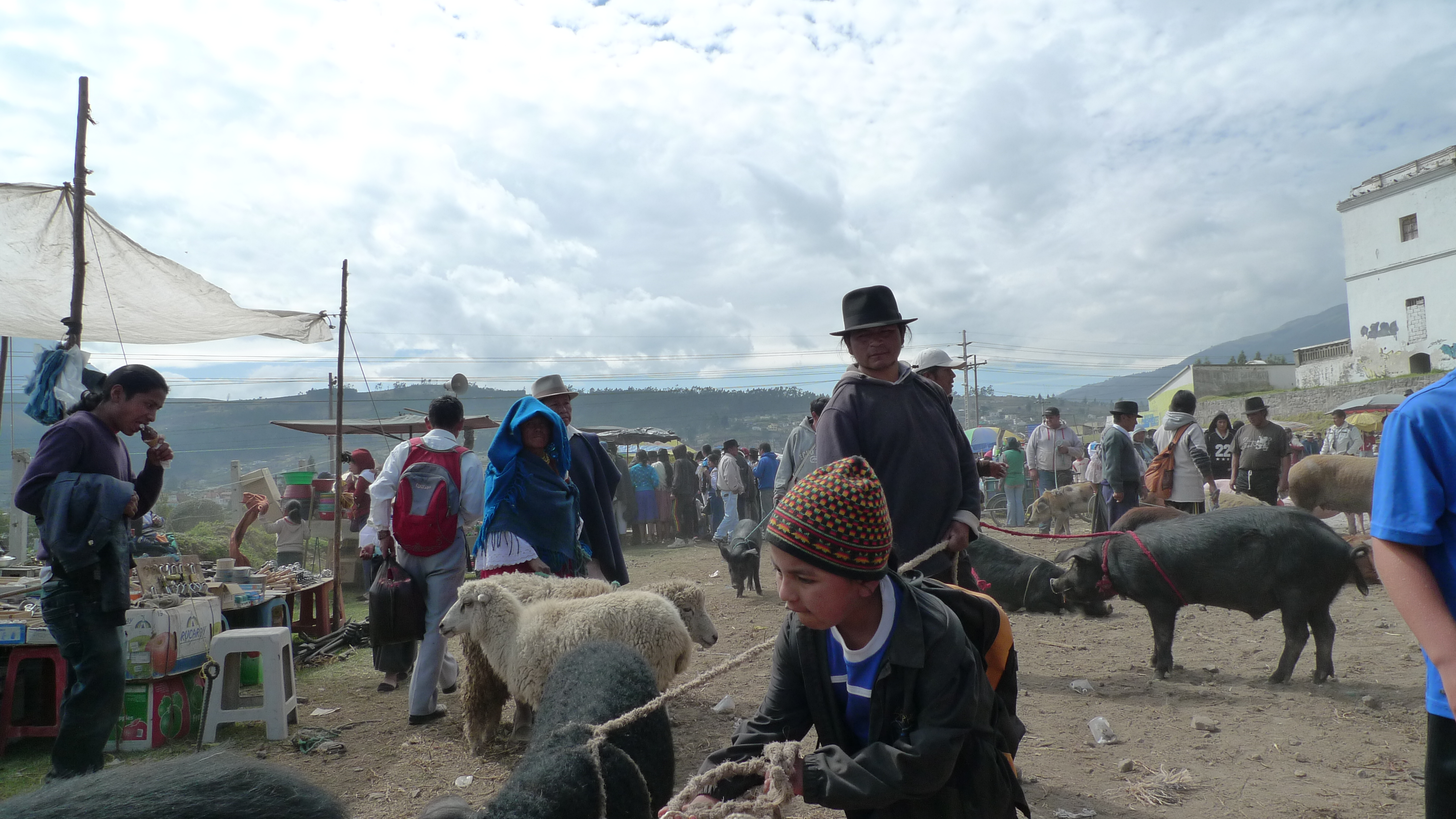
    Animal Market, Otavalo
    Animal Market, Otavalo Ecuador

    We have seen first hand the struggle to survive that both people and animals experience when their world is not abundant.  This has given us a greater awareness of how our individual actions at home impact people, places and animals unseen to us.  Discussing the loss of habitat in Costa Rica lead to a discussion about us decreasing our consumption of animal products and the illegal pet trade.  Seeing the ecological impact of large-scale agriculture for export has made us more aware of our choices when fruits and vegetables in the US are imported from the Southern Hemisphere.   Learning about the long-term effects of colonization, oppression, and exploitation has made us more aware of the freedoms we take for granted.
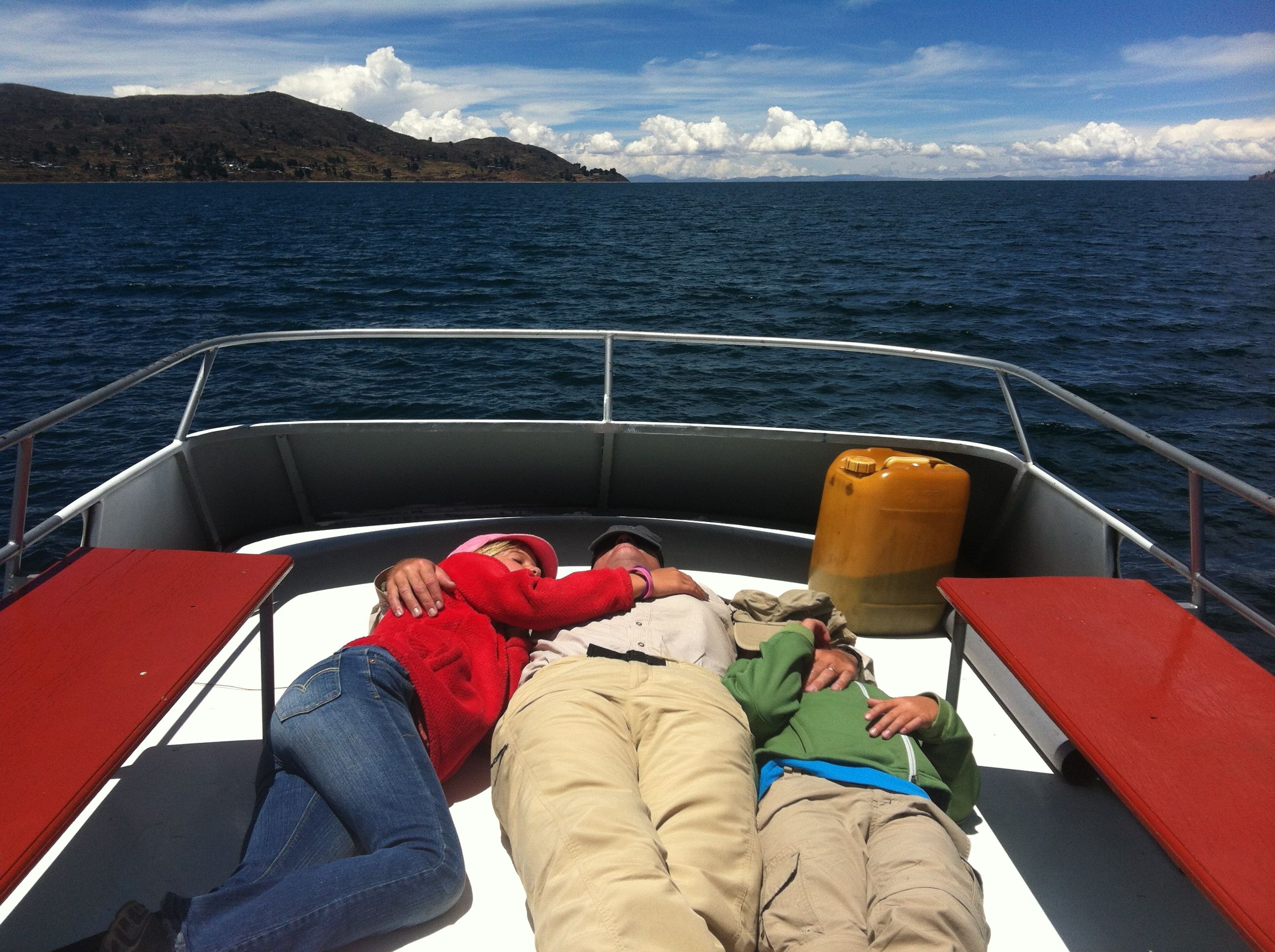
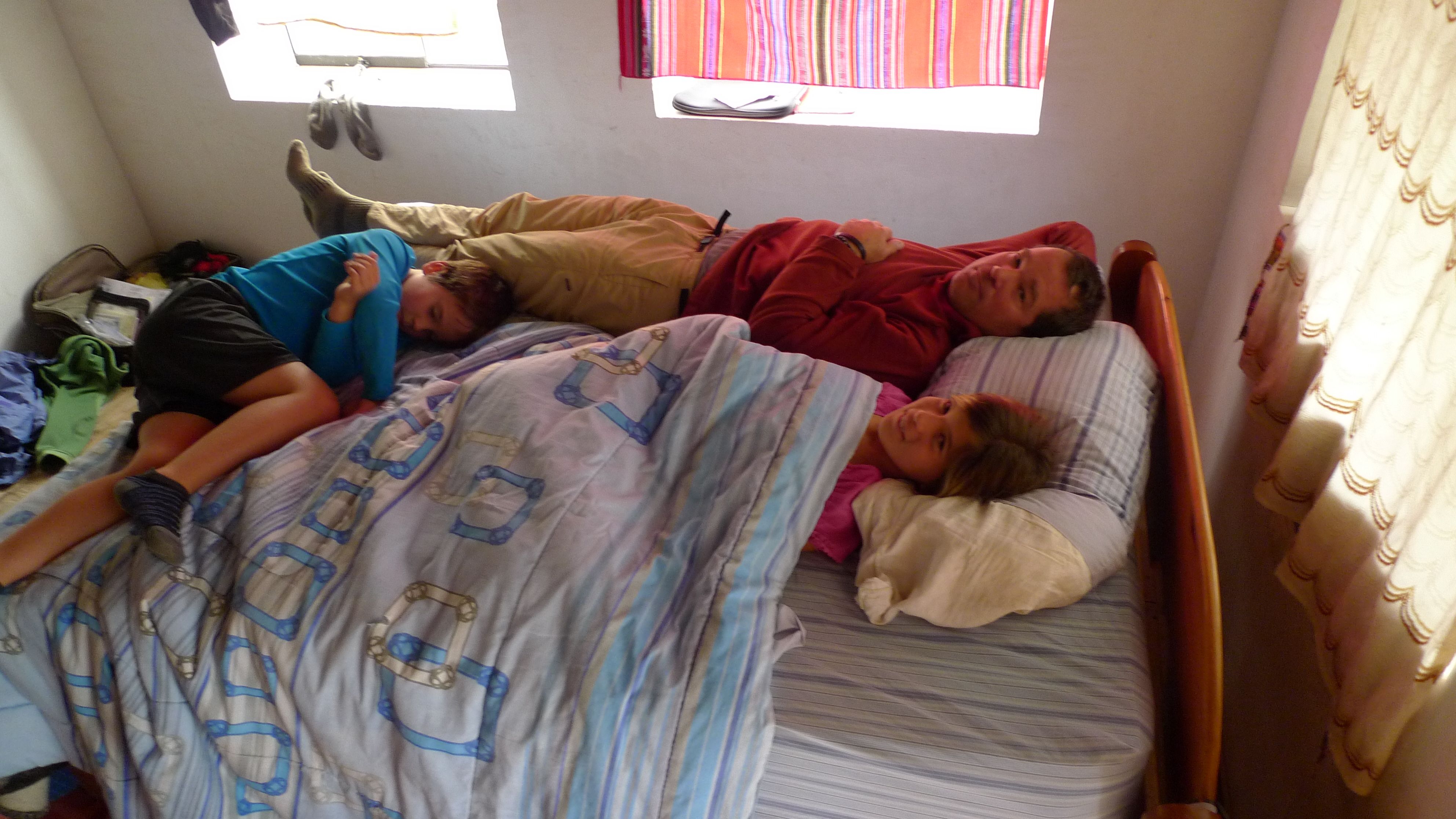
    Nap on Lake Titicaca
    Nap on Lake Titicaca

    We are also more aware of the importance of gentle words, especially when we are stressed. We are much closer to each other both physically and emotionally for we have supported each other through difficult challenges – Colca Canyon, Torres del Paine, and homeschooling while on the road.  Twenty-six weeks of being together all day every day has given us insight in to what makes each other tick and who can be relied upon for what.  We are now much more of a team than we were when we left the US and have a heightened sense that we are stronger as a unit than we are as individuals.  The children now ask, “What can I do to help?” instead of declaring, “I want …” or “Where is my…” The adults are more likely to say, “I could use a hand…” instead of “Go get the…” or “I need you to…”. Mac and Lucia have learned that there are not always three meals per day, sometimes not even two, and dinner at 10:00 or 11:00 pm is just fine.  They can now be hungry and tired without being cranky.

    Brothers
    Brothers

    Perhaps the most important thing we have learned is that family really is the foundation for happiness.   There really in nothing more important than family. Without our jobs or school to distract us, we are now able to focus on each other.  This is not to say that we were not close when we were in the US, but rather that we each had to split our attention between our family and school, work, friends.  Similarly, visits to family members further away had to be arranged when our work or school would let us leave, not when it would be beneficial to see them.  With family as far away as Australia and Argentina, it is difficult to visit them for only a week or two.  And, if you can only visit for a week or so, there is a tendency to focus on “doing” things all of the time rather than simply enjoying being together.  Lucia commented on this when we first arrived at the campito, a small weekend house outside of Buenos Aires for Colburn’s Argentine family, saying that she felt like she should have been there five years ago.  When we went back two months later, it was like coming home for all of us.  It has been wonderful to be able to share some of their life, not just a visit.

    We have truly enjoyed our time traveling so far and feel that we are incredibly blessed to be able to do so.
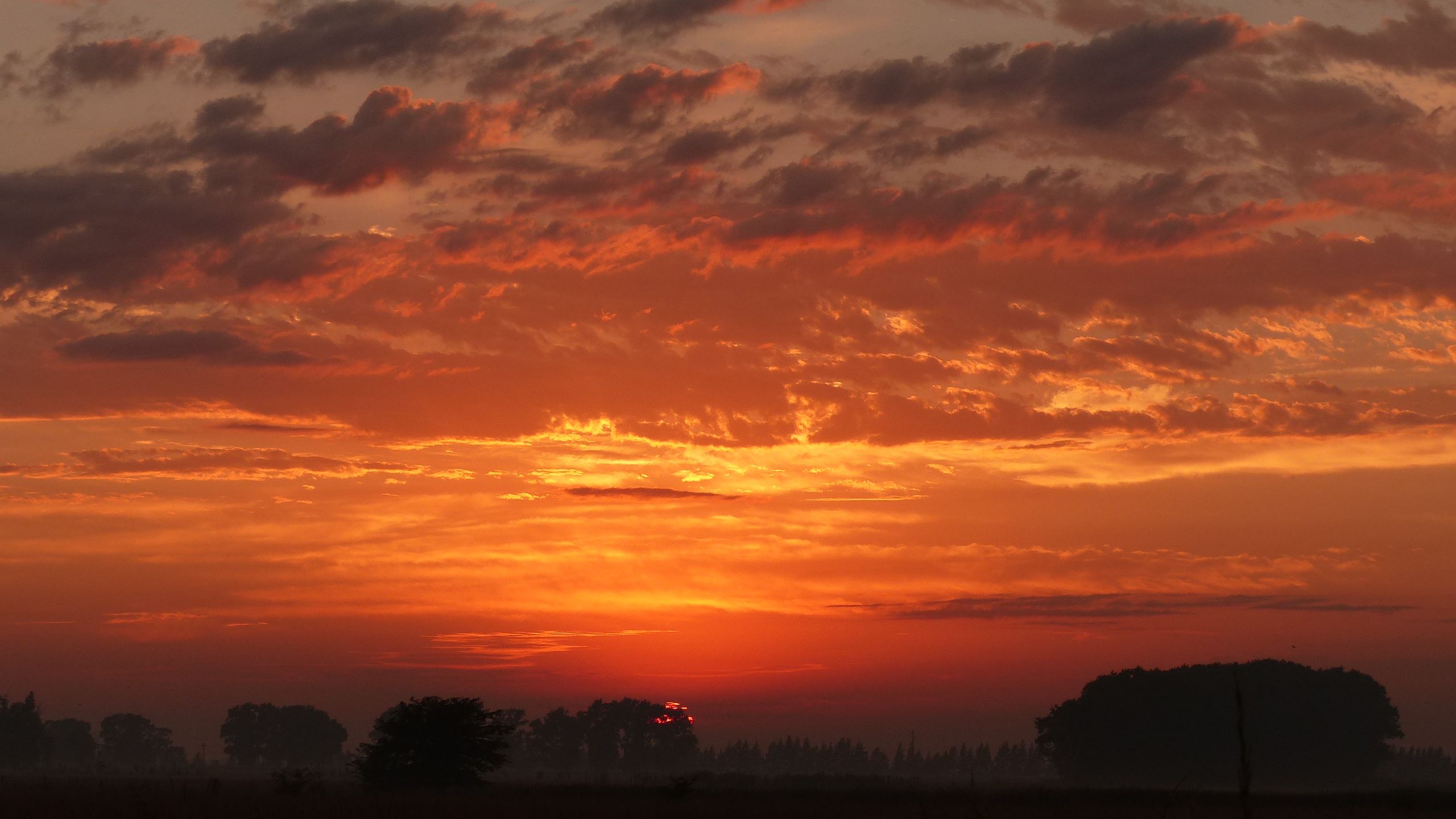
    Sunrise at the Campito
    Sunrise at the Campito
  • Vicuñitas con Mochilitas (Little Vicuñas on the Inca Trail)

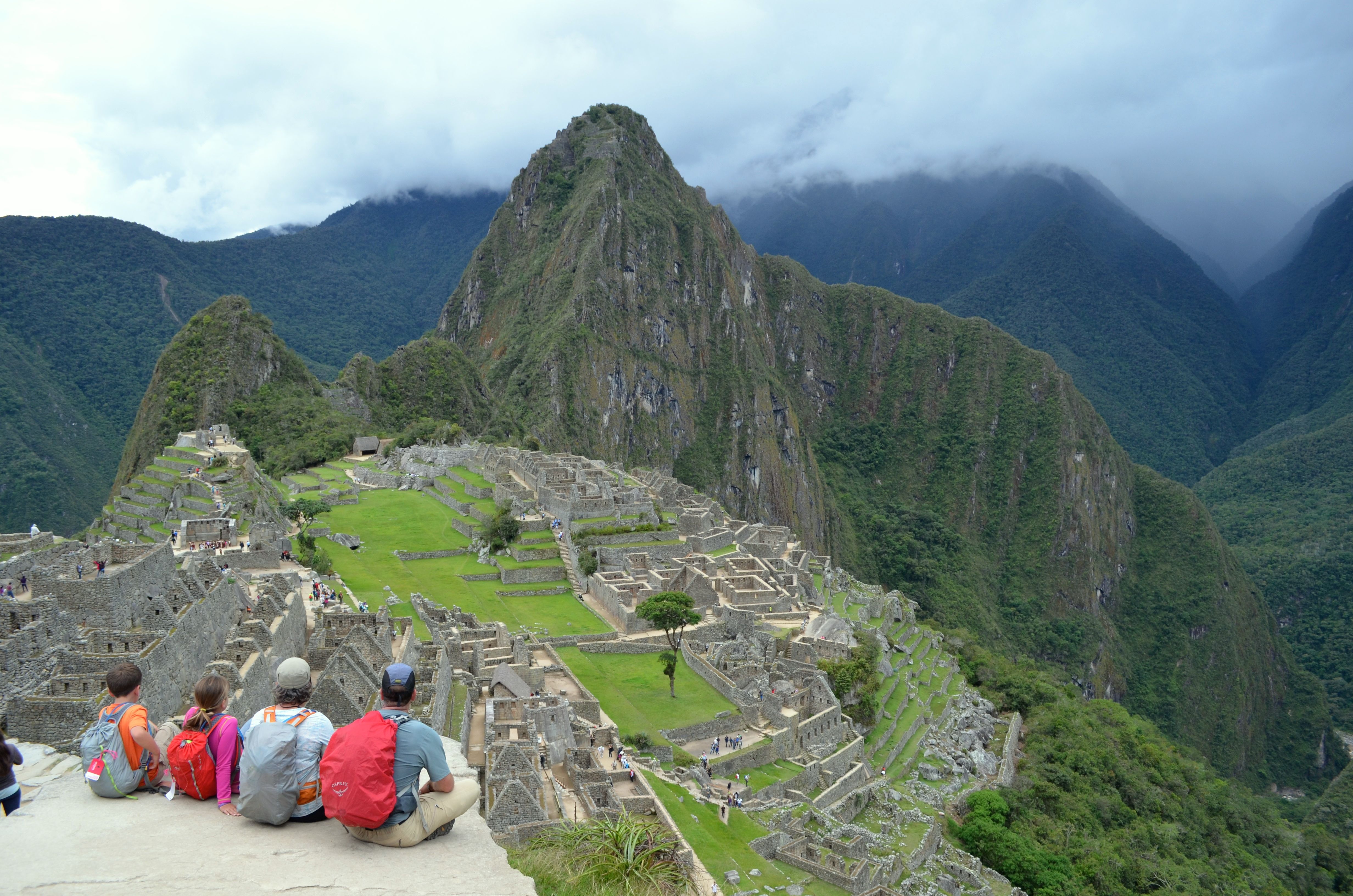
    At Machu Pichu
    At Machu Pichu

    By Deb

    The Inca Trail is one of those traveler destinations that you have to see to believe. A four day walk to the ruins of Machu Pichu, it is the stuff of travel legends (both good and bad) and was something that we approached with a bit of trepidation – would it be too difficult for us and the kids, would it be over-run with tourists and porters, would it be worth both the time and effort? And, for us, the answer is a resounding YES! It is difficult (6200 meters – nearly 20,000 feet – of gain and loss spread over 43 km), crowded (there are 500 people allowed on the trail every day) and worth both the time and effort. Others may disagree, but to us, it was totally worth it.


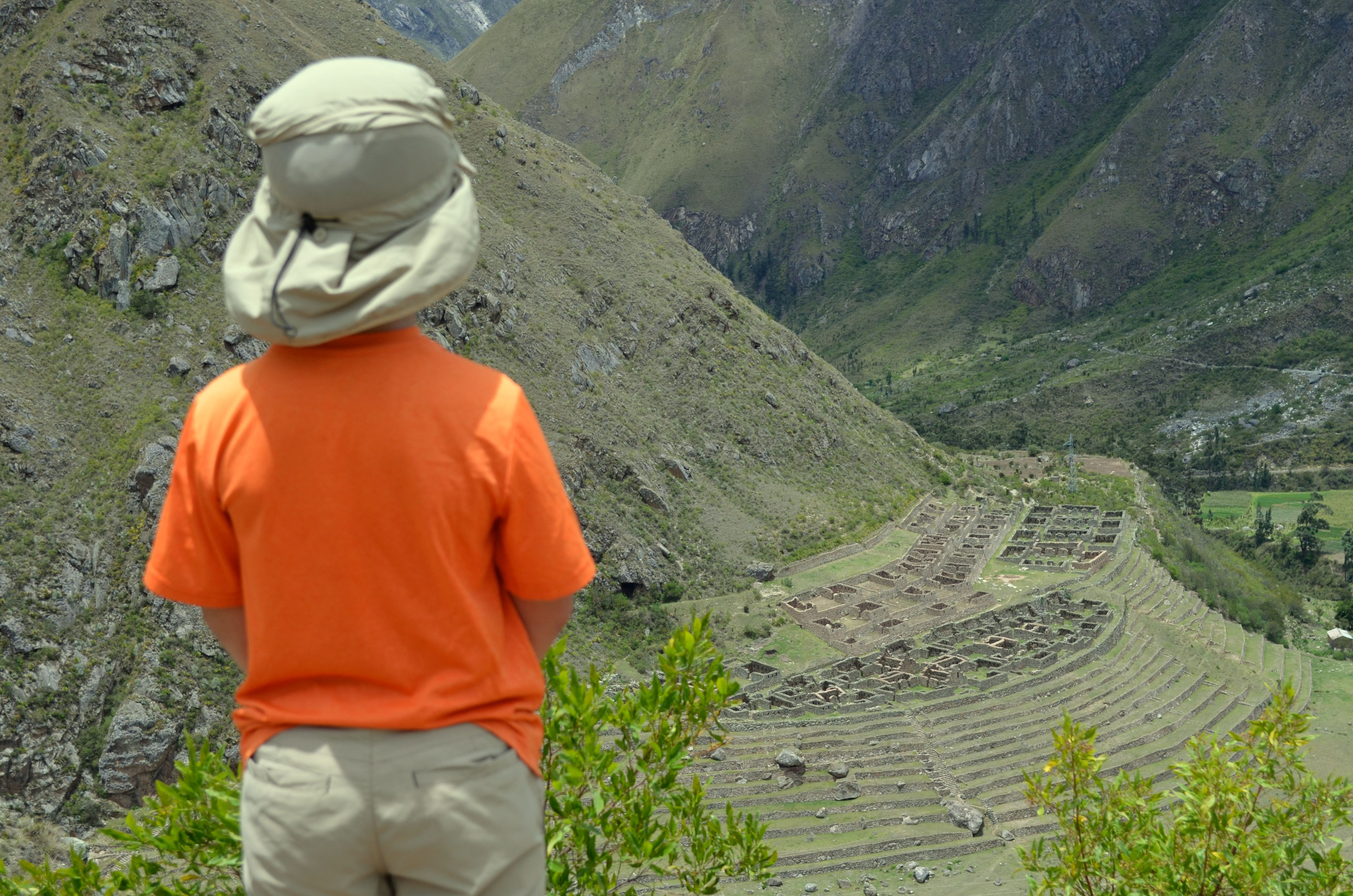
    Llacatapata - Mac's Favorite Ruins
    Llacatapata – Mac’s Favorite Ruins

    When we were preparing for this trip, the Inca Trail was high on the list of “must do” hikes, but as I read more about it, many travelers felt that it was too crowded, too rushed, and not worth the effort when you can easily take a nice train to the base of the mountain and a bus up to the ruins themselves.  I began to have doubts about hiking the Inca Trail. We also thought back to when we were in Turkey a few years ago. We went to Ephesus, a large well-preserved Greek ruin, that was literally jam-packed with tourists. While it was interesting to see, the constant jostling for a view and getting herded down a path with several hundred other tourists left us feeling a little disappointed. The next day we went to a lesser-known ruin, Priene, far off of the tourist path – no package tourists or cruise ships disgorging their passengers to visit this site. Although not as well-preserved as Ephesus, Priene allowed us to have the whole site to ourselves. The ruins were every bit as impressive as Ephesus and we were able to explore the site at our own pace. The original Temple of Athena at Priene is the second largest in all of the known Greek ruins – jus two columns fewer than the largest – and despite its size and importance, there were literally no other visitors their during our stay. We loved it – all of the grandeur of the more famous ruin without the crowds.
    Enjoying the View
    Enjoying the View

    When I was researching the hike, I found several alternatives for the Inca Trail – Lares, Salkantay, Choquequirao, and others – so that you don’t have to be herded down the path with 499 new friends. Choquequirao was high on our list – a five day hike that visit ruins which Hiram Bingham actually found before Machu Pichu. The site is estimated to be twice as large as Machu Pichu yet receives less than 1,000 visitors per year – far less than what visit Machu Pichu on any given day. It seemed liked the perfect substitute – twice the size with essentially no people – it would be just like Priene.

    Time to Play
    Time to Play

    Then I read Mark Adam’s book Turn Right at Machu Pichu. In this book, the author retraces much of Bingham’s original explorations for Vilcabamba, visiting Espiritu Pampa, Vilconta, and Choquequirao, but is encouraged by his guides to come back on a second trip to actually hike the Inca Trail to give him an understanding of the pilgrimages made by the Inca coming to Machu Pichu. They argue that it’s not about the destination, but rather the process of getting there, and that many tourists miss this aspect when they rush through the trail in a hurry to get to Machu Pichu. This was enough to make us reconsider our approach and we are very glad we did.  They also suggested that the trail be done over five days, not four, because you need time to visit the other sites along the way in order to understand the importance of Machu Pichu.  Since we have kids, it made perfect sense to have lower per day mileage too, so we sucked it up and booked a five-day trip.

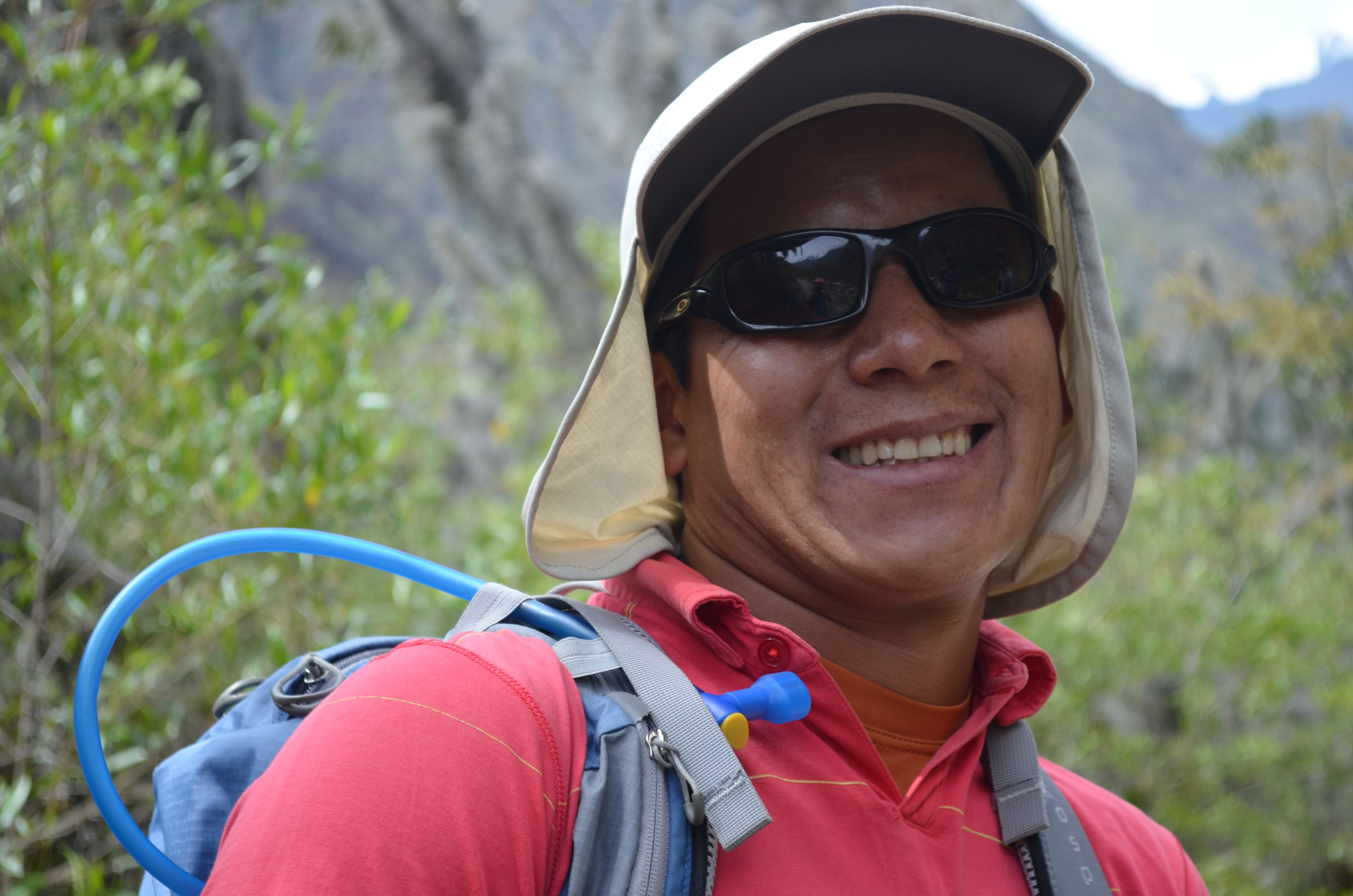
    Edwin - our guide and new friend
    Edwin – our guide and new friend

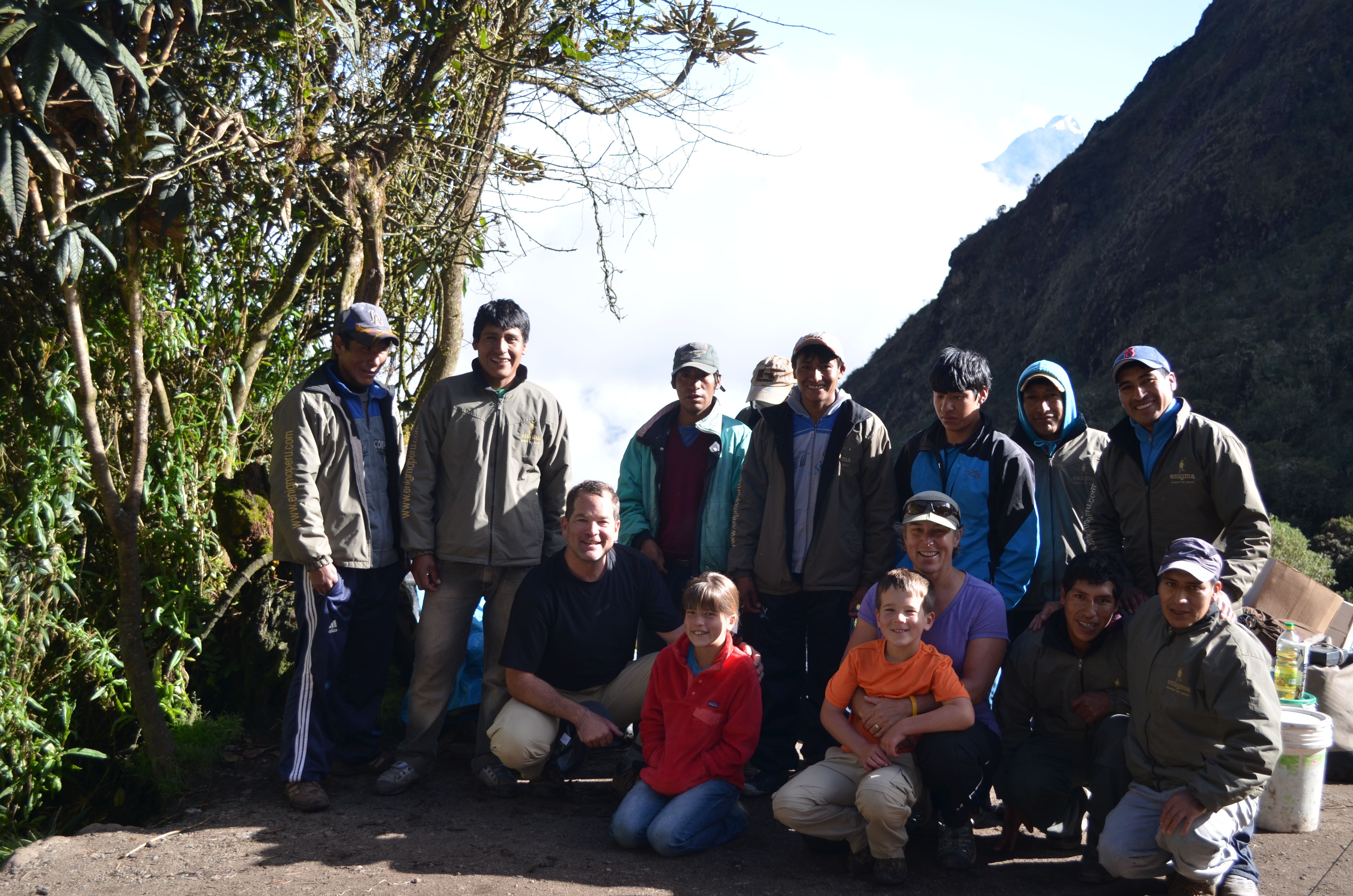
    We met our guide, Edwin, for a trip briefing the night before the trek started.  We immediately felt at ease and knew that we would be well taken care of under his guidance.  Young, intelligent, and passionate he provided an overview of what to expect over the next few days.  He told us that we would have a total of ten porters (including a chef) to carry our gear and make sure that we were “comfortable” on the trail and reviewed trail and camp conditions.  We would only need to  carry our day packs with what was required for the day – jackets, snacks, water, etc. – the porters would take care of everything else including carrying our tents, sleeping bags, pads, food, etc. and we would meet them for lunch on the trail each day. With great excitement, we could barely get to sleep that night and we headed out at 6:00am for a two hour drive to the trailhead.

    Our Porters
    Our Porters

    After much official paperwork and stamps, we began walking the Inca Trail around 9:00am.  We were the second group on the trail so it was essentially a walk on our own – none of the hoards we had heard about.  The first day is a bit long in distance, just over 12 km, but with very little elevation gain so we had plenty of time to stop along the way to learn about the flora and fauna of there area as well as to look at a beautiful set of ruins, Llactapata, only recently uncovered.  The only people who passed us were porters from the other companies literally running down the trail with 50 lb packs.  It was as if we had the trail to ourselves.

    Beginning the Inca Trail
    Beginning the Inca Trail

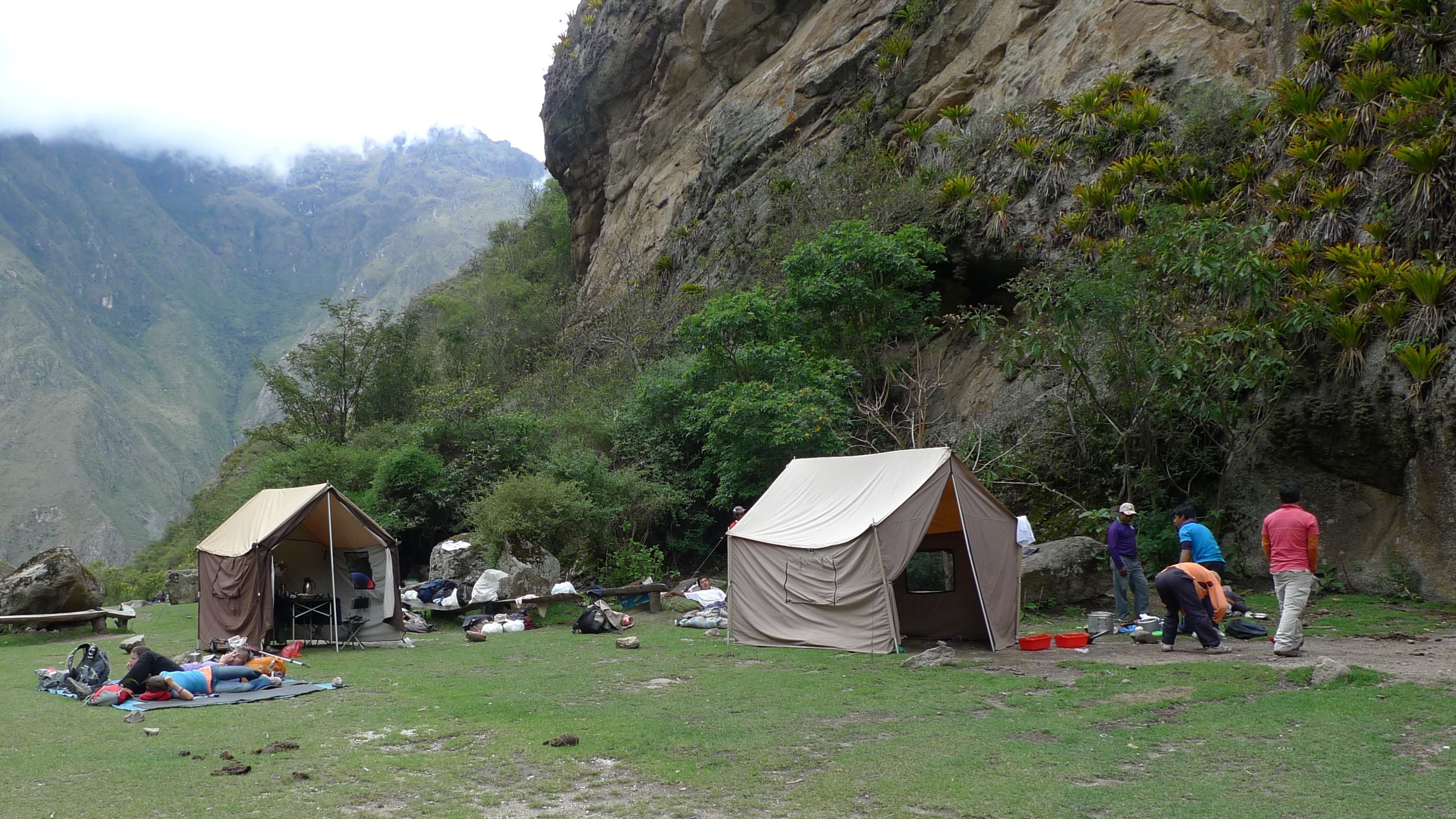
    We arrived at lunch far ahead of schedule but found that the porters had already set up a cooking tent, a dining tent (complete with table, chairs, and napkin sculptures!), had warm water and hand towels for us to “wash up” with before lunch, as well as pads for us to “rest” on before we ate.  This was not like any backpacking or hiking we had ever done.  I kept telling the kids, “don’t expect every trip to be like this!” to which they would reply, “maybe not, but lets enjoy it while we can!”  Lunch was never sandwiches and GORP – our trail staples.  Rather it was a three-course cooked meal.  Each lunch started with an appetizer (think ceviche, chicken-wrapped asparagus with a cream sauce, cauliflower fritters with a yellow pepper sauce, etc.) followed by a soup (quinoa, chicken noodle, etc.) and then a main of beef or chicken in a tasty sauce with a couple cooked side dishes too (broccoli quiche, steamed veggies, rice, lentils, etc.).  After lunch was time for a siesta before heading back out again.  The porters would break down our lunch camp, pack it up, run ahead of us on the trail and set it all up again at our evening camp.  It was always ready when we came in, despite us being ahead of schedule several times.  Dinners were just as luxurious as lunches with soup, mains and cooked desserts every night.

    Lunch Day 1
    Lunch Day 1 – we are resting on the left side of the photo

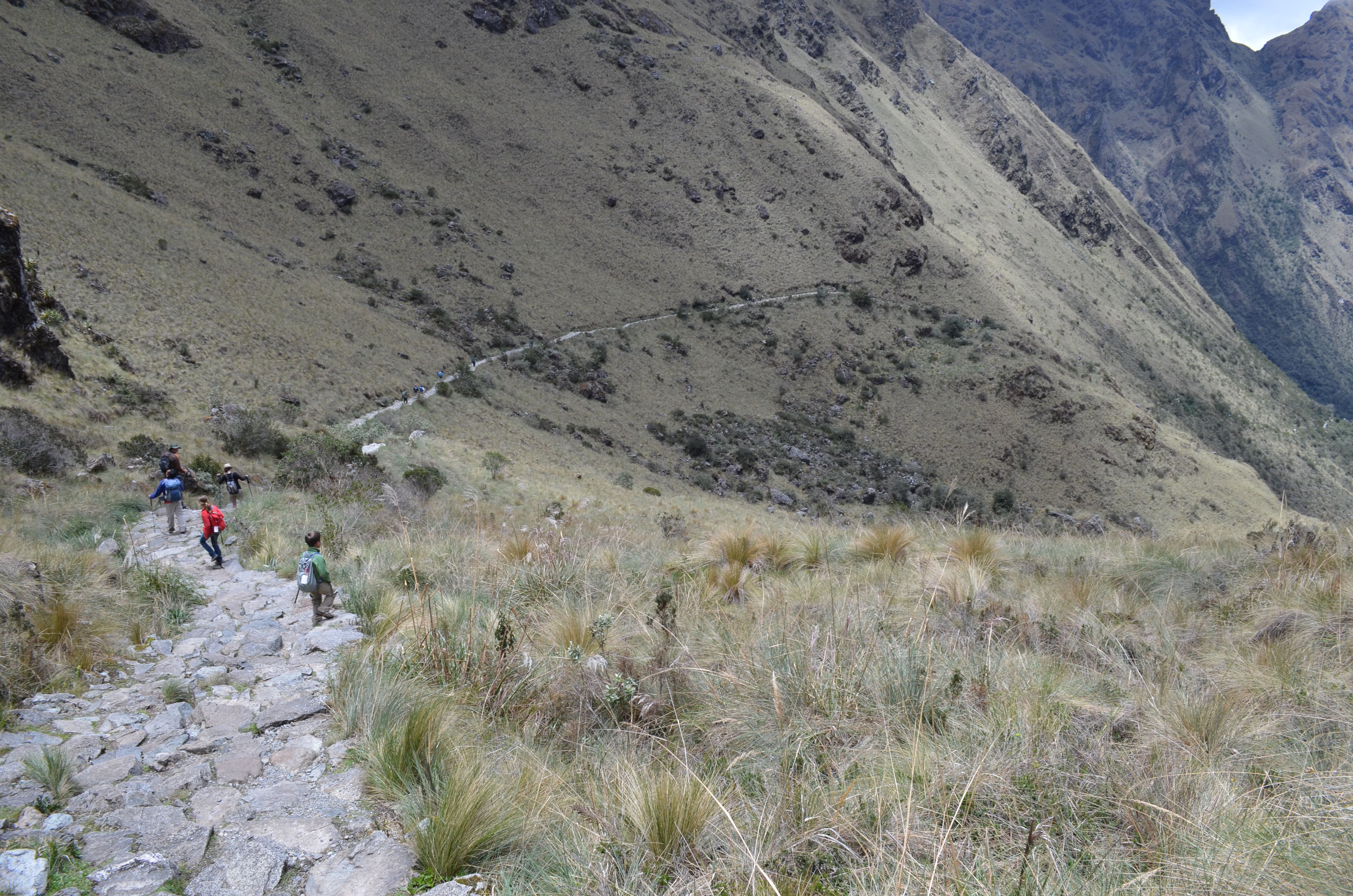
    The second day is the most difficult – you have to cross Warmi Wañusqa, at nearly 4200mt (13,000 ft) it is the highest point on the trail.  From where you camp, it is a 1,200 meter (4,000 ft) climb then an equal descent down the back side to the second camp.  The path is not really a trail, it is rock steps, lots and lots of rock steps!

    Heading Up Wiñya Wañya
    Heading Up Wiñya Wañya – it’s rock steps most of the way up the valley

    We were able to get in to and out of camp on the early side, so were some of the first folks on the trail again.  Enjoying the coolness of early morning and the quietness of having the trail to ourselves, we took our time and learned a great deal about the cloud forest and how the trail was built.  Soon the other groups were out of camp and our solitude was broken.  We had not seen anyone the day before because we were the first on the trail and had stayed ahead of the pack the whole day.  By the time we reached our first rest stop, there were several other groups hiking with us.  Most of the other hikers were surprised to see kids on the trail but even more surprised to realize that the kids actually hiked better than they did!  We had our snack with two guys from Mysore, India who said that seeing the kids was “inspirational” to them and helped them keep moving.  Another gal who we paralleled most of the way up the steep section said, “Well, seeing them smile as they walk helps me keep going”.  All of the porters, not just from our company, loved seeing kids on the trail.  Lucia and Mac always received smiles, words of encouragement, and pats on the head.  One group of young porters slowed down to walk with them a bit and gave them a great compliment by calling them “Vicuñitas con mochiltas” – little vicuñas with little backpacks.  Vicuñas are very petite wild camelids whose wool is highly prized as the softest and most beautiful in Peru so it was quite a compliment.

    Top of the pass
    With our vicuñitas on top of the pass

    Much like our time in Colca Canyon, the kids handled the challenge with great alacrity and grace, without whining or complaining.  One of the benefits of doing a five day is that you don’t have to camp in the busy campgrounds and can take time to enjoy your surroundings.  Our goal on day two was to make it to camp by lunch, which we did.  After we finished lunch, a light rain started falling and we took a nap in our cozy tents while four-day folks walked on through the rain.  We knew then that we were exceptionally lucky to have booked a five day.

    Heading Down the Other Side
    Heading Down the Other Side – yes, it’s steps on the way down too

    After the physical challenge of day two, we reaped the rewards on day three with visits to three different Incan sites – Runkurakay, Sayamarca, and Cachaquaqocha.  The trail flattens out and becomes the cliff-hugging path that you see in the pictures.  In some places the path was atop a 30 meter high wall clinging precariously to the side of the mountain.  In other places it was a “tunnel” that went through granite boulders, but always with phenomenal views of the surrounding mountains.  The walking is easy compared to the day before and the focus is getting to know the different ruins, Incan culture, etc.  It is the reward for the efforts expended getting there.

    Phyyupatamarca - the most beautiful campsite
    Phyyupatamarca – the most beautiful campsite

    The campsite for the night is perhaps the most beautiful in all of Peru (some would argue the world, but that may be taking it a little too far), perched above the ruins at Phuyupatamarca and know for its quietness because only folks who are doing a five-day stay there.  We were told by our guide, Edwin, that llamas frequently visit the campsite because it is sheltered from the prevailing winds.  And, sure enough, when we woke up there were several llamas (including an adorable newborn) in the site below us!  The llamas are accustomed to hikers so readily accept petting and good neck-scratches.  Even the momma was OK with us being near her baby.

    Camp Llamas
    Camp Llamas – they like their necks scratched

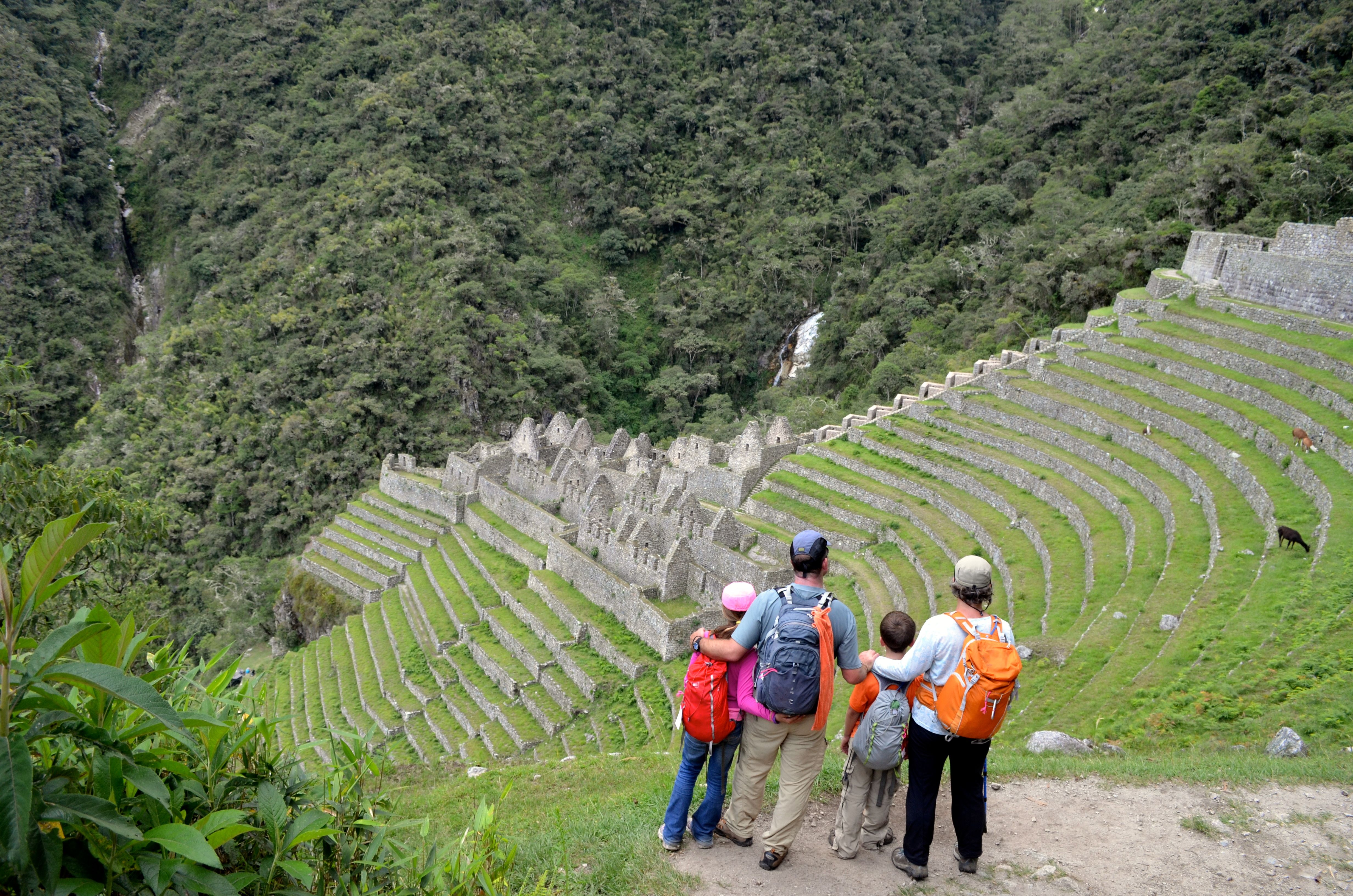
    Much like day three, day four is at a leisurely pace with plenty of time to explore the less-visited sites.  We had lunch just outside of Wiñay Wañya, perhaps the most impressive of all the sites we visited.  Most folks arrive here late on their third day, tired from a long hike getting there and aware that they will be getting up before dawn tomorrow, few people walk the extra 10 minutes to see the ruins.  We loved being at Wiñay Wañya because it was quite similar to our experience at Priene, without other tourists there we were able to explore at our own pace and get a much better sense of how the site fits in with the other sites.  Phenomenal, really moving.

    Our Favorite Ruins - only shared it with the llamas
    Our Favorite Ruins – only shared it with the llamas

    The second half of the day is covering the ground that most folks do in the dark as they walk in to Machu Pichu.  The trail continues to hug the mountain, contouring horizontally around the back side of Machu Pichu, until you reach the sun gate and get your first view of Machu Pichu.  Seeing it for the first time is exhilarating, especially when you have spent the past four days walking to get there.  Again, the kids proved to be inspirational to the folks who were walking with us.  The Sun Gate is still an hour’s walk from the city itself but we were able to take our time and visit the site at our leisure.  We would come back on the final day to tour the city and learn about the history specific to Machu Pichu.

    At the Sun Gate
    At the Sun Gate – it’s still an hour’s walk to Machu Pichu

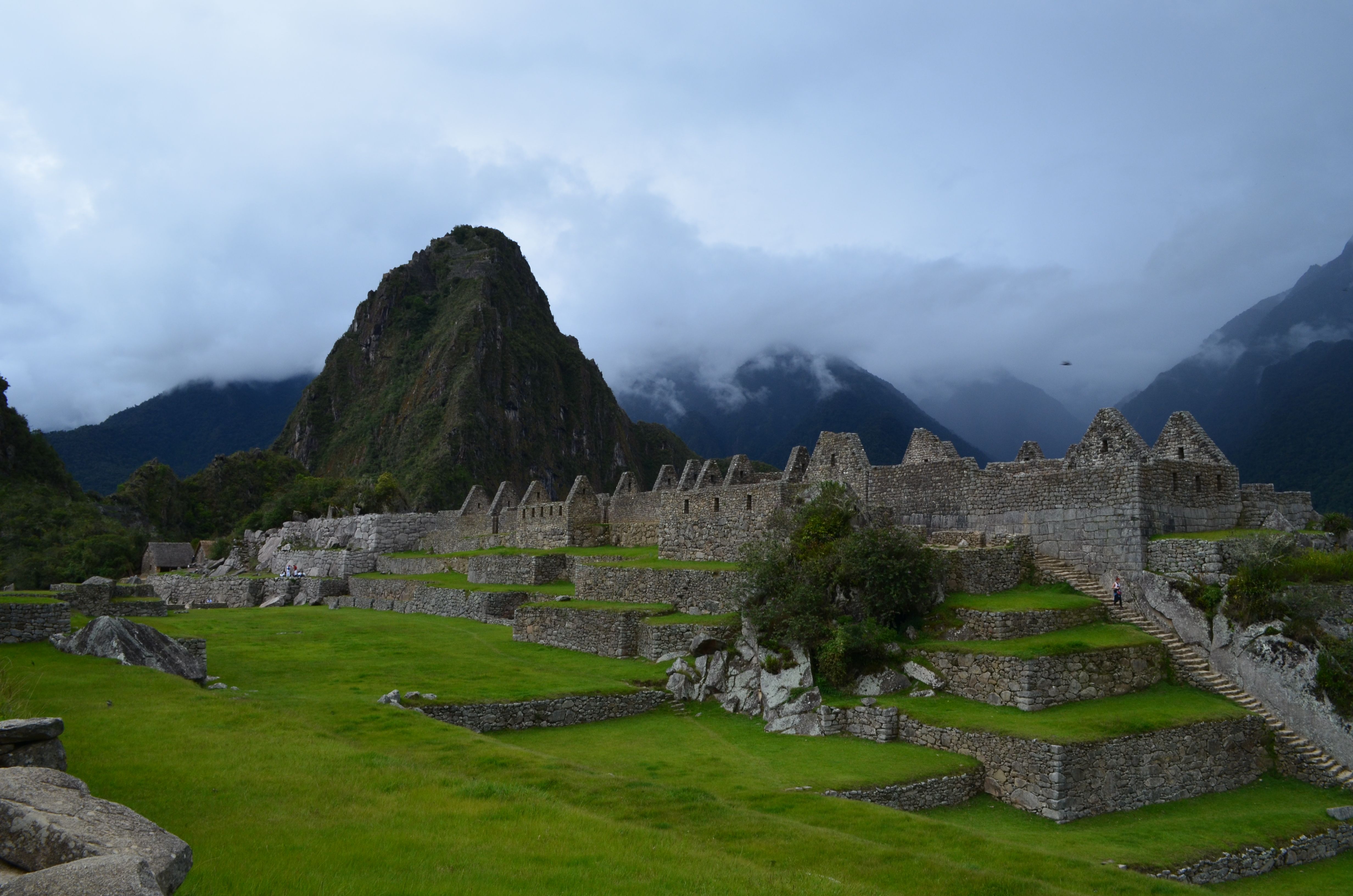
    Machu Pichu itself is just as cool as everyone says it is.  There is a bit of a mystical power when you go there and see up close how it was designed, built and has been preserved.  Everything has thought – the shape of the doorways, how the terraces were backfilled for drainage, who lived where, etc.  I can’t even imagine what it would be like to visit Choquequirao when it is fully uncovered or to have seen the Cori Concha before it was destroyed for its gold.  But I can say that if you have even the slightest interest in Incan culture, ancient ruins, or are simply hankering for a Peruvian adventure, walking the Inca Trail is definitely worth the effort if you slow down and do it as a five-day journey.  A four day moves too fast and is always about making the pace, not about exploring the area or understanding why the Inca built where they did (everything had a plan and a purpose – but that’s a whole different blog post) and what their views seemed to have been.  Once again, we had a blast exploring the world with our children.

    BeautifulMP
    Beautiful Machu Pichu

  • Peru – the Rest of the Story

    Sunset over Lake Titicaca
    Sunset over Lake Titicaca

    Colca Canyon may rank up there with one of the best lifetime experiences as a family.  As Colburn wrote, it was a confluence of events that left us elated, euphoric, and exhausted.  After leaving Colca, we headed off on a tourist bus to Lake Titicaca.   Lake Titicaca is one of those places that I have always dreamed about visiting – it seemed so exotic, one of those places you have to go just to say that you’ve been there (Timbuktu, Kathmandu and Zanzibar are similar locations).  But, in reality, after such an amazing experience as Colca was, we were disappointed.  Although none of us wanted to admit it, the most any of us can say was, “That was nice.” Part of what was disappointing was the level of tourist “blech” that we experienced.

    Rampant Commercialism on Lake Titicaca
    Rampant Commercialism on Lake Titicaca

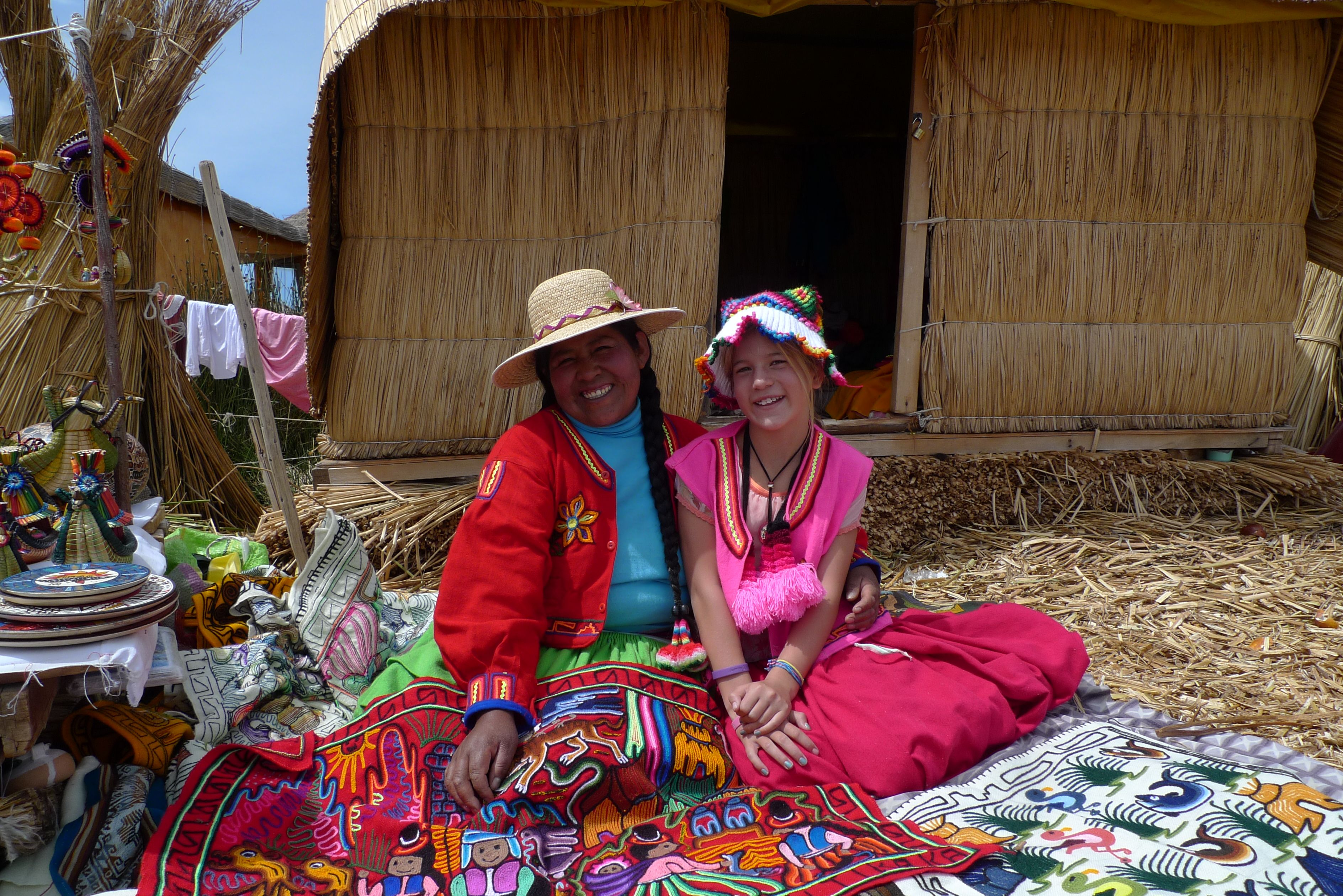
    When I thought of going to Lake Titicaca, I thought of traditional cultures that have maintained their authenticity through sharing it with tourism.  What we experienced instead was rampant commercialism interspersed with a small amount of authenticity.  You really had to look hard for authenticity and the bright spot was our home-stay family Rosa, Lucy and Roy on Isla Amantani.  This was our only “authentic” experience.

    Lucy and Roy, our bright spots!
    Lucy and Roy, our bright spots!

    Leaving Lake Titicaca, we headed again on the tourist bus, to Cusco.  Until we reached Ollantaytambo, this had been the most disturbing experience so far in our trip.  Yes, it stops at nice places to see and breaks up the trip with a few stops, but yuck! being surrounded by tourists and fleeced for every penny was disturbing.  Every time we would stop, Mac would ask, “Do I have to get off the bus?”  It was painful to be herded like cattle and treated like idiots, one of the few experiences I regret.  When we finally arrived in Cusco, we were all relieved.  Cusco itself is a wonderfully historic city.  Touring the Cori Concha, wandering through old Incan streets, and getting to make our own chocolate bars from scratch – including roasting and grinding our own cocoa beans – was wonderful.

    Grinding cocoa beans at the Choco Museo
    Grinding cocoa beans at the Choco Museo
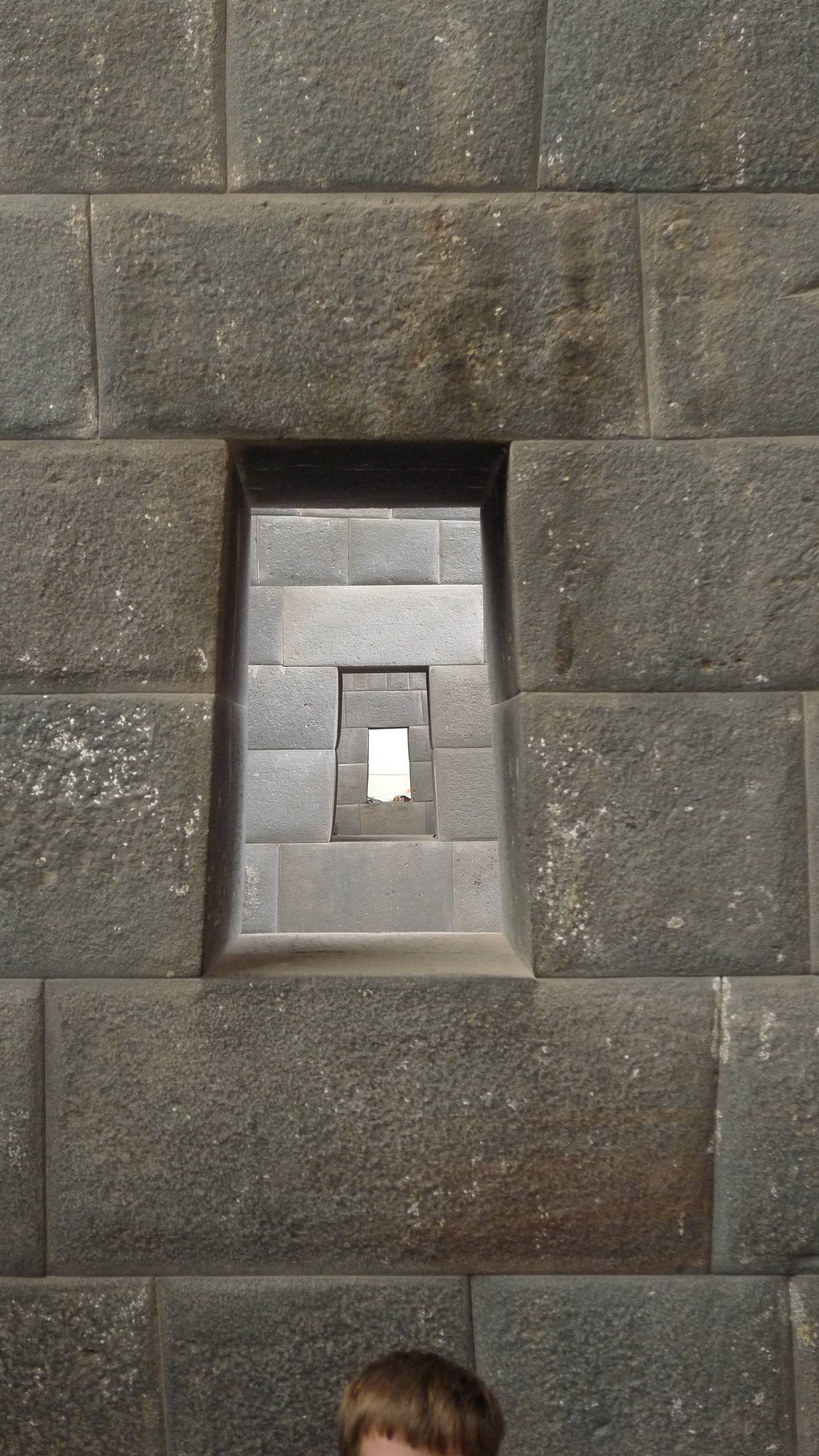
    Temple of the Sun, Cori Cancha Cusco
    Temple of the Sun, Cori Cancha Cusco

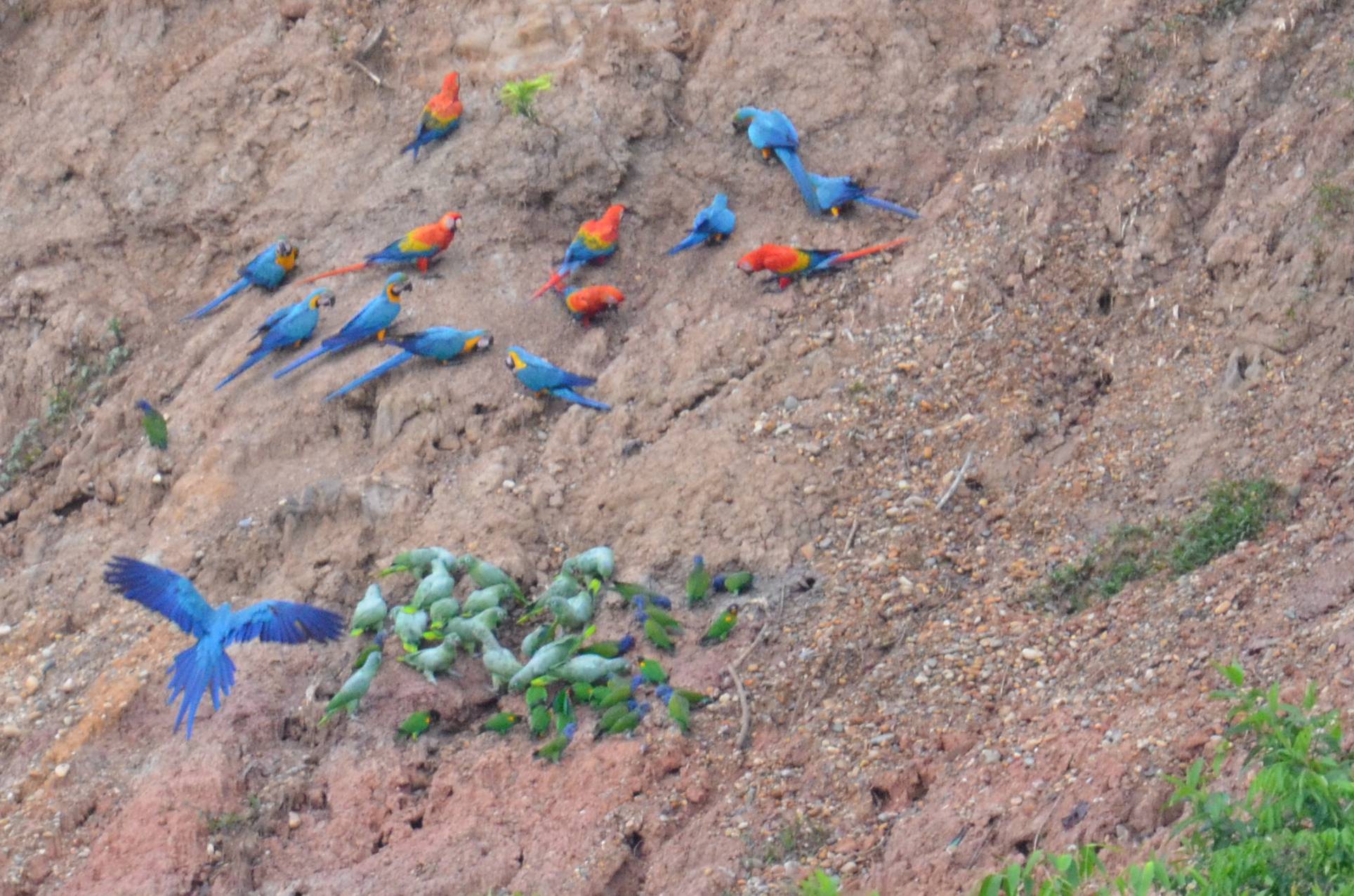
    We then headed off in to the Amazon for some time in the jungle.  Although the area has a very well-developed tourist infrastructure, the experience was wonderful.  It did not have the magic of Colca, but seeing hundreds of Macaws, wild peccary, and the monkeys was energizing.  Our guide, Delford, was patient, knowledgeable, and really good with the kids.

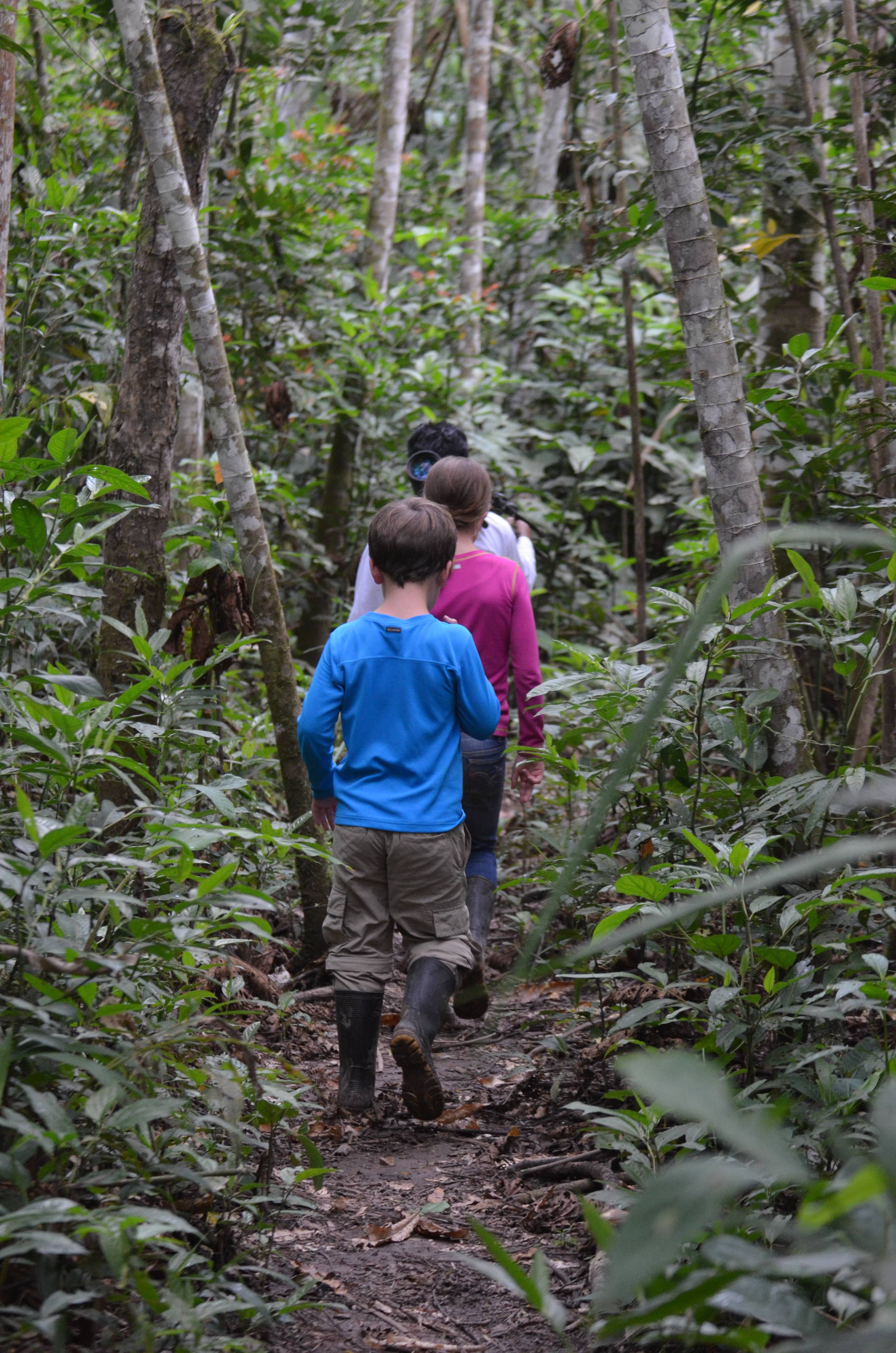
    TambopataHikeWe were up at 4:00 every morning to make it to the clay-lick at sunrise.  The kids were amazingly engaged for such an early hour and the early morning was followed with multiple hikes and an evening event too.

    Macaws at the claylick
    Macaws at the clay lick

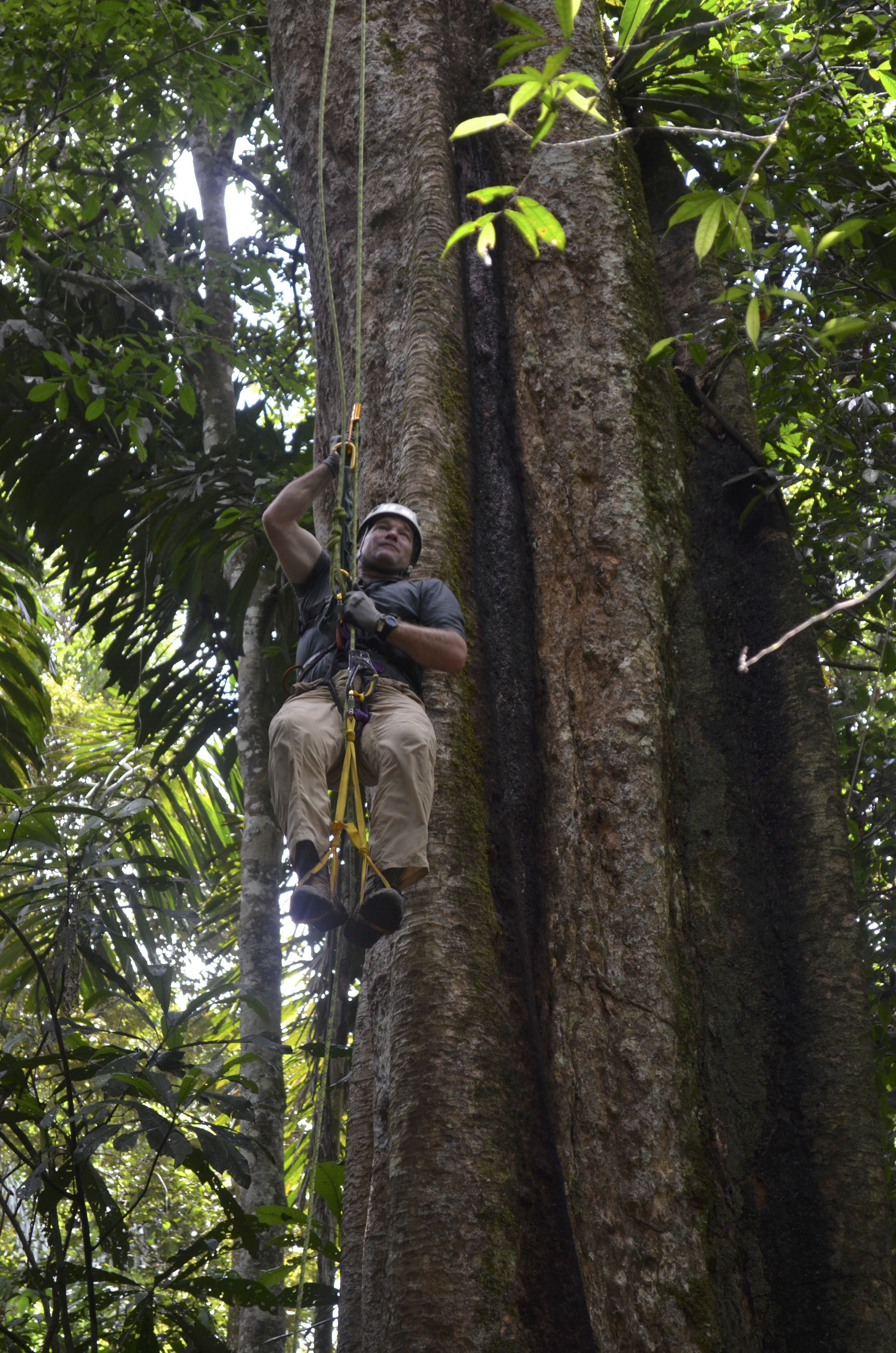
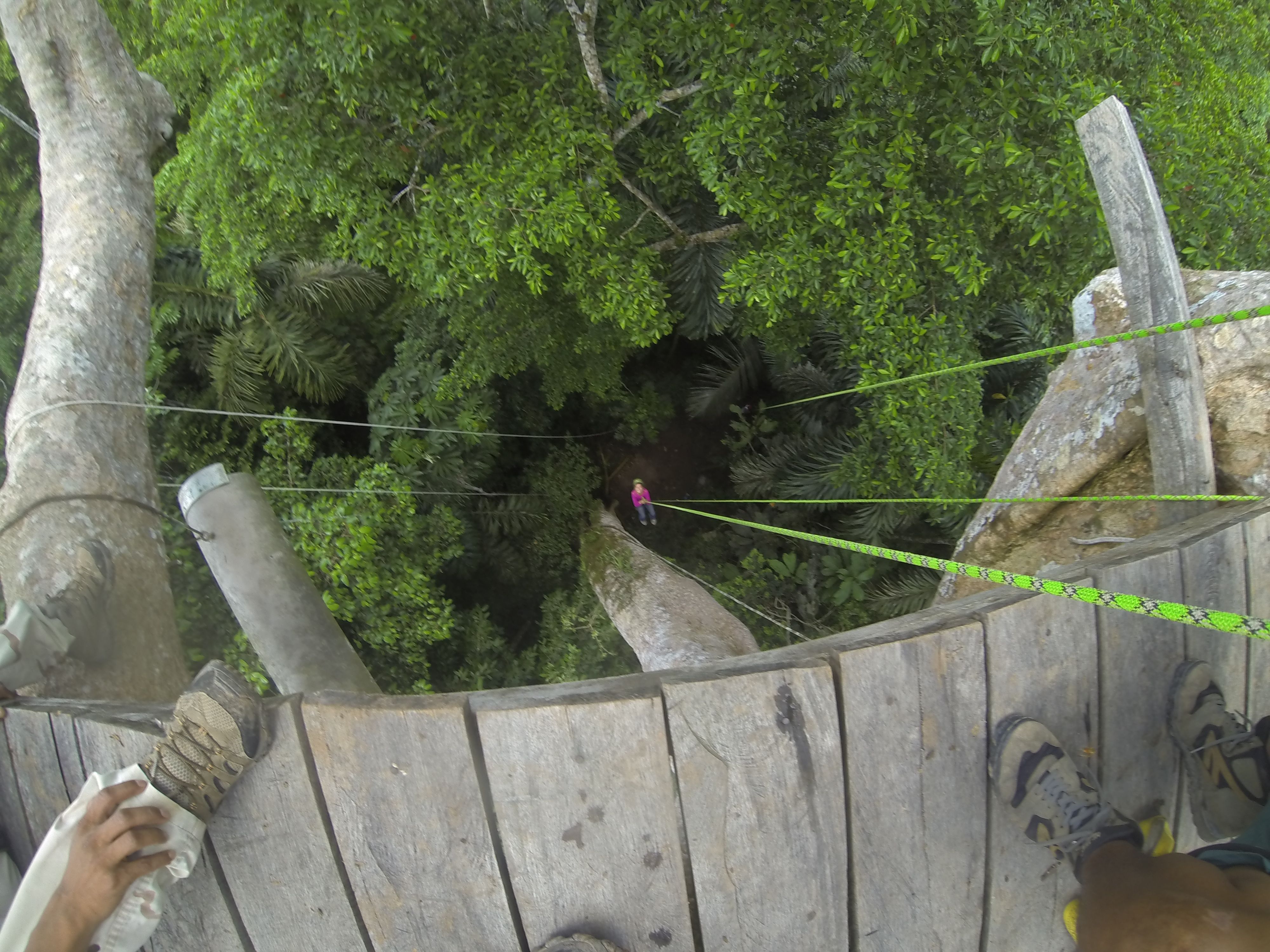
    Colburn and Lucia did a morning of “tree climbing” which involved ascending a 35 meter rope replicating the work of Macaw researchers.  Their strength and endurance was impressive – especially given the heat and humidity!

    Colburn ascending 35 meters straight up
    Colburn ascending 35 meters straight up
    Lucia rappelling down through the canopy - she's the pink dot in the middle
    Lucia rappelling down through the canopy – she’s the pink dot in the middle

    Our day out of the jungle was going to be a long one – we new that from the beginning – but we had no idea just how long it would turn out to be.  We were up at 4:30am to be at the boat by 5:00am.  Five hours later we transferred to a bus to go to the airport, arriving at 11:00am, two hours early for our flight which we then found out was going to be delayed at least 40 minutes.  Five hours of what became known as “hot.  sweaty.  waiting.” (think packed tropical airport without walls, fans or air conditioning) later, we were told that the flight was cancelled for “weather” reasons but that we could be booked on the same flight the next day.  Knowing that weather patterns often come in three-day patterns, we feared the same problem the next day.  Also, the town we were in is a working jungle town, not a tourist destination so there are zero hotels with air conditioning.   As we waited to talk to the gentleman at the counter, he suggested to another group of tourists that had been on the boat with us in the morning, that it might be possible to take a night bus back to Cusco.  They were heading out to Machu Picchu in a couple days and needed at least one day to acclimate so they were frantic to get to Cusco.  We were supposed to be going to our three-week volunteering experience so wanted to get there soon, but did not have a strict deadline. We did not, however, want to spend another night in the heat and humidity.

    What followed is another one of those travel stories that will live in our memories forever – I just wish we had pictures to show.  Our group – three English women, a week-old newlywed couple from outside of London, and us, a family of four from Reno, piled in to tuktuks and headed off to the bus station to buy tickets.  None of the other folks spoke any Spanish and had not navigated the bus system in Peru (a little counter-intuitive until you’ve done it a couple times), so we were able to help get everyone settled (purchase tickets, pay the needed exit taxes, etc.) and ready to go.  We all had planned on being in Cusco that night so no one had food with us and the bus didn’t leave until 8:00pm, so we strided off to a local family restaurant we had seen on the main road.  We descended upon a lovely Sunday afternoon family gathering and promptly ate them out of house and home…..for $50….for all nine of us!  The food was wonderful – stuffed spicy peppers, grilled chicken, beers and sodas for all – and Mama Rosario was grateful for our patronage and we were grateful to the opportunity to see a different side of fellow travelers, the real life of a jungle town, and to experience the camaraderie of being thrown together with people you don’t know.   The company was wonderful, the bus ride harrowing, and the experience one that will not be forgotten.

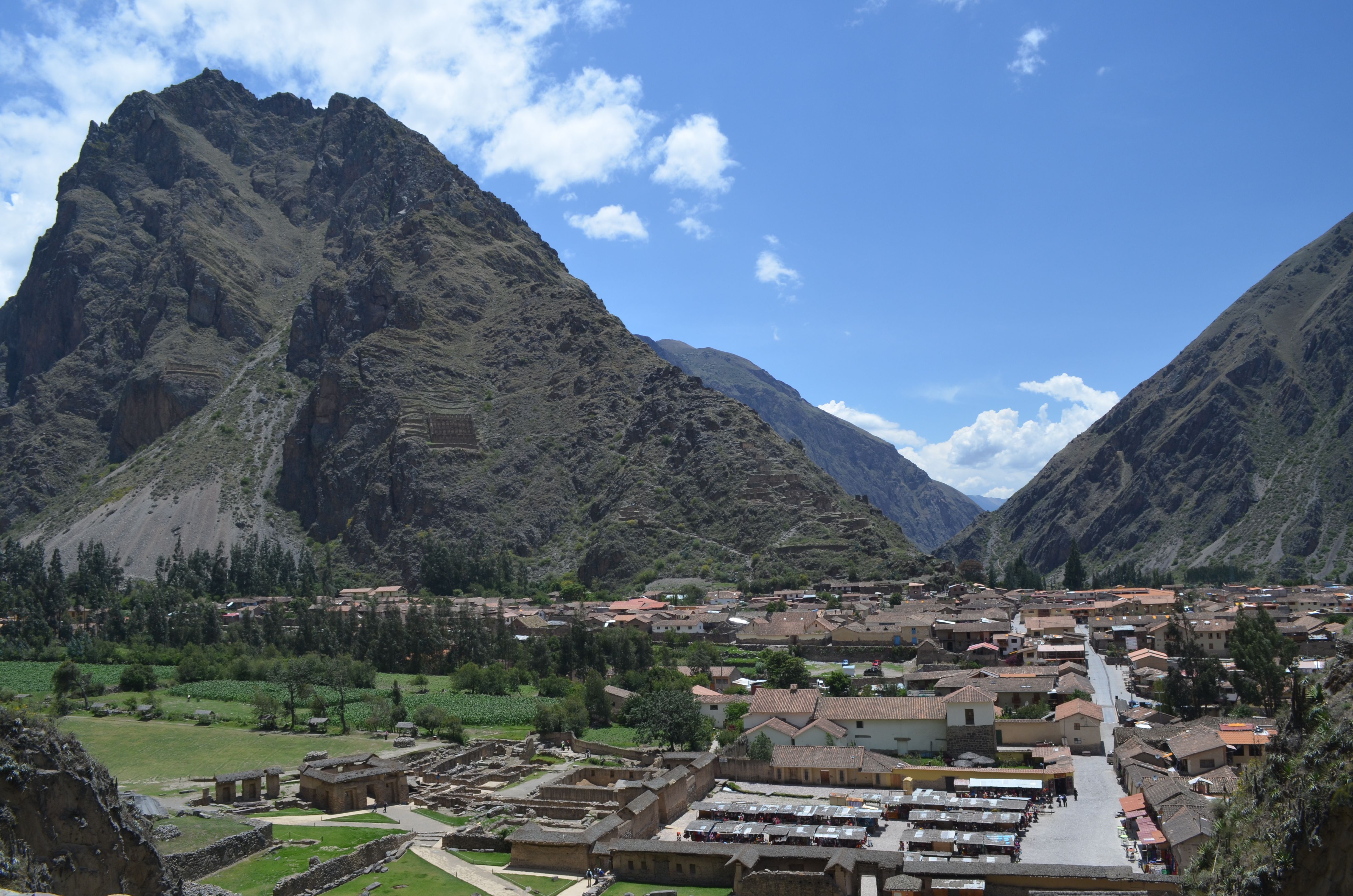
    The little town of Ollantaytambo
    The little town of Ollantaytambo

    After a day of recovery from our unexpected 27-hour travel day, we headed off to Ollantaytambo, a small town in the Sacred Valley, the valley leading up to Machu Picchu.  Strewn with Incan ruins, the valley is both beautiful and historic.  We had planned on having a home-stay, working with a relatively new English-immersion school and the local health clinic.  Unfortunately, poor execution on the part of the company we hired to arrange our volunteering lead to the first real “failure” of our trip.  We found ourselves with 2.5 weeks and nothing to do but a few smattered tourist experiences – a cooking class, a few Spanish classes and a wool-dying workshop – no actual volunteering.

    Hit hard by the stomach flu
    Hit hard by the stomach flu

    Although disappointed, we restructured our thoughts towards enjoying this “time-off” and also doing some more hiking than we had planned.  This down-time has ended up being a blessing in disguise though as we have been hit hard by we have termed “The New Peruvian Weight-loss Plan”…. substantial gastro-intestinal distress for all of us.  Yes, we are disappointed that the company we hired to arrange our volunteering proved to be more of a post-sorority resume padding experience than a substantive volunteering opportunity, but we have been reminded of what I knew as a river-guide, “No matter where you go, there you are.”

    Herding sheep in the Andes
    Herding sheep in the Andes

    Our time in Ollantaytambo was our second experience with the seedy underbelly of an area whose economy depends on tourism.  Much like Titicaca, the buses roll in every morning, disgorge their passengers to gawk around the town square for 30 minutes or so then pack them back up and head off to their next destination, with the tourists never really seeing what the town itself is like.  The tourists come in wearing their brand new adventure clothes with floppy brimmed hats perched dutifully on their heads with disposable water bottles in hand, then proceed to point at the locals and take pictures of them without asking, and maybe if the locals are lucky, buy some tacky cheaply-made souvenirs from a local tienda or a few snacks from the abuelitas which gather at the square.  After watching this a few times, we decided that it was like living at the New Jersey Port Authority – it is simply a place that people pass through, not really visit.  Even the kids were distraught at the behaviors.

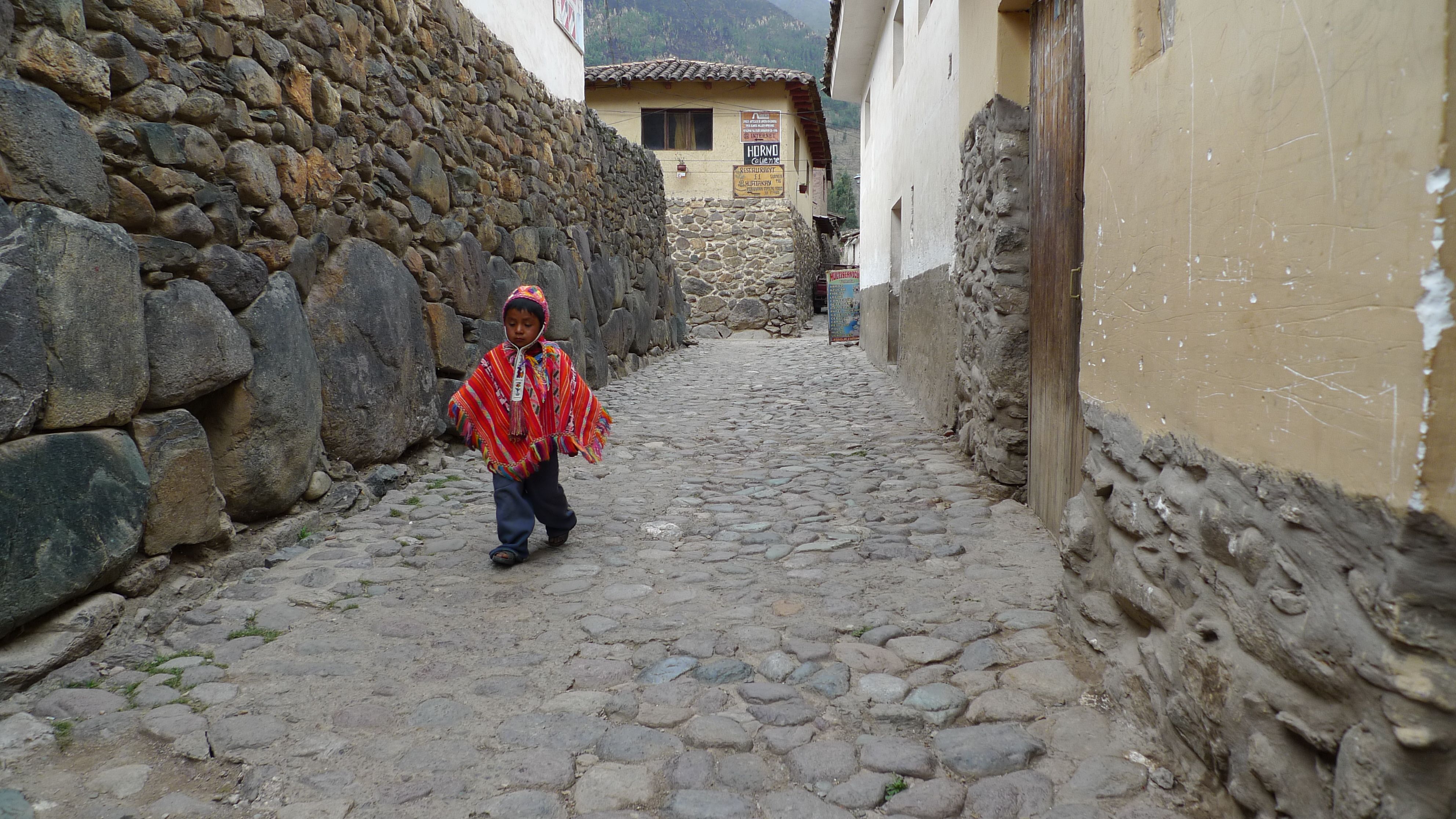
    Ollanta Boy
    Ollanta Boy

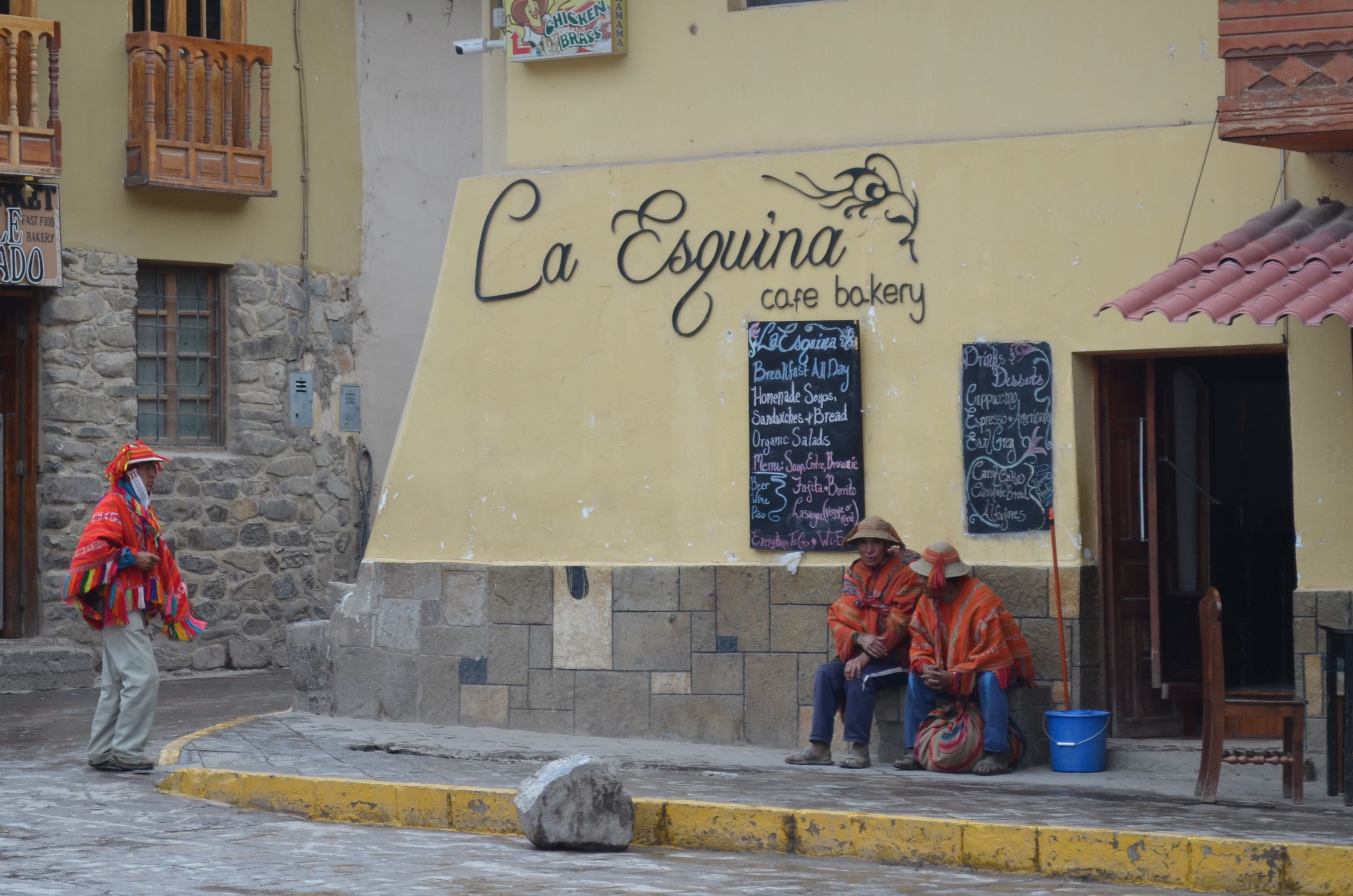
    The effect on the local town is one that can only be described as “disturbing”.  The local rural men come to town every morning to find work as porters on the Inca Trail.  Much like how the day-laborers line up outside Home Depot at home, these men are dressed and ready to go to work if there is work today, but there are few jobs and lots of people who are willing carry heavy packs for a few bucks.  If there is no work, it is a two-hour walk back to the village only to be repeated again tomorrow.

    Waiting for work.  Unfortunately they are too poor to eat at the tourist cafe.
    Waiting for work. Unfortunately they are too poor to eat at the tourist cafe.

    Repeated rejection and limited economic opportunities lead to substantial alcoholism and domestic violence in these remote villages.  We witnessed the alcohol abuse first hand during the annual anniversary celebration of the town – which was unfortunately our first day in Ollanta.   As we walked around the main square, we were struck by the number of cases of beer stacked everywhere and the number of people (both men and women) drinking heavily from large bottles.  While we watched a live band performance, we saw a group of 40- or 50-year old men literally pounding beers as fast as they could – it looked like a bad fraternity party for old guys.

    Ollanta Anniversary Celebration (before the drunkeness started)
    Ollanta Anniversary Celebration (before the drunkeness started)

    A little later in the evening, the same men were falling-down drunk and one was still passed out face down on the square the next morning.  The kids were mortified; we were shocked as it is behavior unbecoming for anyone, but at 40 or 50, it seems especially wrong.  It ends up that the guys we saw drinking are all the local taxi drivers.  We couldn’t use them after realizing that’s who they were.  The following week was a similar experience when we went to the cemetery with our host family for the “Day of the Dead” activities.  In spirit, the Day of the Dead is supposed to be a time to gather as a family, remember your deceased loved ones, and spruce up their burial plot.  In reality, the path leading to the cemetery is lined with cases of beer being sold and people inside the cemetery are sending their kids to buy more beer.  The experience lost some of its romantic appeal when we saw the reality.

    Incan Terraces
    Incan Terraces – kids are tiny compared to how big the terraces are.

    So we are now back in Cusco, enjoying the benefits of indoor plumbing, wonderful restaurants, lightening fast internet, and the anonymity that comes from being able to hide inside your own apartment for the evening.  Our whole time in Ollanta was plagued by GI and other illnesses, so we are trying to rid ourselves of the little buggers.  We have really enjoyed exploring the various ruins around Cusco – granaries, temples, terraces, fortresses, and ceremonial centers.  The kids can now differentiate the purpose of the Incan structure by the building techniques utilized, can discuss how the Inca rose and fell so quickly (it’s a fascinating story….just ask Mac) as well as the impact of Spanish colonialism in South America, and have mastered both ascending and descending incredibly steep stone steps safely.  We are looking forward to our time on the Inca Trail, our last big experience in Peru.

    Textile woven by our natural dye instructor (these are all natural colors)
    Textile woven by our natural dye instructor (these are all natural colors)
  • Colca Canyon

    Colca Canyon

    Day1: 1500m descent into the canyon.
    Day1: 1500m descent into the canyon.

    Having written this prior to yesterday’s school shooting in our hometown of Reno, we consider ourselves incredibly fortunate to be spending so much time with our children.

    Between Deb and I, hundreds of children have experienced the outdoors during our many years as outdoor educators.  We designed, planned and executed outdoor experiences for other parents’ children.  We have done plenty of trips with our kids – day hikes, rock climbing excursions, sea-kayaking day trips, etc.  But in the Colca Canyon, a sort of confluence of several powerful elements occurred that left us, as a family, elated and closer than ever.

    The key element was the alacrity that Lucia and Mac brought with them into the Canyon and maintained throughout the entire trip.  They each carried a daypack, with their water, fleece, etc. as well as a little of the “group gear”.

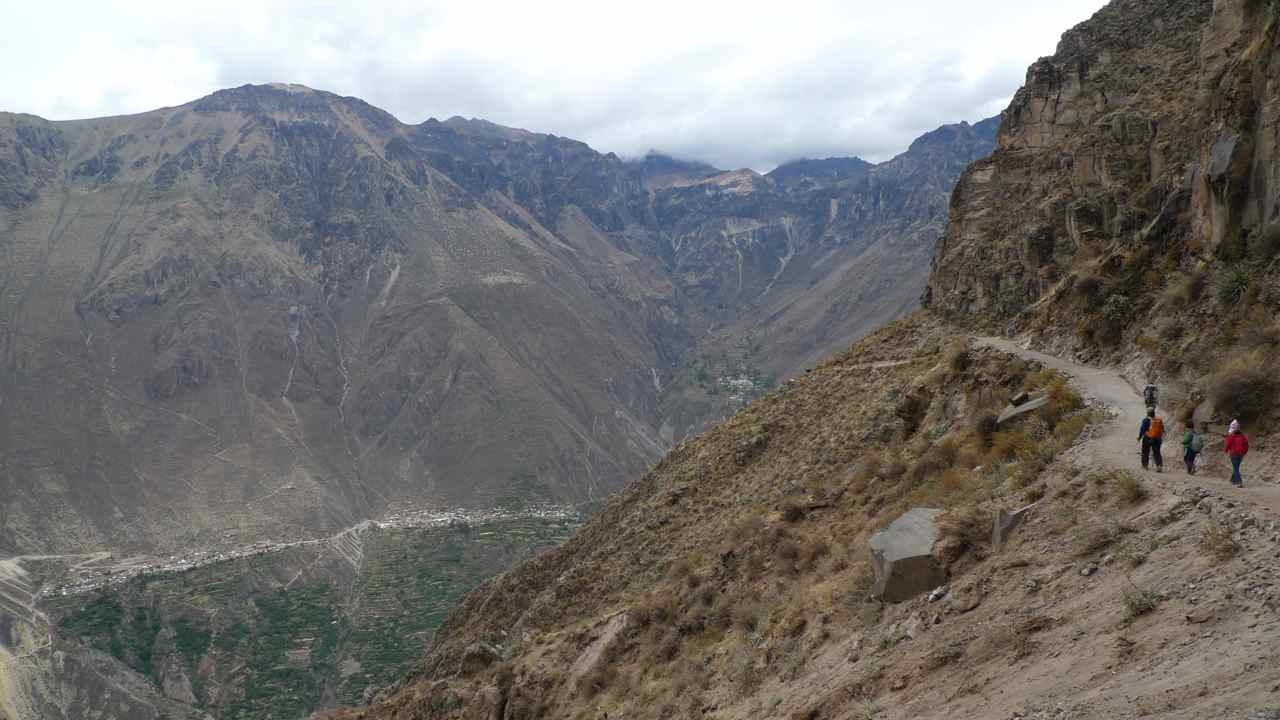
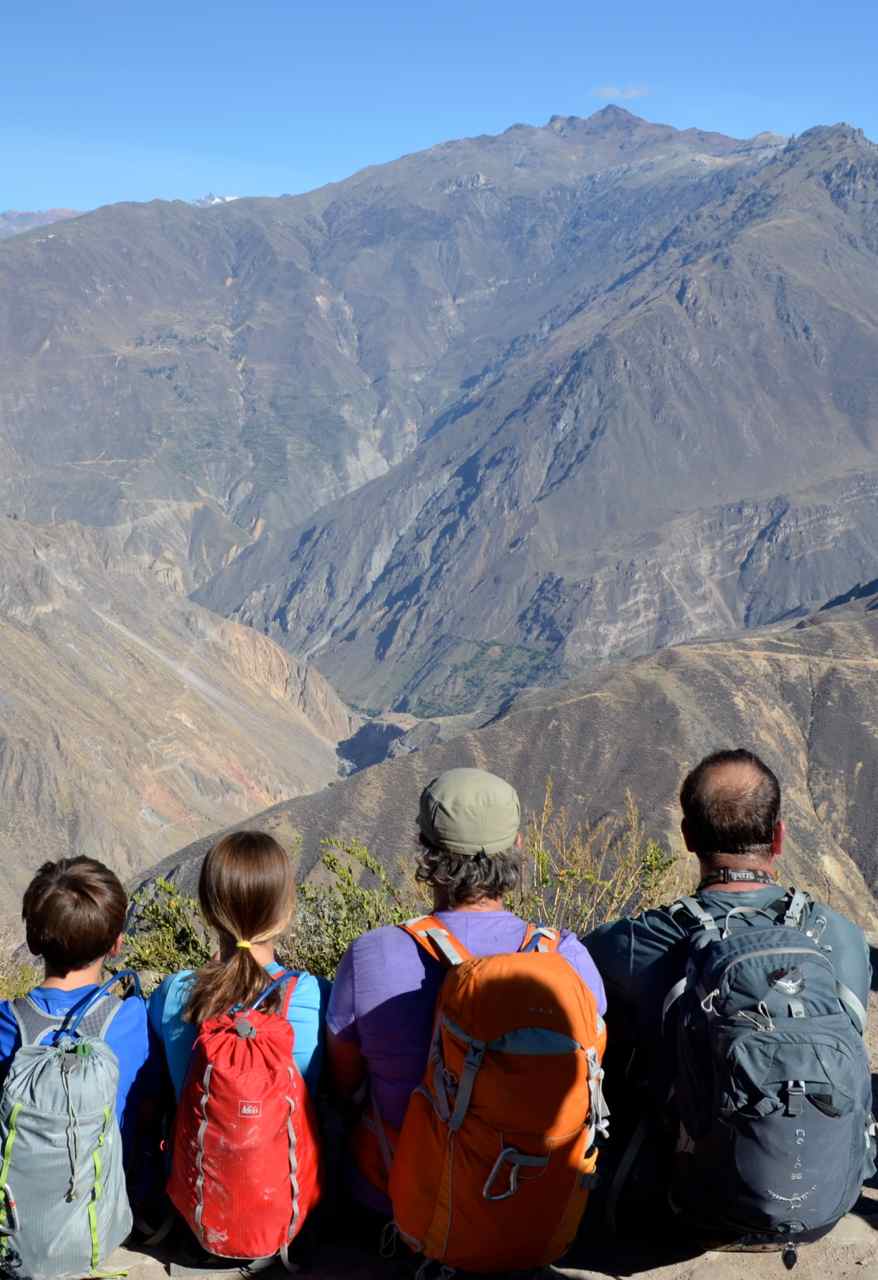
    Heading down into the canyon.  The green terraces on the left was our destination.
    Heading down into the canyon. The green terraces on the left were our destination.

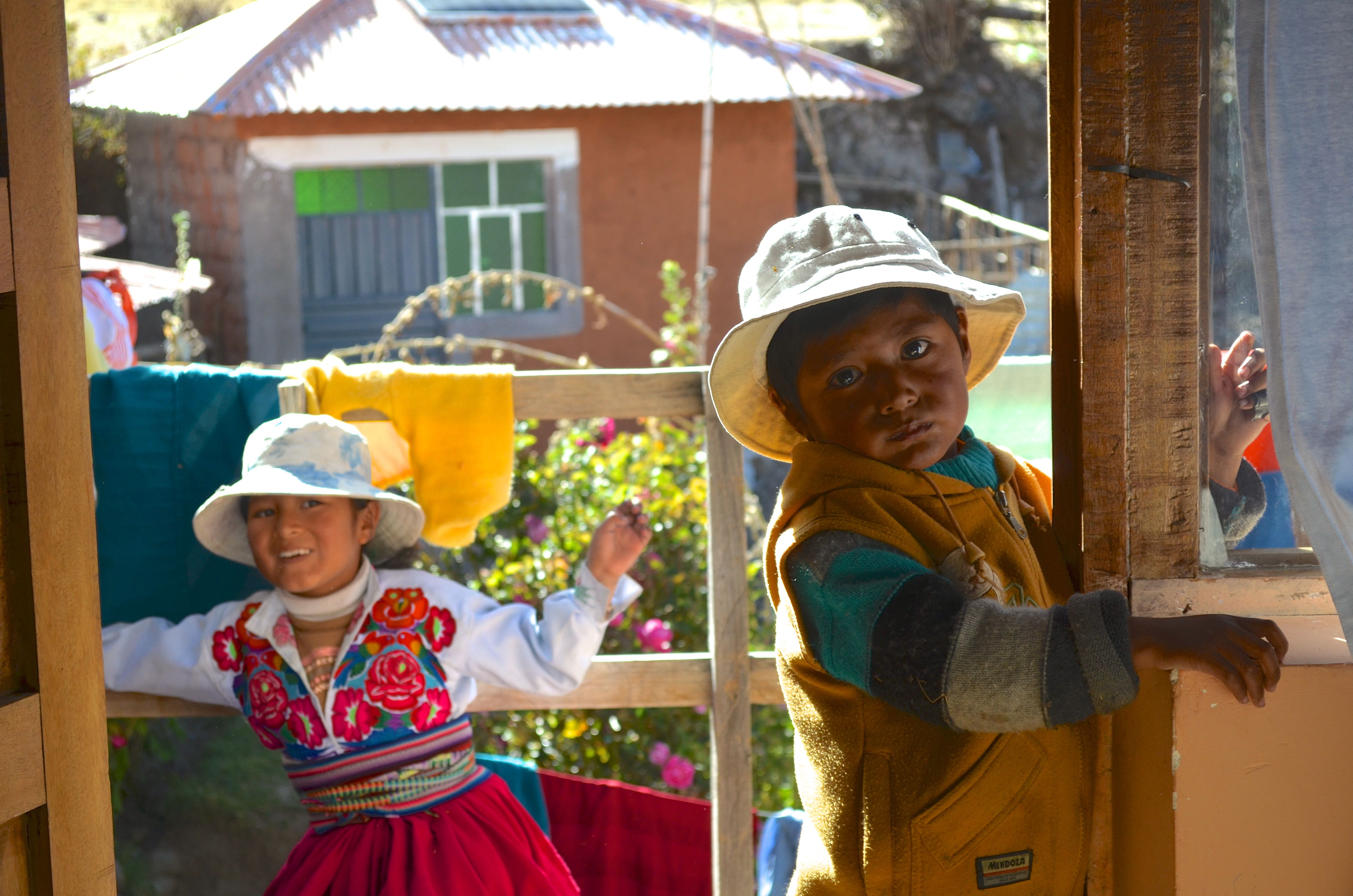
    As we passed Canyon locals, they clearly marveled at the kid’s mochilitas, little backpacks, and their complexion, hair color, eye color and size. Over the 29 kilometers, Deb and I never heard a whine from either kid.  Both were encouraging of themselves and others.  Mac, for example would simply say, “This is harder than I thought, what do you think?”  At other times, Lucia would cite Dory in Finding Nemo, “Just keep swimming, just keep swimming.”  Deb and I, having spent the last 15 years of low physical fitness were challenged by this trek.  The kids were inspirational to us.

    The kids' attitudes were incredible.  This photo was just after climbing out the canyon.
    The kids’ attitudes were incredible. This photo was just after climbing 1500 meters in 6 km out the canyon.

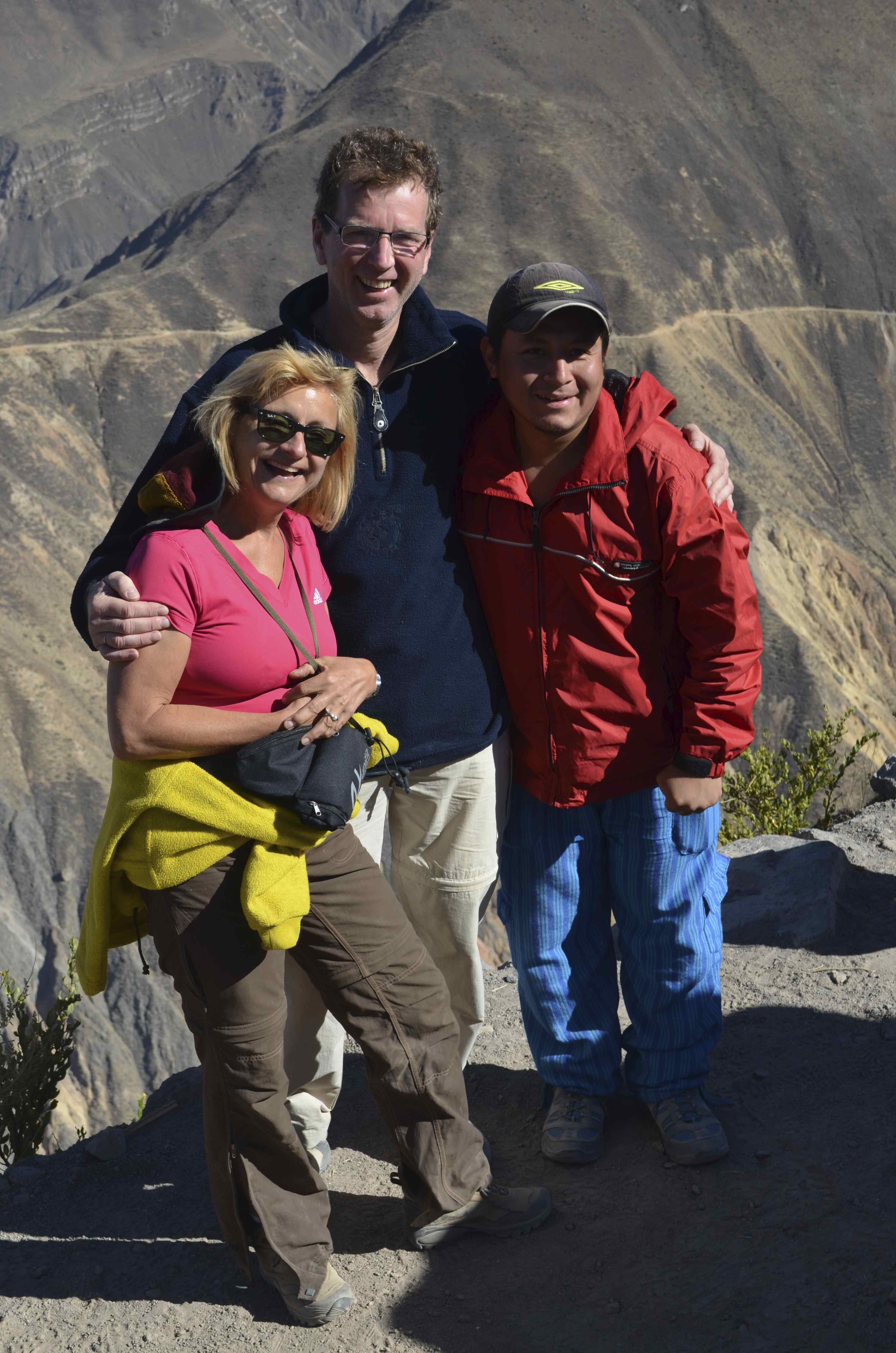
    The people we encountered were the second magical element of this trek. Hubert, our guide, was born in a town in the upper canyon and shared with us countless concepts, ideas, and examples of the connections between the people and the natural world.  He coordinated the trek and it was flawless.  Carlitos, the guide company owner and a guide himself, met us on the orientation day and again on the second night with his two German clients – Bent and Ankala – whom we befriended.  Bent and I sat together for dinner – I struggled in Deutch and he struggled in English, so we both decided to struggle together in Spanish.  Somehow it worked.

    Tia Ruffina and Tio Mauricio live at the bottom of the canyon in the little town of Cosnihua (population 40) where we stayed the night with them.  They belong to the Cabana culture which has existed in the Colca Canyon since before the Inca came to power.  The Incas influenced this culture by introducing terracing and water aquaduct systems.

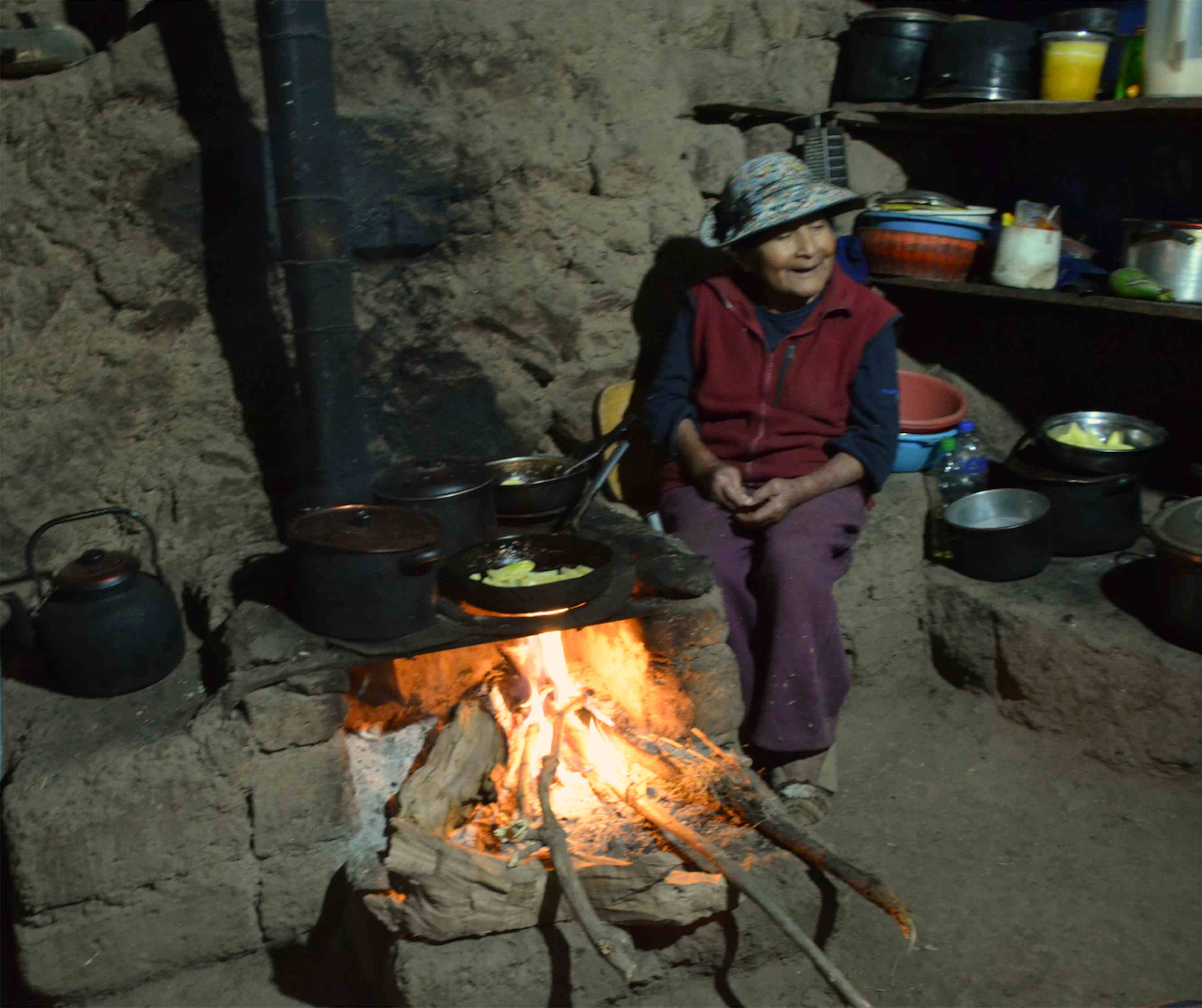
    We had soup, rice, fresh avocado, and fried potatoes, Ruffina was so nice to us.
    We had soup, rice, fresh avocado, and fried potatoes, Ruffina was so nice to us.

    Ruffina cooked for us over an open fire and took great interest in getting to know Lucia and Mac.  We would love to come back and stay with her for longer – something we will seriously consider as a few weeks in this world is enticing. The morning of day two was spent with Mauricio in his Incan farm terraces learning about all the things he grows.  Mauricio was quietly sharing his fruit trees, climbing and retrieving a peach, slicing it and handing it to each of us.  The avocados were memorable – locally called “palta”.

    Mauricio sharing with us one of five types of avocados.
    Mauricio sharing with us one of the five types of avocados he grows.

    Each of us had a blanket wrapped over a shoulder and Lucia and Deb wore the traditional Cabana woman’s hat.

    Lucia with prickly-pear fungus called cochinilla- a valuable commodity sold for dyes, lipstick pigment.
    Lucia with prickly-pear fungus called cochinilla- a valuable commodity sold for dyes, lipstick pigment.

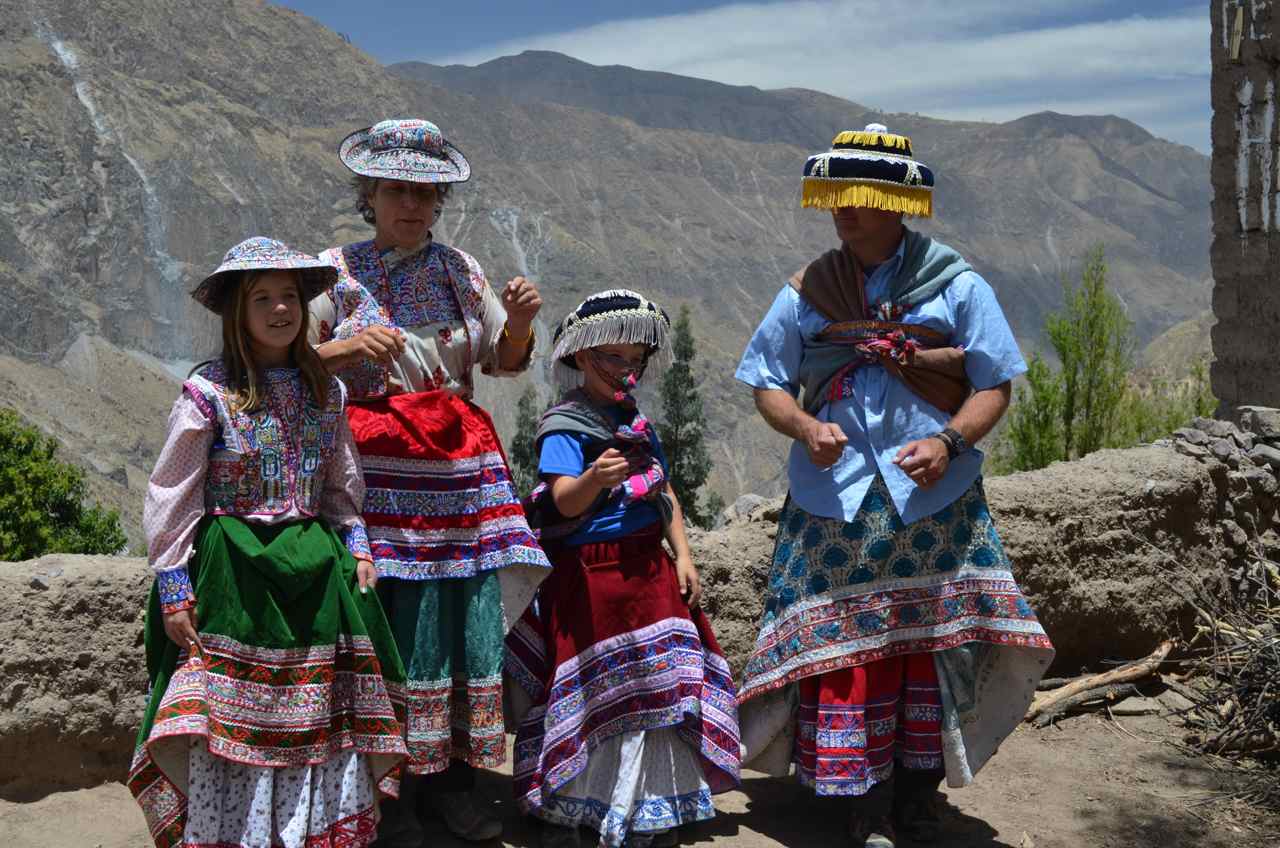
    Returning to the home, we dressed up into the traditional dress of the Cabana culture.  These dresses are bought or made each year and paraded proudly in an annual fiesta.  The men’s dress is based from an old local legend that described two lovers who, being from different classes, were barred from marrying.  As the legend has it, the boy sneaks into the girl’s town, like a true Romeo, dressed as a woman with his facial features covered.  The lovers elope.

    We dressed up in Cabana traditional dress.  We laughed - as did our hosts.
    We dressed up in Cabana traditional dress. We laughed – as did our hosts.

    The two cultures of the canyon, many centuries ago, shaped the heads of their children in two distinct forms – however, today, the distinct forms are manifest only in the womens’ hats.  Once the cultures abandoned the head shaping, the hats became powerful cultural symbols of each culture.

    The 1500meter ascent out of the canyon began at 4:30AM with headlamps.  Lucia and Mac were dauntless in achieving the edge of the canyon rim just three hours later.  We were elated when we were met with a cheering crowd – especially Carlitos, the guiding co. owner as well as Bent and Ankala, our new German friends who live in Buenos Aires.  Photos clicked and we were all grinning.  The children were celebrities – for having accomplished a trek of 29km and 3500m total elevation gain and loss.

    We are finished with the climb.
    We are finished with the climb.

    As backpackers, hikers, adventurers, Deb and I are delighted to share this passion with our own children. Treks on the Inca Trail, in Torres de Paine and Fitz Roy are planned in November and December and we, as a family, are looking forward to more challenges.  One final note, we got on the bus through sheer magic – a “paying it forward” kind of experience.  We needed lunch, our bags from storage, tickets – and Bent, Ankala didn’t just stand aside and say, “that’s your deal”.

    Bent, Ankala, Carlitos on the last day before the race to the bus.
    Bent, Ankala, Carlitos on the last day before the race to the bus.

    Rather, “team Colca” descended on the buffet lunch line swiftly filling carryout bins with rice, fish, salads, and desserts then collecting forks and everyone piling into the van that would take us to the bus.  One bag, a smallish grocery bag, was left behind.  We did not realize this until the last minute, so Hubert ran to retrieve it – Carlitos all-the-while sweet-talking the bus driver to stay put.  What Carlitos promised I can only imagine but the driver was simpatico about it all.  The bag arrived and we pulled out of the station in Chivay waving a huge debt of gratitude to Bent, Ankala, Hubert, and Carlitos.

    overlookwithpacks

    The kids are amazing – resilient, dauntless, funny, and wide-eyed.  Traveling with our children unlocks an entirely hidden aspect of travel and our trek in Colca was priceless because of achieving it with our children.

    Tragic events remind Deb and I to do what is necessary to make sure we are close with our kids – for the long term.  We are fortunate to have this time to build relationships with them.

    Colburn