Category: Ecuador

  • The End of Six Months in South America

    We have been on the road in Central and South America for six months.  As we are wrapping up this phase, we wanted to reflect upon what the trip has held for us so far.  South America has been a grand adventure – trekking, rafting, snorkeling, zip-lining, hiking, surfing, etc.  We have experienced a range of situations that have tested our limits.  We have navigated our way through an entire continent in a different language, not always smoothly, but we’ve done it.  We have learned what we need to stay happy on the road and just how little stuff is actually necessary.
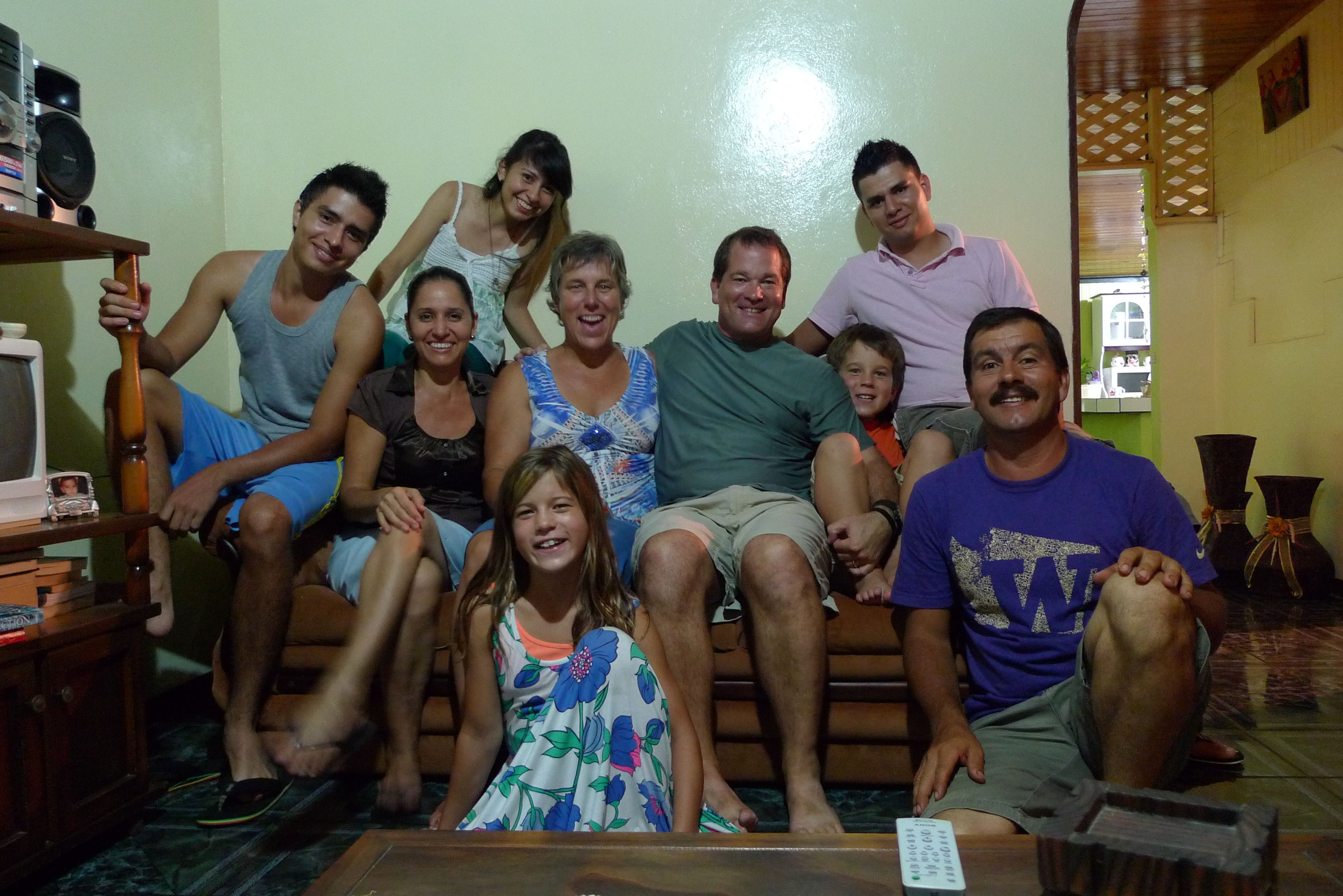
    Retana-Miñoz Family
    Retana-Miñoz Family

    Many people ask us which country we have liked the best.  Unfortunately, this is somewhat like asking you which child you like best.  It is not really possible to say that we liked one better than the other, but we have enjoyed them for very different reasons.   In Costa Rica and Nicaragua, we enjoyed the ease of travel and wild life.  Spending a week at Proyecto Asis and with the Retana Munoz family, our homestay family was an amazing experience.  Rosi and her family were gracious, patient, and made us feel completely at home living with them.  Taking Spanish lessons with Danielle and Yalitza gave us a foundation for making our way through the language.  Working with and learning about peccary, capuchin monkeys, macaws, and a whole host of other animals provided us with first hand knowledge of the challenges which face the animals in the wild we were to see later in our trip.  We enjoyed it so much that we are thinking about going back there at the end of this summer – “one year later” – to see how our perspective has changed.
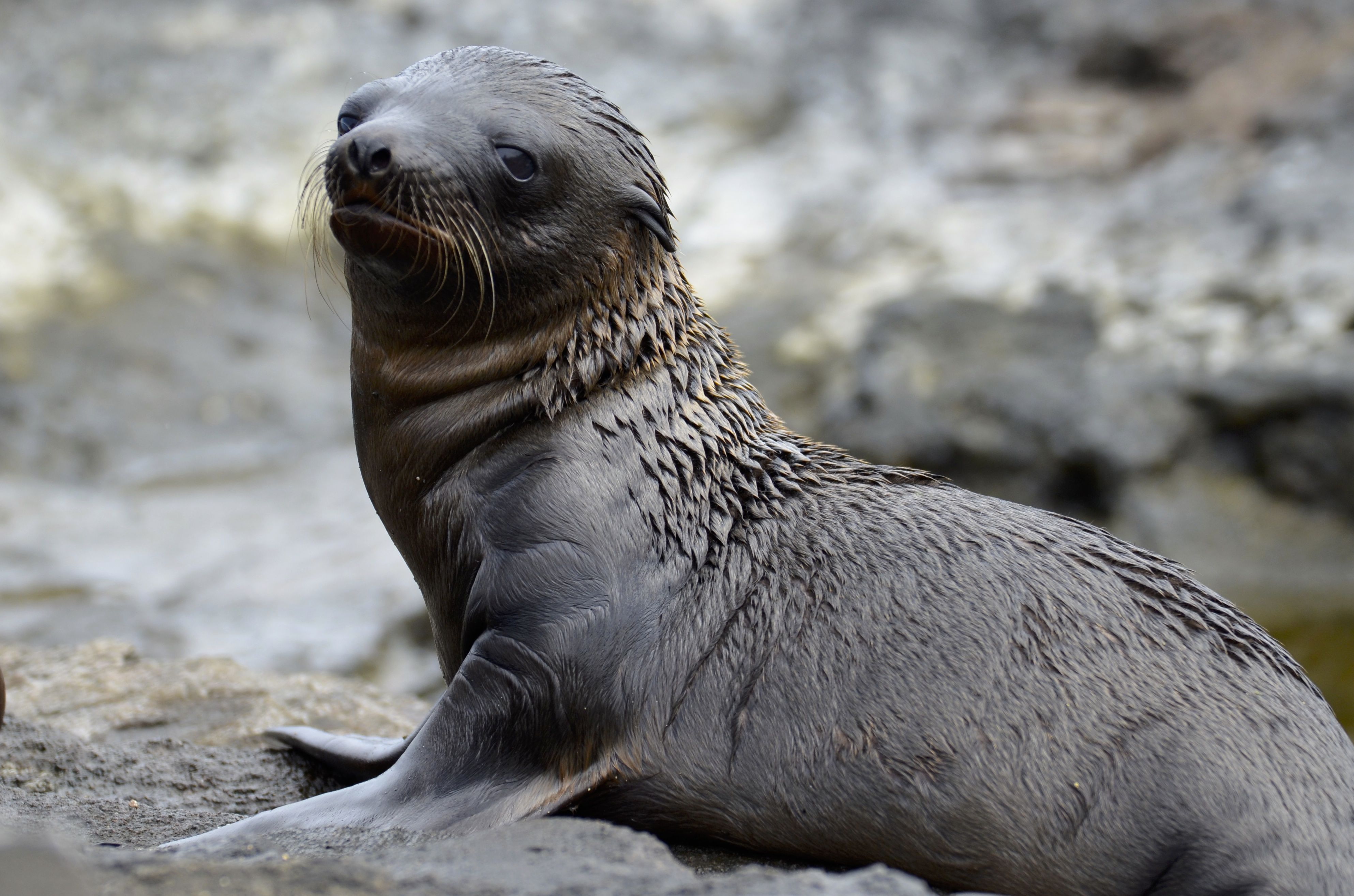
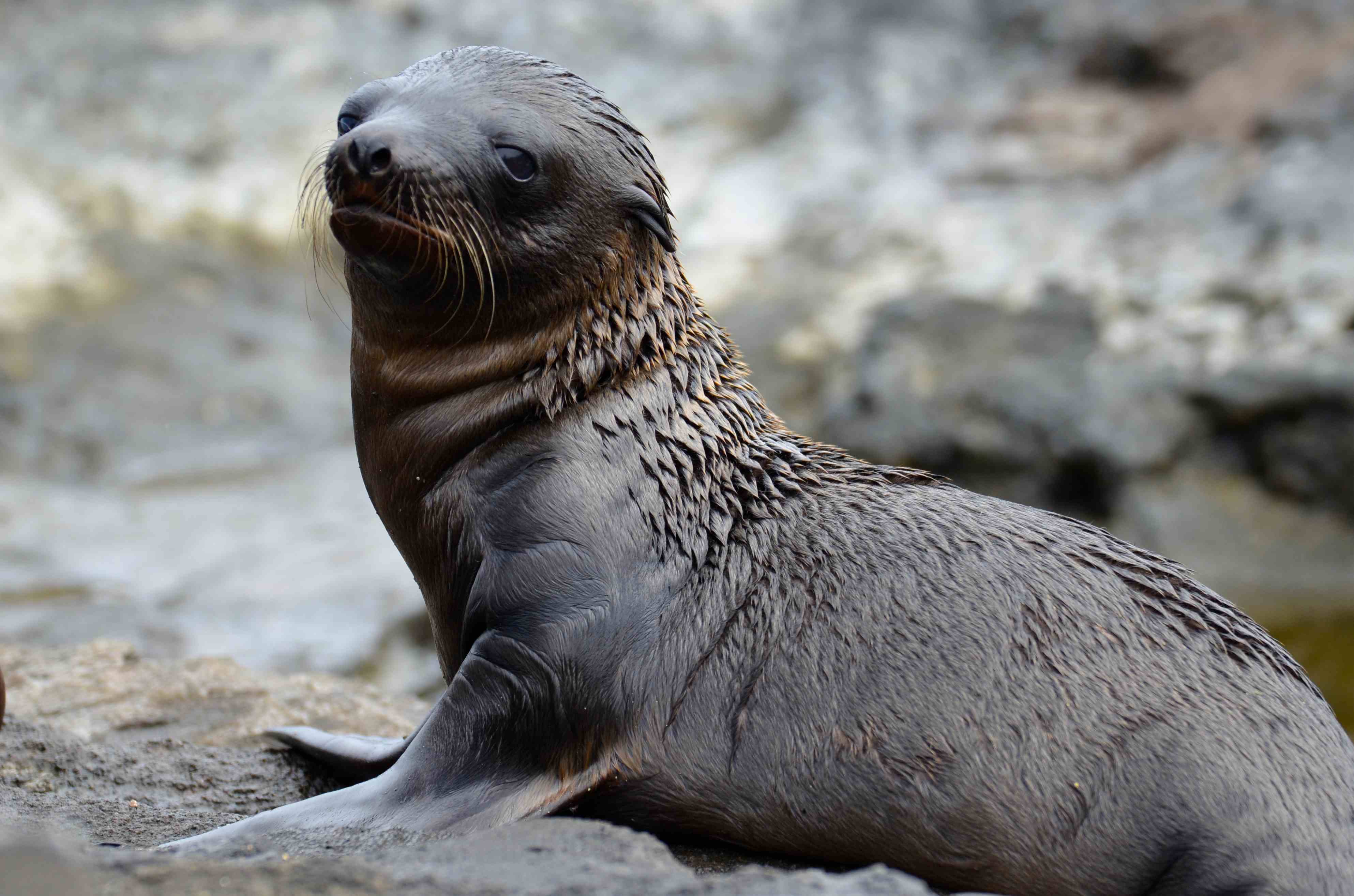
    Infant Sea Lion
    Infant Sea Lion

    Ecuador held Quito, the Galapagos, and Otovalo; each quite different from the other but creating a very well-rounded experience.  The Galapagos will always hold a special place in our hearts as you can interact with wildlife in a way that is not possible anywhere else on Earth.  Playing in the ocean with sea lions produces a giddiness that is not often experienced as an adult.  Watching marine iguanas climb out of the sea to bask on the black lava and expel excess salt out of their nostrils is seeing life on our planet before hominids began to dominate everything.  Listening to the scratch and scrape of a giant tortoise as it hauls its shell over the rocky landscape reminds us of how resilient life is, and how fragile.  We had enough time (four weeks) on the Galapagos to feel like we really got to know the place.  Quito and Otavalo were our first introduction to the Incan influence, but it was subtle.
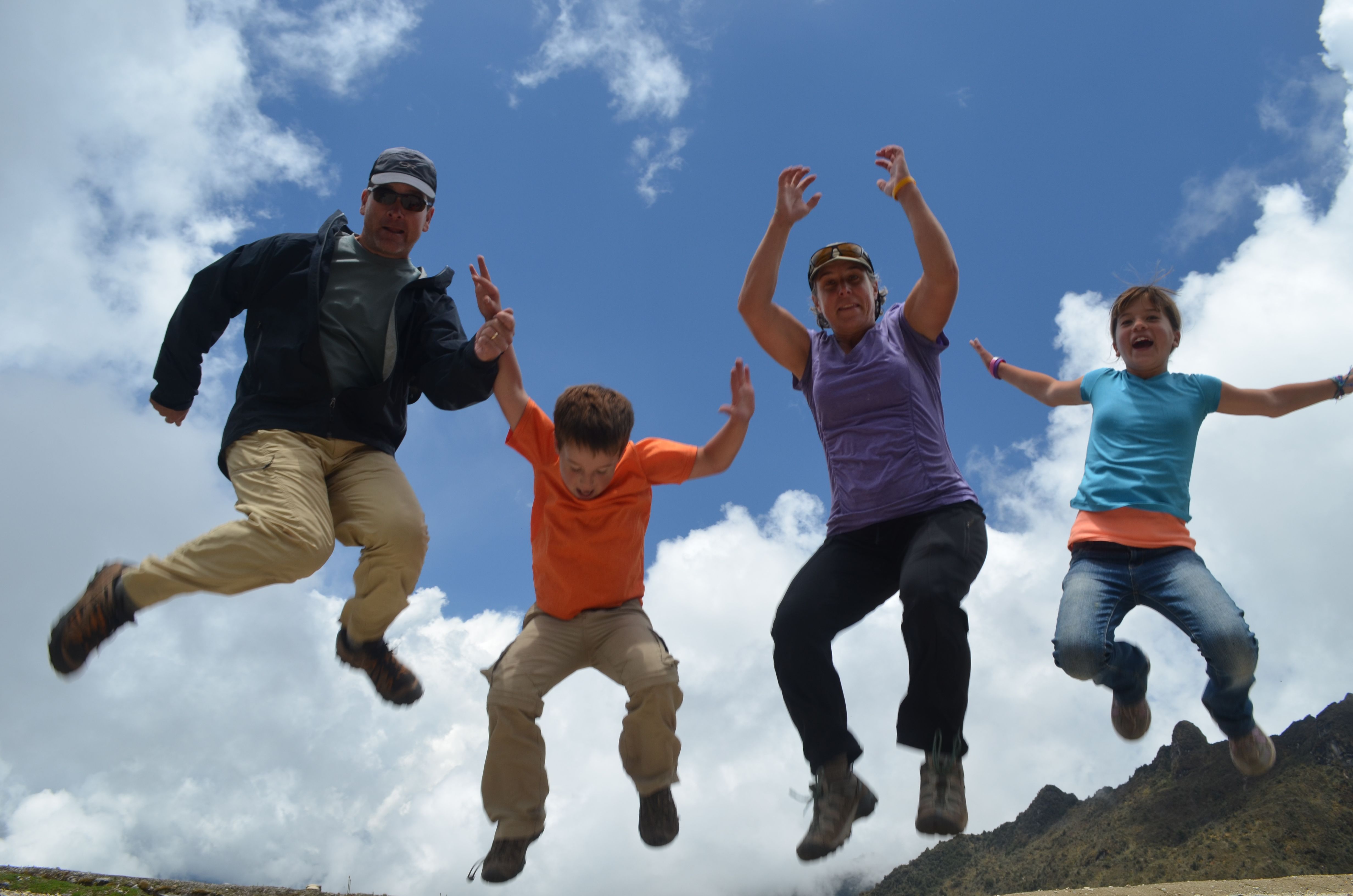
    Celebrating Success
    Celebrating Success in Peru

    Our experience in Peru was very different from Ecuador.  Yes, the landscapes are similar, but what we paid attention to was much different.  With the Incan influence clearly visible everywhere, we learned more about the history and culture than flora and fauna.   The stark beauty of the Colca Canyon and the wonderful hospitality of our host family and guide left us feeling as if we were truly welcomed there, not just a paying passenger.  In contrast, Titicaca and Ollanta left us feeling as if we were simply a commodity; something to be exploited for every dollar possible.  Although it was quite disturbing, we became aware of just how damaging tourism can be for a culture, a necessary awareness when traveling abroad.  We are now even more diligent in making sure that we give our dollars to organizations that do not damage and exploit the culture or the people solely for profit.  Our time in the Amazon was amazing – the raucous calls of the macaws flying overhead, the peculiar odor of a peccary approaching, the grace of the monkeys launching from tree to tree – will always be remembered.  Hiking our way to Machu Picchu was a more of a pilgrimage than a trek, allowing us to glimpse the spiritual side of Incan culture as well as a fantastic experience.
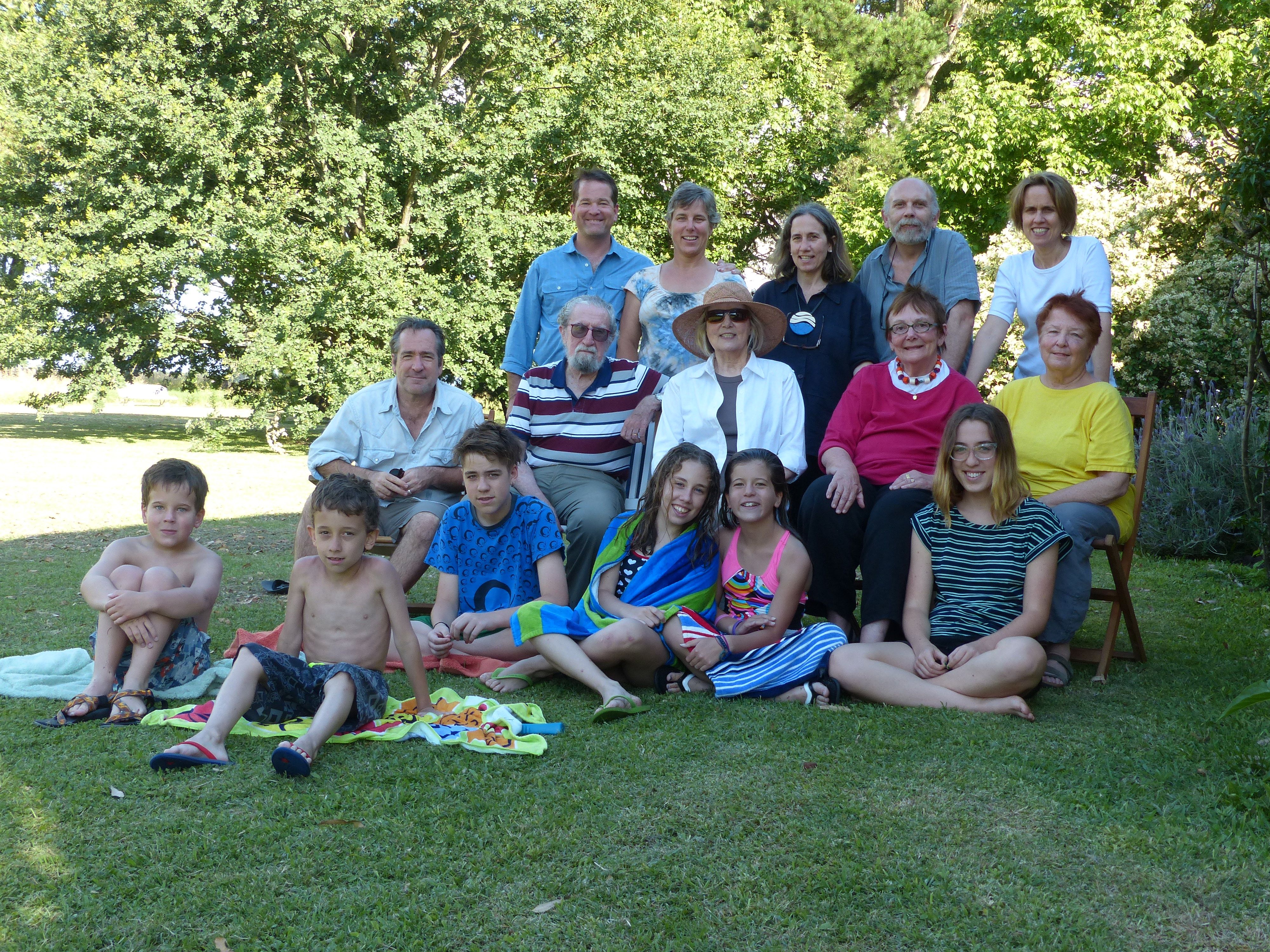
    With Granny and Jean and Our Argentine Family
    With Granny and Jean and Our Argentine Family

    We have enjoyed Argentina for our time with family, the absolutely jaw-dropping landscapes and the availability of fabulous wine and scrumptious grilled meats everywhere.  Being able to spend the better part of a month with Colburn’s Argentine family has been a true gift.  We have been with them long enough to able to see in to their life in a way that is not possible with a one or two week visit.  They have welcomed us with such grace and kindness that we have felt as if we were in our own home, not visiting.
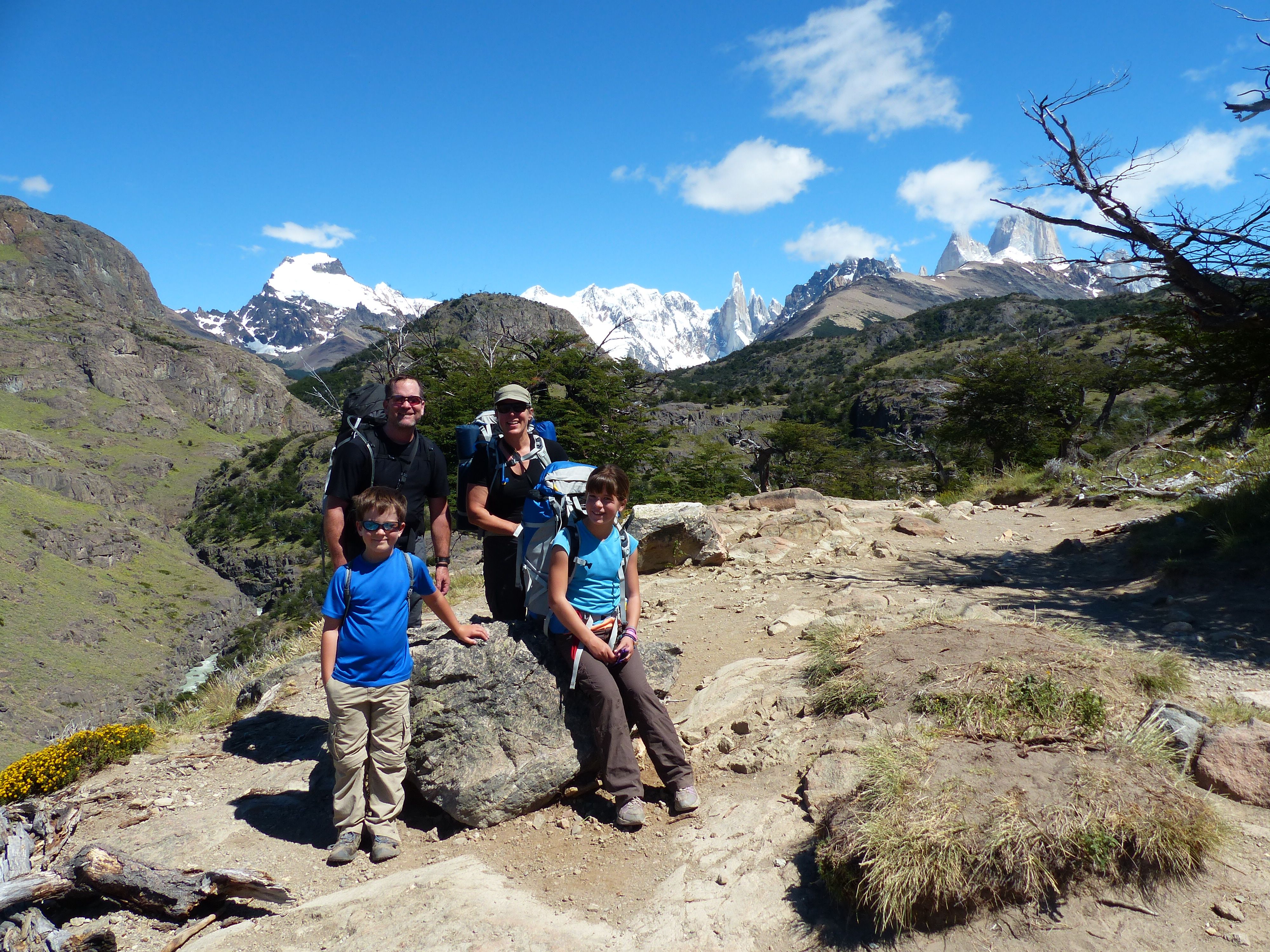
    Near El Chaltén
    Near El Chaltén, Southern Patagonia

    Going to Southern Patagonia was like finding the place we have always wanted to be. It is mesmerizing and might be like what the American West was before super highways and strip malls.  We know we will be back to Patagonia, so when we left it was hasta luego not adios.

    Hot.  Sweaty.  Waiting.  Puerto Maldonado Peru.
    Hot. Sweaty. Waiting.  Leaving the Amazon, Puerto Maldonado Peru.

    Beyond simply visiting interesting places, our travel has changed each of us individually and also as a family unit.  Individually, we are each now more gentle with ourselves and others.  Our expectations for everything going as planned has diminished considerably since leaving the US.  Repeatedly experiencing extended periods of waiting for an unknown outcome and the feeling of being lost as we try to navigate our way through unmarked routes in foreign lands has taught us that most people are really quite helpful and a sense of humor about pretty much everything is essential to successful travel.

    An Indication of the Future  (translation - the road is in a bad state)
    An Indication of the Future
    (translation – the road is in a bad state)

    When Deb left her wallet in a taxi in Peru, the driver came back to the airport and found us to return it with everything still in it.  When we were having trouble getting the rental car company to do anything about our car that wouldn’t start, the gentleman at the hotel desk became our valiant defender summoning a tow truck within 15 minutes.
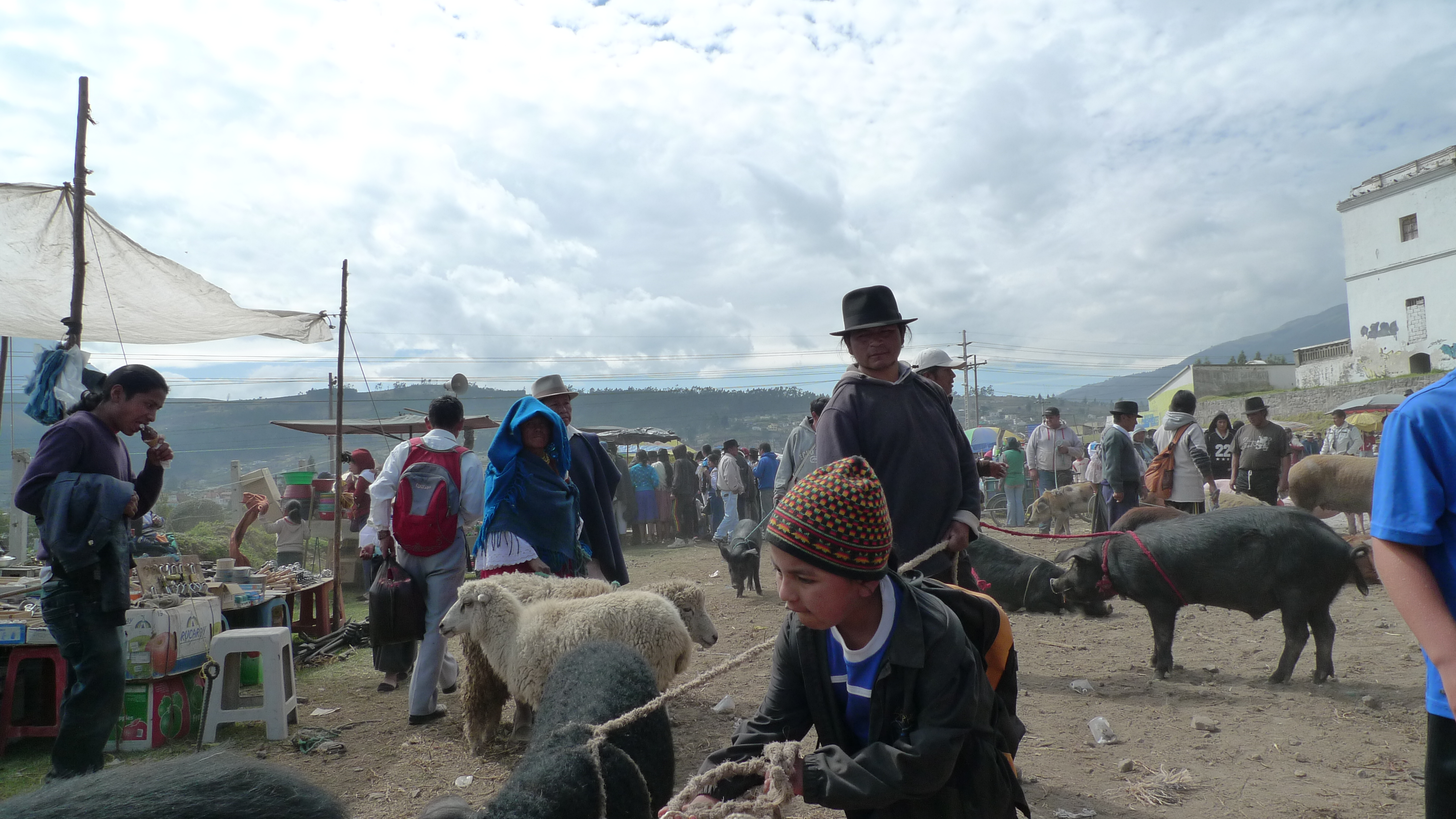
    Animal Market, Otavalo
    Animal Market, Otavalo Ecuador

    We have seen first hand the struggle to survive that both people and animals experience when their world is not abundant.  This has given us a greater awareness of how our individual actions at home impact people, places and animals unseen to us.  Discussing the loss of habitat in Costa Rica lead to a discussion about us decreasing our consumption of animal products and the illegal pet trade.  Seeing the ecological impact of large-scale agriculture for export has made us more aware of our choices when fruits and vegetables in the US are imported from the Southern Hemisphere.   Learning about the long-term effects of colonization, oppression, and exploitation has made us more aware of the freedoms we take for granted.
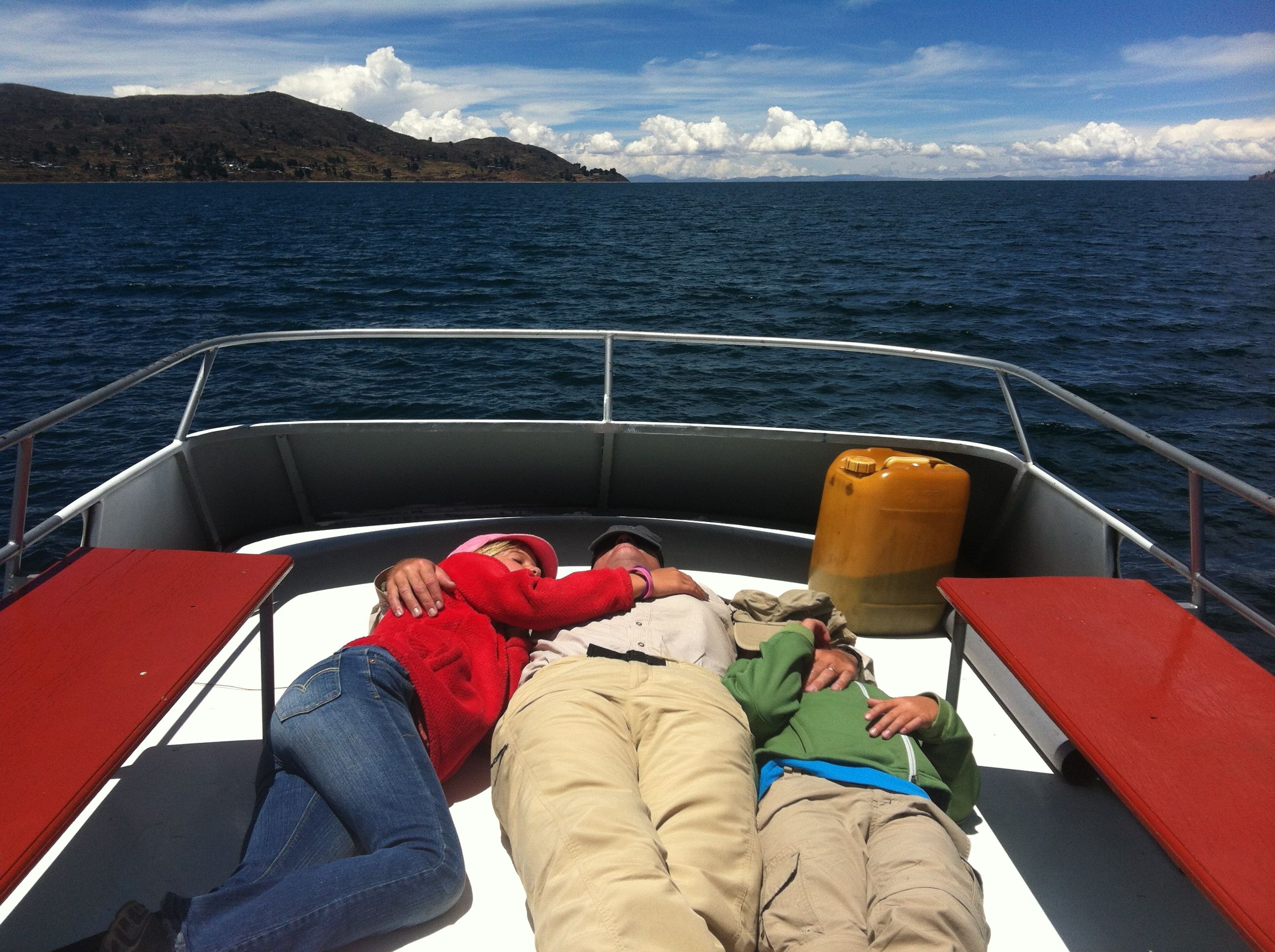
    Nap on Lake Titicaca
    Nap on Lake Titicaca

    We are also more aware of the importance of gentle words, especially when we are stressed. We are much closer to each other both physically and emotionally for we have supported each other through difficult challenges – Colca Canyon, Torres del Paine, and homeschooling while on the road.  Twenty-six weeks of being together all day every day has given us insight in to what makes each other tick and who can be relied upon for what.  We are now much more of a team than we were when we left the US and have a heightened sense that we are stronger as a unit than we are as individuals.  The children now ask, “What can I do to help?” instead of declaring, “I want …” or “Where is my…” The adults are more likely to say, “I could use a hand…” instead of “Go get the…” or “I need you to…”. Mac and Lucia have learned that there are not always three meals per day, sometimes not even two, and dinner at 10:00 or 11:00 pm is just fine.  They can now be hungry and tired without being cranky.

    Brothers
    Brothers

    Perhaps the most important thing we have learned is that family really is the foundation for happiness.   There really in nothing more important than family. Without our jobs or school to distract us, we are now able to focus on each other.  This is not to say that we were not close when we were in the US, but rather that we each had to split our attention between our family and school, work, friends.  Similarly, visits to family members further away had to be arranged when our work or school would let us leave, not when it would be beneficial to see them.  With family as far away as Australia and Argentina, it is difficult to visit them for only a week or two.  And, if you can only visit for a week or so, there is a tendency to focus on “doing” things all of the time rather than simply enjoying being together.  Lucia commented on this when we first arrived at the campito, a small weekend house outside of Buenos Aires for Colburn’s Argentine family, saying that she felt like she should have been there five years ago.  When we went back two months later, it was like coming home for all of us.  It has been wonderful to be able to share some of their life, not just a visit.

    We have truly enjoyed our time traveling so far and feel that we are incredibly blessed to be able to do so.
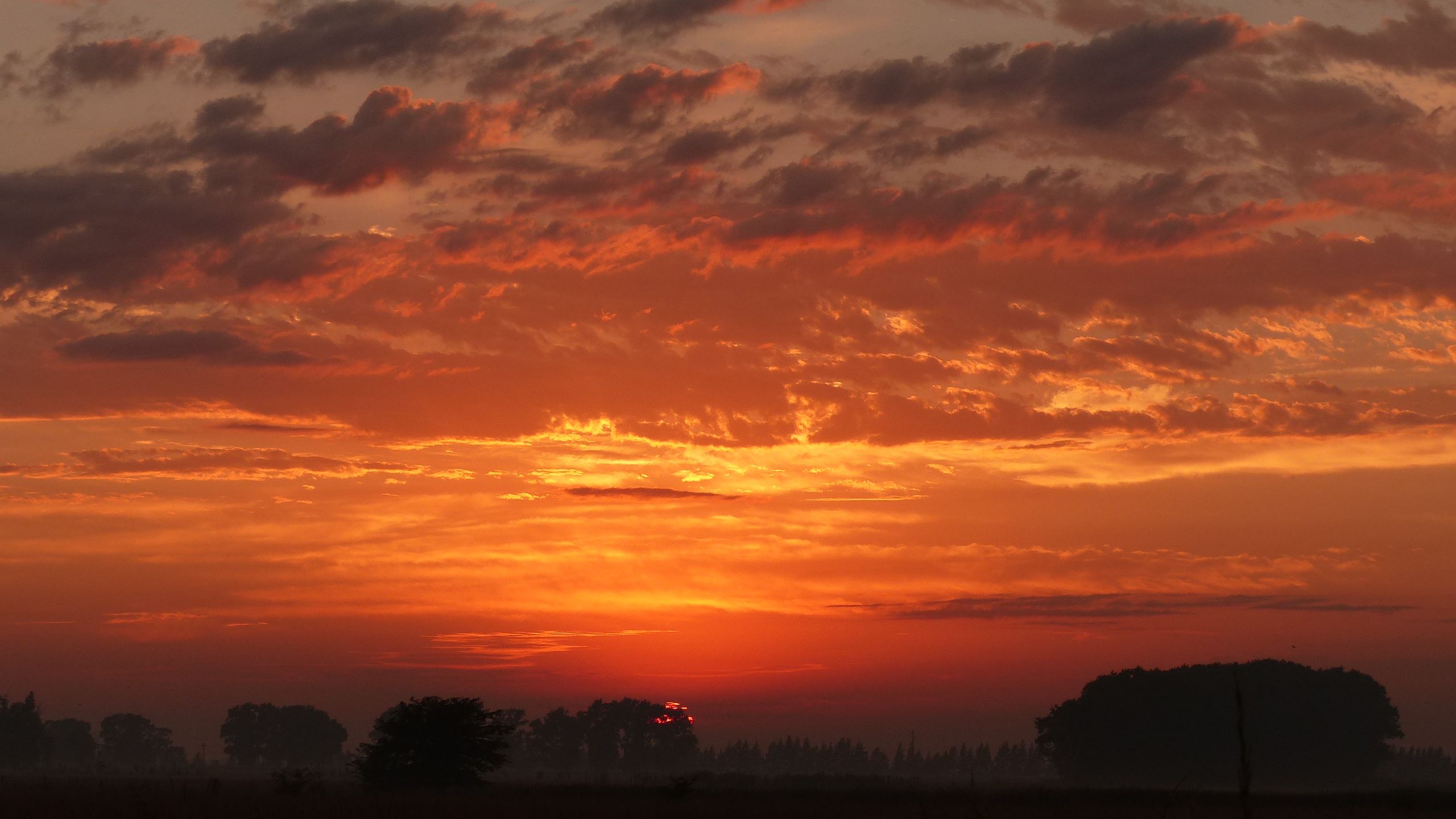
    Sunrise at the Campito
    Sunrise at the Campito
  • Galapagos – The Second Half

    Above Darwin Lake
    Above Darwin Lake

    By Deb

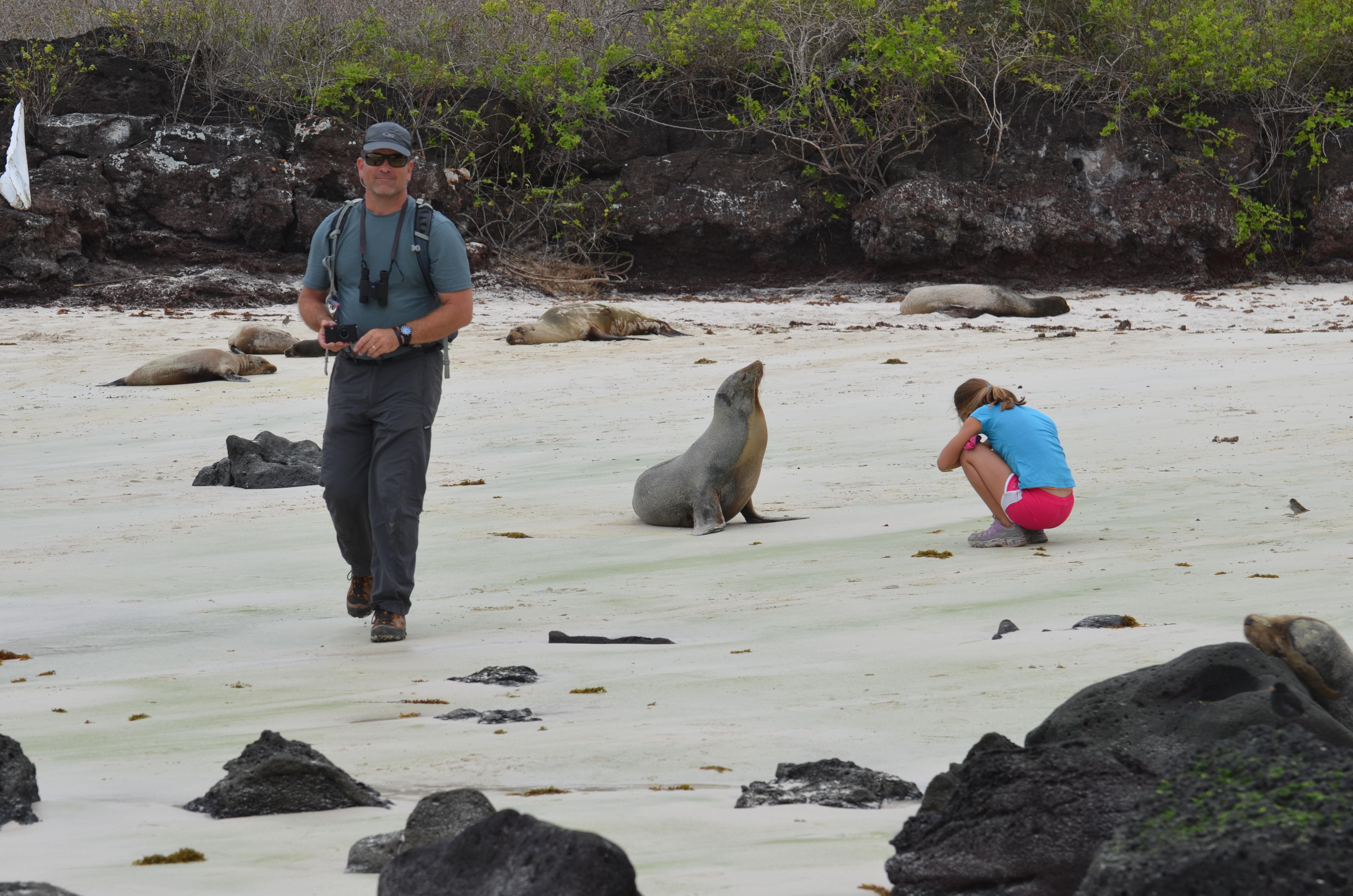
    Our time on the Galapagos Archipelago was fantastic, yet words will probably do little to explain the magic of being there. The setting is stark and unforgiving, yet the life that survives there is placid and phenomenally beautiful.  It was surreal to be able to watch the wildlife from such proximity that we would have to move away from them to maintain the required 6 foot distance.  They do not run away from humans, but rather seemed intrigued by us, especially the sea lions which will swim up to you and bite your fins to try to get you to chase them.

    Inquisitive Sea Lion
    Inquisitive Sea Lion

    For centuries, the only animals which inhabited the Galapagos are those which could swim or fly there on their own (i.e. sea lions, penguins, frigate birds, etc.), those which were able to survive a 2-week trip on a vegetation raft blown out to sea (i.e. iguanas, tortoises) or carried by a strong off-shore wind (i.e. finches, mocking birds).  Until humans began visiting the islands a couple hundred years ago, there were no mammals at all – they were too fragile to survive the journey out to the islands.  Even now, the largest animals on the islands are giant tortoises and iguanas, both of which are vegetarians.

    Newborn Baby Fur Seal
    Newborn Baby Fur Seal

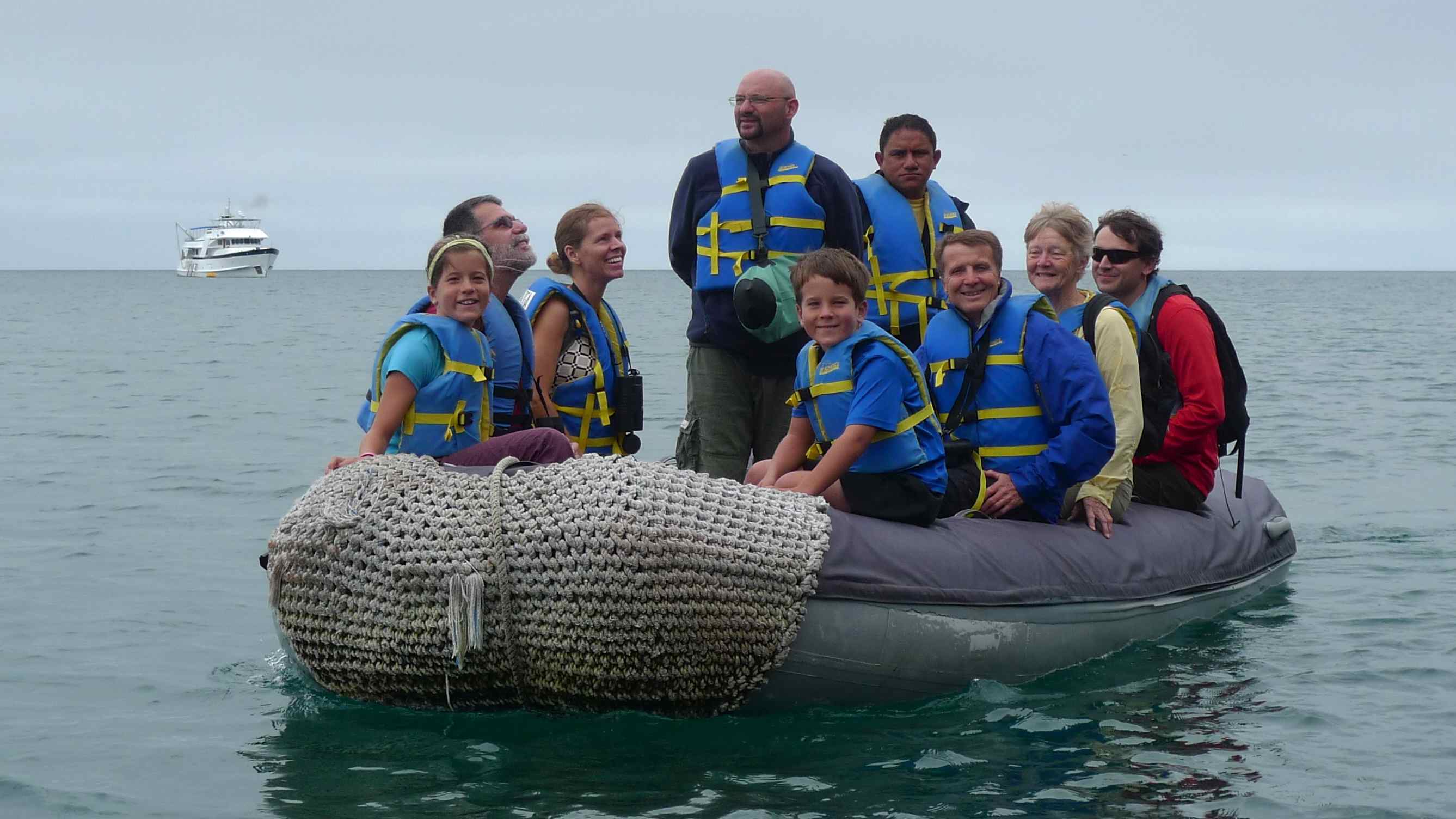
    We had originally planned on staying on land and only doing day-tours out the other islands but were able to score a last-minute deal on an 8-day boat trip through the western islands.  Now, if you know us, we are not “cruise” people, but, wow, what a fantastic experience!  Our initial trepidation about being out of place on the boat were quickly relieved when we met the other folks – a varied group of 12 others – many of whom were just like us.  There were a few younger back-packer types as well as a number of folks our age an older but we all love travel and the outdoors.  The only thing missing were other kids, but Lucia and Mac were their usual charming selves and made quick friends with all.

    Kids on Panga with Other Guests
    Kids on a Panga with Other Guests

    Despite our initial trepidation, we are very glad that we did a boat trip.  Yes, it sort of blew our Ecuador budget a bit, but we were able to see much more than we would have doing only day-trips.  Because the evenings were spent traveling between distant locations, we would wake up in a new place ready for a new adventure.  Each day held at least two different locales, usually quite different from each other, with different activities.  The morning may be hiking through a lava field or up a volcano then the afternoon snorkeling with sea iguanas or sea turtles.  The video below highlights only some of what we saw.  A note of disclaimer – the quality of the photos and video is pretty low so it is a bit blurry and jerky.  Although I tend to have high expectations for anything that I “publish”, it would take me another 8-10 hours of internet time to upload at a higher quality so I have decided that this is “good enough” to give you an idea of what the experience was like.  If you want to see better quality photos, please visit our SmugMug site shindellsrtw.smugmug.com

  • No Need for Binoculars

    DSC_0794By Colburn

    I am a total amateur naturalist hack, my children are clearer on some concepts than I am. Therefore, I do not claim anything I write can be thought of as fact, true or believable.  I couldn’t begin to compete with Mr. Darwin, the BBC or National Geographic.  However, I am on fire with fascination with the Galapagos – and, yes, most of what I am describing hopefully will make you want to look some of these ideas up on Wikipedia.

    It has been a week since we left Otavalo, Ecuador – world of Otavaleńos, textiles, the Saturday animal market and smoky cool high altitude breezes.  We arrived Monday last week on San Cristobal Island and oriented ourselves to the Galapagos – I have had some difficulty knowing my cardinal directions – frequently I am stunned to see the sun setting in the east!  Once oriented, I relax and enjoy the incredible sunsets.

    DSC_0833The Galapagos Islands, what we have seen so far, is mesmerizing.  There are several themes that have emerged from the first week that we expect will continue through the next three weeks we are on the archipelago – a shallow tabletop of islands 600 miles from the coast of South America.  First, the volcanic action that results from the smashing of three enormous tectonic plates in this location is omnipresent.  When you head to the beach or inland, away from the human developments, lava flows of various ages are everywhere.

    Rocky Lava Tide PoolIt is important to know that the islands are all moving about seven centimeters per year in an south-easterly direction.  Therefore, the islands on the east side of the archipelago are the older siblings – San Cristobal and Santa Cruz being the oldest.  Our journey is from east to west – so, in theory, we are going forward in geologic time as we move to the far western islands later next week into the end of September.  We will be exploring Isabella – home of several active volcanoes – and also Fernandina – one of the youngest most raw and volatile of the siblings in the archipelago.  These volcanoes are the reason these islands exist – the lava flows over millions of years have accumulated over time.  The islands sit on a tabletop plateau, formed by the volcanoes, which drops precipitously on the western edge. These islands are also at the confluence of not only three smashing plates but also three significant ocean currents.

    Galapagos_Islands_topographic_map-en.svgSecond, four major currents impact the archipelago: Pacific, from the east, Humboldt, from the south, Cromwell, from the west and Panama from the northeast.  Each has its own season of ebb and flow – right now it is the cold/misty Garúa. Season, marked by the increased flow from the colder Humboldt Current.  The food and nutrients hit the shelf of the archipelago and upwells for feeding vast sea life.

    Third, adaptation – I could go on and on.  My head spins with the fascinating examples of how land and sea life has adapted to the archipelago and, more specifically, have adapted to each island.

    DSC_0724Giant Tortoises, there are now eleven species from the fourteen that once existed – all, I am reminded are descendants from a single ancient species which made it out here somehow – debris raft, floating island, who knows.  The shape of the tortoise’s carapace (shell) is a result of millions of years of the successful tortoises passing the helpful genes to their offspring.  If the food is high on bushes on a particular island, the successful tortoises have a shell that makes room for them to reach the food- therefore, they live, the ones with the wrong shell shape die.  The right shell shaped parents have kids who have the right shell shape – there, that was first attempt at explaining natural selection through transmutation!  Naturalists can determine the home island of a tortoise by the shape of their carapace.  Go research this- it’s fascinating.

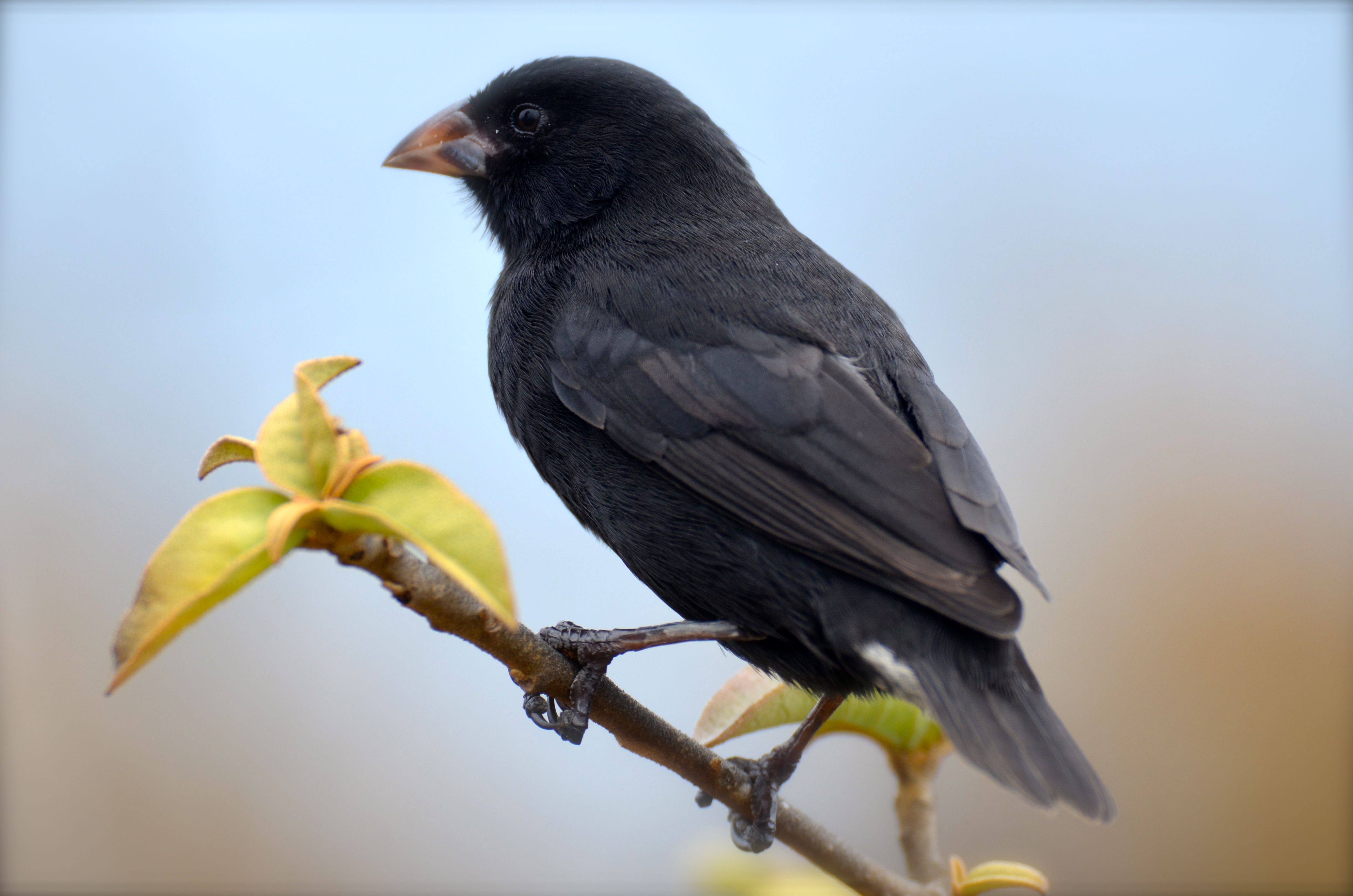
    DSC_0819Finches – good lord – it goes on and on.  The finches did the same thing as the tortoises.  One lone family of fiches were blown out to sea from Ecuador most likely and found a home on the archipelago.  As they spread throughout the islands, they encountered differing types of seeds, fruits or foods that began to select which finches would survive on that island.  If there were mostly hard nuts on an island, the parents with short crushing beaks survived and had kids with the successful beaks.  Those without the right shaped beak died.  There are over a dozen species of finches on the Galapagos now.  Several visit us in our apartment – they are fearless – as is most every living thing on the islands.  No need for binoculars.

    DSC_0895

    Marine Iguanas – yes, there’s only one species and it inhabits only one place on earth – the Galapagos.  Somehow iguanas made it out here and they split into two species – land iguanas and marine iguanas.  The ones which could deal with the harsh saltwater survived and have thrived on the coast – eating sea lettuce and green and red algae.  They can swim really well – only with the swish of their tail.  From a distance, with the head out of the water, they look like a cat swimming.  The marine iguana expels the excessive salt in their system by sneezing the salt out of their nostrils.  So, as you walk the tide pools, you will usually first notice a colony of marine iguanas by the sounds of sneezing.  Otherwise, they are so well camouflaged you are likely to come close to stepping on one.  Since they are exothermic, they spend a lot of time on the hot black volcanic rock or sand sunning themselves.  The cold pacific water sucks the heat right or them, as it does Mac and Lucia.

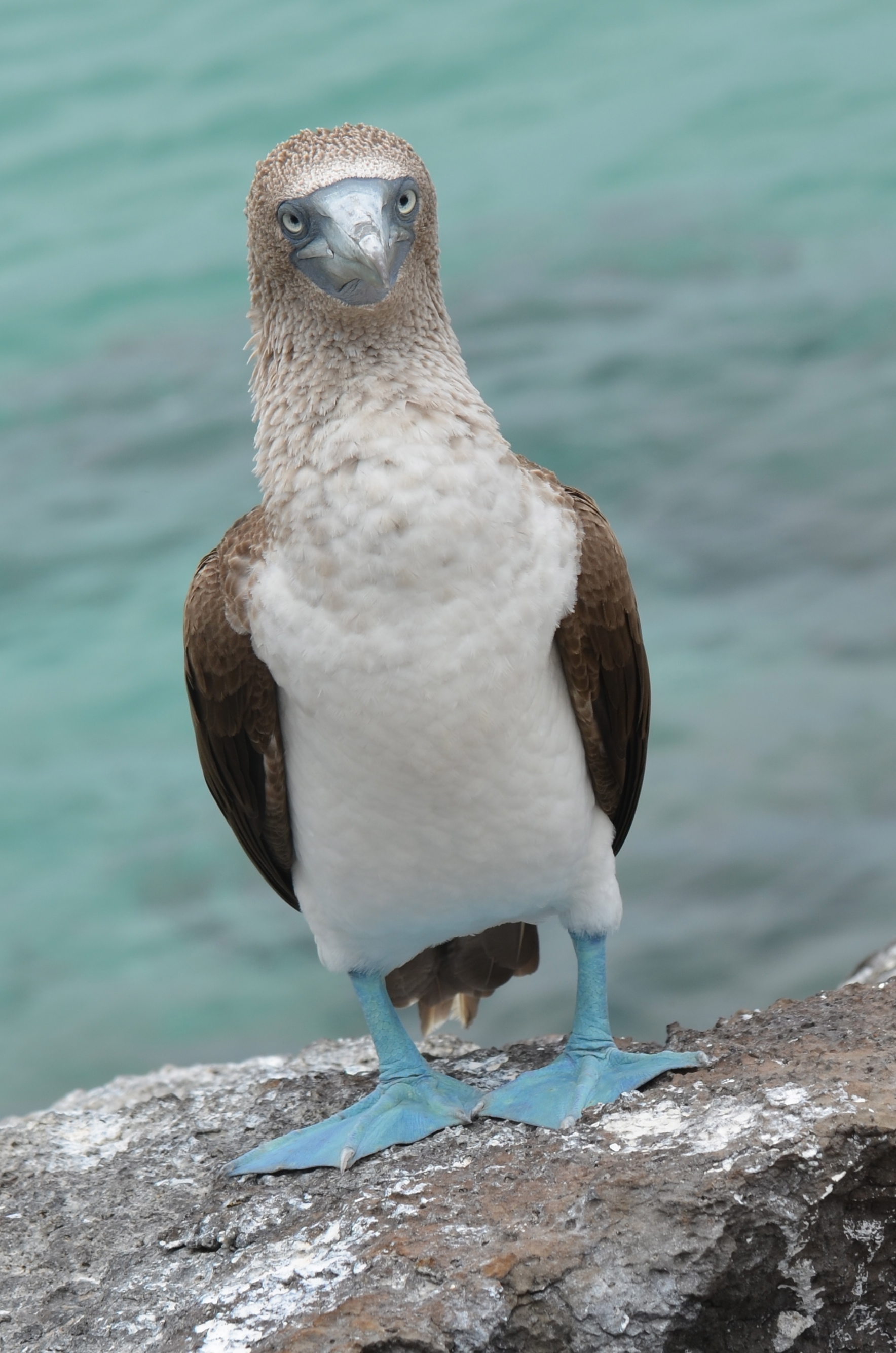
    L1040145Lucia and Mac are right there with us on this expedition – they are excellent naturalists – curious, fun loving and relaxed.  We have to find thicker full coverage wetsuits, as the shorty wetsuits we brought with us are not warm enough for Mac and Lu.  They come out of the waster blue-lipped and shivering but excited with stories of what they saw underwater.  Lucia spent a few minutes swimming with a Galapagos Green Sea Turtle.  Already cold and blue, when we spotted the turtle from the sea-kayak, she hopped back in, not wanting to miss the chance to see one up close.  Mac wanted to see a Marine Iguana eat.  So, yesterday, on the rocks at low tide the iguanas began heading out to the exposed edge of the rocky coast where they found sea lettuce.  Mac watched.  Blue Boobies fly by or sit on nearby rocks – I have not pulled out my binoculars that often.  At a startling frequency, the life on land and in sea is fearless of us – indifferent to our presence.  The finches, boobies, fur seals, tortoises and turtles, to name a few, keep doing their thing as we sit, swim or walk by.

    DSC_0850

    Finally, the place is both a convergence and a divergence.  Plates and currents meet here, yet the life that inhabits the islands have undergone a long drawn out separation from their ancestors to survive on their assigned island.  All these animals I have described are neighbors on islands of the same archipelago, yet so far away from their distant descendants just across the channel – separated by millions of years of divergence.

  • And on to Ecuador!

    IMG_0701

    After a long travel day, we made it to Quito in the wee hours of September 2.   We had rented a sweet old colonial house in the old section of town.  After a few pretty “basic” weeks in Costa Rica, we felt as if we were living the high life with a full kitchen, four levels, and private bedrooms!  And, best of all, the climate had gone from hot, sweaty and buggy to cool and dry!  Quito is at nearly 9,000ft, so the evenings were cool enough to want a sweater – something we hadn’t considered since leaving upstate New York.  We were in heaven.

    L1030937
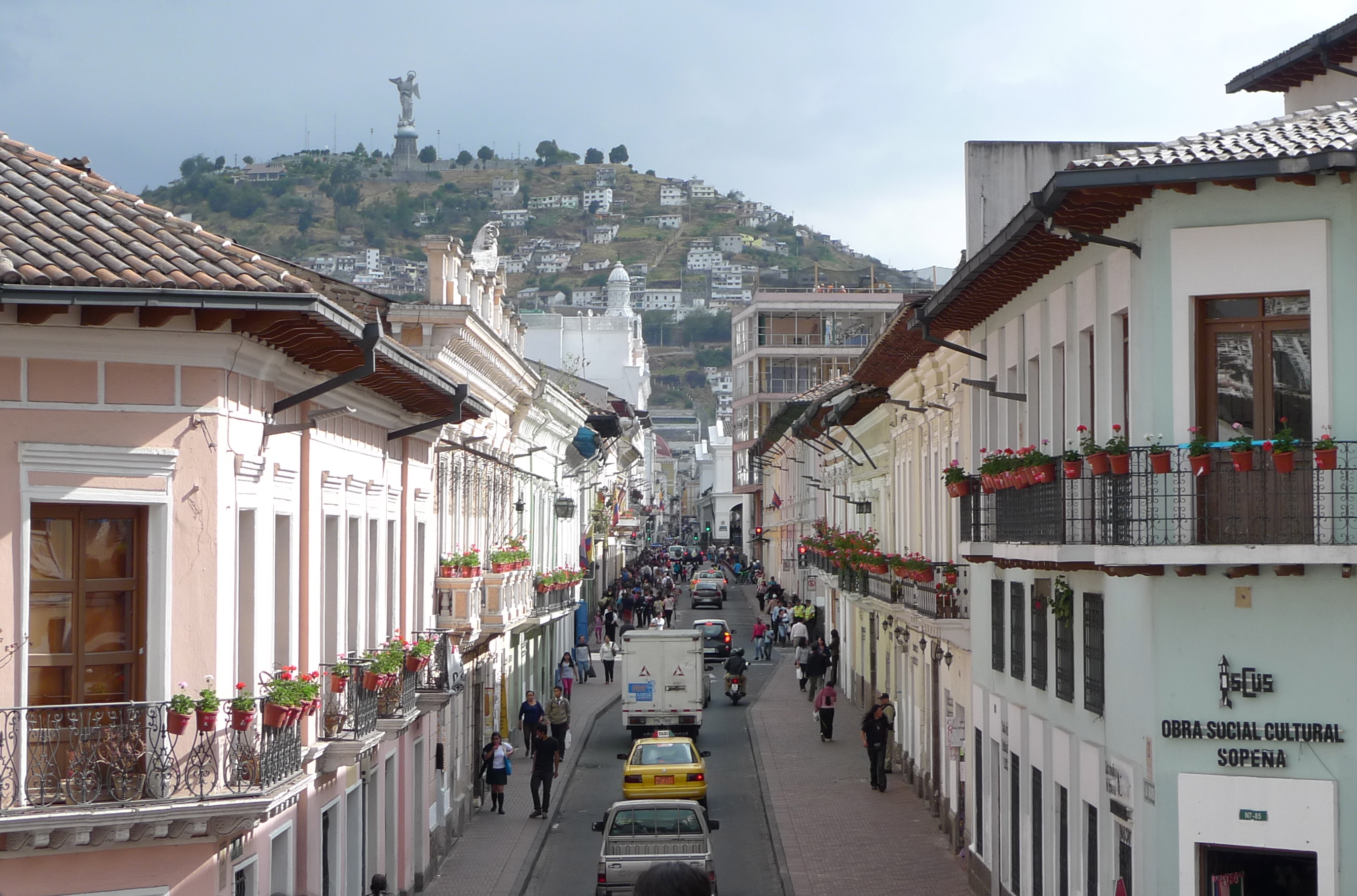
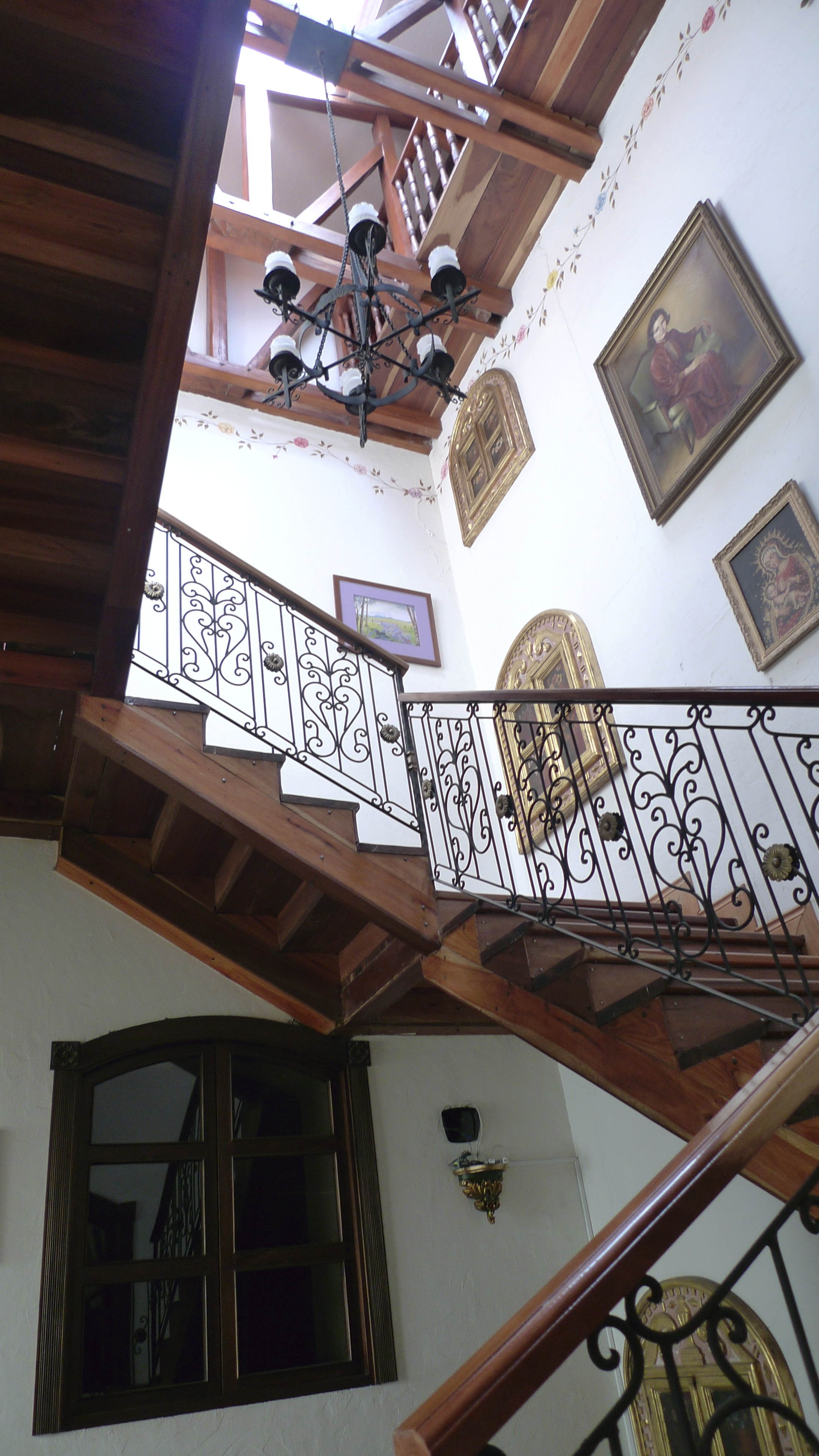
    The Old Town part of Quito is a World Heritage Site and its easy to see why. The area is small, maybe 12 x12 blocks, surrounding three main plazas.  Many of the homes have been restored and the Colonial Churches are awe-inspiring. The house we rented, like all colonial homes in South America, has a large stone and stucco facade right on the sidewalk, leaving no “front yard”.  The only indication that there is a home inside are the two large heavy wood doors.  These doors open to a hallway that in turn opens to an interior courtyard surrounded by public rooms (i.e. kitchen, sitting room, etc.), hammocks, and two outdoor seating areas.  The bedrooms and library are on the second floor and more rooms and a great roof top terrazzo on the third floor.  The basement floor had a small chapel (which kind of freaked us out at first) and what appeared to be a storage area.  Throughout the house the walls had ceramic murals, beautiful sculptures, and hand-painted floral designs.  And, all of this for $100 per night!  I would have loved to know more about the history of the house as it probably has many stories to tell.
     L1030814
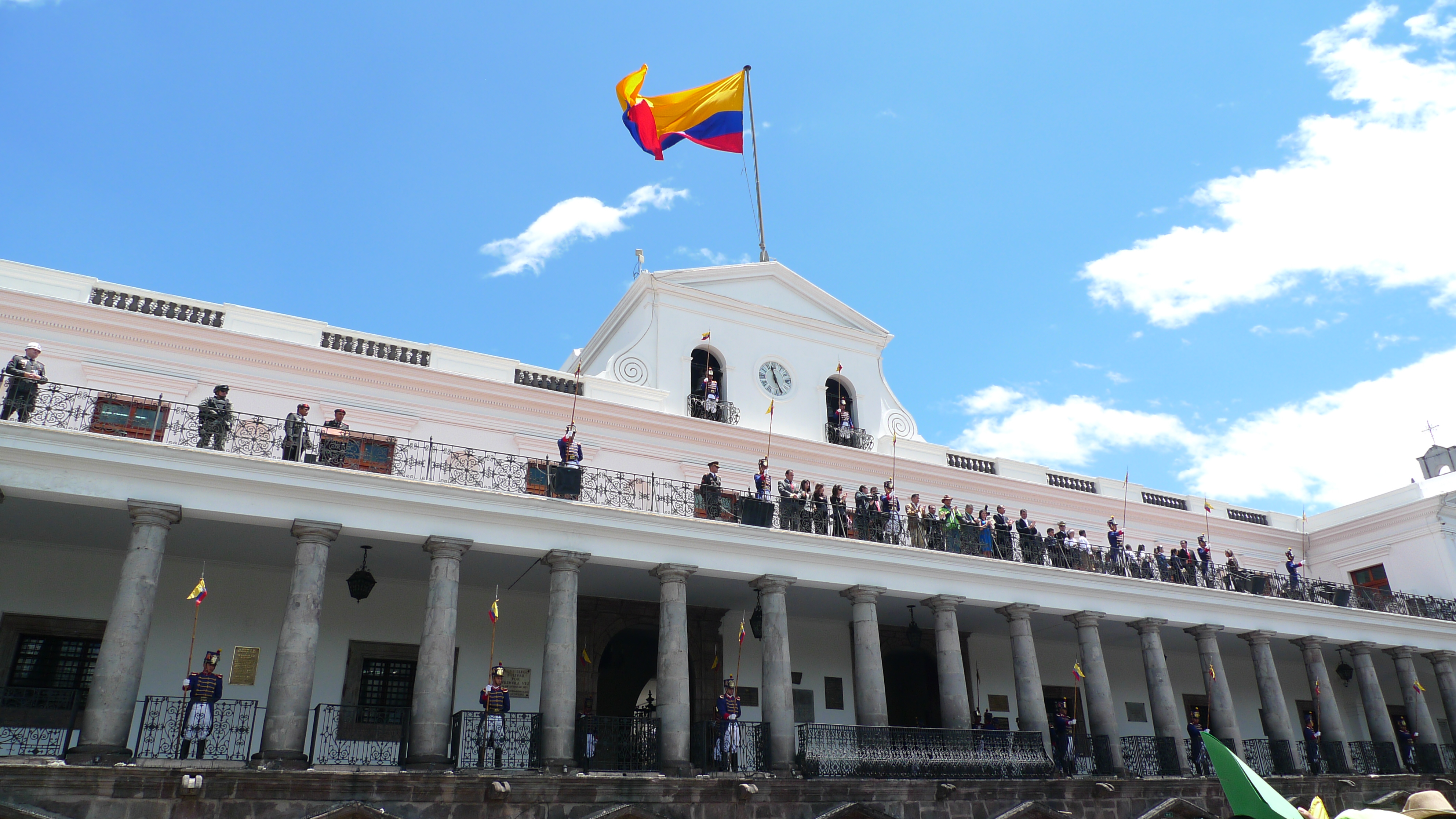
    The morning that we arrived was the weekly changing of the guard at the Presidential Palace.  Since we were only three blocks from the main square, we felt that we absolutely had to see it and we were glad that we did.  Accompanied by the requisite pomp and circumstance, it was quite a sight to behold – parading horses, ceremonial guards with shining lances and colorful pennants, protesters, indigenous folks dressed in traditional clothing, water coca leaves and sun hats being hawked, kids offering shoe shines, and the actual President doing a meet and greet.
    L1030830Having been part of the entourage that took the former President Clinton and his family rafting on the Snake River, I had seen the various levels of presidential security, all of which seemed to be present for this weekly activity.  There were even a couple responses to minor threats as evidenced by the Secret Service guy with dark suit, reflective glasses, communication thing in his ear and in his hand goes running in to the crowd with the uniformed “Presidential Police” guy in full riot gear only to come walking back a few minutes later.  Apparently that situation had been handled and all was well.  For only the second time in our trip, we felt that we were truly “somewhere different” (the first was doing the land border crossing from Costa Rica in to Nicaragua).
    L1040013
    Quito also has a great Museum of Archeology chronicling the human history of  Ecuador.  The bottom floor is pre-colonization history and the upstairs is post-colonization.  On the first floor, Mac was fascinated by the dioramas of the different ancient peoples that inhabited the various climates of the country.  We probably spent 20 or more minutes looking at each one (there were 6 or 8 of them), finding the similarities and differences between the jungle people and the mountain people across time, how they hunted, what they ate, what animals were where, how the lives of folks changed with “progress”, etc.  It was quite engaging for both of us.
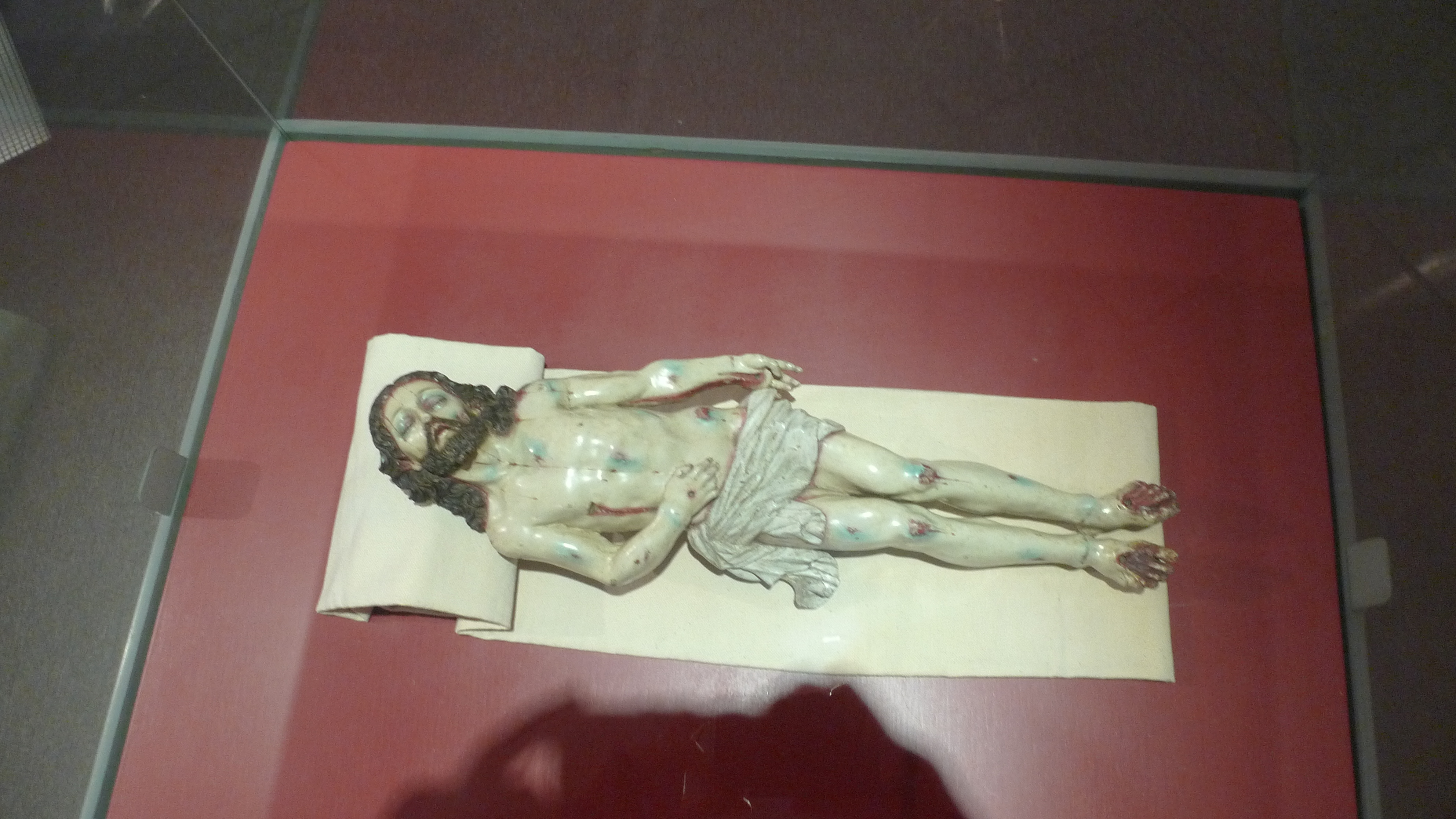
    L1030881Lucia and Colburn spent their time perusing the pre-Incan artifacts and reading about the history as well.  This part of the museum is very well done but we were all struck when we went upstairs to view the post-colonization section.  Gone were the dioramas and objects of daily living.  Instead, the entire upstairs was devoted to Spanish Colonial Christian antiquities including gilded alters, a plethora of graphic crucifixes, paintings of damnation and other many other fear-inducing artifacts.  After about 10 minutes, the kids had had enough of the torment of Jesus and we headed out for a little time in the park to clear our minds of the images we had just seen.
     L1030922
    After a brief stop at the “Middle of the World” (literally on the equator – Mac is checking the GPS to make sure it read 000,000,000), we headed up to Otavalo, a smallish town a couple hours away known for its weekly indigenous crafts market.
    L1030954
    While many of the guide books state that this is now largely a tourist market, we did not find it to be overrun with tourists.  Perhaps because we are here in the off-season, we felt as if we experienced folks going about their weekly routine purchasing meat, plastic pots, clothing, etc.
    DSC_0461
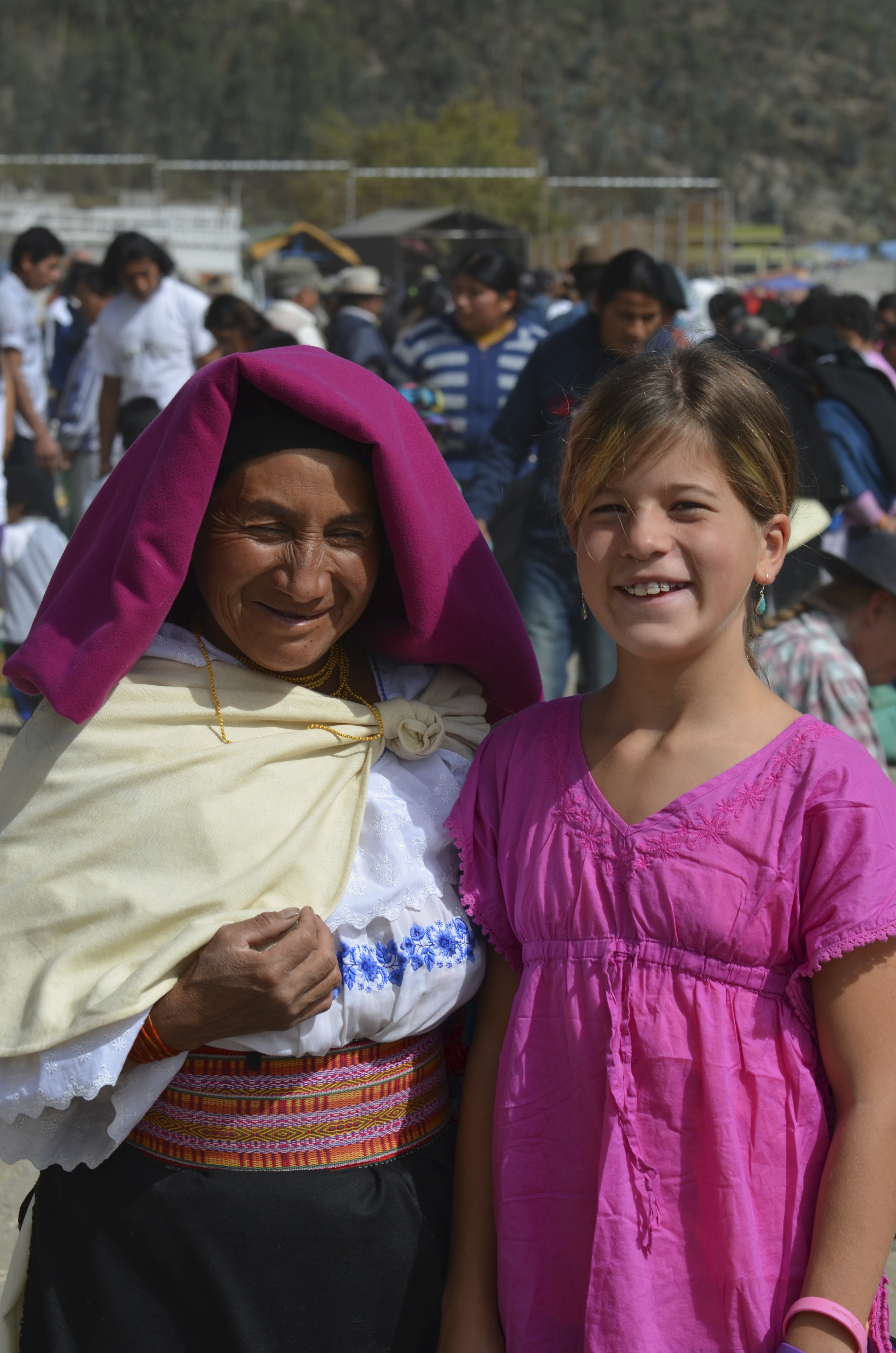
    Yes, many of the stalls are dedicated to souvenir-type objects, but there were also many selling traditional clothing (which, despite the high cost, people still wear on a regular basis), underwear, cell phones, horseshoes, leather belts, brooms, vegetables, plastic tarps, etc.  (Note on photos below: Our family is not standing on anything – they are on the sidewalk, even with the other folks)
    DSC_0523
    The market is definitely the place to be on Saturday as what is normally a quiet small city becomes a bustling metropolis over night.  Streets and sidewalks are congested with people and cars, restaurants and food stalls are packed, and there is the constant soundtrack of the pan flute everywhere.
     DSC_0501
    There is also a Saturday live animal market that coincides with crafts market.  Colburn and I had been to several “meat markets” when we were in Asia years ago, but never one for live animals.  The kids had never been to any such an event before.
    DSC_0488
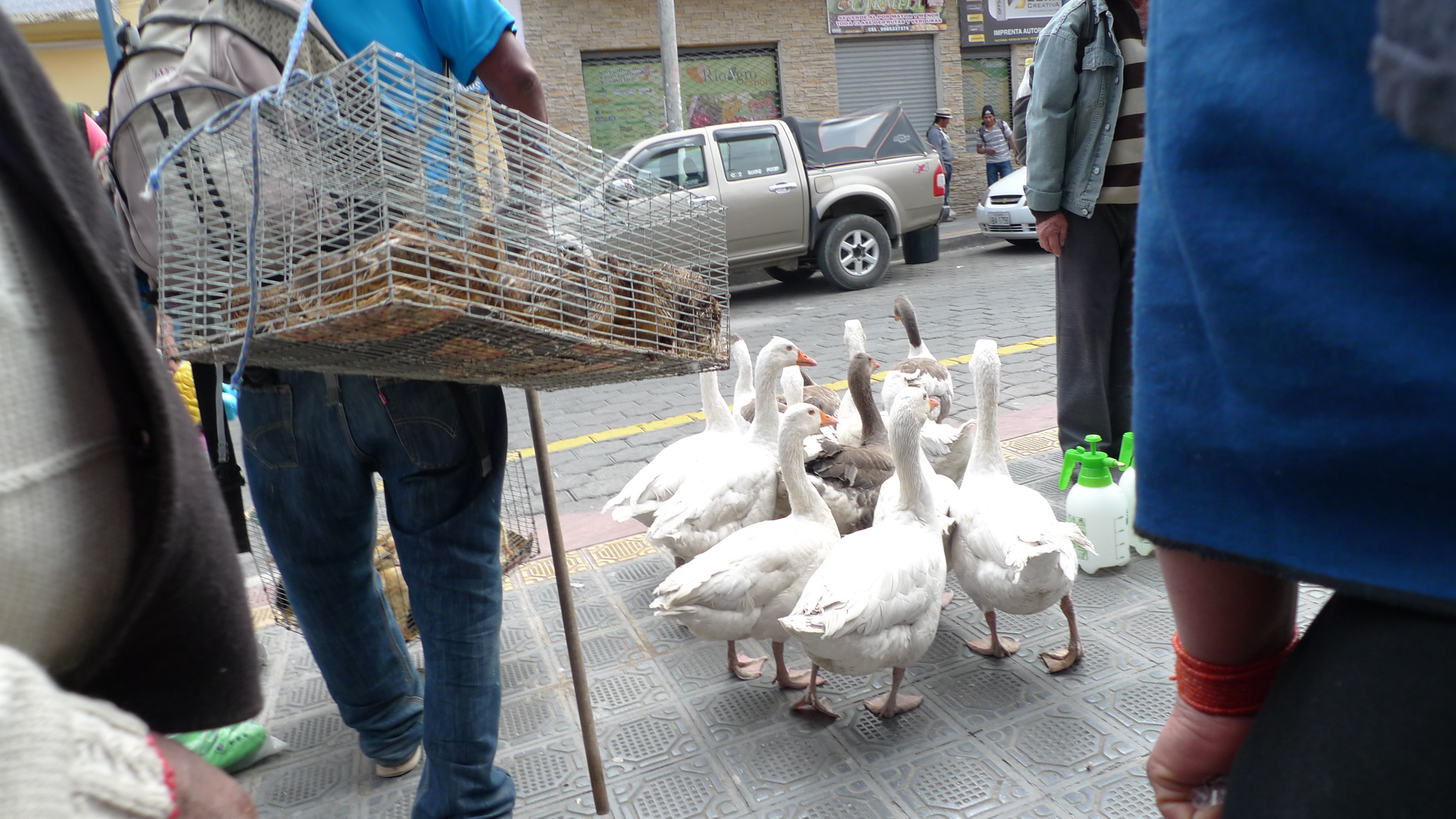
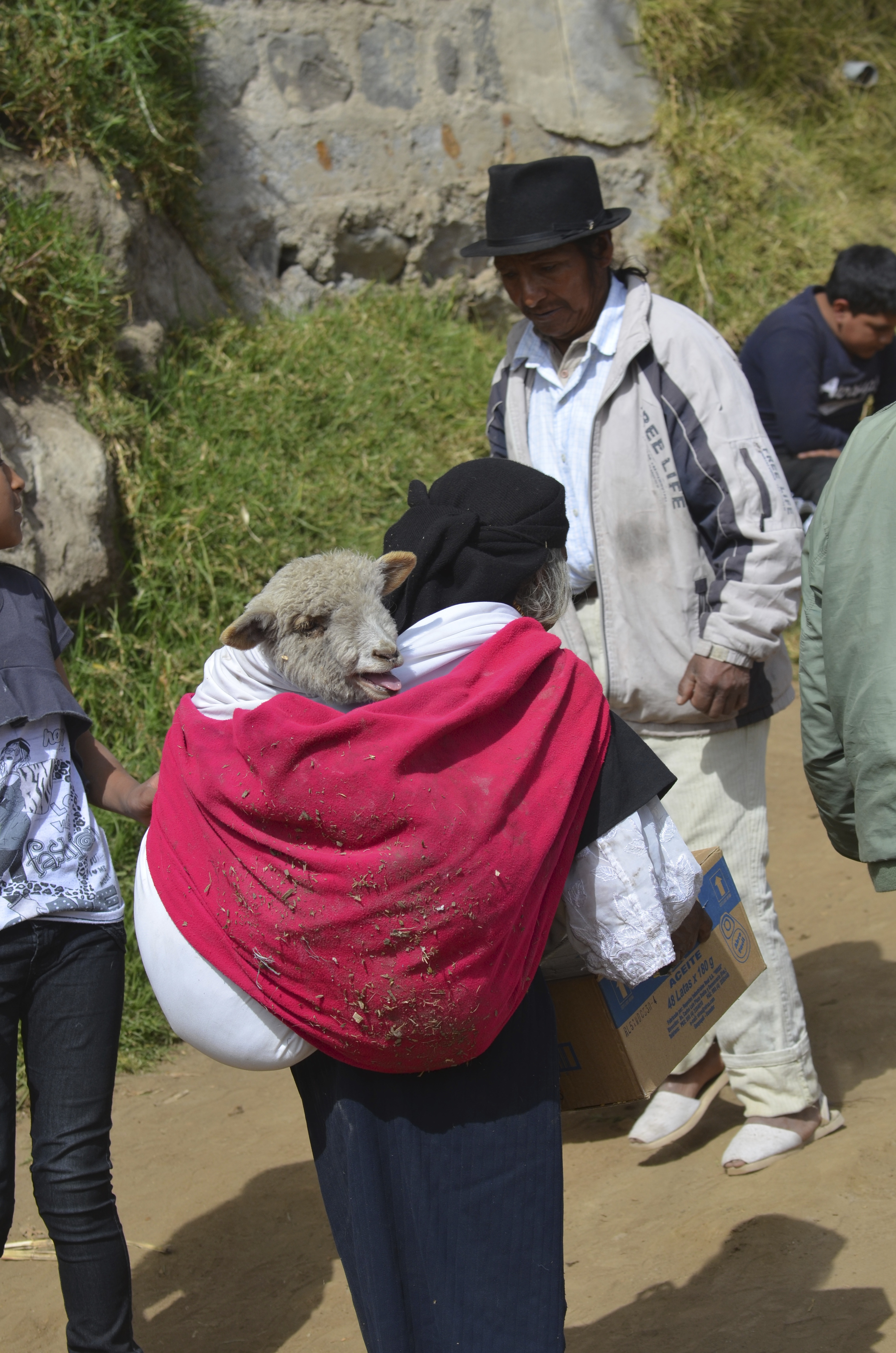
    In this market there were chickens, geese, and ducks in all the different stages, guinea pigs by the sack-full (literally they are carried in old rice sacks), and sheep, goats, pigs and cows tethered to makeshift ropes.  There were even puppies and kittens being sold as pets, not a food source.
    DSC_0495
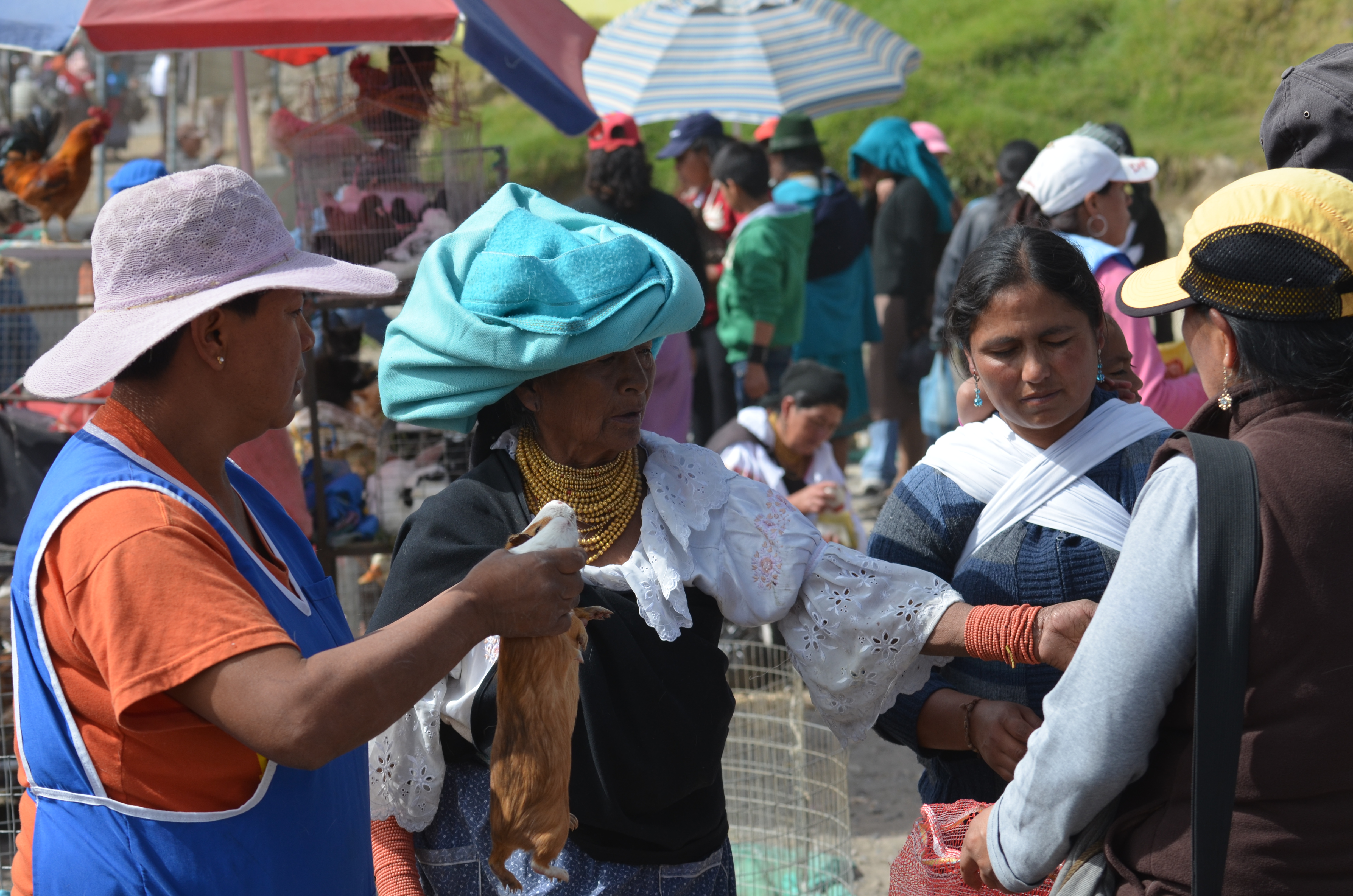
    Each animal received a thorough evaluation by the buyer before purchase.  If the chicken was not heavy enough or the guinea pig didn’t pass muster, they were put back and another one offered for inspection (note the movement of the guinea pigs being proffered).
    DSC_0496 (1)
    People walking away from the market had live chickens hanging upside down form both hands or tucked neatly under an arm, a lamb in a baby carrier on their back, or a squealing squirming bag of guinea pig slung over their shoulder.
     DSC_0491 (1)
    One thing that we have learned though long term travel is that, unlike one or two week trips, we cannot handle multiple events in one day without blowing a fuse.  Spending a few hours watching the changing of the Presidential Guard, wandering through the weekly market, or sometimes just getting from one place to the next can be enough exploration for one day.  We like to spend time just hanging out together.  We do school work with the kids, make reservations for our next destination, play games, or just veg-out with iPads, audiobooks, or a movie.  Our family has now been together 24/7 for more than two months and it seems to be getting easier, not harder.
    So, now we are off to the Galapagos for the next month.  It is somewhat surreal to think that we will be going to a place that I have always dreamed of going, but never thought that it would actually happen.  We loved the wildlife in Costa Rica and are hoping to get our fill out there.