Tag: travel with children

  • Peaceful Papua

    Peaceful Papua

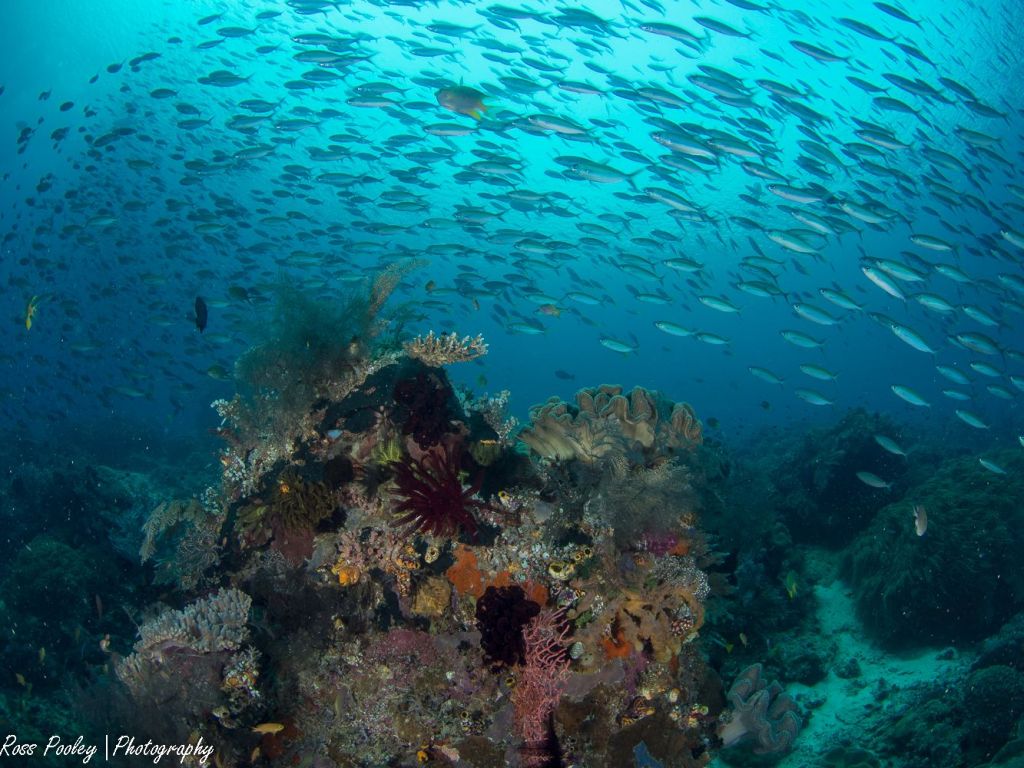
    Healthy corals (Photo: Ross Pooley)
    Healthy corals (photo: Ross Pooley)

    Located off the north-western side of the island which is split between the countries of Indonesia and Papua New Guinea, Raja Ampat is an archipelago in the middle of the Coral Triangle with incredible marine diversity.  We ventured here because it holds some of the last pristine coral reefs anywhere in the world.  Noted naturalist and broadcaster, David Attenborough (Mac’s idol since he was 5 years old) says that a single reef in Raja Ampat can contain more species of coral than in all of the Carribbean – 75% of all known species grow here.  And, having seen it, I believe that these claims might well be true.

    One of several turtles we saw snorkeling
    One of several turtles we saw snorkeling

    Coral reefs world-wide are dying at an alarming rate.  It is estimated that 25% of all coral reefs are now damaged beyond repair with another 60% are under imminent risk because of a combination of factors including rising surface temperatures, ocean acidification due to increasing CO2 levels, rampant costal development causing both pollution and sedimentation as well as over-fishing and destructive fishing methods (dynamiting, poisoning). Science does not yet have an answer for why the reefs of Raja Ampat have survived better here than in other areas but they appear to be more resistant to high surface temperatures, somehow making them less likely to suffer from the bleaching and coral disease that have decimated other areas of the oceans.
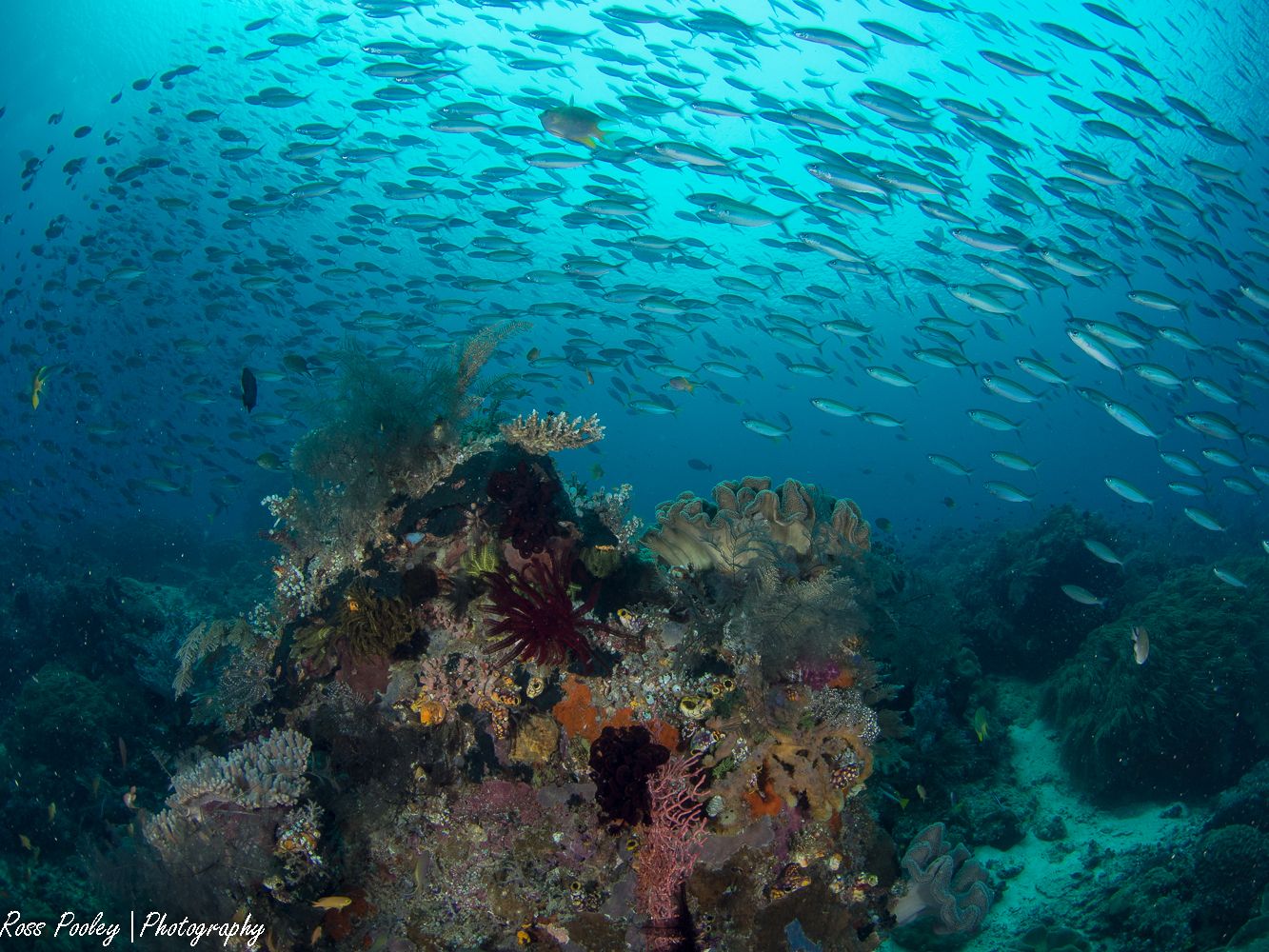
    Mayhem  (photo: Ross Pooley)
    Mayhem (photo: Ross Pooley)

    Healthy reefs support health fish populations so this area also has some of the greatest biodiversity of anywhere on Earth because it is at the crossroads of two major oceans – the Pacific Ocean and the Indian Ocean.  Like in the Galapagos, cold currents bring nutrients from deep in the open ocean to the surface when they hit the shallower waters of the archipelago.  Unlike many shallow seas which are devoid of nutrients, the nutrient-laden water supports a wide variety of fish – more than 1,500 different species and nearly 700 mollusk species.

    Note the shark in the back is grabbing a fish (photo: Ross Pooley)
    Note the shark in the back is grabbing a fish (photo: Ross Pooley)
    Little Nemo fish
    Little Nemo fish

    All of these factors combine to make one incredible place to visit.  Although many people would wait until they had more dives under their weight-belts to venture this far, we decided that if we waited to go to Papua, we probably would never see it.  You see, getting there is not easy – which is probably good because too many people would go if it was easier to get there.

    Our favorite surface interval spot, Kri Beach
    Our favorite surface interval spot, Kri Beach

    Our journey began in New Zealand with a 10 hour journey to Denpasar, Bali via Brisbane, Australia.  After clearing Indonesian immigration and switching to the domestic terminal, we took an hour-long flight to Makassar then had to spend part of the night there because our second leg didn’t leave until 3:00am.  Arriving in Sorong, West Papua, at 6:30am, we waited until 11:00am for our boat to the island, which was another hour-and-half journey. All-in-all, the entire journey took us something like 30 hours, only about three of which were actually spent sleeping, and that was beginning relatively close by in New Zealand.  You really have to want to get to Raja Ampat to go there, but it is definitely worth the effort.

    Mantas (photo: Ross Pooley)
    Mantas (photo: Ross Pooley)

    We chose a relatively new resort, Papua Explorers, because it offered the right mix of both diving and non-diving activities.  We aren’t really big scuba divers, so don’t plan our days around getting in as many dives as possible. Instead we wanted to learn about life both above and below the water.  PapEx helped us snorkel as a family, visit local villages, find the elusive Red Bird of Paradise and get some phenomenal diving in for the parents as well.

    Snorkeling in the blue waters
    Snorkeling in the blue waters

    The snorkelling and diving were incredible – pictures only capture momentary glimpses of what we experienced.  Beyond the myriad of fishes, we saw octopi fighting, were visited by reef sharks on nearly every dive, watched manta rays being cleaned for probably 20 minutes, found woebegong sharks hiding under rocks, observed the diminutive pygmy sea horse (even a pregnant one!) hanging on to sea fans and were surrounded by more fish than I ever thought existed in the world.  There were three baby black-tipped reef sharks and a blue-spotted ray that swam under our bungalow porch like clock-work every morning and evening.
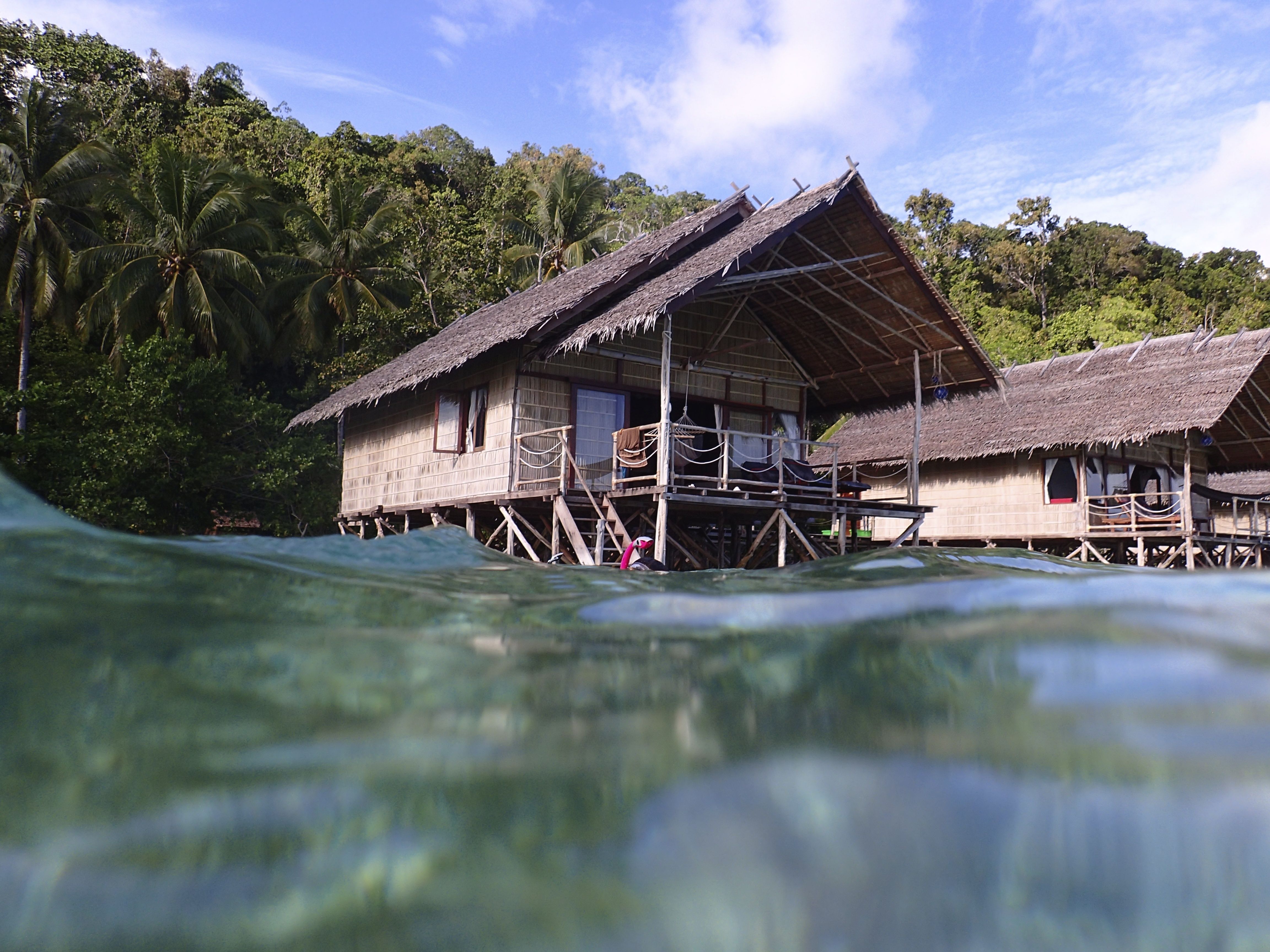
    The baby sharks and rays would hang out under our bungalow
    The baby sharks and rays would hang out under our bungalow
    Mac inspecting a tiny sea star
    Mac inspecting a tiny sea star

    But, more than the marine life, the things we enjoyed most about Raja Ampat were the people.  The local Papuans are peaceful, soft-spoken, quick to smile and always singing or playing an instrument.  We visited a village on Arborek Island where we were allowed to walk through town without once being accosted by people trying to sell us trinkets and treasures.  In nearly two years of travel, this is the first time that I can recall where literally no one asked us to buy anything.  In fact, there was nothing but biscuits and toilet paper for sale – no necklaces, bracelets or sarongs.  The people smiled at us, waved, and went about their day, seemingly happy to share their island with us without expectations.  It really makes me wonder why the people of Papua have not succumbed to exploiting tourists in the same way that nearly every other place we have visited has.
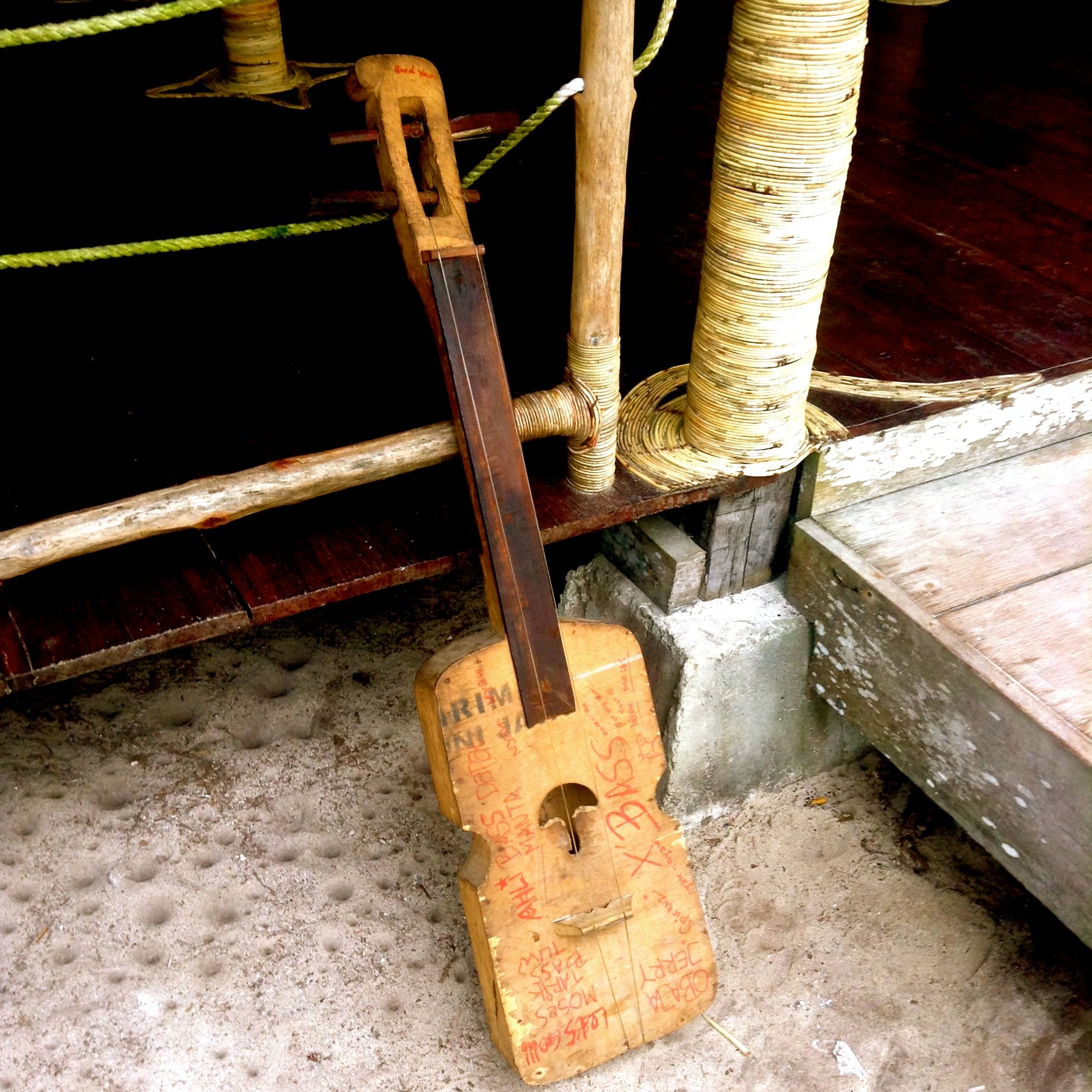
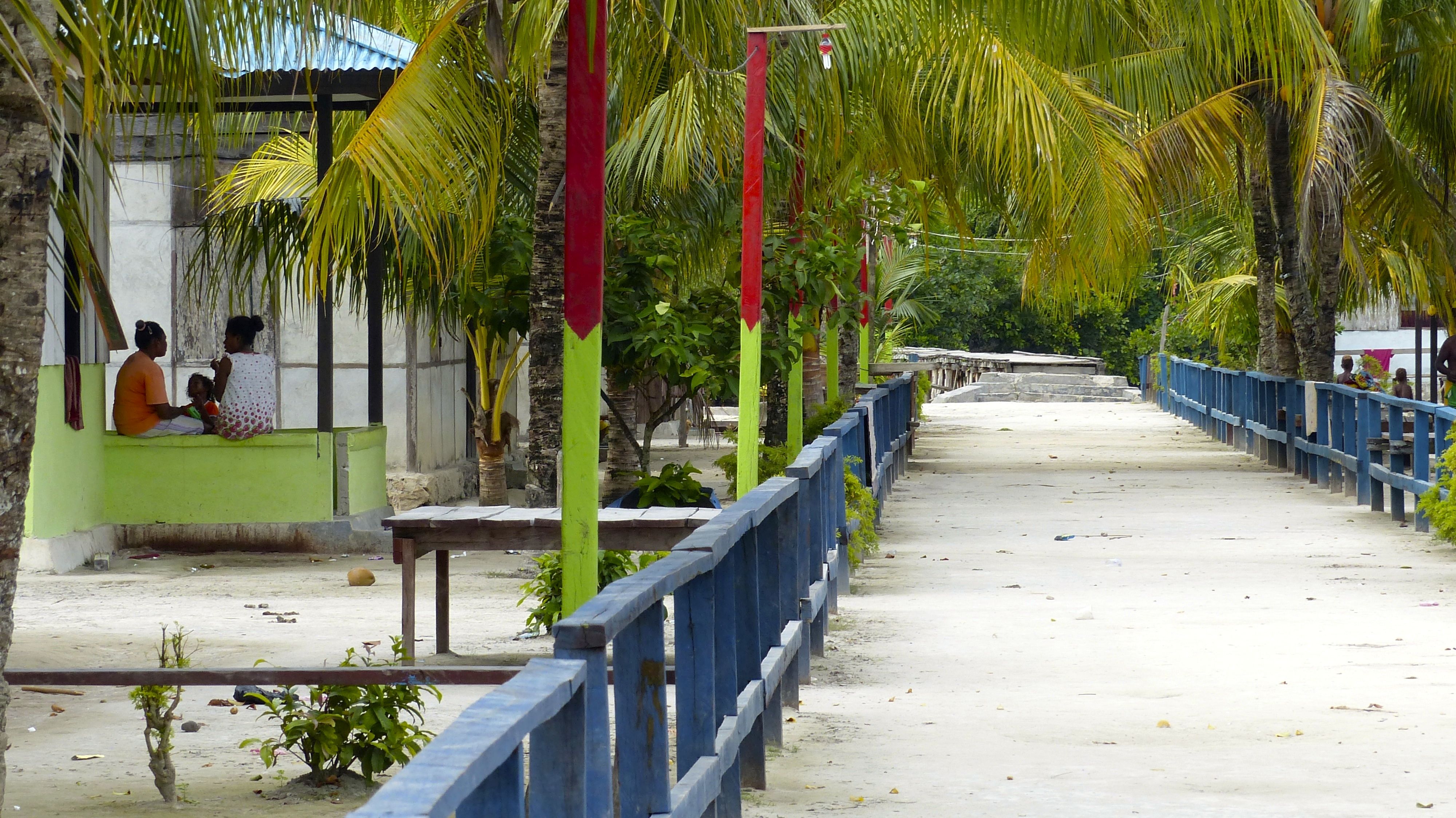
    Always music around
    Always music around
    The village near our resort - extremely tidy and nothing for sale
    The village near our resort – extremely tidy and nothing for sale

    Our main dive and snorkelling guides, Hervil and Moses, are brothers from a neighbouring island.  While their English is limited,  Hervil’s zen-master confidence diving put our nervous nelly tendencies at ease.  Moses seemed to enjoy playing with the kids in the water as much as they did, but also found lots of critters to look at as well, striking the perfect balance and keeping them interested day after day.  Our other guides and boat drivers, Obaja, Ismail, Derek, Manu, Nathan, Gundawan and others were wonderful as well – we just didn’t spend as much time with them as we did with Moses and Hervil.  Everyone made us feel very welcome and well looked-after every day.
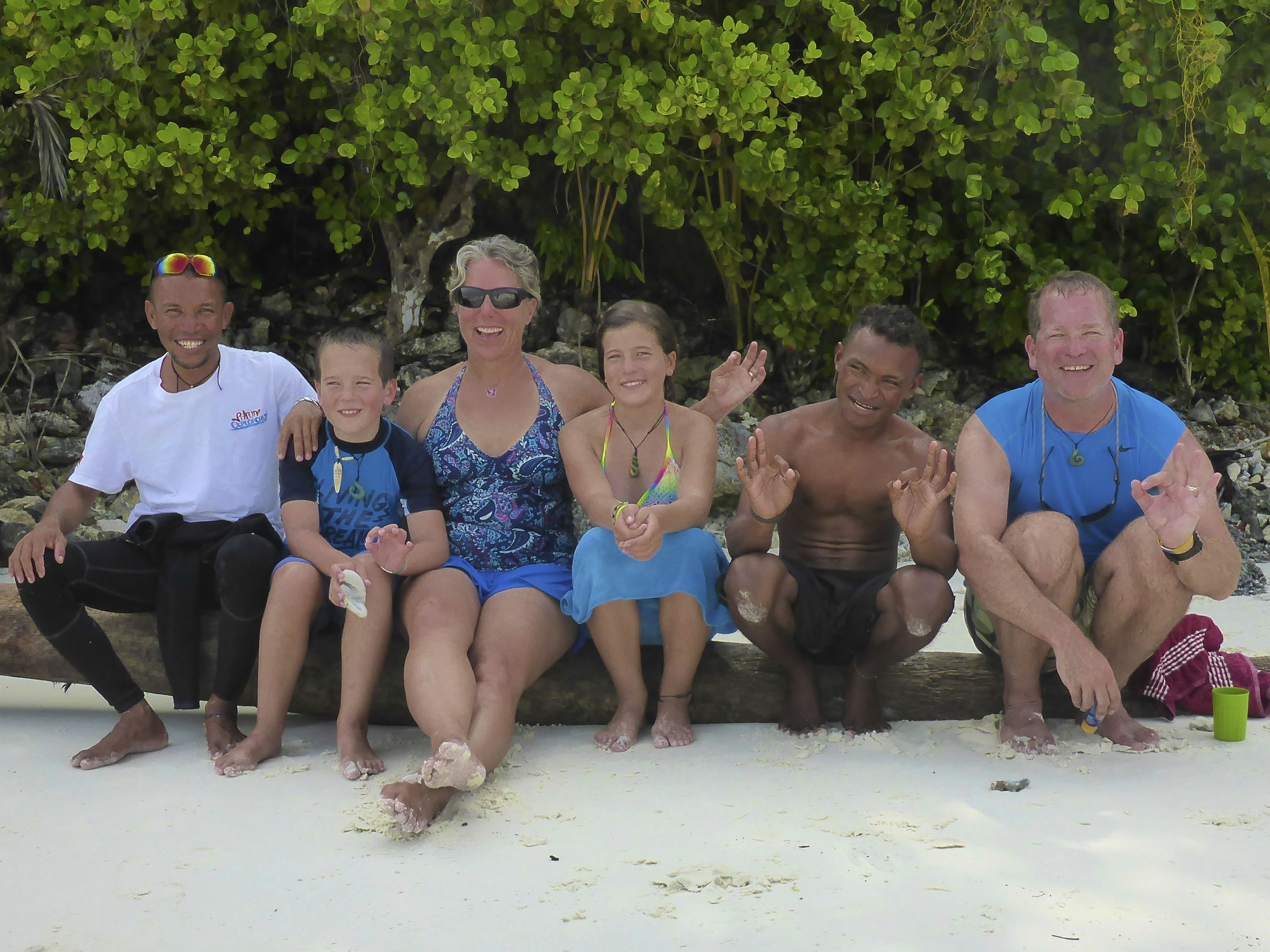
    Most of our dives/snorkels were guided by Hervil & Moses
    Most of our dives/snorkels were guided by Hervil & Moses

    We were also fortunate to have an incredible group of guests with us almost the entire two weeks we were there – Marquee and Jay from Chicago, Sonia and Richard from Portland, and Joonas and Camilla from Finland – making the time out of the water as enjoyable as the time diving and snorkelling.  They embraced the kids as equal members of the group, not just something to be seen and not heard.  This made our time together even better, especially for Mac and Lucia who now exhibit the traveller’s love of sharing stories from the road, but are often over-looked during the dinner-table discussions because they are “just kids”.  Not so in Papua.  We would love to come back again sometime soon.

    Having fun in Raja
    Having fun in Raja
  • The Unknown

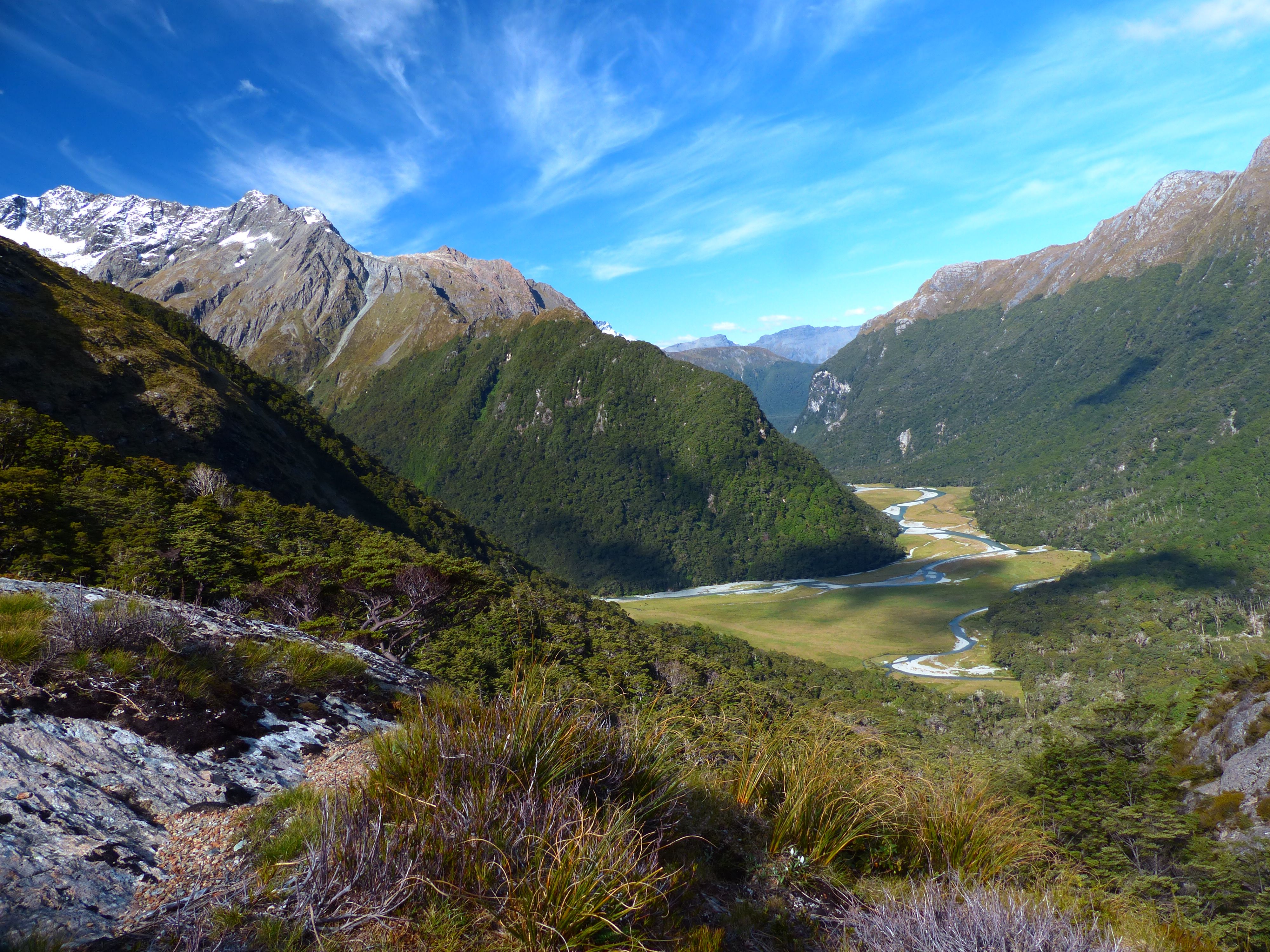
    The view from our last hut
    The view from our last hut

    As I stood at the sink of the hut doing the breakfast dishes on our last day of trekking, I asked the woman standing next to me, a Danish mother of an 8 month old baby, what their plans were for the day.  Expecting to hear, “heading out”, “going to see the lake” or something similarly safe, I was moderately surprised when she replied, “Heading to MacKenzie”, a trekking hut some 12 kilometers over a moderately steep alpine pass away.  We had done the walk the day before and enjoyed it tremendously, but it is the middle day of a 3-4 day high alpine trek in New Zealand — not something you expect to be done with a young child.  Initially I was taken slightly aback by the response, but as I considered it further, I said, “Wow, I really admire you!” To be honest, we love adventure, but I don’t think it would have ever even crossed our minds to take our infant on a multi-day hike where you have to sleep in dorms of 25-28 beds.  We were challenged by car camping trips to Yosemite and Lake Tahoe, so I was impressed by the courage and confidence that these young parents showed.

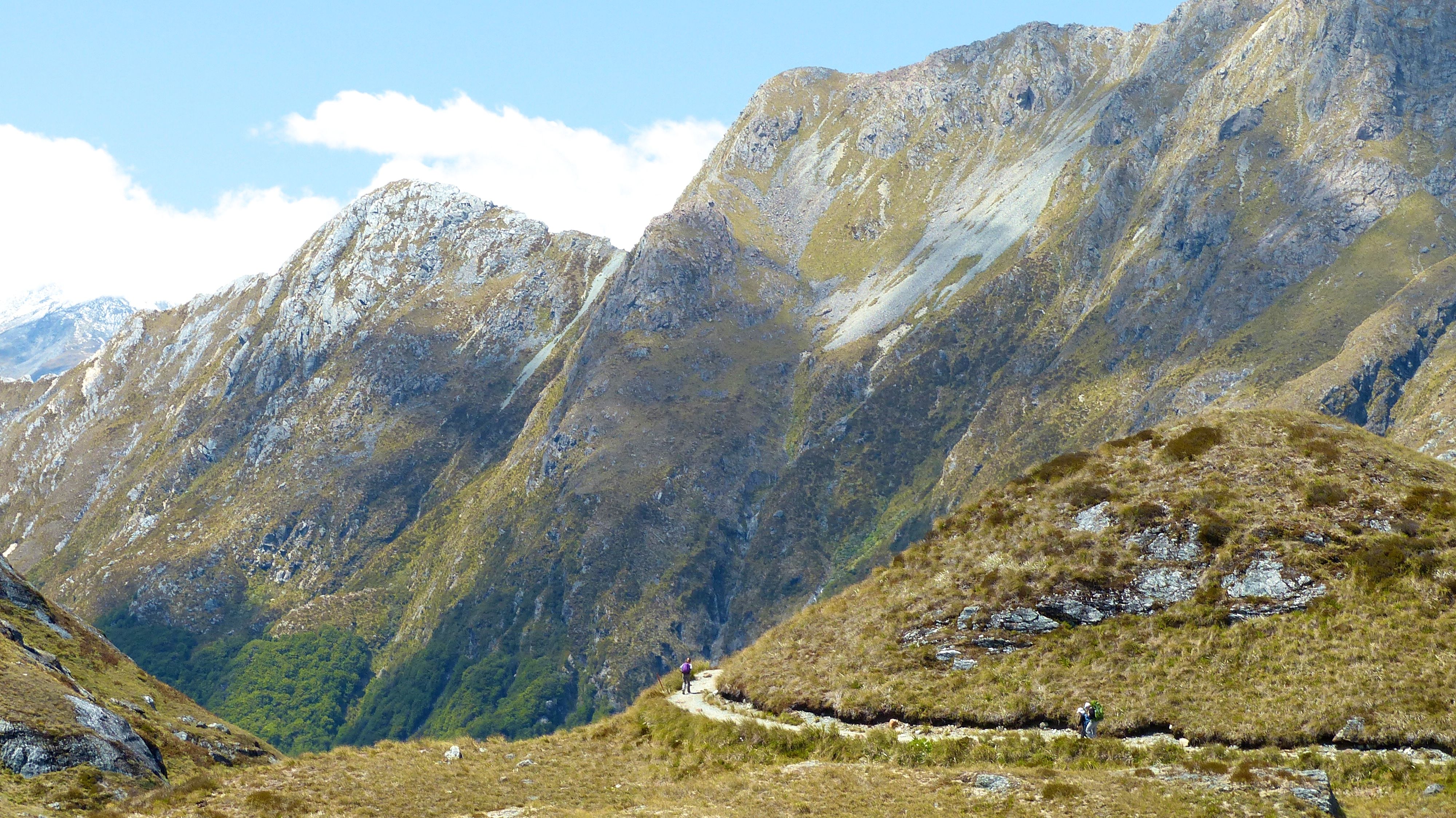
    The Harris Saddle
    The Harris Saddle to Lake Mackenzie

    But, they weren’t doing this walk on a whim or as a spur of the moment decision.  They had thought about the challenges of taking an infant trekking and came to the conclusion that they could handle any situation that might come up.  The walk they chose is on a very well maintained route (at least half of which is a meter wide gravel bridle path) with only intermittent rocky or steep areas.  The facilities are exceptional with cosy warm huts every evening, running water that can be consumed without treatment, and flush toilets.  They planned their trip so that the first night was only a half-day hike away from the car so should the situation be too challenging for them or their baby, Elena, they could easily descend.  They had been ready to abort the trip because the weather was quite unsettled for a few days before they began walking, but it had cleared and was predicted to be beautiful for their three nights/four days.  They had planned that each evening her partner would make an announcement during the hut talk that although their daughter is normally a good sleeper, they had extra ear plugs for the other people in the bunk room with them in case this was one of her off-nights.  The night we were with them, someone in the corner of the room commented that they wished that the people who snored would have been so thoughtful!  Everyone in the hut seemed quite content to have such a young hiker amongst them and appreciated the thoughtfulness of the parents.  Elena spent the evening being adored by young and old alike.

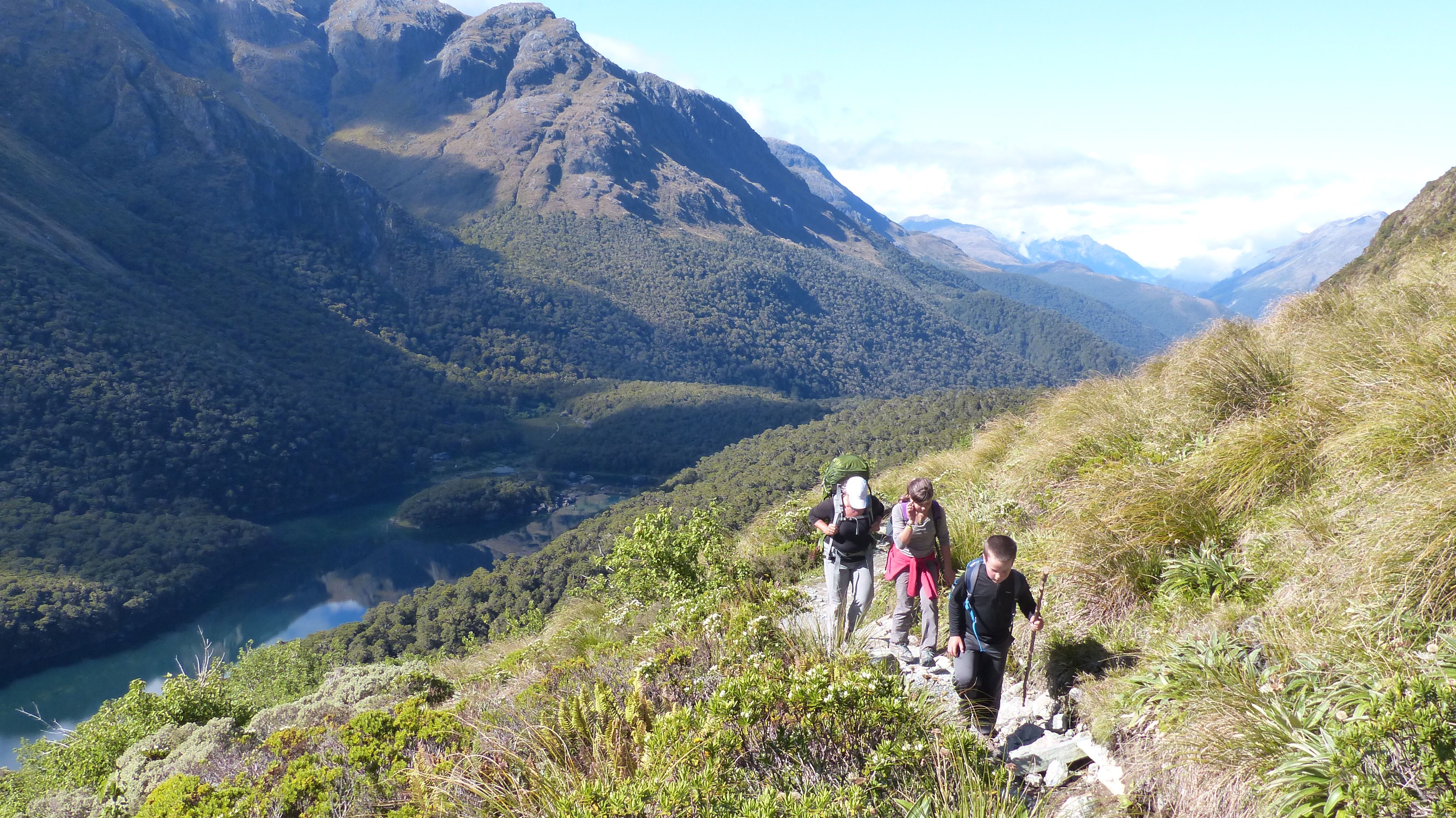
    Ascent
    Ascending from Lake Mackenzie

    As our conversation about doing things with children continued, a Polish father hiking with several kids and also doing breakfast dishes with us, joined in commenting that he felt many people can only see a myriad of reasons why they should not do something rather than the few but compelling reasons why the should do something.  Together we pondered why we were all in New Zealand, a half-a-world away from our respective home countries, trekking with our children, when there are so many reasons why we shouldn’t be on such an adventure.  The line of questioning goes something like this:  what will we do if someone gets sick?  what if the baby gets fussy?  how will we make sure the kids aren’t behind in school when they get back?  etc.  There are an awful lot of reasons why we shouldn’t be there.  But, in the end, there is really only one good reason to do something out of the ordinary — because you really want to do it, and for some people that is enough of a reason to actually do it. For each of us standing at the line of sinks that morning, none of our trips would never have happened if we let all of the reasons why we shouldn’t  do it rule our decision, yet we were all there.  What is different about us?  Why did we choose to do something which has so many reasons not to?

    MackenzieLake
    Lake Mackenzie

    I believe that it comes down to a tolerance for the unknown.  At home our lives are largely predictable and there is great comfort in that routine.  We know what our daily schedule is — kids to school by 8:30 and us to work by 9:00, a full day at work then pick up the kids for after-school activities, make dinner, get any home chores done, and be in bed by 10:30.  We have our favorite markets for groceries but also know where to go for a back-up, we have our favorite coffee shops in several different parts of town depending on where we are and can drive home without worrying about which exit to take because we go there out of habit rather than conscious thought.  If our kid gets sick, we know we can call our primary care provider for a same-day appointment or go to an urgent care.  When our kids were babies, if they were fussy, we had an armory of resources to calm them and a pile of things to distract them.  But when you step outside of this norm through travel, everything is unknown — how to navigate in a different culture, what to do with your days, how will to find your way through foreign lands where you may or may not be able to read the signs, where to find food to eat, what you will do if someone gets sick, what to do if the weather is horrible, etc. — and you have to be okay with not knowing because the list goes on and on.  As you enter the unknown and live there for awhile, a sense of accomplishment and confidence flourishes – both as individuals and as a family.

    HowdenHutGames
    Howden Hut Games

    With travel you learn that things will happen, but you will be able to figure out how to handle them.  You will experience the kindness of strangers for the overwhelming majority of people in this world are incredibly nice and will go to great lengths to help out a foreigner.   You will also find that there are a great deal more similarities in people than differences. If you let the unknown of what you will do if the baby gets fussy in the dormitories rule your decision, you may never experience her becoming the loving center of 48 people’s lives for one evening.  If you let the unknown of what you will do if someone gets sick when they are trekking, you may never watch young men at a Tibetan monastery blowing their shells and banging on their drums as they learn the meditation chants.  If you let the fear of what will happen if you get lost driving your own car through Africa, you will never share peaches with three generations of a family of wood-carvers along the side of the road.

    The notice board keeps you informed
    The notice board keeps you informed

    It is only through a tolerance of the unknown that some experiences can happen, but this is not a process one can enter blindly trusting that everything will be fine without forethought.  We, in fact, spend a great deal of time planning and evaluating our options, considering what we would do should certain situations occur. We have taken reasonable precautions to handle the foreseeable obstacles.  What will we do if someone gets sick?  We have an armory of medicines and a nurse practitioner on staff.  If she can’t handle the situation, we have an insurance policy which will help us locate English speaking providers in every country.  So far we have only had a broken toe, one case of pneumonia, a round of strep throat, a few bouts of travelers diarrhea, and two chipped teeth — all of which have been handled without any trips to a hospital and only two visits to local dentists.  What will we do if we get lost? Each of us wear a wrist band with our contact and medical information engraved on it and have a satellite phone for emergencies.

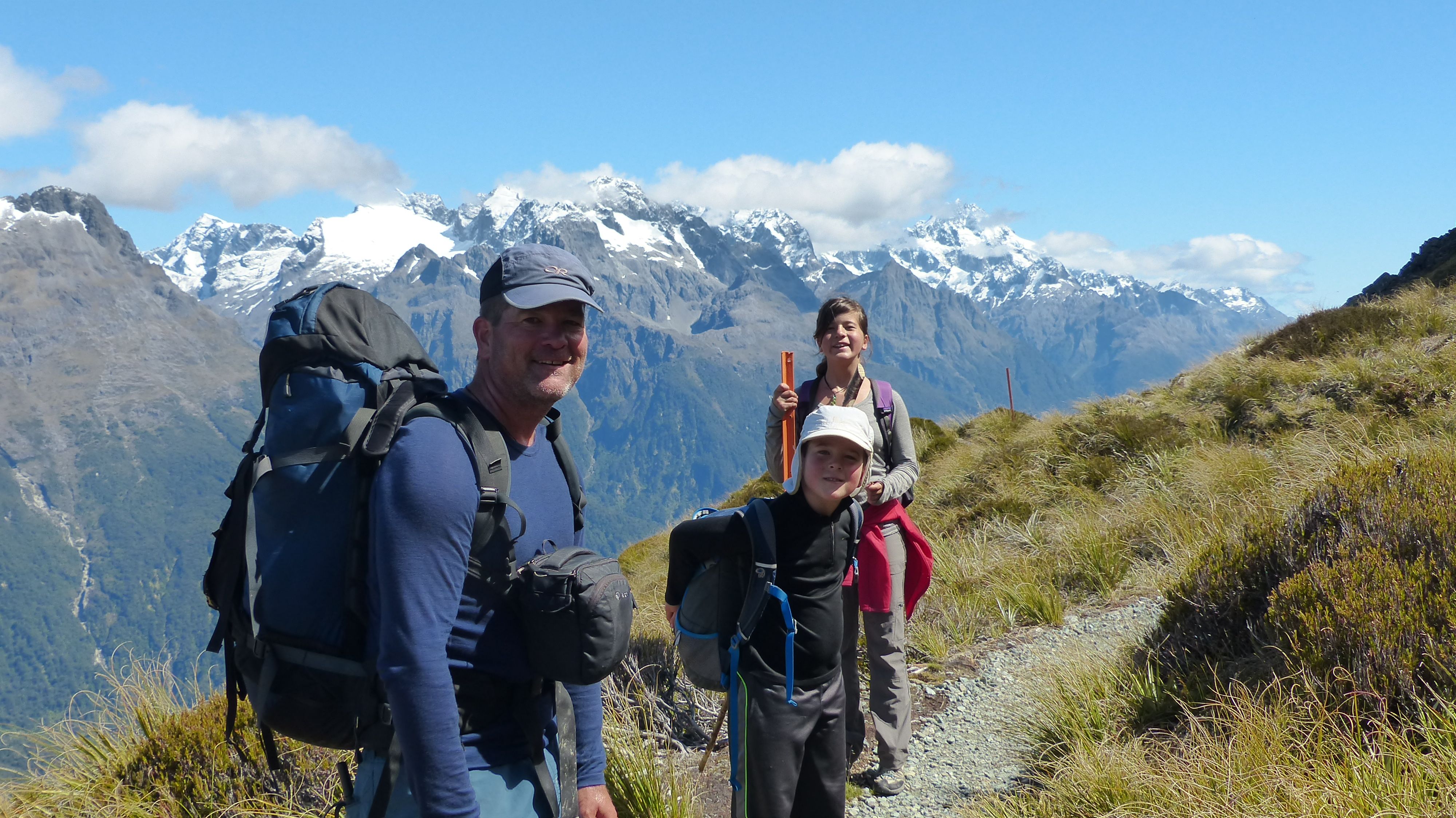
    High on the Routeburn
    High on the Routeburn

    What will we do if the area could be dangerous because of weather or political strife?  In areas where weather can have a severe impact on the experience or safety, we plan accordingly.  We wanted to go to Madagascar in March, but it is the middle of the rainy season and roads can be dangerous. It’s just not worth the risk. When we were in Nepal, a freak storm dumped snow on the route we were supposed to trek so we headed to a different area.  Our  seven day Greenstone-Routeburn trek was condensed to four because there was a major low pressure system that would have made it difficult to enjoy hiking and possibly dangerous.  Because we could change it, we did. Although everything would probably be just fine, visiting Egypt and Ethiopia are currently off the table for this round because the political situation seems too uncertain for our comfort but other areas such as Turkey, Israel and Jordan are still being considered.  We are constantly reviewing our options and making sure that blind adventure does not over-rule common sense and that we draw on multiple sources of valid information to base our decisions.  We have learned that we can handle the unknowns.

    Sunny days
    Sunny days

    One of the byproducts of a global family journey are a vast and rich wealth of stories — stories we share with each other, with family, with friends, and with other parents who wonder whether they should (or could) do something like this.  These stories are born from the adventures and have become the fabric of our vital and colorful family circus.  We have each benefitted from adventures experienced during childhood and are privileged to have had consistent and loving families our whole lives.  Early on, both of us, on opposite coasts, developed a passion for adventure.  It is the reason we found each other, working as outdoor educators taking kids on trips outside. Seeing the other families from around the world in the track hut in New Zealand, sharing stories about when things did not go as planned, triggers a moment to stop as a family and ask the question, “What other adventures are out there?” because new experiences are a wonderful facet to any family’s life.  We are more open to enjoying them now because we know we can handle them.

    Hiking was like walking through an elven forest
    Hiking was like walking through an elven forest

    And now, as we begin preparation for returning to the US, we find ourselves again facing another big unknown.  Where will we live?  We are not certain, but it will be near family on one coast or the other.  How will we handle being settled after such a grand adventure?  At this point, we are all desiring a more stable routine but also know that travel is part of our blood.  This means that the thing we are currently longing for will also be challenging. Will we go back to the same professions?  Maybe, maybe not.  Colburn is going back to the US in February for interviews because he has found a few options which seem to combine his love of leadership with a bit more adventure and creativity than he had previously. If something pops up that feels right, we will follow that opportunity.  If not, we are considering other opportunities which will allow us greater flexibility so that we can continue to explore while living a more settled life. Perhaps the hardest thing to face will be heading off to our respective days without each other: the kids to school and the parents to work.  Driving away from each other even though only for 8-10 hours, after these two years, will be heart-wrenching.  We don’t wish to hasten that day, however, it must come.  In just a few months, we will again step in to the unknown of life after a grand adventure.

    DandC
    A grand adventure together!


  • Travel Vignettes

    Travel Vignettes

    Onward
    Onward

    This is a hodgepodge of short thoughts we have had recently, none of which warrant a full post so are put together.

    A Boy and His Dog(s)

    Mac and Brownie
    Mac and Brownie

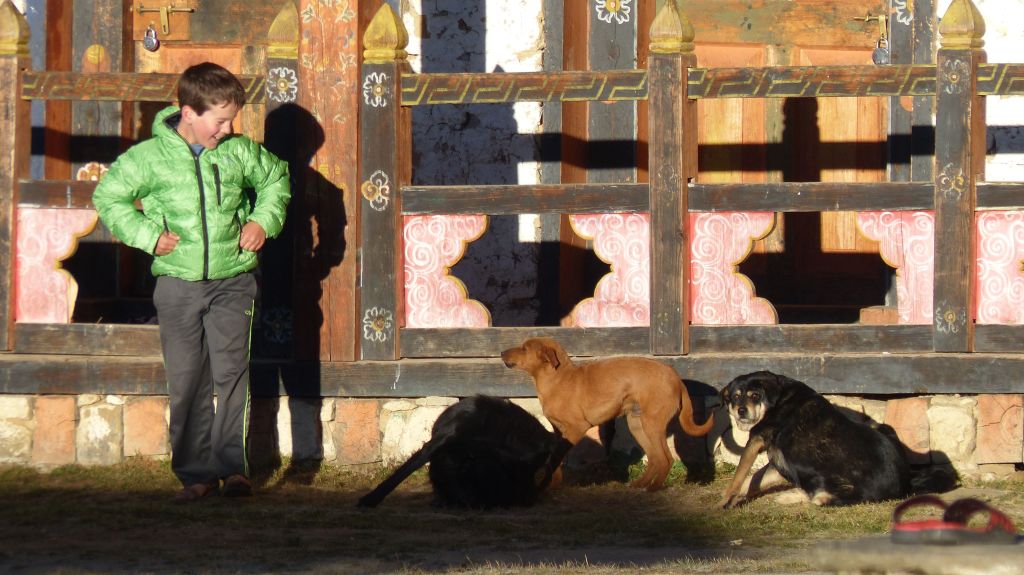
    Anybody who knows us, even a little, knows that we love dogs. Apparently, we have passed this affliction on to our children because they both fawn over any friendly dog we pass. We have found dogs to love in nearly every city, town, and hamlet we have passed through. This longing has seemed to intensify during our time in Nepal and Bhutan as Mac has been particularly hard hit by missing our curly dog. When we speak of what we long for about home, Moxie tops Mac’s list most every time. While he misses certain foods, his friends, clean toilets, etc., it is always Moxie that he misses most. Along our trek in the Annapurna region, he was able to find a young Tibetan Mastiff mix to love in every town. They all looked similar so he named each after a candy bar – Bounty, Snickers, KitKat, and Brownie. Each dog would walk us from our guest house to the end of his territory where we would eventually be guided by a different dog from the next town. Mac has been reading a lot of stories about boys and their dogs (i.e. Shiloh, Where the Red Fern Grows, etc.) which seems to allay the loss somewhat, but also seems to intensify the longing as well. That connection is something he desires intensely. Right now the kids are talking about how many and what kinds of dogs will round out our menagerie when we get back. There is something about the bond between a boy and his dog that cannot be substituted, and missing Moxie is one of the more difficult parts of traveling this long.

    Mac with Bounty
    Mac and Bounty


    A Girl Grows Up

    We were looking through last year’s photos recently when we realised just how much Lucia has grown up over the past year and one half. No longer a young girl, she is now an independent, capable, witty and aware young woman entering her tween years with grace and a level head. She has also developed a keen awareness of the role of inequality in the world. For example, while hiking in Nepal, we walked for a while with a transgender woman. After we parted ways, Lucia wondered out loud how the process happens which led us to a discussion of the role of hormones in the development of male or female characteristics. As I explained how exogenous testosterone can change physical appearance (i.e. hair on the face and chest, greater muscle mass, deeper voice, etc.), she, without missing a beat, adds, “And, of course, greater job opportunities.” At 11, she has recognised the pervasiveness of gender-based inequality across the globe – an unintended, but wholly welcome, lesson. Also showing wisdom beyond her years, after getting on Instagram after a couple weeks without internet, she said, “I am so tired of all the selfies on Instagram! Don’t my friends have anything better to do with their time?” Yes, honey, I sure hope they do, but what they look like is the most important thing in the world to them right now. We can only wonder what re-entry will be like for her. Perhaps we are simply providing something for her to go to therapy about later in life.

    With Auntie Mar just before we left
    Lucia and Mac with Auntie Mar just before we left
    Lucia, 11 years old
    Lucia now


    The Bickersons

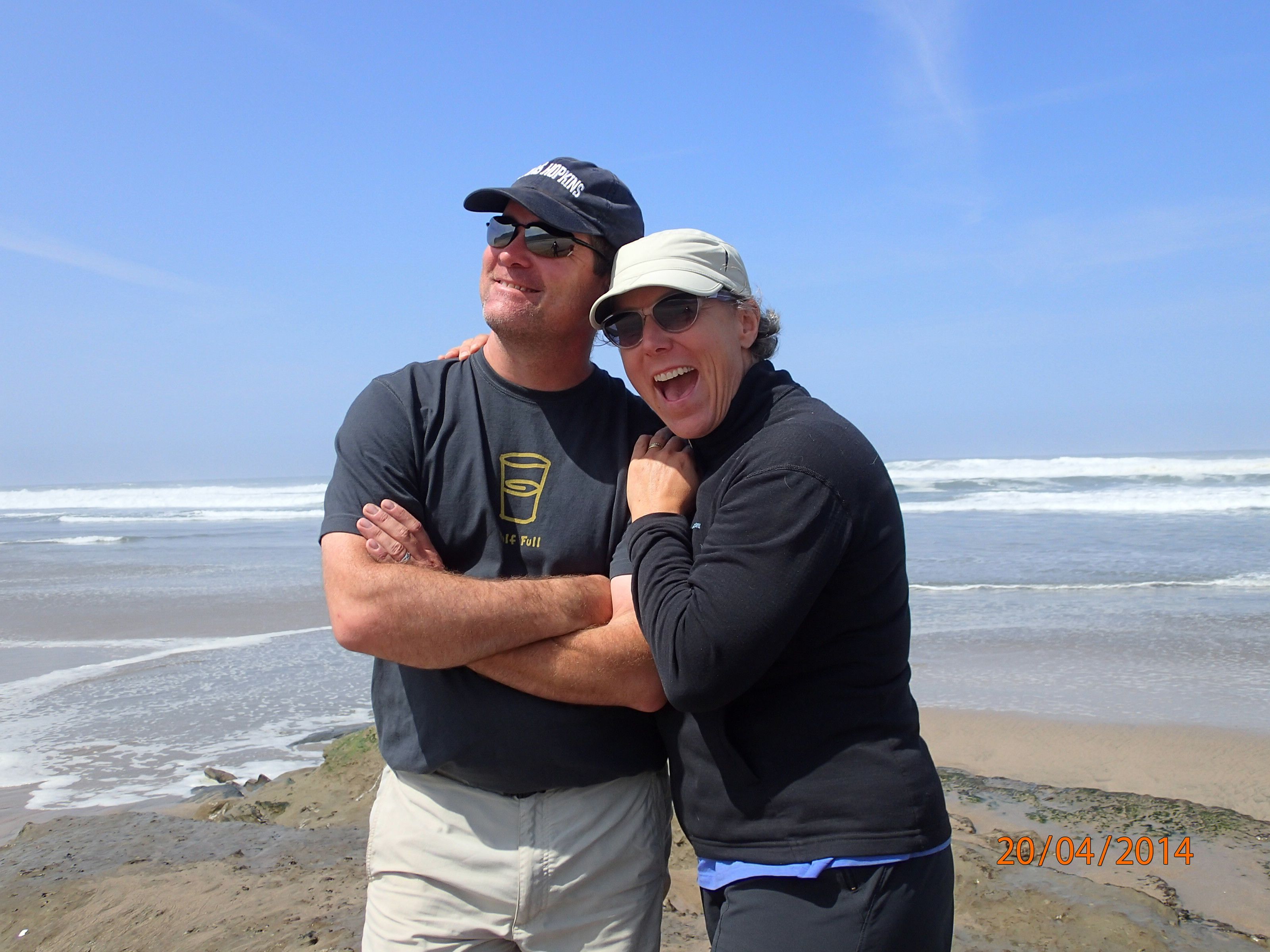
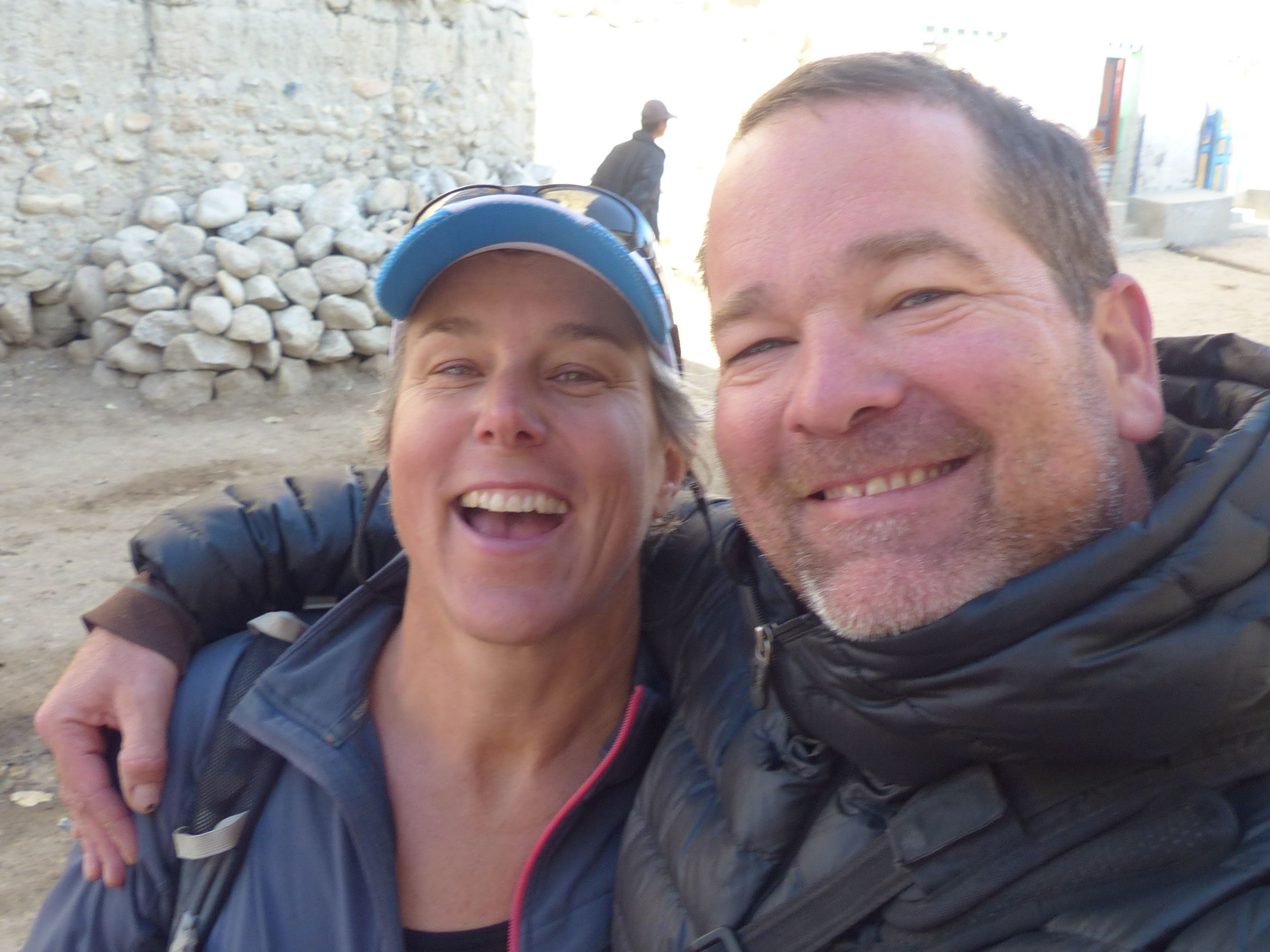
    Often we are asked if it is difficult to spend so much time together, if we we are constantly at each other’s throats. The reality is no – not at all – it may seem like it from the outside but it’s really quite enjoyable. This is not to say that traveling together is always easy, but we are quite happy together and have worked out who does what within the family. Colburn is in charge of money and restaurants, Deb is in charge of reservations and logistics, Lucia now makes sure we don’t leave too much stuff behind because we have lost 6 water bottles since August, and Mac makes sure we have snacks and water. We all have a role to play, but one of the unintended consequences of being together all day, every day for a year and a half is that our marriage has matured at an accelerated rate. We’ve become an old married couple much earlier than our 18 years together would indicate. Perhaps it stems from being more comfortable with and up front about our individual strengths and weaknesses, perhaps it is not having the distractions of work and school to temper our actions, perhaps it is just the consequence of so much time together – something most couples don’t really do until retirement – it is difficult to tell why. From the outside it may look as if we are arguing about trivial things, but the reality is that it is much more of a form of playful banter and not really an argument at all. You can’t spend this much time together and not get along. We love each other more and more each day.

    Having fun in California
    Having fun in California
    Having fun in Mustang
    Having fun in Mustang


    Holding on and Letting Go
    Traveling together for an extended period has brought us to the realisation that life really is a matter of deciding what needs to be held on to and what needs to be let go. Hold on to your children, let go of your preconceived notions of who they should be. Hold on to principles and let go of steadfast rules. Hold on to simple routines, let go of expectations that everything will go the way you think it should. Hold on to what matters most to you – people you love, beliefs, dreams – and let go of anything or anyone who does not support you in those things. Hold on to tradition even when letting go is easier. The list goes on. In fact, it might even be the theme for our book, should we ever write one…..


    Onward
    Onward