Category: South America

  • And on to Ecuador!

    IMG_0701

    After a long travel day, we made it to Quito in the wee hours of September 2.   We had rented a sweet old colonial house in the old section of town.  After a few pretty “basic” weeks in Costa Rica, we felt as if we were living the high life with a full kitchen, four levels, and private bedrooms!  And, best of all, the climate had gone from hot, sweaty and buggy to cool and dry!  Quito is at nearly 9,000ft, so the evenings were cool enough to want a sweater – something we hadn’t considered since leaving upstate New York.  We were in heaven.
    L1030937
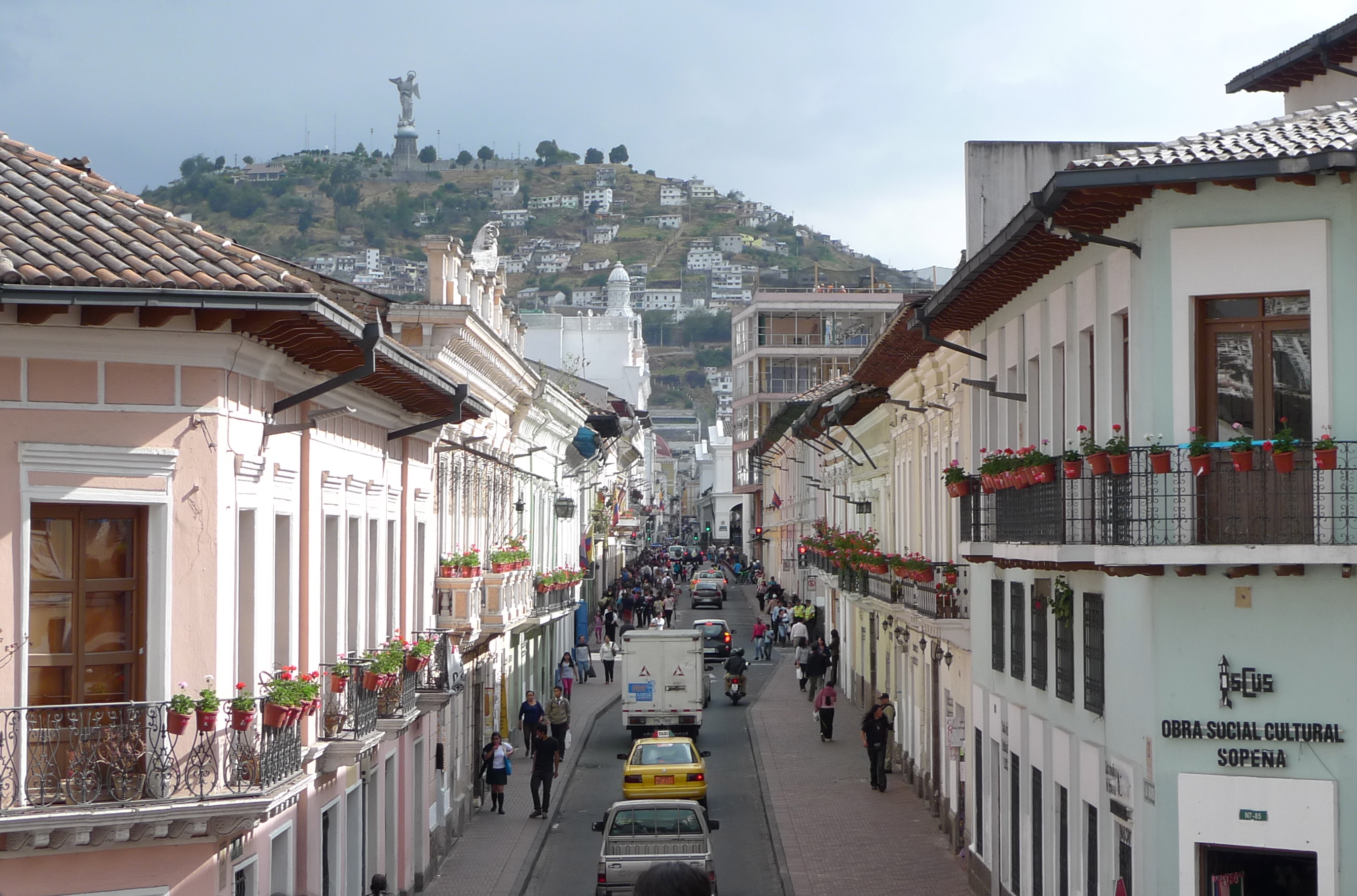
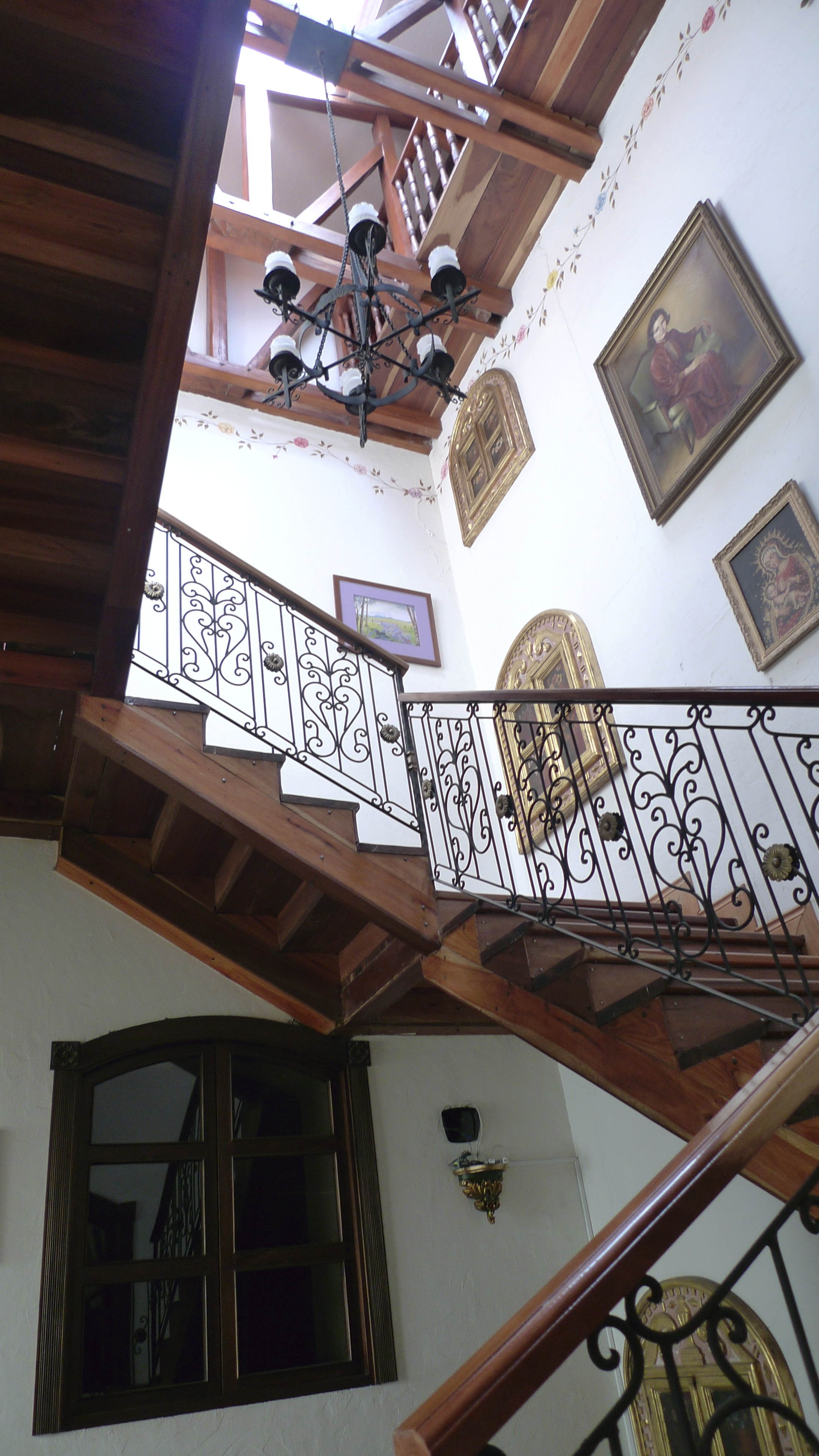
    The Old Town part of Quito is a World Heritage Site and its easy to see why. The area is small, maybe 12 x12 blocks, surrounding three main plazas.  Many of the homes have been restored and the Colonial Churches are awe-inspiring. The house we rented, like all colonial homes in South America, has a large stone and stucco facade right on the sidewalk, leaving no “front yard”.  The only indication that there is a home inside are the two large heavy wood doors.  These doors open to a hallway that in turn opens to an interior courtyard surrounded by public rooms (i.e. kitchen, sitting room, etc.), hammocks, and two outdoor seating areas.  The bedrooms and library are on the second floor and more rooms and a great roof top terrazzo on the third floor.  The basement floor had a small chapel (which kind of freaked us out at first) and what appeared to be a storage area.  Throughout the house the walls had ceramic murals, beautiful sculptures, and hand-painted floral designs.  And, all of this for $100 per night!  I would have loved to know more about the history of the house as it probably has many stories to tell.
     L1030814
    The morning that we arrived was the weekly changing of the guard at the Presidential Palace.  Since we were only three blocks from the main square, we felt that we absolutely had to see it and we were glad that we did.  Accompanied by the requisite pomp and circumstance, it was quite a sight to behold – parading horses, ceremonial guards with shining lances and colorful pennants, protesters, indigenous folks dressed in traditional clothing, water coca leaves and sun hats being hawked, kids offering shoe shines, and the actual President doing a meet and greet.
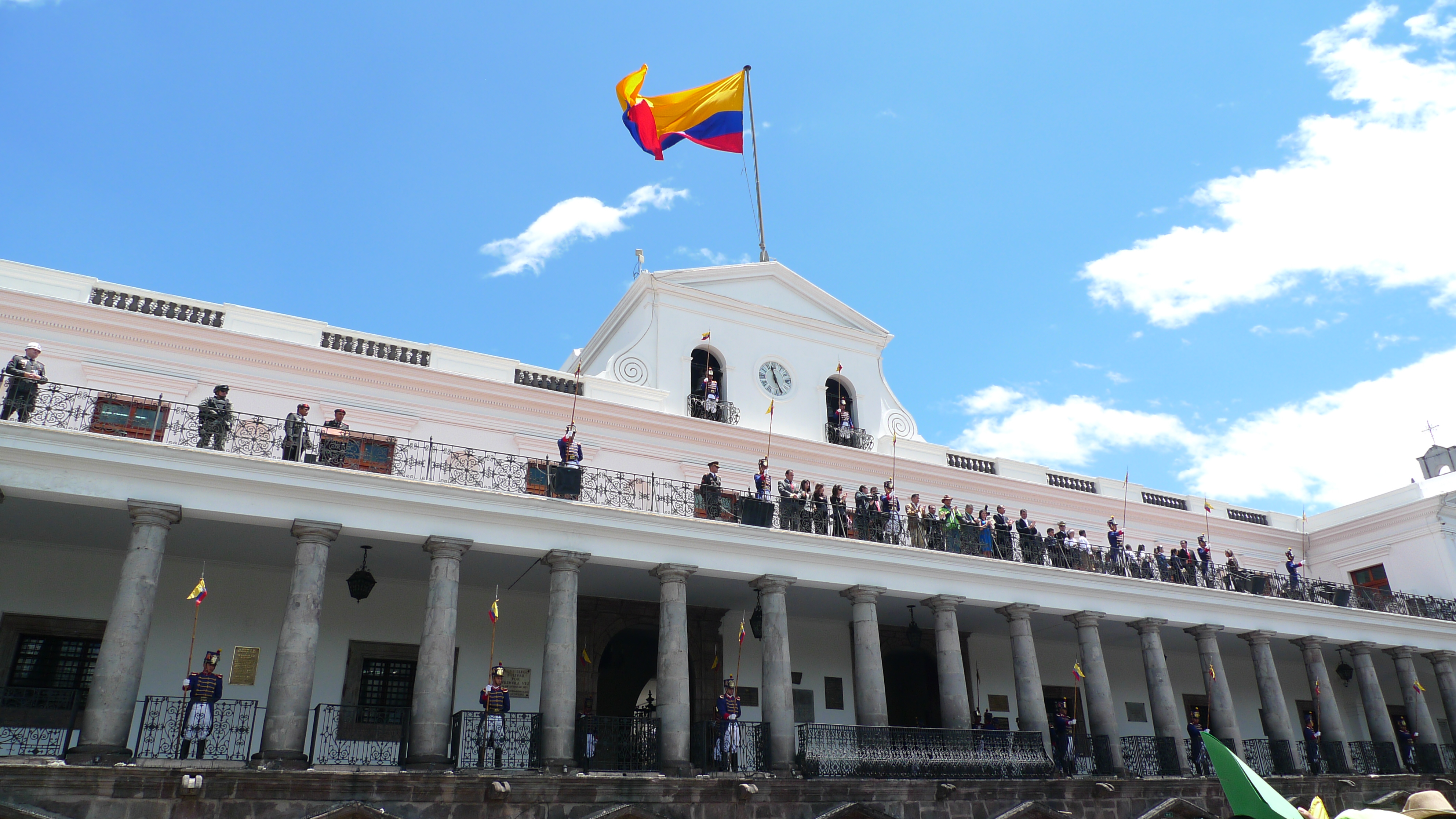
    L1030830Having been part of the entourage that took the former President Clinton and his family rafting on the Snake River, I had seen the various levels of presidential security, all of which seemed to be present for this weekly activity.  There were even a couple responses to minor threats as evidenced by the Secret Service guy with dark suit, reflective glasses, communication thing in his ear and in his hand goes running in to the crowd with the uniformed “Presidential Police” guy in full riot gear only to come walking back a few minutes later.  Apparently that situation had been handled and all was well.  For only the second time in our trip, we felt that we were truly “somewhere different” (the first was doing the land border crossing from Costa Rica in to Nicaragua).
    L1040013
    Quito also has a great Museum of Archeology chronicling the human history of  Ecuador.  The bottom floor is pre-colonization history and the upstairs is post-colonization.  On the first floor, Mac was fascinated by the dioramas of the different ancient peoples that inhabited the various climates of the country.  We probably spent 20 or more minutes looking at each one (there were 6 or 8 of them), finding the similarities and differences between the jungle people and the mountain people across time, how they hunted, what they ate, what animals were where, how the lives of folks changed with “progress”, etc.  It was quite engaging for both of us.
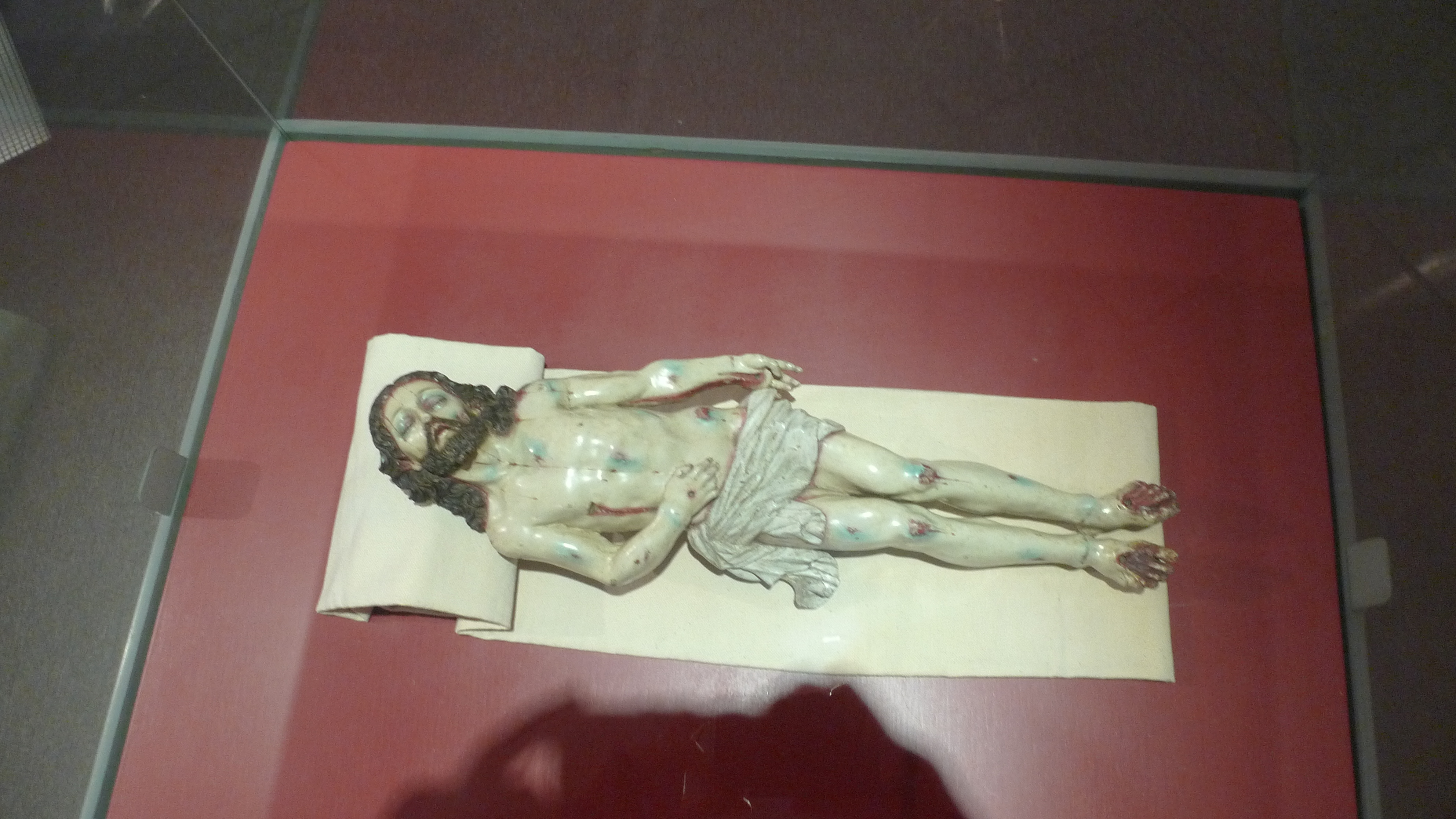
    L1030881Lucia and Colburn spent their time perusing the pre-Incan artifacts and reading about the history as well.  This part of the museum is very well done but we were all struck when we went upstairs to view the post-colonization section.  Gone were the dioramas and objects of daily living.  Instead, the entire upstairs was devoted to Spanish Colonial Christian antiquities including gilded alters, a plethora of graphic crucifixes, paintings of damnation and other many other fear-inducing artifacts.  After about 10 minutes, the kids had had enough of the torment of Jesus and we headed out for a little time in the park to clear our minds of the images we had just seen.
     L1030922
    After a brief stop at the “Middle of the World” (literally on the equator – Mac is checking the GPS to make sure it read 000,000,000), we headed up to Otavalo, a smallish town a couple hours away known for its weekly indigenous crafts market.
    L1030954
    While many of the guide books state that this is now largely a tourist market, we did not find it to be overrun with tourists.  Perhaps because we are here in the off-season, we felt as if we experienced folks going about their weekly routine purchasing meat, plastic pots, clothing, etc.
    DSC_0461
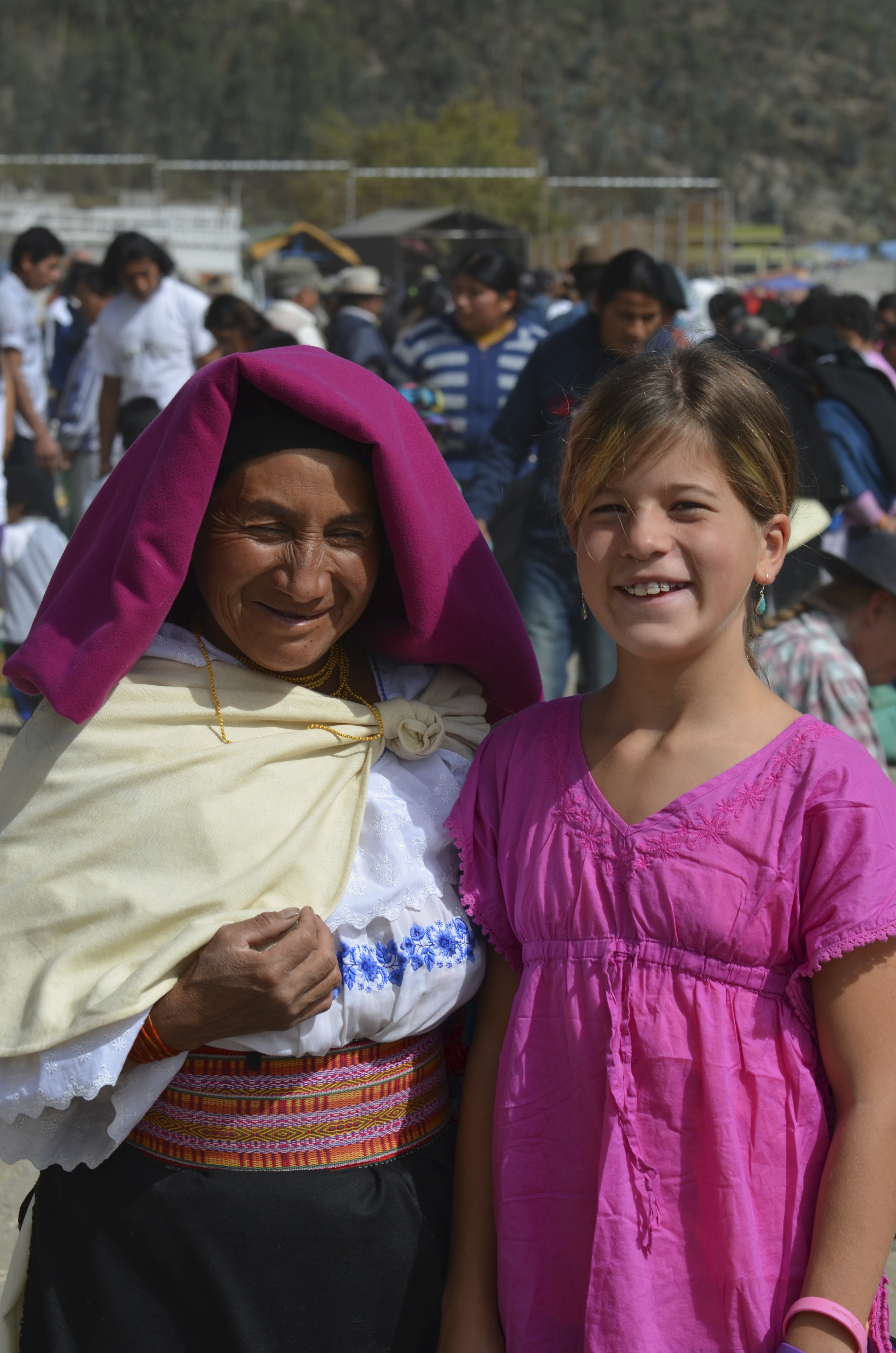
    Yes, many of the stalls are dedicated to souvenir-type objects, but there were also many selling traditional clothing (which, despite the high cost, people still wear on a regular basis), underwear, cell phones, horseshoes, leather belts, brooms, vegetables, plastic tarps, etc.  (Note on photos below: Our family is not standing on anything – they are on the sidewalk, even with the other folks)
    DSC_0523
    The market is definitely the place to be on Saturday as what is normally a quiet small city becomes a bustling metropolis over night.  Streets and sidewalks are congested with people and cars, restaurants and food stalls are packed, and there is the constant soundtrack of the pan flute everywhere.
     DSC_0501
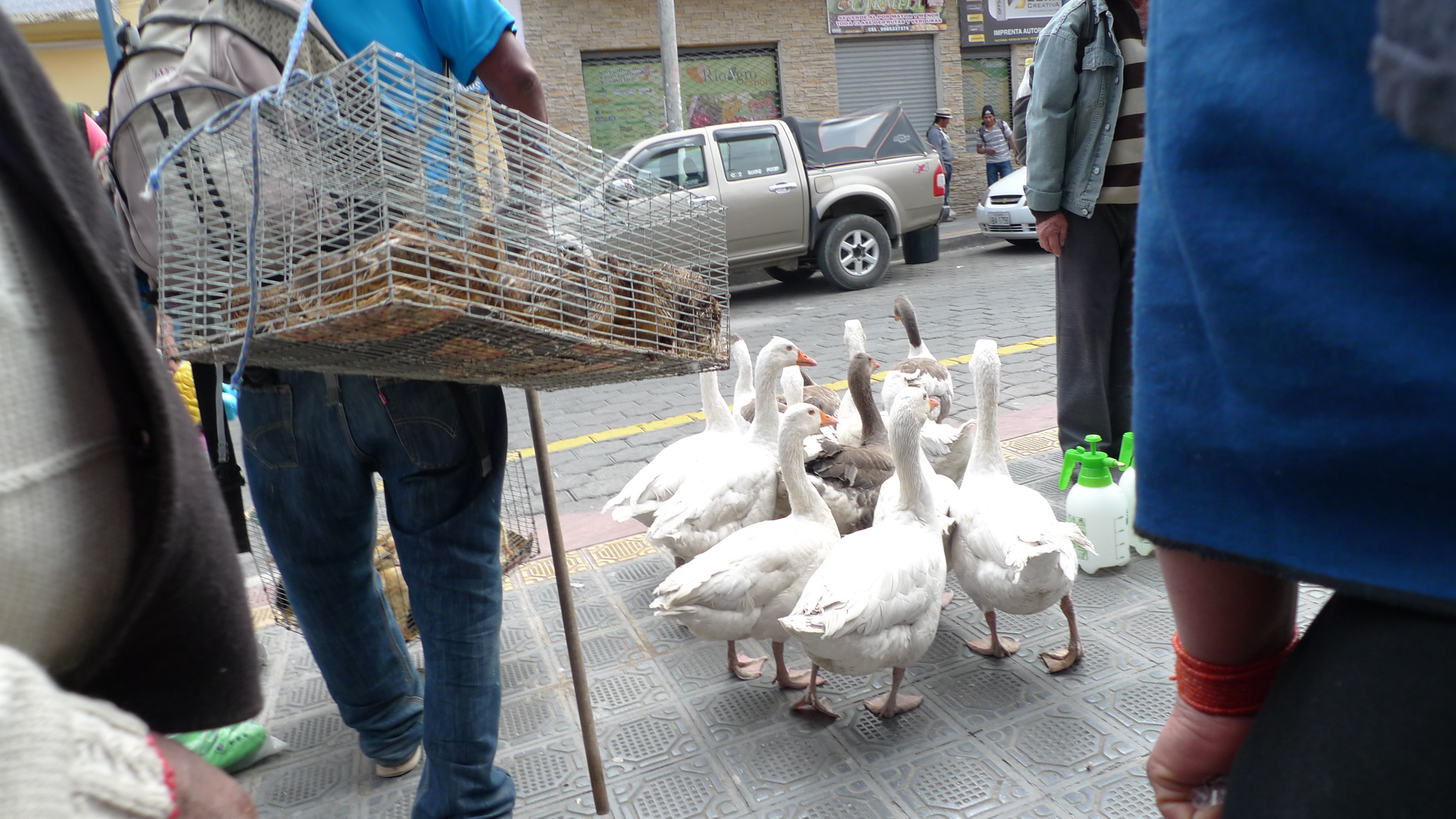
    There is also a Saturday live animal market that coincides with crafts market.  Colburn and I had been to several “meat markets” when we were in Asia years ago, but never one for live animals.  The kids had never been to any such an event before.
    DSC_0488
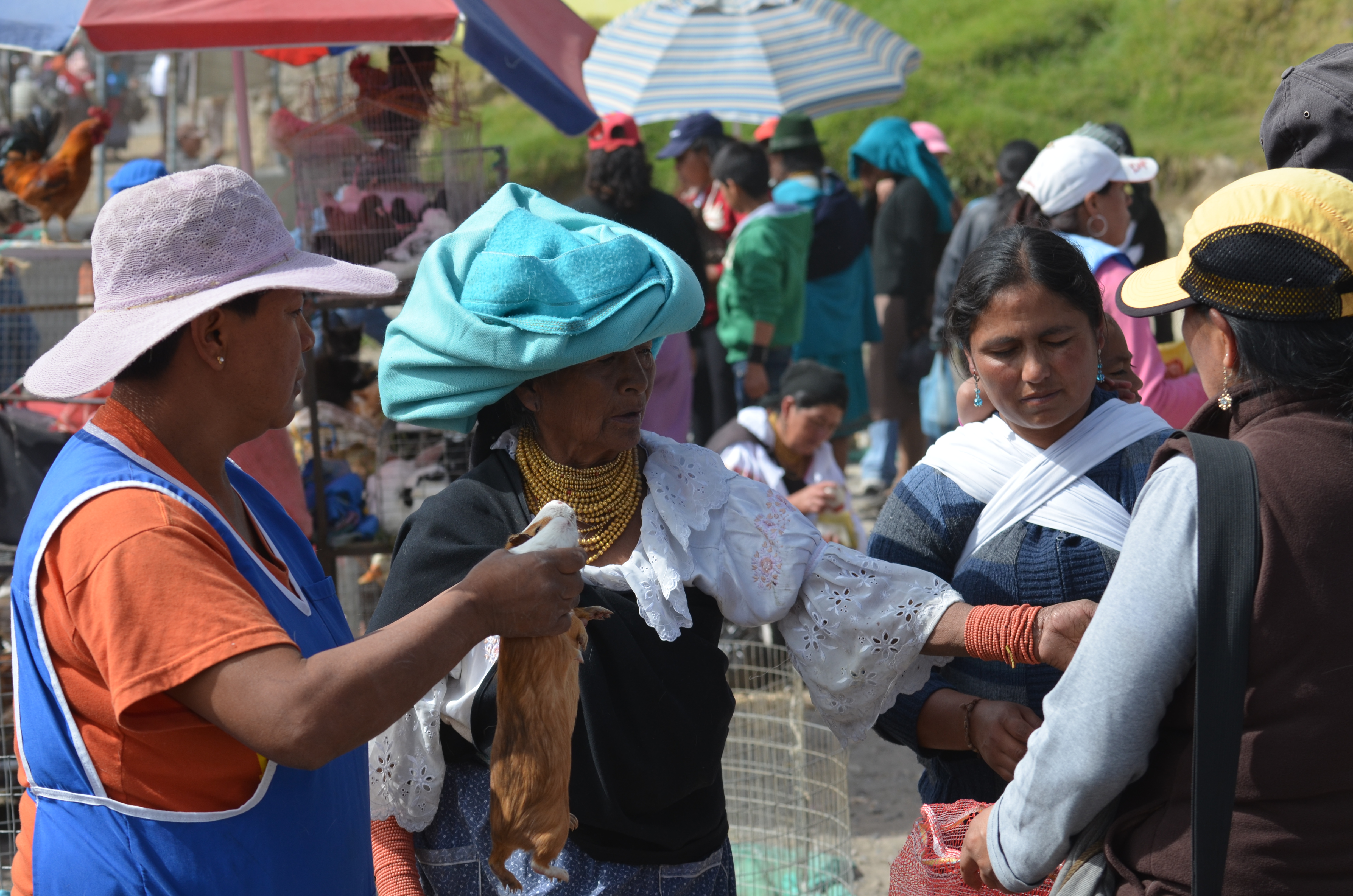
    In this market there were chickens, geese, and ducks in all the different stages, guinea pigs by the sack-full (literally they are carried in old rice sacks), and sheep, goats, pigs and cows tethered to makeshift ropes.  There were even puppies and kittens being sold as pets, not a food source.
    DSC_0495
    Each animal received a thorough evaluation by the buyer before purchase.  If the chicken was not heavy enough or the guinea pig didn’t pass muster, they were put back and another one offered for inspection (note the movement of the guinea pigs being proffered).
    DSC_0496 (1)
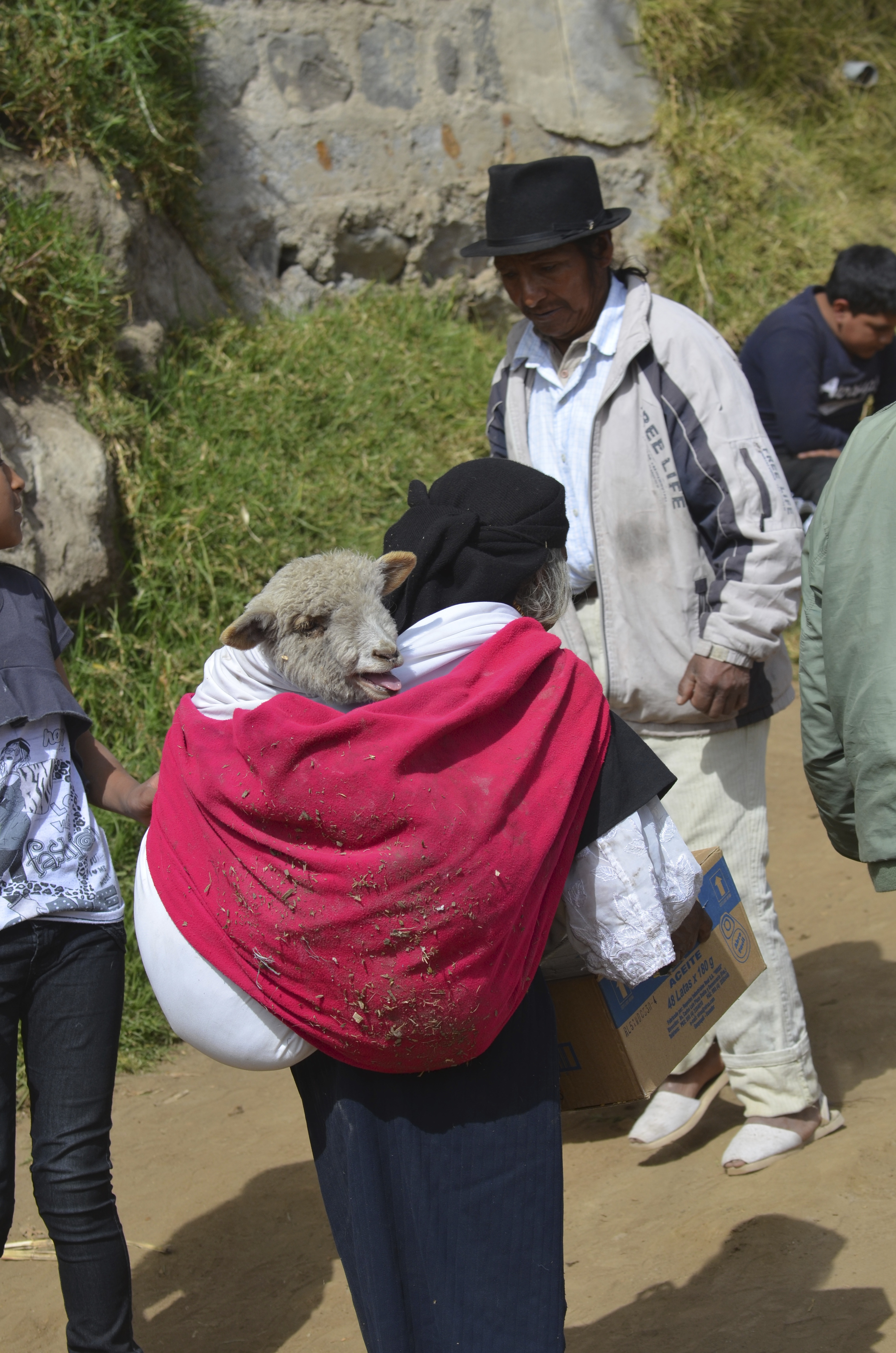
    People walking away from the market had live chickens hanging upside down form both hands or tucked neatly under an arm, a lamb in a baby carrier on their back, or a squealing squirming bag of guinea pig slung over their shoulder.
     DSC_0491 (1)
    One thing that we have learned though long term travel is that, unlike one or two week trips, we cannot handle multiple events in one day without blowing a fuse.  Spending a few hours watching the changing of the Presidential Guard, wandering through the weekly market, or sometimes just getting from one place to the next can be enough exploration for one day.  We like to spend time just hanging out together.  We do school work with the kids, make reservations for our next destination, play games, or just veg-out with iPads, audiobooks, or a movie.  Our family has now been together 24/7 for more than two months and it seems to be getting easier, not harder.
    So, now we are off to the Galapagos for the next month.  It is somewhat surreal to think that we will be going to a place that I have always dreamed of going, but never thought that it would actually happen.  We loved the wildlife in Costa Rica and are hoping to get our fill out there.


  • What We Have Learned So Far

    20130831-151114.jpg
    Time flies…especially when you are having fun! We have just completed our second month on the road and it’s hard to believe that it has been that long because time has passed so quickly. Three weeks in the US, four weeks Costa Rica and one in Nicaragua has bolstered our travel-confidence in that we have faced mild challenges by navigating land border crossings solely in Spanish, fended off raging mosquitos, dealt with stifling heat/humidity, and eventually found our way to dinner after being moderately lost (in the dark … during a down pour of biblical proportions … on an unlighted dirt road … in the middle of no-where) without losing our sense of humor. We have learned that it is much easier to do school work before a big activity (white water rafting, zip lining, etc.) rather than afterward, that cookies and a cold drink really do make a sweaty day much more bearable, and that we likely don’t need half of the stuff we thought that we did.
    20130831-152116.jpg<br /
    Costa Rica and Nicaragua have been a blast – if nothing else for than the sheer amount of different things there are to do here. In the past five weeks we have tried kite boarding (largely a bust because of little wind the week we were there), learned to surf, went for our first family white water trip, looked in to the crater of an active volcano, found incredible wildlife everywhere we went, hiked through incredibly dense primary cloud and rain forests, went zip lining (including a 1 km long superman style cable), milked a cow, lived with a Costa Rican family on their farm, jumped off of a 30 meter platform on a Tarzan swing, went for two different horseback rides to beautiful waterfalls, and spent a week working with rescued wild animals.

    20130831-151126.jpg
    We have played with baby capuchin monkeys and had their wild counterparts visit us in a tree house. We have watched a caiman hunt a tilapia fish and swallow it whole. We have seen the effects of the war in Nicaragua and been able to contrast that with the relative wealth and stability of Costa Rica. We have learned about the black market pet trade and the impact of US wealth on other nations.
    20130831-151253.jpg

    20130831-151230.jpg
    The kids have been simply awesome. They have truly embraced the challenges of travel with aplomb and grace. This is not to say that it has been “easy” for any of us. We still miss Moxie and the comforts of our home. Lucia had to learn to deal with the real threat of spiders and scorpions when we were in Nicaragua. But, after a few days, she said, “You know, it’s really not a big deal. You just have to shake out your clothes and watch where you walk.” Mac has had to adjust to near-constant transitions, not something that comes naturally for our little home-body. He has, however, developed an understanding that change will happen whether or not he wants it to happen but that fighting the change doesn’t help the process any. Instead we are now trying to include some “down time” when we get to a new place so he can settle more quickly and make sure he knows what to expect for the next few weeks.

    20130831-151143.jpg<br /
    Both kids have embraced the differences in food – Lucia loves mamones (lychee fruit) and casado for lunch while Mac found heaven with fresh pineapple juice, plates of grilled meat and nachos in all of their different forms (he wouldn't even try them in the US). During our week with a Costa Rican family, neither kid ever asked for special food – they ate at least a little of everything they were served and asked for seconds of the things they really enjoyed.

    20130831-151211.jpg
    When their Spanish teacher was not able to come one day at the animal rescue center,
    the kids volunteered to work all day instead of going to the movies for the afternoon. Cleaning up a stinky peccary pen, getting dive-bombed by parrots and scraping monkey poop off of the floor isn’t all that much fun, but they were troopers and didn’t get distracted all afternoon. The gentleman they were working with said, “Los muchachos son muy valiente” for working all day. We couldn’t be more proud of them and their positive attitudes.

    20130831-151448.jpg
    Now that we have had a good chunk of time in this part of Central America, we are ready to head off on our next adventure, South America. We understand that Costa Rica is much more developed and Westernized than many of the other Central American countries but now feel that we are ready to experience the cultural differences of South America without being overwhelmed. Our first stop is Ecuador (including the Galapagos), then off to Peru and a small excursion in to Chile and then Argentina for Christmas and New Years.

    20130831-151340.jpg<br /

    20130831-151324.jpg

    20130831-151305.jpg

  • Costa Rica and Nicaragua – Getting our Travel-legs

    Costa Rica and Nicaragua – Getting our Travel-legs

    P1020642 When we were putting together our initial itinerary, we knew that we wanted to start of with something easy – something that was different enough from what we usually do that it was interesting but would allow us to get our travel-legs underneath us without freaking out too much.  We decided on Costa Rica as a good place to start.  We would be able to see lots of “different things” and get from place to place easily.  Realistically, it is a vacation rather than travel – exactly what we wanted based on the level of stress we have each carried over the past few year.

    IMG_0436

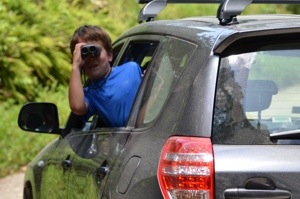
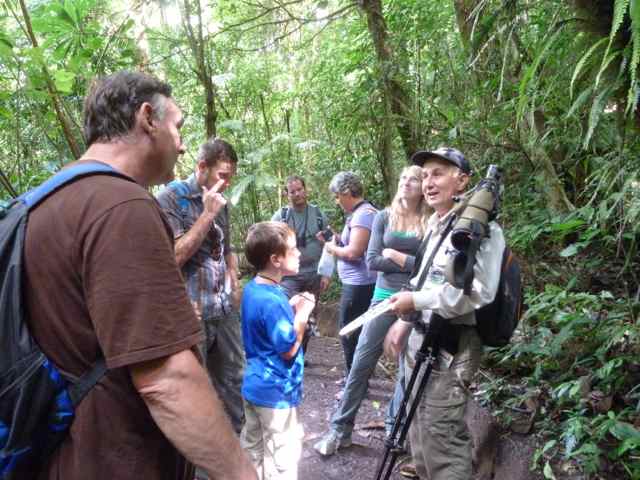
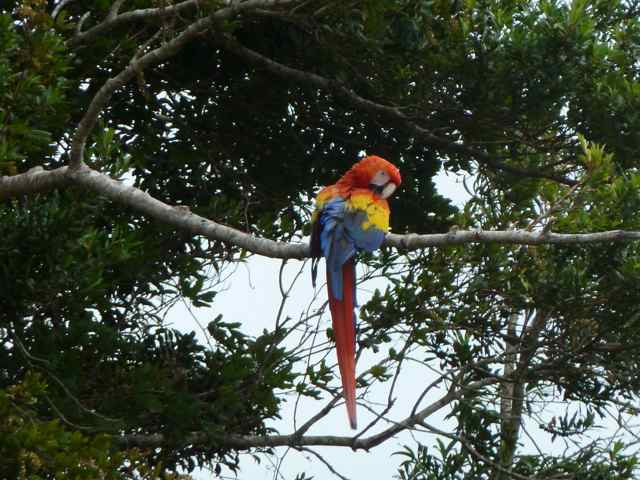
    We began with a week of kiteboarding lessons in the very north of Costa Rica, just 25 km south of the Nicaraguan border.  We rented a little house on the Bahia Salinas bay and took kiteboarding lessons every day that the wind was strong enough to fly a kite.  Unfortunately, that was not very often!  While the wind is usually quite consistent in this location, the week we were there, it only really blew a couple days so neither Colburn nor I were able to get up on a board.  Disappointing, yes, but there was plenty of relaxing and adventuring for us to do in the area, so it was a wonderfully slow introduction to travel.  The area we were in is quite rural and exploring the back roads and national parks proved to be great fun.  Mac has a keen eye for wild life so we quickly realized that when he said, “Stop, I see something!” we really should stop and see it.  If you’ve read the kid’s blogs, you have been keeping up on our wildlife tally – the diversity is quite impressive actually.

    P1020893

    Leaving Bahia Salinas, we had to make our way by public transport to the Nicaraguan border.  It was the first real test of our travel mettle.  First we had to take a public bus to the border and negotiate leaving Costa Rica in Spanish.  Because we had not been on the main tourist trail, I had dusted off my high school Spanish and felt comfortable with this part – it was relatively easy.

    L1030654

    Once “out” of Costa Rica, we had to walk a kilometer or two across no-man’s-land with our bags under the blazing equatorial sun in order to enter Nicaragua. This part was not so easy.  Between the sun, the humidity, carrying our bags and the chaos of Central American border crossings, I was pretty much a wreck.  As we were standing in a mass of humanity ready to enter Nicaragua, Lucia commented that she had never seen me sweat so much and I have to agree, I don’t know that I have ever been that sweaty before.  Part of the sweat definitely came from nerves.  As the only one in our family with any Spanish skills, I was the chief translator and person to figure out where we had to go and what forms needed to be filled out.  If you have never done a border crossing by land, it is something that has to be experienced to be understood…at least in Central America.  The buildings are not marked, there are no signs pointing the way or providing instructions (i.e. fill out this form), and it is dusty and hot.  Unlike entering by air, there is no control over who is between you and the immigration official.  There are swarms young men with official looking identification offering to help you get to the front of the line and telling you want to do for a “small fee”.  Our passports had to be checked by at least five different officials at various points along the way.  There are money changers and bus touts and old ladies selling food.   There are dogs with pleading eyes, lines of tractor trailers getting sprayed with disinfectant, work crews building a new road and European 20-something backpackers with dreads and baggy pants looking equally confused.  Interestingly, unlike entering Costa Rica by air, we did not see one other white family in the whole crossing process.  We felt like intrepid travelers.  Once we cleared Nicaraguan immigration, the stress was over as we were being picked up by a shuttle driver to take us to our destination in an air conditioned van.

    DSC_0341

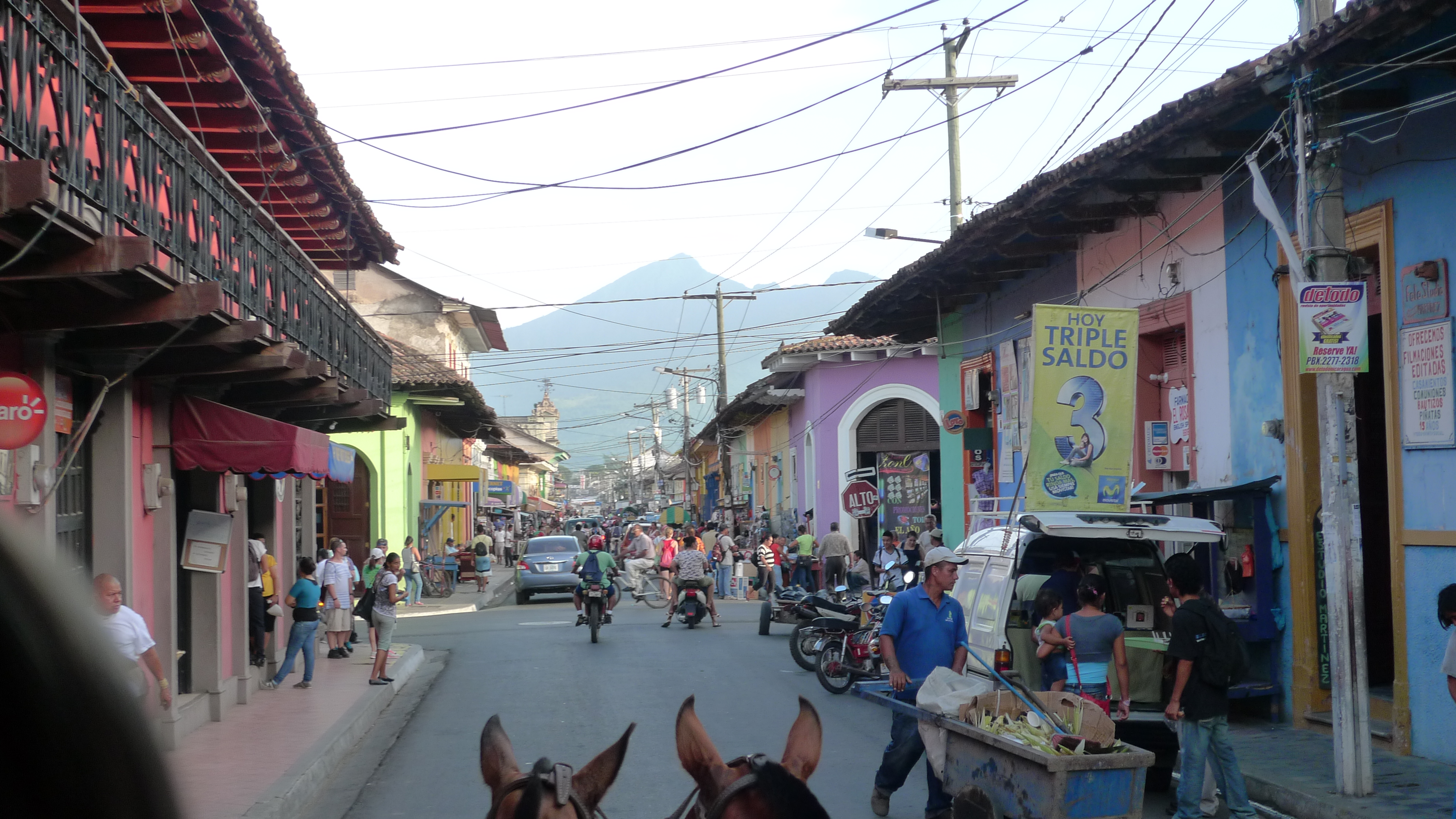
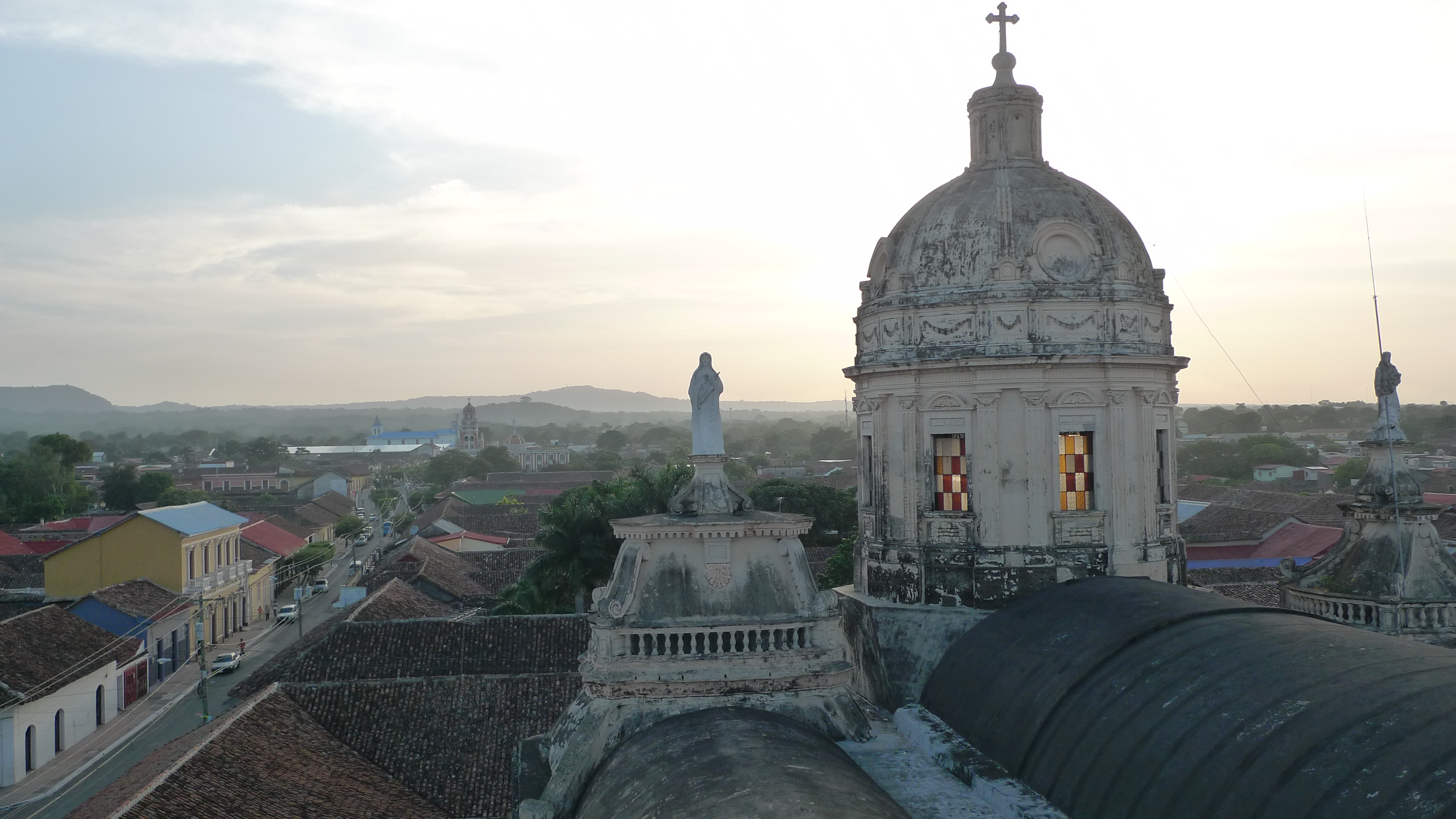
    The focus of our time in Nicaragua was learning Spanish and taking surfing lessons.  We signed up for two hours of immersion Spanish each day and all made progress with our language skills.  Eventually were able to have an introductory surfing lesson and all of us were able to stand (briefly) by the end of the lesson.  Despite the threat of sting rays and sea urchins, we all had a blast and want to make an effort to get more lessons when we go back to Costa Rica.  Kiteboarding lessons were fun, but at our age, learning a new “extreme sport” may not be the best idea.  If we had gone through the learning curve 10 or 15 years ago, it would probably have been great, but we didn’t, so it is probably not something we will develop a passion for at this point.  Surfing, however, was an absolute hoot, does not involve nearly as much gear and does not pose a substantial threat to personal safety.  It was definitely something we can all see doing together.  The beaches of Nicaragua are phenomenal and the whole place was an adventure.  We wrapped up our time in Nicaragua in the city of Granada, one of the best-preserved colonial cities in Central America.  Granada itself is beautiful with wonderful food and churches and deserves a longer look.  Unfortunately we did not have much time, but it did whet our appetite for a return visit at some point.

    L1030659

    After completing the same border crossing process in reverse (much easier the second time when you know which buildings are which and what you need to do at each), we’re back in Costa Rica now and up high (about 4500 feet) in the cloud forest at Monteverde.  We have a little tree house just a couple kilometers from the biggest reserve and have had a blast.  Monteverde is known for canopy tours, wildlife, and waterfalls.  We have been busy every day doing something adventurous (ziplining, wildlife hike, coffee/cane sugar/chocolate production tour, etc.) and getting some school work done.  We are definitely settling in to the process of travel and getting our “travel legs”.

    P1030089

    One question we are often asked is which country do we prefer – Costa Rica or Nicaragua?  Honestly, Costa Rica is a lovely vacation destination, but not much of an adventure.  It is fun, but rather bland.  You can find pancakes, hamburgers, and chicken tenders on every menu.  Nicaragua is definitely an adventure, but is still an easy adventure.  While it has a substantial tourist infrastructure, Nicaragua has not sold out to American tastes yet and retains a bit of character.

    P1030114

    Although the areas we have been to in both areas are culturally similar, the differences are still striking. Everything that Costa Rica is, Nicaragua is not.  Everything that Nicaragua is, Costa Rica is not.   I am very glad to have experienced both. Costa Rica is very orderly (people follow traffic signals), safety conscious (everyone wears seat belts and helmets), and the dogs are fat.  In Nicaragua, we didn’t see anyone using a helmet or seat belts (we had to jerry rig our Jeep so that we would not become projectiles), a bit chaotic (cars parked willy-nilly on the street) , and the dogs were very skinny.  Nicaragua was genuinely welcoming and English was the exception.  In Costa Rica, people seem to be nice to you because it is part of their livelihood and English is relatively common.  Nicaragua was an adventure, a bit wild, and Costa Rica is very interesting but well-trod.  In Costa Rica, someone comes to your house/hotel in a spotlessly clean van to pick you up, in Nicaragua you have to make your own way to where you want to go.  Costa Rica relies on international volunteers to protect turtle nesting sites while in Nicaragua the same types of sites are patrolled by the National Army (complete with automatic weapons).  Nicaragua is very poor while Costa Rica is quite wealthy by comparison.  Nicaragua has a developing government where Costa Rica has a relatively stable and competent governmental system.  For being so close together, they are very different.  Now that we have our travel legs, if I had to choose only one location, I would say that Nicaragua is more interesting.

    L1030617


  • Things the Kids Won’t Write About in Their Blogs

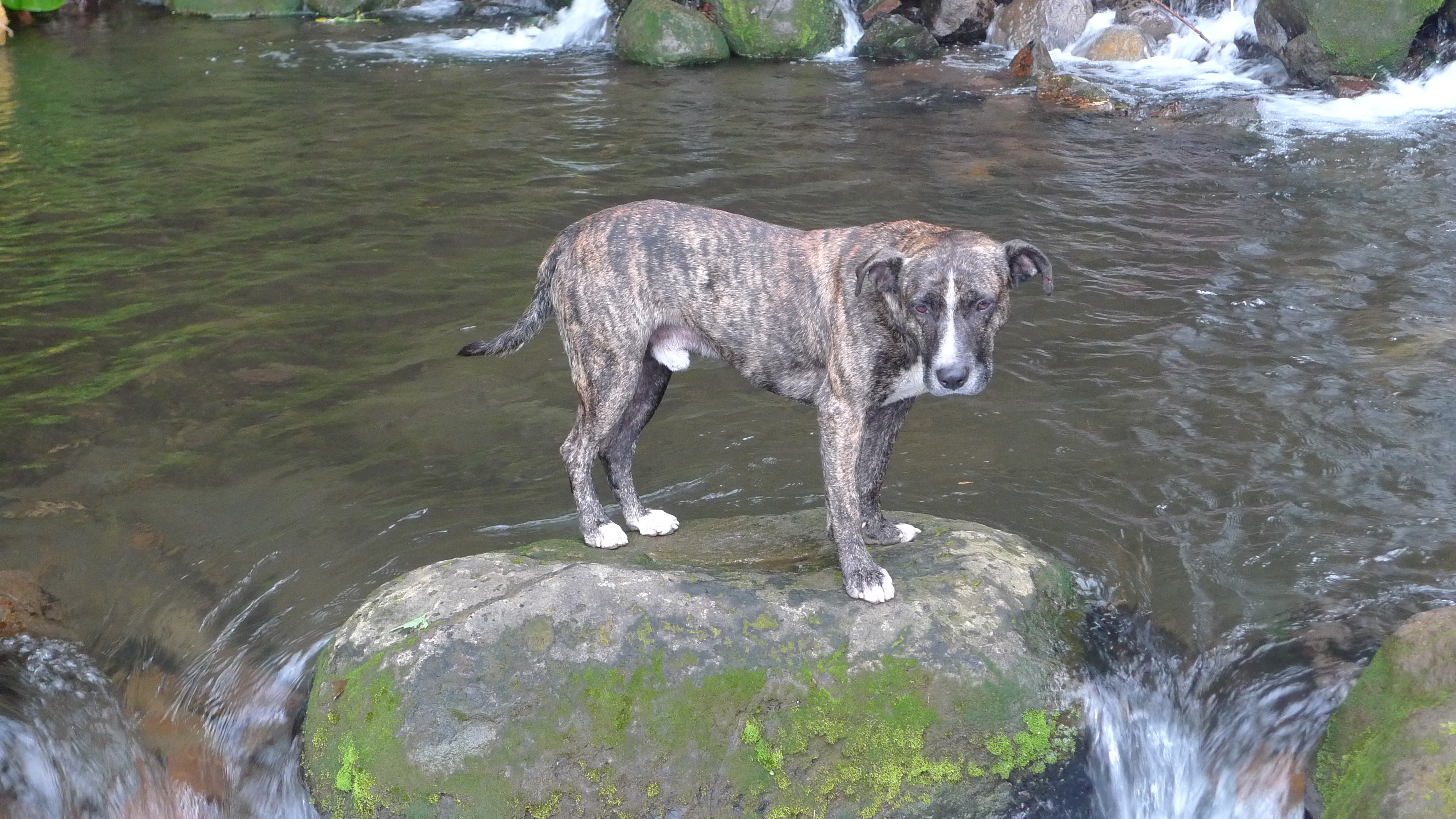
    Eco - an intact brindled pit bull
    Eco – an intact brindled pit bull

    In no particular order, some interesting things that the kids have said since leaving –

    • “I’m excited to take Spanish lessons so that I won’t be locked out of the Spanish-speaking world….but I guess that is how Spanish-speaking people feel about the English speaking world.”  Mac – after a week in Costa Rica.
    • “If it was up to me, I would give $1,000 to each family so that they could have a safe place to live and all of the basic things they need.”  Lucia – while driving through the countryside.
    • “I thought that slavery ended after the Civil War?” – Mac on Cape Cod after observing that all of the people working in the front of the restaurants are white and all of the people working in the kitchens are black.
    • “Now I know why you wanted to take us on this trip – so we could see just how much stuff we have that other people don’t.”  Lucia.
    • Similarly, Mac said, “You guys sure know how to spend our wealth well” – when I asked him what he meant, he followed up “By taking us on this trip so we can see what the rest of the world is like.”
    • “What is that sticking out down below his tail?”  both  kids regarding testicles on a dog….apparently they have never seen an intact male before.  They know what testicles are, but have never seen them on a dog because all the ones we have had are neutered.

    This is stuff that you couldn’t possibly script.  Now the question is do they become numb to it after a while?

    Also, as a clarification about the “I thought slavery ended” – the reality is that Cape Cod experiences a huge influx of tourists during the summer and have to hire foreign workers to meet the need.  Many of these workers come from the Caribbean Islands.  This, of course, brought up a discussion about guest workers and immigration policy with an 8 year old….