Category: Costa Rica

  • The End of Six Months in South America

    We have been on the road in Central and South America for six months.  As we are wrapping up this phase, we wanted to reflect upon what the trip has held for us so far.  South America has been a grand adventure – trekking, rafting, snorkeling, zip-lining, hiking, surfing, etc.  We have experienced a range of situations that have tested our limits.  We have navigated our way through an entire continent in a different language, not always smoothly, but we’ve done it.  We have learned what we need to stay happy on the road and just how little stuff is actually necessary.
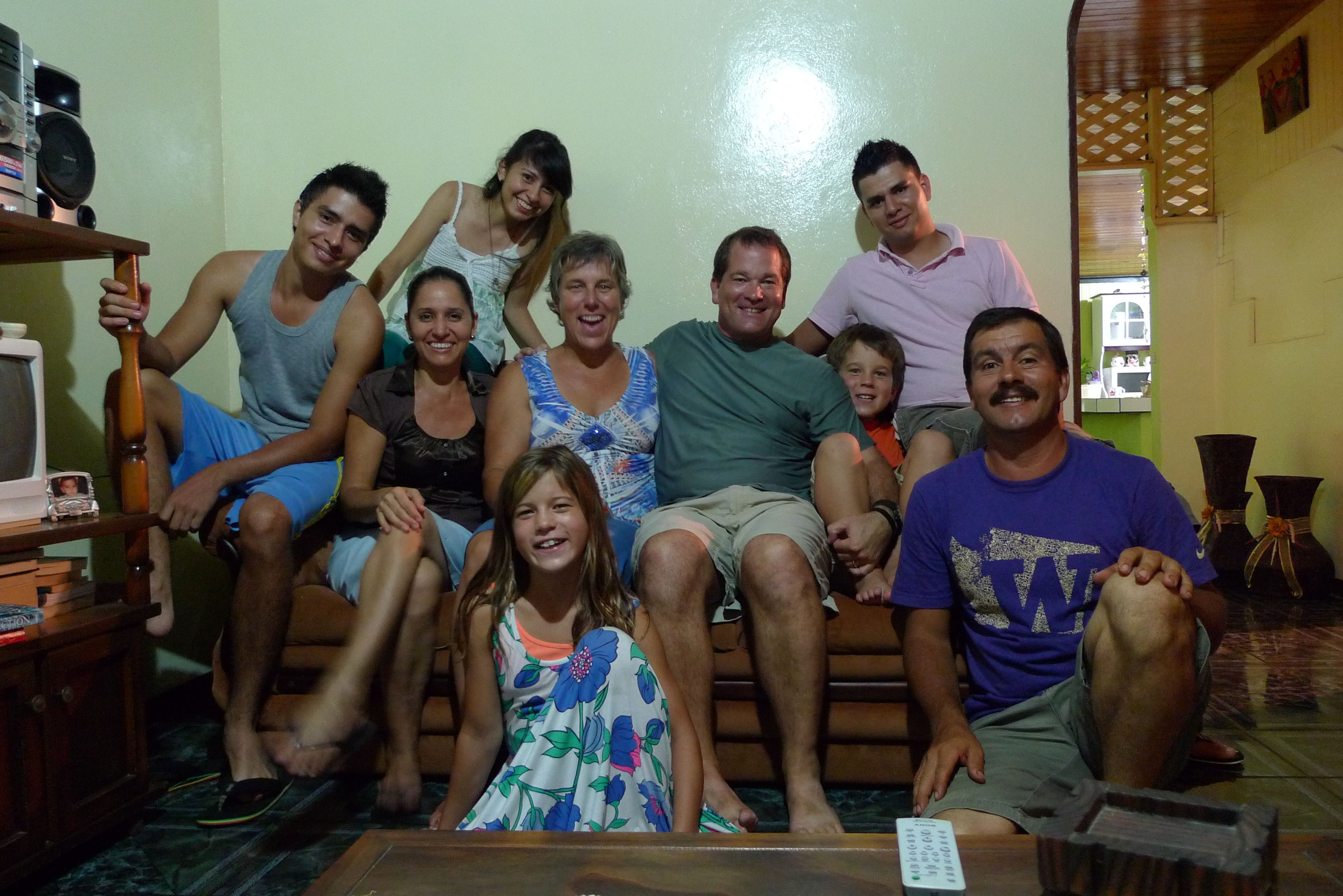
    Retana-Miñoz Family
    Retana-Miñoz Family

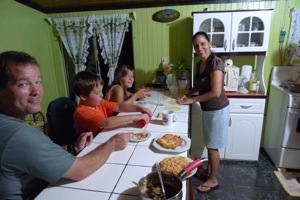
    Many people ask us which country we have liked the best.  Unfortunately, this is somewhat like asking you which child you like best.  It is not really possible to say that we liked one better than the other, but we have enjoyed them for very different reasons.   In Costa Rica and Nicaragua, we enjoyed the ease of travel and wild life.  Spending a week at Proyecto Asis and with the Retana Munoz family, our homestay family was an amazing experience.  Rosi and her family were gracious, patient, and made us feel completely at home living with them.  Taking Spanish lessons with Danielle and Yalitza gave us a foundation for making our way through the language.  Working with and learning about peccary, capuchin monkeys, macaws, and a whole host of other animals provided us with first hand knowledge of the challenges which face the animals in the wild we were to see later in our trip.  We enjoyed it so much that we are thinking about going back there at the end of this summer – “one year later” – to see how our perspective has changed.
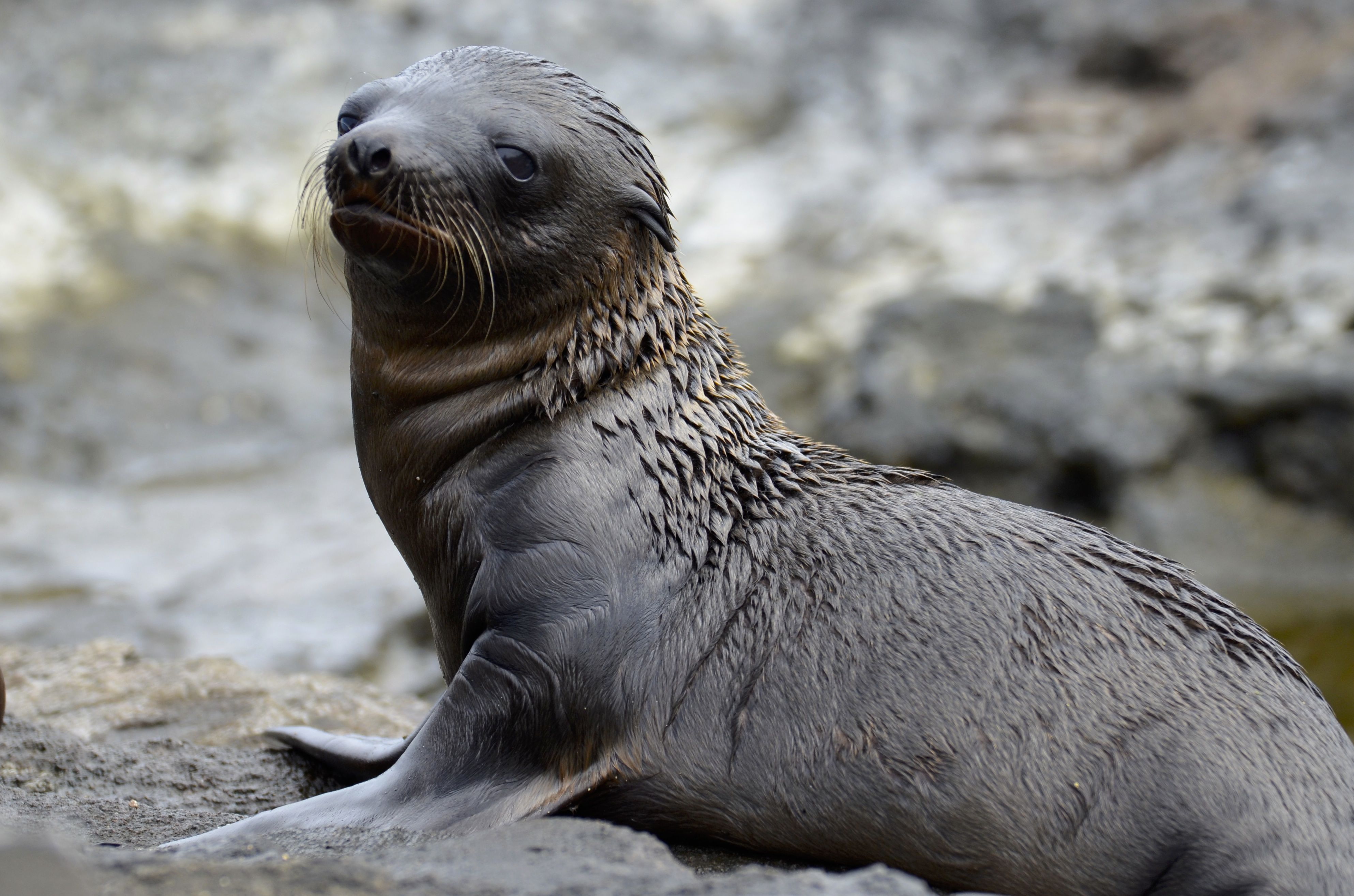
    Infant Sea Lion
    Infant Sea Lion

    Ecuador held Quito, the Galapagos, and Otovalo; each quite different from the other but creating a very well-rounded experience.  The Galapagos will always hold a special place in our hearts as you can interact with wildlife in a way that is not possible anywhere else on Earth.  Playing in the ocean with sea lions produces a giddiness that is not often experienced as an adult.  Watching marine iguanas climb out of the sea to bask on the black lava and expel excess salt out of their nostrils is seeing life on our planet before hominids began to dominate everything.  Listening to the scratch and scrape of a giant tortoise as it hauls its shell over the rocky landscape reminds us of how resilient life is, and how fragile.  We had enough time (four weeks) on the Galapagos to feel like we really got to know the place.  Quito and Otavalo were our first introduction to the Incan influence, but it was subtle.
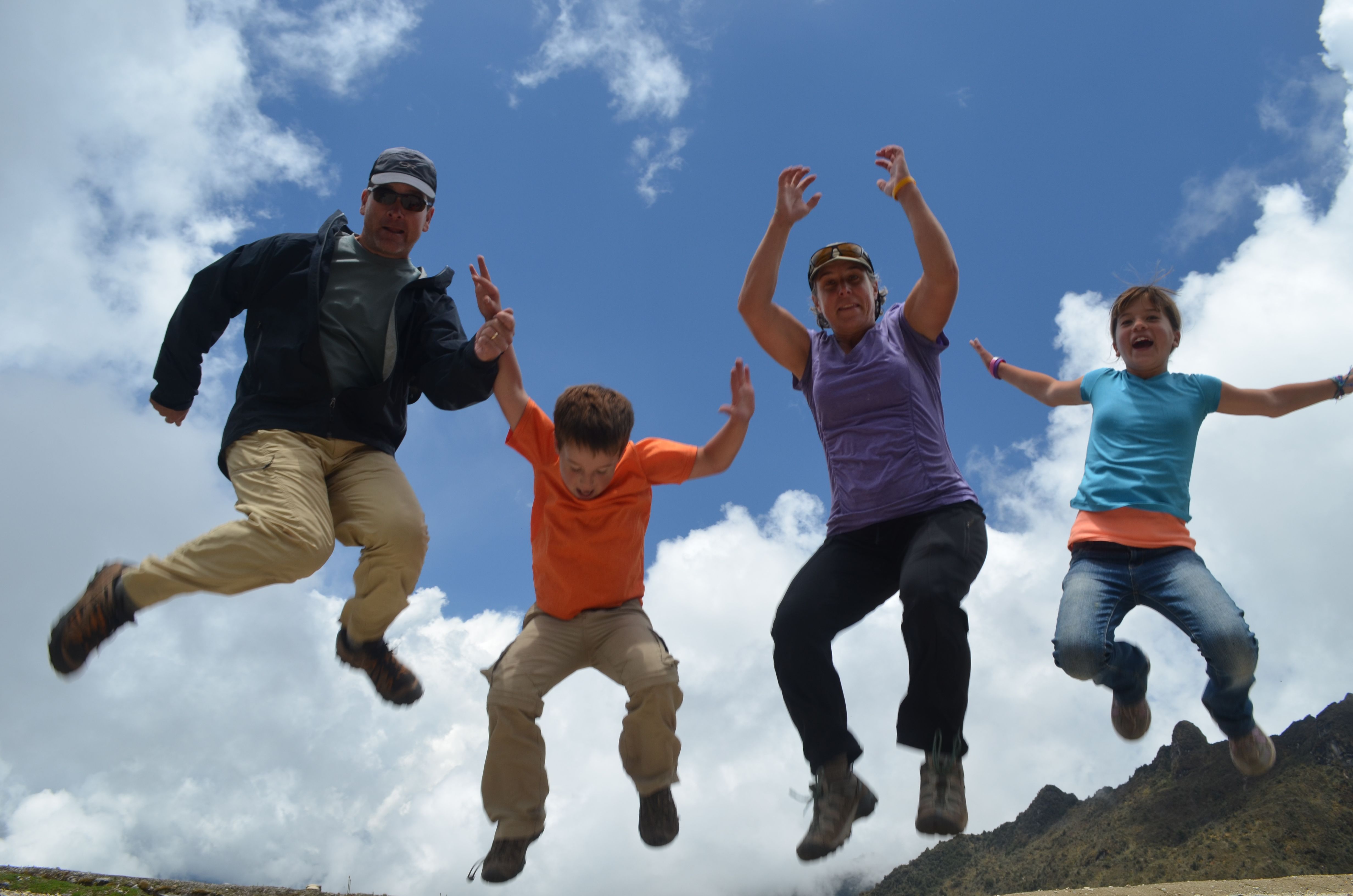
    Celebrating Success
    Celebrating Success in Peru

    Our experience in Peru was very different from Ecuador.  Yes, the landscapes are similar, but what we paid attention to was much different.  With the Incan influence clearly visible everywhere, we learned more about the history and culture than flora and fauna.   The stark beauty of the Colca Canyon and the wonderful hospitality of our host family and guide left us feeling as if we were truly welcomed there, not just a paying passenger.  In contrast, Titicaca and Ollanta left us feeling as if we were simply a commodity; something to be exploited for every dollar possible.  Although it was quite disturbing, we became aware of just how damaging tourism can be for a culture, a necessary awareness when traveling abroad.  We are now even more diligent in making sure that we give our dollars to organizations that do not damage and exploit the culture or the people solely for profit.  Our time in the Amazon was amazing – the raucous calls of the macaws flying overhead, the peculiar odor of a peccary approaching, the grace of the monkeys launching from tree to tree – will always be remembered.  Hiking our way to Machu Picchu was a more of a pilgrimage than a trek, allowing us to glimpse the spiritual side of Incan culture as well as a fantastic experience.
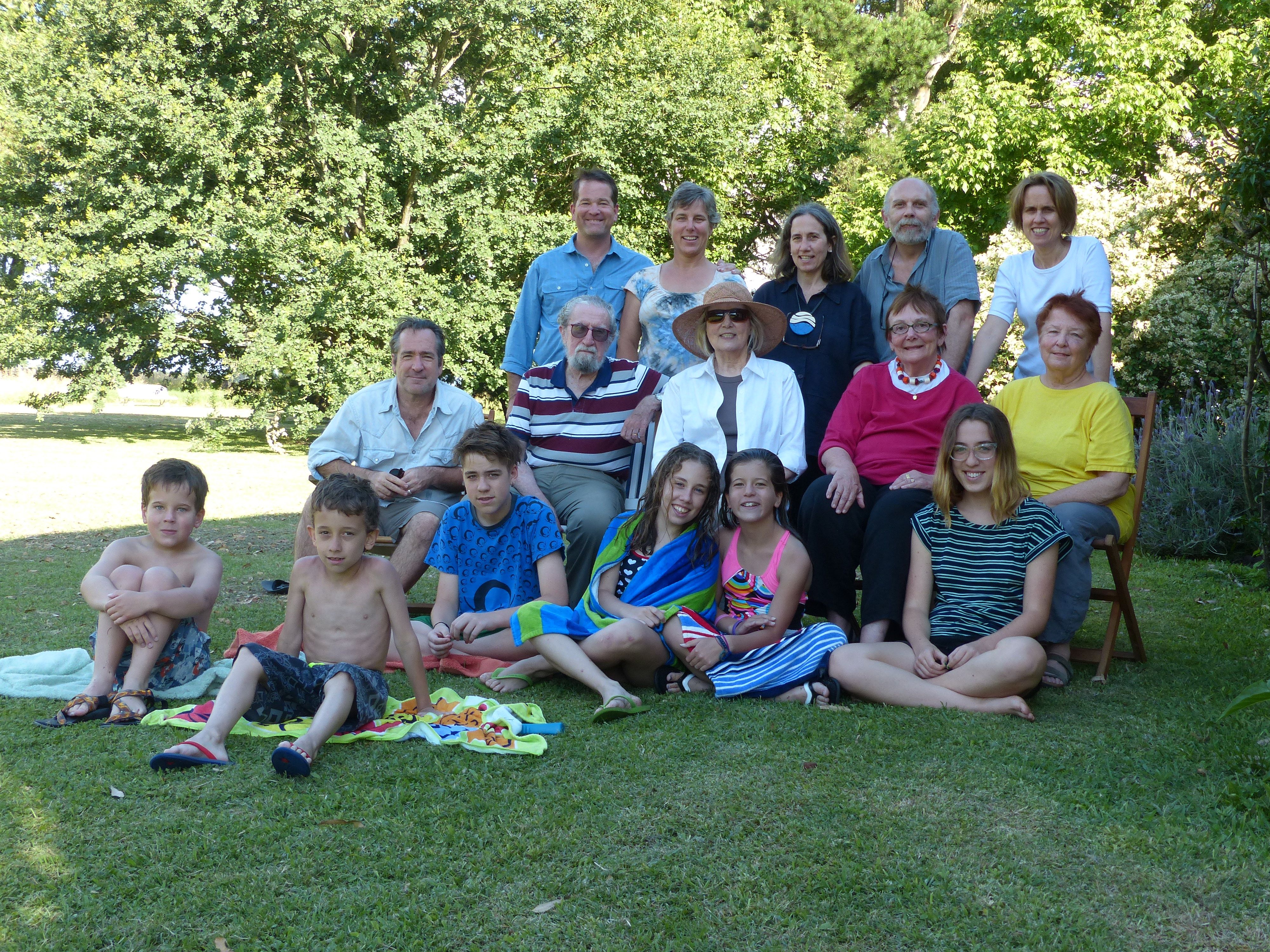
    With Granny and Jean and Our Argentine Family
    With Granny and Jean and Our Argentine Family

    We have enjoyed Argentina for our time with family, the absolutely jaw-dropping landscapes and the availability of fabulous wine and scrumptious grilled meats everywhere.  Being able to spend the better part of a month with Colburn’s Argentine family has been a true gift.  We have been with them long enough to able to see in to their life in a way that is not possible with a one or two week visit.  They have welcomed us with such grace and kindness that we have felt as if we were in our own home, not visiting.
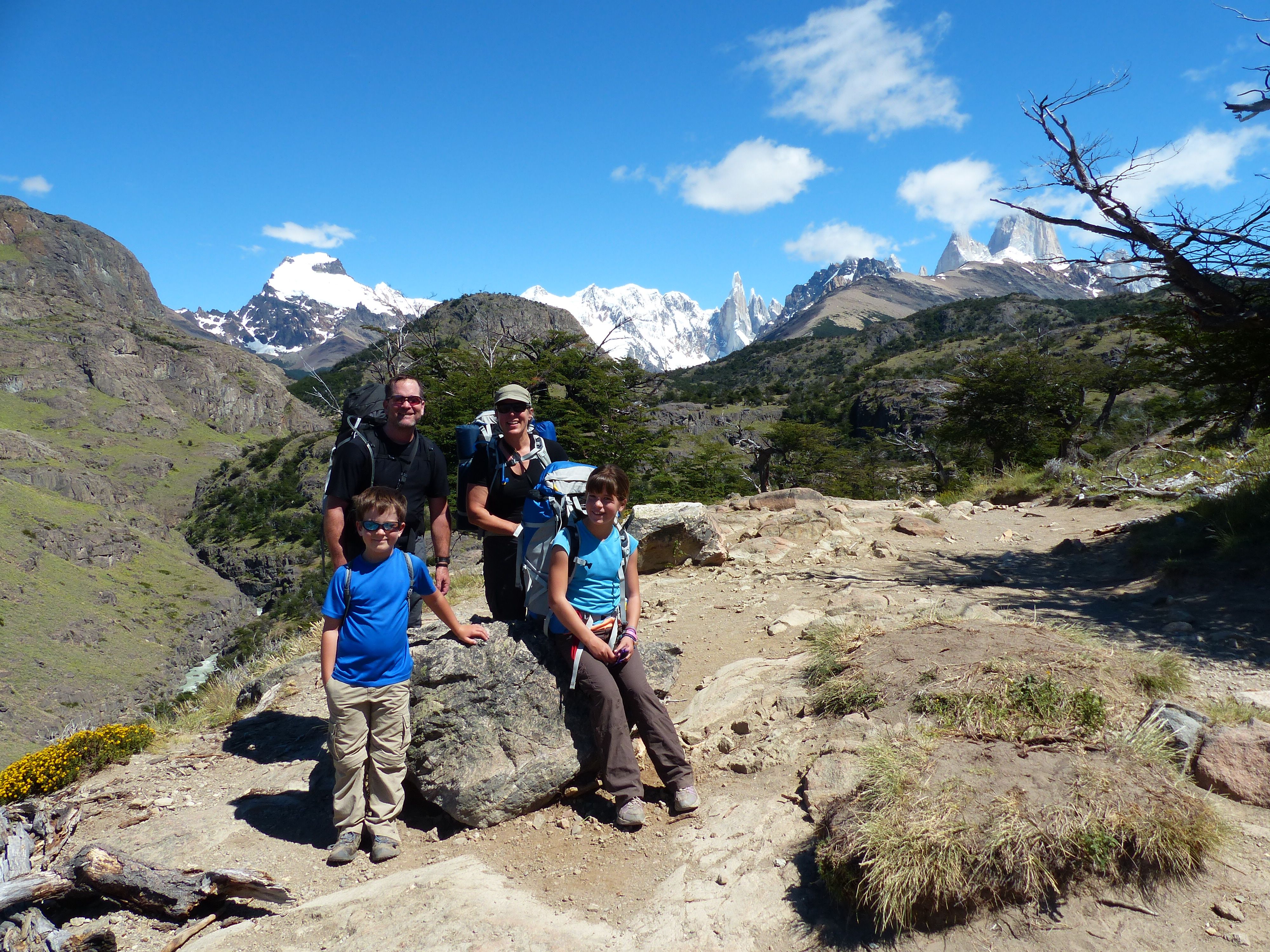
    Near El Chaltén
    Near El Chaltén, Southern Patagonia

    Going to Southern Patagonia was like finding the place we have always wanted to be. It is mesmerizing and might be like what the American West was before super highways and strip malls.  We know we will be back to Patagonia, so when we left it was hasta luego not adios.

    Hot.  Sweaty.  Waiting.  Puerto Maldonado Peru.
    Hot. Sweaty. Waiting.  Leaving the Amazon, Puerto Maldonado Peru.

    Beyond simply visiting interesting places, our travel has changed each of us individually and also as a family unit.  Individually, we are each now more gentle with ourselves and others.  Our expectations for everything going as planned has diminished considerably since leaving the US.  Repeatedly experiencing extended periods of waiting for an unknown outcome and the feeling of being lost as we try to navigate our way through unmarked routes in foreign lands has taught us that most people are really quite helpful and a sense of humor about pretty much everything is essential to successful travel.

    An Indication of the Future  (translation - the road is in a bad state)
    An Indication of the Future
    (translation – the road is in a bad state)

    When Deb left her wallet in a taxi in Peru, the driver came back to the airport and found us to return it with everything still in it.  When we were having trouble getting the rental car company to do anything about our car that wouldn’t start, the gentleman at the hotel desk became our valiant defender summoning a tow truck within 15 minutes.
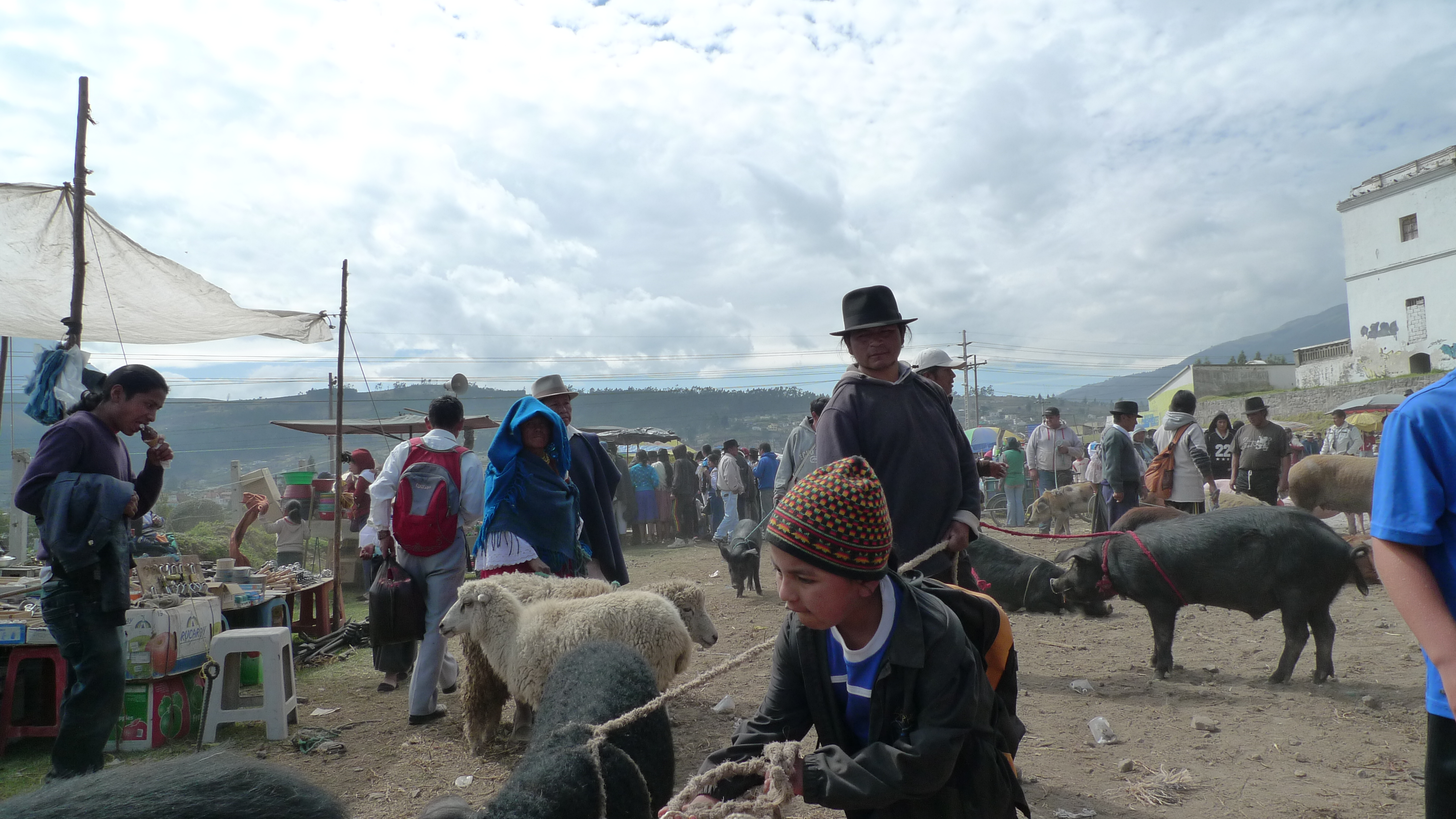
    Animal Market, Otavalo
    Animal Market, Otavalo Ecuador

    We have seen first hand the struggle to survive that both people and animals experience when their world is not abundant.  This has given us a greater awareness of how our individual actions at home impact people, places and animals unseen to us.  Discussing the loss of habitat in Costa Rica lead to a discussion about us decreasing our consumption of animal products and the illegal pet trade.  Seeing the ecological impact of large-scale agriculture for export has made us more aware of our choices when fruits and vegetables in the US are imported from the Southern Hemisphere.   Learning about the long-term effects of colonization, oppression, and exploitation has made us more aware of the freedoms we take for granted.
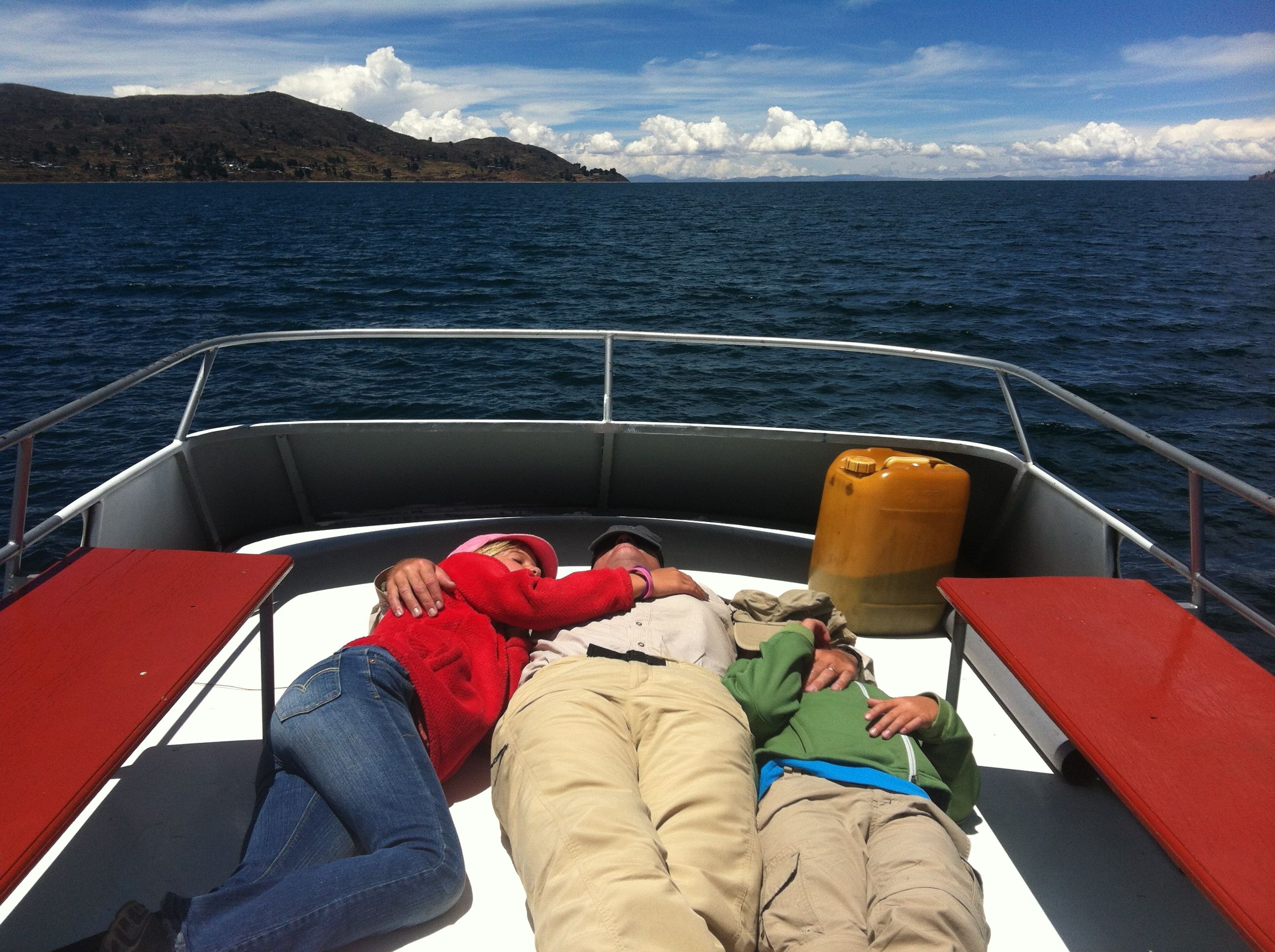
    Nap on Lake Titicaca
    Nap on Lake Titicaca

    We are also more aware of the importance of gentle words, especially when we are stressed. We are much closer to each other both physically and emotionally for we have supported each other through difficult challenges – Colca Canyon, Torres del Paine, and homeschooling while on the road.  Twenty-six weeks of being together all day every day has given us insight in to what makes each other tick and who can be relied upon for what.  We are now much more of a team than we were when we left the US and have a heightened sense that we are stronger as a unit than we are as individuals.  The children now ask, “What can I do to help?” instead of declaring, “I want …” or “Where is my…” The adults are more likely to say, “I could use a hand…” instead of “Go get the…” or “I need you to…”. Mac and Lucia have learned that there are not always three meals per day, sometimes not even two, and dinner at 10:00 or 11:00 pm is just fine.  They can now be hungry and tired without being cranky.

    Brothers
    Brothers

    Perhaps the most important thing we have learned is that family really is the foundation for happiness.   There really in nothing more important than family. Without our jobs or school to distract us, we are now able to focus on each other.  This is not to say that we were not close when we were in the US, but rather that we each had to split our attention between our family and school, work, friends.  Similarly, visits to family members further away had to be arranged when our work or school would let us leave, not when it would be beneficial to see them.  With family as far away as Australia and Argentina, it is difficult to visit them for only a week or two.  And, if you can only visit for a week or so, there is a tendency to focus on “doing” things all of the time rather than simply enjoying being together.  Lucia commented on this when we first arrived at the campito, a small weekend house outside of Buenos Aires for Colburn’s Argentine family, saying that she felt like she should have been there five years ago.  When we went back two months later, it was like coming home for all of us.  It has been wonderful to be able to share some of their life, not just a visit.

    We have truly enjoyed our time traveling so far and feel that we are incredibly blessed to be able to do so.
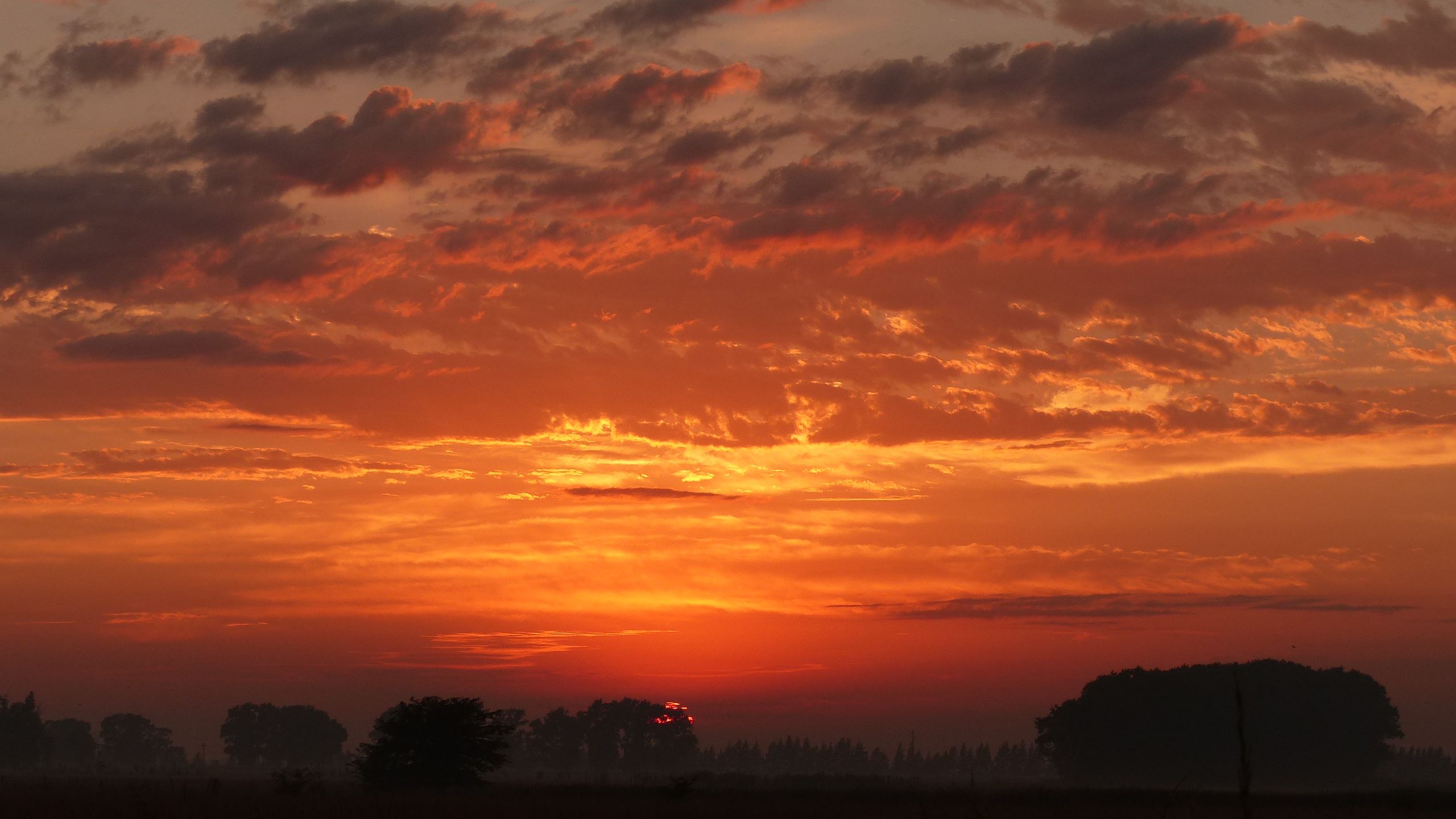
    Sunrise at the Campito
    Sunrise at the Campito
  • What We Have Learned So Far

    20130831-151114.jpg
    Time flies…especially when you are having fun! We have just completed our second month on the road and it’s hard to believe that it has been that long because time has passed so quickly. Three weeks in the US, four weeks Costa Rica and one in Nicaragua has bolstered our travel-confidence in that we have faced mild challenges by navigating land border crossings solely in Spanish, fended off raging mosquitos, dealt with stifling heat/humidity, and eventually found our way to dinner after being moderately lost (in the dark … during a down pour of biblical proportions … on an unlighted dirt road … in the middle of no-where) without losing our sense of humor. We have learned that it is much easier to do school work before a big activity (white water rafting, zip lining, etc.) rather than afterward, that cookies and a cold drink really do make a sweaty day much more bearable, and that we likely don’t need half of the stuff we thought that we did.
    20130831-152116.jpg<br /
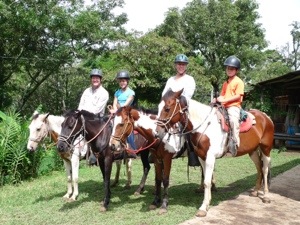
    Costa Rica and Nicaragua have been a blast – if nothing else for than the sheer amount of different things there are to do here. In the past five weeks we have tried kite boarding (largely a bust because of little wind the week we were there), learned to surf, went for our first family white water trip, looked in to the crater of an active volcano, found incredible wildlife everywhere we went, hiked through incredibly dense primary cloud and rain forests, went zip lining (including a 1 km long superman style cable), milked a cow, lived with a Costa Rican family on their farm, jumped off of a 30 meter platform on a Tarzan swing, went for two different horseback rides to beautiful waterfalls, and spent a week working with rescued wild animals.

    20130831-151126.jpg
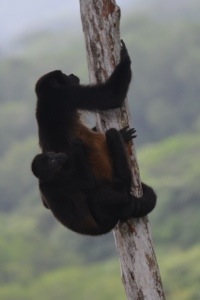
    We have played with baby capuchin monkeys and had their wild counterparts visit us in a tree house. We have watched a caiman hunt a tilapia fish and swallow it whole. We have seen the effects of the war in Nicaragua and been able to contrast that with the relative wealth and stability of Costa Rica. We have learned about the black market pet trade and the impact of US wealth on other nations.
    20130831-151253.jpg

    20130831-151230.jpg
    The kids have been simply awesome. They have truly embraced the challenges of travel with aplomb and grace. This is not to say that it has been “easy” for any of us. We still miss Moxie and the comforts of our home. Lucia had to learn to deal with the real threat of spiders and scorpions when we were in Nicaragua. But, after a few days, she said, “You know, it’s really not a big deal. You just have to shake out your clothes and watch where you walk.” Mac has had to adjust to near-constant transitions, not something that comes naturally for our little home-body. He has, however, developed an understanding that change will happen whether or not he wants it to happen but that fighting the change doesn’t help the process any. Instead we are now trying to include some “down time” when we get to a new place so he can settle more quickly and make sure he knows what to expect for the next few weeks.

    20130831-151143.jpg<br /
    Both kids have embraced the differences in food – Lucia loves mamones (lychee fruit) and casado for lunch while Mac found heaven with fresh pineapple juice, plates of grilled meat and nachos in all of their different forms (he wouldn't even try them in the US). During our week with a Costa Rican family, neither kid ever asked for special food – they ate at least a little of everything they were served and asked for seconds of the things they really enjoyed.

    20130831-151211.jpg
    When their Spanish teacher was not able to come one day at the animal rescue center,
    the kids volunteered to work all day instead of going to the movies for the afternoon. Cleaning up a stinky peccary pen, getting dive-bombed by parrots and scraping monkey poop off of the floor isn’t all that much fun, but they were troopers and didn’t get distracted all afternoon. The gentleman they were working with said, “Los muchachos son muy valiente” for working all day. We couldn’t be more proud of them and their positive attitudes.

    20130831-151448.jpg
    Now that we have had a good chunk of time in this part of Central America, we are ready to head off on our next adventure, South America. We understand that Costa Rica is much more developed and Westernized than many of the other Central American countries but now feel that we are ready to experience the cultural differences of South America without being overwhelmed. Our first stop is Ecuador (including the Galapagos), then off to Peru and a small excursion in to Chile and then Argentina for Christmas and New Years.

    20130831-151340.jpg<br /

    20130831-151324.jpg

    20130831-151305.jpg

  • Costa Rica and Nicaragua – Getting our Travel-legs

    Costa Rica and Nicaragua – Getting our Travel-legs

    P1020642 When we were putting together our initial itinerary, we knew that we wanted to start of with something easy – something that was different enough from what we usually do that it was interesting but would allow us to get our travel-legs underneath us without freaking out too much.  We decided on Costa Rica as a good place to start.  We would be able to see lots of “different things” and get from place to place easily.  Realistically, it is a vacation rather than travel – exactly what we wanted based on the level of stress we have each carried over the past few year.

    IMG_0436

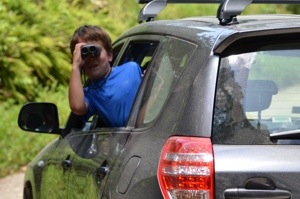
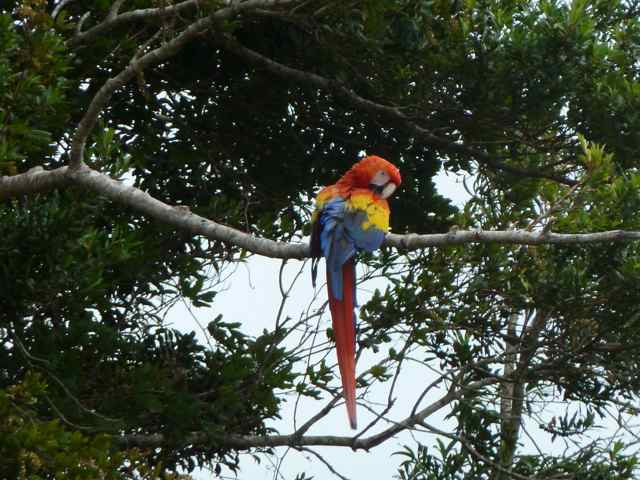
    We began with a week of kiteboarding lessons in the very north of Costa Rica, just 25 km south of the Nicaraguan border.  We rented a little house on the Bahia Salinas bay and took kiteboarding lessons every day that the wind was strong enough to fly a kite.  Unfortunately, that was not very often!  While the wind is usually quite consistent in this location, the week we were there, it only really blew a couple days so neither Colburn nor I were able to get up on a board.  Disappointing, yes, but there was plenty of relaxing and adventuring for us to do in the area, so it was a wonderfully slow introduction to travel.  The area we were in is quite rural and exploring the back roads and national parks proved to be great fun.  Mac has a keen eye for wild life so we quickly realized that when he said, “Stop, I see something!” we really should stop and see it.  If you’ve read the kid’s blogs, you have been keeping up on our wildlife tally – the diversity is quite impressive actually.

    P1020893

    Leaving Bahia Salinas, we had to make our way by public transport to the Nicaraguan border.  It was the first real test of our travel mettle.  First we had to take a public bus to the border and negotiate leaving Costa Rica in Spanish.  Because we had not been on the main tourist trail, I had dusted off my high school Spanish and felt comfortable with this part – it was relatively easy.

    L1030654

    Once “out” of Costa Rica, we had to walk a kilometer or two across no-man’s-land with our bags under the blazing equatorial sun in order to enter Nicaragua. This part was not so easy.  Between the sun, the humidity, carrying our bags and the chaos of Central American border crossings, I was pretty much a wreck.  As we were standing in a mass of humanity ready to enter Nicaragua, Lucia commented that she had never seen me sweat so much and I have to agree, I don’t know that I have ever been that sweaty before.  Part of the sweat definitely came from nerves.  As the only one in our family with any Spanish skills, I was the chief translator and person to figure out where we had to go and what forms needed to be filled out.  If you have never done a border crossing by land, it is something that has to be experienced to be understood…at least in Central America.  The buildings are not marked, there are no signs pointing the way or providing instructions (i.e. fill out this form), and it is dusty and hot.  Unlike entering by air, there is no control over who is between you and the immigration official.  There are swarms young men with official looking identification offering to help you get to the front of the line and telling you want to do for a “small fee”.  Our passports had to be checked by at least five different officials at various points along the way.  There are money changers and bus touts and old ladies selling food.   There are dogs with pleading eyes, lines of tractor trailers getting sprayed with disinfectant, work crews building a new road and European 20-something backpackers with dreads and baggy pants looking equally confused.  Interestingly, unlike entering Costa Rica by air, we did not see one other white family in the whole crossing process.  We felt like intrepid travelers.  Once we cleared Nicaraguan immigration, the stress was over as we were being picked up by a shuttle driver to take us to our destination in an air conditioned van.

    DSC_0341

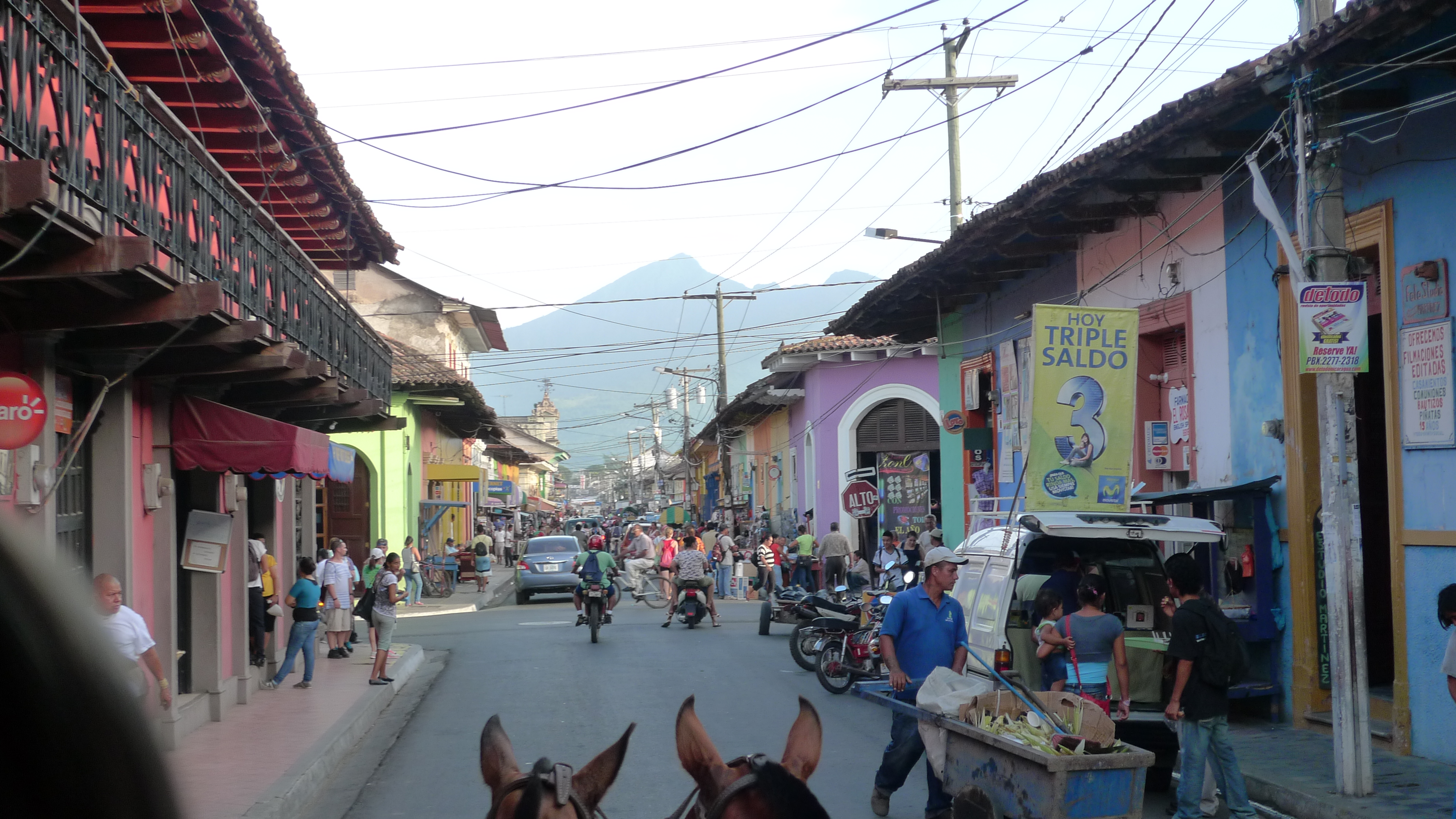
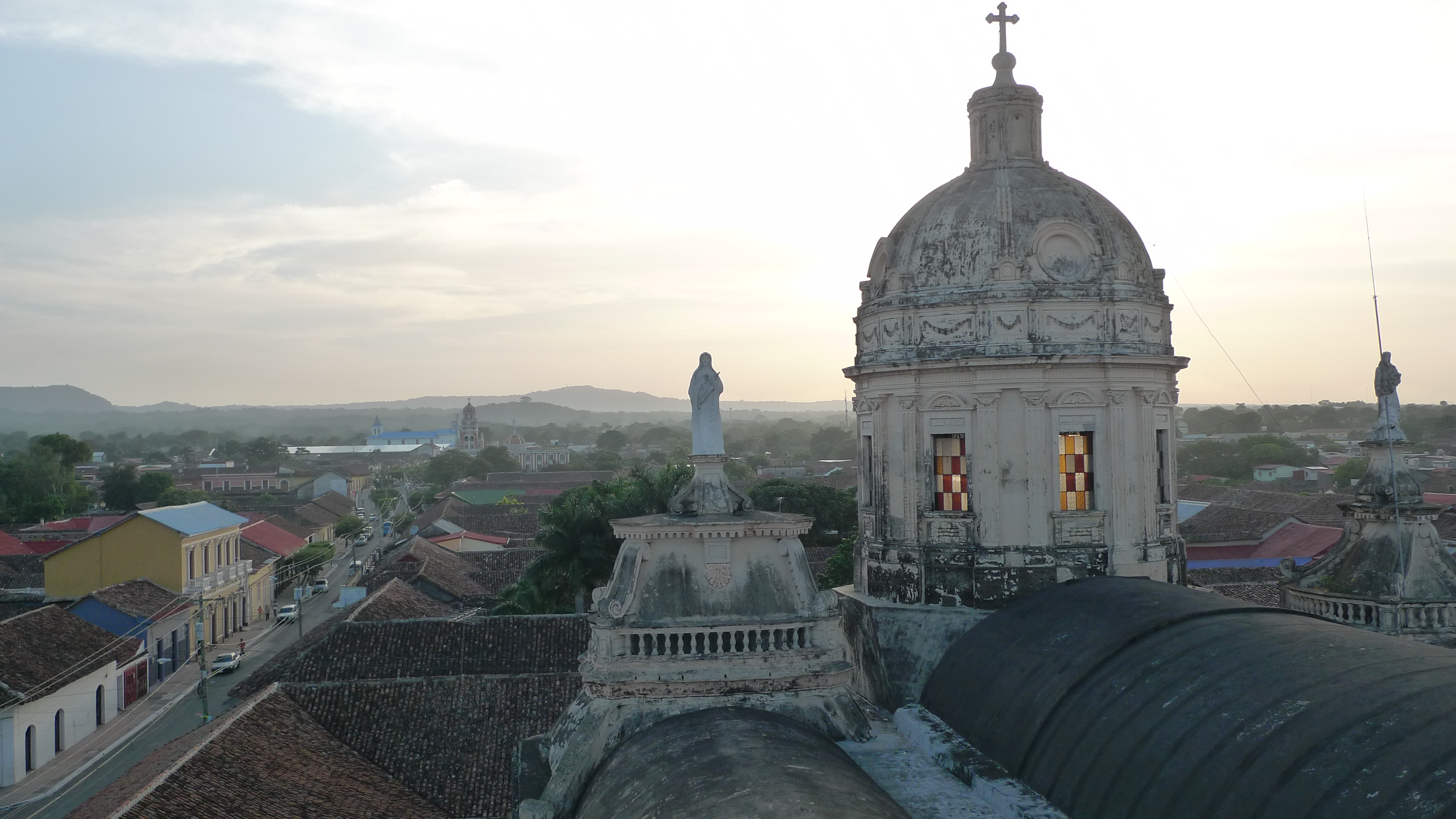
    The focus of our time in Nicaragua was learning Spanish and taking surfing lessons.  We signed up for two hours of immersion Spanish each day and all made progress with our language skills.  Eventually were able to have an introductory surfing lesson and all of us were able to stand (briefly) by the end of the lesson.  Despite the threat of sting rays and sea urchins, we all had a blast and want to make an effort to get more lessons when we go back to Costa Rica.  Kiteboarding lessons were fun, but at our age, learning a new “extreme sport” may not be the best idea.  If we had gone through the learning curve 10 or 15 years ago, it would probably have been great, but we didn’t, so it is probably not something we will develop a passion for at this point.  Surfing, however, was an absolute hoot, does not involve nearly as much gear and does not pose a substantial threat to personal safety.  It was definitely something we can all see doing together.  The beaches of Nicaragua are phenomenal and the whole place was an adventure.  We wrapped up our time in Nicaragua in the city of Granada, one of the best-preserved colonial cities in Central America.  Granada itself is beautiful with wonderful food and churches and deserves a longer look.  Unfortunately we did not have much time, but it did whet our appetite for a return visit at some point.

    L1030659

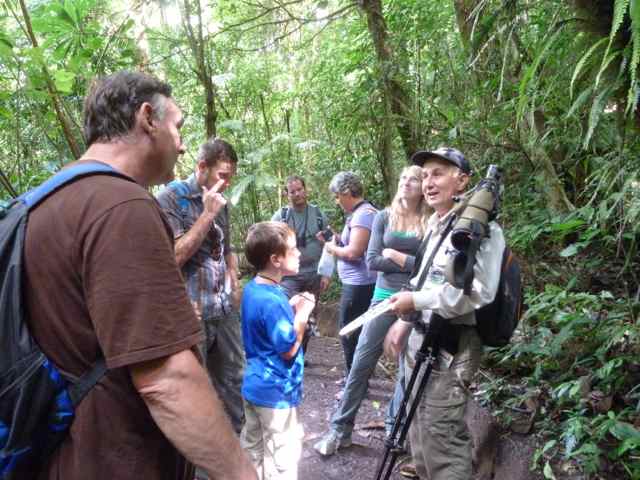
    After completing the same border crossing process in reverse (much easier the second time when you know which buildings are which and what you need to do at each), we’re back in Costa Rica now and up high (about 4500 feet) in the cloud forest at Monteverde.  We have a little tree house just a couple kilometers from the biggest reserve and have had a blast.  Monteverde is known for canopy tours, wildlife, and waterfalls.  We have been busy every day doing something adventurous (ziplining, wildlife hike, coffee/cane sugar/chocolate production tour, etc.) and getting some school work done.  We are definitely settling in to the process of travel and getting our “travel legs”.

    P1030089

    One question we are often asked is which country do we prefer – Costa Rica or Nicaragua?  Honestly, Costa Rica is a lovely vacation destination, but not much of an adventure.  It is fun, but rather bland.  You can find pancakes, hamburgers, and chicken tenders on every menu.  Nicaragua is definitely an adventure, but is still an easy adventure.  While it has a substantial tourist infrastructure, Nicaragua has not sold out to American tastes yet and retains a bit of character.

    P1030114

    Although the areas we have been to in both areas are culturally similar, the differences are still striking. Everything that Costa Rica is, Nicaragua is not.  Everything that Nicaragua is, Costa Rica is not.   I am very glad to have experienced both. Costa Rica is very orderly (people follow traffic signals), safety conscious (everyone wears seat belts and helmets), and the dogs are fat.  In Nicaragua, we didn’t see anyone using a helmet or seat belts (we had to jerry rig our Jeep so that we would not become projectiles), a bit chaotic (cars parked willy-nilly on the street) , and the dogs were very skinny.  Nicaragua was genuinely welcoming and English was the exception.  In Costa Rica, people seem to be nice to you because it is part of their livelihood and English is relatively common.  Nicaragua was an adventure, a bit wild, and Costa Rica is very interesting but well-trod.  In Costa Rica, someone comes to your house/hotel in a spotlessly clean van to pick you up, in Nicaragua you have to make your own way to where you want to go.  Costa Rica relies on international volunteers to protect turtle nesting sites while in Nicaragua the same types of sites are patrolled by the National Army (complete with automatic weapons).  Nicaragua is very poor while Costa Rica is quite wealthy by comparison.  Nicaragua has a developing government where Costa Rica has a relatively stable and competent governmental system.  For being so close together, they are very different.  Now that we have our travel legs, if I had to choose only one location, I would say that Nicaragua is more interesting.

    L1030617


  • Things the Kids Won’t Write About in Their Blogs

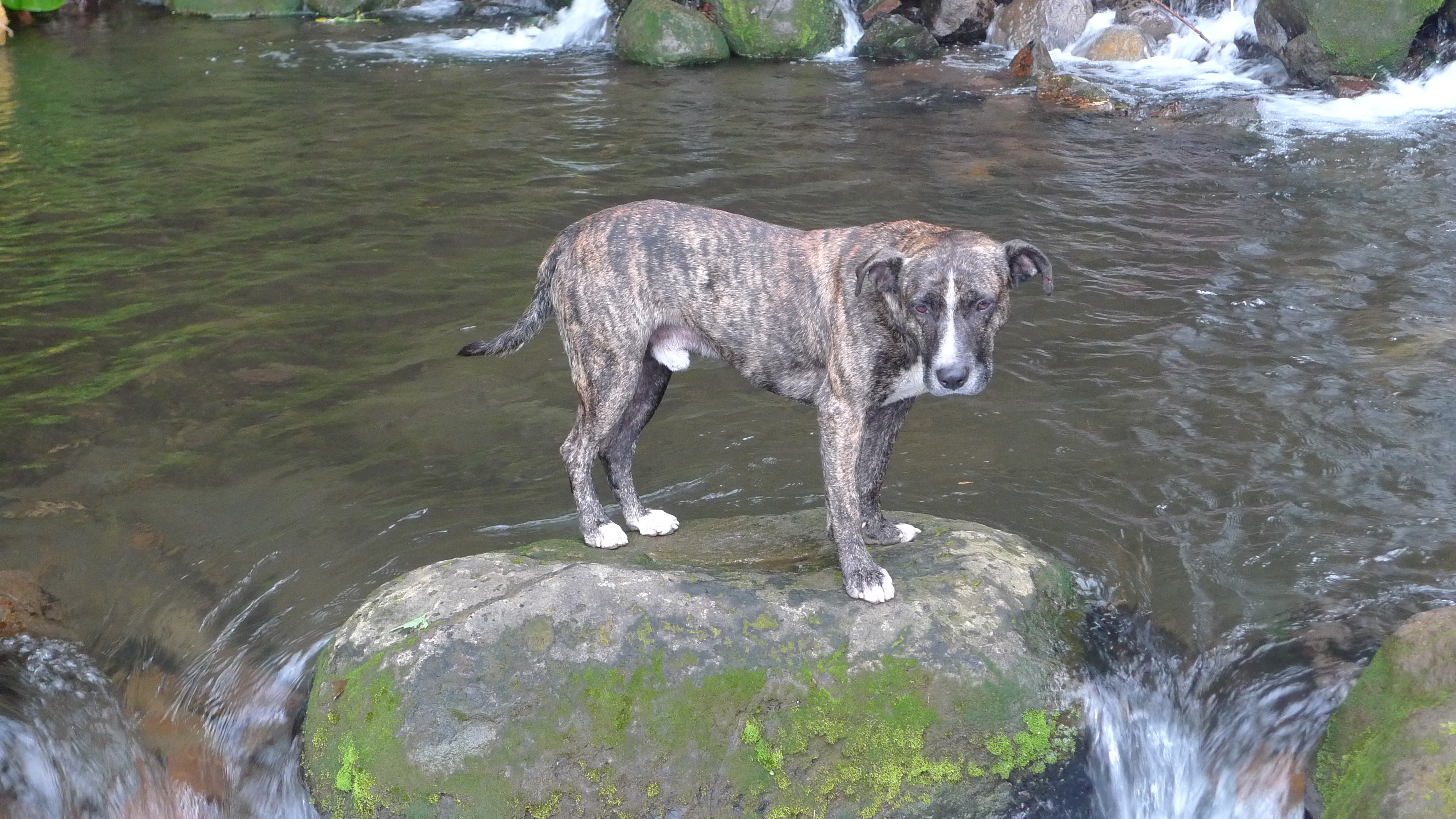
    Eco - an intact brindled pit bull
    Eco – an intact brindled pit bull

    In no particular order, some interesting things that the kids have said since leaving –

    • “I’m excited to take Spanish lessons so that I won’t be locked out of the Spanish-speaking world….but I guess that is how Spanish-speaking people feel about the English speaking world.”  Mac – after a week in Costa Rica.
    • “If it was up to me, I would give $1,000 to each family so that they could have a safe place to live and all of the basic things they need.”  Lucia – while driving through the countryside.
    • “I thought that slavery ended after the Civil War?” – Mac on Cape Cod after observing that all of the people working in the front of the restaurants are white and all of the people working in the kitchens are black.
    • “Now I know why you wanted to take us on this trip – so we could see just how much stuff we have that other people don’t.”  Lucia.
    • Similarly, Mac said, “You guys sure know how to spend our wealth well” – when I asked him what he meant, he followed up “By taking us on this trip so we can see what the rest of the world is like.”
    • “What is that sticking out down below his tail?”  both  kids regarding testicles on a dog….apparently they have never seen an intact male before.  They know what testicles are, but have never seen them on a dog because all the ones we have had are neutered.

    This is stuff that you couldn’t possibly script.  Now the question is do they become numb to it after a while?

    Also, as a clarification about the “I thought slavery ended” – the reality is that Cape Cod experiences a huge influx of tourists during the summer and have to hire foreign workers to meet the need.  Many of these workers come from the Caribbean Islands.  This, of course, brought up a discussion about guest workers and immigration policy with an 8 year old….