Category: Chile

  • The End of Six Months in South America

    We have been on the road in Central and South America for six months.  As we are wrapping up this phase, we wanted to reflect upon what the trip has held for us so far.  South America has been a grand adventure – trekking, rafting, snorkeling, zip-lining, hiking, surfing, etc.  We have experienced a range of situations that have tested our limits.  We have navigated our way through an entire continent in a different language, not always smoothly, but we’ve done it.  We have learned what we need to stay happy on the road and just how little stuff is actually necessary.
    Retana-Miñoz Family
    Retana-Miñoz Family

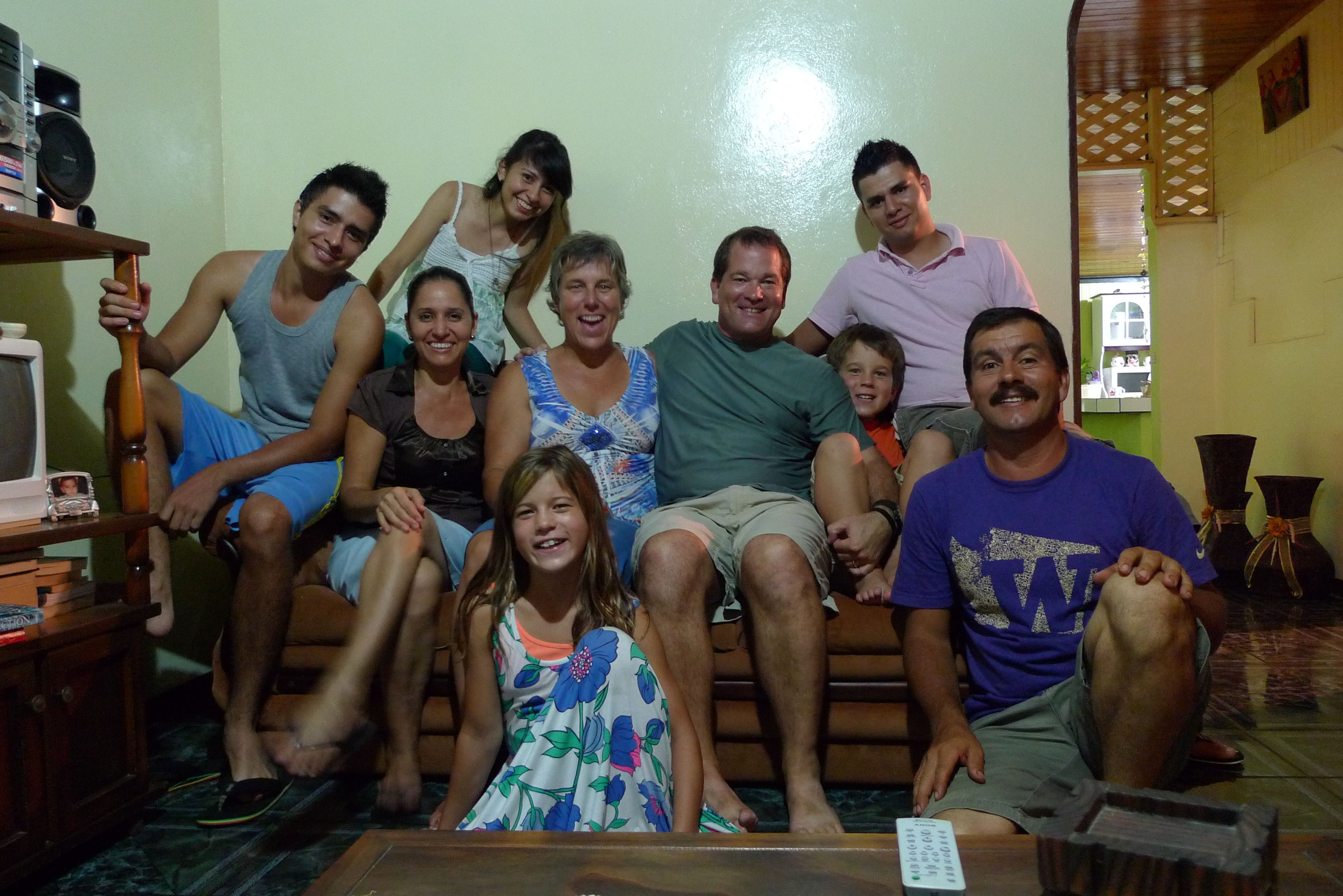
    Many people ask us which country we have liked the best.  Unfortunately, this is somewhat like asking you which child you like best.  It is not really possible to say that we liked one better than the other, but we have enjoyed them for very different reasons.   In Costa Rica and Nicaragua, we enjoyed the ease of travel and wild life.  Spending a week at Proyecto Asis and with the Retana Munoz family, our homestay family was an amazing experience.  Rosi and her family were gracious, patient, and made us feel completely at home living with them.  Taking Spanish lessons with Danielle and Yalitza gave us a foundation for making our way through the language.  Working with and learning about peccary, capuchin monkeys, macaws, and a whole host of other animals provided us with first hand knowledge of the challenges which face the animals in the wild we were to see later in our trip.  We enjoyed it so much that we are thinking about going back there at the end of this summer – “one year later” – to see how our perspective has changed.
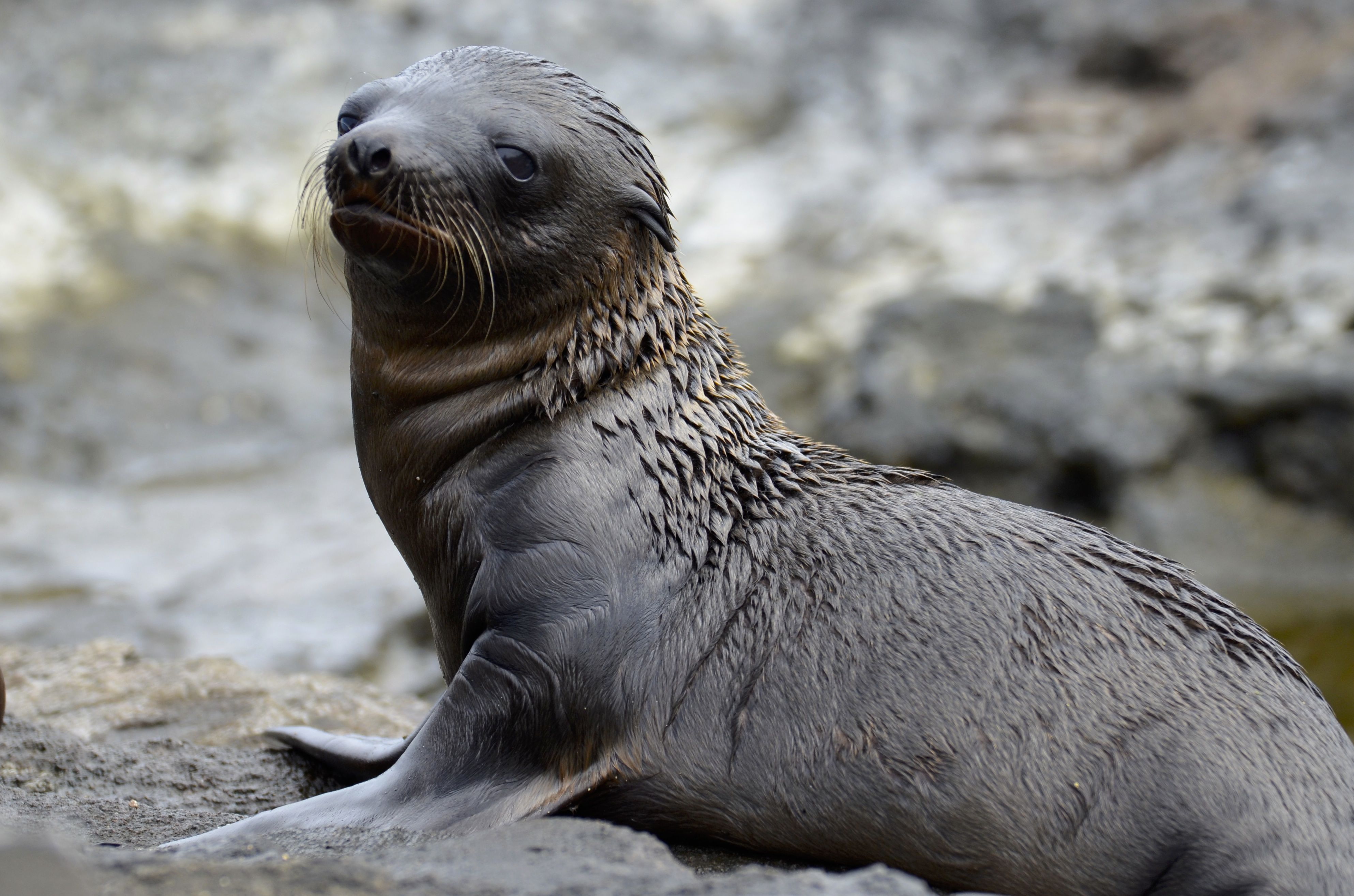
    Infant Sea Lion
    Infant Sea Lion

    Ecuador held Quito, the Galapagos, and Otovalo; each quite different from the other but creating a very well-rounded experience.  The Galapagos will always hold a special place in our hearts as you can interact with wildlife in a way that is not possible anywhere else on Earth.  Playing in the ocean with sea lions produces a giddiness that is not often experienced as an adult.  Watching marine iguanas climb out of the sea to bask on the black lava and expel excess salt out of their nostrils is seeing life on our planet before hominids began to dominate everything.  Listening to the scratch and scrape of a giant tortoise as it hauls its shell over the rocky landscape reminds us of how resilient life is, and how fragile.  We had enough time (four weeks) on the Galapagos to feel like we really got to know the place.  Quito and Otavalo were our first introduction to the Incan influence, but it was subtle.
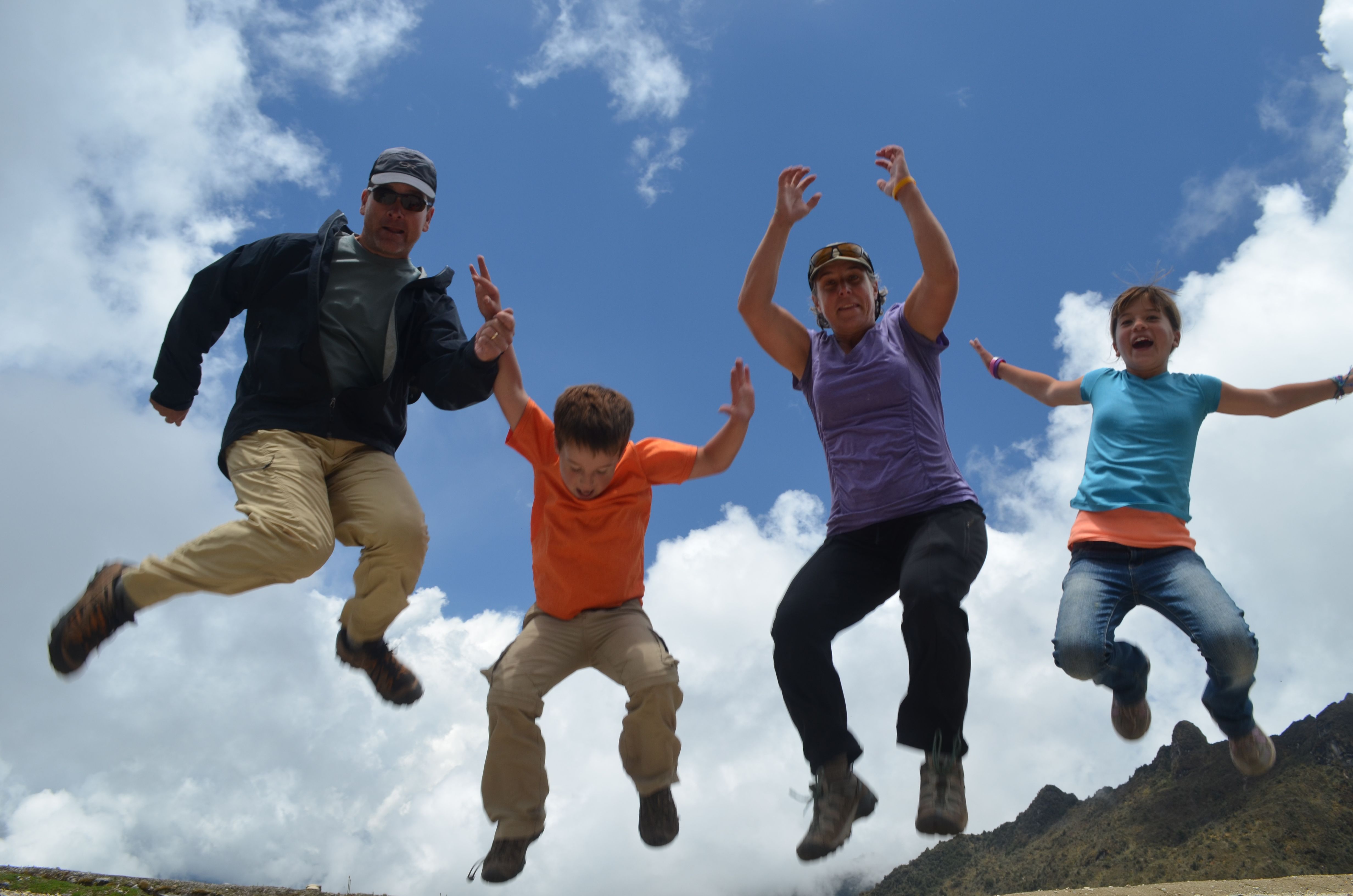
    Celebrating Success
    Celebrating Success in Peru

    Our experience in Peru was very different from Ecuador.  Yes, the landscapes are similar, but what we paid attention to was much different.  With the Incan influence clearly visible everywhere, we learned more about the history and culture than flora and fauna.   The stark beauty of the Colca Canyon and the wonderful hospitality of our host family and guide left us feeling as if we were truly welcomed there, not just a paying passenger.  In contrast, Titicaca and Ollanta left us feeling as if we were simply a commodity; something to be exploited for every dollar possible.  Although it was quite disturbing, we became aware of just how damaging tourism can be for a culture, a necessary awareness when traveling abroad.  We are now even more diligent in making sure that we give our dollars to organizations that do not damage and exploit the culture or the people solely for profit.  Our time in the Amazon was amazing – the raucous calls of the macaws flying overhead, the peculiar odor of a peccary approaching, the grace of the monkeys launching from tree to tree – will always be remembered.  Hiking our way to Machu Picchu was a more of a pilgrimage than a trek, allowing us to glimpse the spiritual side of Incan culture as well as a fantastic experience.
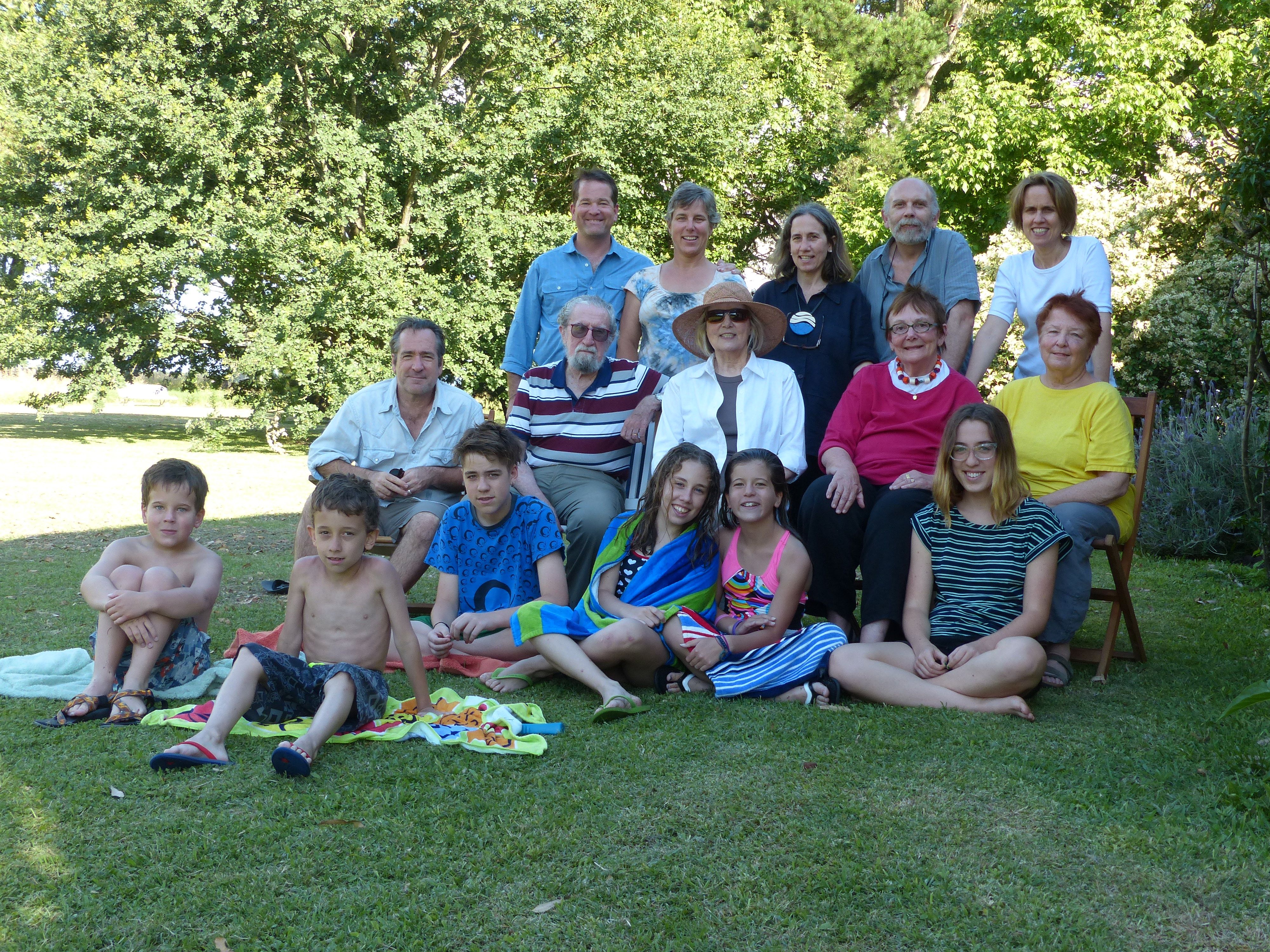
    With Granny and Jean and Our Argentine Family
    With Granny and Jean and Our Argentine Family

    We have enjoyed Argentina for our time with family, the absolutely jaw-dropping landscapes and the availability of fabulous wine and scrumptious grilled meats everywhere.  Being able to spend the better part of a month with Colburn’s Argentine family has been a true gift.  We have been with them long enough to able to see in to their life in a way that is not possible with a one or two week visit.  They have welcomed us with such grace and kindness that we have felt as if we were in our own home, not visiting.
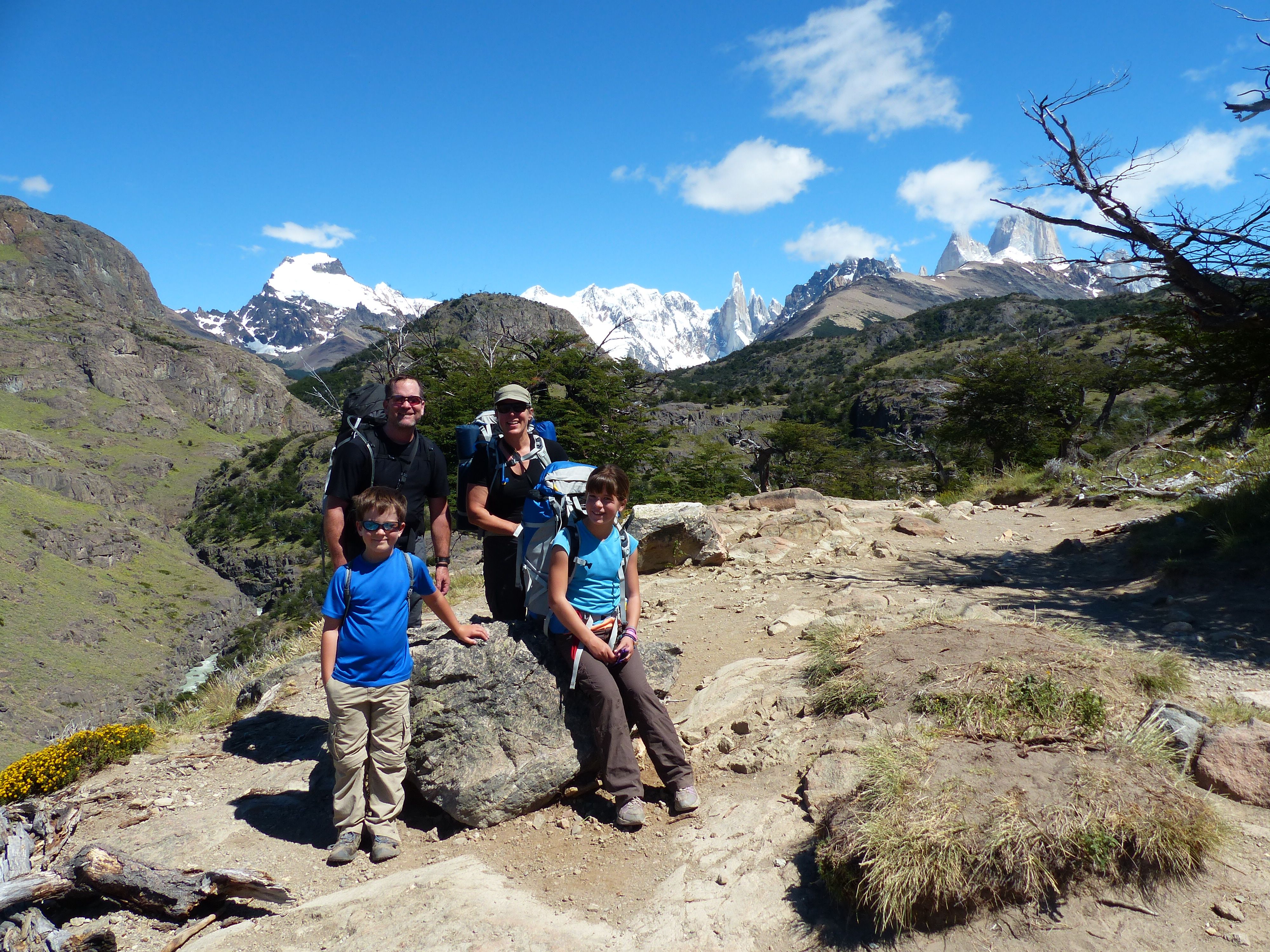
    Near El Chaltén
    Near El Chaltén, Southern Patagonia

    Going to Southern Patagonia was like finding the place we have always wanted to be. It is mesmerizing and might be like what the American West was before super highways and strip malls.  We know we will be back to Patagonia, so when we left it was hasta luego not adios.

    Hot.  Sweaty.  Waiting.  Puerto Maldonado Peru.
    Hot. Sweaty. Waiting.  Leaving the Amazon, Puerto Maldonado Peru.

    Beyond simply visiting interesting places, our travel has changed each of us individually and also as a family unit.  Individually, we are each now more gentle with ourselves and others.  Our expectations for everything going as planned has diminished considerably since leaving the US.  Repeatedly experiencing extended periods of waiting for an unknown outcome and the feeling of being lost as we try to navigate our way through unmarked routes in foreign lands has taught us that most people are really quite helpful and a sense of humor about pretty much everything is essential to successful travel.

    An Indication of the Future  (translation - the road is in a bad state)
    An Indication of the Future
    (translation – the road is in a bad state)

    When Deb left her wallet in a taxi in Peru, the driver came back to the airport and found us to return it with everything still in it.  When we were having trouble getting the rental car company to do anything about our car that wouldn’t start, the gentleman at the hotel desk became our valiant defender summoning a tow truck within 15 minutes.
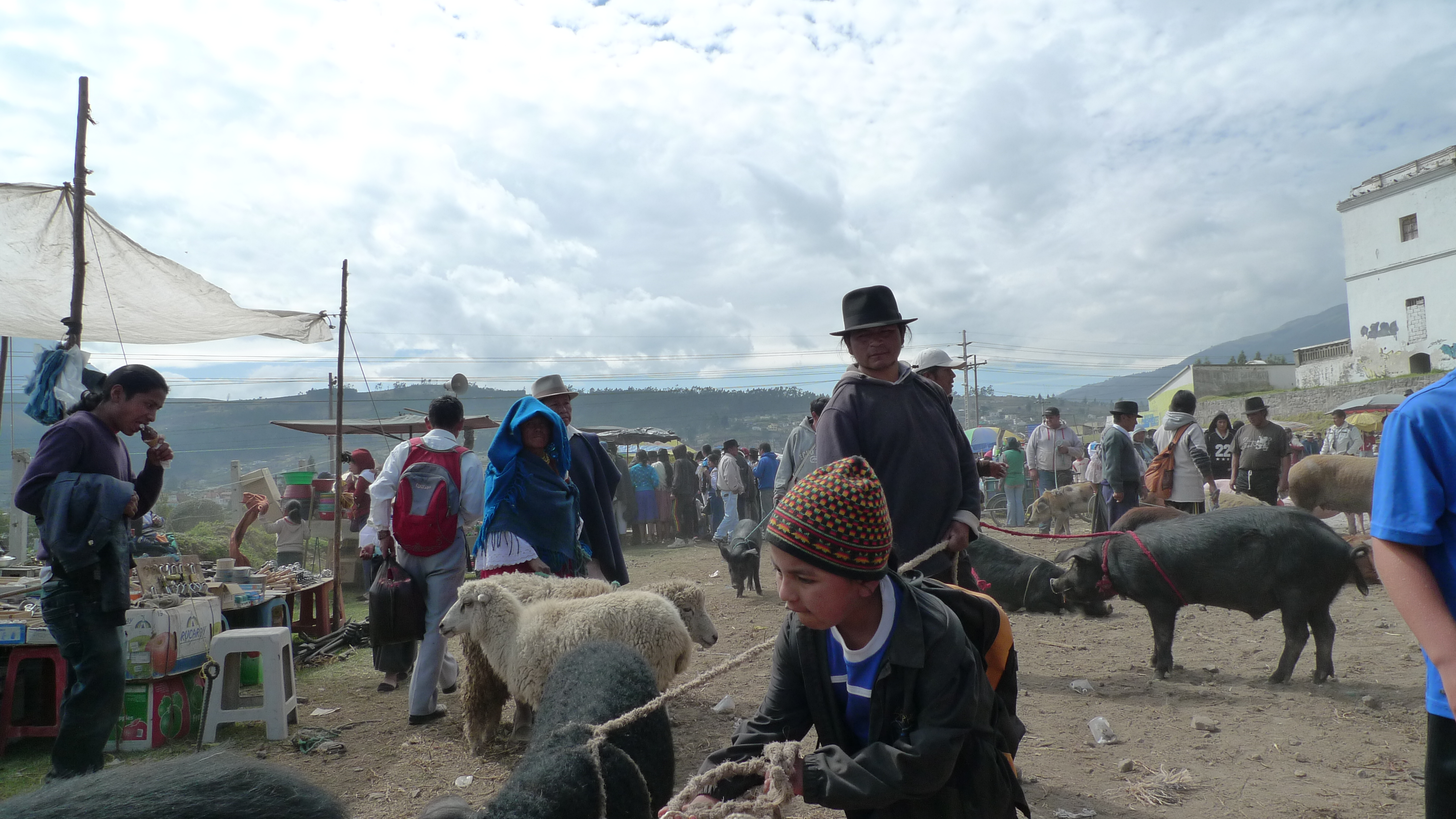
    Animal Market, Otavalo
    Animal Market, Otavalo Ecuador

    We have seen first hand the struggle to survive that both people and animals experience when their world is not abundant.  This has given us a greater awareness of how our individual actions at home impact people, places and animals unseen to us.  Discussing the loss of habitat in Costa Rica lead to a discussion about us decreasing our consumption of animal products and the illegal pet trade.  Seeing the ecological impact of large-scale agriculture for export has made us more aware of our choices when fruits and vegetables in the US are imported from the Southern Hemisphere.   Learning about the long-term effects of colonization, oppression, and exploitation has made us more aware of the freedoms we take for granted.
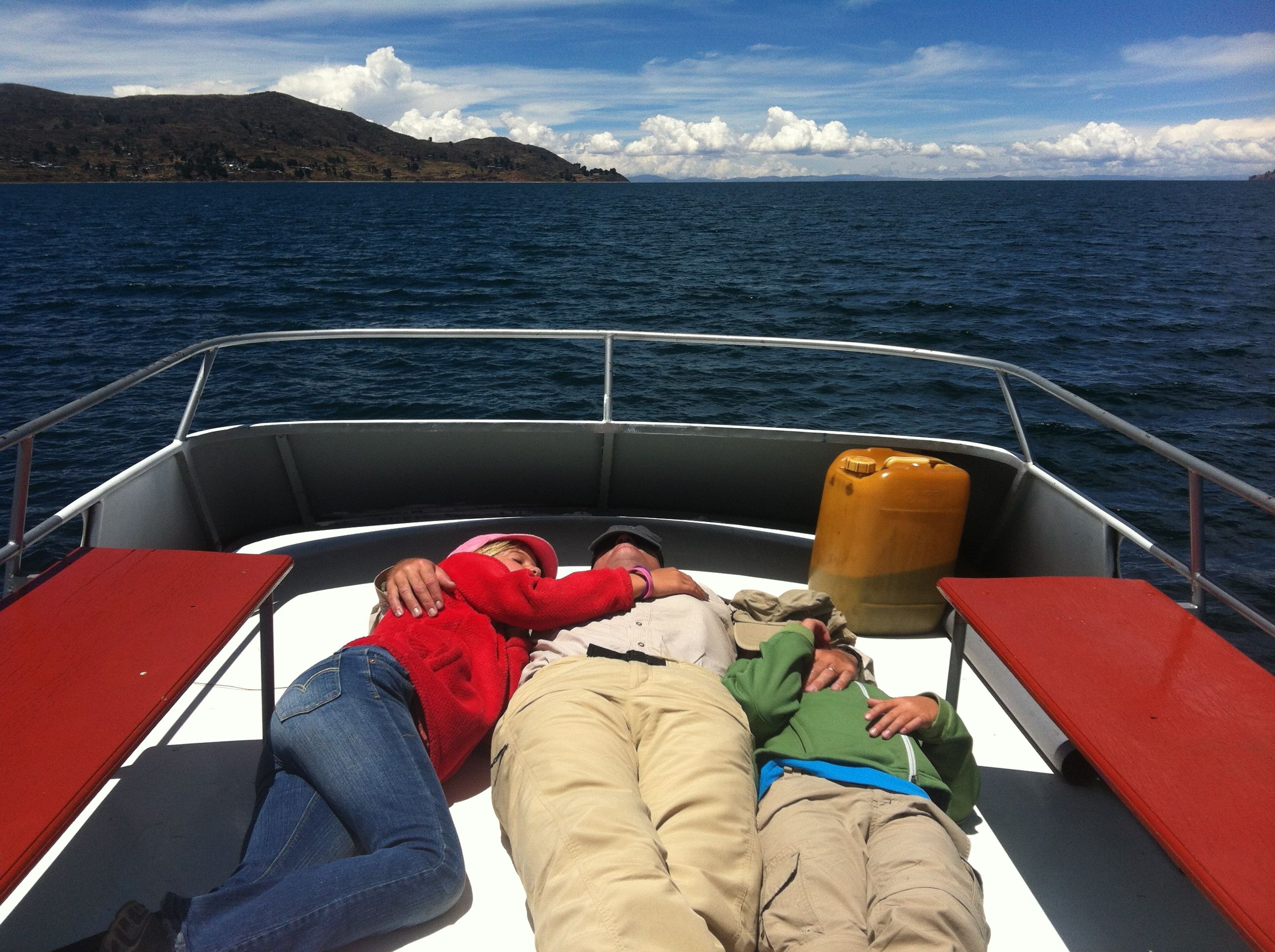
    Nap on Lake Titicaca
    Nap on Lake Titicaca

    We are also more aware of the importance of gentle words, especially when we are stressed. We are much closer to each other both physically and emotionally for we have supported each other through difficult challenges – Colca Canyon, Torres del Paine, and homeschooling while on the road.  Twenty-six weeks of being together all day every day has given us insight in to what makes each other tick and who can be relied upon for what.  We are now much more of a team than we were when we left the US and have a heightened sense that we are stronger as a unit than we are as individuals.  The children now ask, “What can I do to help?” instead of declaring, “I want …” or “Where is my…” The adults are more likely to say, “I could use a hand…” instead of “Go get the…” or “I need you to…”. Mac and Lucia have learned that there are not always three meals per day, sometimes not even two, and dinner at 10:00 or 11:00 pm is just fine.  They can now be hungry and tired without being cranky.

    Brothers
    Brothers

    Perhaps the most important thing we have learned is that family really is the foundation for happiness.   There really in nothing more important than family. Without our jobs or school to distract us, we are now able to focus on each other.  This is not to say that we were not close when we were in the US, but rather that we each had to split our attention between our family and school, work, friends.  Similarly, visits to family members further away had to be arranged when our work or school would let us leave, not when it would be beneficial to see them.  With family as far away as Australia and Argentina, it is difficult to visit them for only a week or two.  And, if you can only visit for a week or so, there is a tendency to focus on “doing” things all of the time rather than simply enjoying being together.  Lucia commented on this when we first arrived at the campito, a small weekend house outside of Buenos Aires for Colburn’s Argentine family, saying that she felt like she should have been there five years ago.  When we went back two months later, it was like coming home for all of us.  It has been wonderful to be able to share some of their life, not just a visit.

    We have truly enjoyed our time traveling so far and feel that we are incredibly blessed to be able to do so.
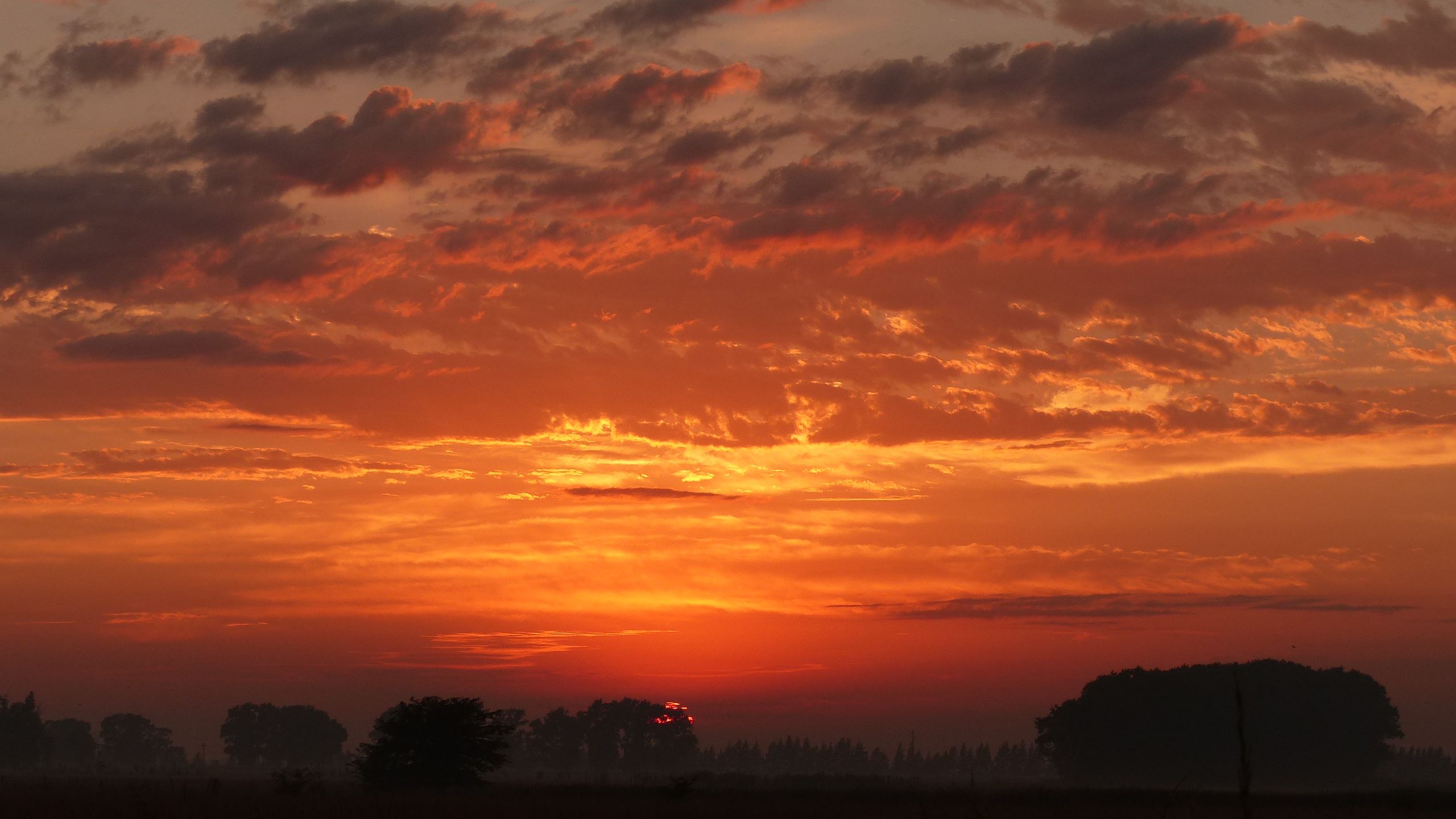
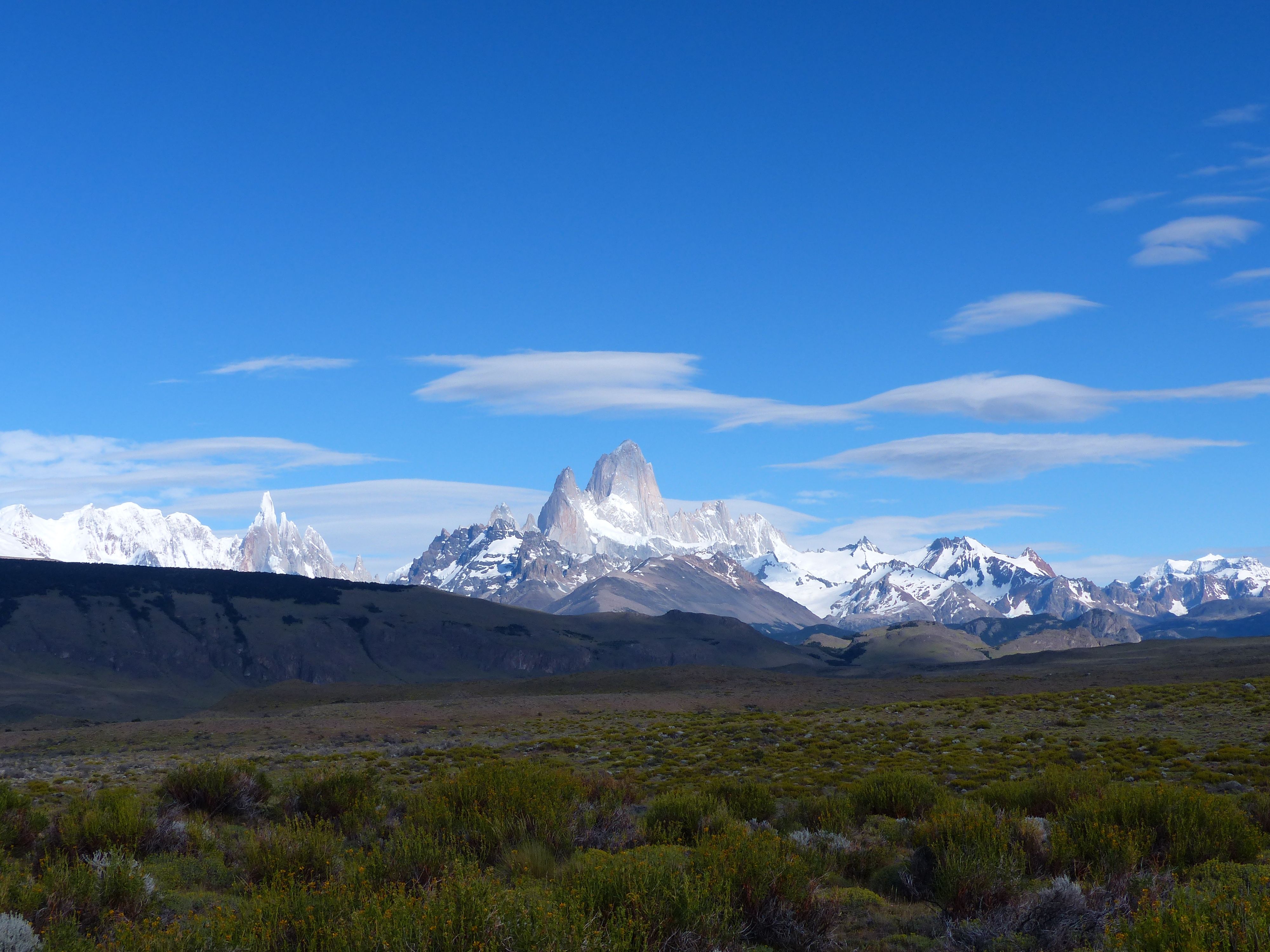
    Sunrise at the Campito
    Sunrise at the Campito
  • Why We Love Patagonia

    The high desert near El Chaltén
    The high desert near El Chaltén

    We love mountains, we really do, and like the desert an awful lot as well.  This is why we like our hometown of Reno so much – technically we live in the desert yet are 15 minutes from some of the most beautiful mountains in the United States.  We have the benefit of a dry, sunny climate and can drive to “the snow” in a matter of minutes for our outdoor fix.  This might be why we have fallen in love with Patagonia, the region that spreads from the Pampa through to Tierra del Fuego and crosses between Chile and Argentina.  It is definitely our kind of place.  The flat horizon line of the pampa or the ridgeline of the Andes in Patagonia holds our imaginations.

    The region of Patagonia
    The region of Patagonia

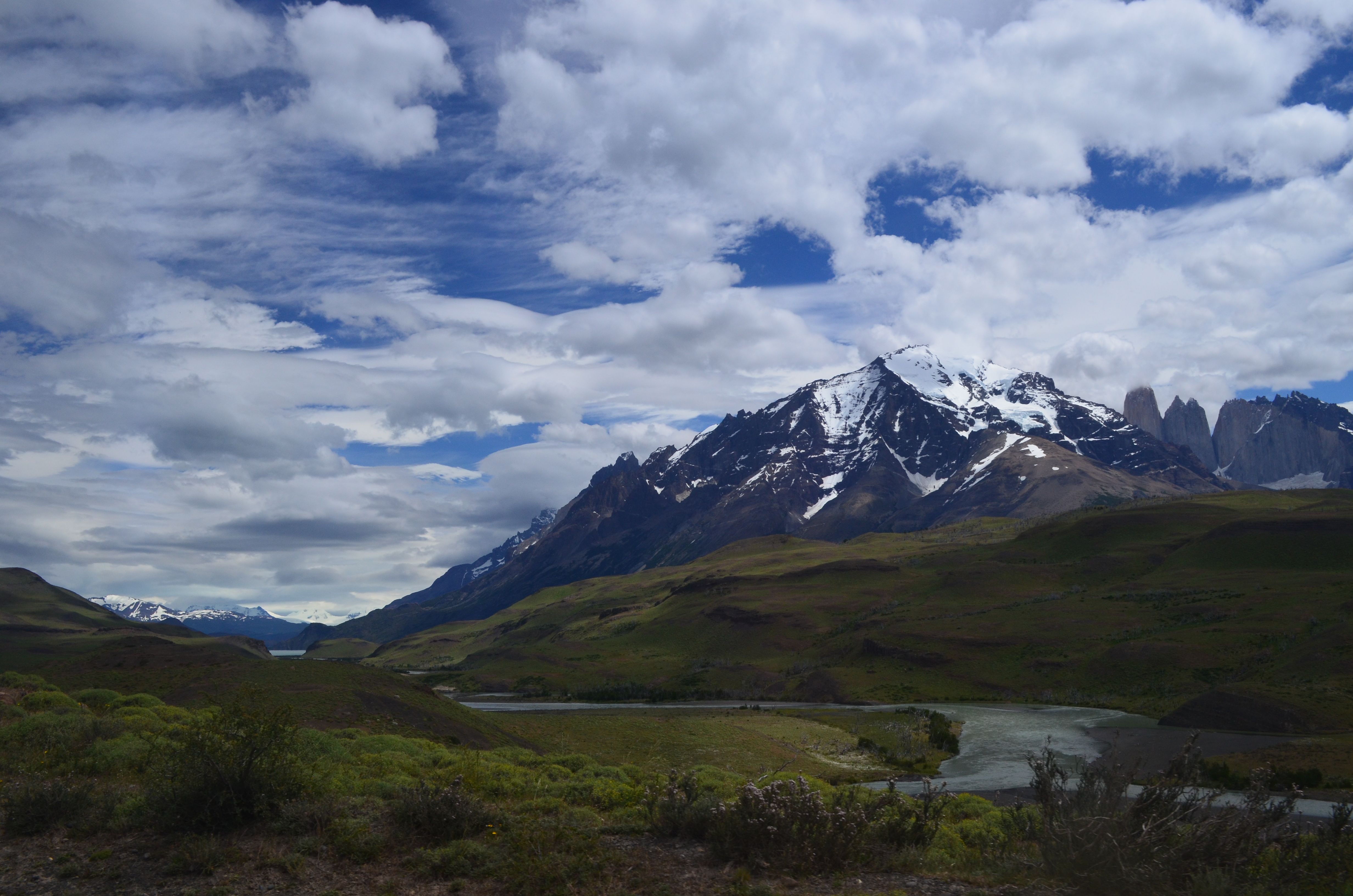
    When we arrived in Patagonia, we were immediately struck by the landscape – arid yet mountainous – we felt at home.  In contrast to the Pampa’s mesmerizing expanse and razor-sharp uninterrupted horizon line, Patagonia is a series of rolling hills, subtle mountains, small lakes, ancient glacial moraines, and milky blue streams.  The diminutive Guanaco roam in small packs, the Rheas seem oddly out of place, and the wind blows strong and consistent.  It is as if Nevada, southeastern Wyoming and Colorado have all been wrapped in to one – but it is different and on a grander scale.  The spaces are larger, the mountains taller.  We love Patagonia.

    Our favorite campsite of all time - de Angostini
    Our favorite campsite of all time – de Angostini

    Like the West, the people are tough.  Their skin is tanned and weathered from the intense sun, biting wind, and snow, but the smiles are bright and welcoming.  The dogs look as if they have come from herding stock – Australian Shepherd, Cattle Dogs and Border Collies mostly, but some German Shepherds and Great Pyranese too.

    Mountains of Patagonia
    Mountains of Patagonia

    The lenga trees are short and sturdy against the wind, small oak-shaped leaves tough like holly but without the spines.  Much like a forest of hemlock, walking through a forest of lenga makes you feel as if you are in the land of gnomes and elves or that Robin Hood will bound out from behind a tree any moment.  It is a tidy forest without understory or debris.  The landscape is young because the ice fields have only recently (in a geologic sense) retreated, revealing fresh and raw lands.  It is a place where all life must find a way to survive.  We loved it.

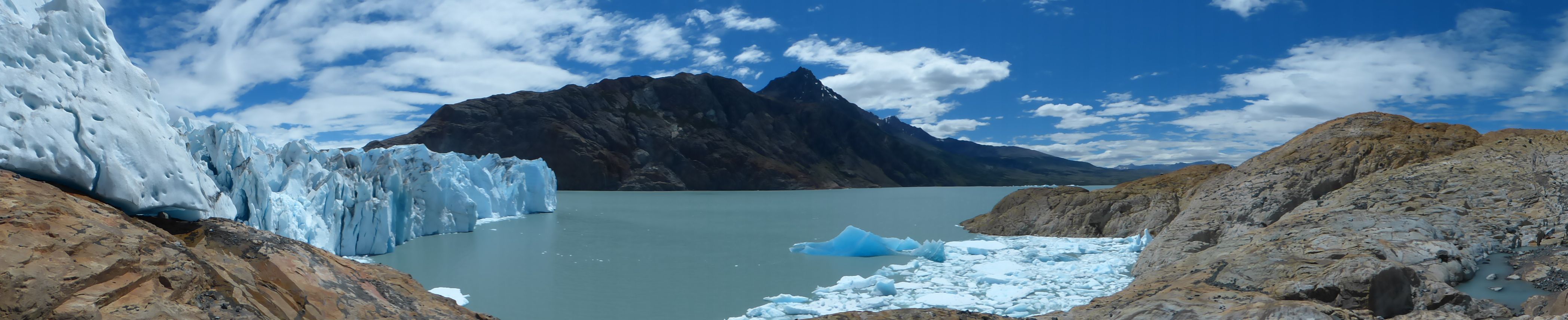
    Videma Glacier
    Videma Glacier

    After our trek in Torres del Paine, we were ready for a few days of rest and some time to catch up on schoolwork.  We took our few unplanned days in El Calafate to enjoy being in one place.  Other than a day-trip to see the glaciers and a visit to a wetlands sanctuary and museum, we mostly stayed in town and did math…not very exciting but what you need to do when road schooling your children.  While visiting the glaciers was interesting, there was little else to do in a town which mostly caters to package tourists.  After four days, it was time to move on.

    Colburn ice climbing
    Colburn ice climbing

    To get closer to the mountains, we headed north from El Calafate to El Chaltén.  (Side note: our trip has been broken down in to different letters: The C’s – Cuzco, Quito, Cuenca, The P’s – Puerto Natales, Punta Arenas, Patagonia, and The L’s – El Chalten, El Calafate, El Bolson!).  El Chaltén is a new town, only in existence since 1985, created to end the border dispute between Argentina and Chile over who was responsible for administration of the northern part of the park.  It is an outdoor person’s heaven.

    The area around El Chaltén
    The area around El Chaltén

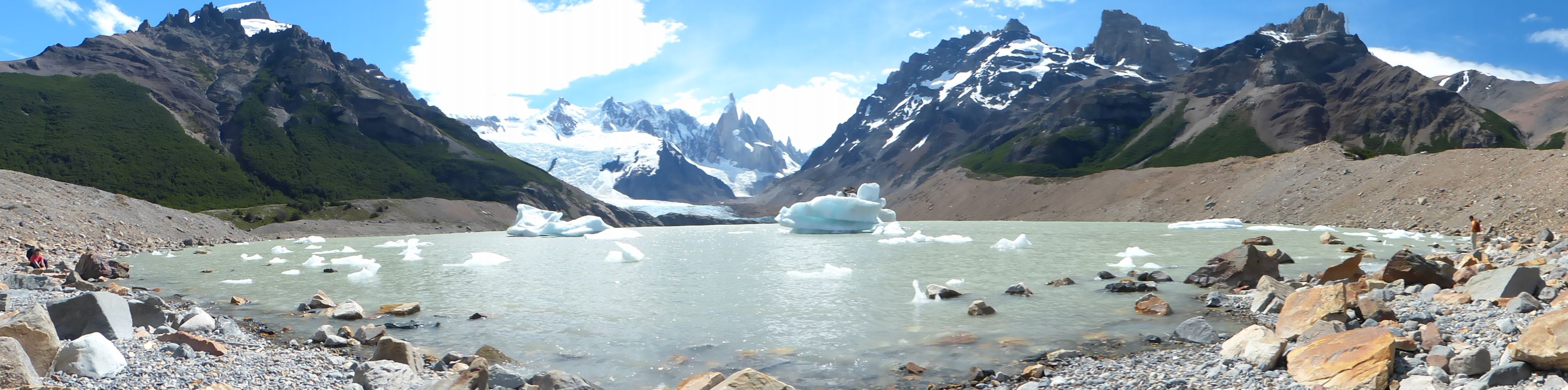
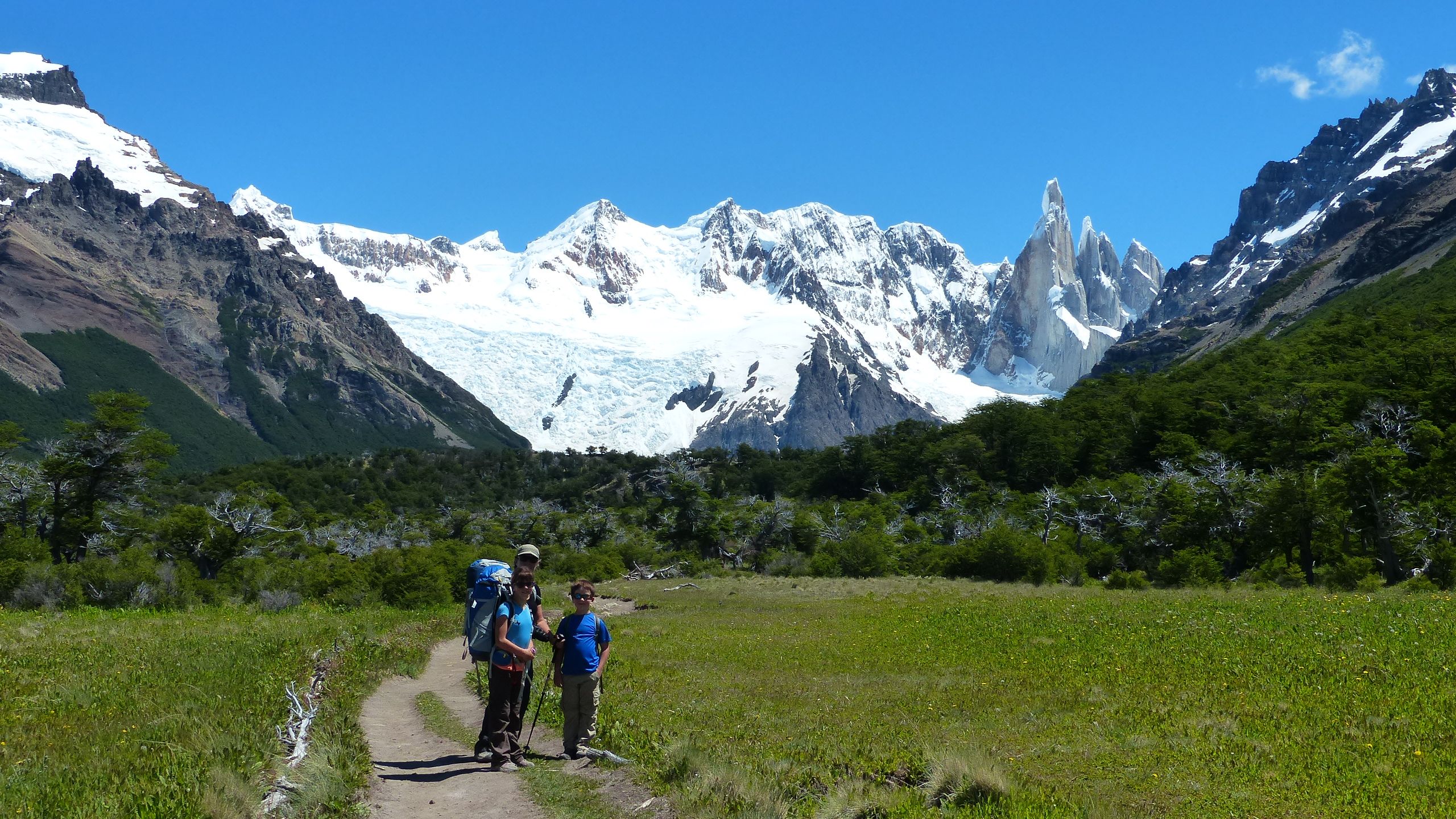
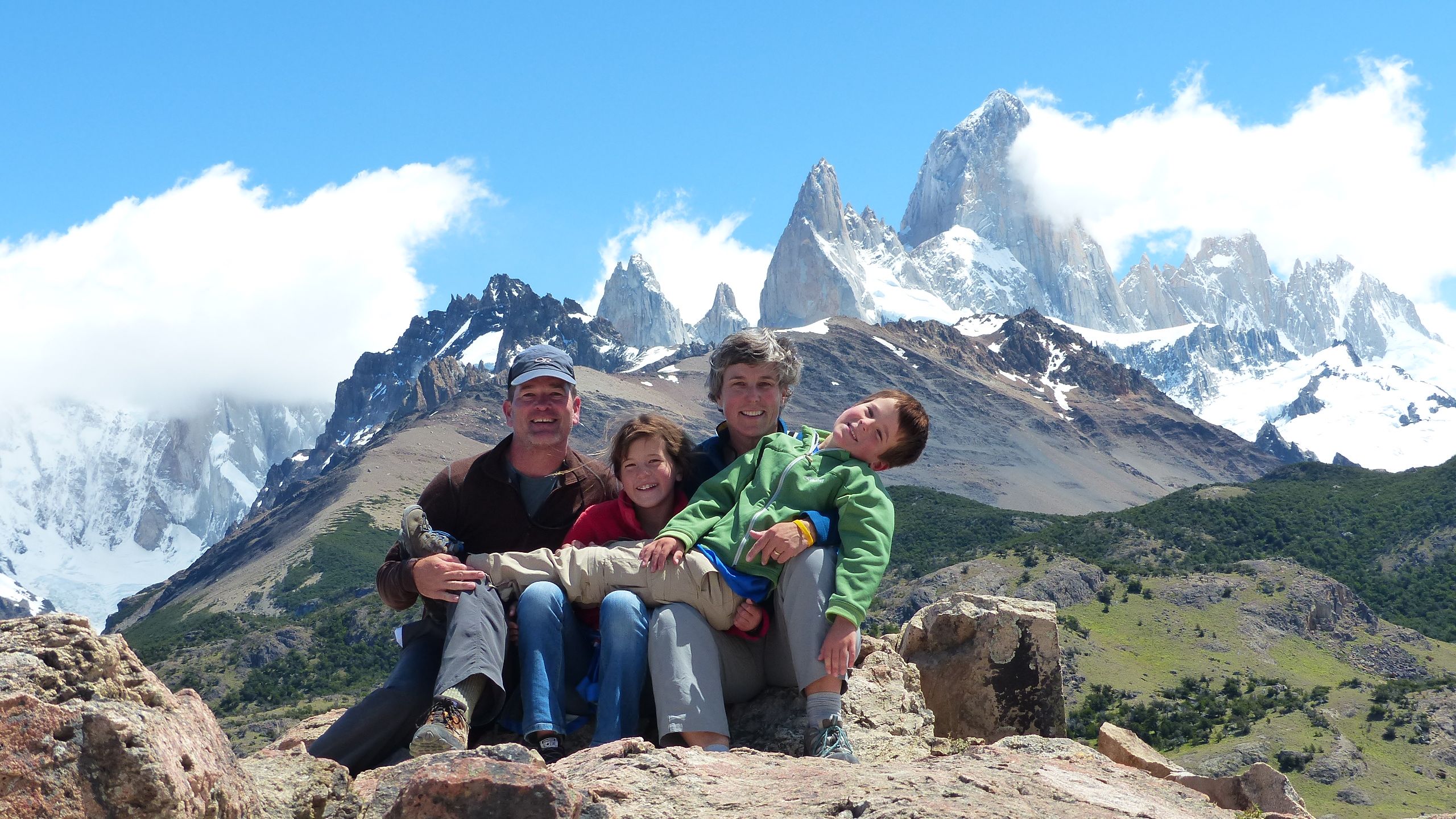
    Situated at the confluence of two rivers, it is a spectacular location where you can see Cerro Fitz Roy from the town playground, you can walk a half-hour to a 30 meter waterfall, or an hour to an overlook where you can see Fitz Roy, Cerro Torre, and both rivers from one spot…and there are Andean condors there too!  Only 10 kilometers by trail from town is what is perhaps our favorite campsite of all times – de Angostini.

    The trail to our favorite campsite of all time, de Angostini
    The trail to de Angostini

    Literally, we loaded our packs with overnight stuff and walked out of our door a few hundred meters to the trailhead and were hiking in a matter of minutes.  No long drives, no park entrance fees, no shuttles – just amazing hiking, good local beer, and great lamb asado.  We loved El Chaltén.

    Mount FitzRoy and Cerro Torre from 45 minutes above El Chaltén
    Mount FitzRoy and Cerro Torre from 45 minutes above El Chaltén

    At some point during our 1800 km road trip to El Bolson we noticed the shadows and the location of the sun.  Shadows are cast on the left side of the car heading west.  We were struck by the contrast.  In the US, when driving west, the sun falls in the lap of the driver and casts a shadow on the right side of the car. The long days and bright sun in the far south of Patagonia make a northern hemisphere inhabitant stop and wonder where they are.  We love Patagonia.

  • Trekking in Torres del Paine

    We hiked from the valley on the other side of the pointy peaks on the right all the way around to the last valley on the left - 60 km or so in total
    We hiked from the valley on the other side of the pointy peaks on the center-right all the way around to the last valley on the left – 60 km or so in total

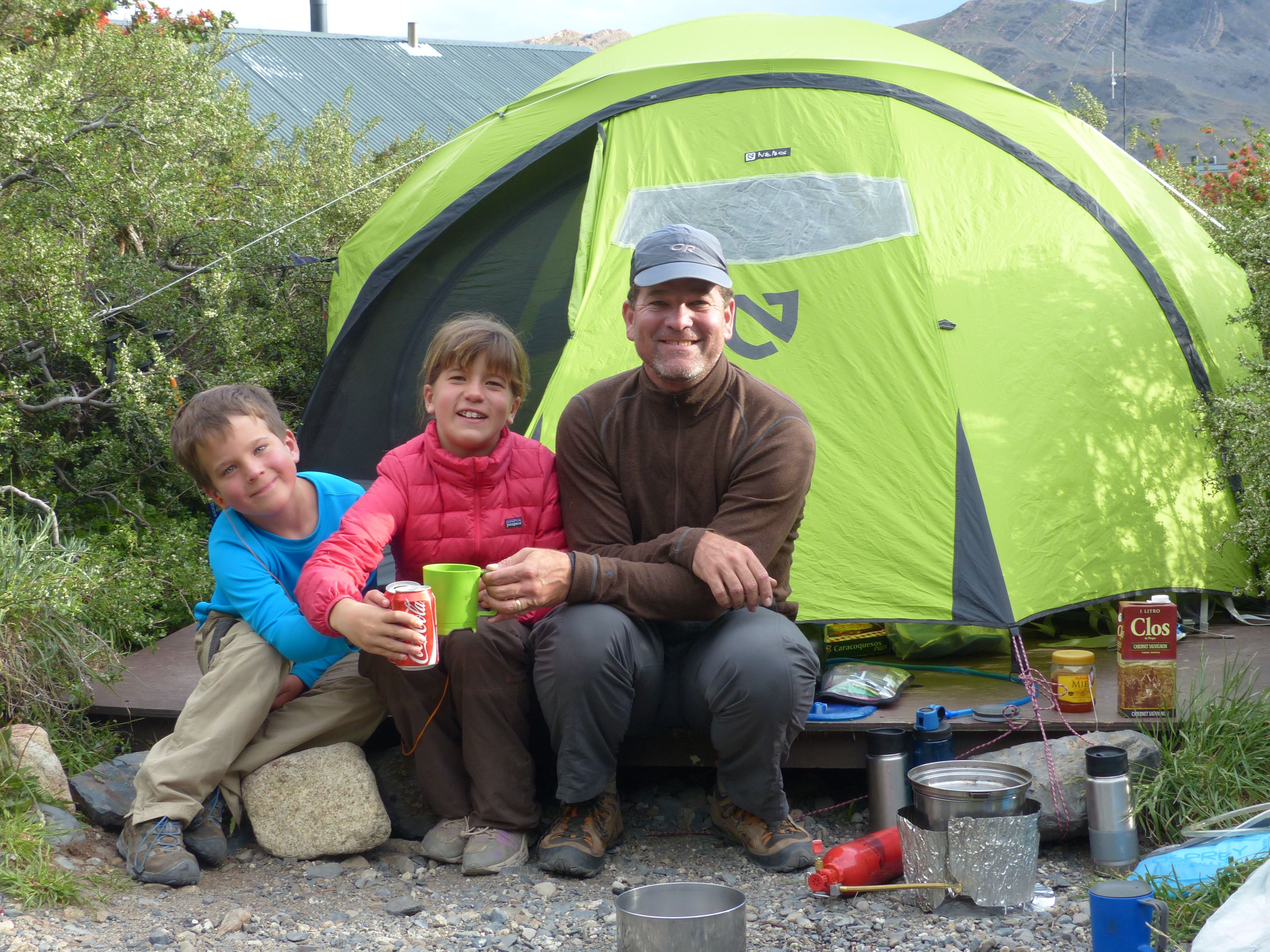
    Torres del Paine, Chile.  This was one of those places that had been on our short-list for years.  Since we met, Colburn has talked wistfully of trekking in Patagonia.  We always ogled over pictures of the terrain from our friends who had traveled there.  As we were planning our entire trip, trekking in Torres became a pillar around which we planned the other South American experiences. We had researched possible routes, terrain, and logistics until we couldn’t possibly absorb any more information without actually going there.  Colburn’s brother, Richard, schlepped a tent, sleeping bags, pads and freeze-dried food down from the US for us so we could have quality gear, not rental stuff.  After great success in Colca Canyon and the Inca Trail, we were excited for our first unguided and unsupported trek. We were ready.  We felt prepared.

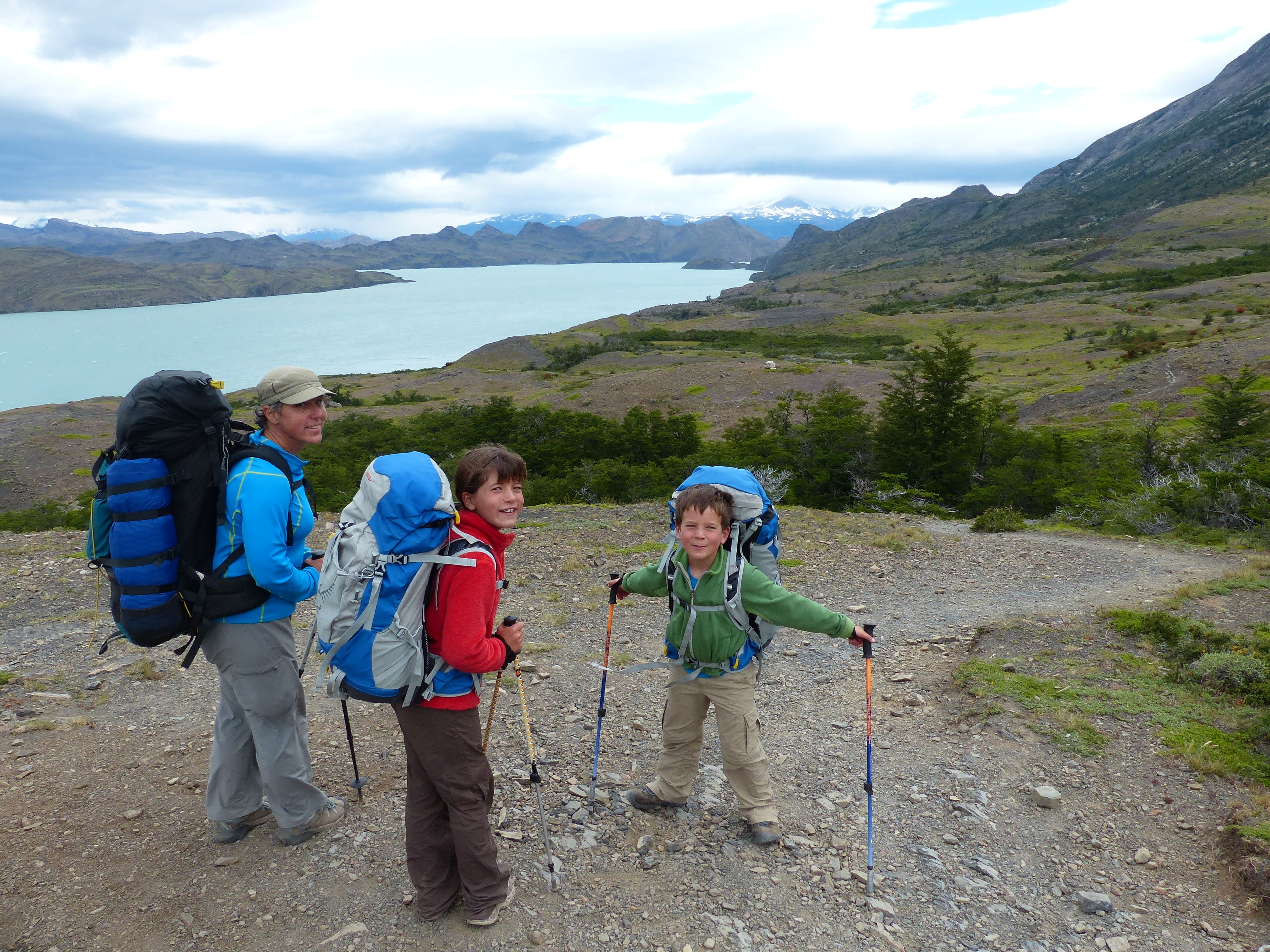
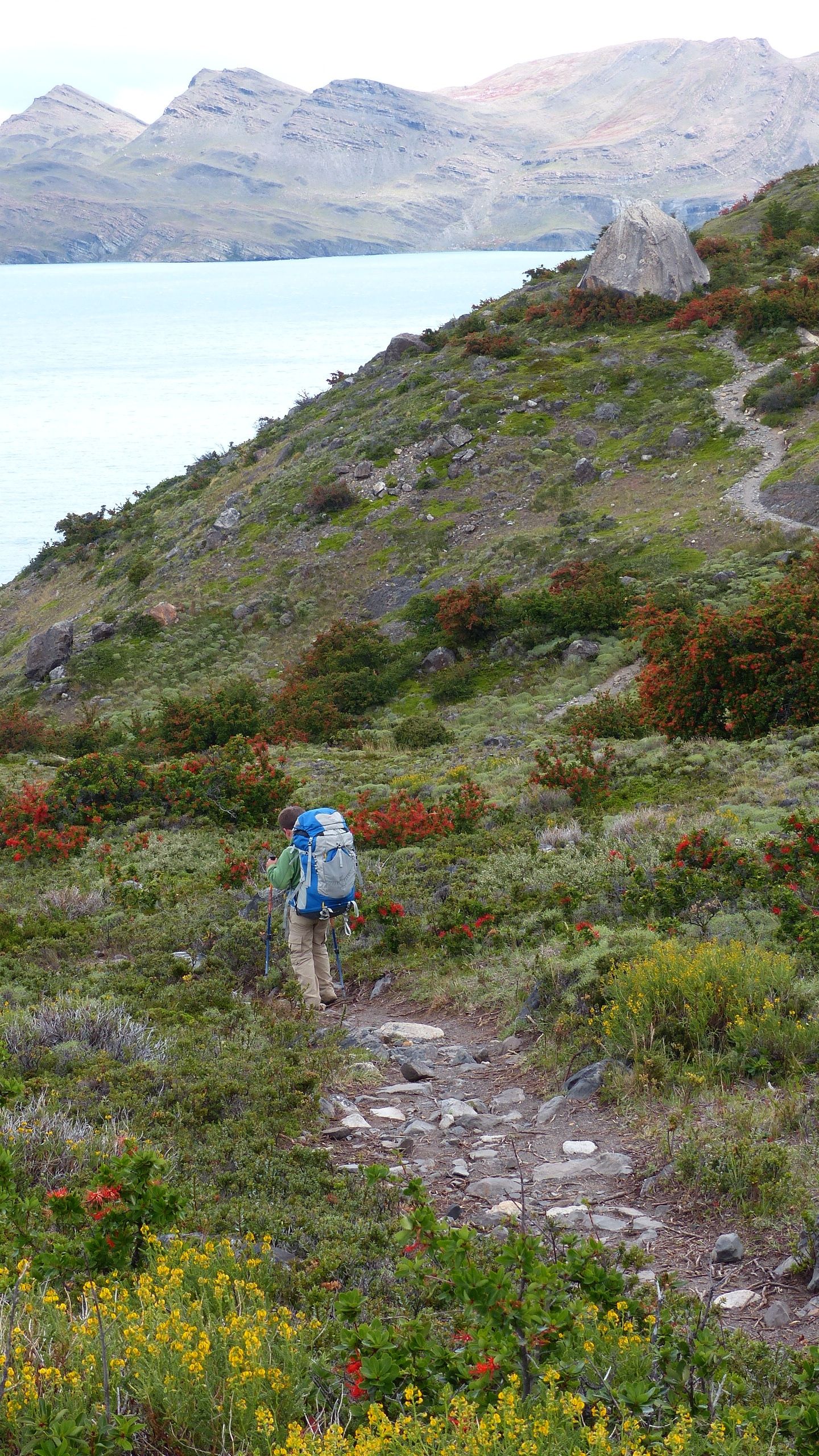
    Hiking along the edge of  Laguna Azul
    Hiking along the edge of Laguna Azul

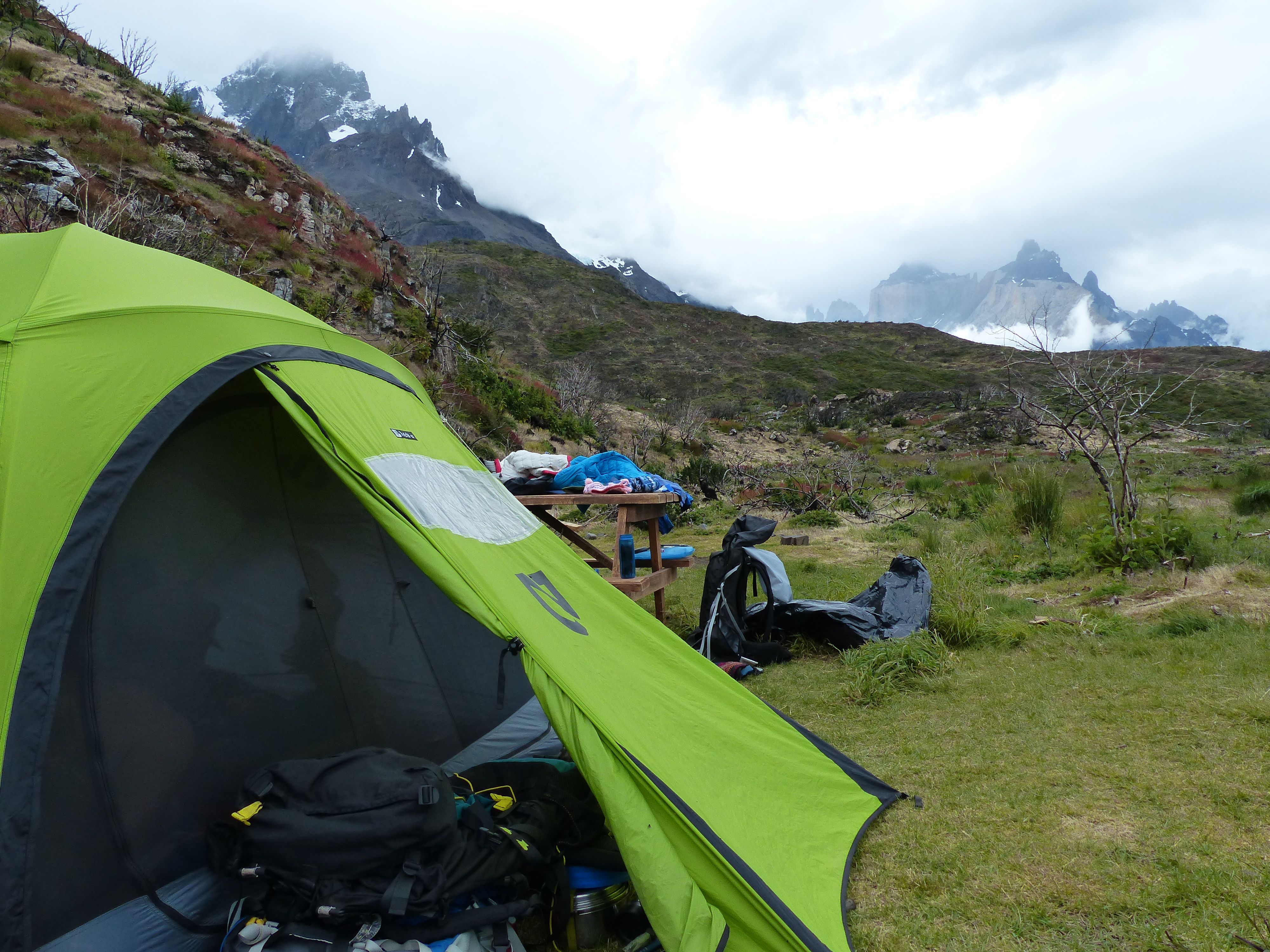
    We arrived in the park in the late afternoon after prepping in town for the better part of a day.  We needed to supplement our freeze-dried dinners with breakfasts and lunches, buy new socks for the kids (their feet have grown a lot in five months!), and get the “hazardous materials” not allowed on planes (white gas, matches, etc.).  The terrain was shrouded in clouds as we battled near 100km/hour winds to set up our tent, so we did not see the mountains.  Sometime in the middle of the night, the winds died down and the clouds lifted to reveal the Southern Cross outside of our tent window and the early morning light revealed a phenomenal mountain landscape outside our tent.  An auspicious beginning.

    On our way up to the Mirador
    On our way up to the Mirador – it’s up the side valley in the distance on the left

    We were excited for a “day hike” to the Mirador Las Torres, perhaps the most photographed area of the park.  As a result of our extensive research, we had decided that it was best to do this section as a day-trip without packs as it is considered the most difficult day of the trip.  The hike to the Mirador is listed in most sources as 9.5 kilometers, an estimated four and a half hours of hiking.  Not too bad we thought – a good introductory hike.  I am not sure what part of my (Deb’s) brain was not working when we planned this because somewhere along the way, I forgot to include the time/distance necessary to get us back to our base camp!  What we thought would be a relatively easy day without packs turned out to be the most difficult day of the trip.  According to our GPS, we hiked a total of 24 kilometers (a little over 14 miles) and had 1,600 meters (4,800 feet) of elevation gain during the day.

    At the Mirador
    At the Mirador – half way!

    Prior to this trek, our longest day was 16 km and our biggest vertical was 1,200 meters, but they were on different days during different treks.  This beat both on one day.  All of us were exhausted, our feet hurt, we were hungry.   On the way down, Mac said, “I feel like I’m broken.”  Lucia concurred with, “I think I’m getting moody because I don’t want to walk anymore.”  We couldn’t have agreed more – it was a hard day and we were beat.  We didn’t want to walk anymore either, but we did.  Eventually, nine hours after leaving, we returned to our cozy camp and indulged in freeze-dried lasagna, Mac claiming that it was the “second best meal ever” – only behind our homemade lasagna.   Two twenty-somethings we met later in the trek said that they ended up taking a day of rest the following day to recover after the “day hike” because it was that hard.  We kept going.

    For every downhill, there is an equal uphill
    For every downhill, there is an equal uphill

    The following days were less grueling.  Although we were carrying our packs, we took time to enjoy the views.  We stopped often for snacks and water.  We adjusted our camps so that each day ended when we were tired, not when we got to where we wanted to go.

    Our Last Camp - Paine Grande
    Our Last Camp – Paine Grande

    Sometime on day five at Paine Grande Refuge, a perfect stranger and his friends had watched us arrive at camp, set up the tent and make our way to the cooking hut with our food and cooking gear for dinner.  He was a college student, as were his friends, at the end of their study-abroad semester in Santiago.  Overhearing our obvious US accents, they hypothesized which state would grow “tough as nails kids” who would be running up and down the board walkways at camp after a day of hiking.  They had narrowed the state down to California, Maryland or Texas.  Pretty funny.  When we told them that we are from Nevada, they were surprised.  “We are all suffering here and your kids are running up and down the camp paths like it’s nothing.”  He was the lone emissary communicating his friends’ observations of Mac and Lucia on a windy, rainy afternoon arrival from a day’s hike from Campamento Italiano, some eight kilometers away.

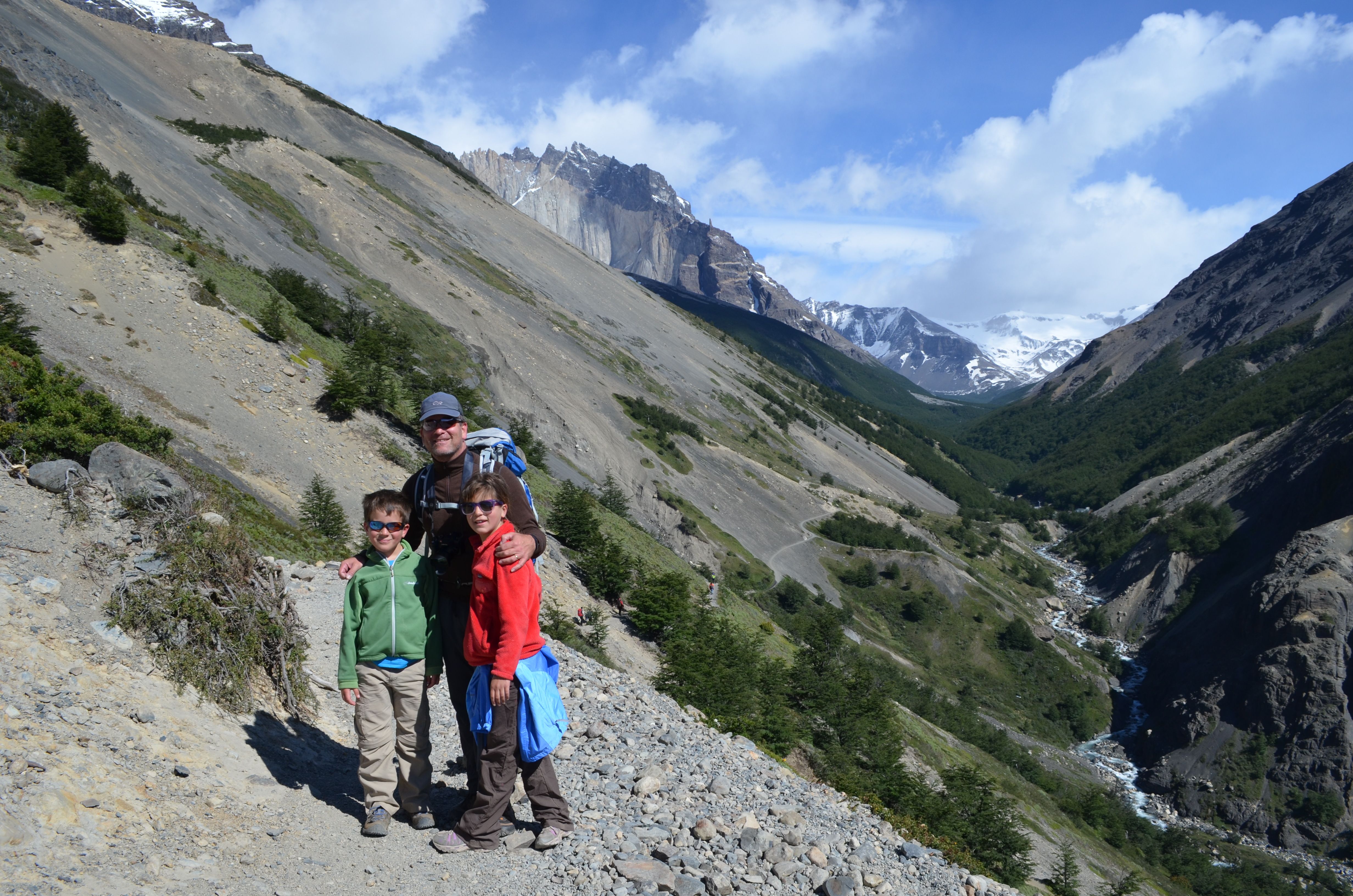
    Happy trekking kids
    Kids that are “tough-as-nails” AND happy!

    It wasn’t the first time we have been observed surreptitiously by strangers.  Apparently, Lucia and Mac were the only kids carrying their own packs on the trail while we were there.  Frequently, we received a higher degree of smiles and photos were taken of the kids by oncoming hikers or day-tourists.  However, at Cuernos Campamento, on day three, we did cross paths with another family with kids of roughly the same gender and age.  Deb sprinted back into the campsite as if she had seen a Leprechaun, excitedly saying to Lucia, “There’s another kid out there and she’s wearing pink!  Go see!”  Under the conditions that evening, we were more focused on keeping the tent from collapsing in the brutal 90km winds than we were with socializing with another family – something we would have dearly wanted to do under more calm conditions.

    Camp wind-storm - Mom and Dad drank a whole box of wine that night
    Camp Cuernos in a wind-storm – Mom and Dad drank a whole box of wine that night

    As an aside, the next morning several tents that had been present when we went to bed were simply no longer there in the morning – our neighbors (and their tents) seemed to have left in the middle of the night, possibly after the tents were destroyed by the winds.  On day five we observed one camper trying to repeatedly wrangle his tent to the ground only for the wind to sweep it back up in the air.  A few moments later we saw him stuff the collapsed tent and broken poles through a window in the Refugio in frustration.  Rick Lowell posited the potential of Lucia in such a wind as, “experiencing a Latin version of the Wizard of Oz.” Perhaps.  We never saw the family again – maybe they too were blown away.

    The day we were rained out of Vale Frances - note the rain blowing sideways
    The day we were rained out of Valle Frances – note the rain blowing sideways

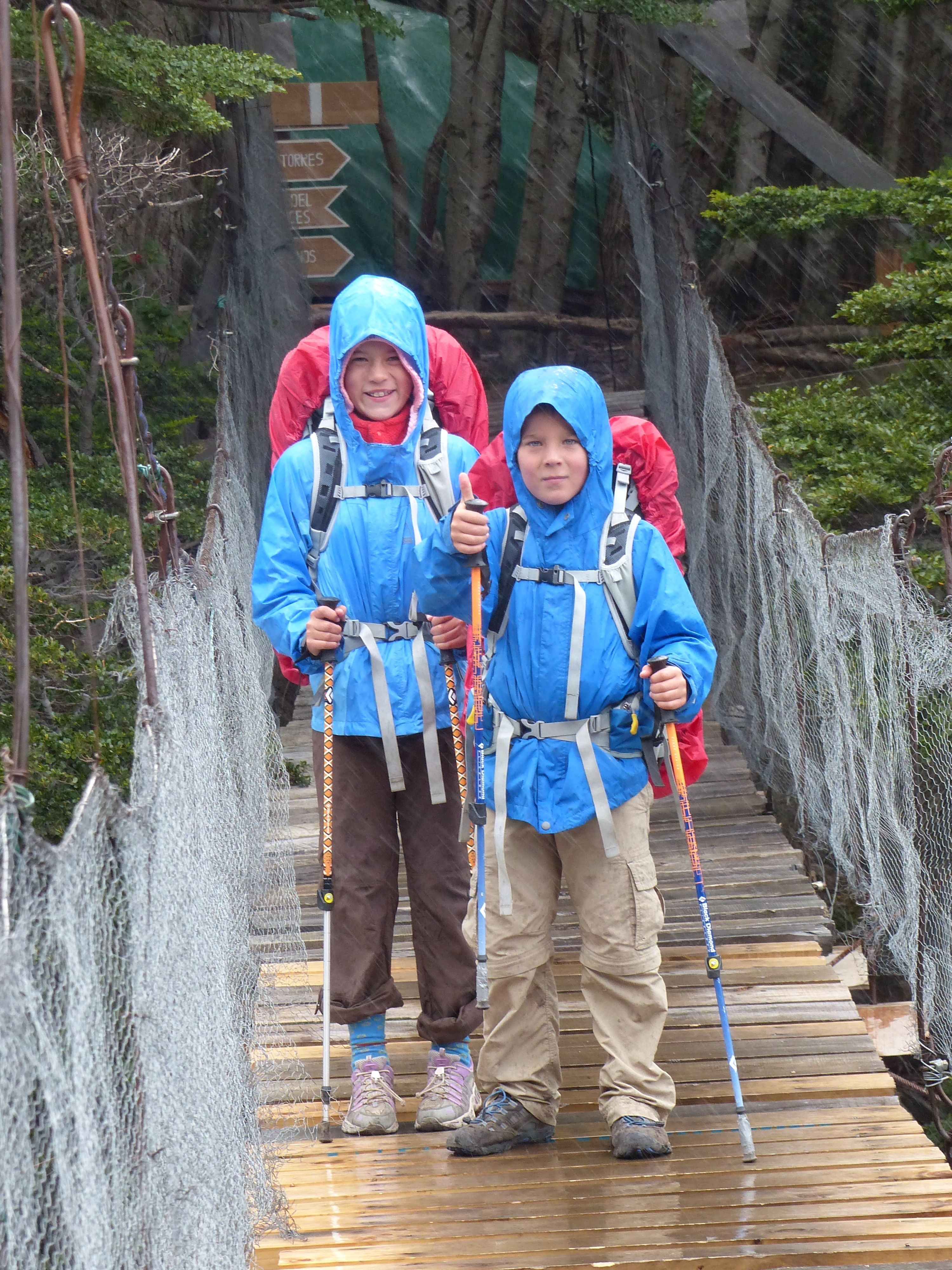
    We have been ruminating on a quotation from Dwight D. Eisenhower, “In preparing for battle I have always found that plans are useless, but planning is indispensable.”   We found that conditions and terrain of Torres del Paine made us come back to this concept time and again.  The weather and terrain was formidable and we made adjustments daily.  We changed our campsites and the number of days at each.  Each day we assessed our food: what to eat now, what to allot for other days considering some days were tougher than others. One day when we were supposed to have another “easy day hike”, we turned back after 500 meters on the trail into Valle de Frances because the rain and wind were drenching us and the view of the valley vanishing before our eyes in the swirling clouds and sheets of rain and wind.  We took shelter under a tree in a rocky cove off the trail as we weighed our options.    Lu and Mac were dauntless and the photo of them on the bridge, in the wind and rain with Lucia’s smile and Mac’s singular thumbs-up says it all.

    Beautiful panoramas everywhere
    Beautiful panoramas everywhere

    Our job as parents was to insulate to a degree the kids from some of the more unnecessary obstacles.  On one especially windy night, Deb and I lay in the tent plastered against the outer walls to keep the tent upright, periodically splaying our outer leg and arm out to support the tent walls from the force of the wind.  All the night Deb and I would glance over at each other and fist pump as Lu and Mac slept through the windstorm without any idea of the gale that blew outside.  This was the same storm that crushed other tents that night.  By far the most demanding trek of our trip so far, Torres del Paine tested our expedition skills, but we kept it positive.  On the day that I (Colburn) carried two packs on and off, we developed the mantra – “we don’t want any broken kids.”  I happily carried the extra pack  and would have done it for the rest of the trip knowing that keeping it positive and keeping the small doses of success coming into the kids’ experience is what makes the whole process rewarding and enjoyable.

    Fun with Photos - Dramatic Torres del Paine
    Fun with Photos – Dramatic Torres del Paine

    We had done our homework, knew all the options and chose the right options as the weather, terrain and variables arose in our path.  The result was a trip that we will not forget.  Colca Canyon and Inca Trail treks had tempered us – fitness, alacrity, and lessons of how and when we are working best together.  But it was Torres del Paine that showed us that a solid sense of humor is key.  You’ll see by the increased “fun with photos” selections of our shared and unshared photos.

    Getting punchy
    Fun with photos – crazy Mom and Dad

    Mac and Lucia made funny videos, played with camera features and made mom’s head disappear under the water’s surface.  Dad made facial contortions that even he had never seen before – that would be hard without a mirror.  Mom broke two of our four outdoorsy Lexan sporks trying to extract peanut butter out of the Skippy jar – a valued gift Granny brought personally from the US at Thanksgiving.  We all have made a formal decree that Deb is only to have metal sporks from now on.  She says that she is going to mail the sporks back to the Swedish manufacturer with results from the “field testing”.  The landscape made us feel small and vulnerable, but the solidarity of our family let us know that we are strong and durable.

    Fun with Photos - Crazy Mac
    Fun with Photos – Crazy Mac