Category: Australia/New Zealand

  • The Unknown

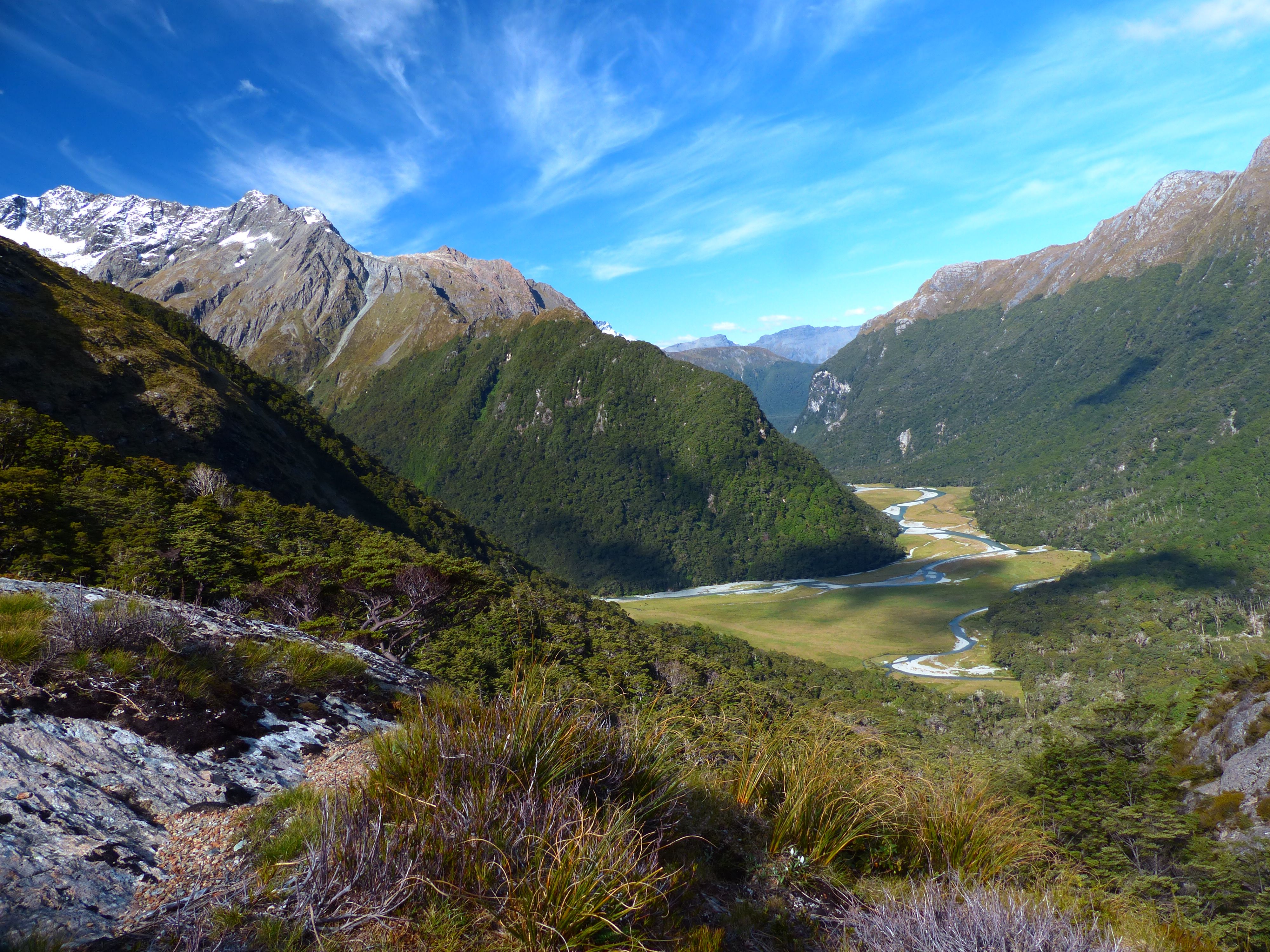
    The view from our last hut
    The view from our last hut

    As I stood at the sink of the hut doing the breakfast dishes on our last day of trekking, I asked the woman standing next to me, a Danish mother of an 8 month old baby, what their plans were for the day.  Expecting to hear, “heading out”, “going to see the lake” or something similarly safe, I was moderately surprised when she replied, “Heading to MacKenzie”, a trekking hut some 12 kilometers over a moderately steep alpine pass away.  We had done the walk the day before and enjoyed it tremendously, but it is the middle day of a 3-4 day high alpine trek in New Zealand — not something you expect to be done with a young child.  Initially I was taken slightly aback by the response, but as I considered it further, I said, “Wow, I really admire you!” To be honest, we love adventure, but I don’t think it would have ever even crossed our minds to take our infant on a multi-day hike where you have to sleep in dorms of 25-28 beds.  We were challenged by car camping trips to Yosemite and Lake Tahoe, so I was impressed by the courage and confidence that these young parents showed.
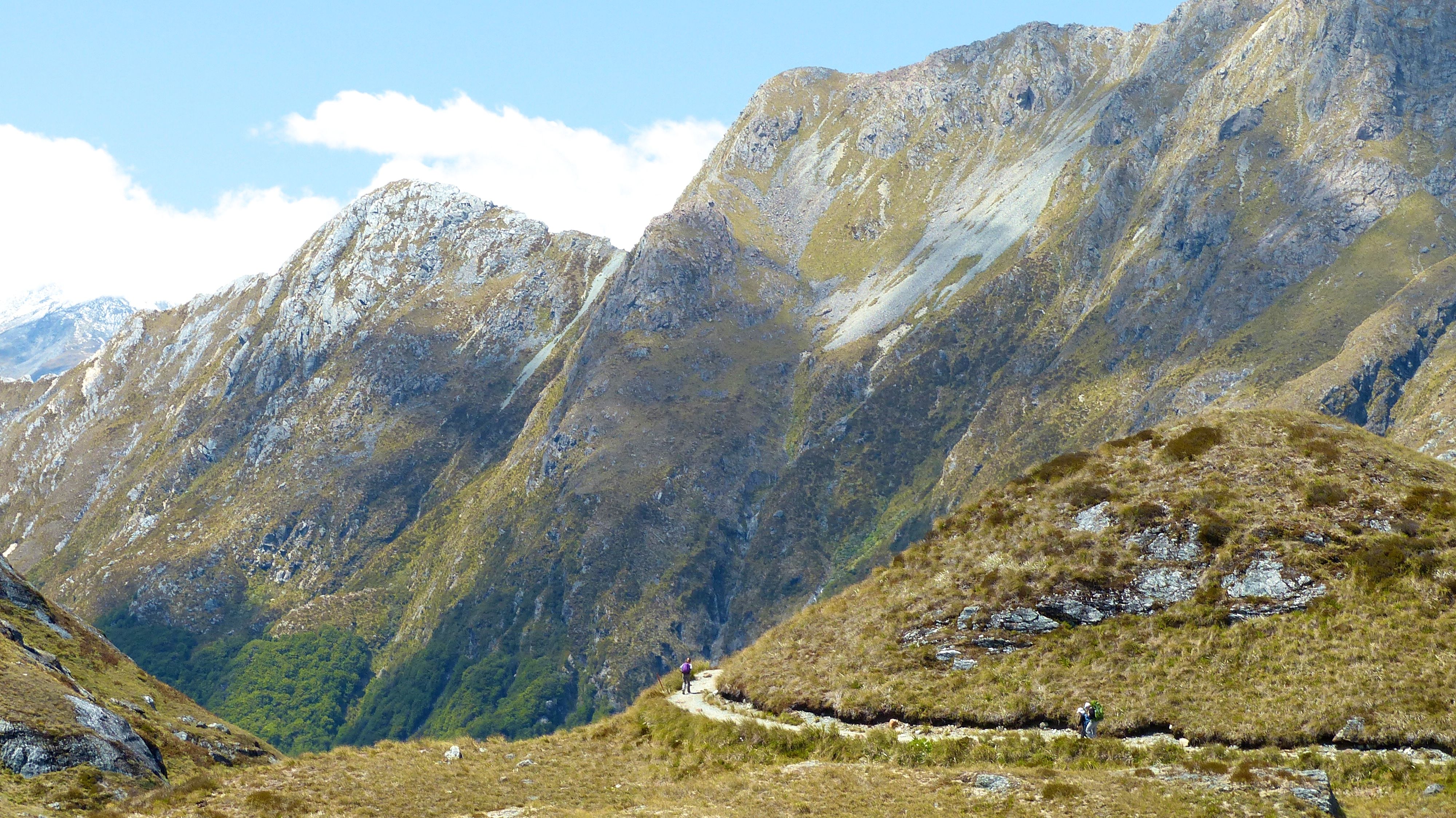
    The Harris Saddle
    The Harris Saddle to Lake Mackenzie

    But, they weren’t doing this walk on a whim or as a spur of the moment decision.  They had thought about the challenges of taking an infant trekking and came to the conclusion that they could handle any situation that might come up.  The walk they chose is on a very well maintained route (at least half of which is a meter wide gravel bridle path) with only intermittent rocky or steep areas.  The facilities are exceptional with cosy warm huts every evening, running water that can be consumed without treatment, and flush toilets.  They planned their trip so that the first night was only a half-day hike away from the car so should the situation be too challenging for them or their baby, Elena, they could easily descend.  They had been ready to abort the trip because the weather was quite unsettled for a few days before they began walking, but it had cleared and was predicted to be beautiful for their three nights/four days.  They had planned that each evening her partner would make an announcement during the hut talk that although their daughter is normally a good sleeper, they had extra ear plugs for the other people in the bunk room with them in case this was one of her off-nights.  The night we were with them, someone in the corner of the room commented that they wished that the people who snored would have been so thoughtful!  Everyone in the hut seemed quite content to have such a young hiker amongst them and appreciated the thoughtfulness of the parents.  Elena spent the evening being adored by young and old alike.
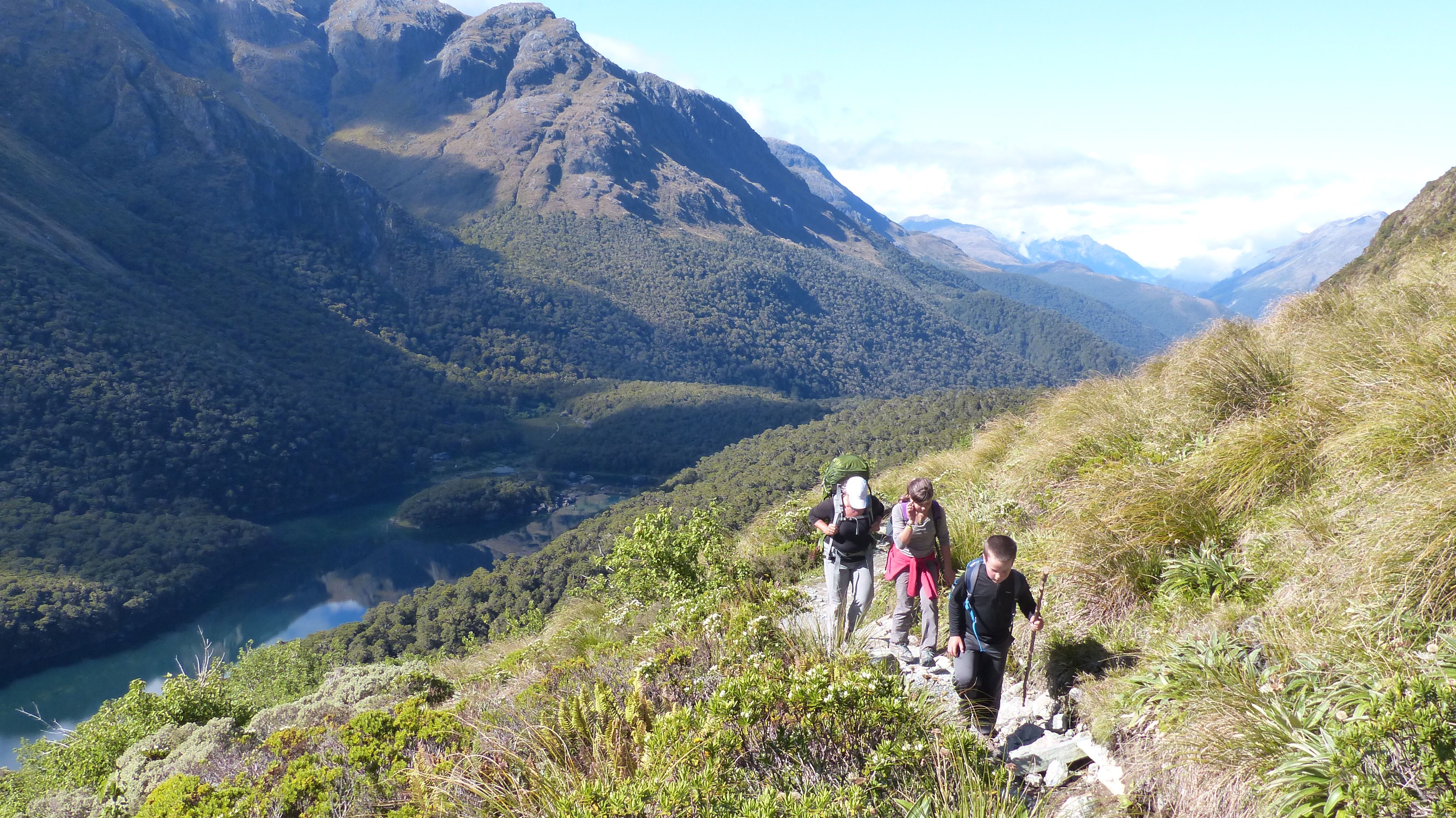
    Ascent
    Ascending from Lake Mackenzie

    As our conversation about doing things with children continued, a Polish father hiking with several kids and also doing breakfast dishes with us, joined in commenting that he felt many people can only see a myriad of reasons why they should not do something rather than the few but compelling reasons why the should do something.  Together we pondered why we were all in New Zealand, a half-a-world away from our respective home countries, trekking with our children, when there are so many reasons why we shouldn’t be on such an adventure.  The line of questioning goes something like this:  what will we do if someone gets sick?  what if the baby gets fussy?  how will we make sure the kids aren’t behind in school when they get back?  etc.  There are an awful lot of reasons why we shouldn’t be there.  But, in the end, there is really only one good reason to do something out of the ordinary — because you really want to do it, and for some people that is enough of a reason to actually do it. For each of us standing at the line of sinks that morning, none of our trips would never have happened if we let all of the reasons why we shouldn’t  do it rule our decision, yet we were all there.  What is different about us?  Why did we choose to do something which has so many reasons not to?

    MackenzieLake
    Lake Mackenzie

    I believe that it comes down to a tolerance for the unknown.  At home our lives are largely predictable and there is great comfort in that routine.  We know what our daily schedule is — kids to school by 8:30 and us to work by 9:00, a full day at work then pick up the kids for after-school activities, make dinner, get any home chores done, and be in bed by 10:30.  We have our favorite markets for groceries but also know where to go for a back-up, we have our favorite coffee shops in several different parts of town depending on where we are and can drive home without worrying about which exit to take because we go there out of habit rather than conscious thought.  If our kid gets sick, we know we can call our primary care provider for a same-day appointment or go to an urgent care.  When our kids were babies, if they were fussy, we had an armory of resources to calm them and a pile of things to distract them.  But when you step outside of this norm through travel, everything is unknown — how to navigate in a different culture, what to do with your days, how will to find your way through foreign lands where you may or may not be able to read the signs, where to find food to eat, what you will do if someone gets sick, what to do if the weather is horrible, etc. — and you have to be okay with not knowing because the list goes on and on.  As you enter the unknown and live there for awhile, a sense of accomplishment and confidence flourishes – both as individuals and as a family.

    HowdenHutGames
    Howden Hut Games

    With travel you learn that things will happen, but you will be able to figure out how to handle them.  You will experience the kindness of strangers for the overwhelming majority of people in this world are incredibly nice and will go to great lengths to help out a foreigner.   You will also find that there are a great deal more similarities in people than differences. If you let the unknown of what you will do if the baby gets fussy in the dormitories rule your decision, you may never experience her becoming the loving center of 48 people’s lives for one evening.  If you let the unknown of what you will do if someone gets sick when they are trekking, you may never watch young men at a Tibetan monastery blowing their shells and banging on their drums as they learn the meditation chants.  If you let the fear of what will happen if you get lost driving your own car through Africa, you will never share peaches with three generations of a family of wood-carvers along the side of the road.

    The notice board keeps you informed
    The notice board keeps you informed

    It is only through a tolerance of the unknown that some experiences can happen, but this is not a process one can enter blindly trusting that everything will be fine without forethought.  We, in fact, spend a great deal of time planning and evaluating our options, considering what we would do should certain situations occur. We have taken reasonable precautions to handle the foreseeable obstacles.  What will we do if someone gets sick?  We have an armory of medicines and a nurse practitioner on staff.  If she can’t handle the situation, we have an insurance policy which will help us locate English speaking providers in every country.  So far we have only had a broken toe, one case of pneumonia, a round of strep throat, a few bouts of travelers diarrhea, and two chipped teeth — all of which have been handled without any trips to a hospital and only two visits to local dentists.  What will we do if we get lost? Each of us wear a wrist band with our contact and medical information engraved on it and have a satellite phone for emergencies.

    High on the Routeburn
    High on the Routeburn

    What will we do if the area could be dangerous because of weather or political strife?  In areas where weather can have a severe impact on the experience or safety, we plan accordingly.  We wanted to go to Madagascar in March, but it is the middle of the rainy season and roads can be dangerous. It’s just not worth the risk. When we were in Nepal, a freak storm dumped snow on the route we were supposed to trek so we headed to a different area.  Our  seven day Greenstone-Routeburn trek was condensed to four because there was a major low pressure system that would have made it difficult to enjoy hiking and possibly dangerous.  Because we could change it, we did. Although everything would probably be just fine, visiting Egypt and Ethiopia are currently off the table for this round because the political situation seems too uncertain for our comfort but other areas such as Turkey, Israel and Jordan are still being considered.  We are constantly reviewing our options and making sure that blind adventure does not over-rule common sense and that we draw on multiple sources of valid information to base our decisions.  We have learned that we can handle the unknowns.
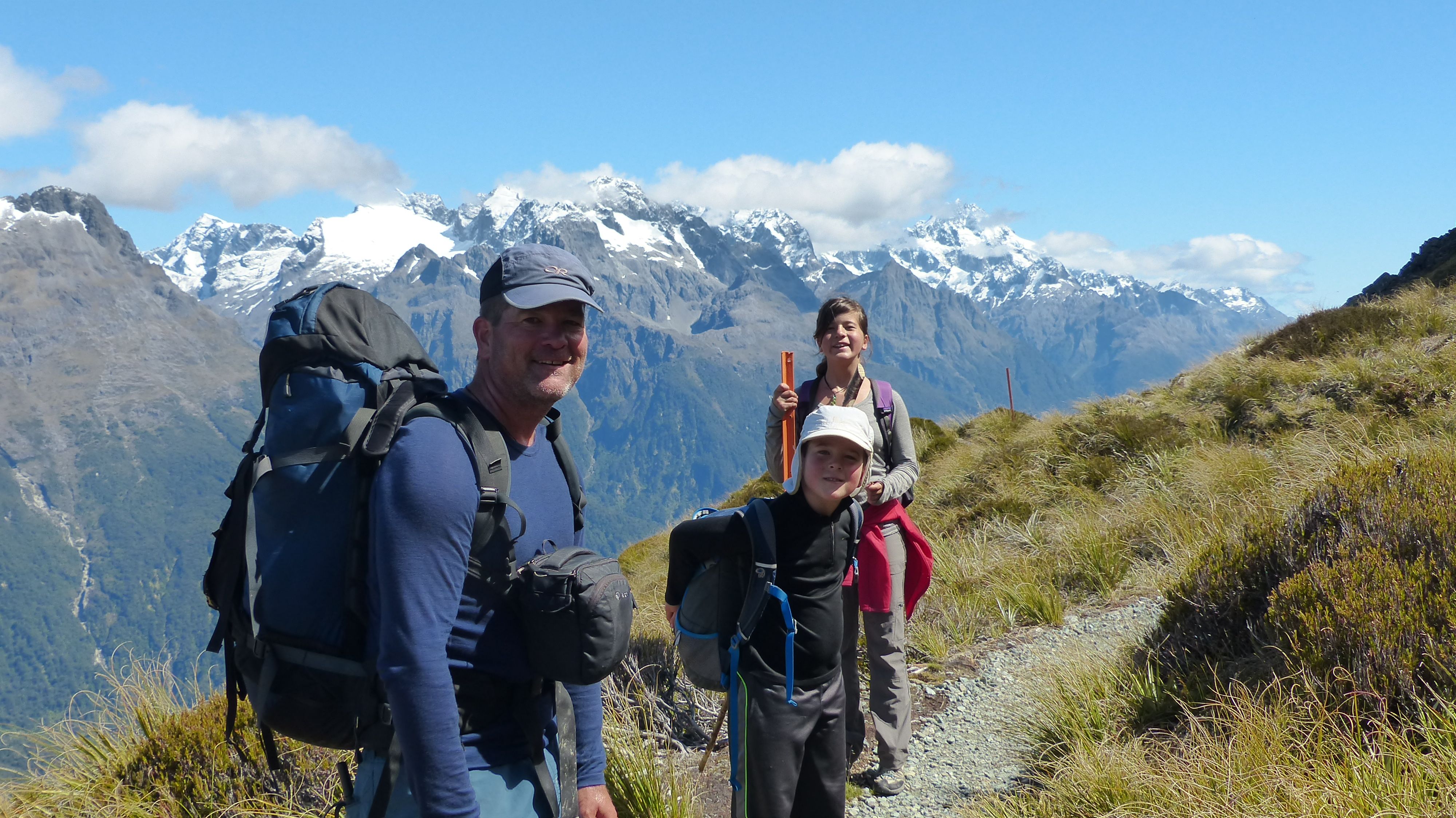
    Sunny days
    Sunny days

    One of the byproducts of a global family journey are a vast and rich wealth of stories — stories we share with each other, with family, with friends, and with other parents who wonder whether they should (or could) do something like this.  These stories are born from the adventures and have become the fabric of our vital and colorful family circus.  We have each benefitted from adventures experienced during childhood and are privileged to have had consistent and loving families our whole lives.  Early on, both of us, on opposite coasts, developed a passion for adventure.  It is the reason we found each other, working as outdoor educators taking kids on trips outside. Seeing the other families from around the world in the track hut in New Zealand, sharing stories about when things did not go as planned, triggers a moment to stop as a family and ask the question, “What other adventures are out there?” because new experiences are a wonderful facet to any family’s life.  We are more open to enjoying them now because we know we can handle them.

    Hiking was like walking through an elven forest
    Hiking was like walking through an elven forest

    And now, as we begin preparation for returning to the US, we find ourselves again facing another big unknown.  Where will we live?  We are not certain, but it will be near family on one coast or the other.  How will we handle being settled after such a grand adventure?  At this point, we are all desiring a more stable routine but also know that travel is part of our blood.  This means that the thing we are currently longing for will also be challenging. Will we go back to the same professions?  Maybe, maybe not.  Colburn is going back to the US in February for interviews because he has found a few options which seem to combine his love of leadership with a bit more adventure and creativity than he had previously. If something pops up that feels right, we will follow that opportunity.  If not, we are considering other opportunities which will allow us greater flexibility so that we can continue to explore while living a more settled life. Perhaps the hardest thing to face will be heading off to our respective days without each other: the kids to school and the parents to work.  Driving away from each other even though only for 8-10 hours, after these two years, will be heart-wrenching.  We don’t wish to hasten that day, however, it must come.  In just a few months, we will again step in to the unknown of life after a grand adventure.

    DandC
    A grand adventure together!


  • At Home in a Foreign Land

    At Home in a Foreign Land

    Land of the Kiwi
    Land of the SKiwi

    Travel in Asia is hard, really hard. There are a number of aspects which began to wear on us after a while – the different conception of personal space, a near constant jockeying to get in front of the next person wether it be on the road or in a shop or waiting for a table. The myriad of different languages and dialects makes being able to speak more than a few words nearly impossible and charades necessary to convey our thoughts/needs, a constant and very real worry about being run over every time you walk out of the hotel, not being able to read the signs, etc.- everything takes effort. What is initially a fabulous “cultural experience” becomes a grating irritation with extended repetition.

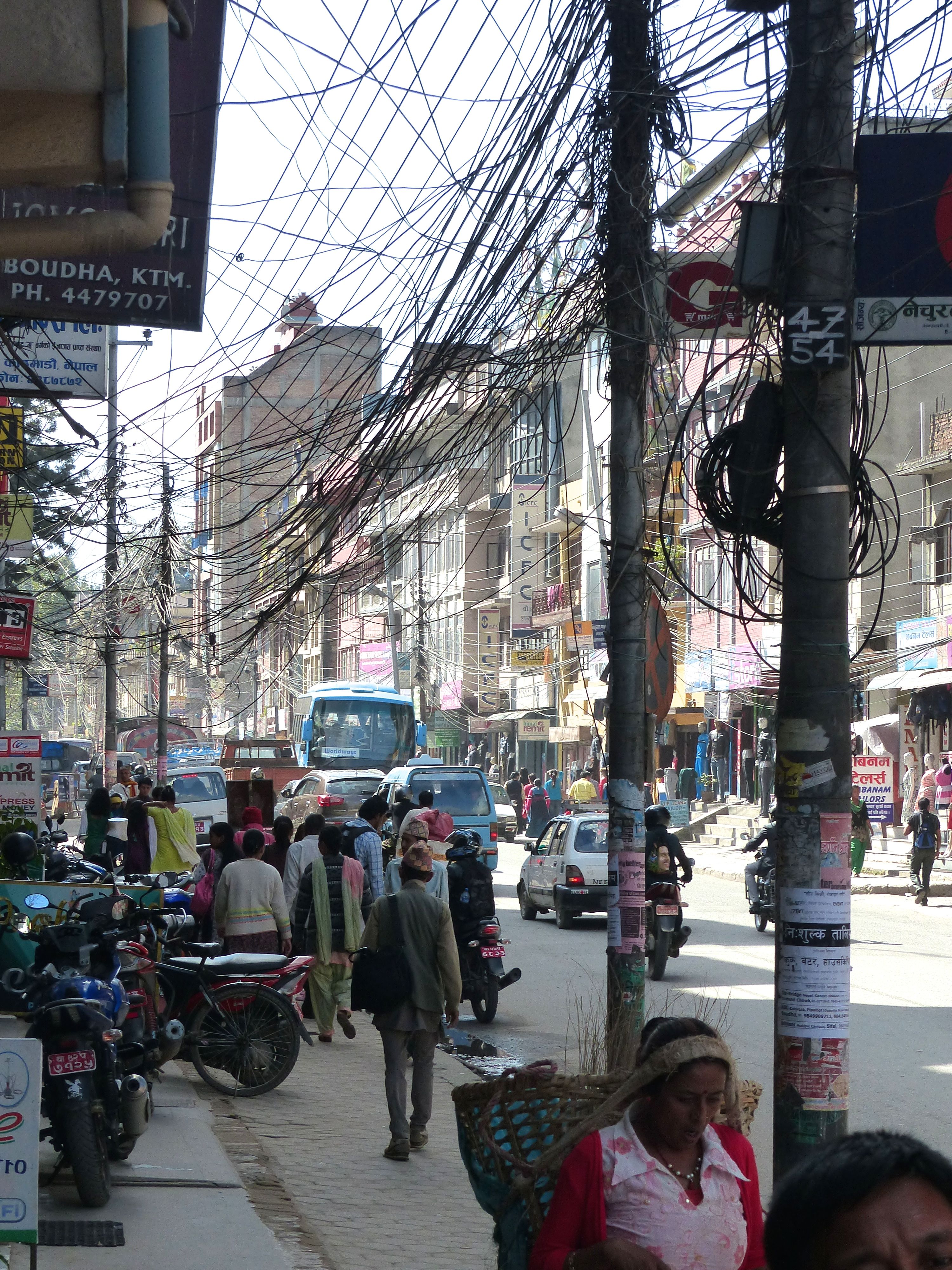
    Crazy Kathmandu
    Crazy Kathmandu

    Now, this is not so say that we did not enjoy Asia, in fact, we loved it. Personally I found Kathmandu to be one of the most intriguing (albeit gritty, dusty and chaotic) cities in the world and would go back in a heartbeat. But travel in Asia is challenging. The week we vacationed in Thailand afforded us an amazing respite from the real world. It recharged our batteries and provided time for us to ponder for what we will do in our last half year of travel.

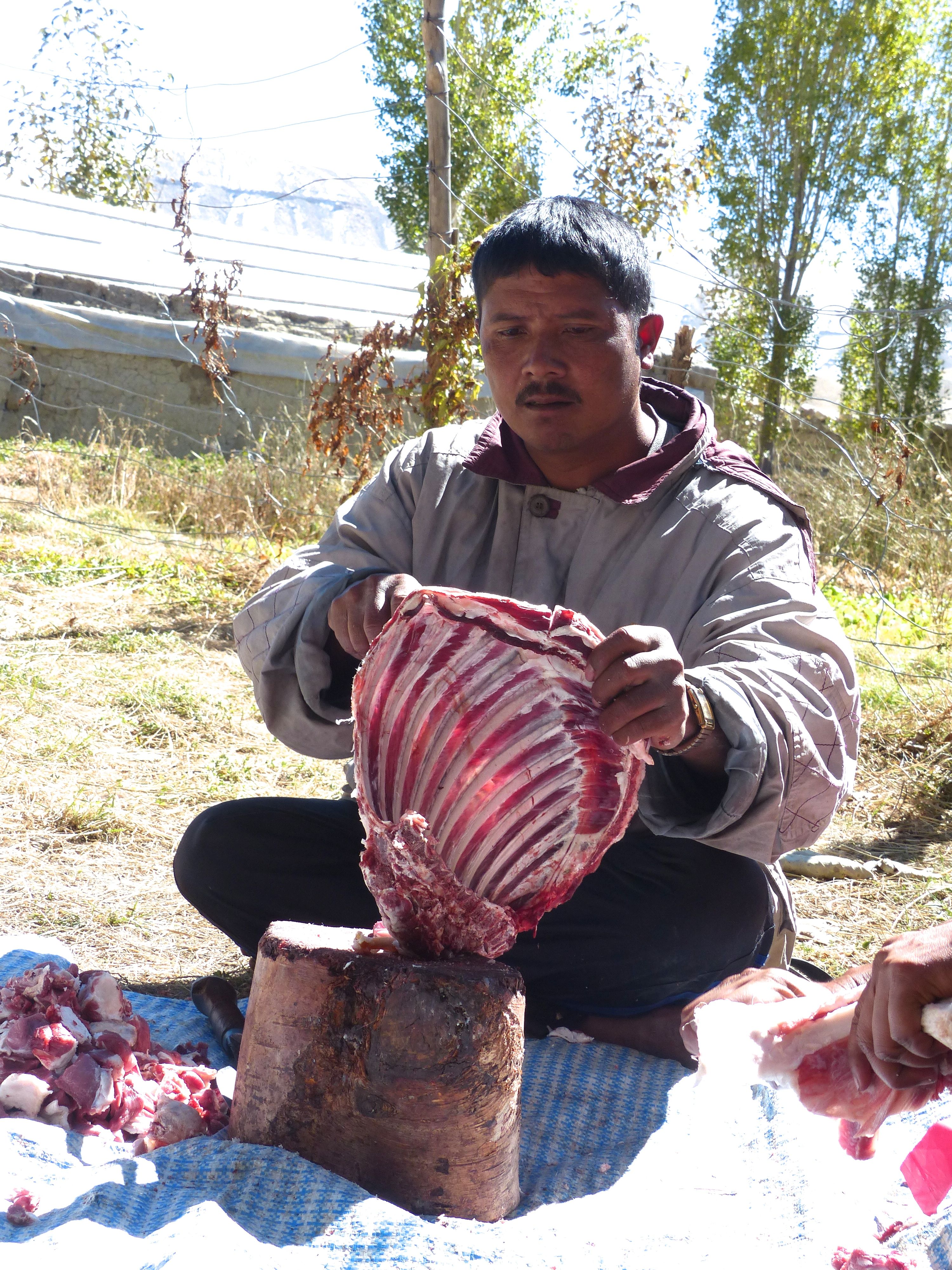
    Preparing Goat
    Sometimes we were a little closer to our dinner than we would like.

    Unfortunately, this clarity lead to the decision that six weeks in China and Japan would be too much of a challenge for us at this point. We were all incredibly excited to walk along the Great Wall, hike the Nakasendo Trail, view the Terracotta Warriors, etc. but none of us were sure we could really enjoy the experience as much as we would like to because we are beginning to feel the fatigue of long term travel. When we broached the subject with the kids, they quickly concurred that China and Japan would be best done as its own separate trip at some point in the future when we had more tolerance for things that are “different”. Right now, we want things that are easy and New Zealand has to be the most pleasant place to travel in the world.

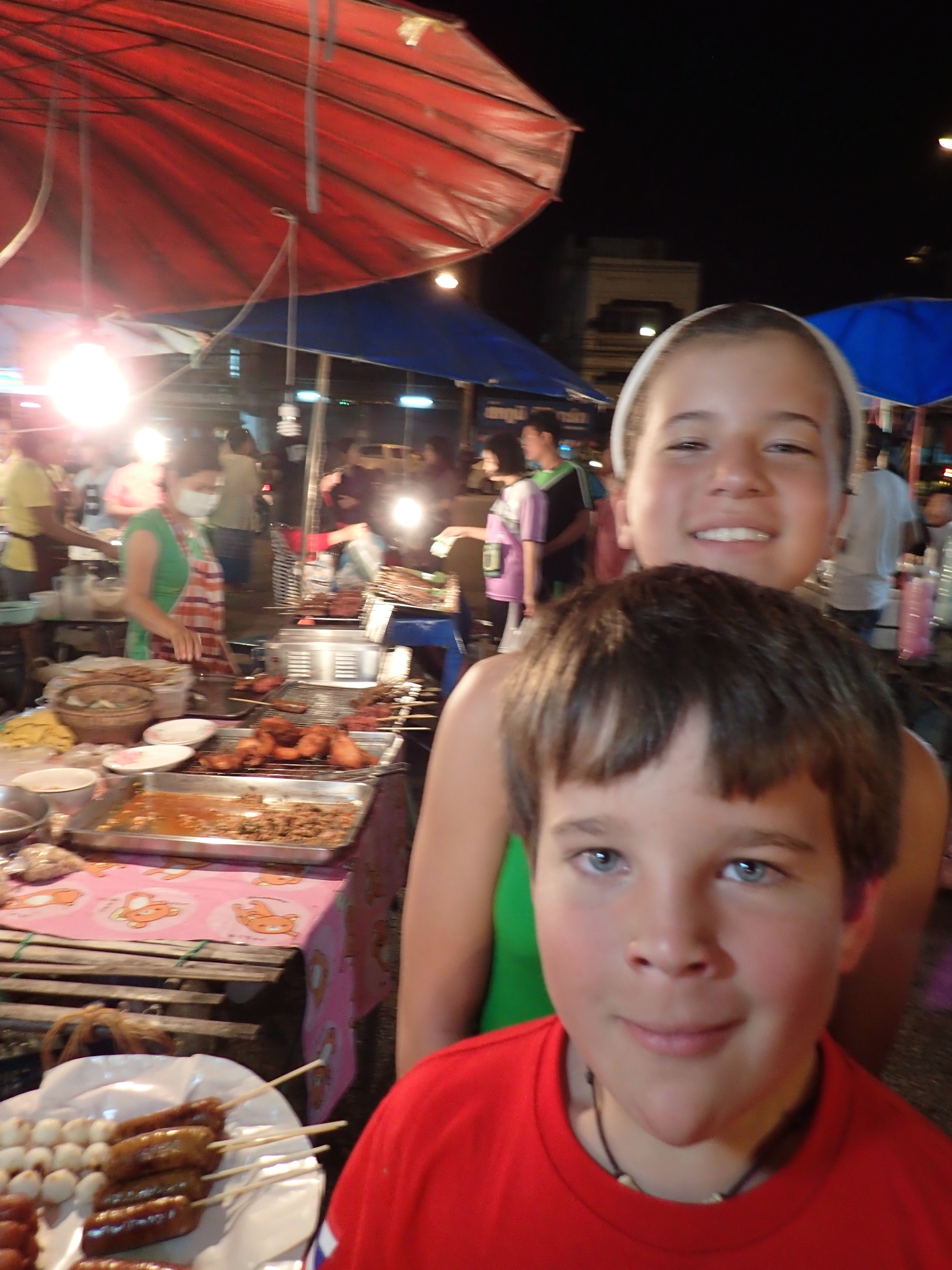
    Finding dinner at a night market in Krabi
    Finding dinner at a night market in Thailand

    After more than two months in Nepal, Bhutan, Thailand, and briefly Cambodia, we headed to the Land of the Kiwi for a five week road trip. Like Patagonia, going to New Zealand had been a lifetime dream for Colburn – world class landscapes, great wines, amazing hiking and fishing – and all in one compact country. I had biked around the South Island with my brother more than 20 years ago and recalled the spectacular scenery, the kind locals, good beer and ease of travel fondly. Initially when we planning our trip, we thought that we would save Australia and New Zealand for a time when we weren’t able to tolerate difficult travel as well as we can at this point in our life. However, the challenges of our time in Asia and the fact that our kids are big Lord of the Rings and Hobbit fans, lead to the decision that this was the perfect time for New Zealand — and we were right! It is a beautiful land with incredibly kind people and an amazing infrastructure which makes travel effortless.

    You can even buy raw milk from a vending machine
    You can even buy raw milk from a vending machine

    Everything works as it should: people wait patiently in a queue for their turn, cars follow the rules of the road with great care, the food is pleasantly bland, you can drink the tap water pretty much everywhere, toilets are the sit-down type and flush, and people mostly speak the same language, although there have been a few times we’re not really sure what they are saying because of the local tendency to leave off the ending words (i.e. “the river’s clear all in” for “river is clear all in all”). Our first night we went to a brew pub and were giddy with excitement that they had salad, nachos, and steak sandwiches on the menu. It seemed too good to be true! They have all of the necessary day to day items in one place so you don’t have to go to the pharmacy to buy shampoo then to the kiosk to get crackers before passing by the vegetable seller to get veggies and and finally on to the bread shop to get bread. The people look like we do, except for the men in short shorts (rugby shorts ala the 1980’s) and low-cut rubber boots. There is laughter and smiles and people in casual conversation every where you go. It is very much like home, but in a foreign land.

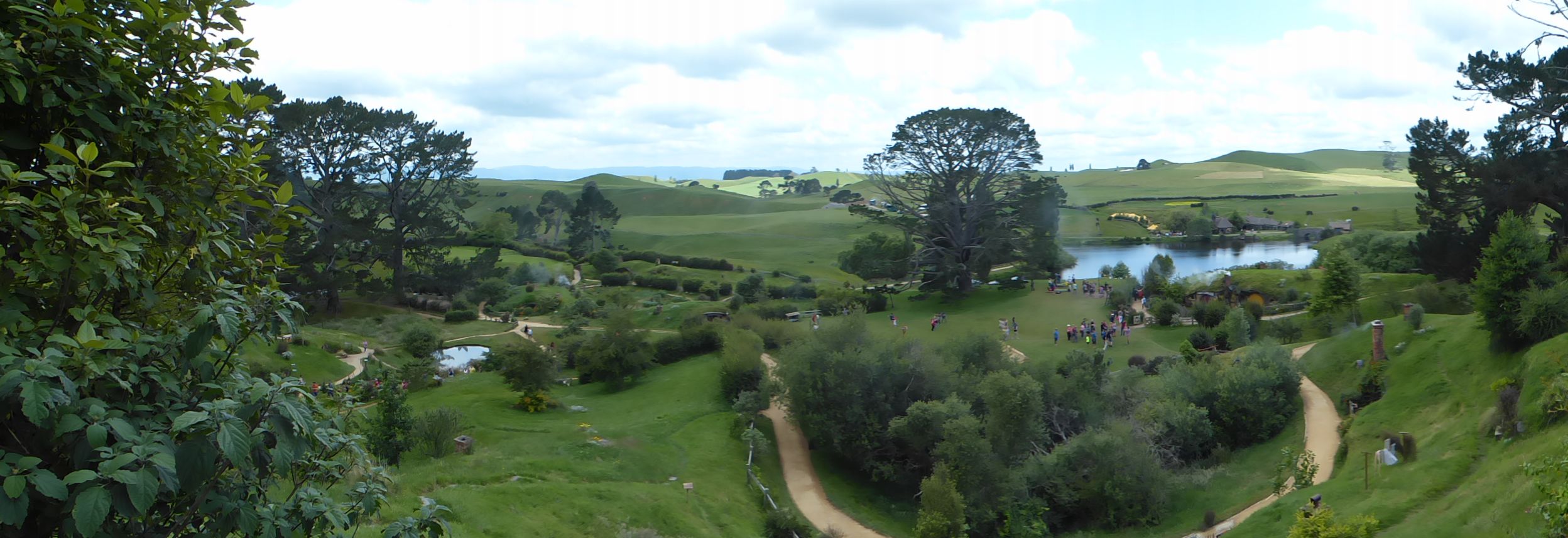
    The view of Hobbiton
    The view of Hobbiton

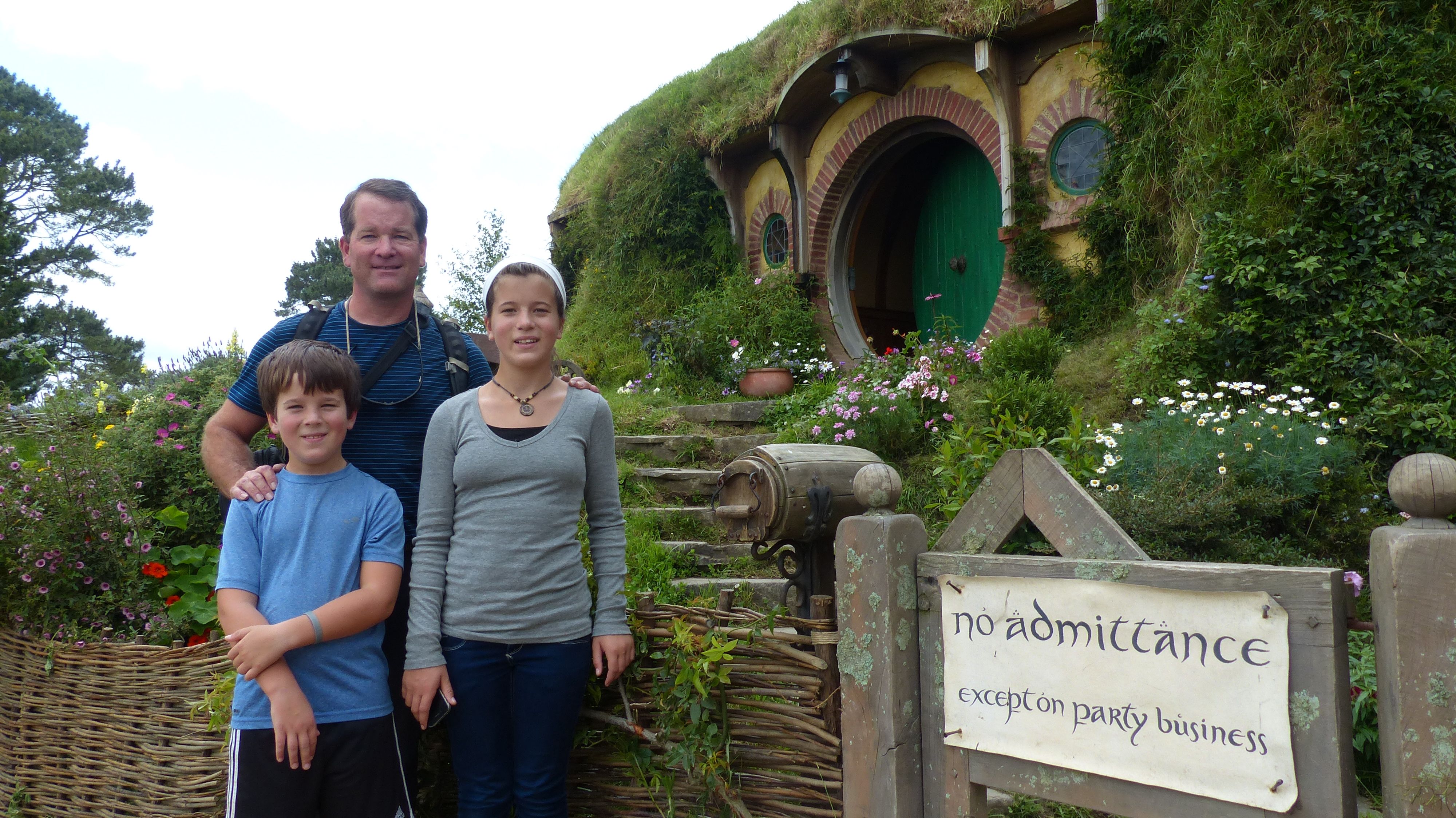
    To begin our tour of Middle Earth, we started with an afternoon tour of the recreated Hobbiton just outside of Auckland. Located on the Alexander family farm, the Hobbit Holes were built with durable materials (not styrofoam) for the last two Hobbit movies as part of the filming agreement. The family run enterprise has turned in to a blockbuster tourist attraction supporting not only family but the entire local town. The area is spectacular – every bit as bucolic and idyllic as it is in the movies. The Holes are simply facades but well-tended with beautiful gardens and props throughout, leaving the feeling that you really are in Hobbiton. The tour concludes with a pint of ale or ginger beer at the Green Dragon Tavern, the only fully created structure on site. We thought the kids heads were going to explode when we saw the different locations – Gandolf’s Cut, Bag End, the Party Tree, etc. They really had a great time seeing the locations “for real”.

    The pilgrimage to Bilbo's House
    The pilgrimage to Bilbo’s House

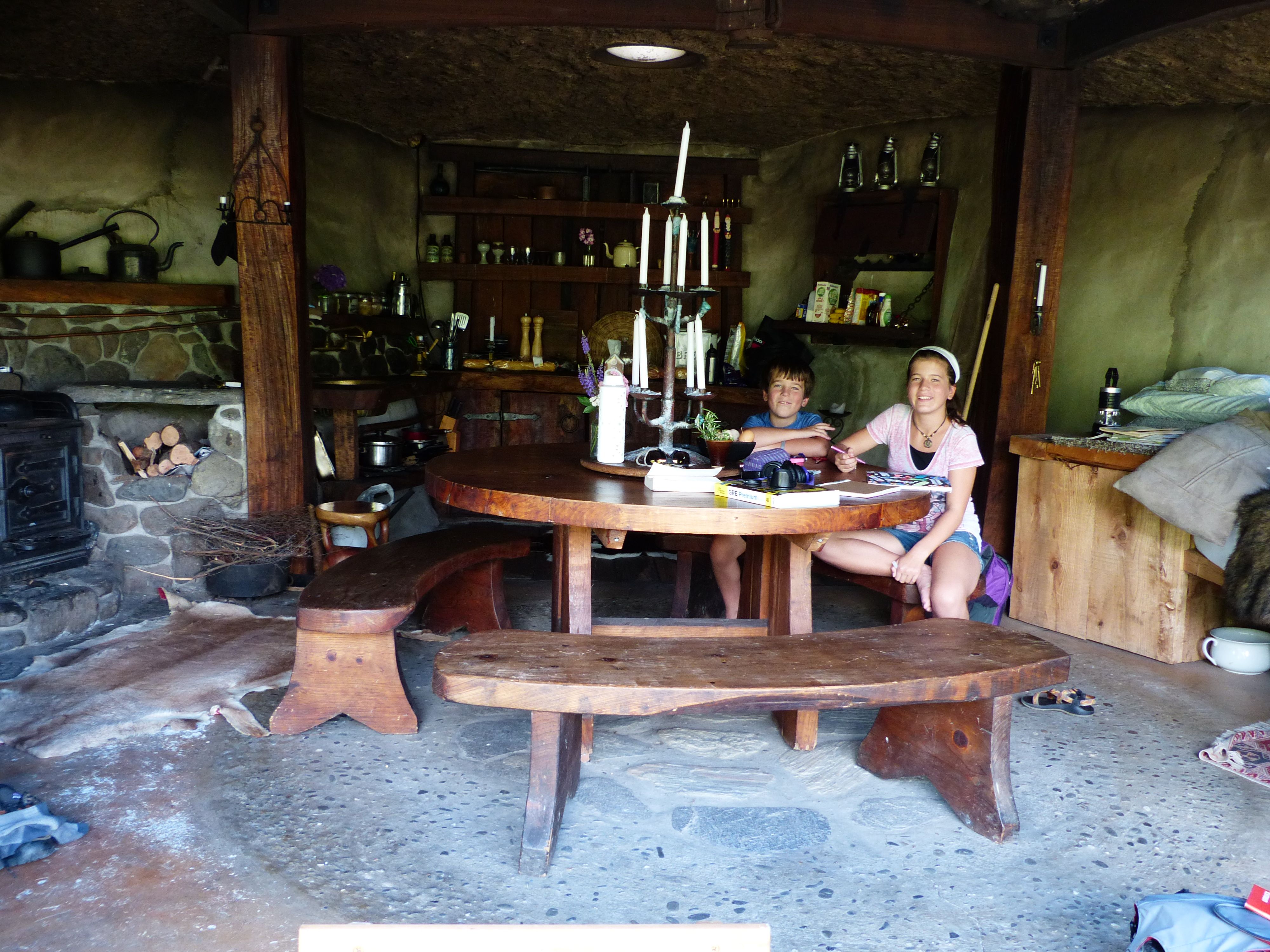
    The perfect follow up to our tour of Hobbiton, as a Christmas surprise, we spent a couple nights in our very own Hobbit Hole. A labor of love for a local family, they built an in-earth cabin on their farm over a period of probably 20 years, long before the Lord of the Rings and Hobbit became an international movie franchise. Lovingly built from local timbers and stone, the hole contains a double bed, coal-fired stove, hot water heated through the coal stove, and incredible period furnishings.

    Inside our Hobbit Hole
    Inside our Hobbit Hole

    There is a modern bathroom with composting toilet and an outdoor claw-foot bath tub. The Hole is located on the back of the farm, nestled between small hillocks, with a pond just in front, so there is complete privacy. We felt as if we were far, far away from any civilisation, yet able to get to town in under 20 minutes. We spent most of our time reading, enjoying the quietness of a rural environment, and only ventured out one time to see the Waitomo Glow Worm Caves. The glow worms aren’t really worms at all (they are larvae for a mosquito-like insect but “glow larvae” or “glow maggot” isn’t nearly as marketable as “glow worm”) but, wow, what an incredible experience to be floating in the utter darkness of an underground river with the ceiling of the cave lit up by thousands of tiny blue lights that twinkle like stars in a clear sky. It was absolutely magical.

    Getting to our Hobbit Hole
    Getting to our Hobbit Hole

    Our pursuit of Middle Earth continued with an expedition to find Mount Doom. While the movie version was computer enhanced, the inspiration for it came from Mt Ngaruhoe in the Tongariro National Park. We had planned to hike the Tongariro Crossing, a spectacular full-day hike which crosses below Mt. Doom, on Christmas Eve, but the combination of questionable weather and the desire to have a “real Christmas”, as our kids put it, lead us to just do a drive-by on our way to Taupo. Still, it was impressive to see the perfectly formed cone volcano silhouetted in the blue sky. Mac commented, “we really are in Middle Earth, aren’t we?” He has become so interested in the story that he is actually reading the book of The Hobbit, his first challenging novel read voluntarily.

    Mt. Doom
    Mt. Doom

    Celebrating Christmas while traveling the past two years has allowed us to view the granddaddy of all holidays differently. At home we have seven or eight Roughneck bins chock full of Christmas decorations. Like many Americans, we begin the process (hanging lights, decorating, Advent calendars, baking cookies, etc.) just after Thanksgiving, taking the better part of a month to prepare for the big day. It is a really, really big deal. However, these past two years have been substantially different, especially since we’ve been in the Southern Hemisphere so Christmas is celebrated in the middle of summer. Last year we were trekking in Patagonia until a couple days before Christmas so could only really start getting “ready” on Christmas Eve. Also, the Argentine Christmas is much less commercial than in the US, so there wasn’t the country-wide frenzy that we typically feel. It was lovely family event without any of the pressure felt in the US.

    A simple Christmas
    A simple Christmas

    This year was similar in New Zealand. We had rented a condo on the quiet end of Lake Taupo (the largest volcano in the world) so we could be in one place for both Christmas Eve and Christmas Day. The kids wanted a Christmas tree but they are hard to come by here in the middle of summer so instead we cut out a tree shape from a roll of wrapping paper we bought at the grocery store. We all coloured ornaments on plain paper then hung them on the tree with wrapping tape. We used tinfoil to make silver garland and even topped our little tree with a tinfoil angel! It was all great fun and incredibly low-key. Colburn made his famous papa steaks and we ate an early dinner on the deck after taking a long walk at a trout fishery that morning. No hours spent flipping though cooking magazines for fancy dishes, no stress about hanging holiday lights, no worries about wrapping presents. Like last year, it was a lovely and relaxing day spent focused on being with family, not on the cultural expectations of the season.

    Now, to be honest, we have an advantage in enjoying a low-key Christmas since we don’t have much space for carrying things. We have all learned to not buy/have nearly as much as we would in the US. Presents had to be limited to what we could reasonably fit in our small rental car. Lucia has longed for real paper books to read as she is not nearly as fond of reading on the iPad, so she was able to indulge her reading obsession with six of the biggest books that would be absolutely unmanageable if we didn’t have our own car. Mac longed for a big Lego set to build, so he received a couple of Hobbit sets that could be broken down in to smaller bags for travel. They both got some candy to round out their gifts and were grateful for having received what they termed as so much.

    Lucia learning to drive a boat
    Lucia learning to drive a boat

    With Christmas behind us, we headed out on a four day canoe journey down the Whanganui River. Although considered a Great Walk, this 90km wilderness river journey takes the paddler through unspoilt land that looks as if it has been lost to time. Even though the area is second-growth forest, its not hard to imagine dinosaurs cruising through the totara trees and ferns which line the banks as the waterfalls cascade in numbers to great to be counted. Our pre-trip recognisance said that the paddle is considered to be a class 1+ (which means mostly flat water with an occasional rapid that needs minor care to negotiate) suitable for anyone who is fairly outdoorsy yet many accounts said that the chances of flipping were somewhere near 90%. As a former river guide, I am pretty comfortable with my skills on the water and Colburn has been canoeing since he was a toddler, but we both began to get a little apprehensive about such statistics. Colburn referenced his families’ legendary trip down the Delaware River when the rapids were a bit more difficult than they had expected and, although everyone was safe at the end of the trip, it became an iconic event in the family mythology. We were concerned that our Whanganui trip could easily go the way of the Shindell-Wright Delaware trip 30+ years earlier.

    OLYMPUS DIGITAL CAMERA
    Safely on the Whanganui

    The weather was cool and cloudy, so not one that invites swimming in a chilly river. Despite many years working and living on the river, I hate cold water, especially cold moving water. However, once we got on the river, our apprehension was allayed when we saw the quality of many of the other paddlers. They could hardly keep a boat straight in flat water or wanted to stand up and paddle Lewis & Clark style, so it was no wonder they might have difficulty with faster water. This proved to be true. In one rapid, we saw three out of four boats flip and even saw one of the boats flip a second time in a rapid further down the river. The good thing on the Whanganui is that, while a flip is cold and wet, there are no dangerous obstacles down-river, so it’s more inconvenient than scary. We were able to successfully negotiate every rapid without any excess water coming on board and had great fun showing off in some of the wave-trains.

    Creating the Uruak Hai larvae called Mac
    Creating the Uruak-Hai larvae called Mac

    The Lord of the Rings theme continued on our trip with them pretending to be be uruk-hai spawning from the mud in the side-streams. Mac would occasionally break in to dwarven song from the Hobbit while we paddled through the quiet stretches. Lucia learned to steer a boat for herself and has become proficient at reading the water to determine her own route without mom or dad’s input. They both love the water as much as their parents do and we are excited to be able to have yet another great family thing to do when we get back to the US.

    Tired, dirty, and horribly bitten by sand flies (tiny black flies whose bite itches like crazy for several days), we headed to the capital city of Wellington to continue our tour of Middle Earth. We visited Weta Cave to see how Peter Jackson’s company did all of the effects and computer generated imaging for the movies. It was fascinating to see how they put together the costumes, created the weapons, and built the models they used. I remember as a teenager seeing how George Lucas made some of the Star Wars effects and being amazed. Now, 30 years later, seeing how they did LOR and the Hobbit, it brought back many of the same feelings. Some of the interesting tidbits that we learned were that the orcs and uruk-hai were all live actors, just really big guys! The elves had the hardest job because, once fully dressed, they couldn’t sit down at all. The dwarves were often the hottest on set because they all had to wear fat-suits under their costumes and the dwarves’ beards were the most costly element in the movie because they had to be hand-made every day. Viggo Mortensen, who plays Aragorn, is a method actor so had his sword with him all of the time and is reported to have been seen brandishing it while walking barefoot through the streets of Wellington. Apparently the cops were notified that he might be seen doing this, so it never was a problem. Having spent hours watching and re-watching the films, it was really cool to see how it was all produced.

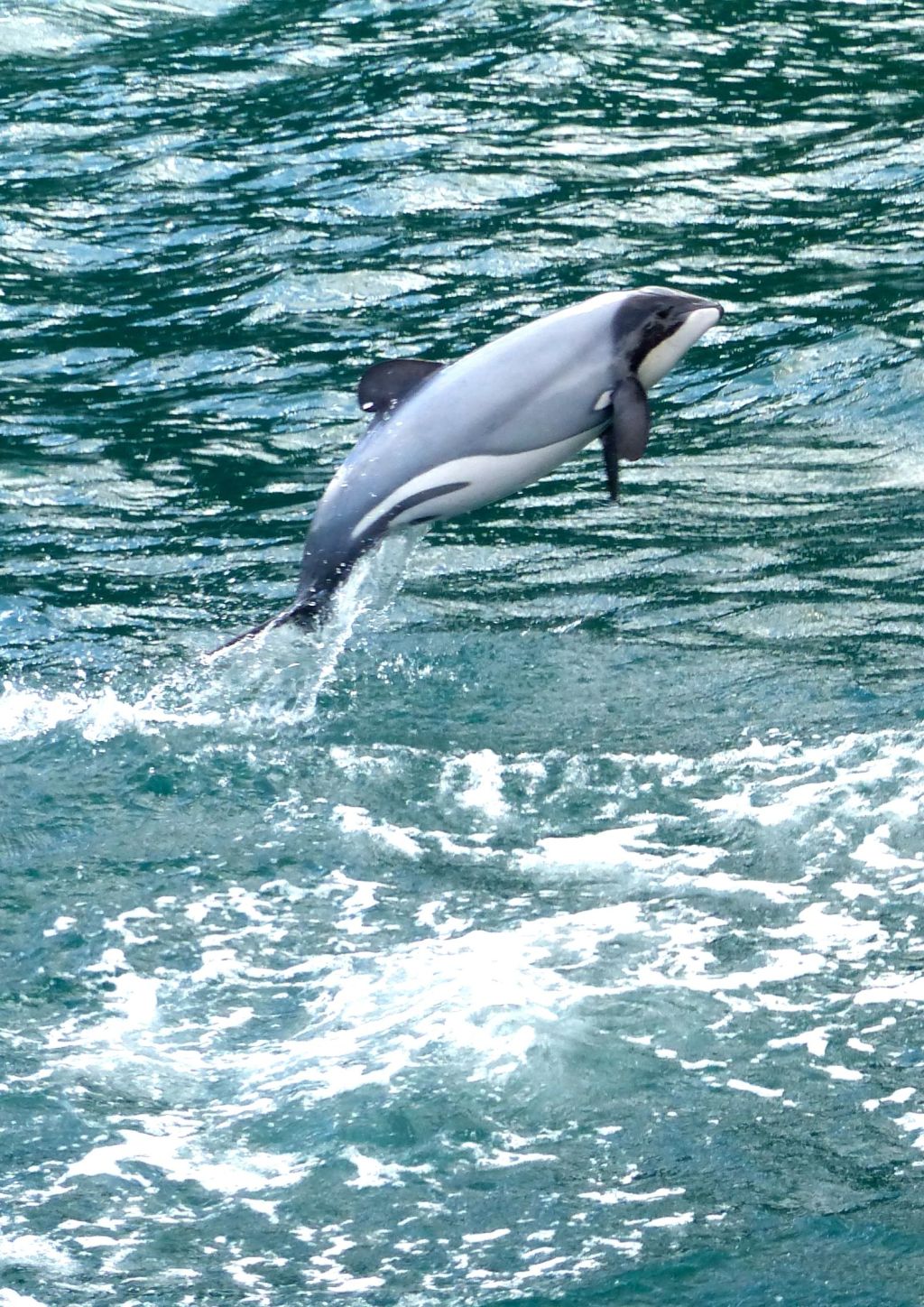
    The diminutive Hector's Dolphin
    A wild but diminutive Hector’s Dolphin, only found in New Zealand

    With our time on the North Island completed, we took a three hour car ferry to the South Island on New Year’s Eve. The weather had been unsettled so there were heavy grey clouds and rain as we headed to Nelson, purported to be sunniest city in New Zealand. We waited out the tail end of a rainstorm by tasting craft brews and getting some school done at the local pub. Although slightly premature in setting up our tents, quietly we ushered in the new year asleep in our cozy temporary shelters.

    Mac kayaking on by Abel Tasman
    Mac kayaking off the coast of Abel Tasman

    New Zealand is a beautiful and welcoming country where the people are perpetually friendly, patient, and kind. We have noticed that people follow rules here – even when they are offered as suggestions – and not following them elicits a severe finger-wagging from the locals. When entering a town along a highway, the NO ENGINE BRAKES sign is worded politely asking drivers of large vehicles to please refrain from using engine brakes next 3 km. When we were on the Whanganui River, every person we saw was wearing their life vest fully buckled at all times while on the water – even the 20-somethings that were incredibly hung-over after drinking several bottles of whisky (we know because we they put up their tents right next to ours!). In the US, I would not have been at all surprised if they only used their PFDs as seat cushions or slung them over their shoulders only when they were going through a rapid. On the roads, drivers rarely pass unnecessarily and definitely not on blind curves or other dangerous sections. Almost everyone wears hats and sunscreen when outside. In one campground, our neighbour noticed our accent and came over with two sodas and two beers saying, “Welcome to New Zealand!” After visiting Bhutan, a county known for its pursuit of Gross National Happiness but where driving should be considered an extreme sport and most residents are polite but indifferent, it seems that the Kiwis have somehow attained that ideal, but without the need for advertising it to the world. New Zealand is definitely the place where we have felt truly at home in a foreign land.